








Despite Israel’s military efforts, Hamas remains in control of Gaza after
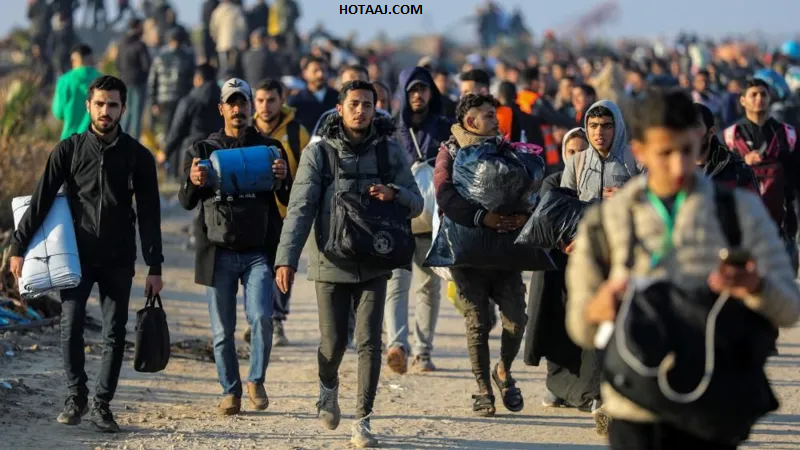
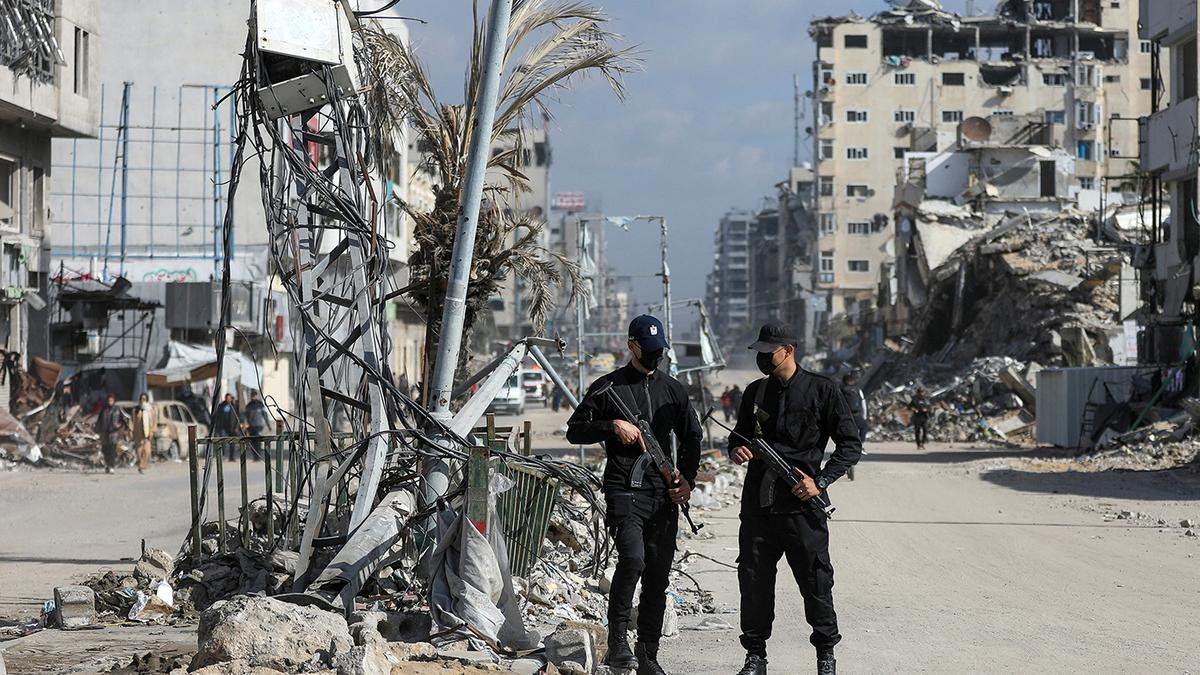
As a ceasefire brought a rare moment of calm to Gaza’s devastated cities, Hamas swiftly emerged from its underground hideouts, assuming control over the territory once more. With the dust settling and the sounds of battle fading, the militant group made its presence known, stepping back into public view as the region’s governing authority.
Hamas, having survived through years of wars and clashes, was quick to assert its authority, managing to consolidate power once again despite Israel’s massive military operations. Amid the ruins of Gaza’s infrastructure, the group announced plans to coordinate the distribution of humanitarian aid to the population in desperate need of assistance, positioning itself as the central force capable of managing relief efforts.
In the wake of the ceasefire, Hamas sought to re-establish its position, not only as a military entity but as the political leader, signaling its resilience and enduring influence in the face of international efforts to dislodge it. The group’s ability to regain control, despite the massive destruction and ongoing regional tensions, highlights its entrenched power and determination to maintain a foothold in the region.
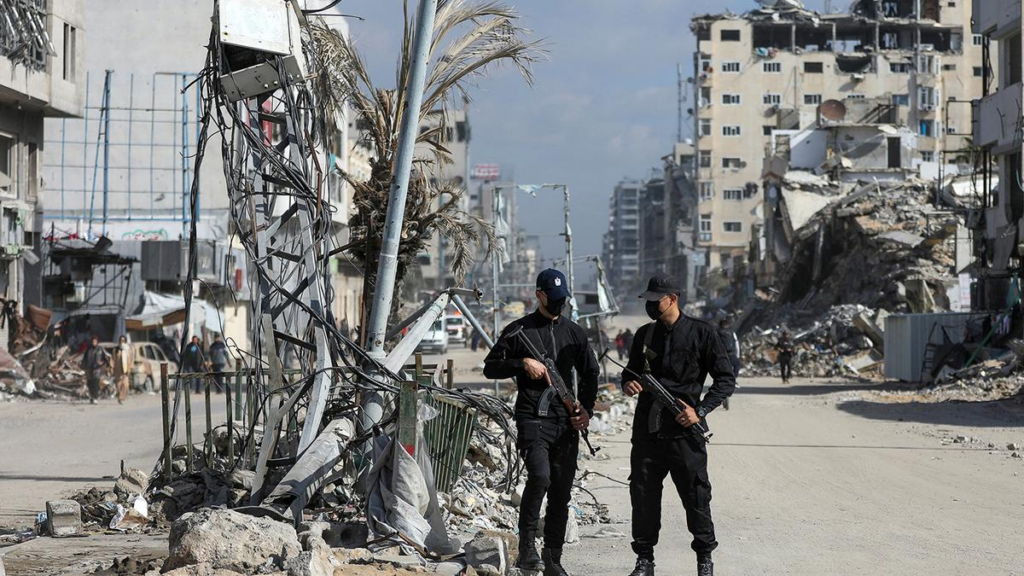
Hamas has not only survived 15 months of intense conflict with Israel—one of the deadliest and most destructive in recent memory—but continues to hold firm control over the Gaza Strip, which now lies in ruins, resembling an apocalyptic wasteland. Despite the devastation, Hamas remains in power, and as part of the ceasefire agreement, humanitarian aid is set to flow into the region. On Monday, the Hamas-led government announced that it would take charge of coordinating the distribution of aid to Gaza’s desperate population, further solidifying its role as the central authority in the territory.
Hostages handed over
As part of the ongoing efforts to ease tensions and build trust, a significant number of hostages were handed over following the ceasefire agreement. The release marked a temporary but welcome moment of relief for the families of those held captive, some for months, as the international community continues to call for the safe return of all hostages.
The exchange, though limited in scope, was seen as a breakthrough in a conflict marked by extreme violence and deeply entrenched political divisions. Many of the hostages were civilians caught in the crossfire during the conflict, while others were soldiers or members of various factions involved in the hostilities. The release process, though chaotic, symbolized a fragile step towards potential reconciliation.
However, despite this positive development, the situation remains fragile. The hostages who were freed, often physically and emotionally scarred, now face a difficult reintegration process, while questions about the remaining captives loom large. With both sides having exchanged prisoners in the past, the hope for broader negotiations continues, but the road to long-lasting peace and stability in the region remains uncertain.
Rise of Hamas
The rise of Hamas in the Gaza Strip is a complex and multifaceted story, rooted in political, religious, and social dynamics. Established in 1987 during the First Intifada, Hamas emerged as a Palestinian militant and political organization with the aim of establishing an Islamic state in historic Palestine. Its roots were deeply tied to the Muslim Brotherhood, and its leadership adopted an ideology that blended Palestinian nationalism with Islamic fundamentalism. Over the years, Hamas has become a significant force in Palestinian politics, especially after it gained control of Gaza in 2007.
The organization’s rise was fueled by its opposition to the peace process led by the Palestinian Authority and its radical stance against Israel. Unlike the Palestinian Liberation Organization (PLO) and its successor, the Palestinian Authority, which negotiated peace with Israel, Hamas rejected any compromise with the Jewish state, focusing instead on armed resistance. This ideology resonated with many Palestinians who were disillusioned with the ongoing occupation and the perceived failures of the peace process.
Hamas first gained widespread popularity for its charitable works, including providing social services, education, and healthcare, which earned it significant grassroots support, particularly among Gaza’s impoverished population. Its military wing, the Izz ad-Din al-Qassam Brigades, carried out numerous attacks against Israeli targets, further cementing its image as a formidable militant force. Hamas’ focus on resistance gained traction, especially as the region’s political landscape was shaped by escalating tensions and ongoing Israeli military actions.
In the 2006 Palestinian legislative elections, Hamas achieved a stunning victory, defeating the more moderate Fatah party and gaining control of the Palestinian Legislative Council. However, this victory led to political turmoil and violent clashes between Hamas and Fatah, culminating in Hamas taking full control of Gaza in 2007. Since then, Gaza has been under Hamas’ rule, despite ongoing Israeli blockades and military operations aimed at weakening the group.
Throughout multiple wars with Israel, Hamas has managed not only to survive but to maintain its power, bolstered by a strong network of fighters, an underground economy, and support from regional allies such as Iran and Hezbollah. The group’s ability to remain resilient in the face of international sanctions and military pressure has only strengthened its resolve.
The rise of Hamas has been a defining feature of the Palestinian-Israeli conflict, and its continued rule in Gaza remains a significant obstacle to peace. While its authority over Gaza has solidified, the suffering of the population under constant bombardment, economic deprivation, and political isolation continues to fuel the ongoing cycle of violence in the region.
‘A Chameleon’
The term “a chameleon” is often used metaphorically to describe a person or entity that changes their behavior, appearance, or opinions to fit into different environments or situations, much like the reptile known for its ability to alter its skin color in response to its surroundings. This adaptability can be seen as a strength in certain contexts, allowing the individual or organization to navigate complex, shifting dynamics. However, it can also carry negative connotations, implying a lack of consistency or authenticity.
In politics, business, or personal relationships, being referred to as “a chameleon” can suggest that someone is highly pragmatic, often adjusting their stance to suit the needs of the moment. While this flexibility might help them gain favor with different groups or audiences, it could also raise questions about their true values or intentions. For example, a politician who shifts their stance on key issues depending on public opinion may be seen as a “chameleon,” adapting their position to stay in power rather than standing firm on principles.
In the corporate world, a “chameleon” leader may be praised for their ability to adapt strategies based on market demands, but might also be viewed skeptically by employees and stakeholders if their shifting decisions lack clear direction or long-term vision. On a personal level, someone who changes their personality or behavior depending on who they’re with could be seen as trying to fit in or please others, sometimes at the expense of genuine connections.
Ultimately, being described as “a chameleon” can reflect an individual’s or organization’s survival strategy in an ever-changing world, where the ability to adapt is often essential. However, the perception of such adaptability depends on whether the change is seen as purposeful and strategic or merely opportunistic and insincere.
Courtesy: Sky News Australia
References
- ^ Jump up to:a b c d Ragad, Abdelali; Irvine-Brown, Richard; Garman, Benedict; Seddon, Sean (24 November 2023). “How Hamas built a force to attack Israel on 7 October”. BBC News. Retrieved 28 December 2023.
- ^ Jump up to:a b “Who are Hamas’s allies in Gaza? From Islamic Jihad to Marxist militants”. The National. 15 November 2023. Retrieved 19 November 2023.
- ^ Guy Van Vlierden (14 October 2023). “HLN Onderzoek. Van jihadisten tot communisten: zeker 10 groeperingen deden mee met actie Palestijnse terroristen” [HLN Research. From jihadists to communists: at least 10 groups participated in Palestinian terrorist action]. Het Laatste Nieuws (in Dutch). Archived from the original on 14 October 2023.
- ^ Smyth, Phillip (December 2023). “The Path to October 7: How Iran Built Up and Managed a Palestinian ‘Axis of Resistance'”. CTC Sentinel. 16 (11). Combating Terrorism Center.
- ^ Fabian, Emanuel (19 October 2023). “IDF says it killed head of military wing of Gaza’s Popular Resistance Committees”. The Times of Israel. Archived from the original on 19 October 2023. Retrieved 19 October 2023.
- ^ “Israel Army Fires Artillery at Lebanon as Hezbollah Claims Attack”. Asharq Al-Awsat. 8 October 2023. Archived from the original on 8 October 2023. Retrieved 8 October 2023.
- ^ Nada Homsi (31 October 2023). “‘We’re with the resistance’: Hezbollah allies the Fajr Forces join Lebanon–Israel front”. The National. Archived from the original on 12 November 2023. Retrieved 12 November 2023.
- ^ “الوكالة الوطنية للإعلام – القومي أعلن استشهاد أحد مقاتليه وسام محمد سليم” [The National News Agency announced the martyrdom of one of its fighters, Wissam Muhammad Salim.]. nna-leb.gov.lb (in Arabic). 15 December 2023.
- ^ “Iran Update, January 14, 2024”. Institute for the Study of War. Archived from the original on 15 January 2024. Retrieved 15 January 2024.
- ^ Dahan, Maha El (31 October 2023). “Yemen’s Houthis enter Mideast fray, hardening spillover fears”. Reuters. Archived from the original on 1 November 2023. Retrieved 31 October 2023.
- ^ Ben-Ari, Lior; Zitun, Yoav (22 December 2023). “Iran-backed militias in Iraq claim struck Israel’s Karish natural gas rig in Mediterranean”. Ynetnews. Retrieved 22 December 2023.
- ^ “Iran launches barrage of ballistic missiles at Israel”. BBC News. 1 October 2024.
- ^ “Israel army kills two attackers who crossed from Jordan”. France 24. 18 October 2024. Retrieved 18 October 2024.
- ^ Abraham, Yuval (3 April 2024). “‘Lavender’: The AI machine directing Israel’s bombing spree in Gaza”. +972 Magazine. Retrieved 12 June 2024.
as many as 37,000 Palestinians as suspected militants
- ^ “How Israel is using ‘Lavender’ and ‘Daddy’ to identify 37,000 Hamas operatives”. The Economic Times. 9 April 2024. Retrieved 12 June 2024.
The “Lavender” system is designed to identify individuals suspected of being part of Hamas and Palestinian Islamic Jihad (PIJ), even targeting those with lower ranks for potential aerial bombardments. In the initial stages of the conflict, the military heavily relied on Lavender, leading to the system labeling up to 37,000 Palestinians as militants, along with their residences, for potential airstrikes.
- ^ “Gaza Strip”. The World Factbook. Central Intelligence Agency. 22 May 2024. Retrieved 8 June 2024.
- ^ “How Hamas secretly built a ‘mini-army’ to fight Israel”. Reuters. 13 October 2023. Archived from the original on 13 October 2023. Retrieved 13 October 2023.
- ^ International Institute for Strategic Studies (25 February 2021). The Military Balance 2021. London: Routledge. p. 344. ISBN 978-1-03-201227-8. Archived from the original on 21 January 2022. Retrieved 13 October 2023.
- ^ “Israel’s massive mobilization of 360,000 reservists upends lives”. The Washington Post. 10 October 2023. Archived from the original on 30 October 2023. Retrieved 13 October 2023.
- ^ van der Merwe, Ben (4 April 2024). “Israel–Hamas war: Gaza’s morgue network has effectively collapsed – how are they recording their dead?”. Sky News. Retrieved 18 May 2024.
- ^ Jump up to:a b “72 deaths counted in Gaza in last 24 hours: Health Ministry”. Al Jazeera. 21 January 2025. Retrieved 21 January 2025.
- ^ Jump up to:a b c d “Israel–Gaza war in maps and charts: Live tracker”. Al Jazeera. 9 October 2023.
- ^ Jump up to:a b “Health Ministry In Hamas-run Gaza Says War Death Toll At 46,913”. Barron’s. Agence France-Presse. 19 January 2025.
- ^ “Hostilities in the Gaza Strip and Israel – reported impact”. UN OCHA. 29 May 2024. Retrieved 30 May 2024.
- ^ Jump up to:a b c d Graham-Harrison, Emma (17 September 2024). “Gaza publishes identities of 34,344 Palestinians killed in war with Israel”. The Guardian. ISSN 0261-3077. Retrieved 24 September 2024.
- ^ “In subtle parting shot at government, IDF chief calls for external probe into Oct. 7 failures”. The Times of Israel. 21 January 2025. Retrieved 21 January 2025.
- ^ Nakhoul, Samia; Pamuk, Humeyra; Landay, Jonathan (6 June 2024). “Diminished Hamas switches to full insurgent mode in Gaza”. Reuters. Retrieved 6 June 2024.
- ^ “Hamas Toll Thus Far Falls Short of Israel’s War Aims, U.S. Says”. The Washington Post. 21 January 2024.
- ^ Jump up to:a b c Jamaluddine, Zeina; Abukmail, Hanan; Aly, Sarah; Campbell, Oona M. R.; Checchi, Francesco (9 January 2025). “Traumatic injury mortality in the Gaza Strip from Oct 7, 2023, to June 30, 2024: a capture–recapture analysis”. The Lancet. Elsevier. doi:10.1016/S0140-6736(24)02678-3.
- ^ Jump up to:a b Garry, S.; Checchi, F. (2020). “Armed conflict and public health: Into the 21st century”. Journal of Public Health. 42 (3): e287 – e298. doi:10.1093/pubmed/fdz095. PMID 31822891.
- ^ Jump up to:a b Geneva Declaration Secretariat (2008). Global Burden of Armed Violence (PDF) (Report). Geneva Declaration Secretariat. p. 4.
The ratio of people killed in war to those dying indirectly because of a conflict is explored in the chapter on indirect deaths (INDIRECT CONFLICT DEATHS). Studies show that between three and 15 times as many people die indirectly for every person who dies violently.
- ^ Jump up to:a b Khatib, Rasha; McKee, Martin; Yusuf, Salim (2024). “Counting the dead in Gaza: difficult but essential”. The Lancet. 404 (10449). Elsevier BV: 237–238. doi:10.1016/s0140-6736(24)01169-3. ISSN 0140-6736. PMID 38976995.
In recent conflicts, such indirect deaths range from three to 15 times the number of direct deaths. Applying a conservative estimate of four indirect deaths per one direct death to the 37,396 deaths reported, it is not implausible to estimate that up to 186,000 or even more deaths could be attributable to the current conflict in Gaza. Using the 2022 Gaza Strip population estimate of 2,375,259, this would translate to 7.9% of the total population in the Gaza Strip.
- ^ Jump up to:a b Sridhar, Devi (5 September 2024). “Scientists are closing in on the true, horrifying scale of death and disease in Gaza”. The Guardian. Retrieved 12 November 2024.
- ^ “About 10 percent of the Gaza Strip’s population killed, injured, or missing due to the Israeli genocide”. Euro-Med Human Rights Monitor. 25 July 2024. Retrieved 20 October 2024.
- ^ Rowlands, Lyndal; Varshalomidze, Tamila; Rasheed, Zaheena; Quillen, Stephen; Gadzo, Mersiha; Najjar, Farah (20 November 2024). “Eighty-five patients at risk as Kamal Adwan Hospital under Israeli attack: Director”. Al Jazeera.
The hospital’s director, Dr Hussam Abu Safiya, has been giving us regular updates on the situation there. Here are his latest comments to Al Jazeera: An elderly man has died of starvation in the northern Gaza Strip.
- ^ Najjar, Farah (8 July 2024). “Another child dies of starvation in Gaza”. Al Jazeera. Retrieved 28 July 2024.
- ^ Siddiqui, Usaid (16 August 2024). “WATCH: Father loses daughter to malnutrition amid blockade and dire living conditions”. Al Jazeera. Retrieved 16 August 2024.
- ^ Mohamed, Edna; Jamal, Urooba (1 June 2024). “Child dies of malnutrition and dehydration: Report”. Al Jazeera.
- ^ Haq, Sana Noor; Dahman, Ibrahim; Sabbah, Abdul Qader; Salman, Abeer (6 March 2024). “Newborns die of hunger and mothers struggle to feed their children as Israel’s siege condemns Gazans to starvation”. CNN.
- ^ Graham-Harrison, Emma (5 June 2024). “Starvation already causing many deaths and lasting harm in Gaza, agencies say”. The Guardian. ISSN 0261-3077. Retrieved 13 June 2024.
- ^ Tondo, Lorenzo; Taha, Sufian (12 July 2024). “Thousands of Palestinians missing amid Gaza’s unrelenting warfare”. The Guardian. ISSN 0261-3077. Retrieved 12 July 2024.
- ^ “Hostilities in the Gaza Strip and Israel | Flash Update #160 [EN/AR/HE]”. ReliefWeb. 1 May 2024. Retrieved 2 May 2024.
More than 10,000 people are estimated to be missing under rubble in Gaza, according to the Palestinian Civil Defense
- ^ “Israel has killed 12,329 Palestinians students since Oct 7, 2023, says Ministry”. Wafa. 14 January 2025. Retrieved 14 January 2025.
- ^ Uras, Umut; Milisic, Alma (20 October 2024). “Statistics bureau says 5 employees killed since October 2023”. Al Jazeera. Retrieved 20 October 2024.
According to the organisation, between October 7, 2023 and October 15, 2024: 16,300 people have been imprisoned.
- ^ Tétrault-Farber, Gabrielle (6 December 2023). “UN rights chief warns of heightened risk of ‘atrocity crimes’ in Gaza”. Reuters. Retrieved 6 December 2023.
- ^ “Education Ministry says Israel killed 9,241 Palestinian students since October 7”. Wafa. 15 July 2024. Retrieved 16 July 2024.
- ^ “Defense minister: Israel ‘won’t let the West Bank become Gaza or southern Lebanon'”. Times of Israel. 12 January 2025.
- ^ “Martyrs”. Palestinian Central Bureau of Statistics. Archived from the original on 8 February 2024. Retrieved 3 June 2024.
- ^ Jump up to:a b “Israeli army raids Balata refugee camp 4 times in 24 hours”. Anadolu Agency. 28 July 2024. Retrieved 28 July 2024.
Simultaneously with its onslaught on the Gaza Strip, the Israeli army intensified operations in the West Bank, resulting in 592 deaths and approximately 5,400 injuries, according to official Palestinian data.
- ^ “Israeli forces arrest young man in occupied West Bank”. Al Jazeera. 11 January 2025. Retrieved 11 January 2025.
In parallel with Israel’s war on Gaza since October 7, 2023, the Israeli army has expanded its raids in the West Bank, while settlers have escalated their attacks there as well, resulting in 847 Palestinians killed, 6,700 wounded, and 14,300 arrested since, according to official Palestinian data.
- ^ הבקשה של פיקוד הדרום בלילה שלפני הטבח – והסירוב | פרסום ראשון
- ^ Jump up to:a b Fabian, Emanuel; Pacchiani, Gianluca (1 November 2023). “IDF estimates 3,000 Hamas terrorists invaded Israel in Oct. 7 onslaught”. The Times of Israel. Archived from the original on 1 November 2023. Retrieved 1 November 2023.
- ^ Jump up to:a b “Death toll rises in Israel’s war on Lebanon”. Al Jazeera. 4 December 2024.
Israeli attacks on Lebanon have killed 4,047 people and wounded 16,638 others, Lebanese Health Minister Firass Abiad said in a televised address.
- ^ Rowlands, Lyndal; Regencia, Ted; Jamal, Urooba; Uras, Umut; Adler, Nils (15 October 2024). “Lebanon says 41 killed in Israeli attacks on Monday”. Al Jazeera. Retrieved 15 October 2024.
The newest figures bring the overall death toll since Israel on September 23 launched an intense air campaign in Lebanon to 1,356.
- ^ “وزير خارجية لبنان: نصر الله قبِل وقف إطلاق النار مع إسرائيل قبل اغتياله”. Al Jazeera Arabic (in Arabic). 3 October 2024. Archived from the original on 7 October 2024. Retrieved 3 October 2024.
- ^ “Death toll update: Three civilians including woman and her son killed in Israeli airstrikes on the vicinity of Aleppo international airport”. Syrian Observatory for Human Rights. 31 December 2023. Archived from the original on 14 January 2024. Retrieved 31 December 2023.
- ^ “Including child and Syrian Red Crescent volunteer: Israeli str-ikes on crossings between Syria and Lebanon leave seven persons de-ad”. Syrian Observatory for Human Rights. 27 November 2024. Retrieved 27 November 2024.
- ^ Jump up to:a b Fabian, Emanuel (8 October 2023). “Authorities name 715 soldiers, 66 police officers killed in Gaza war”. The Times of Israel. Archived from the original on 8 October 2023. Retrieved 29 May 2024.
- ^ Fabian, Emanuel (3 November 2024). “IDF soldier killed by grenade explosion in Gaza; Military Police probing circumstances”. The Times of Israel. Retrieved 9 November 2024.
- ^ “IDF suicide rate rises amid ongoing war and mass reservist call-ups”. 2 January 2025.
- ^ “Amid multi-front war: IDF sees 891 soldiers killed, 38 suicides over 2 years”. 2 January 2025.
- ^ Benson, Pesach (22 January 2024). “13,572 Israelis injured since Oct. 7”. Jewish News Syndicate. Retrieved 24 May 2024.
- ^ “More than 13,500 Israelis ‘wounded from the war’ since October 7, 2023: Report”. Al Jazeera. 31 December 2024. Retrieved 31 December 2024.
The Israeli Broadcasting Corporation has reported that the rehabilitation department of Israel’s Defence Ministry receives about 1,000 new people each month who have been “wounded from the war”. Since October 7, 2023, more than 13,500 Israelis have been injured and admitted for treatment at the rehabilitation department, the broadcaster reported in a post on social media. Of those wounded, 51 percent are under the age of 30 years and 43 percent of the total are dealing with “psychological reactions”, the broadcaster said.
- ^ “Suicides soar among Israeli soldiers since Gaza war began”. Al Jazeera. 2 January 2025. Retrieved 2 January 2025.
According to figures released by the army, at least 891 Israeli soldiers have been killed and 5,569 others wounded since the outbreak of the war on Gaza.
- ^ Jump up to:a b c Fabian, Emanuel (1 September 2024). “Bodies of 6 hostages, murdered by Hamas just days ago, found in Rafah – IDF”. The Times of Israel. Archived from the original on 19 September 2024. Retrieved 1 September 2024.
- ^ “Around Half a Million Israelis Displaced Inside Israel: Military”. Barron’s. 16 October 2023. Retrieved 18 November 2023.
- ^ Williams, Dan (13 November 2023). “Israel sharpens warning to Lebanon as cross-border hostilities spike”. Reuters. Archived from the original on 13 November 2023. Retrieved 30 January 2024.
- ^ El-Gaafary, Nabila (28 May 2024). “Second Egyptian soldier reportedly dies from Rafah border clash”. The New Arab. Cairo. Retrieved 28 May 2024.
- ^ Berman, Lazar (8 October 2023). “Two Israeli tourists killed in shooting attack at Egyptian tourist site”. Times of Israel. Archived from the original on 8 October 2023. Retrieved 8 October 2023.
- ^ “At least seven injured as Israeli tank ‘accidentally’ hits Egyptian border”. Al Jazeera. 22 October 2023. Retrieved 23 November 2023.
- ^ “Blasts hit two Egyptian Red Sea towns near Israel border, six injured”. Al Jazeera. 27 October 2023. Archived from the original on 7 November 2023. Retrieved 11 November 2023.
- ^ “Rafah crossing remains closed; too much damage from strikes, Egypt says”. www.timesofisrael.com. AP. 18 October 2023. Retrieved 1 December 2024.
- ^ Four Egyptian workers were injured while trying to repair Rafah crossing, Egypt FM Sameh Shoukry tells CNN. Al-Ahram. 18 October 2024
- ^ Jump up to:a b El Deeb, Sarah (9 October 2023). “What is Hamas? The group that rules the Gaza Strip has fought several rounds of war with Israel”. AP News. Archived from the original on 23 October 2023. Retrieved 5 December 2023.
- ^ Krauss, Joseph (14 May 2024). “Palestinians mark 76 years of dispossession as a potentially even larger catastrophe unfolds in Gaza”. AP News. Archived from the original on 13 June 2024. Retrieved 14 June 2024.
- ^ “How Israel jails hundreds of Palestinians without charge”. BBC News. 15 December 2023. Archived from the original on 27 August 2024. Retrieved 4 September 2024.
- ^ “Hamas says it has enough Israeli captives to free all Palestinian prisoners”. Al-Jazeera. 7 October 2023. Archived from the original on 7 October 2023. Retrieved 7 October 2023.
- ^ Frankel, Julia (21 December 2023). “Israel’s military campaign in Gaza is among the most destructive in history, experts say”. PBS NewsHour. Associated Press. Archived from the original on 22 April 2024. Retrieved 22 April 2024.
- ^ “Israeli bombardment destroyed over 70% of Gaza homes: Report”. Al Jazeera. 31 December 2023. Archived from the original on 23 April 2024. Retrieved 22 April 2024.
- ^ “Can Israel achieve its war goals in Gaza?”. Financial Times. Archived from the original on 7 April 2024. Retrieved 6 May 2024.
- ^ “Netanyahu says IDF will control Gaza after war, rejects notion of international force”. The Times of Israel. 10 November 2023. Archived from the original on 12 November 2023. Retrieved 13 November 2023.
- ^ Lilieholm, Lucas; Regan, Helen; Haq, Sana Noor; Danaher, Caitlin; Powell, Tori B.; Lauren, Said-Moorhouse; Forrest, Jack (15 January 2025). “Live updates: Israel and Hamas agree to Gaza ceasefire and hostage deal”. CNN. Retrieved 15 January 2025.
- ^ “Gaza ceasefire begins after Hamas releases names of first Israeli hostages to be freed”. BBC. 19 January 2025. Retrieved 19 January 2025.
- ^ “Nearly 70% of verified Gaza war dead women and children, UN rights office says”. Reuters. 8 November 2024. Retrieved 8 November 2024.
- ^ “Gaza’s Health Ministry says the Palestinian death toll from the war has surpassed 46,000”. Associated Press. 9 January 2025.
- ^ Jump up to:a b Khadder, Kareem; Haq, Sanna Noor (22 October 2024). “More than 100,000 Palestinians have been injured in Gaza since last October, according to health ministry”. CNN. Archived from the original on 2 November 2024.
- ^ “Israel: Starvation Used as Weapon of War in Gaza”. Human Rights Watch. 18 December 2023. Archived from the original on 19 December 2023. Retrieved 22 September 2024.
- ^ Jump up to:a b “Untangling the reality of famine in Gaza”. Refugees International. 12 September 2024. Retrieved 24 November 2024.
- ^ Jump up to:a b c “Amnesty International investigation concludes Israel is committing genocide against Palestinians in Gaza”. Amnesty International. 5 December 2024. Retrieved 5 December 2024.
- ^ Palumbo, Daniele; Abutaleb, Abdelrahman; Cusiac, Paul; Rivault, Erwan (30 January 2024). “At least half of Gaza’s buildings damaged or destroyed, new analysis shows”. BBC News. Archived from the original on 31 January 2024. Retrieved 1 February 2024.
- ^ “No Traces of Life, Israel’s Ecocide in Gaza 2023 – 2024”. Forensic Architecture. 29 March 2024. Archived from the original on 8 April 2024. Retrieved 7 April 2024.