


The UK and the European Union are set to face off in a landmark trade tribunal hearing over a dispute involving the humble sandeel, a small silvery fish that plays a critical role in the marine food chain. This marks the first significant courtroom showdown between the two sides since Brexit, with implications for both fishing rights and post-Brexit trade relations.
The UK government has banned European fishing vessels, particularly from Denmark, from catching sandeel in its North Sea waters, citing environmental concerns. The decision was made to protect marine wildlife, as sandeels are a vital food source for many species, including seabirds and fish. The UK claims that limiting sandeel fishing will help preserve the ecosystem in the region.
However, the European Union, particularly Denmark, is challenging the move, arguing that it is discriminatory and violates the post-Brexit trade agreement. Danish vessels, which rely on catching sandeel for commercial purposes, are being disproportionately affected by the ban, the EU argues. They contend that the fishing restrictions undermine the terms of the 2021 trade deal, which was negotiated after the UK left the European Union.
Formal negotiations between the UK and the EU to resolve the dispute have broken down, and the matter is now heading to a three-day arbitration hearing. The trade tribunal will determine whether the UK’s ban on sandeel fishing breaches the terms of the trade agreement and what, if any, actions need to be taken to resolve the situation.
The outcome of this case could set a significant precedent for future disputes between the UK and the EU under the post-Brexit trade deal, which established new rules and frameworks for cooperation between the two sides. If no last-minute compromise is reached, the tribunal hearing will proceed as planned, with both sides awaiting the legal decision that will shape the future of fishing rights and trade relations in the post-Brexit era.
The case concerning the UK’s sandeel fishing ban is set to be heard next Tuesday at the Permanent Court of Arbitration, based in The Hague. A panel of three international trade judges will preside over the dispute. The tribunal’s decision could either uphold the UK’s stance on protecting marine wildlife or rule that the UK must lift or modify its ban. If the tribunal rules in favor of the EU, the UK could face retaliatory tariffs on British exports if it refuses to comply with the ruling.
Under the terms of the post-Brexit trade agreement, the tribunal must deliver a final ruling by the end of April. However, the judgment could be issued earlier, and there is no option for an appeal. The outcome of this case could have significant ramifications, not only for the fishing industry but also for future trade relations between the UK and the EU.
The timing of the arbitration comes as the UK faces additional challenges in upcoming negotiations with the EU, particularly concerning new fishing quotas that are set to take effect in June next year. These negotiations will be critical, as the current fishing arrangements under the trade deal are set to expire, and both sides will need to establish new terms.
In addition to the fishing dispute, UK opposition leader Sir Keir Starmer is seeking to leverage the broader context of post-Brexit relations. He is expected to push for new agreements with the EU on matters like security and food trade, hoping to reset relations between the two sides in the wake of Brexit. These negotiations will be closely watched as they could pave the way for future collaboration or further tensions between the UK and the European Union.
Environmental plaudits
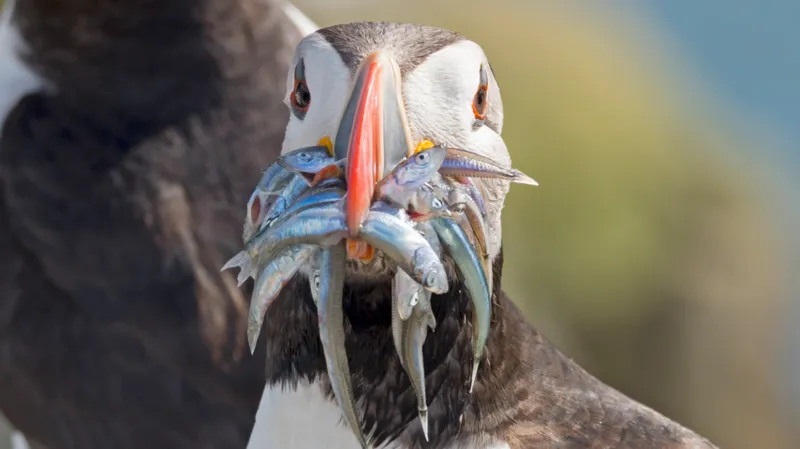
Sandeel, a group of small, eel-like fish species, plays a significant role in the marine food chain despite not being caught for culinary consumption. It is a primary food source for larger fish species such as cod and haddock, as well as for seabirds like puffins and kittiwakes. The fish, which is mainly used in animal feed and fish oil production, has become a point of contention in the post-Brexit fishing dispute between the UK and the EU.
Under the 2021 post-Brexit trade deal, sandeel is classified as a jointly managed fish stock, meaning both the UK and EU share responsibility for regulating its catch. The UK government, in a move aimed at protecting marine biodiversity, implemented a ban on fishing sandeel in English waters in March last year, following similar actions by the Scottish government. The ban was put in place to prevent overfishing and protect the North Sea ecosystem, particularly given the importance of sandeel as a food source for other marine species.
The move was welcomed by conservation groups, who had long advocated for stronger protection measures for marine life. Under the leadership of Prime Minister Rishi Sunak’s Conservative government, the ban was introduced and has been upheld by Sir Keir Starmer’s Labour government since taking office in July.
However, the ban has been met with fierce opposition from Danish fishermen, who rely on sandeel for commercial purposes such as selling it to animal feed and fish oil producers. Under the trade agreement, Denmark holds the right to catch the majority of the EU’s share of sandeel in UK waters, and the UK’s fishing restrictions have sparked outrage among Danish fishing communities. They argue that the ban undermines their livelihoods and breaches the terms of the post-Brexit trade deal.
As the dispute heads for arbitration in the Permanent Court of Arbitration, the outcome will have far-reaching implications, not only for the fishing industry but also for the broader relationship between the UK and the EU, particularly as the two sides prepare for further negotiations on catch limits and other trade matters in the coming months.
Small fish, big row
The central issue of the ongoing trade dispute between the UK and the EU revolves around whether the UK’s decision to restrict trawlers from fishing sandeel in its waters for conservation reasons unfairly limits the EU’s agreed fishing rights. The European Union argues that the geographical scope of the UK’s ban is disproportionate, citing scientific modeling on fish stock levels that it believes do not justify such a wide-reaching ban. The EU also highlights the economic and social impacts on Danish fishing communities, which rely on sandeel fishing for commercial purposes.
In its response, the UK has defended its decision, asserting that the scientific advice behind the ban is sound and that the EU has not presented a better alternative model for managing sandeel stocks. Furthermore, the UK points out that the trade agreement between the UK and the EU explicitly requires both sides to consider the impact of fishing on marine biodiversity, which it argues justifies the conservation measures taken.
The UK’s decision to maintain the ban has garnered significant support from a broad coalition, including conservation groups, various political parties, and even committed Brexiteers. This coalition argues that protecting marine life and seabird populations is crucial, and the ban serves an important ecological purpose. In fact, the renewable energy industry has also thrown its weight behind the ban, arguing that it contributes to seabird “resilience” and facilitates the development of offshore wind farms while still meeting conservation targets.
While the sandeel fishing industry is relatively small—worth an estimated £45 million annually—the outcome of this dispute will be closely watched for its broader implications. It will serve as a test case for how the UK’s right to implement conservation measures will be weighed against the economic rights of EU fishing communities. The court’s decision could set a precedent for how future disputes between the UK and the EU are resolved under the post-Brexit trade agreement.
Courtesy: ITV News
References
- ^ “Largest Countries In Europe 2020”. worldpopulationreview.com. Archived from the original on 8 July 2022. Retrieved 30 July 2022.
- ^ Jump up to:a b c “World Population Prospects 2022”. United Nations Department of Economic and Social Affairs, Population Division. Retrieved 17 July 2022.
- ^ Jump up to:a b c “World Population Prospects 2022: Demographic indicators by region, subregion and country, annually for 1950-2100” (XSLX) (“Total Population, as of 1 July (thousands)”). United Nations Department of Economic and Social Affairs, Population Division. Retrieved 17 July 2022.
- ^ “GDP PPP, current prices”. International Monetary Fund. 2022. Archived from the original on 22 January 2021. Retrieved 16 January 2022.
- ^ “GDP Nominal, current prices”. International Monetary Fund. 2022. Archived from the original on 25 February 2017. Retrieved 16 January 2022.
- ^ “Nominal GDP per capita”. International Monetary Fund. 2022. Archived from the original on 11 January 2020. Retrieved 16 January 2022.
- ^ “Reports”. Human Development Reports. Archived from the original on 9 July 2012. Retrieved 21 July 2017.
- ^ Jump up to:a b c d e f g Analysis (19 December 2011). “Global religious landscape” (PDF). Pewforum.org. Archived (PDF) from the original on 23 March 2018. Retrieved 17 August 2012.
- ^ “Demographia World Urban Areas” (PDF). Demographia. Archived (PDF) from the original on 3 May 2018. Retrieved 28 October 2020.
- ^ “Europe”. Encyclopædia Britannica. Archived from the original on 30 March 2019. Retrieved 30 July 2022.
- ^ “Europe: Human Geography | National Geographic Society”. education.nationalgeographic.org. Retrieved 4 February 2023.
- ^ National Geographic Atlas of the World (7th ed.). Washington, DC: National Geographic. 1999. ISBN 978-0-7922-7528-2. “Europe” (pp. 68–69); “Asia” (pp. 90–91): “A commonly accepted division between Asia and Europe … is formed by the Ural Mountains, Ural River, Caspian Sea, Caucasus Mountains, and the Black Sea with its outlets, the Bosporus and Dardanelles.”
- ^ Lewis & Wigen 1997, p. 226
- ^ Covert, Kim (2011). Ancient Greece: Birthplace of Democracy. Capstone. p. 5. ISBN 978-1-4296-6831-6. Archived from the original on 27 July 2022. Retrieved 30 July 2022.
Ancient Greece is often called the cradle of western civilization. … Ideas from literature and science also have their roots in ancient Greece.
- ^ Jump up to:a b National Geographic, 534.
- ^ Jump up to:a b “History of the European Union 1945–59”. european-union.europa.eu. Archived from the original on 23 April 2022. Retrieved 16 April 2022.
- ^ “The European union—a federation or a confederation?” (PDF). Archived (PDF) from the original on 19 March 2022. Retrieved 30 July 2022.
- ^ “Qrakh. Thraciae Veteris Typus. Ex conatibus Geographicis Abrah. Ortelij. Cum Imp. Et Belgico privilegio decennali. 1585”. 15 February 1585.
- ^ “Greek goddess Europa adorns new five-euro note”. BBC News. 10 January 2013. Retrieved 21 March 2024.
- ^ Jump up to:a b M. L. West; West, Morris (2007). Indo-European Poetry and Myth. OUP Oxford. p. 185. ISBN 978-0-19-928075-9. Archived from the original on 22 January 2021. Retrieved 30 July 2022.
- ^ FitzRoy, Charles (2015). The Rape of Europa: The Intriguing History of Titian’s Masterpiece. Bloomsbury Publishing. pp. 52–. ISBN 978-1-4081-9211-5. Archived from the original on 20 March 2022. Retrieved 30 July 2022.
- ^ Astour, Michael C. (1967). Hellenosemitica: An Ethnic and Cultural Study in West Semitic Impact on Mycenaean Greece. Brill Archive. p. 128. GGKEY:G19ZZ3TSL38. Archived from the original on 20 March 2022. Retrieved 30 July 2022.
- ^ Jump up to:a b “Europe – Origin and meaning of the name Europe by Online Etymology Dictionary”. www.etymonline.com. Archived from the original on 17 September 2017. Retrieved 30 July 2022.
- ^ Jump up to:a b Beekes, Robert (2004). “Kadmos and Europa, and the Phoenicians” (PDF). Kadmos. 43 (1): 168–69. doi:10.1515/kadm.43.1.167. ISSN 0022-7498. S2CID 162196643. Archived (PDF) from the original on 1 November 2021. Retrieved 30 July 2022.
- ^ M. L. West (1997). The east face of Helicon: west Asiatic elements in Greek poetry and myth. Oxford: Clarendon Press. p. 451. ISBN 978-0-19-815221-7..
- ^ Davidson, Roderic H. (1960). “Where is the Middle East?”. Foreign Affairs. 38 (4): 665–675. doi:10.2307/20029452. JSTOR 20029452. S2CID 157454140.
- ^ Jump up to:a b “Europe”. Microsoft Encarta Online Encyclopaedia 2007. Archived from the original on 28 October 2009. Retrieved 27 December 2007.
- ^ “Cyprus”. The World Factbook. Central Intelligence Agency. 7 August 2024. Retrieved 13 August 2024.
- ^ Falconer, William; Falconer, Thomas. Dissertation on St. Paul’s Voyage Archived 2017-03-27 at the Wayback Machine, BiblioLife (BiblioBazaar), 1872. (1817.), p. 50, ISBN 1-113-68809-2 These islands Pliny, as well as Strabo and Ptolemy, included in the African sea
- ^ “Europe – Noun”. Princeton University. Archived from the original on 15 July 2014. Retrieved 9 June 2008.
- ^ Histories 4.38. C.f. James Rennell, The geographical system of Herodotus examined and explained, Volume 1, Rivington 1830, p. 244
- ^ Herodotus, 4:45
- ^ Strabo Geography 11.1
- ^ Franxman, Thomas W. (1979). Genesis and the Jewish antiquities of Flavius Josephus. Pontificium Institutum Biblicum. pp. 101–102. ISBN 978-88-7653-335-8.
- ^ W. Theiler, Posidonios. Die Fragmente, vol. 1. Berlin: De Gruyter, 1982, fragm. 47a.
- ^ I. G. Kidd (ed.), Posidonius: The commentary, Cambridge University Press, 2004, ISBN 978-0-521-60443-7, p. 738 Archived 1 August 2020 at the Wayback Machine.
- ^ Geographia 7.5.6 (ed. Nobbe 1845, vol. 2 Archived 24 May 2020 at the Wayback Machine, p. 178) Καὶ τῇ Εὐρώπῃ δὲ συνάπτει διὰ τοῦ μεταξὺ αὐχένος τῆς τε Μαιώτιδος λίμνης καὶ τοῦ Σαρματικοῦ Ὠκεανοῦ ἐπὶ τῆς διαβάσεως τοῦ Τανάϊδος ποταμοῦ. “And [Asia] is connected to Europe by the land-strait between Lake Maiotis and the Sarmatian Ocean where the river Tanais crosses through.”
- ^ Jump up to:a b J. G. A. Pocock (2002). “Some Europes in Their History”. In Pagden, Anthony (ed.). The Idea of Europe From Antiquity to the European Union. Cambridge University Press. pp. 57–61. doi:10.1017/CBO9780511496813.003. ISBN 978-0511496813. Archived from the original on 23 March 2022. Retrieved 30 July 2022.
- ^ Norman F. Cantor, The Civilization of the Middle Ages, 1993, “”Culture and Society in the First Europe”, pp185ff.
- ^ Dawson, Christopher; Olsen, Glenn (1961). Crisis in Western Education (reprint ed.). CUA Press. p. 108. ISBN 978-0-8132-1683-6.
- ^ Noted by Cantor, 1993:181.
- ^ J. G. A. Pocock. “Western historiography and the problem of “Western” history” (PDF). United Nations. pp. 5–6. Archived (PDF) from the original on 13 June 2022. Retrieved 30 July 2022.
- ^ Philipp Johann von Strahlenberg (1730). Das Nord-und Ostliche Theil von Europa und Asia (in German). p. 106.
- ^ Davies, Norman (1996). Europe: A History. Oxford University Press. p. 8. ISBN 978-0-19-820171-7. Archived from the original on 1 August 2020. Retrieved 23 August 2010.
- ^ “Boundary of Europe and Asia along Urals” (in Russian). Archived from the original on 8 January 2012.
- ^ Peter Simon Pallas, Journey through various provinces of the Russian Empire, vol. 3 (1773)
- ^ Douglas W. Freshfield, “Journey in the Caucasus Archived 2020-08-01 at the Wayback Machine“, Proceedings of the Royal Geographical Society, Volumes 13–14, 1869. Cited as de facto convention by Baron von Haxthausen, Transcaucasia (1854); review Dublin University Magazine
- ^ “Europe”[dead link], Brockhaus and Efron Encyclopedic Dictionary, 1906
- ^ “Do we live in Europe or in Asia?” (in Russian). Archived from the original on 18 February 2018. Retrieved 30 July 2022.
- ^ Orlenok V. (1998). “Physical Geography” (in Russian). Archived from the original on 16 October 2011.
- ^ Tutin, T.G.; Heywood, V.H.; Burges, N.A.; Valentine, D.H.; Walters, S.M.; Webb, D.A. (1964). Flora Europaea, Volume 1: Lycopodiaceae to Platanaceae. Cambridge: Cambridge University Press. ISBN 978-0-521-06661-7.
- ^ Tutin, Thomas Gaskell (1993). Flora Europaea, Volume 1: Psilotaceae to Platanaceae (2nd ed.). Cambridge New York Melbourne [etc.]: Cambridge University Press. ISBN 978-0-521-41007-6.
- ^ E.M. Moores, R.W. Fairbridge, Encyclopedia of European and Asian regional geology, Springer, 1997, ISBN 978-0-412-74040-4, p. 34: “most Soviet geographers took the watershed of the Main Range of the Greater Caucasus as the boundary between Europe and Asia.”
- ^ Lewis & Wigen (1997), p. ?.
- ^ Jump up to:a b Posth; Yu; Ghalichi (2023). “Palaeogenomics of Upper Palaeolithic to Neolithic European hunter-gatherers”. Nature. 615 (2 March 2023): 117–126. Bibcode:2023Natur.615..117P. doi:10.1038/s41586-023-05726-0. PMC 9977688. PMID 36859578.
- ^ “Quaternary Period”. National Geographic. 6 January 2017. Archived from the original on 29 November 2020. Retrieved 30 July 2022.
- ^ “How long can we expect the present Interglacial period to last?”. U.S. Department of the Interior. Archived from the original on 26 July 2022. Retrieved 30 July 2022.
- ^ A. Vekua; D. Lordkipanidze; G.P. Rightmire; J. Agusti; R. Ferring; G. Maisuradze; et al. (2002). “A new skull of early Homo from Dmanisi, Georgia”. Science. 297 (5578): 85–89. Bibcode:2002Sci…297…85V. doi:10.1126/science.1072953. PMID 12098694. S2CID 32726786.
- ^ The million year old tooth from Archived 22 September 2021 at the Wayback Machine Atapuerca, Spain, found in June 2007
- ^ Strickland, Ashley (10 October 2018). “Bones reveal Neanderthal child was eaten by a giant bird”. CNN. Archived from the original on 7 July 2022. Retrieved 30 July 2022.
- ^ “Neanderthals Died Out 10,000 Years Earlier Than Thought, With Help From Modern Humans”. National Geographic. 21 August 2014. Archived from the original on 18 February 2021.
- ^ National Geographic, 21.
- ^ Fleming, Nic (2022). “My work digging up the shelters of our ancestors”. Nature. 606 (7916): 1035. Bibcode:2022Natur.606.1035F. doi:10.1038/d41586-022-01593-3. PMID 35676354. S2CID 249520231.
- ^ Fu, Qiaomei; et al. (23 October 2014). “The genome sequence of a 45,000-year-old modern human from western Siberia”. Nature. 514 (7523): 445–449. Bibcode:2014Natur.514..445F. doi:10.1038/nature13810. hdl:10550/42071. PMC 4753769. PMID 25341783.
- ^ 42.7–41.5 ka (1σ CI). Douka, Katerina; et al. (2012). “A new chronostratigraphic framework for the Upper Palaeolithic of Riparo Mochi (Italy)”. Journal of Human Evolution. 62 (2): 286–299. Bibcode:2012JHumE..62..286D. doi:10.1016/j.jhevol.2011.11.009. PMID 22189428.
- ^ Borza, E.N. (1992). In the Shadow of Olympus: The Emergence of Macedon. Princeton University Press. p. 58. ISBN 978-0-691-00880-6. Archived from the original on 1 August 2020. Retrieved 30 July 2022.
- ^ Scarre, Chris (1996). Fagan, Brian M. (ed.). The Oxford Companion to Archaeology. Oxford University Press. pp. 215–216. ISBN 978-0-19-507618-9.
- ^ Atkinson, R.J.C., Stonehenge (Penguin Books, 1956)
- ^ Peregrine, Peter Neal; Ember, Melvin, eds. (2001). “European Megalithic”. Encyclopedia of Prehistory. Vol. 4. Springer. pp. 157–184. ISBN 978-0-306-46258-0.
- ^ Jump up to:a b Haak, Wolfgang; Lazaridis, Iosif; Patterson, Nick; Rohland, Nadin; Mallick, Swapan; Llamas, Bastien; Brandt, Guido; Nordenfelt, Susanne; Harney, Eadaoin; Stewardson, Kristin; Fu, Qiaomei (11 June 2015). “Massive migration from the steppe was a source for Indo-European languages in Europe”. Nature. 522 (7555): 207–211. arXiv:1502.02783. Bibcode:2015Natur.522..207H. doi:10.1038/nature14317. ISSN 0028-0836. PMC 5048219. PMID 25731166.
- ^ “When the First Farmers Arrived in Europe, Inequality Evolved”. Scientific American. 1 July 2020.
- ^ Gibbons, Ann (21 February 2017). “Thousands of horsemen may have swept into Bronze Age Europe, transforming the local population”. Science.
- ^ “Ancient Greece”. British Museum. Archived from the original on 15 June 2012.
- ^ “Periods – School of Archaeology”. University of Oxford. Archived from the original on 19 November 2018. Retrieved 25 December 2018.
- ^ Short, John R. (1987). An Introduction to Urban Geography. Routledge. p. 10. ISBN 978-0-7102-0372-4. Archived from the original on 20 March 2022. Retrieved 30 July 2022.
- ^ Jump up to:a b c Daly, Jonathan (2013). The Rise of Western Power: A Comparative History of Western Civilization. A&C Black. pp. 7–9. ISBN 978-1-4411-1851-6. Archived from the original on 28 April 2022. Retrieved 30 July 2022.
- ^ Dunn, John (1994). Democracy: the unfinished journey 508 BCE – 1993 CE. Oxford University Press. ISBN 978-0-19-827934-1.
- ^ National Geographic, 76.
- ^ Heath, Thomas Little (1981). A History of Greek Mathematics, Volume I. Dover Publications. ISBN 978-0-486-24073-2.
- ^ Heath, Thomas Little (1981). A History of Greek Mathematics, Volume II. Dover publications. ISBN 978-0-486-24074-9.
- ^ Pedersen, Olaf. Early Physics and Astronomy: A Historical Introduction. 2nd edition. Cambridge: Cambridge University Press, 1993.
- ^ Strauss, Barry (2005). The Battle of Salamis: The Naval Encounter That Saved Greece – and Western Civilization. Simon and Schuster. pp. 1–11. ISBN 978-0-7432-7453-1. Archived from the original on 23 June 2022. Retrieved 30 July 2022.
- ^ Jump up to:a b McEvedy, Colin (1961). The Penguin Atlas of Medieval History. Penguin Books.
- ^ National Geographic, 123.
- ^ Foster, Sally M., Picts, Gaels, and Scots: Early Historic Scotland. Batsford, London, 2004. ISBN 0-7134-8874-3
- ^ Williams, Stephen; Friell, Gerard (2005). Theodosius: The Empire at Bay. Routledge. p. 105. ISBN 978-1-135-78262-7. Archived from the original on 30 May 2022. Retrieved 30 July 2022.
- ^ Hadas, Moses (1950). A History of Greek Literature. Columbia University Press. pp. 273, 327. ISBN 978-0-231-01767-1. Archived from the original on 21 May 2022. Retrieved 30 July 2022.
- ^ Laiou & Morisson 2007, pp. 130–131; Pounds 1979, p. 124.
- ^ Journal of the History of Ideas, Vol. 4, No. 1. (January 1943), pp. 69–74.
- ^ Norman F. Cantor, The Medieval World 300 to 1300.
- ^ National Geographic, 135.
- ^ Hunter, Shireen; et al. (2004). Islam in Russia: The Politics of Identity and Security. M.E. Sharpe. p. 3.
(..) It is difficult to establish exactly when Islam first appeared in Russia because the lands that Islam penetrated early in its expansion were not part of Russia at the time, but were later incorporated into the expanding Russian Empire. Islam reached the Caucasus region in the middle of the seventh century as part of the Arab conquest of the Iranian Sassanian Empire.
- ^ Kennedy, Hugh (1995). “The Muslims in Europe”. In McKitterick, Rosamund, The New Cambridge Medieval History: c. 500 – c. 700, pp. 249–272. Cambridge University Press. 052136292X.
- ^ National Geographic, 143–145.
- ^ National Geographic, 162.
- ^ National Geographic, 166.
- ^ Bulliet et al. 2011, p. 250.
- ^ Brown, Anatolios & Palmer 2009, p. 66.
- ^ Gerald Mako, “The Islamization of the Volga Bulghars: A Question Reconsidered”, Archivum Eurasiae Medii Aevi 18, 2011, 199–223.
- ^ Marc’Antonio Bragadin, Storia delle Repubbliche marinare, Odoya, Bologna 2010, 240 pp., ISBN 978-88-6288-082-4
- ^ G. Benvenuti, Le Repubbliche Marinare. Amalfi, Pisa, Genova, Venezia, Newton & Compton editori, Roma 1989
- ^ Jump up to:a b National Geographic, 158.
- ^ National Geographic, 186.
- ^ National Geographic, 192.
- ^ National Geographic, 199.
- ^ Laiou & Morisson 2007, pp. 130–131; Pounds 1979, p. 124.
- ^ Duiker, William J.; Spielvogel, Jackson J. (2010). The Essential World History. Cengage Learning. p. 330. ISBN 978-0-495-90227-0. Archived from the original on 11 May 2013. Retrieved 20 January 2013.
The Byzantine Empire also interacted with the world of Islam to its east and the new European civilization of the west. Both interactions proved costly and ultimately fatal.
- ^ Findlay, Ronald (2006). Eli Heckscher, International Trade, And Economic History. MIT Press. pp. 178–179. ISBN 978-0-262-06251-0. Archived from the original on 11 May 2013. Retrieved 20 January 2013.
These Christian allies did not accept the authority of Byzantium, and the Fourth Crusade that sacked Constantinople and established the so-called Latin Empire that lasted until 1261 was a fatal wound from which the empire never recovered until its fall at the hands of the Ottoman Turks in 1453 (Queller and Madden 1997).
- ^ Browning, Robert (1992). The Byzantine Empire (Revised ed.). CUA Press. p. 253. ISBN 978-0-8132-0754-4. Retrieved 20 January 2013.
And though the final blow was struck by the Ottoman Turks, it can plausibly be argued that the fatal injury was inflicted by the Latin crusaders in 1204.
- ^ Byfield, Ted (2008). A Glorious Disaster: A.D. 1100 to 1300: The Crusades: Blood, Valor, Iniquity, Reason, Faith. Christian History Project. p. 136. ISBN 978-0-9689873-7-7. Archived from the original on 11 May 2013. Retrieved 20 January 2013.
continue to stand for another 250 before ultimately falling to the Muslim Turks, but it had been irrevocably weakened by the Fourth Crusade.
- ^ Golna, Cornelia (2004). City of Man’s Desire: A Novel of Constantinople. Go-Bos Press. p. 424. ISBN 978-90-804114-4-9. Archived from the original on 11 May 2013. Retrieved 20 January 2013.
1204 The Fourth Crusade sacks Constantinople, destroying and pillaging many of its treasures, fatally weakening the empire both economically and militarily
- ^ Powell, John (2001). Magill’s Guide to Military History: A-Cor. Salem Press. ISBN 978-0-89356-015-7. Archived from the original on 11 May 2013. Retrieved 20 January 2013.
However, the fifty-seven years of plunder that followed made the Byzantine Empire, even when it retook the capital in 1261, genuinely weak. Beginning in 1222, the empire was further weakened by a civil war that lasted until 1355. … When the Ottomans overran their lands and besieged Constantinople in 1453, sheer poverty and weakness were the causes of the capital city’s final fall.
- ^ Irvin, Dale T. (2002). History of the World Christian Movement: Volume 1: Earliest Christianity To 1453. Continuum International Publishing Group. p. 405. ISBN 978-0-567-08866-6. Archived from the original on 11 May 2013. Retrieved 20 January 2013.
Not only did the fourth crusade further harden the resentments Greek-speaking Christians felt toward the Latin West, but it further weakened the empire of Constantinople, many say fatally so. After the restoration of Greek imperial rule the city survived as the capital of Byzantium for another two centuries, but it never fully recovered.
- ^ Frucht, Richard C. (2004). Eastern Europe: An Introduction to the People, Lands, and Culture. ABC-CLIO. p. 856. ISBN 978-1-57607-800-6. Archived from the original on 11 May 2013. Retrieved 20 January 2013.
Although the empire was revived, the events of 1204 had so weakened Byzantium that it was no longer a great power.
- ^ Duiker, William J.; Spielvogel, Jackson J. (2010). The Essential World History. Cengage Learning. p. 386. ISBN 978-0-495-90227-0. Archived from the original on 11 May 2013. Retrieved 20 January 2013.
Later they established themselves in the Anatolian peninsula at the expense of the Byzantine Empire. … The Byzantines, however, had been severely weakened by the sack of Constantinople in the Fourth Crusade (in 1204) and the Western occupation of much of the empire for the next half century.
- ^ National Geographic, 211.