


China Sends Vice-President Han Zheng to Trump’s Inauguration: A Historic First
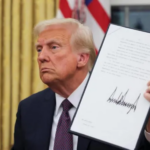
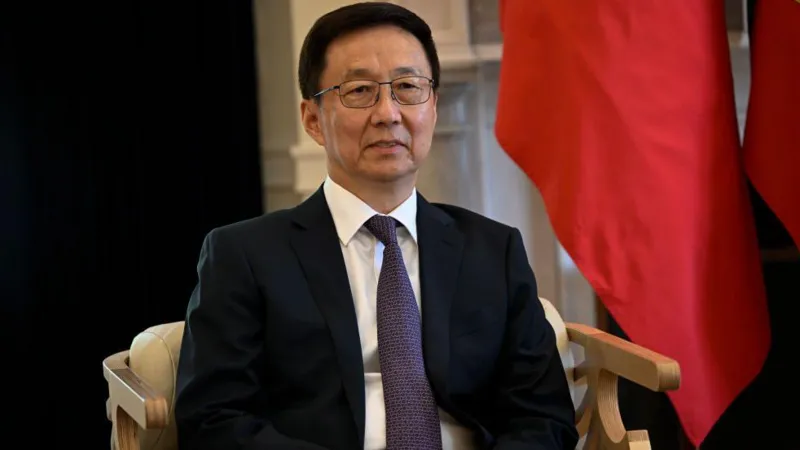
China will send Vice-President Han Zheng to attend the inauguration of U.S. President-elect Donald Trump on Monday, marking the first time that a senior Chinese leader will witness the swearing-in of a U.S. president. This move comes after an invitation from Trump to Chinese President Xi Jinping, a notable departure from tradition, as foreign leaders typically do not attend U.S. presidential inaugurations.
The attendance of Han Zheng signals China’s interest in fostering a cooperative relationship with the incoming U.S. administration. Beijing has expressed its intention to work with the new U.S. government to “find the right way for the two countries to get along with each other in the new era.” However, the Trump presidency is expected to bring new challenges, particularly in the form of trade tensions. Trump has threatened to impose additional tariffs on Chinese-made imports, a move that could further strain the already delicate trade relationship between the two countries.
In the wake of this uncertainty, Beijing is preparing for a more combative approach from Washington, especially with figures like Marco Rubio, Trump’s nominee for Secretary of State, labeling China as “the largest, most advanced adversary America has ever faced.” As tensions rise, both nations will need to navigate the complexities of their relationship in the coming years.
Xi Sends Vice-President Han Zheng to Trump’s Inauguration: A Calculated Move in U.S.-China Relations
For the first time, China will send Vice-President Han Zheng to witness the inauguration of U.S. President-elect Donald Trump on January 20, marking a notable shift in Beijing’s approach to international political ceremonies. While Xi Jinping has never attended an inauguration or coronation, choosing instead to send representatives, Han’s presence underscores China’s serious interest in engaging with the new U.S. administration. Han’s attendance, however, is also a clear sign that China intends to avoid playing a secondary role in the “Trump show.”
Xi’s decision reflects his desire to establish a working relationship with Trump without appearing subservient. According to Neil Thomas, a fellow in Chinese politics at the Asia Society Policy Institute, sending Han allows China to signal its willingness to engage with Trump on a deal-making basis, while maintaining its own diplomatic stature. This decision is significant, as Beijing typically opts for sending its ambassadors to such events, as seen during the last two U.S. inaugurations in 2017 and 2021.
The Chinese government’s cautious approach to Trump’s inauguration stands in contrast to its willingness to send high-level officials to similar ceremonies in other countries. Han attended Indonesian President Prabowo Subianto’s inauguration in October, and his predecessor, Wang Qishan, represented China at the inaugurations of Philippine President Ferdinand Marcos Jr. and Brazilian President Lula da Silva in recent years.
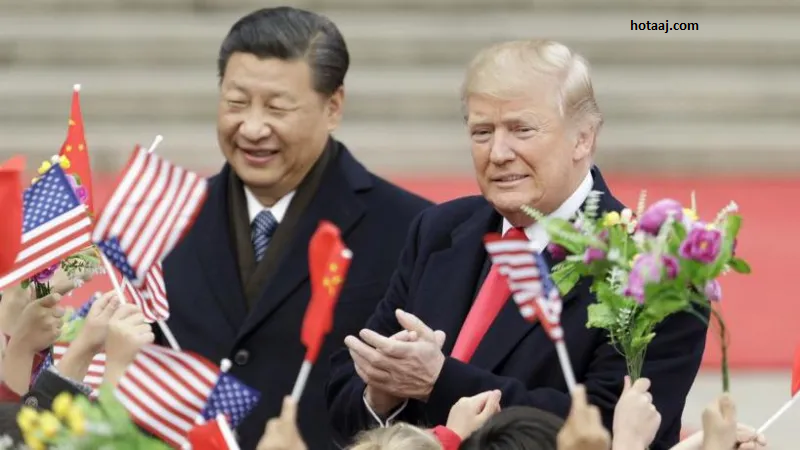
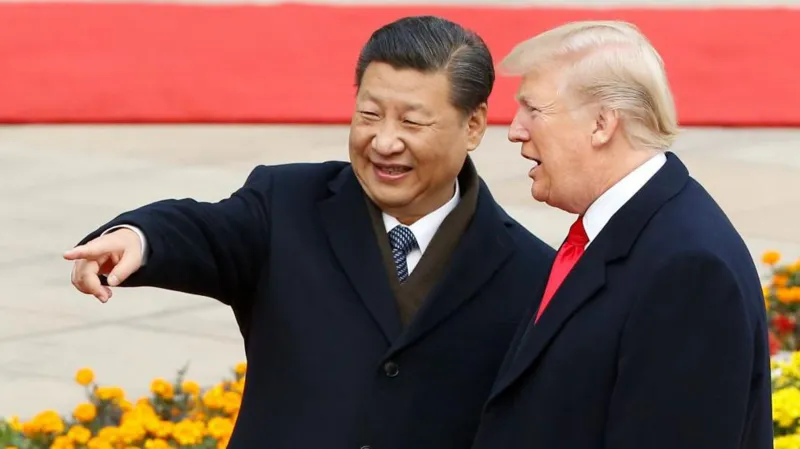
Trump’s outreach to Xi, which included inviting him to the inauguration, represents a strategic effort to maintain open dialogue with both allies and adversaries. According to Trump spokesperson Karoline Leavitt, the invitation illustrates the President’s commitment to creating dialogues with nations regardless of their relationship with the U.S., including adversaries and competitors. This is also seen as an attempt to reinforce Trump’s image as someone with the ability to influence Xi’s decision-making, reinforcing a sense of a “special relationship” between the two leaders.
Despite these efforts, there were internal discussions within Trump’s team about sending a higher-ranking official to represent China. Some advisors suggested that Cai Qi, Xi’s right-hand man, could attend instead of Han or Foreign Minister Wang Yi. However, as Vice-President, Han Zheng holds a senior position in China’s political hierarchy, and his decision to attend is considered a gesture of respect toward Trump, according to Chong Ja-Ian, a non-resident scholar at Carnegie China. This carefully chosen diplomatic move reveals the delicate balance China is trying to strike in its relations with the incoming U.S. administration.
Han Zheng’s Role in China’s Diplomatic Strategy for Trump’s Inauguration
Han Zheng, appointed Vice-President of China in March 2023, holds a significant role in Chinese politics as the “number eight” leader, ranking just below the seven members of the Politburo Standing Committee. His appointment marks a step down from his earlier position as a full member of the Politburo Standing Committee until October 2022, when Xi Jinping began his third term and appointed his most trusted deputies to senior roles.
Having spent most of his political career in Shanghai, Han is no stranger to foreign affairs. In his capacity as vice-president, he has led efforts to promote China’s Belt and Road initiative, a major global trade and infrastructure project, and was also instrumental in overseeing the 2022 Beijing Winter Olympics. His experience in international diplomacy makes him a logical choice to represent China at high-profile events like Trump’s inauguration.
However, Han’s absence from the Politburo Standing Committee may have played a role in Beijing’s decision to send him rather than a more senior leader. This decision allows Xi Jinping and the Chinese Communist Party (CCP) to maintain a delicate balance in U.S.-China relations. Should relations between the two countries take a turn for the worse, sending Han—a leader not seen as part of Xi’s innermost circle—provides the CCP with a degree of distance from Trump.
Prof. Chong Ja-Ian, a non-resident scholar at Carnegie China, suggests that this strategic move enables Beijing to engage with Trump while still keeping a buffer between its top leadership and the potentially contentious relationship with the new U.S. administration.
Neil Thomas, a fellow at the Asia Society Policy Institute, further underscores that while Han is trusted by Xi to undertake the mission, he is not considered a key ally. This gives China the flexibility to shift blame onto Han if the engagement with Trump leads to any diplomatic embarrassment. By sending Han, China ensures it retains some control over its interactions with the U.S. while minimizing the potential political risks for Xi and the CCP.
Courtesy: Firstpost
References
- ^ “Association for Conversation of Hong Kong Indigenous Languages Online Dictionary”. hkilang.org. 1 July 2015. Archived from the original on 1 July 2015. Retrieved 12 September 2019.
- ^ Wong 2023, p. 21.
- ^ “Profile: Chinese Vice President Xi Jinping”. Radio Free Europe/Radio Liberty. 7 November 2012. Archived from the original on 19 October 2013. Retrieved 26 August 2013.
- ^ 與丈夫習仲勛相伴58年 齊心:這輩子無比幸福 [With her husband Xi Zhongxun for 58 years: very happy in this life] (in Chinese). Xinhua News Agency. 28 April 2009. Archived from the original on 28 January 2013. Retrieved 18 March 2013.
- ^ Chan, Alfred L. (24 March 2022). “Childhood and Youth: Privilege and Trauma, 1953–1979”. Xi Jinping: Political Career, Governance, and Leadership, 1953–2018. Oxford University Press. ISBN 978-0-19-761525-6. Archived from the original on 27 February 2024. Retrieved 12 January 2024.
- ^ Takahashi, Tetsushi (1 June 2002). “Connecting the dots of the Hong Kong law and veneration of Xi”. Nikkei Shimbun. Archived from the original on 3 December 2021. Retrieved 23 October 2020.
- ^ Jump up to:a b c d e Osnos, Evan (30 March 2015). “Born Red”. The New Yorker. Archived from the original on 4 October 2019. Retrieved 11 September 2019.
- ^ Li, Cheng. “Xi Jinping’s Inner Circle (Part 2: Friends from Xi’s Formative Years)” (PDF). Hoover Institution. pp. 6–22. Archived (PDF) from the original on 26 September 2020. Retrieved 15 July 2020.
- ^ Tisdall, Simon (29 December 2019). “The power behind the thrones: 10 political movers and shakers who will shape 2020”. The Guardian. ISSN 0029-7712. Archived from the original on 5 November 2021. Retrieved 16 January 2020.
- ^ Wei, Lingling (27 February 2018). “Who Is ‘Uncle He?’ The Man in Charge of China’s Economy”. The Wall Street Journal. Archived from the original on 3 October 2021. Retrieved 16 January 2020.
- ^ Bouée 2010, p. 93.
- ^ 习近平:"我坚信我的父亲是一个大英雄" [Xi Jinping: “I firmly believe my father is a great hero”] (in Chinese). State Administration of Press, Publication, Radio, Film and Television. 14 October 2013. Archived from the original on 5 March 2018. Retrieved 6 March 2018. 女儿习和平……在"文化大革命"中被迫害致死,是习仲勋难以抹去的心痛。 [His daughter Xi Heping… was persecuted to death during the “Cultural Revolution”, which is a heartache that Xi Zhongxun could not erase.]
- ^ Buckley, Chris; Tatlow, Didi Kirsten (24 September 2015). “Cultural Revolution Shaped Xi Jinping, From Schoolboy to Survivor”. The New York Times. Archived from the original on 5 March 2018. Retrieved 6 March 2018.
- ^ Shi, Z. C. (2017). 习近平的七年知青岁月 [Xi Jinping’s Seven Years as an Educated Youth] (in Chinese). China Central Party School Press. p. [page needed]. ISBN 978-7-5035-6163-4. Retrieved 18 August 2024.
- ^ 不忘初心:是什么造就了今天的习主席? [What Were His Original Intentions? The President Xi of Today]. Youku (in Simplified Chinese). 30 January 2018. Archived from the original on 30 January 2018. Retrieved 30 January 2018.
- ^ Jump up to:a b c d Page, Jeremy (23 December 2020). “How the U.S. Misread China’s Xi: Hoping for a Globalist, It Got an Autocrat”. The Wall Street Journal. ISSN 0099-9660. Archived from the original on 24 December 2020. Retrieved 25 December 2020.
- ^ 《足迹》第1集:过"五关"有多难 [“Footprints” Episode 1: How difficult is it to pass the “Five Gates”]. Xinhua News Agency (in Chinese). 23 May 2022. Archived from the original on 18 August 2024. Retrieved 18 August 2024.
- ^ 习近平的七年知青岁月 [Xi Jinping’s Seven Years as an Educated Youth]. China News Service (in Chinese). 1 July 2018. Archived from the original on 18 August 2024. Retrieved 18 August 2024.
- ^ Lim, Louisa (9 November 2012). “For China’s Rising Leader, A Cave Was Once Home”. NPR. Archived from the original on 16 June 2018. Retrieved 27 October 2018.
- ^ Demick, Barbara; Pierson, David (14 February 2012). “China’s political star Xi Jinping is a study in contrasts”. Toronto Star. Archived from the original on 13 October 2017. Retrieved 24 October 2017.
- ^ Matt Rivers (19 March 2018). “This entire Chinese village is a shrine to Xi Jinping”. CNN. Archived from the original on 26 February 2021. Retrieved 11 February 2021.
- ^ Jump up to:a b 習近平扶貧故事 [Xi Jinping’s Poverty Alleviation Story] (in Chinese). Sino United Electronic Publishing Limited. 2021. pp. 19–61. ISBN 978-988-8758-27-2. Retrieved 30 August 2024.
- ^ 習近平如何改變中國 [How Xi Jinping is changing China]. China Interpretation Series (in Chinese). Linghuo wenhua shiye youxiang gongsi. 2014. p. 12. ISBN 978-986-5721-05-3. Retrieved 23 August 2024.
- ^ Chan, A. L. (2022). Xi Jinping: Political Career, Governance, and Leadership, 1953–2018. Oxford University Press. p. 33. ISBN 978-0-19-761522-5. Retrieved 23 August 2024.
- ^ “Xi Jinping 习近平” (PDF). Brookings Institution. Archived (PDF) from the original on 27 September 2021. Retrieved 14 October 2021.
- ^ Ranade, Jayadva (25 October 2010). “China’s Next Chairman – Xi Jinping”. Centre for Air Power Studies. Archived from the original on 24 July 2013. Retrieved 27 May 2012.
- ^ Chan, A. L. (2022). Xi Jinping: Political Career, Governance, and Leadership, 1953-2018. Oxford University Press. p. 34. ISBN 978-0-19-761522-5. Retrieved 23 August 2024.
- ^ 延川县志 [Yanchuan County Annals]. Shaanxi Local Chronicles Series (in Chinese). Shaanxi People’s Publishing House. 1999. p. 41. ISBN 978-7-224-05262-6. Retrieved 23 August 2024.
- ^ 红墙内的子女们 [Children Within the Red Wall] (in Chinese). Yanbian University Press. 1998. p. 468. ISBN 978-7-5634-1080-4. Retrieved 23 August 2024.
- ^ 缙麓别调(三) [Jinlu Special Tune (Part 3)] (in Chinese). Chongqing daxue dianzi yinxiang chubanshe. 2021. p. 76. ISBN 978-7-5689-2545-7. Retrieved 23 August 2024.
- ^ Pengpeng, Z. 谜一样的人生 [A Mysterious Life] (in Chinese). Zhu Peng Peng. p. 619. ISBN 978-0-9787999-2-2. Retrieved 23 August 2024.
- ^ Zhong, Wen; Zhang, Jie (2022). 习近平传 [Biography of Xi Jinping] (in Chinese). Bouden House. p. 3. ISBN 978-1-034-94892-6. Retrieved 30 August 2024.
- ^ Simon & Cong 2009, pp. 28–29.
- ^ 耿飚传 [Biography of Geng Biao] (in Chinese). People’s Liberation Army Press. 2009. ISBN 978-7-5065-5904-1. Retrieved 30 August 2024.
- ^ Guo, X. (2019). The Politics of the Core Leader in China: Culture, Institution, Legitimacy, and Power. Cambridge University Press. p. 363. ISBN 978-1-108-48049-9. Retrieved 30 August 2024.
- ^ Li, C. (2016). Chinese Politics in the Xi Jinping Era: Reassessing Collective Leadership. Brookings Institution Press. p. 338. ISBN 978-0-8157-2694-4. Retrieved 30 August 2024.
- ^ Johnson, Ian (30 September 2012). “Elite and Deft, Xi Aimed High Early in China”. The New York Times. ISSN 0362-4331. Archived from the original on 30 September 2012. Retrieved 4 April 2023.
- ^ Jump up to:a b 精准扶贫的辩证法 [The Dialectics of Targeted Poverty Alleviation] (in Chinese). Xiamen University Press. 2018. p. 59. ISBN 978-7-5615-6916-0. Retrieved 30 August 2024.
- ^ “习近平同志当县委书记时就被认为是栋梁之才” [Comrade Xi Jinping was considered a pillar of talent when he was the county party secretary]. Xinhua News Agency (in Chinese). 8 February 2018. Archived from the original on 30 August 2024. Retrieved 30 August 2024.
- ^ 决战2020:拒绝贫困 [Decisive Battle of 2020: Say No to Poverty] (in Chinese). China Democracy and Legal System Publishing House. 2016. p. 12. ISBN 978-7-5162-1125-0. Retrieved 30 August 2024.
- ^ Jump up to:a b 正定縣志 [Zhengding Chronicle] (in Chinese). China City Press. 1992. pp. 73–548. ISBN 978-7-5074-0610-8. Retrieved 30 August 2024.
- ^ 青春岁月: 当代青年小报告文学选 [Youth Years: A Selection of Contemporary Youth Reportage] (in Chinese). People’s Literature Publishing House. 1986. p. 62. Retrieved 30 August 2024.
- ^ Jump up to:a b 河北社会主义核心价值观培育践行报告 [Hebei’s Report on the Cultivation and Practice of Socialist Core Values] (in Chinese). Social Sciences Literature Press. 2023. p. 3. ISBN 978-7-5228-1618-0. Retrieved 30 August 2024.
- ^ 紅色后代 [Red Offspring] (in Chinese). Chengdu Publishing House. 1996. p. 286. ISBN 978-7-80575-946-3. Retrieved 30 August 2024.
- ^ 血脉总相连: 中国名人后代大寻踪 [Blood is Always Connected: Tracing the Descendants of Chinese Celebrities] (in Chinese). Beijing Yanshan Publishing House. 1993. p. 363. ISBN 978-7-5402-0658-1. Retrieved 30 August 2024.
- ^ 河北青年 [Hebei Youth] (in Chinese). Hebei Youth Magazine. 1984. p. 5. Retrieved 30 August 2024.
- ^ 决策论 [Decision Theory] (in Chinese). Beijing Book Co. Inc. 2018. p. 141. ISBN 978-7-226-05307-2. Retrieved 30 August 2024.
- ^ 社会的逻辑 [The Logic of Society] (in Chinese). Peking University Press. 2017. p. 17. ISBN 978-7-301-26916-9. Retrieved 30 August 2024.
- ^ Jump up to:a b “习近平与人民日报的10个故事” [10 stories about Xi Jinping and People’s Daily]. Haiwai Net (in Chinese). 15 June 2018. Archived from the original on 30 August 2024. Retrieved 30 August 2024.
- ^ Jump up to:a b “中共元老何載逝世 曾薦習近平「棟樑之才」” [He Zai, the veteran of the CCP, passed away. He once recommended Xi Jinping as a “pillar of talent”]. China Times (in Chinese). 17 November 2023. Archived from the original on 30 August 2024. Retrieved 30 August 2024.
- ^ “104岁中共元老何载逝世 曾荐习近平”栋梁之才”” [He Zai, a 104-year-old CCP veteran, passed away. He once recommended Xi Jinping as a “pillar of talent”]. Sing Tao Daily (in Chinese). 16 November 2023. Archived from the original on 30 August 2024. Retrieved 30 August 2024.
- ^ Aoyagi, W.S.A. (2017). History of Biodiesel – with Emphasis on Soy Biodiesel (1900-2017): Extensively Annotated Bibliography and Sourcebook. Soyinfo Center. p. 262. ISBN 978-1-928914-97-6. Retrieved 30 August 2024.
- ^ “˭谁能想到石家庄食品协会主席成了中国领导人” [Who would have thought that the chairman of Shijiazhuang Food Association would become the Chinese leader?]. China National Radio (in Chinese). 23 September 2015. Archived from the original on 30 August 2024. Retrieved 30 August 2024.
- ^ Zhang, Qizi (2016). 厦门城市治理体系和治理能力现代化研究 [Research on the modernization of Xiamen’s urban governance system and governance capacity]. A series of achievements of inter-academy cooperation of Chinese Academy of Social Sciences: Xiamen (in Chinese). Social Sciences Literature Press. p. 9. ISBN 978-7-5097-9562-0. Retrieved 19 September 2024.
- ^ “白鹭振翅 向风而行” [Egrets flap their wings and fly into the wind]. Xinhua News Agency (in Chinese). 25 July 2024. Archived from the original on 24 September 2024. Retrieved 19 September 2024.
- ^ “习近平同志推动厦门经济特区建设发展的探索与实践” [Comrade Xi Jinping’s exploration and practice in promoting the construction and development of Xiamen Special Economic Zone]. State Council of the People’s Republic of China (in Chinese). 26 May 2023. Retrieved 19 September 2024.
- ^ “时政长镜头丨筼筜回响” [Long shot of current affairs丨Yuanlong Echo]. Science and Technology Daily (in Chinese). 21 February 2024. Archived from the original on 24 September 2024. Retrieved 19 September 2024.
- ^ Kuhn, R.L. (2011). How China’s Leaders Think: The Inside Story of China’s Past, Current and Future Leaders. Wiley. p. 420. ISBN 978-1-118-10425-5. Retrieved 19 September 2024.
- ^ Dillon, M. (2021). China in the Age of Xi Jinping. Taylor & Francis. p. 93. ISBN 978-1-000-37096-6. Retrieved 19 September 2024.
- ^ Brown, W.N. (2021). Chasing the Chinese Dream: Four Decades of Following China’s War on Poverty. Springer Nature Singapore. p. 9. ISBN 978-981-16-0654-0. Retrieved 19 September 2024.
- ^ Brown, W.N. (2022). The Evolution of China’s Anti-Poverty Strategies: Cases of 20 Chinese Changing Lives. Springer Nature Singapore. p. 6. ISBN 978-981-19-7281-2. Retrieved 19 September 2024.
- ^ 中国脱贫攻坚精神 [China’s Spirit of Poverty Alleviation] (in Chinese). Huazhong University of Science and Technology Press. 2021. p. 74. ISBN 978-7-5680-6816-1. Retrieved 19 September 2024.
- ^ Feng, Hexia (2023). 中国的贫困治理 [Poverty Governance in China] (in Chinese). Social Sciences Literature Press. p. 11. ISBN 978-7-5228-1509-1. Retrieved 19 September 2024.
- ^ Jump up to:a b Lam, W. (2023). Xi Jinping: The Hidden Agendas of China’s Ruler for Life. Taylor & Francis. p. 21. ISBN 978-1-000-92583-8. Retrieved 19 September 2024.
- ^ Jump up to:a b Chan, A.L. (2022). Xi Jinping: Political Career, Governance, and Leadership, 1953-2018. Oxford University Press. p. 547. ISBN 978-0-19-761522-5. Retrieved 7 November 2024.
- ^ 《福州年鉴》编辑委员会 (1995). 福州年鉴 (in Chinese). 中国统计出版社. p. 16. Retrieved 7 November 2024.
- ^ Tiezzi, Shannon (4 November 2014). “From Fujian, China’s Xi Offers Economic Olive Branch to Taiwan”. The Diplomat. Archived from the original on 10 June 2016. Retrieved 17 March 2016.
- ^ 驼铃: 大众文学 (in Chinese). 驼铃杂志社. 2000. p. 45. Retrieved 7 November 2024.
- ^ Ho, Louise (25 October 2012). “Xi Jinping’s time in Zhejiang: doing the business”. South China Morning Post. Archived from the original on 29 April 2016. Retrieved 9 December 2019.
- ^ Chatwin, Jonathan (2024). The Southern Tour: Deng Xiaoping and the Fight for China’s Future. Bloomsbury Academic. ISBN 9781350435711.
- ^ Wang, Lei (25 December 2014). 习近平为官之道 拎着乌纱帽干事 [Xi Jinping’s Governmental Path – Carries Official Administrative Posts]. Duowei News (in Simplified Chinese). Archived from the original on 3 February 2015. Retrieved 7 September 2019.
- ^ Tian, Yew Lun; Chen, Laurie; Cash, Joe (11 March 2023). “Li Qiang, Xi confidant, takes reins as China’s premier”. Reuters. Archived from the original on 24 May 2023. Retrieved 24 May 2023.
- ^ 习近平任上海市委书记 韩正不再代理市委书记 [Xi Jinping is Secretary of Shanghai Municipal Party Committee – Han Zheng is No Longer Acting Party Secretary]. Sohu (in Simplified Chinese). 24 March 2007. Archived from the original on 16 October 2007. Retrieved 7 September 2019.
- ^ “China new leaders: Xi Jinping heads line-up for politburo”. BBC News. 15 November 2012. Archived from the original on 9 September 2019. Retrieved 25 August 2019.
- ^ 从上海到北京 习近平贴身秘书只有钟绍军 [From Shanghai to Beijing, Zhong Shaojun Has Been Xi Jinping’s Only Personal Secretary]. Mingjing News (in Simplified Chinese). 11 July 2013. Archived from the original on 12 June 2018. Retrieved 12 September 2019.
- ^ Lam 2015, p. 56.
- ^ 新晋政治局常委: 习近平 [Newly Appointed Member of Politburo Standing Committee: Xi Jinping]. Caijing (in Simplified Chinese). 22 October 2007. Archived from the original on 22 December 2015. Retrieved 12 September 2019.
- ^ “Wen Jiabao re-elected China PM”. Al Jazeera. 16 March 2008. Archived from the original on 13 August 2022. Retrieved 13 August 2022.
- ^ “Vice-President Xi Jinping to Visit DPRK, Mongolia, Saudi Arabia, Qatar and Yemen”. Ministry of Foreign Affairs. 5 June 2008. Archived from the original on 23 July 2011. Retrieved 20 October 2010.
- ^ Wines, Michael (9 March 2009). “China’s Leaders See a Calendar Full of Anniversaries, and Trouble”. The New York Times. ISSN 0362-4331. Archived from the original on 21 July 2016. Retrieved 8 September 2019.
- ^ Anderlini, Jamil (20 July 2012). “Bo Xilai: power, death and politics”. Financial Times. Archived from the original on 11 December 2022. Retrieved 11 January 2020.
- ^ Palmer, James (19 October 2017). “The Resistible Rise of Xi Jinping”. Foreign Policy. Archived from the original on 6 February 2020. Retrieved 11 January 2020.
- ^ Ansfield, Jonathan (22 December 2007). “Xi Jinping: China’s New Boss And The ‘L’ Word”. Newsweek. Archived from the original on 30 March 2010. Retrieved 20 October 2010.
- ^ Elegant, Simon (19 November 2007). “China’s Nelson Mandela”. Time. Archived from the original on 28 July 2009. Retrieved 8 September 2019.
- ^ Elegant, Simon (15 March 2008). “China Appoints Xi Vice President, Heir Apparent to Hu”. Bloomberg News. Archived from the original on 21 October 2012. Retrieved 20 October 2010.
- ^ Uren, David (5 October 2012). “Rudd seeks to pre-empt PM’s China white paper with his own version”. The Australian. Archived from the original on 22 November 2012. Retrieved 8 September 2019.
- ^ “Chinese VP Receives Key to the City of Montego Bay”. Jamaica Information Service. 15 February 2009. Archived from the original on 14 July 2019. Retrieved 7 September 2019.
- ^ “Chinese VP praises friendly cooperation with Venezuela, Latin America”. CCTV. Xinhua. 18 February 2009. Archived from the original on 21 October 2022. Retrieved 20 October 2022.
- ^ “Xi Jinping proposes efforts to boost cooperation with Brazil”. China Daily. 20 February 2009. Archived from the original on 6 February 2011. Retrieved 11 September 2019.
- ^ “Chinese vice president begins official visit”. Times of Malta. 22 February 2009. Archived from the original on 3 February 2020. Retrieved 11 September 2019.
- ^ Sim, Chi Yin (14 February 2009). “Chinese VP blasts meddlesome foreigners”. AsiaOne. Archived from the original on 11 July 2011. Retrieved 20 October 2010.
- ^ Lai, Jinhong (18 February 2009). 習近平出訪罵老外 外交部捏冷汗 [Xi Jinping Goes and Scolds at Foreigners, Ministry of Foreign Affairs in Cold Sweat]. United Daily News (in Simplified Chinese). Archived from the original on 21 February 2009. Retrieved 27 February 2009.
- ^ “A Journey of Friendship, Cooperation and Culture – Vice Foreign Minister Zhang Zhijun Sums Up Chinese Vice President Xi Jinping’s Trip to 5 European Countries”. Permanent Representative of China to the United Nations. 21 October 2009. Archived from the original on 3 February 2020. Retrieved 11 September 2019.
- ^ Raman, B. (25 December 2009). “China’s Cousin-Cousin Relations with Myanmar”. South Asia Analysis Group. Archived from the original on 17 March 2010. Retrieved 14 February 2012.
- ^ Bull, Alister; Chris Buckley (24 January 2012). “China leader-in-waiting Xi to visit White House next month”. Reuters. Archived from the original on 29 October 2013. Retrieved 28 October 2018.
- ^ Johnson, Kirk (15 February 2012). “Xi Jinping of China Makes a Return Trip to Iowa”. The New York Times. ISSN 0362-4331. Archived from the original on 21 June 2019. Retrieved 12 September 2019.
- ^ Beech, Hannah (15 September 2012). “China’s Heir Apparent Xi Jinping Reappears in Public After a Two-Week Absence”. Time. ISSN 0040-781X. Archived from the original on 14 August 2022. Retrieved 20 August 2022.
- ^ Jump up to:a b “China Confirms Leadership Change”. BBC News. 17 November 2012. Archived from the original on 29 July 2016. Retrieved 15 November 2012.
- ^ “Xi Jinping: China’s ‘princeling’ new leader”. Hindustan Times. 15 November 2012. Archived from the original on 28 October 2018. Retrieved 28 October 2018.
- ^ Wong, Edward (14 November 2012). “Ending Congress, China Presents New Leadership Headed by Xi Jinping”. The New York Times. Archived from the original on 8 December 2012. Retrieved 16 November 2012.
- ^ FlorCruz, Jaime A; Mullen, Jethro (16 November 2012). “After months of mystery, China unveils new top leaders”. CNN. Archived from the original on 15 November 2012. Retrieved 16 November 2012.
- ^ Johnson, Ian (15 November 2012). “A Promise to Tackle China’s Problems, but Few Hints of a Shift in Path”. The New York Times. Archived from the original on 26 July 2014. Retrieved 16 July 2014.
- ^ “Full text: China’s new party chief Xi Jinping’s speech”. BBC News. 15 November 2012. Archived from the original on 14 September 2019. Retrieved 7 September 2019.
- ^ Page, Jeremy (13 March 2013). “New Beijing Leader’s ‘China Dream'”. The Wall Street Journal. Archived from the original on 11 October 2019. Retrieved 8 September 2019.
- ^ Chen, Zhuang (10 December 2012). “The symbolism of Xi Jinping’s trip south”. BBC News. Archived from the original on 8 July 2014. Retrieved 22 July 2014.
- ^ Demick, Barbara (3 March 2013). “China’s Xi Jinping formally assumes title of president”. Los Angeles Times. Archived from the original on 16 March 2013. Retrieved 16 March 2013.
- ^ Cheung, Tony; Ho, Jolie (17 March 2013). “CY Leung to meet Xi Jinping in Beijing and explain cross-border policies”. South China Morning Post. Archived from the original on 18 March 2013. Retrieved 16 March 2013.
- ^ “China names Xi Jinping as new president”. Inquirer.net. Agence France-Presse. 15 March 2013. Archived from the original on 17 March 2013. Retrieved 16 March 2013.
- ^ People’s Daily, Department of Commentary (20 November 2019). “Stories of Incorrupt Government: “The Corruption and Unjustness of Officials Give Birth to the Decline of Governance””. Narrating China’s Governance. Singapore: Springer Singapore. pp. 3–39. doi:10.1007/978-981-32-9178-2_1. ISBN 978-981-329-177-5.
- ^ “Xi Jinping’s inaugural Speech”. BBC News. 15 November 2012. Archived from the original on 14 September 2019. Retrieved 7 September 2019.
- ^ Jacobs, Andrew (27 March 2013). “Elite in China Face Austerity Under Xi’s Rule”. The New York Times. Archived from the original on 30 November 2018. Retrieved 7 September 2019.
- ^ Oster, Shai (4 March 2014). “President Xi’s Anti-Corruption Campaign Biggest Since Mao”. Bloomberg News. Archived from the original on 9 December 2014. Retrieved 7 September 2019.
- ^ Heilmann 2017, pp. 62–75.
- ^ “China’s Soft-Power Deficit Widens as Xi Tightens Screws Over Ideology”. Brookings Institution. 5 December 2014. Archived from the original on 4 March 2016. Retrieved 7 September 2019.
- ^ “Charting China’s ‘great purge’ under Xi”. BBC News. 22 October 2017. Archived from the original on 6 June 2021. Retrieved 7 January 2022.
- ^ “Tiger in the net”. The Economist. 11 December 2014. ISSN 0013-0613. Archived from the original on 17 August 2022. Retrieved 17 August 2022.
- ^ “China’s former military chief of staff jailed for life for corruption”. The Guardian. 20 February 2019. Archived from the original on 10 October 2019. Retrieved 13 September 2019.
- ^ “China’s anti-corruption campaign expands with new agency”. BBC News. 20 March 2018. Archived from the original on 24 September 2019. Retrieved 13 September 2019.
- ^ Jump up to:a b “31个省级纪委改革方案获批复 12省已完成纪委”重建”” [31 Provincial Commission for Discipline Inspection Reform Plans Approved 12 Provinces Have Completed “Reconstruction”]. Xinhua News Agency. 13 June 2014. Archived from the original on 3 July 2014. Retrieved 7 January 2015.
- ^ Jump up to:a b c Chin, Josh (15 December 2021). “Xi Jinping’s Leadership Style: Micromanagement That Leaves Underlings Scrambling”. The Wall Street Journal. ISSN 0099-9660. Archived from the original on 13 August 2022. Retrieved 13 August 2022.
- ^ Wong, Chun Han (16 October 2022). “Xi Jinping’s Quest for Control Over China Targets Even Old Friends”. The Wall Street Journal. ISSN 0099-9660. Archived from the original on 16 October 2022. Retrieved 17 October 2022.
- ^ Jump up to:a b c “China re-connects: joining a deep-rooted past to a new world order”. Jesus College, Cambridge. 19 March 2021. Archived from the original on 11 February 2023. Retrieved 11 February 2023.
- ^ Wang, Gungwu (7 September 2019). “Ancient past, modern ambitions: historian Wang Gungwu’s new book on China’s delicate balance”. South China Morning Post. Archived from the original on 11 February 2023. Retrieved 11 February 2023.
- ^ Denyer, Simon (25 October 2017). “China’s Xi Jinping unveils his top party leaders, with no successor in sight”. The Washington Post. Archived from the original on 13 August 2019. Retrieved 25 October 2017.
Censorship has been significantly stepped up in China since Xi took power.
- ^ Economy, Elizabeth (29 June 2018). “The great firewall of China: Xi Jinping’s internet shutdown”. The Guardian. Archived from the original on 10 October 2019. Retrieved 4 November 2019.
Before Xi Jinping, the internet was becoming a more vibrant political space for Chinese citizens. But today the country has the largest and most sophisticated online censorship operation in the world.
- ^ “Xi outlines blueprint to develop China’s strength in cyberspace”. Xinhua News Agency. 21 April 2018. Archived from the original on 21 April 2018. Retrieved 22 April 2018.
- ^ Zhuang, Pinghui (19 February 2016). “China’s top party mouthpieces pledge ‘absolute loyalty’ as president makes rare visits to newsrooms”. South China Morning Post. Archived from the original on 31 March 2023. Retrieved 14 August 2022.
- ^ Risen, Tom (3 June 2014). “Tiananmen Censorship Reflects Crackdown Under Xi Jinping”. U.S. News & World Report. Archived from the original on 11 April 2019. Retrieved 8 September 2019.
- ^ Bougon 2018, pp. 157–65.
- ^ Tiezzi, Shannon (24 June 2014). “China’s ‘Sovereign Internet'”. The Diplomat. Archived from the original on 4 August 2017. Retrieved 4 August 2017.
- ^ Ford, Peter (18 December 2015). “On Internet freedoms, China tells the world, ‘leave us alone'”. The Christian Science Monitor. ISSN 0882-7729. Archived from the original on 4 August 2017. Retrieved 4 August 2017.
- ^ “Wikipedia blocked in China in all languages”. BBC News. 14 May 2019. Archived from the original on 15 May 2019. Retrieved 15 May 2019.
- ^ Phillips, Tom (6 August 201