




“PM Modi’s Praise for Assam’s ‘Hati Bondhu’ Brings National Recognition to Success in Mitigating Human-Elephant Conflict”
In Short
- PM Modi praises Assam’s Hati Bondhu initiative for human-elephant coexistence.
- Hati Bondhu reduces man-elephant conflict in Nagaon and Karbi Anglong.
- Over 800 bighas transformed into feeding grounds for elephants.
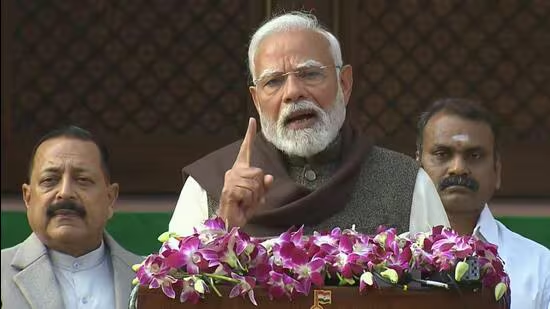
In his first “Mann Ki Baat” address of 2025, Prime Minister Narendra Modi praised the innovative “Hati Bondhu” initiative from Assam for its success in fostering peaceful human-elephant coexistence. The project, which operates in the elephant-prone regions of Nagaon and Karbi Anglong, has gained significant national attention following the prime minister’s recognition. Modi referred to the initiative as a “perfect example” of humans understanding and responding to the needs of elephants, particularly in mitigating the frequent man-animal conflicts in these areas.
Modi highlighted the troubling situation in Nagaon, where herds of elephants had long been destroying crops, causing distress to farmers in over 100 villages. He acknowledged the villagers’ empathy towards the elephants, recognizing that the animals were simply intruding to alleviate hunger. Rather than resorting to conflict, the villagers sought a compassionate solution.
“Hati Bondhu,” which translates to “Elephant Friend,” was born from this understanding. The initiative has focused on creating awareness about the challenges faced by both farmers and elephants. By promoting better farming techniques and cultivating mutual respect, villagers have been able to reduce crop destruction and protect the elephants’ natural habitat.
In his address, Modi emphasized the importance of human understanding and compassion in preserving wildlife. He explained, “While animals cannot speak, humans can understand their feelings and gestures,” underscoring the profound bond that has developed between the people and elephants through this initiative. The prime minister’s recognition has not only celebrated the success of Hati Bondhu but has also drawn national attention to Assam’s efforts in wildlife conservation and human-animal coexistence.
The initiative’s success, which combines local community efforts with environmental awareness, is now seen as a model for other parts of India grappling with similar challenges. The prime minister’s praise has brought renewed focus on the importance of such community-driven conservation projects, emphasizing the need for empathy and understanding in addressing complex ecological and agricultural challenges.
Assam Chief Minister Himanta Biswa Sarma echoed Prime Minister Narendra Modi’s sentiments, expressing his gratitude for the national recognition of the “Hati Bondhu” initiative. Sarma hailed the project as a “natural solution” to reducing the escalating man-elephant conflicts in the region. He emphasized that the initiative benefits both people and elephants, describing it as a “win-win situation.”
The Hati Bondhu project, which has involved around 8,000 beneficiaries across 100 villages, addresses the growing tensions between humans and elephants. In Assam, the conflict has become a critical conservation issue. As human settlements expand and agricultural activities intensify, the natural habitats of elephants have shrunk, forcing them into closer proximity with human populations. This encroachment has heightened the likelihood of human-elephant interactions, often leading to destructive confrontations.
The Hati Bondhu initiative focuses on mitigating these conflicts by promoting sustainable farming practices and increasing awareness about elephant behavior. By offering farmers practical solutions, such as crop protection strategies and better management of their land, the project aims to reduce the damage elephants cause to crops while ensuring their safety. The involvement of local communities in these efforts has been pivotal, with the initiative relying heavily on the collaboration between farmers, conservationists, and the government to find balanced solutions.
This growing partnership between humans and elephants is seen as a positive step toward preserving the region’s biodiversity while safeguarding the livelihoods of local farmers. As such, the Hati Bondhu initiative stands as an exemplary model for balancing conservation with development, a testament to the power of community-driven solutions in addressing complex environmental challenges.
The Hati Bondhu initiative, established in 2018 by 90-year-old nature enthusiast Pradip Bhuyan from Guwahati and local conservationist Binod Dulu Borah from Nagaon, has revolutionized human-elephant relations in Assam. What started as a response to the rising casualties and destruction caused by human-elephant conflict has since evolved into a successful model of peaceful coexistence.
At the heart of Hati Bondhu’s approach are its innovative agricultural practices. The initiative focuses on cultivating Napier grass, jackfruit, and elephant apples on barren lands near elephant corridors. This not only provides a sustainable food source for the elephants but also helps to reduce their intrusion into human settlements. By transforming previously unproductive land into dedicated feeding grounds, Hati Bondhu has addressed the root cause of human-elephant conflict: the elephants’ search for food in agricultural areas.
The results have been remarkable. Over 800 bighas (approximately 266 acres) of land have been converted into feeding grounds for elephants, significantly alleviating the pressure on local crops. In Hatikhuli Ronghang village, for example, elephants now graze peacefully on specially cultivated grass and fruits, instead of raiding nearby paddy fields. Since the implementation of these practices, the region, once notorious for violent encounters, has not reported any fatal incidents in the past eight years.
Hati Bondhu’s success is a testament to the power of innovative, community-driven solutions in resolving conflicts between humans and wildlife. By fostering a deep understanding of elephants’ needs and creating a harmonious environment for both people and elephants, this initiative has set a precedent for conservation efforts across the country.
The success of the Hati Bondhu organization is rooted in its meticulous understanding of elephant behavior and migratory patterns. Through extensive fieldwork along the Nagaon-Karbi Anglong border, the team identified critical routes that elephants use when descending from the Karbi Hills into nearby human settlements. Recognizing these patterns, Hati Bondhu took strategic action by planting food sources along these corridors to intercept the elephants’ movement.
By providing abundant food, water, and security in these areas, the organization successfully redirected the elephants from encroaching into farmland. As a result, the elephants are now drawn to these cultivated feeding grounds, where they can satisfy their hunger without causing harm to crops. This approach ensures that farmers can harvest their crops safely, free from the fear of elephant raids.
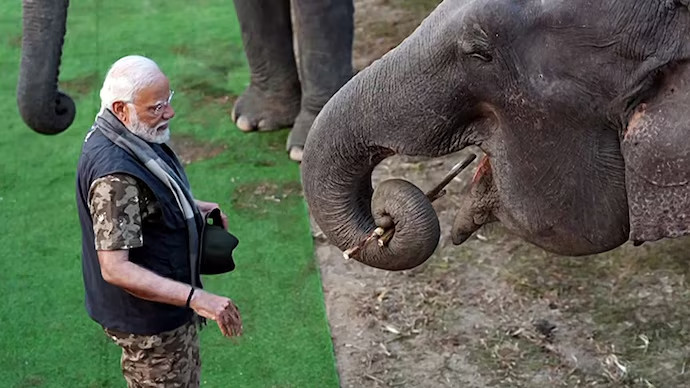
Binod Dulu Borah and his wife Meghana Mayur Hazarika have played an instrumental role in overseeing the success of these efforts. They maintain a vigilant watch over the elephants as they feast on the Napier grass and other cultivated foods. Their commitment helps ensure that while elephants are engaged with the dedicated feeding grounds, farmers are able to complete their harvest without conflict, fostering a peaceful coexistence between humans and wildlife.
The impact of Hati Bondhu extends well beyond the fields, transforming the livelihoods of farmers and fostering a new sense of communal responsibility toward wildlife conservation. For years, farmers had abandoned paddy cultivation due to the devastating annual raids by elephants, which destroyed crops and left them with little to show for their efforts. However, with the introduction of this initiative, they are now experiencing bountiful harvests. Each year, they had lived in fear of losing their crops to elephant incursions, but with the strategic planting of food sources for the elephants, farmers in areas like Chapanala and Baijoori are finally able to harvest their paddy without suffering losses.
The initiative’s success has also led to an unexpected cultural shift in the region. By creating safe spaces for elephants to feed, Hati Bondhu has instilled a sense of shared stewardship among the villagers. In places like Hatikhuli Ronghang, it has become a common sight to see farmers and elephants coexisting peacefully in the same fields. Over the past week, farmers have been able to complete their harvests while wild elephants freely roam and graze on the Napier grass and paddy in adjacent plots. This harmonious coexistence, once thought impossible, has drawn attention from researchers and conservationists who are eager to study and document this pioneering model of human-wildlife cohabitation.
The innovative approach of Hati Bondhu has earned widespread praise from both conservationists and policymakers. Assam Chief Minister Himanta Biswa Sarma highlighted the initiative’s success, particularly the use of 30 hectares of private land for cultivating Napier grass, calling it a “symbol of Assam’s cultural commitment to coexistence with nature.” He also underscored the broader significance of the project in tackling habitat loss, which is one of the primary drivers of human-wildlife conflict in India.
By offering elephants a reliable food source, Hati Bondhu has not only reduced the frequency of crop-raids but has also helped mitigate the risk of retaliatory violence against the animals. This shift in how communities interact with wildlife has the potential to serve as a model for addressing similar conflicts in other parts of India, where human-animal encounters often result in loss of life on both sides. As more communities look to adopt similar approaches, the success of Hati Bondhu is contributing to a larger conversation about the importance of human-wildlife coexistence in the country.
Hati Bondhu’s journey is a testament to resilience and the power of community collaboration. Despite the many challenges posed by human-elephant conflict, the initiative continues to operate with unwavering dedication. Ensuring the safety of both people and elephants requires constant vigilance, but the founders remain steadfast in their mission. Their goal is to set an example that conservation efforts do not have to come at the expense of local livelihoods. The program’s success is supported by the commitment of numerous volunteers, who handle the daily operations and ensure its smooth functioning.
As human-elephant conflict continues to be a major conservation challenge across India, Hati Bondhu shines as a beacon of hope. The initiative showcases how grassroots innovation—driven by empathy and cooperation—can solve even the most deeply rooted ecological problems. By striking a careful balance between conservation and livelihood, Hati Bondhu has demonstrated that peaceful coexistence is not only possible but can also be a transformative force for both humans and wildlife. Its success offers valuable lessons in sustainable conservation practices and the importance of community-driven efforts in protecting endangered species.
In his Mann Ki Baat address, Prime Minister Modi’s words highlighted the essence of this initiative: “Hati Bondhu is a testament to what can be achieved when communities come together with a shared vision. Let us all learn from their example and strive for harmony with nature.”
For Assam and its people, this recognition is not only a moment of immense pride but also a call to action—to further cultivate the fragile yet powerful bond between humans and elephants. It serves as a reminder that conservation efforts can thrive when communities work together, and it inspires others across India to explore similar solutions for peaceful coexistence with wildlife.
Courtesy: Narendra Modi
References
- ^ (Gujarati: નરેન્દ્ર દામોદરદાસ મોદી; pronounced [ˈnəɾendɾə dɑmodəɾˈdɑs ˈmodiː] listenⓘ
- ^ Jump up to:a b Narendra Modi was born Narendrabhai Damodardas Modi on 17 September 1950. He uses Damodardas as his middle name—Gujaratis have a tradition of using the names of their fathers as their middle names—but he is widely known as Narendra Modi.[3]
- ^ Sources stating that RSS had a deep impact on the political hierarchy of the BJP, specially in the case of Narendra Modi.[5][6][7]
- ^ Sources describing Modi’s administration as complicit in the 2002 violence.[8][9][10][11][12]
- ^ In 2012, a court stated that investigations had found no evidence against Modi.[14][15]
- ^ Sources stating that Modi has failed to improve human development indices in Gujarat:[11][12]
- ^ Jump up to:a b Sources describing that India has experienced a backslide in democracy:[31][32][33][34][35]
- ^ Sources discussing the controversy surrounding Modi:[11][39][40][41][42][43][44]
- ^ Applications were filed with the Prime Minister’s Office (PMO) under the RTI Act seeking details of his arrest. In reply, the PMO said it maintains official records on Modi only since he became the prime minister in 2014. Despite this claim, the official website of the PMO contains information about Modi from the 1950s.[80][81]
- ^ Replying to an RTI query, the School of Open Learning said it did not have any data of students who received a BA degree in 1978.[82] Jayantibhai Patel, a former political science professor of Gujarat University, said the subjects listed in Modi’s MA degree were not offered by the university when Modi was studying there.[89][90] In 2016, Delhi University deemed the BA degree to be authentic.[91]
- ^ The exact number of people killed in the train burning is variously reported. For example, the BBC says it was 59,[117] while The Guardian put the figure at 60.[118]
- ^ “The Narendra Modi led government completed two years in power in May 2016 and the prime minister has made his mark on both the domestic and foreign policy fronts. It is important to assess how successful his initiatives have been in the arena of foreign affairs in comparison to his predecessors. In this regard, this paper identifies and examines the key trends and issues in foreign policy under the Modi led administration and the measures needed to translate speeches and policies into action. Modi government has also taken a serious node of relations with middle-east nations, as well as Iran and Israel.”[380]Citations
- ^ “Narendra Modi Fast Facts”. CNN. 6 September 2023. Retrieved 22 November 2023.
- ^ “Jashodaben, named by Narendra Modi as his wife, prays for him to become PM”. NDTV. Press Trust of India. 11 April 2014. Archived from the original on 17 July 2020. Retrieved 12 June 2020.
- ^ Marino 2014, pp. 4–5.
- ^ “The rise and journey of Narendra Modi as the leader reshaping India: timeline”. The Hindu. 6 June 2024. ISSN 0971-751X. Archived from the original on 28 June 2024. Retrieved 25 June 2024.
- ^ Asrar, Nadim (26 February 2014). “Narendra Modi’s political journey from RSS worker to BJP’s PM candidate”. NDTV. Archived from the original on 8 August 2020. Retrieved 15 August 2015.
- ^ “PM Modi turns 69: A timeline of his political career”. Deccan Herald. 17 September 2019. Archived from the original on 15 January 2021. Retrieved 13 January 2021.
- ^ Tiwari, Ravish (27 November 2014). “The low-profile RSS apparatchik is the newface of power in the NDA”. India Today. Retrieved 13 January 2021.
- ^ Jump up to:a b c d e Bobbio, Tommaso (1 May 2012). “Making Gujarat Vibrant: Hindutva, development and the rise of subnationalism in India”. Third World Quarterly. 33 (4): 657–672. doi:10.1080/01436597.2012.657423. S2CID 154422056. Archived from the original on 1 March 2020. Retrieved 2 September 2019.
- ^ Jump up to:a b c d e f Nussbaum, Martha Craven (2008). The Clash Within: Democracy, Religious Violence, and India’s Future. Harvard University Press. pp. 17–28, 50–51. ISBN 978-0-674-03059-6. JSTOR 27639120.
- ^ Jump up to:a b c d Shani, Orrit (2007). Communalism, Caste and Hindu Nationalism: The Violence in Gujarat. Cambridge University Press. pp. 168–173. ISBN 978-0-521-68369-2. Archived from the original on 18 February 2023. Retrieved 20 January 2021.
- ^ Jump up to:a b c d e Buncombe, Andrew (19 September 2011). “A rebirth dogged by controversy”. The Independent. London. Archived from the original on 25 December 2011. Retrieved 10 October 2012.
- ^ Jump up to:a b c Jaffrelot, Christophe (June 2013). “Gujarat Elections: The Sub-Text of Modi’s ‘Hattrick’—High Tech Populism and the ‘Neo-middle Class'”. Studies in Indian Politics. 1 (1): 79–95. doi:10.1177/2321023013482789. S2CID 154404089. Retrieved 29 August 2021.
- ^ * Jaffrelot, Christophe (2021), Modi’s India: Hindu Nationalism and the Rise of Ethnic Democracy, translated by Schoch, Cynthia, Princeton and Oxford: Princeton University Press, pp. 40–41, ISBN978-0-691-20680-6, archived from the original on 22 June 2023, retrieved 22 June 2023
- Shahani, Nishant (2021), Pink Revolutions: Globalization, Hindutva, and Queer Triangles in Contemporary India, Critical Ethnic Studies Association series, Evanston, Illinois: Northwestern University Press, ISBN 978-0-8101-4363-0, archived from the original on 22 June 2023, retrieved 22 June 2023
- Dhattiwala, Raheel (2019), Keeping the Peace: Spatial Differences in Hindu-Muslim Violence in Gujarat in 2002, Cambridge University Press, p. 73, ISBN 978-1-108-49759-6, archived from the original on 22 June 2023, retrieved 22 June 2023
- Kinnvall, Catarina (2019), “Populism, ontological insecurity and Hindutva: Modi and the masculinization of Indian politics”, Cambridge Review of International Affairs, 32 (3): 238–302, 295, doi:10.1080/09557571.2019.1588851, ISSN 0955-7571, S2CID 164991567
- ^ “India Gujarat Chief Minister Modi cleared in riots case”. BBC News. BBC. 10 April 2012. Archived from the original on 20 December 2016. Retrieved 17 February 2017.
- ^ Dasgupta, Manas (10 April 2012). “SIT finds no proof against Modi, says court”. The Hindu. Archived from the original on 21 December 2016. Retrieved 17 February 2017.
- ^ Lalwani, Sameer; Tallo, Emily (17 April 2019), “Did India shoot down a Pakistani F-16 in February? This just became a big deal: There are broader implications for India — and the United States”, Washington Post, archived from the original on 30 November 2020, retrieved 27 January 2023
- ^ Hall, Ian (2019), “India’s 2019 General Election: National Security and the Rise of the Watchmen”, The Round Table: The Commonwealth Journal of International Affairs, 108 (5): 507–519, 510, doi:10.1080/00358533.2019.1658360, S2CID 203266692
- ^ Jaffrelot, Christophe (2021), Modi’s India: Hindu Nationalism and the Rise of Ethnic Democracy, Princeton University Press, ISBN 978-0-691-22309-4
- ^ Jump up to:a b “Book review: How Pulwama made Modi’s Balakot response his 1971 moment”. Business Standard India. 30 November 2019. Archived from the original on 28 May 2020. Retrieved 11 January 2021.
- ^ Akhtar, Rais; Kirk, William, Jammu and Kashmir, State, India, Encyclopaedia Britannica, archived from the original on 19 June 2015, retrieved 7 August 2019 (subscription required)
- ^ Osmańczyk, Edmund Jan (2003), Encyclopedia of the United Nations and International Agreements: G to M, Taylor & Francis, pp. 1191–, ISBN 978-0-415-93922-5, archived from the original on 17 January 2023, retrieved 8 June 2023
- ^ Ellis-Peterson, Hannah; Azizur Rahman, Shaikh (6 March 2020), “‘I cannot find my father’s body’: Delhi’s fearful Muslims mourn riot dead”, The Guardian, Delhi, archived from the original on 6 March 2020, retrieved 7 March 2020
- ^ Wamsley, Laurel; Frayer, Lauren (26 February 2020), In New Delhi, Days Of Deadly Violence And Riots, NPR, archived from the original on 4 March 2020, retrieved 25 March 2020
- ^ Abi-Habib, Maria (5 March 2020), “Violence in India Threatens Its Global Ambitions”, The New York Times, archived from the original on 5 March 2020, retrieved 6 March 2020
- ^ Jump up to:a b Grimley, Naomi; Cornish, Jack; Stylianou, Nassos (5 May 2022). “Covid: World’s true pandemic death toll nearly 15 million, says WHO”. BBC News. Archived from the original on 13 May 2022. Retrieved 22 August 2022.
- ^ Jump up to:a b Biswas, Soutik (5 May 2022). “Why India’s real Covid toll may never be known”. BBC. Archived from the original on 21 August 2022. Retrieved 22 August 2022.
- ^ Aggarwai, Mithil; Frayer, Janis Mackey (4 June 2024). “India hands PM Modi a surprise setback, with his majority in doubt in the world’s largest election”. NBC News. Archived from the original on 4 June 2024. Retrieved 4 June 2024.
- ^ Poharel, Krishna; Lahiri, Tripti (3 June 2024). “India’s Narendra Modi Struggles to Hold On to Majority, Early Election Results Show”. Wall Street Journal. Archived from the original on 4 June 2024. Retrieved 4 June 2024.
- ^ Welzel, Christian; Inglehart, Ronald; Bernhangen, Patrick; Haerpfer, Christian W. (2019), “Introduction”, in Welzel, Christian; Inglehart, Ronald; Bernhangen, Patrick; Haerpfer, Christian W. (eds.), Democratization, Oxford University Press, pp. 4, 7, ISBN 978-0-19-873228-0
- ^ Chidambaram, Soundarya (2022), “India’s Inexorable Path to Autocratization: Looking beyond Modi and the populist lens”, in Widmalm, Sten (ed.), Routledge Handbook of Autocratization in South Asia, Routledge, pp. 130–148, doi:10.4324/9781003042211-11, S2CID 245210210
- ^ Brunkert, Lennart; Kruse, Stefan; Welzel, Christian (3 April 2019). “A tale of culture-bound regime evolution: the centennial democratic trend and its recent reversal”. Democratization. 26 (3): 422–443. doi:10.1080/13510347.2018.1542430. ISSN 1351-0347. S2CID 148625260. Archived from the original on 10 October 2021. Retrieved 4 January 2021.
- ^ Jump up to:a b Khaitan, Tarunabh (26 May 2020). “Killing a Constitution with a Thousand Cuts: Executive Aggrandizement and Party-state Fusion in India”. Law & Ethics of Human Rights. 14 (1): 49–95. doi:10.1515/lehr-2020-2009. hdl:11343/241852. ISSN 2194-6531. S2CID 221083830.
- ^ Jump up to:a b Ganguly, Sumit (18 September 2020). “India’s Democracy Is Under Threat”. Foreign Policy. Archived from the original on 4 December 2020. Retrieved 27 November 2020.
- ^ “India: Freedom in the World 2021 Country Report”. Freedom House. 2021. Archived from the original on 4 March 2021. Retrieved 4 March 2021.
- ^ Goel, Vindu; Gettleman, Jeffrey (2 April 2020). “Under Modi, India’s Press Is Not So Free Anymore”. The New York Times. ISSN 0362-4331. Archived from the original on 2 April 2020. Retrieved 9 March 2021.
- ^ Jump up to:a b Kaul, Volker; Vajpeyi, Ananya (2020). Minorities and Populism – Critical Perspectives from South Asia and Europe. Springer Publishing. p. 22. ISBN 978-3-030-34098-8.
- ^ “Global Leader Approval Ratings”. Morning Consult. Archived from the original on 28 November 2022. Retrieved 9 September 2022.
- ^ “PM Narendra Modi continues to be most popular global leader with approval rating of 74%: Survey”. The Times of India. 12 August 2022. Archived from the original on 9 September 2022. Retrieved 9 September 2022.
- ^ Visweswaran, Kamala (April 2011). Visweswaran, Kamala (ed.). Perspectives on Modern South Asia: A Reader in Culture, History, and Representation. Wiley-Blackwell. p. 188. ISBN 978-1-4051-0062-5. OCLC 682895189. Retrieved 30 August 2021.
- ^ Jump up to:a b c d e Stepan, Alfred (7 January 2015). “India, Sri Lanka, and the Majoritarian Danger”. Journal of Democracy. 26: 128–140. doi:10.1353/jod.2015.0006. S2CID 153861198.
- ^ Jump up to:a b c d e f g Ganguly, Sumit (October 2014). “India’s Watershed Vote: The Risks Ahead”. Journal of Democracy. 25 (4): 56–60. doi:10.1353/jod.2014.0077. S2CID 154421269.
- ^ “Indian PM Narendra Modi still mired in controversy, says expert”. Canadian Broadcasting Corporation. 16 April 2015. Archived from the original on 14 October 2017. Retrieved 17 February 2017.
- ^ Robinson, Simon (11 December 2007). “India’s Voters Torn Over Politician”. Time. Archived from the original on 23 October 2013. Retrieved 10 October 2012.
- ^ Burke, Jason (28 March 2010). “Gujarat leader Narendra Modi grilled for 10 hours at massacre inquiry”. The Guardian. Archived from the original on 9 September 2013. Retrieved 10 October 2012.
- ^ Messina, Karyne E. (21 September 2022). Resurgence of Global Populism: A Psychoanalytic Study of Projective Identification, Blame-Shifting and the Corruption of Democracy. Taylor & Francis. ISBN 978-1-000-64640-5. Archived from the original on 8 April 2024. Retrieved 7 April 2024.
- ^ Rashid, Omar (27 April 2019). “Modi hits back on ‘fake OBC’ jibes, says he is ‘most backward'”. The Hindu. ISSN 0971-751X. Archived from the original on 25 August 2023. Retrieved 6 April 2024.
- ^ Marino 2014, pp. 13, 15, 29–30, 74.
- ^ “Heeraben Modi: Indian PM Modi’s mother dies aged 99”. BBC. 30 December 2022. Retrieved 30 December 2022.
- ^ Chatterji, Angana P.; Hansen, Thomas Blom; Jaffrelot, Christophe (2019), “Introduction”, in Chatterji, Angana P.; Hansen, Thomas Blom; Jaffrelot, Christophe (eds.), Majoritarian State: How Hindu Nationalism Is Changing India, Oxford University Press, p. 3, ISBN 978-0-19-007817-1
- ^ Roberts, Adam (2017), Superfast Primetime Ultimate Nation: The Relentless Invention of Modern India, Public Affairs, ISBN 978-1-61039-670-7
- ^ Roberts, Adam (23 May 2015), Special Report, India: Modi’s many tasks (PDF), London: Economist, archived (PDF) from the original on 22 December 2021, retrieved 22 December 2021
- ^ Jump up to:a b c d Jose, Vinod K. (1 March 2012). “The Emperor Uncrowned: The Rise of Narendra Modi”. The Caravan. pp. 2–4. Archived from the original on 11 November 2013. Retrieved 11 November 2013.
- ^ Mukhopadhyay 2013, p. 82.
- ^ Raina, Shilpa (14 March 2014). “Modi’s life dominates publishing space (Election Special)”. newkerala.com. Archived from the original on 15 March 2014. Retrieved 4 April 2014.
- ^ Marino 2014, p. 24.
- ^ Pathak, Anil (2 October 2001). “Modi’s meteoric rise”. The Times of India. Retrieved 11 April 2013.
- ^ N.P., Ullekh (26 January 2015). War Room: The People, Tactics and Technology behind Narendra Modi’s 2014 Win. Roli Books Private Limited. ISBN 978-93-5194-068-5.
- ^ Gowen, Annie (25 January 2015). “Abandoned as a child bride, wife of Narendra Modi hopes he calls”. The Washington Post. Retrieved 30 August 2021.
- ^ Jump up to:a b Schultz, Kai; Kumar, Hari (7 February 2018). “Narendra Modi’s Estranged Wife Escapes Unhurt From Car Crash in India”. The New York Times. Retrieved 31 August 2021.
- ^ Gowen, Annie (25 January 2015). “Abandoned as a child bride, wife of Narendra Modi hopes he calls”. The Washington Post. Retrieved 31 August 2021.
- ^ “Narendra Modi Fast Facts”. CNN. 12 September 2018. Archived from the original on 13 September 2018. Retrieved 31 August 2021.
- ^ Jump up to:a b “Narendra Modi: From tea vendor to PM candidate”. India Today. 13 September 2013. Archived from the original on 21 April 2014. Retrieved 21 April 2014.
- ^ Mukhopadhyay 2013, A time of difference.
- ^ Marino 2014, p. 25.
- ^ * Marino 2014, pp. 30–33
- Mukhopadhyay 2013, pp. 128–129
- “Narendra Modi invited to Ramakrishna Mission’s headquarter in Belurmath”. The Economic Times. 26 May 2014. Archived from the original on 31 October 2014. Retrieved 17 October 2014.
- ^ “The tale of two Narendras: Narendra Modi and Swami Vivekananda”. The Statesman. 4 July 2016. Archived from the original on 18 February 2017. Retrieved 18 February 2017.
- ^ Marino 2014, pp. 26–29.
- ^ Guha 2007, pp. 491–492; Panda 2016, pp. 96; Mahurkar 2017, pp. 7–9.
- ^ Mukhopadhyay 2013, pp. 131, 138.
- ^ Unnithan, Sandeep (19 May 2014). “The man behind Modi: Lakshmanrao Inamdar”. India Today. Ahmedabad. Archived from the original on 21 May 2014. Retrieved 22 May 2014.
- ^ Mukhopadhyay, Nilanjan (14 May 2014). “Narendra Modi: The making of the political leader”. Mint. Archived from the original on 17 May 2014. Retrieved 22 May 2014.
- ^ Marino 2014, p. 35.
- ^ Sengupta, Shubbhabrata (27 March 2021). “A Sataygrah [sic] and Asatyagraha: Narendra Modi and the Liberation of Bangladesh”. The Wire. Retrieved 31 August 2021.
- ^ Lahiri, Ishadrita (27 March 2021). “Was Modi Arrested for Bangladesh Satyagraha? Here’s What We Know”. The Quint. Retrieved 31 August 2021.
- ^ “Delhi confidential: The Satyagraha”. The Indian Express. 27 March 2021. Retrieved 22 June 2021.
- ^ Jump up to:a b “Political slugfest over PM Modi’s ‘Satyagraha for Bangladesh’ remarks”. The Tribune. 26 March 2021. Retrieved 22 June 2021.
- ^ “Modi’s satyagraha talk in Dhaka sparks online war”. The Times of India. 27 March 2021. Retrieved 22 June 2021.
- ^ Mukhopadhyay 2013, p. 138.
- ^ Jump up to:a b Marino 2014, pp. 35–40.
- ^ “RTI filed seeking info on Modi’s claim of his arrest for supporting Bangladesh’s independence”. Dhaka Tribune. 27 March 2021. Retrieved 22 October 2021.
- ^ “PMO cites a cut-off year of 2014 for recordkeeping on Modi”. Telegraph India. 19 June 2021. Retrieved 22 October 2021.
- ^ Jump up to:a b “Narendra Modi degree row: DU college says it has no data of students passing out in 1978”. India Today. 14 March 2017. Archived from the original on 17 March 2017. Retrieved 9 June 2017.
- ^ “Narendra Modi’s degree ‘authentic’: Delhi University Registrar Tarun Das”. The Hindu. 10 May 2016. Archived from the original on 14 November 2017. Retrieved 9 June 2017.
- ^ Avasthi, Yogesh (10 May 2016). “Globetrotting PM Modi was weakest in ‘International Relations'”. The Economic Times. Archived from the original on 29 July 2017. Retrieved 17 February 2017.
- ^ “Modi proves to be an astute strategist”. Hindustan Times. 23 December 2007. Archived from the original on 19 August 2014. Retrieved 20 August 2014.
- ^ “Degree row- PM Modi MA with first class: Gujarat University”. The Indian Express. 2 May 2016. Archived from the original on 29 July 2017. Retrieved 29 July 2017.
- ^ “The curious case of Prime Minister Narendra Modi’s degree”. National Herald. 16 June 2018. Retrieved 22 October 2021.
- ^ “The curious case of TOI’s report on Modi’s ‘dear friend'”. Newslaundry. 3 October 2020. Retrieved 22 October 2021.
- ^ “Huge discrepancy in Modi’s MA degree, claims ex-Gujarat University professor”. India Today. 12 May 2016. Retrieved 22 October 2021.
- ^ “Subjects listed in Narendra Modi’s Gujarat University degree were not in syllabus, says ex-professor”. Scroll.in. 13 May 2016. Retrieved 22 October 2021.
- ^ “Narendra Modi’s degree ‘authentic’: Delhi University Registrar Tarun Das”. The Hindu. 10 May 2016. ISSN 0971-751X. Archived from the original on 29 May 2023. Retrieved 29 May 2023.
- ^ Guha 2007, p. 493–494.
- ^ Kochanek & Hardgrave 2007, p. 205.
- ^ Marino 2014, pp. 36–40.
- ^ Marino 2014, pp. 71–74; Natarajan and Pooja 2019, pp. 98–101.
- ^ Marino 2014, p. 43.
- ^ Mukhopadhyay 2013, p. 150.
- ^ Marino 2014, p. 65; Natarajan and Pooja 2019, pp. 98–99; Sen 2016, pp. 145–151; Hall 2016, p. 90; Mukhopadhyay 2013, pp. 56–57
- ^ Patel, Aakar (22 December 2013). “The poetic side of Narendra Modi”. Deccan Chronicle. Archived from the original on 24 May 2014. Retrieved 25 May 2014.
- ^ Mehta, Harit (28 June 2004). “Gujarat not enamoured by poet Narendra Modi”. The Times of India. Archived from the original on 23 October 2015. Retrieved 6 January 2016.
- ^ Marino 2014, pp. 38–43, 46–50.
- ^ Shekhar, Himanshu (2015). Management Guru Narendra Modi. Diamond Pocket Books Pvt Ltd. p. 64. ISBN 978-81-288-2803-4.
- ^ Marino 2014, pp. 45–48, 54–59.
- ^ Guha 2007; Marino 2014, pp. 56; Panda 2016, pp. fontcover; Rao 2020, pp. 228.
- ^ Mukhopadhyay 2013, pp. 68–69.
- ^ Jump up to:a b Marino 2014, pp. 60–63.
- ^ “Gujarat-CM candidates: Gujarat Assembly Elections 2012: Narendra Modi profile”. Zee News. Gujarat. 11 December 2012. Archived from the original on 20 April 2013. Retrieved 21 April 2013.
- ^ Jain & E 2018, pp. 17–21; Komireddi 2019, pp. 67–69; Kochanek & Hardgrave 2007, pp. 44–49; Marino 2014, p. 49; Panda 2016, p. 95; Kanrad 2018, pp. 87–91.
- ^ Mehta, Harit (1 April 2014). “Six-year banishment led to Narendra Modi’s metamorphosis”. The Times of India. Archived from the original on 1 April 2014. Retrieved 2 April 2014.
- ^ Jump up to:a b Venkatesan, V. (26 October 2001). “A pracharak as Chief Minister”. Frontline (magazine). Vol. 18, no. 21. New Delhi. Archived from the original on 5 April 2013. Retrieved 11 April 2013.
- ^ Marino 2014, pp. 78–79; Mukhopadhyay 2013, pp. 78–95.
- ^ Jump up to:a b c Phadnis, Aditi (2009). Business Standard Political Profiles of Cabals and Kings. Business Standard Books. pp. 116–21. ISBN 978-81-905735-4-2. Archived from the original on 3 January 2014.
- ^ Bunsha, Dionne (26 October 2001). “A new oarsman”. Frontline. Vol. 18, no. 21. Archived from the original on 21 October 2006. Retrieved 11 April 2013.
- ^ Srivastava, Ritesh K. (8 April 2014). “Narendra Modi – Leading the race to 7 RCR”. Zee News. Archived from the original on 24 August 2014. Retrieved 25 August 2014.
- ^ Dasgupta, Manas (7 October 2001). “Modi sworn in Gujarat CM amidst fanfare”. The Hindu. Archived from the original on 11 October 2014. Retrieved 11 October 2014.
- ^ Venkatesan, V. (15 March 2002). “A victory and many pointers”. Frontline. Vol. 19, no. 5. Archived from the original on 6 January 2016. Retrieved 11 October 2014.
- ^ “Eleven sentenced to death for India Godhra train blaze”. BBC News. 1 March 2011. Archived from the original on 24 June 2014. Retrieved 25 June 2014.
- ^ Burke, Jason (22 February 2011). “Godhra train fire verdict prompts tight security measures”. The Guardian. Archived from the original on 23 October 2013. Retrieved 10 March 2014.
- ^ Jump up to:a b c Ghosh, Partha S. (Institute of Social Sciences, New Delhi; formerly, ICSSR National Fellow, and Professor of South Asian Studies at Jawaharlal Nehru University): OP-ED: South Asia’s leaders have failed their region,” Archived 7 April 2022 at the Wayback Machine opinion and historical analysis, 15 November 2021, Dhaka Tribune, retrieved 15 November 2021
- ^ Jump up to:a b c d e Jaffrelot, Christophe (July 2003). “Communal Riots in Gujarat: The State at Risk?”. Heidelberg Papers in South Asian and Comparative Politics. doi:10.11588/heidok.00004127. Archived from the original on 7 June 2007. Retrieved 17 February 2017.
- ^ Jump up to:a b “Gujarat riot death toll revealed”. BBC News. 11 May 2005. Archived from the original on 26 February 2009. Retrieved 17 February 2017.
- ^ Jump up to:a b Murphy, Eamon (2010). “‘We have no orders to save you’: state terrorism, politics and communal violence in the Indian state of Gujarat, 2002”. In Jackson, Richard; Murphy, Eamon Murphy; Poynting, Scott (eds.). Contemporary State Terrorism. New York, New York, US: Routledge. pp. 84–103. ISBN 978-0-415-49801-2.
- ^ Jump up to:a b c Desai, Bharat; Pathak, Anil (1 March 2002). “Mobs rule Ahmedabad streets”. The Economic Times. Archived from the original on 4 January 2013. Retrieved 17 April 2014.
- ^ Jump up to:a b c Dasgupta, Manas (1 March 2002). “140 killed as Gujarat bandh turns violent”. The Hindu. Chennai, India. Archived from the original on 3 March 2015. Retrieved 17 April 2014.
- ^ “Decision to bring Godhra victims’ bodies taken at top level”. The Hindu. Chennai, India. 10 February 2012. Archived from the original on 12 February 2013. Retrieved 12 April 2013.
- ^ Campbell, John; Seiple, Chris; Hoover, Dennis R.; et al., eds. (2012). The Routledge Handbook of Religion and Security. Routledge. p. 233. ISBN 978-0-415-66744-9.
- ^ Brass, Paul R. (15 July 2005). The Production of Hindu-Muslim Violence in Contemporary India. University of Washington Press. p. 388. ISBN 978-0-295-98506-0.
- ^ Filkins, Dexter (2 December 2019). “Blood and Soil in Narendra Modi’s India”. The New Yorker. Archived from the original on 22 April 2020. Retrieved 3 February 2020.
- ^ Santhosh, R. (11 August 2015), Jacobsen, Knut A. (ed.), “Muslims in Contemporary India”, Routledge Handbook of Contemporary India (1 ed.), Routledge, p. 393, doi:10.4324/9781315682570-31, ISBN 978-1-315-68257-0, retrieved 22 December 2022
- ^ Jump up to:a b Sengupta, Somini (28 April 2009). “Shadows of Violence Cling to Indian Politician”. The New York Times. Archived from the original on 30 August 2012. Retrieved 12 May 2013.
- ^ Nielsen, Kenneth Bo; Nilsen, Alf Gunvald (30 December 2021), “Hindu nationalist statecraft and Modi’s authoritarian populism”, Routledge Handbook of Autocratization in South A