



A passenger plane carrying 64 passengers and crew has crashed into a river in Washington, D.C., after it collided in mid-air with a US Army helicopter.
Eighteen bodies have been pulled from the Potomac River so far, where search and rescue teams are scouring the waters in freezing temperatures, according to a police official who spoke to the BBC’s broadcast partner, CBS News.
Authorities are investigating, and the nearby Ronald Reagan Washington National Airport has grounded all flights.
What happened?
At around 21:00 local time (02:00 GMT) on Wednesday, a PSA Airlines jet operating as American Airlines 5342 collided with a US Army helicopter as it approached Ronald Reagan Washington National Airport, according to the Federal Aviation Administration (FAA).
The passenger plane, a Bombardier CRJ700, departed from Wichita, Kansas, and was carrying 60 passengers and four crew, American Airlines said.
The Pentagon confirmed that the helicopter involved was a Sikorsky H-60, which had taken off from Fort Belvoir in Virginia. Washington, D.C., Mayor Muriel Bowser stated that three US soldiers were on board. Another official said the helicopter was on a training flight and belonged to B Company, 12th Aviation Battalion from Fort Belvoir in Virginia.
A video clip published online, reviewed by CNN, allegedly captures the air traffic control conversation moments before the crash. In the recording, a controller can reportedly be heard warning the helicopter about the approaching plane, but no reply was received. The BBC has not independently verified the audio.
The FAA has announced that it will investigate the incident in coordination with the National Transportation Safety Board (NTSB).
Were there casualties?
Officials in Washington, D.C., have refused to confirm reports on casualties during a press conference, stating that their priority is to continue the rescue operation through the night, which they describe as challenging.
However, a police official at the scene told CBS that 18 bodies had been pulled from the water.
US Figure Skating confirmed that “several members of our skating community were sadly aboard” the flight, including athletes, coaches, and family members returning home from a development camp in Kansas.
Early reports in US media indicated that the passenger plane was split in half on the Potomac River, while the helicopter was found upside down in the water.
Washington, D.C., Fire and Emergency Services Chief John Donnelly stated that around 300 responders on rubber boats have been deployed to search for survivors.
“The challenge is access, there is wind, pieces of ice (on the water). It is dangerous and hard to work in,” he said.
What are eyewitnesses saying?
Ari Schulman told NBC Washington that he witnessed the plane crash while driving on the George Washington Parkway, which runs along the airport. He explained that the plane’s approach appeared normal until he saw it suddenly bank hard to the right, with “streams of sparks” trailing underneath, illuminating its belly.
At that moment, he said, he knew something was terribly wrong. Having seen plane landings at the airport in the past, he noted that a plane’s underside should not be visible in the dark. The sparks, he described, resembled a “giant roman candle” and stretched from the plane’s nose to its tail.
Jimmy Mazeo, who was dining with his girlfriend at a park near the airport, also witnessed the crash.
He recalled seeing what looked like a “white flare” in the sky and mentioned that planes flying into Ronald Reagan Airport appeared to be flying in “irregular patterns.”
Mr. Mazeo said he didn’t think much of what he saw at first, but everything changed when emergency services began arriving at the scene.
What are US officials saying?
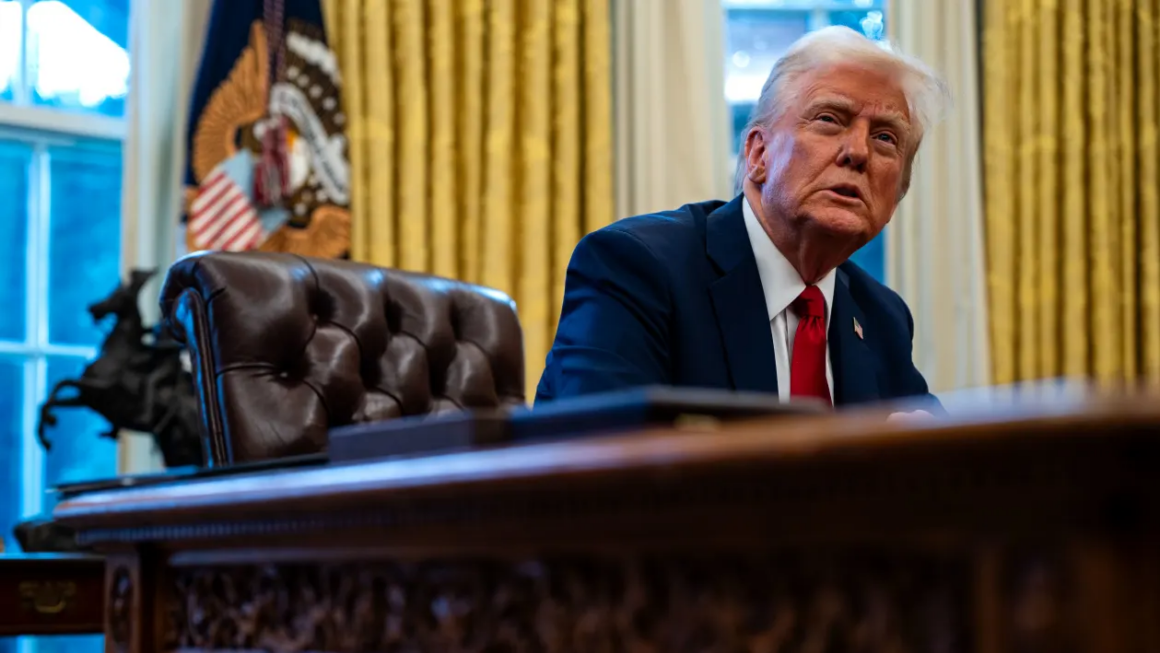
President Donald Trump said he had been fully briefed on the “terrible accident” and was closely monitoring the situation. In a statement, he expressed his condolences, saying, “May God Bless their souls,” and thanked the first responders for their incredible work.
On his TruthSocial social media account, Trump also raised questions about the incident, writing, “This is a bad situation that looks like it should have been prevented. NOT GOOD!!!”
Vice-President JD Vance called for prayers for those involved in the incident.
Defense Secretary Pete Hegseth and Transportation Secretary Sean Duffy, whose appointments were recently confirmed, also stated that they were closely monitoring the situation.
Asked whether flight paths near Ronald Reagan Airport would be changed following the incident, Transportation Secretary Sean Duffy said, “We will take appropriate action if necessary.” He added, “There will be a review of what happened here tonight.”
American Airlines CEO Robert Isom expressed his “deep sorrow” over the collision in a video posted on the airline’s website.
That sentiment was echoed by Roger Marshall, a U.S. senator representing Kansas, the departure point of the plane. He described the tragedy as a “heartbreak beyond measure.”
Courtesy: 9 News Australia
References
- ^ Jump up to:a b c d e “State Symbols”. Washington State Legislature. Archived from the original on July 10, 2014. Retrieved July 11, 2014.
- ^ “United States Census Quick Facts Washington”. Retrieved January 5, 2025.
- ^ “Household Income in States and Metropolitan Areas: 2023” (PDF). Retrieved January 11, 2025.
- ^ Table H-8. Median Household Income by State: 1984 to 2015 (Microsoft Excel), United States Census Bureau, September 13, 2016, archived from the original on July 13, 2017, retrieved July 20, 2017
- ^ Jump up to:a b Bush, Evan (October 19, 2016). “Dear D. C., you can’t call yourself ‘State of Washington’. That’s our name”. The Seattle Times. Archived from the original on April 8, 2017. Retrieved April 7, 2017.
- ^ “Word list and common terms”. University of Washington. Archived from the original on September 2, 2021. Retrieved September 2, 2021.
Lowercase state: state of Washington or Washington state. Note that Washington State refers to the university in Pullman, Washington.
- ^ “United States Census Quick Facts Washington”. Retrieved January 5, 2025.
- ^ Augustyn, Adam; Critchfield, Howard J. (August 12, 2021). “Washington state, United States”. Encyclopædia Britannica. Archived from the original on September 2, 2021. Retrieved September 2, 2021.
- ^ “Puget Sound”. Washington State Department of Ecology. Archived from the original on September 2, 2021. Retrieved September 2, 2021.
- ^ Cargill, Chris (March 23, 2016). “Agriculture: The cornerstone of Washington’s economy”. Washington Policy Center. Archived from the original on September 2, 2021. Retrieved September 2, 2021.
- ^ Jump up to:a b c “Agriculture: A Cornerstone of Washington’s Economy”. Washington State Department of Agriculture. Archived from the original on September 2, 2021. Retrieved March 8, 2021.
- ^ Jump up to:a b Smith, Rob (September 11, 2019). “Shining the Light on Washington’s Robust Commercial Fishing Industry During National Seafood Month”. Seattle Business. Archived from the original on September 2, 2021. Retrieved September 2, 2021.
- ^ “Key Industries in Washington State”. Washington State Department of Commerce. Archived from the original on September 1, 2021. Retrieved September 2, 2021.
- ^ Balk, Gene (February 27, 2018). “Liberals outnumber conservatives for first time in Washington state, Gallup poll shows”. The Seattle Times. Archived from the original on September 2, 2021. Retrieved May 28, 2020.
- ^ “America’s best states to live in, ranked”. USA Today. Archived from the original on November 7, 2018. Retrieved November 9, 2018.
- ^ Walsh, John (May 21, 2013). Q&A: Legal Marijuana in Colorado and Washington (Report). Brookings Institution. Archived from the original on September 2, 2021. Retrieved September 2, 2021.
- ^ Casey, Heather. “Guides: A Brief History of Civil Rights in the United States: A Timeline of the Legalization of Same-Sex Marriage in the U.S.” Georgetown Law Library. Archived from the original on September 2, 2021. Retrieved September 2, 2021.
- ^ Jump up to:a b Connelly, Joel (May 15, 2019). “Connelly: When Washington legalized abortion, before Roe v. Wade”. Seattle Post-Intelligencer. Archived from the original on September 2, 2021. Retrieved September 2, 2021.
- ^ “Death with Dignity Act”. Washington State Department of Health. Archived from the original on September 2, 2021. Retrieved September 2, 2021.
- ^ “Physician-Assisted Suicide Fast Facts”. CNN. November 26, 2014. Archived from the original on September 2, 2021. Retrieved September 2, 2021.
- ^ Brier, Warren J. (January 1960). “How Washington Territory Got Its Name”. Pacific Northwest Quarterly. 51 (1): 13–15. JSTOR 40487423.
- ^ “History”. City of Longview, WA. Archived from the original on March 6, 2014. Retrieved April 17, 2014.
- ^ Jump up to:a b “Territorial Timeline”. Washington History. Washington Secretary of State. Archived from the original on June 19, 2013. Retrieved February 26, 2010.
- ^ “House Resolution No. 2016–4662” (PDF). Washington State Legislature. February 15, 2016. Archived (PDF) from the original on February 15, 2017. Retrieved April 4, 2017.
- ^ Palmer, Brian (February 9, 2012). “How Did Washington State and Washington, D. C., Get the Same Name?”. Slate. Archived from the original on April 7, 2017. Retrieved April 7, 2017.
- ^ Berger, Knute (November 7, 2016). “D. C. wants to steal our state’s name. They can have it”. Crosscut.com. Archived from the original on April 8, 2017. Retrieved April 7, 2017.
- ^ “Kennewick Man Skeletal Find May Revolutionalize Continent’s History”. ScienceDaily. Middle Tennessee State University. April 26, 2006. Archived from the original on March 6, 2019. Retrieved April 18, 2014.
- ^ Eligon, John (November 14, 2019). “A Native Tribe Wants to Resume Whaling. Whale Defenders Are Divided”. The New York Times. Archived from the original on September 2, 2021. Retrieved September 2, 2021.
- ^ “Makah Whaling & Whale Hunt – Makah Tribe (Neah Bay, Washington)”. Makah Tribe. Archived from the original on September 2, 2021. Retrieved September 2, 2021.
- ^ Meyer, Robinson (August 16, 2016). “A Major Earthquake in the Pacific Northwest Looks Even Likelier”. The Atlantic. Archived from the original on September 2, 2021. Retrieved September 2, 2021.
- ^ Walker, James (January 21, 2021). “Bruno de Hezeta y Dudagoitia (1744–1807)”. The Oregon Encyclopedia. Archived from the original on September 2, 2021. Retrieved September 2, 2021.
- ^ Lange, Greg (January 23, 2003). “Smallpox epidemic ravages Native Americans on the northwest coast of North America in the 1770s.”. HistoryLink. Archived from the original on May 26, 2008. Retrieved July 31, 2010.
- ^ “Washington State Archives”. Washington Secretary of State. Archived from the original on September 2, 2021. Retrieved September 2, 2021.
- ^ “Washington State Archives”. Washington Secretary of State. Archived from the original on September 2, 2021. Retrieved September 2, 2021.
- ^ “Cascades Volcano Observatory, History – Ensign Manuel Quimper – Map of the Northwest Coast of North America – Strait of Juan de Fuca”. United States Geological Survey. Archived from the original on September 2, 2021. Retrieved September 2, 2021.
- ^ “Spanish Explorations of the Pacific Northwest and the First Nootka Sound Settlement, 1790–1791”. The National Archives and Records Administration. October 12, 2017. Archived from the original on September 2, 2021. Retrieved September 2, 2021.
- ^ “George Vancouver”. Northwest Power and Conservation Council. Archived from the original on September 2, 2021. Retrieved September 2, 2021.
- ^ “Center for the Study of the Pacific Northwest: Timeline of Events along the Northwest Coast”. University of Washington. Archived from the original on September 2, 2021. Retrieved September 2, 2021.
- ^ “After Nootka”. Maritime Museum of British Columbia. Archived from the original on September 2, 2021. Retrieved September 2, 2021.
- ^ Lang, William L. (February 17, 2020). “Robert Gray (1755–1806)”. The Oregon Encyclopedia. Archived from the original on September 2, 2021. Retrieved September 2, 2021.
- ^ “History of the journey through Washington”. Washington State Parks and Recreation Commission. Archived from the original on September 2, 2021. Retrieved September 2, 2021.
- ^ Nisbet, Jack (January 8, 2021). “David Thompson (1770–1857)”. The Oregon Encyclopedia. Archived from the original on September 2, 2021. Retrieved September 2, 2021.
- ^ “Milestones: 1801–1829 – Office of the Historian”. Office of the Historian. Archived from the original on September 2, 2021. Retrieved September 2, 2021.
- ^ “A Question of Boundaries”. Library of Congress. Archived from the original on September 2, 2021. Retrieved September 2, 2021.
- ^ Assmann, Cody (May 26, 2020). “Hudson’s Bay Company: Tycoon of the Fur Trade”. Frontier Life. Archived from the original on September 2, 2021. Retrieved September 2, 2021.
- ^ Spry, Irene M. (1985). “Sinclair, James”. Dictionary of Canadian Biography. Vol. VIII. University of Toronto/Université Laval. Archived from the original on October 24, 2013. Retrieved September 2, 2021.
- ^ Jump up to:a b Noakes, Taylor C. (February 7, 2006). “Oregon Treaty”. The Canadian Encyclopedia. Archived from the original on September 2, 2021. Retrieved September 2, 2021.
- ^ “What’s This Place – Whitman Mission National Historic Site”. United States National Park Service. Archived from the original on September 2, 2021. Retrieved September 2, 2021.
- ^ Norton, Melanie J.; Booss, John (January 2019). “Missionaries, measles, and manuscripts: revisiting the Whitman tragedy”. Journal of the Medical Library Association. 107 (1): 108–113. doi:10.5195/jmla.2019.538. ISSN 1536-5050. PMC 6300234. PMID 30598656.
- ^ Williams, David B. (March 19, 2020). “Hudson’s Bay Company builds Fort Nisqually in spring 1833”. HistoryLink. Archived from the original on September 2, 2021. Retrieved September 2, 2021.
- ^ “History of the City of Tumwater, Washington”. City of Tumwater, Washington Government. Archived from the original on September 2, 2021. Retrieved September 2, 2021.
- ^ “Articles on George Washington Bush”. City of Tumwater, WA. Archived from the original on July 14, 2007. Retrieved June 15, 2007.
- ^ McClintock, Thomas C. (Summer 1995). “James Saules, Peter Burnett, and the Oregon Black Exclusion Law of June 1844”. Pacific Northwest Quarterly. 86 (3): 122. JSTOR 40491550.
- ^ “The Pig War”. National Park Service, U.S. Department of the Interior. Archived from the original on January 10, 2007. Retrieved September 7, 2012.
- ^ Weber, Dennis P. (Fall 2003). “The Creation of Washington: Securing Democracy North of the Columbia” (PDF). Columbia: The Magazine of Northwest History. Vol. 17, no. 3. Archived from the original (PDF) on June 29, 2016. Retrieved September 9, 2019.
- ^ Meany & Condon, p. 4
- ^ Lange, Greg (February 15, 2003). “Washington is admitted as the 42nd state to the United States of America on November 11, 1889.”. HistoryLink. Archived from the original on June 22, 2011. Retrieved November 10, 2010.
- ^ Hoang, Mai (September 8, 2018). “Red Delicious no longer king as Yakima Valley embraces apple diversity”. Yakima Herald-Republic. Archived from the original on September 2, 2021. Retrieved September 2, 2021.
- ^ “Coal, Metallic and Mineral Resources”. Washington State Department of Natural Resources. Archived from the original on September 2, 2021. Retrieved September 2, 2021.
- ^ Wigren, Erika L. (May 8, 2019). “From the Tacoma Community History Project: A History of the Tacoma Smelter & Its Workers”. UW Tacoma Library. Archived from the original on September 2, 2021. Retrieved September 2, 2021.
- ^ Kershner, Jim (September 8, 2015). “Boeing and Washington”. HistoryLink. Archived from the original on September 2, 2021. Retrieved September 2, 2021.
- ^ “Grand Coulee Dam Construction and Legacy”. University of Washington. Archived from the original on September 2, 2021. Retrieved September 2, 2021.
- ^ “Discovery Park History”. City of Seattle, Washington Government. Archived from the original on September 2, 2021. Retrieved September 2, 2021.
- ^ “Hanford History”. hanford.gov. Archived from the original on September 2, 2021. Retrieved September 2, 2021.
- ^ “Lesson Twenty-One: African Americans in the Modern Northwest”. University of Washington. Archived from the original on September 2, 2021. Retrieved September 2, 2021.
- ^ Gregory, James N. (2015). “The Great Migration (African American)”. America’s Great Migrations. University of Washington. Archived from the original on September 2, 2021. Retrieved September 2, 2021.
- ^ Caldbick, John (May 18, 2010). “1970 Census: Women outnumber men in Washington state for first time; Seattle and Spokane lose population as Tacoma and Everett gain; early baby boomers approach adulthood.”. HistoryLink. Archived from the original on September 2, 2021. Retrieved September 2, 2021.
- ^ “Washington’s 1970 Abortion Reform Victory: The Referendum 20 Campaign – Seattle Civil Rights and Labor History Project”. University of Washington. Archived from the original on September 2, 2021. Retrieved September 2, 2021.
- ^ “Mount St. Helens: Senator Murray Speaks on the 25th Anniversary of the May 18, 1980 Eruption”. Senate.gov. Archived from the original on August 21, 2012. Retrieved January 8, 2010.
- ^ “Mount St. Helens National Volcanic Monument”. USDA Forest Service. Archived from the original on November 22, 2011. Retrieved January 8, 2010.
- ^ “Washington State Constitution—Article XXIV—Boundaries”. Washington State Legislature. Archived from the original on July 24, 2019. Retrieved April 17, 2014.
- ^ Kershner, Jim (July 31, 2013). “Britain and the United States agree on the 49th parallel as the main Pacific Northwest boundary in the Treaty of Oregon on June 15, 1846”. HistoryLink. Archived from the original on September 13, 2017. Retrieved September 4, 2017.
- ^ “Volcano Hazards including Lahars – Emergency Management”. City of Seattle, Washington Government. Archived from the original on September 2, 2021. Retrieved September 2, 2021.
- ^ “Elevations and Distances in the United States—Highest and Lowest Elevations”. United States Geological Survey. April 29, 2005. Archived from the original on November 9, 2013. Retrieved April 17, 2014.
- ^ “Volcano Hazards Program—Mount Rainier Hazards”. United States Geological Survey. December 17, 2012. Archived from the original on April 19, 2014. Retrieved April 17, 2014.
- ^ Blumenthal, Les (August 29, 2006). “Washington State’s Glaciers are Melting, and That Has Scientists Concerned”. McClatchy Newspapers. Common Dreams. Archived from the original on July 25, 2008. Retrieved September 13, 2009.
- ^ Mapes, Lynda V. (February 3, 2010). “Hoh Rain Forest revels in wet, ‘wild ballet'”. The Seattle Times. Archived from the original on February 4, 2010. Retrieved February 4, 2010.
- ^ Lam, Linda (October 15, 2016). “Seattle’s Rainy Reputation Is Well-Deserved”. The Weather Channel. Archived from the original on February 6, 2021. Retrieved January 17, 2021.
- ^ “Washington State Department of Agriculture”. National Association of State Departments of Agriculture. Archived from the original on September 2, 2021. Retrieved September 2, 2021.
- ^ “Pullman 2 NW, Washington Period of Record Climate summary”. Western Regional Climate Center. Archived from the original on January 13, 2012. Retrieved September 22, 2011.
- ^ Phillips, James W. (1971). Washington State Place Names. Seattle: University of Washington Press. ISBN 978-0-295-95158-4.[page needed]
- ^ “Dust Storm in Eastern Washington: Image of the Day”. NASA Earth Observatory. October 6, 2009. Archived from the original on October 9, 2009. Retrieved October 10, 2009.
- ^ Gibbens, Sarah (June 29, 2021). “What is a heat dome? Pacific Northwest swelters in record temperatures”. National Geographic. Archived from the original on September 2, 2021. Retrieved September 2, 2021.
- ^ Kruckeberg, Arthur R. (1991). The Natural History of Puget Sound Country. Seattle: University of Washington Press. pp. 42–43. ISBN 978-0-295-97477-4.
- ^ Banel, Feliks (January 2, 2019). “The ‘Big Snow of 1880’ is still the biggest Seattle has ever seen”. MyNorthwest. Archived from the original on September 2, 2021. Retrieved September 2, 2021.
- ^ Jump up to:a b Dorpat, Paul (January 31, 2002). “Snow and Other Weathers—Seattle and King County”. HistoryLink. Archived from the original on September 2, 2021. Retrieved September 2, 2021.
- ^ Dougherty, Phil (January 23, 2007). “Record low temperatures and heavy snow plague Washington state for three weeks beginning on January 12, 1950.”. HistoryLink. Archived from the original on September 2, 2021. Retrieved September 2, 2021.
- ^ “United States Extreme Record Temperatures & Differences”. Golden Gate Weather Services. 2005. Archived from the original on October 1, 2012. Retrieved October 14, 2012.
- ^ “Washington could see La Niña winter with wetter, colder weather than normal”. KING5. September 10, 2020. Archived from the original on September 2, 2021. Retrieved September 2, 2021.
- ^ “Climate Change—Economic Impacts”. Washington State Department of Ecology. Archived from the original on July 30, 2010. Retrieved July 31, 2010.
- ^ “Climate of Washington”. Western Regional Climate Center. Archived from the original on September 2, 2021. Retrieved September 2, 2021.
- ^ “Mt. Baker Holds Snowfall Record”. National Oceanic and Atmospheric Administration. August 2, 1999. Archived from the original on January 7, 2013. Retrieved April 17, 2014.
- ^ “Washington State Records”. Office of the Washington State Climatologist. Archived from the original on September 2, 2021. Retrieved February 25, 2021.
- ^ Markell, Joanna (February 10, 2022). “Washington officially has a new all-time maximum temperature record: 120 degrees”. Yakima Herald-Republic. Archived from the original on February 11, 2022. Retrieved February 10, 2022.
- ^ “118?!?! Here is how hot it got around Western Washington during historic heat wave”. Fox 13 Seattle. June 29, 2021. Archived from the original on July 22, 2014. Retrieved September 28, 2021.
- ^ “Western Regional Climate Data Center, Longview”. Western Regional Climate Center. Archived from the original on May 18, 2012. Retrieved July 31, 2010.
- ^ “Seattle, WA Monthly Weather Forecast”. The Weather Channel. Retrieved October 31, 2023.
- ^ “Bellingham 3 SSW, Washington”. National Climatic Data Center (NCDC) 1981-2010 Monthly Normals. Western Regional Climate Center (WRCC), National Oceanic and Atmospheric Administration (NOAA). Retrieved September 21, 2016.
- ^ “EPHRATA MUNI AP, WASHINGTON”. National Climatic Data Center (NCDC) 1981-2010 Monthly Normals. Western Regional Climate Center (WRCC), National Oceanic and Atmospheric Administration (NOAA).
- ^ “Quillayute State Airport, Washington”. National Climatic Data Center (NCDC) 1981-2010 Monthly Normals. Western Regional Climate Center (WRCC), National Oceanic and Atmospheric Administration (NOAA). Retrieved September 21, 2016.
- ^ “Rainier Paradise Ranger Station, Washington”. National Climatic Data Center (NCDC) 1981-2010 Monthly Normals. Western Regional Climate Center (WRCC), National Oceanic and Atmospheric Administration (NOAA). Retrieved September 21, 2016.
- ^ “Richland, Washington”. National Climatic Data Center (NCDC) 1981-2010 Monthly Normals. Western Regional Climate Center (WRCC), National Oceanic and Atmospheric Administration (NOAA). Retrieved September 21, 2016.
- ^ “Seattle Tacoma International Airport, Washington”. National Climatic Data Center (NCDC) 1981-2010 Monthly Normals. Western Regional Climate Center (WRCC), National Oceanic and Atmospheric Administration (NOAA). Retrieved September 21, 2016.
- ^ “NOWData”. Spokane Area monthly summarized data for 1981–2010: mean maximum, mean average, and mean minimum temperature. National Weather Service Forecast Office, Spokane, Washington, National Oceanic and Atmospheric Administration (NOAA). Archived from the original on September 21, 2016. Retrieved September 21, 2016.
- ^ “Vancouver 4 NNE, Washington”. National Climatic Data Center (NCDC) 1981-2010 Monthly Normals. Western Regional Climate Center (WRCC), National Oceanic and Atmospheric Administration (NOAA). Retrieved September 21, 2016.
- ^ “WINTHROP 1 WSW, WASHINGTON”. National Climatic Data Center (NCDC) 1981-2010 Monthly Normals. Western Regional Climate Center (WRCC), National Oceanic and Atmospheric Administration (NOAA).
- ^ “Yakima Air Terminal, Washington”. National Climatic Data Center (NCDC) 1981-2010 Monthly Normals. Western Regional Climate Center (WRCC), National Oceanic and Atmospheric Administration (NOAA). Retrieved September 21, 2016.
- ^ “The Diversity of Washington’s Forests—Washington Forestland Ownership”. Washington Forest Protection Association. Archived from the original on April 18, 2014. Retrieved July 14, 2013.
- ^ “Washington Flora Checklist”. University of Washington Herbarium. 2010. Archived from the original on August 20, 2013. Retrieved July 15, 2013.
- ^ Jump up to:a b c Clark, Eugene. “Washington (state, United States) : Plant and animal life”. Encyclopædia Britannica. Archived from the original on July 16, 2013. Retrieved July 15, 2013.
- ^ “Species Fact Sheets—Mammals”. Washington Department of Fish & Wildlife. Archived from the original on July 8, 2013. Retrieved July 14, 2013.