


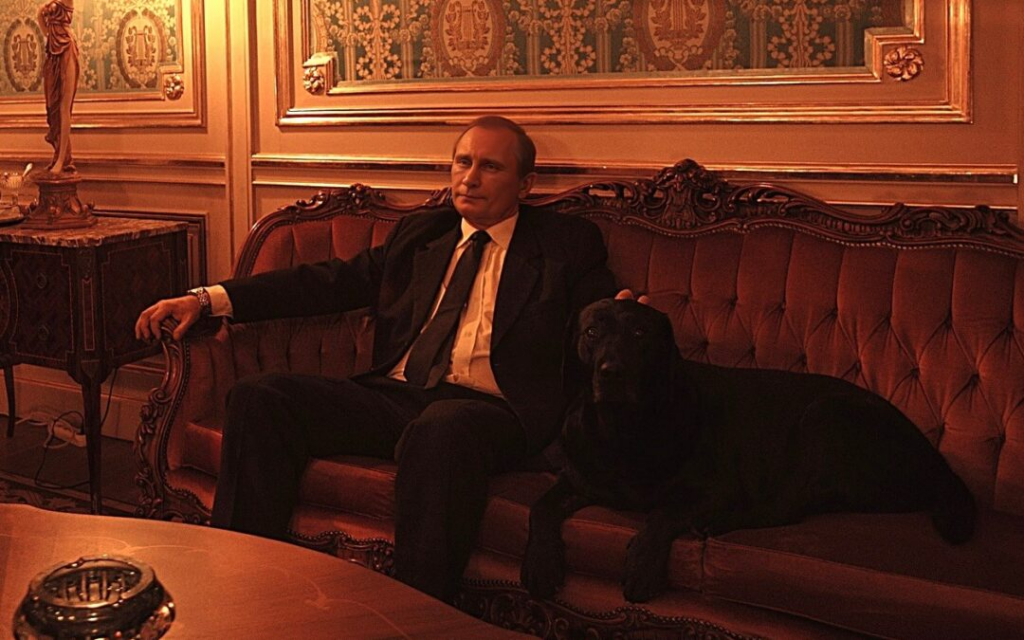
A groundbreaking English-language Polish film about Vladimir Putin, set to premiere on January 10th, is generating considerable attention due to its innovative use of artificial intelligence in filmmaking. The biopic, titled Putin, is directed by Patryk Vega, a filmmaker renowned for his gritty portrayals of the criminal underworld. However, with the escalation of geopolitical tensions and Russia’s full-scale invasion of Ukraine in 2022, Vega pivoted from his original plan to make a film about Russian gangsters. Instead, he set his sights on creating a compelling portrayal of what he refers to as “Russia’s biggest gangster,” Vladimir Putin.
In a bold move, the film employs AI-powered special effects to digitally superimpose Putin’s face onto an actor, offering a realistic and immersive representation of the Russian president. The decision to use AI technology was driven by the need to closely capture the public image of Putin, known for his distinct appearance, and to present it in a narrative that delves deep into his political persona and controversial actions.
Speaking to Gazeta Wyborcza, Vega explained his creative shift. Initially, his film was supposed to focus on the world of Russian gangsters, but the outbreak of war in Ukraine profoundly affected his vision. “I decided to make a film about Putin, not only because he is a key figure in global politics but also because, in my eyes, he embodies the very essence of what it means to be a gangster on the world stage,” Vega remarked. The director’s goal is to explore Putin’s rise to power, his leadership tactics, and his role in the international sphere, particularly as it relates to the ongoing conflict in Ukraine.
The film aims to present a critical view of Putin’s leadership, portraying him as a complex figure who navigates the intersections of power, corruption, and influence. It promises to offer an intimate, yet controversial, look into the Russian president’s life and decisions that have shaped both Russia and the world. Given the tension surrounding Putin’s regime and the ongoing war in Ukraine, Putin is expected to provoke strong reactions and spark important conversations.
With Putin, Patryk Vega has stepped outside his usual genre, moving from criminal thrillers to a politically charged narrative that draws on current events and historical context. The use of AI in the film adds a futuristic and cutting-edge element, allowing audiences to engage with a digital reconstruction of a figure who remains one of the most influential and contentious leaders of the 21st century.
As the premiere approaches, expectations are high for the film’s impact, both in terms of its storytelling and the conversation it will undoubtedly stir regarding Putin’s influence on global politics. Whether Putin will become a critical success or ignite controversy remains to be seen, but it is clear that the film represents an ambitious and bold attempt to merge technology with storytelling in an exploration of one of the world’s most enigmatic leaders.
Putin, Patryk Vega’s first English-language film, has garnered significant attention for its innovative approach to portraying the Russian president through advanced technology. With a production budget of $15 million, the film’s unique use of AI to generate a realistic image of Vladimir Putin has sparked curiosity worldwide. Set to be screened in 64 countries, the movie promises to offer a strikingly authentic depiction of one of the most recognized figures in modern global politics.
In an interview with The Telegraph, Vega explained his reasoning behind the film’s technological innovation. “The audience needed to see the real Putin,” he said. “They see him every day in the media. Even the best actor with great make-up wouldn’t convincingly portray a figure everyone in the world knows so well.” This insight into the film’s approach underscores the challenge of capturing a leader whose face and presence have been immortalized by media coverage for years.
To create a realistic and convincing representation of Putin, Vega employed a dual technique. He enlisted Polish actor Sławomir Sobala, who spent two years meticulously studying and mastering the Russian president’s mannerisms, body language, and movements. Sobala’s dedication to accurately replicating Putin’s physical characteristics was essential in ensuring a believable portrayal. However, it was the integration of cutting-edge AI technology that allowed Sobala’s performance to seamlessly transform into a visual representation of Putin on screen.
The AI technology was used to superimpose Putin’s face onto Sobala’s body, effectively merging the actor’s physicality with the digital face of the Russian president. This fusion of live-action performance and digital effects aims to create an experience that feels as real and immersive as possible, offering the audience a face-to-face encounter with the figure they have seen countless times in the media.
Vega’s decision to use AI highlights the filmmaker’s ambition to push the boundaries of cinema and provide a portrayal of Putin that feels both familiar and unsettling. The film’s groundbreaking use of technology is expected to spark conversations not only about the nature of filmmaking but also about the implications of AI in the representation of real-life figures.
As the film is set to debut in a wide array of international markets, Putin is poised to make a significant impact. With its combination of cutting-edge technology, skilled performances, and a timely narrative focused on one of the most controversial leaders of the 21st century, the film is likely to ignite debates and discussions about the intersection of politics, media, and technology in the modern world.
Putin weaves a compelling narrative, presenting the Russian president as a ruthless, power-hungry leader. The film intertwines dramatized accounts of well-documented events with fictional elements, spanning decades of Putin’s life—from his childhood to his rise to the presidency, and culminating in the full-scale invasion of Ukraine. This blend of fact and fiction allows the film to explore both the historical context and the controversial actions of one of the most polarizing leaders of the modern era.
In one memorable scene, a young Vladimir Putin is portrayed delivering a chilling declaration: “It is better to die standing than live on your knees.” This line captures the essence of his perceived worldview, one that prioritizes strength, dominance, and a relentless pursuit of power. The film uses these dramatic moments to emphasize the formative experiences that shaped Putin’s future decisions and his unyielding grip on leadership.
As the narrative unfolds, the film ventures into more provocative and controversial depictions of Putin’s character. One such scene shows the Russian president participating in a hunting expedition where women, dressed as Playboy bunnies, are cast as the “prey” in a highly stylized and symbolic portrayal. This scene is designed to evoke a sense of decadence and manipulation, reflecting the film’s portrayal of Putin as a figure who uses both power and image to maintain control.
By mixing fictionalized elements with real-world events, Putin aims to present a complex and layered portrayal of the Russian leader, exploring not only his political rise but also his personal ambitions and the choices that have shaped his path. The inclusion of such bold and controversial scenes contributes to the film’s unapologetic tone, positioning it as a provocative piece of cinema that challenges conventional portrayals of political figures.
Ultimately, Putin seeks to offer an intimate, yet critical, exploration of one of the most influential leaders of the 21st century, positioning the film as both a character study and a politically charged commentary on power, corruption, and control. As the film prepares for its premiere, it is clear that it will spark conversation, with its unflinching portrayal of Putin expected to ignite debates on the intersection of politics, media, and representation.
Despite the strong and ruthless facade that Putin presents, director Patryk Vega’s ultimate vision for the film is to reveal the vulnerability and fear beneath the surface of the Russian president. While the film showcases Putin as a dominant and power-hungry leader, Vega emphasizes that the real essence of the character he aimed to portray is one of weakness and fear. In an effort to convey this complex dynamic, the film presents Putin not as the untouchable figure many believe him to be, but as a deeply frightened man grappling with his own mortality.
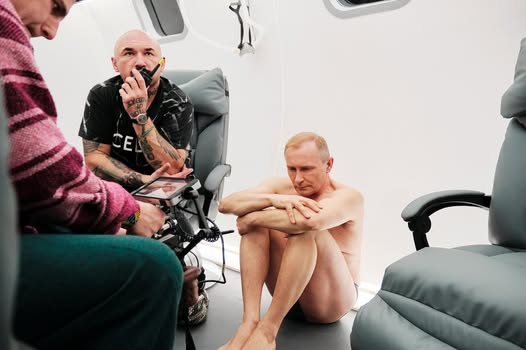
In promotional material for the film, a particularly striking image shows Putin sitting on the floor wearing a nappy, symbolizing a moment of profound vulnerability. This image, along with other elements of the film, is designed to provoke a reaction from the audience by challenging their perceptions of Putin as an all-powerful leader. Vega explains that his intention is to expose the fear that drives Putin, stating, “Everyone is afraid of Vladimir Putin [but] in my film, he is a terrified man who is terrified of death.”
Vega further elaborated on his approach to Gazeta Wyborcza, stating, “My thesis is that Putin is a coward… I wanted to expose Putin, to let the audience get extremely close to the caged tiger and show them that this tiger is also afraid.” This perspective is a deliberate attempt to humanize Putin, not as an invincible figure, but as a man who is deeply fearful of the consequences of his own actions. By portraying the president as both a powerful figure and a terrified individual, Vega seeks to create a more nuanced view of Putin, one that contrasts his public image with the private insecurity that may drive him.
This portrayal is a significant departure from the way many have depicted Putin in the media, where he is often shown as a strong, unyielding leader. In Putin, Vega is determined to present a different side of the man—one that is equally driven by fear and self-preservation, further complicating the public’s understanding of the Russian leader.
By exposing the fear behind the power, Putin aims to spark a deeper reflection on the nature of authority, vulnerability, and the humanizing forces that influence even the most powerful individuals. With this portrayal, Vega invites the audience to question the very foundation of Putin’s leadership and to confront the darker, more fragile elements of a man who has shaped Russia and the world in profound ways.

The content and methods employed in Putin have sparked significant debate, with differing opinions on its artistic choices and ethical considerations. On one hand, the film has garnered attention for its innovative use of AI to create a realistic portrayal of Vladimir Putin, a technique that has sparked fascination within the film industry. However, critics have raised concerns about the film’s reliance on exaggerated tropes and questioned the ethical implications of using AI to superimpose the face of a real, living political figure onto an actor’s performance. Some worry that this approach could blur the line between reality and fiction, especially when dealing with such a polarizing figure as Putin.
In response to this criticism, Patryk Vega remains steadfast in his defense of the film’s methods. He argues that the social importance of the subject matter justifies his approach. “In his case, we are dealing with an important social interest. This man is accused of war crimes. This gives me the green light to make such a film,” Vega told Gazeta Wyborcza. By framing his work within the context of global political issues and the war in Ukraine, Vega positions his film as more than just entertainment—it is a form of commentary on the actions of a leader who has been accused of serious international crimes.
The film’s controversial nature has also led to unexpected intrigue from outside sources. Vega claims that his work caught the attention of Russian intelligence agents, who allegedly posed as U.S. buyers and offered a substantial sum of $200,000 for the script. According to Vega, he redirected these individuals to Poland’s intelligence agency, after which the offers ceased. This incident has added an additional layer of intrigue to the film, further fueling discussions about the intersection of politics, technology, and cinema.
Despite the controversy, Putin has become a conversation piece, raising important questions about the ethical responsibilities of filmmakers when portraying real-life figures, especially in politically charged contexts. The debate over the film’s methods—its use of AI, its depiction of a world leader, and the potential consequences of such a portrayal—continues to evolve as the film prepares for its global premiere. Whether seen as a groundbreaking artistic achievement or a dangerous manipulation of technology, Putin is certain to provoke strong reactions and lasting discussions.

Courtesy: NFKRZ
References
- ^ Jump up to:a b c d “Statistics on the Russian cinema market” (PDF). Nevafilm Research. Retrieved 22 March 2017.
- ^ “Table 8: Cinema Infrastructure – Capacity”. UNESCO Institute for Statistics. Archived from the original on 24 December 2018. Retrieved 5 November 2013.
- ^ “Film distributors by box office share Russia 2021”. Statista.
- ^ Jump up to:a b “Top films by box office in Russia May 2022”. Statista.
- ^ “Annual Report 2012/2013” (PDF). Union Internationale des Cinémas. Archived from the original (PDF) on 10 November 2013. Retrieved 10 November 2013.
- ^ Peter Rollberg (2009). Historical Dictionary of Russian and Soviet Cinema. US: Rowman & Littlefield. p. xxiii. ISBN 978-0-8108-6072-8.
- ^ Jump up to:a b Peter Rollberg (2016). Historical Dictionary of Russian and Soviet Cinema. US: Rowman & Littlefield. pp. 49–52. ISBN 978-1442268425.
- ^ Jump up to:a b c d e f g h i j The Encyclopaedia Britannica guide to Russia : the essential guide to the nation, its people, and culture. London: Robinson. 2009. pp. 208–213. ISBN 9781593398507.
- ^ Историческая справка (in Russian). Gerasimov Institute of Cinematography. Retrieved 2 September 2008.
- ^ Snider, Eric (23 November 2010). “What’s the Big Deal?: Battleship Potemkin (1925)”. MTV News. MTV. Archived from the original on 23 May 2019. Retrieved 23 May 2019.
- ^ Ebert, Roger. “Battleship Potemkin”. Archived from the original on 22 November 2010. Retrieved 28 November 2010.
- ^ “Top Films of All-Time”. Filmsite. Retrieved 23 May 2019.
- ^ “The 50 Greatest Films of All Time”. British Film Institute. Sight & Sound. September 2012. Archived from the original on August 2, 2012. Retrieved 1 January 2018.
- ^ Peter Rollberg (2009). Historical Dictionary of Russian and Soviet Cinema. US: Rowman & Littlefield. pp. 172–179. ISBN 978-0-8108-6072-8.
- ^ Peter Rollberg (2016). Historical Dictionary of Russian and Soviet Cinema. US: Rowman & Littlefield. pp. 591–593. ISBN 978-1442268425.
- ^ “Festival de Cannes: Andrei Rublev”. festival-cannes.com. Archived from the original on 31 October 2012. Retrieved 2009-04-10.
- ^ “Soviet Film Maker Tarkovsky Dies at 54”. Los Angeles Times. December 29, 1986.
- ^ Stephen Dalton. “Andrei Tarkovsky, Solaris and Stalker”. BFI.
- ^ Jump up to:a b “Top 10 most decorated Russian filmmakers”. RBTH. 26 January 2022.
- ^ “The History of Russian Cinema”. Cannes Film Festival. 12 January 2011.
- ^ Nancy Condee (2009). “Aleksei German: Forensics in the Dynastic Capital”. The Imperial Trace – Recent Russian Cinema. New York: Oxford University Press. pp. 185–216. ISBN 978-0190451226.
- ^ “‘Deserto Rosso’ Wins Top Prize At 25th Venice Film Festival”. The New York Times. 11 September 1964.
- ^ “Russian film director Konchalovsky wins Special Jury Prize at Venice Film Festival”. TASS.
- ^ Ronald Bergan (21 Jun 2018). “Kira Muratova obituary”. Guardian.
- ^ Birgit Beumers (2005). Pop Culture Russia!: Media, Arts, and Lifestyle. Abc-Clio. p. 77. ISBN 1-85109-459-8.
- ^ Peter Rollberg (2009). Historical Dictionary of Russian and Soviet Cinema. US: Rowman & Littlefield. pp. 157–162. ISBN 978-0-8108-6072-8.
- ^ “Русская кинодвадцатка Радио Свобода “Москва слезам не верит””. Radio Svoboda. Retrieved 15 October 2021.
- ^ Richard Stites (1992). Russian Popular Culture: Entertainment and Society Since 1900. Cambridge University Press. p. 173. ISBN 0-521-36214-8.
- ^ “26e SELECTION DE LA SEMAINE DE LA CRITIQUE – 1987”. International Critics’ Week.
- ^ “35th International Filmfestival Mannheim-Heidelberg, Germany (October 6 – October 11, 1986)”. International Critics’ Week.
- ^ “16th Moscow International Film Festival (1989)”. MIFF. Archived from the original on 16 March 2013. Retrieved 25 February 2013.
- ^ Jump up to:a b Richard Taylor; Nancy Wood; Julian Graffy; Dina Iordanova (2019). The BFI Companion to Eastern European and Russian Cinema. Bloomsbury. pp. 1923–1927. ISBN 978-1838718497.
- ^ Peter Rollberg (2009). Historical Dictionary of Russian and Soviet Cinema. US: Rowman & Littlefield. p. xxxiv. ISBN 978-0-8108-6072-8.
- ^ Birgit Beumers (2005). Pop Culture Russia!: Media, Arts, and Lifestyle. Abc-Clio. p. 80. ISBN 1-85109-459-8.
- ^ “Berlinale: 1990 Prize Winners”. berlinale.de. Retrieved 16 March 2011.
- ^ “Festival de Cannes: Freeze Die Come to Life”. festival-cannes.com. Retrieved 8 August 2009.
- ^ “Berlinale: 1992 Programme”. berlinale.de. Retrieved 2011-05-29.
- ^ “Review/Film; Harshness of Soviet Life In Lungin’s ‘Taxi Blues'”. The New York Times. 18 January 1991.
- ^ “Cannes Festival”. Retrieved 29 January 2013.
- ^ “Festival de Cannes: The Wedding”. festival-cannes.com. Retrieved 10 October 2009.
- ^ “Festival de Cannes: Tsar”. festival-cannes.com. Retrieved 17 May 2009.
- ^ “Berlinale: 1990 Prize Winners”. berlinale.de. Retrieved 19 March 2011.
- ^ “Berlinale: 1991 Prize Winners”. berlinale.de. Retrieved 26 March 2011.
- ^ “Festival de Cannes: The Assassin of the Tsar”. festival-cannes.com. Retrieved 2009-08-09.
- ^ “Festival de Cannes: Anna Karamazoff”. festival-cannes.com. Retrieved 9 August 2009.
- ^ “Festival de Cannes: Perekhod tovarishcha Chkalova cherez severnyy polyus”. festival-cannes.com. Archived from the original on 2 January 2013. Retrieved 11 August 2009.
- ^ Valery Kichin (4 September 2015). “4 Russian films that scooped the Golden Lion at Venice”. RBTH.
- ^ “The 65th Academy Awards (1993) Nominees and Winners”. oscars.org. Retrieved 19 September 2015.
- ^ “Berlinale: 1992 Programme”. berlinale.de. Retrieved 2011-05-22.
- ^ “Tchekiste” [The Chekist]. Cannes Film Festival (in French). Retrieved 16 August 2009.
- ^ “Festival de Cannes: Happy Days”. festival-cannes.com. Retrieved 16 August 2009.
- ^ Jane Taubman (26 November 2004). Kira Muratova: Kinofile Filmmakers’ Companion. I.B.Tauris, 2004. ISBN 0857714104.
- ^ “Venezia, Libertà Per Gli Autori”. La Repubblica. 31 July 1992. Retrieved 29 April 2014.
- ^ “50th Venice Film Festival 1993 – FilmAffinity”. Retrieved 2017-05-28.
- ^ “‘Burnt By the Sun’ Wins Foreign Film Oscar”. Associated Press. March 28, 1995.
- ^ “Hollywood Reporter: Cannes Lineup”. hollywoodreporter. Archived from the original on April 22, 2010. Retrieved 2010-04-16.
- ^ “Festival de Cannes: Assia and the Hen with the Golden Eggs”. festival-cannes.com. Retrieved 27 August 2009.
- ^ Andrei Plakhov (1994-05-03). “Премьера нового фильма Киры Муратовой”. Kommersant.
- ^ “Российский гуманитарный энциклопедический словарь”.
- ^ “UVLECENJA”. Locarno Festival. Archived from the original on 2017-04-24. Retrieved 2023-05-29.
- ^ “Лауреаты Национальной кинематографической премии “НИКА” за 1994 год”. Nika Award.
- ^ “Призеры 1991-2005 гг”. Kinotavr. Archived from the original on 2013-10-23. Retrieved 2017-04-22.
- ^ Edoardo Pittalis, Roberto Pugliese, Bella di Notte, August 1996.
- ^ Sandra Brennan (2016). “A Moslem”. Movies & TV Dept. The New York Times. Archived from the original on 25 March 2016. Retrieved 4 October 2015.
- ^ Peter Rollberg (2009). Historical Dictionary of Russian and Soviet Cinema. US: Rowman & Littlefield. p. 544. ISBN 978-0-8108-6072-8.
- ^ “The 69th Academy Awards (1997) Nominees and Winners”. oscars.org. Retrieved 5 October 2015.
- ^ “Три истории”. VokrugTV.
- ^ “Сеансу отвечают: Три истории”. Seance.
- ^ “Призеры 1991-2005 гг”. Kinotavr.
- ^ Richard Taylor; Nancy Wood; Julian Graffy; Dina Iordanova (2019). The BFI Companion to Eastern European and Russian Cinema. Bloomsbury. p. 1938. ISBN 978-1838718497.
- ^ “Festival de Cannes: Traveling Companion”. festival-cannes.com. Retrieved 2009-09-26.
- ^ “Berlinale: 1998 Programme”. berlinale.de. Retrieved 22 January 2012.
- ^ “Festival de Cannes: Father and Son”. festival-cannes.com. Archived from the original on 10 October 2012. Retrieved 7 November 2009.
- ^ “Festival de Cannes: Khrustalyov, My Car!”. Festival de Cannes. Retrieved 30 September 2009.
- ^ “Festival de Cannes: The Barber of Siberia”. festival-cannes.com. Retrieved 2009-10-11.
- ^ Boris Egorog (25 June 2018). “12 Russian-European movies you must watch before you die”. RBTH.
- ^ “Festival de Cannes: Moloch”. festival-cannes.com. Retrieved 2010-12-21.
- ^ “Festival de Cannes: Taurus”. festival-cannes.com. Retrieved 18 October 2009.
- ^ Jump up to:a b c d e f “100 главных русских фильмов: 1992—2013”. Afisha.
- ^ “Svetlana Baskova in the TV program Cult of Cinema”. Cult of Cinema.
- ^ “В Петербурге суд запретил фильм “Зеленый слоник””. Meduza.
- ^ “27th Moscow International Film Festival (2005)”. MIFF. Archived from the original on 3 April 2013. Retrieved 13 April 2013.
- ^ “”А помните, вы вчера товарища генерала за погон укусили?”: 23 факта о “ДМБ””. Kinoreporter.
- ^ “Winners 1991–2005”. Kinotavr. Archived from the original on 2017-02-02. Retrieved 2017-01-25.
- ^ “Poisons or the World History of Poisoning / Jady ili Vsěmirnaja istorija otravlěnij”. KVIFF.
- ^ “Яды, или Всемирная история отравлений”. VokrugTV.
- ^ “Яды, или Всемирная история отравлений. Х/ф”. Russia-1. Archived from the original on 2020-11-20. Retrieved 2023-05-28.
- ^ Jump up to:a b “24th Moscow International Film Festival (2002)”. MIFF. Archived from the original on 28 March 2013. Retrieved 31 March 2013.
- ^ Dan Fainaru (3 December 2003). “The Last Train (Poslednyi Poezd)”. Screen Daily.
- ^ Deborah Young (September 9, 2005). “Review: ‘Garpastum'”. Variety. Retrieved 2 June 2016.
- ^ “Russian film wins award in Venice”. RBTH. 2008-08-07.
- ^ “Festival de Cannes: Russian Ark”. festival-cannes.com. Retrieved 25 October 2009.
- ^ “Italianetz”, Berlinale Film Archive, 14 February 2005, retrieved 17 July 2017
- ^ “Festival de Cannes: 977”. festival-cannes.com. Retrieved 14 December 2009.
- ^ “Festival de Cannes: Tale in the Darkness”. festival-cannes.com. Retrieved 17 May 2009.
- ^ “Ugly Swans”. Tretyakov Gallery.
- ^ “Festival de Cannes: The Banishment”. festival-cannes.com. Archived from the original on 12 October 2012. Retrieved 18 December 2009.
- ^ “Official Awards at the 64th Venice Film Festival”. www.labiennale.org. Archived from the original on 2008-04-17. Retrieved 2007-12-12.
- ^ “80th Academy Awards Nominations Announced” (Press release). Academy of Motion Picture Arts and Sciences. 2008-01-22. Retrieved 2008-01-22.
- ^ Fabien Lemercier (2008-05-25). “Cantet wins Palme d’Or and Sorrentino, Garrone and Dardenne brothers scoop awards”. Cineuropa.
- ^ “2008 Sundance Film Festival Award Winners”. SlashFilm. 2008.
- ^ “Final Press Release (July 11th, 2009)” (PDF). Karlovy Vary International Film Festival.
- ^ “Федеральный закон от 05.05.2014 г. № 101-ФЗ”. Kremlin.
- ^ “НЕ В МАТЕ ДЕЛО: ЗАКОН О ЗАПРЕТЕ НЕЦЕ