

As Trump prepares to take office, his proposal to use “economic force” to integrate Canada into the US is expected to face strong opposition from lawmakers, law enforcement, and the public.

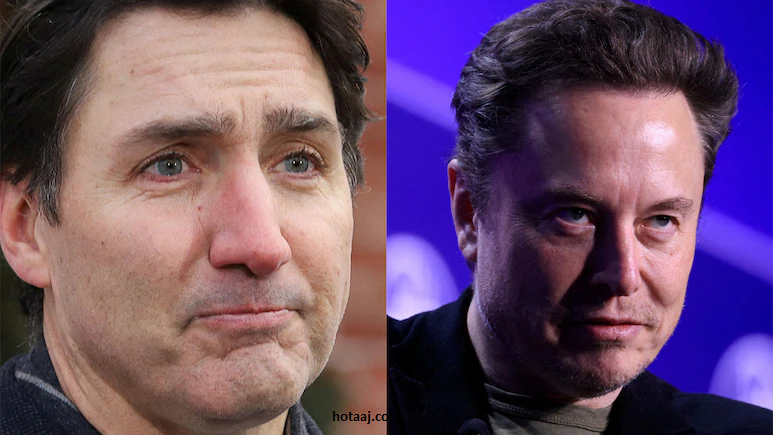
Elon Musk Stirs Controversy Over Canada-US Merger Debate
Billionaire entrepreneur Elon Musk has reignited controversy following a comment directed at former Canadian Prime Minister Justin Trudeau. On Wednesday, Musk responded sharply to Trudeau’s rejection of a proposed Canada-US merger, tweeting, “Girl, you’re not the governor of Canada anymore, so it doesn’t matter what you say.” This response came after Trudeau’s statement that Canada would never merge with the US, emphasizing the mutual benefits of the strong trade and security ties between the two nations.
The exchange comes amid growing tensions surrounding President-elect Donald Trump’s persistent suggestion to use “economic force” to make Canada the 51st US state. Since his election, Trump has proposed that Canada could be integrated into the US due to what he perceives as “massive trade deficits” and subsidies that Canada allegedly requires. Trump also claimed that “Many people in Canada LOVE being the 51st State,” fueling further debate.
In his response, Trudeau firmly rejected Trump’s comments, asserting that the close relationship between the US and Canada benefits workers and communities in both countries. “There isn’t a snowball’s chance in hell that Canada would become part of the United States,” he emphasized.
The controversy escalated when Trump posted a distorted map on social media showing Canada as part of the United States with the caption “Oh Canada!” This image has sparked concerns about the future of US-Canada relations, with many questioning the implications of Trump’s proposals and the growing tension between the two nations.
While the idea of a Canada-US merger is widely seen as far-fetched, the continued heated rhetoric has raised concerns about how the incoming administration will handle international relations, particularly with Canada, and whether Trump’s proposals will gain any traction. The exchange between Musk and Trudeau has added a new layer of complexity to the ongoing debate, highlighting the polarized views on this contentious issue.
Elon Musk Responds to Pierre Poilievre on Canada’s Sovereignty
Billionaire Elon Musk has stirred further debate with his comment on Canada’s sovereignty in response to Carleton MP Pierre Poilievre’s recent post on X (formerly Twitter). Poilievre had posted a strong statement affirming that Canada would never become the 51st state of the US, emphasizing the country’s independence, contributions to global security, and economic ties with the US. He criticized the current government for not highlighting Canada’s significance, pledging to strengthen Canada’s military, control borders, and prioritize Canadian interests if he becomes Prime Minister.
Musk, who often shares his thoughts on political matters, responded to Poilievre’s post by stating, “A referendum of the people is the essence of democracy!” This comment, referencing the democratic process of public voting on important issues, further fueled the ongoing discourse surrounding Canadian sovereignty and its future relationship with the US.
Poilievre’s post outlined a vision of a more assertive Canada, focusing on rebuilding military strength, controlling borders, and ensuring national security, while promoting economic growth through tax cuts and resource development. The response from Musk highlights his belief in direct democracy as a means to address national issues, adding another layer of complexity to the heated discussions surrounding Canada’s political direction.
As Trump prepares to take office, his plans to use “economic force” to integrate Canada into the US are expected to encounter strong resistance from lawmakers, law enforcement, and the public. The idea has sparked widespread controversy, with many questioning its feasibility and implications for US-Canada relations. Musk’s tweet, endorsing a democratic referendum on the matter, has added further fuel to the already heated debate, intensifying the division over Canada’s sovereignty and its future political alignment.

Courtesy: WION
References
- ^ Musk remained on the board and served as an advisor.[73][74]
- ^ SpaceX received nearly $900 million in Federal Communications Commission subsidies for Starlink.[104][105]
- ^ Musk stated he was considering taking Tesla private at a price of $420 a share, an alleged reference to marijuana.[153] Members of Tesla’s board and rapper Azealia Banks alleged that Musk may have been under the influence of recreational drugs when he wrote the tweet.[154][155]
- ^ He did not file the necessary SEC paperwork within 10 days of his stake passing 5%, a violation of US securities laws.[208]
- Citations
- ^ Jump up to:a b c Alexander, Sophie; Hull, Dana (June 21, 2024). “Elon Wants YOU to Have More Babies”. Bloomberg News. Retrieved June 21, 2024.
- ^ “The Top 10 Richest People In The World (January 2025)”. Forbes. Archived from the original on April 25, 2012. Retrieved January 6, 2025.
- ^ Jump up to:a b c Eligon, John; Chutel, Lynsey (May 5, 2022). “Elon Musk Left a South Africa That Was Rife With Misinformation and White Privilege”. The New York Times. Archived from the original on November 11, 2022. Retrieved May 5, 2022.
- ^ Vance (2017), pp. 25, 31.
- ^ Jump up to:a b Hall, Dana (April 11, 2014). “Rocket Man: The otherworldly ambitions of Elon Musk”. The Mercury News. Archived from the original on April 14, 2014. Retrieved April 14, 2014.
- ^ Elliott, Hannah (March 26, 2012). “At Home With Elon Musk: The (Soon-to-Be) Bachelor Billionaire”. Forbes. Archived from the original on May 27, 2012. Retrieved May 30, 2015.
- ^ His biography author Ashlee Vance interviewed on the TV show Triangulation on the TWiT.tv network, discussion of his family starts around the 15th minute
- ^ Vargas, Chanel (March 6, 2018). “11 Things to Know About Stunning 69-Year-Old Model Maye Musk”. Town & Country. Archived from the original on March 7, 2018. Retrieved March 25, 2020.
- ^ Jump up to:a b Usborne, Simon (February 21, 2018). “Meet the Musks: who’s who in Elon’s extended family?”. The Guardian. ISSN 0261-3077. Archived from the original on May 27, 2020. Retrieved March 25, 2020.
- ^ Jump up to:a b Isaacson (2023), p. 23.
- ^ Hull, Dana; May, Patrick. “Exploring the otherworldly ambitions of Elon Musk”. The Buffalo News. Archived from the original on September 26, 2022. Retrieved October 24, 2021.
- ^ Jump up to:a b Friend, Tad (August 17, 2009). “Plugged In”. The New Yorker. Archived from the original on March 8, 2022.
- ^ Jump up to:a b c Smith, Adam (June 28, 2021). “50 years of Elon Musk’s huge wealth, from emeralds to SpaceX and Tesla”. The Independent. Archived from the original on November 25, 2021. Retrieved December 20, 2021.
teenage Elon Musk once walked the streets of New York with emeralds in his pocket. His father said: “We were very wealthy. We had so much money at times we couldn’t even close our safe,” adding that one person would have to hold the money in place with another closing the door. “And then there’d still be all these notes sticking out and we’d sort of pull them out and put them in our pockets.”
- ^ Lieberman, Hallie. “The Musk of Romance”. Wired. Archived from the original on September 2, 2020. Retrieved September 2, 2020.
- ^ Kay, Grace (September 30, 2023). “Elon Musk’s dad, 77, says he’d have more kids — but only if he could find a woman under 35”. Business Insider. Archived from the original on February 23, 2024. Retrieved February 23, 2024.
- ^ Jump up to:a b Hull, Dana; May, Patrick (April 10, 2014). “2014: Rocket Man: The otherworldly ambitions of Elon Musk”. The Mercury News. Archived from the original on September 6, 2016. Retrieved April 7, 2021.
- ^ Crilly, Rob (March 25, 2018). “Elon Musk’s father has baby with step-daughter he has known since she was four”. The Daily Telegraph. Archived from the original on April 26, 2021.
- ^ Mann, Jyoti (September 11, 2023). “Elon Musk really was telling the truth by saying his father Errol never owned an emerald mine, biographer says”. Business Insider. Archived from the original on November 22, 2023. Retrieved February 22, 2024.
- ^ Crellin, Zac (September 22, 2023). “Elon Musk’s Dad Shares Deadly Secrets of Fabled Emerald Mine”. The Daily Beast. Archived from the original on March 13, 2024. Retrieved March 13, 2024.
- ^ Keating, Joseph C. Jr. (September 1995). “Joshua N Haldeman, DC: the Canadian Years, 1926–1950”. The Journal of the Canadian Chiropractic Association. PMC 2485067.
- ^ Vance (2017), pp. 26–30.
- ^ Isaacson (2023), p. 16.
- ^ “Does Elon Musk have PTSD? Biographer Walter Isaacson says the billionaire’s turbulent childhood with an abusive father left him scarred”. Archived from the original on June 15, 2024. Retrieved June 15, 2024.
- ^ Jump up to:a b Strauss, Neil (November 15, 2017). “Elon Musk: The Architect of Tomorrow”. Rolling Stone. Archived from the original on August 17, 2020. Retrieved November 15, 2017.
- ^ “Hoërskool Bryanston se hoof hartseer oor Elon Musk geboelie is”. Archived from the original on June 28, 2024. Retrieved June 28, 2024.
- ^ Jump up to:a b c Isaacson (2023), pp. 2–3.
- ^ Jump up to:a b Bhaimiya, Sawdah. “Errol Musk denies berating his son after an attack at school put Elon Musk in hospital”. Business Insider. Archived from the original on December 5, 2023. Retrieved December 5, 2023.
- ^ “Elon Musk shares the science fiction book series that inspired him to start SpaceX”. CNBC. February 22, 2020. Archived from the original on November 4, 2023. Retrieved November 9, 2023.
- ^ Vance (2017), p. 38.
- ^ O’Kane, Sean (June 9, 2015). “Play the PC game Elon Musk wrote as a pre-teen”. The Verge. Archived from the original on February 7, 2018. Retrieved January 12, 2019.
- ^ Belfiore (2007), pp. 166–195.
- ^ Jump up to:a b Mak, Aaron (December 4, 2019). “Elon Musk Says ‘Pedo Guy’ Was a Common Insult in His Youth. We Checked With His Schoolmates”. Slate. Archived from the original on October 6, 2020. Retrieved December 7, 2019.
- ^ Isaacson (2023), p. 26.
- ^ Jump up to:a b Clifford, Catherine (June 12, 2018). “Multi-billionaire Elon Musk: ‘I arrived in North America at 17 with $2,000′”. CNBC. Archived from the original on August 2, 2020. Retrieved September 14, 2020.
- ^ Vance (2017), p. 44. Musk’s opportunity to flee arrived with a change in the law that allowed Maye to pass her Canadian citizenship to her children.
- ^ Junod, Tom (November 15, 2012). “Elon Musk: Triumph of His Will”. Esquire. Archived from the original on August 18, 2020. Retrieved May 29, 2020.
- ^ Vance (2017), pp. 43–44. What rarely gets mentions is that Musk attended the University of Pretoria for five months before heading off on his grand adventure. … Musk characterized the time at university as just something to do while he awaited his Canadian documentation.
- ^ Vance (2017), p. 45. After a 1,900-mile bus ride, he ended up in Swift Current, a town of fifteen thousands people. Musk called a second cousin out of the blue from the bus station and hitched a ride to his house.
- ^ Vance (2017), p. 46. Musk spent the next year working a series of odd jobs around Canada. He tended vegetables and shoved out grain bins at a cousin’s farm located in the tiny town of Waldeck. … He inquired about the job with the best wage, which turned out to be a gig cleaning the boiler room of a lumber mill for eighteen dollars an hour.
- ^ Vance (2017), pp. 46–47. Elon ended up enrolling at Queen’s University in Kingston, Ontario, in 1989.
- ^ Locke, Taylor (December 20, 2019). “Elon Musk’s college pal: This is what ‘differentiates Elon from the rest of humanity'”. CNBC. Archived from the original on December 14, 2020. Retrieved January 8, 2021.
- ^ Shoichet, Catherine E. (September 29, 2024). “Elon Musk once described his past immigration status as a ‘gray area'”. CNN. Archived from the original on November 13, 2024. Retrieved November 1, 2024.
- ^ Jump up to:a b Vance (2017), p. 368. Musk produced a document for me dated June 22, 2009, that came from Judith Haccou, the director of graduate admissions in the office of the registrar at Stanford University. It read, “As per special request from my colleagues in the School of Engineering, I have searched Stanford’s admission data base and acknowledge that you applied and were admitted to the graduate program in Material Science Engineering in 1995. Since you did not enroll, Stanford is not able to issue you an official certification document.” Musk also had an explanation for the weird timing on his degrees from Penn. “I had a History and an English credit that I agreed with Penn that I would do at Stanford,” he said. “The I put Stanford on deferment. Later, Penn’s requirements changed so that you don’t need the English and History credit. So they awarded me the degree in ’97 when it was clear I was not going to go to grad school, and their requirement was no longer there.”
- ^ Kasprak, Alex (December 21, 2022). “Does Elon Musk Have an Undergraduate Degree in Physics?”. Snopes. Archived from the original on December 23, 2022. Retrieved December 23, 2022.
- ^ Jump up to:a b Vance (2017), Appendix 1. I called Penn’s registrar and verified these findings. Copies of Musk’s records show that he received a dual degree in economics and physics in May 1997. O’Reilly also subpoenaed the registrar’s office at Stanford to verify Musk’s admittance in 1995 for his doctorate work in physics. “Based on the information you provided, we are unable to locate a record in our office for Elon Musk,” wrote the director of graduate admissions.
- ^ Meisenzahl, Elizabeth. “SpaceX, founded by Penn graduate Elon Musk, launches U.S. astronauts into space”. The Daily Pennsylvanian. Archived from the original on August 7, 2020. Retrieved June 1, 2020.
- ^ McCray, Patrick W. (June 11, 2012). “A pioneer in space and on Earth”. CNN. Archived from the original on November 28, 2022. Retrieved November 19, 2022.
- ^ Jump up to:a b Hern, Alex (February 9, 2018). “Elon Musk: the real-life Iron Man”. The Guardian. Archived from the original on June 11, 2022. Retrieved November 3, 2022.
- ^ “How internships helped Elon Musk figure out his future”. CNBC. July 16, 2018. Archived from the original on December 28, 2019. Retrieved December 28, 2019.
- ^ Soni, Jimmi (February 22, 2022). “The little-known story about Elon Musk’s first post-grad internship”. Fortune. Archived from the original on March 7, 2022.
- ^ Jump up to:a b c Sacchetti, Maria; Siddiqui, Faiz; Miroff, Nick (October 26, 2024). “Elon Musk, enemy of ‘open borders’, launched his career working illegally”. The Washington Post. Retrieved October 26, 2024.
- ^ Maidment, Paul (March 15, 2016). “7 college dropouts who made millions”. CNBC. Archived from the original on May 15, 2020. Retrieved September 3, 2020.
- ^ Faiz Siddiqui; Nick Miroff. “Elon Musk claims student visa permitted him to work in U.S.” The Washington Post.
- ^ Delevett, Peter; Hull, Dana (August 13, 2012). “Greg Kouri, early investor in PayPal, dies in New York”. The Mercury News. Archived from the original on October 6, 2022. Retrieved October 1, 2022.
- ^ Huddleston, Tom Jr. (June 19, 2018). “How Elon Musk founded Zip2 with his brother Kimbal”. CNBC. Archived from the original on November 9, 2022. Retrieved October 1, 2022.
- ^ Chafkin, Max (December 1, 2007). “Entrepreneur of the Year, 2007: Elon Musk”. Inc. Archived from the original on December 28, 2007. Retrieved February 22, 2022.
- ^ Jump up to:a b c Huddleston, Tom Jr. (June 19, 2018). “Elon Musk slept on his office couch and ‘showered at the YMCA’ while starting his first company”. CNBC. Archived from the original on August 18, 2020. Retrieved September 4, 2020.
- ^ Novak, Matt (April 1, 2024). “Watch Elon Musk Talk About Being an ‘Illegal Immigrant’ in Video From 2013”. Gizmodo. Archived from the original on September 29, 2024. Retrieved September 29, 2024.
- ^ Shoichet, Catherine E. (September 29, 2024). “Elon Musk once described his past immigration status as a ‘gray area'”. CNN. Archived from the original on September 29, 2024. Retrieved September 29, 2024.
- ^ Kidder (2013), pp. 224–228.
- ^ Vance (2017), p. 67.
- ^ Vance (2017), p. 14.
- ^ Junnarkar, Sandeep (February 16, 1999). “Compaq buys Zip2”. CNET. Archived from the original on October 21, 2014. Retrieved December 13, 2020.
- ^ Vance (2017), p. 109.
- ^ Jump up to:a b Isaacson, Walter (2023). Elon Musk by Walter Isaacson. Simon & Schuster. p. 74. ISBN 978-1-76142-261-4.
- ^ Vance (2017), p. 78.
- ^ Vance (2017), p. 84.
- ^ Jump up to:a b Vance (2017), p. 86.
- ^ Jackson (2004), pp. 40, 69, 130, 163.
- ^ Vance (2017), pp. 85–86.
- ^ Vance (2017), pp. 85–87.
- ^ Vance (2017), pp. 87–88.
- ^ “The PayPal Mafia”. Fortune. Archived from the original on May 23, 2017. Retrieved July 4, 2015.
- ^ Jump up to:a b Vance (2017), p. 89.
- ^ Odell, Mark (September 30, 2014). “Timeline: The rise of PayPal”. Financial Times. Archived from the original on June 22, 2020. Retrieved April 3, 2020.
- ^ “SEC 10-K”. PayPal. December 31, 2001. Archived from the original on August 25, 2020.
- ^ Vance (2017), pp. 116.
- ^ Huang, Echo. “Elon Musk bought a web domain worth millions with ‘sentimental value’ to him”. Quartz. Archived from the original on June 25, 2020. Retrieved April 3, 2020.
- ^ Statt, Nick (July 10, 2017). “Elon Musk now owns X.com, the defunct domain of his second startup”. The Verge. Archived from the original on June 25, 2020. Retrieved September 3, 2020.
- ^ Kleinman, Zoe (October 5, 2022). “Elon Musk, Twitter and the mysterious X app”. BBC. Archived from the original on October 21, 2022. Retrieved October 27, 2022.
- ^ Vance (2017), pp. 99, 102–103.
- ^ Kenneth Chang (May 30, 2020). “Entrepreneur Tries His Midas Touch in Space, New York Times”. The New York Times. Archived from the original on June 2, 2020.
- ^ Jump up to:a b Vance, Ashlee (May 14, 2015). “Elon Musk’s space dream almost killed Tesla”. Bloomberg L.P. Archived from the original on February 23, 2017. Retrieved June 7, 2015.
- ^ Wayne, Leslie (February 5, 2006). “A Bold Plan to Go Where Men Have Gone Before”. The New York Times. Archived from the original on April 12, 2020. Retrieved February 16, 2015.
- ^ California Business Search (C2414622 – Space Exploration Technologies Corp), archived from the original on February 23, 2018, retrieved December 13, 2020
- ^ Koren, Marina (May 6, 2021). “Elon Musk Is Maybe, Actually, Strangely, Going to Do This Mars Thing”. The Atlantic. Archived from the original on May 31, 2022. Retrieved June 8, 2022.
- ^ Jump up to:a b Berger (2021), pp. 178–182.
- ^ Malik, Tariq (November 21, 2005). “Griffin Reiterates NASA’s Commitment to Commercial Cargo, Space News”. Archived from the original on June 19, 2022. Retrieved October 29, 2022.
- ^ Dunbar, Brian. “NASA Invests in Private Sector Space Flight with SpaceX, Rocketplane-Kistler”. nasa.gov (Press release). Archived from the original on September 8, 2021. Retrieved December 2, 2021.
- ^ Ledur, Júlia (May 1, 2019). “Falcon Flights”. Reuters. Archived from the original on February 10, 2021. Retrieved February 10, 2021.
- ^ Chang, Kenneth (May 22, 2012). “Big Day for a Space Entrepreneur Promising More”. The New York Times. Archived from the original on July 1, 2017. Retrieved January 11, 2021.
- ^ Harwood, William (May 31, 2012). “SpaceX Dragon returns to Earth, ends historic trip”. CBS News. Archived from the original on April 22, 2016. Retrieved August 3, 2013.
- ^ “SpaceX rocket in historic upright landing”. BBC News. December 22, 2015. Archived from the original on August 31, 2019. Retrieved June 30, 2016.
- ^ O’Kane, Sean (May 27, 2016). “SpaceX successfully lands a Falcon 9 rocket at sea for the third time”. The Verge. Archived from the original on June 27, 2016. Retrieved June 30, 2016.
- ^ Drake, Nadia (February 25, 2018). “Elon Musk’s Tesla in Space Could Crash into Earth”. National Geographic. Archived from the original on February 10, 2021. Retrieved February 10, 2021.
- ^ Chow, Denise (November 6, 2019). “‘Starman’ and the Tesla Roadster that SpaceX launched into orbit have now cruised beyond Mars”. NBC News. Archived from the original on February 10, 2021. Retrieved February 10, 2021.
- ^ Berger, Eric (August 28, 2019). “Starhopper aces test, sets up full-scale prototype flights this year”. Ars Technica. Archived from the original on January 21, 2021. Retrieved December 15, 2021.
- ^ Roulette, Joey (March 28, 2022). “SpaceX ending production of flagship crew capsule”. Reuters. Archived from the original on March 29, 2022. Retrieved March 31, 2022.
- ^ Wattles, Jackie (May 30, 2020). “SpaceX and NASA launch Crew Dragon in Florida: Live updates”. CNN. Archived from the original on August 29, 2020. Retrieved May 30, 2020.
- ^ “NASA taps Elon Musk’s SpaceX to bring International Space Station out of orbit in a few more years”. Associated Press News. June 26, 2024. Archived from the original on November 13, 2024. Retrieved November 19, 2024.
- ^ Johnson, Eric M.; Roulette, Joey (October 31, 2018). “Musk shakes up SpaceX in race to make satellite launch window: sources”. Reuters. Archived from the original on May 18, 2020. Retrieved March 28, 2021.
- ^ Hall, Shannon (June 1, 2019). “After SpaceX Starlink Launch, a Fear of Satellites That Outnumber All Visible Stars – Images of the Starlink constellation in orbit have rattled astronomers around the world”. The New York Times. Archived from the original on August 21, 2020. Retrieved June 1, 2019.
- ^ Shepardson, David; Roulette, Joey (July 30, 2020). “Taking on SpaceX, Amazon to invest $10 billion in satellite broadband plan”. Reuters. Archived from the original on January 7, 2021. Retrieved January 12, 2021.
- ^ Sheetz, Michael (December 7, 2020). “SpaceX’s Starlink wins nearly $900 million in FCC subsidies to bring internet to rural areas”. CNBC. Archived from the original on December 16, 2020. Retrieved January 12, 2021.
- ^ Wattles, Jackie (Decem