



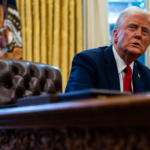
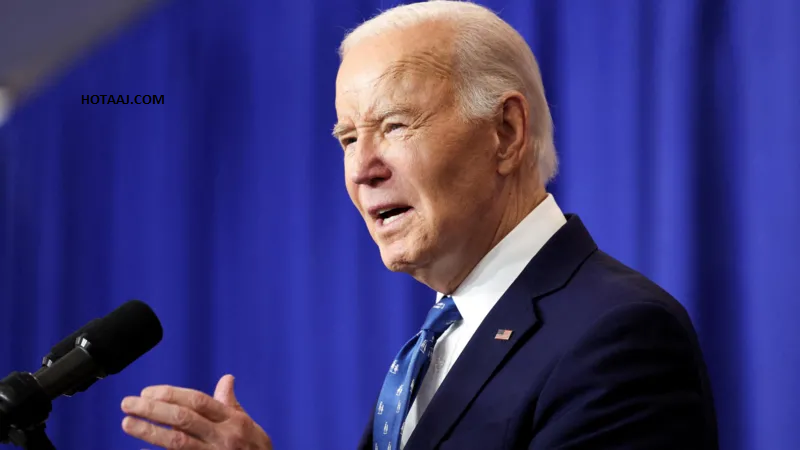
US President Joe Biden has made a significant move in the fight against the death penalty by commuting the sentences of 37 out of 40 federal death row inmates, converting their sentences to life imprisonment without the possibility of parole. This decision represents a dramatic shift in U.S. criminal justice policy and reflects Biden’s long-standing opposition to the death penalty. The commutation includes individuals convicted of heinous crimes, such as nine people who murdered fellow prisoners, four convicted of murders committed during bank robberies, and one who killed a prison guard.
In a statement, President Biden expressed his condemnation of the crimes committed by those affected, noting that he shared the grief of the victims’ families. However, he emphasized his belief that the U.S. should halt the use of the death penalty at the federal level. Biden has been vocal about his stance against capital punishment throughout his political career, and this decision reinforces his commitment to ending federal executions.
“Make no mistake: I condemn these murderers, grieve for the victims of their despicable acts, and ache for all the families who have suffered unimaginable and irreparable loss,” Biden stated, further elaborating on his resolve to end the use of the death penalty, which he argued is flawed and disproportionately applied.
The commutations include high-profile individuals such as disgraced former New Orleans police officer Len Davis, who was involved in a drug ring and orchestrated the murder of a woman, and several other inmates convicted of violent crimes. However, three individuals remain on federal death row: Dzhokhar Tsarnaev, convicted for his role in the 2013 Boston Marathon bombing; Dylann Roof, who killed nine Black churchgoers in Charleston, South Carolina, in 2015; and Robert Bowers, who killed 11 Jewish worshippers in the 2018 Tree of Life synagogue mass shooting in Pittsburgh.
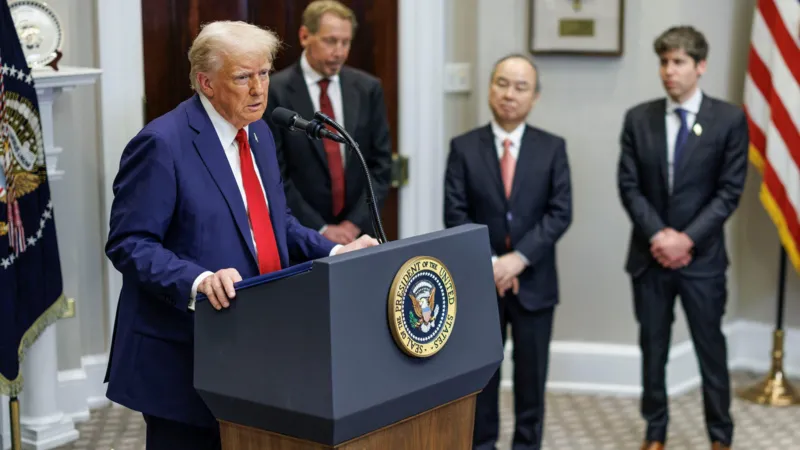
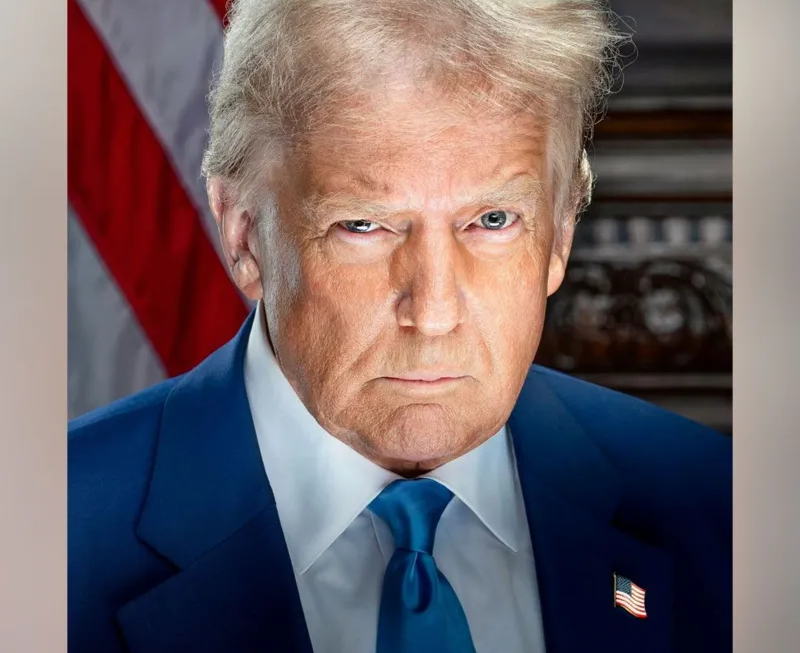
Biden’s decision is seen as a significant move ahead of the upcoming presidential transition, as President-elect Donald Trump, who has been an advocate for the death penalty, is set to take office in January. Trump resumed federal executions in July 2020 after a 17-year hiatus, overseeing the deaths of 13 individuals by lethal injection during his final months in office. Trump has previously indicated his intent to expand the use of the death penalty to include human and drug traffickers, as well as individuals convicted of killing American citizens.
COURTESY: NewsNation
Biden’s statement appeared to address Trump’s stance, highlighting his inability to stand by and allow the resumption of executions under a new administration. In response to Biden’s actions, a White House official noted that his decisions were grounded in a desire to reform the U.S. criminal justice system, acknowledging the need for a more humane approach.
It is important to note that Biden’s actions only affect federal death row inmates, as the use of the death penalty remains a state-level decision in the U.S. According to the Death Penalty Information Center, there are currently around 2,250 inmates on death row in state courts. While the federal government has moved away from executions, 70 state executions have been carried out during Biden’s presidency, reflecting the continued use of capital punishment at the state level.
In addition to his actions regarding the death penalty, earlier this month, Biden commuted the sentences of nearly 1,500 individuals and pardoned 39 more convicted of nonviolent offenses. One of the most notable pardons was that of his son, Hunter Biden, who faced sentencing for tax-related charges and the possession of a gun as a drug user.
Under the U.S. Constitution, the president holds broad powers to grant reprieves and pardons for federal offenses, excluding cases of impeachment. Biden’s actions reflect his ongoing efforts to reshape U.S. criminal justice policy, particularly in relation to the death penalty and nonviolent offenses. While his decisions have sparked controversy, they also represent a marked shift in the approach to criminal justice in the United States.
In a landmark decision, President Joe Biden has commuted the sentences of 37 out of 40 federal death row inmates, converting their sentences to life in prison without the possibility of parole. The commutations represent a pivotal moment in U.S. criminal justice policy, especially given Biden’s long-standing opposition to the death penalty. Biden has repeatedly argued that the death penalty is flawed, ineffective, and disproportionately applied, and this decision aligns with his commitment to reforming the U.S. justice system.
COURTESY: WRAL
Among those whose sentences were commuted are individuals convicted of particularly heinous crimes, such as nine people who killed fellow prisoners, four who murdered during bank robberies, and one who took the life of a prison guard. However, Biden emphasized that while he condemned the actions of these individuals and mourned the victims’ loss, he remained convinced that the federal death penalty should be abolished. In his statement, Biden said, “Make no mistake: I condemn these murderers, grieve for the victims of their despicable acts, and ache for all the families who have suffered unimaginable and irreparable loss.”
Biden’s commutation decisions are notable for several reasons. They come in the final months of his presidency, before the return of President-elect Donald Trump, who has been a staunch supporter of the death penalty and resumed federal executions in 2020 after a 17-year hiatus. During the last six months of his presidency, Trump oversaw 13 federal executions, marking the first use of the death penalty at the federal level since 2003. Trump had indicated during his re-election campaign that he would seek to expand the scope of the death penalty, targeting human and drug traffickers, as well as migrants who kill American citizens. Biden’s decision to commute sentences and halt federal executions underscores his stark contrast to Trump’s approach to capital punishment.
The remaining inmates on federal death row include Dzhokhar Tsarnaev, who helped carry out the 2013 Boston Marathon bombing; Dylann Roof, the white supremacist who killed nine Black churchgoers in Charleston, South Carolina in 2015; and Robert Bowers, who killed 11 Jewish worshippers at the Tree of Life synagogue in Pittsburgh in 2018. These high-profile cases have sparked debate over the use of the death penalty and whether certain crimes should warrant such an extreme form of punishment.
Biden’s decision is a part of his broader stance on criminal justice reform, which includes addressing systemic issues such as racial inequities, prison reform, and the overuse of incarceration. He has long been vocal about his opposition to the death penalty, and his administration issued a moratorium on federal executions shortly after he took office. This move was seen as a step toward reducing the overall use of capital punishment, which remains a divisive issue in the U.S.
COURTESY: MSNBC
However, Biden’s actions will only affect federal death row inmates, and not those sentenced to death in state courts. The United States has a patchwork approach to the death penalty, with 23 states having abolished it and several others, including Arizona, California, Ohio, Oregon, Pennsylvania, and Tennessee, currently having moratoriums in place. Despite the federal government’s shift away from executions, state executions have continued during Biden’s presidency, with over 70 executions carried out at the state level. This demonstrates the ongoing tension between federal and state policies on the death penalty.
In addition to his decisions on the death penalty, Biden also granted clemency to nearly 1,500 individuals convicted of nonviolent offenses earlier this month. He also issued 39 pardons, including one for his son, Hunter Biden, who had been facing sentencing for tax violations and gun possession charges related to his drug use. Biden’s pardons reflect his broader approach to criminal justice reform, which includes reducing sentences for nonviolent offenders and addressing past injustices in the legal system.
The U.S. Constitution grants the president broad authority to issue pardons and reprieves for federal offenses, except in cases of impeachment. While Biden’s decisions have been met with mixed reactions, they reflect a larger conversation about the future of the death penalty in the U.S. and the need for criminal justice reform. Biden’s commutations and moratorium on federal executions mark a significant shift in U.S. policy, but questions remain about how the death penalty will be handled at the state level and whether federal reforms will continue after his presidency.
Biden’s stance has been clear: he believes that the death penalty is an outdated and ineffective tool of justice that disproportionately impacts marginalized communities. With the number of states moving away from capital punishment and growing public opposition to the death penalty, Biden’s decisions could signal a broader trend toward abolition, though the ultimate future of the death penalty in the U.S. remains uncertain.
President Joe Biden’s recent decision to commute the sentences of 37 out of 40 federal death row inmates to life imprisonment without the possibility of parole marks a significant moment in U.S. criminal justice reform. The commutations have sparked nationwide conversations about the death penalty, with Biden reaffirming his belief that it is an unjust and ineffective form of punishment.
Among the 37 individuals whose sentences were commuted are those convicted of gruesome crimes, including murderers who killed fellow prisoners, individuals who committed murders during bank robberies, and one who killed a prison guard. Biden, however, made it clear that despite the severity of their crimes, he remained steadfast in his conviction that the death penalty should no longer be used at the federal level. In his statement, Biden said, “Make no mistake: I condemn these murderers, grieve for the victims of their despicable acts, and ache for all the families who have suffered unimaginable and irreparable loss,” acknowledging the pain of the victims’ families while emphasizing the need for a shift in justice policy.
COURTESY: KHOU 11
This decision comes in stark contrast to the actions of former President Donald Trump, who, during his presidency, resumed federal executions in 2020 after a 17-year hiatus. Trump’s administration oversaw 13 federal executions in the final months of his term, a move that was met with significant controversy and criticism from death penalty opponents. Biden’s decision to commute these sentences is viewed as part of his broader commitment to curbing the use of capital punishment in the U.S., especially given his opposition to it during his long political career.
The remaining death row inmates—such as Dzhokhar Tsarnaev, convicted for the 2013 Boston Marathon bombing; Dylann Roof, the white supremacist responsible for the 2015 Charleston church shooting; and Robert Bowers, who killed 11 people at the Tree of Life synagogue in 2018—have continued to be focal points in the debate over the death penalty in the U.S. These cases, often involving mass violence and terrorism, raise difficult questions about the appropriateness of the death penalty for certain high-profile, violent crimes. Biden has made it clear that while these individuals’ actions are deplorable, his position on the death penalty remains unchanged.
Biden’s stance on the death penalty aligns with the growing movement in the U.S. toward abolition. Twenty-three states have already abolished the death penalty, and several others, such as Arizona, California, and Pennsylvania, have put moratoriums on its use. Despite the federal government’s shift, the use of the death penalty at the state level continues, with over 70 state executions taking place during Biden’s presidency. These state-level executions continue to spark debate on the future of capital punishment in the U.S., with some arguing that federal reforms need to be extended to state courts to achieve meaningful change.
Biden’s move to halt federal executions is also part of a larger effort to address systemic inequalities within the criminal justice system. This includes reducing mandatory minimum sentences, addressing racial disparities in sentencing, and expanding rehabilitation efforts for incarcerated individuals. Biden’s commutation of nearly 1,500 sentences earlier this month for nonviolent offenders further demonstrates his commitment to reforming the criminal justice system, emphasizing rehabilitation over punitive measures for less serious offenses.
COURTESY: CBS19
The decision to commute the sentences of these 37 inmates is seen as part of Biden’s legacy of criminal justice reform. While the commutations were met with praise from advocates of the death penalty’s abolition, they were also criticized by those who argue that certain crimes, particularly violent ones, should still warrant the death penalty. Critics argue that Biden’s actions may send the wrong message regarding the consequences of particularly violent crimes, and that the families of the victims may feel that justice has not been fully served.
Biden’s commitment to reforming the justice system is not limited to his stance on the death penalty. His administration has also prioritized efforts to reduce mass incarceration, improve policing practices, and address the disproportionate impact of the criminal justice system on Black and Latino communities. Biden’s position on the death penalty fits within the broader context of his administration’s focus on racial justice, criminal justice reform, and efforts to dismantle systems that perpetuate inequality.
The question of the future of the death penalty in the U.S. remains one of the most contentious issues in American politics. While Biden’s actions represent a significant shift at the federal level, the state-level use of the death penalty continues to present challenges for advocates seeking abolition. Biden’s decision not only affects the 37 individuals whose sentences were commuted but also serves as a call to re-examine the moral and practical implications of capital punishment in the 21st century.
In the coming years, the fate of the death penalty may depend on the outcomes of future elections and whether more states choose to join the growing number of states that have abolished it. Biden’s actions will undoubtedly influence the ongoing national debate, but whether his stance will lead to broader changes in federal and state policies remains uncertain. The U.S. remains divided on the issue of capital punishment, and Biden’s decisions have added another chapter to the long-running debate over whether the death penalty has a place in modern society.
As President Joe Biden’s administration continues to navigate the complexities of criminal justice reform, his decision to commute the sentences of 37 out of 40 federal death row inmates highlights a critical juncture in the ongoing national conversation on capital punishment. Biden’s approach represents not only a shift in policy but also a direct challenge to the legacy of previous administrations that sought to expand the use of the death penalty.
Biden’s statement underscores his belief in the moral and practical problems associated with the death penalty. He emphasized that the decision to commute these sentences was not about diminishing the severity of the crimes committed but about recognizing the inherent flaws in a system that disproportionately affects marginalized groups. Biden’s administration has argued that the death penalty often fails to deliver justice, particularly for communities of color, and that it is not an effective deterrent against crime.
The commuted sentences are a symbolic step in an ongoing effort to reshape the criminal justice system, which has long been criticized for its inequities. The decision also comes amid growing international pressure on the U.S. to abolish the death penalty altogether. Many countries around the world have moved away from capital punishment, seeing it as a violation of human rights. Biden’s actions align with the U.S.’s international obligations, reaffirming its commitment to global human rights standards.
However, the decision is not without its critics. Supporters of the death penalty argue that for the most heinous crimes, such as mass killings, terrorist acts, and the brutal murders of children or police officers, the death penalty is the only appropriate punishment. These critics contend that commuting the sentences of individuals convicted of such crimes could undermine public faith in the criminal justice system and send the wrong message to society about the consequences of severe criminal behavior.
COURTESY: ABC News
In addition, some of the inmates whose sentences were commuted, such as Dzhokhar Tsarnaev, the convicted Boston Marathon bomber, and Dylann Roof, the Charleston church shooter, remain central figures in the debate. Both men were convicted of acts that left a deep and lasting impact on their communities, and their cases have become rallying points for those who support the death penalty. Roof’s massacre of nine Black churchgoers in South Carolina and Tsarnaev’s involvement in the 2013 bombing that killed three people and injured hundreds are seen by many as unambiguous acts of terrorism and racial hatred, leaving many questioning whether clemency for such individuals is justifiable.
Despite these objections, Biden’s stance is consistent with his campaign promise to limit the use of the death penalty. His administration has been working to create a more equitable justice system by tackling not just the death penalty but also systemic issues such as mandatory sentencing, the prison-industrial complex, and racial bias in law enforcement. The commutation of these 37 death row inmates is part of this broader vision, focusing on rehabilitation and restorative justice rather than retribution.
The Biden administration’s push for a moratorium on federal executions has been met with mixed reactions. While it has garnered support from human rights organizations and advocates for criminal justice reform, it has also faced resistance from those who view the death penalty as a necessary tool for deterring the most violent crimes. The decision to halt federal executions has prompted debates about the role of government in ensuring public safety and delivering justice for victims of heinous crimes.
One of the key challenges that Biden faces in his criminal justice reform efforts is navigating the balance between upholding justice for victims and addressing the flaws of the system. The debate over the death penalty is part of a broader discourse about the efficacy of punitive measures in the modern age. Critics of the system argue that the death penalty is not just ineffective but also inherently unjust, given the possibility of errors in the justice process, such as wrongful convictions and racial disparities in sentencing.
While Biden’s commutations are a step toward ending the federal use of the death penalty, the situation remains fluid. Several states continue to carry out executions, and the federal government’s decision to halt executions is not permanent. If Biden’s successor reverses these policies, the question of the death penalty could once again take center stage in U.S. politics. Biden’s clemency decisions do, however, serve as a powerful reminder of the potential for presidential power to effect meaningful change in the criminal justice system.
In the broader context, Biden’s actions contribute to a shifting national attitude toward the death penalty. A growing number of Americans now question the morality and effectiveness of capital punishment, and as this shift continues, more states may follow the lead of those that have already abolished the death penalty. This trend reflects a broader reckoning with the U.S.’s history of racial and social injustices, and the evolving understanding of how best to achieve a just and equitable society.
In conclusion, Biden’s decision to commute the sentences of 37 death row inmates is more than just a legal maneuver—it is a statement of intent, signaling his commitment to reforming the criminal justice system and moving away from punitive measures that have long been a point of contention. Whether this will lead to lasting changes in U.S. death penalty policy remains to be seen, but it marks a significant step in the ongoing dialogue about justice, punishment, and the role of government in ensuring fairness for all.
References
- ^ 36 U.S.C. § 302
- ^ “The Great Seal of the United States” (PDF). U.S. Department of State, Bureau of Public Affairs. 2003. Retrieved February 12, 2020.
- ^ An Act To make The Star-Spangled Banner the national anthem of the United States of America (H.R. 14). 71st United States Congress. March 3, 1931.
- ^ “2020 Census Illuminates Racial and Ethnic Composition of the Country”. United States Census. Retrieved August 13, 2021.
- ^ “Race and Ethnicity in the United States: 2010 Census and 2020 Census”. United States Census. Retrieved August 13, 2021.
- ^ “A Breakdown of 2020 Census Demographic Data”. NPR. August 13, 2021.
- ^ Jump up to:a b Staff (June 8, 2007). “In Depth: Topics A to Z (Religion)”. Gallup, Inc. Retrieved July 1, 2024.
- ^ Compton’s Pictured Encyclopedia and Fact-index: Ohio. 1963. p. 336.
- ^ “The Water Area of Each State”. United States Geological Survey. 2018. Retrieved January 29, 2024.
- ^ Jump up to:a b Areas of the 50 states and the District of Columbia but not Puerto Rico nor other island territories per “State Area Measurements and Internal Point Coordinates”. Census.gov. August 2010. Retrieved March 31, 2020.
reflect base feature updates made in the MAF/TIGER database through August, 2010.
- ^ “National Population Totals and Components of Change: April 1, 2020 to July 1, 2024”. www.census.gov. United States Census Bureau (USCB). Retrieved December 20, 2024.
- ^ “U.S. Census Bureau Today Delivers State Population Totals for Congressional Apportionment”. United States Census. Retrieved April 26, 2021. The 2020 census is as of April 1, 2020.
- ^ Jump up to:a b c d e f g “World Economic Outlook Database, October 2024 Edition. (United States)”. www.imf.org. International Monetary Fund. October 22, 2024. Retrieved October 22, 2024.
- ^ “Income in the United States: 2023”. Census.gov. p. 53. Retrieved December 15, 2024.
- ^ “Human Development Report 2023/24” (PDF). United Nations Development Programme. March 13, 2024. Retrieved March 13, 2024.
- ^ “The Difference Between .us vs .com”. Cozab. January 3, 2022. Archived from the original on April 16, 2023. Retrieved August 11, 2023.
- ^ Jump up to:ab
- “Common Core Document to U.N. Committee on Human Rights”. U.S. State Department. December 30, 2011. Item 22, 27, 80. Retrieved April 6, 2016.
- “U.S. Insular Areas: application of the U.S. Constitution” (PDF). U.S. General Accounting Office Report. November 1997. pp. 1, 6, 39n. Archived from the original (PDF) on November 3, 2013. Retrieved April 6, 2016.
- ^ “China”. The World Factbook. Retrieved June 10, 2016.
- ^ “United States”. Encyclopædia Britannica. Archived from the original on December 19, 2013. Retrieved January 31, 2010.
- ^ Jump up to:a b DeLear, Byron (July 4, 2013). “Who coined ‘United States of America’? Mystery might have intriguing answer”. The Christian Science Monitor. Boston, Massachusetts.
- ^ Fay, John (July 15, 2016). “The forgotten Irishman who named the ‘United States of America'”. IrishCentral.com.
According to the NY Historical Society, Stephen Moylan was the man responsible for the earliest documented use of the phrase ‘United States of America’. But who was Stephen Moylan?
- ^ A PLANTER (April 6, 1776). “To the inhabitants of Virginia”. The Virginia Gazette. Vol. 5, no. 1287. Williamsburg, Virginia: Dixon and Hunter’s. Archived from the original on December 19, 2014.
- ^ “A Planter’ s Address to the Inhabitants of Virginia”. American Archives. Northern Illinois University. Retrieved May 25, 2024.
- ^ Jump up to:a b Safire 2003, p. 199.
- ^ Mostert 2005, p. 18.
- ^ Davis 1996, p. 7.
- ^ “Is USA A Noun Or Adjective?”. Dictionary.com. March 9, 2017.
- ^ Jump up to:a b U.S. Government Publishing Office Style Manual. January 12, 2017. pp. 222–223. Retrieved September 3, 2020.
- ^ Wilson, Kenneth G. (1993). The Columbia guide to standard American English. New York: Columbia University Press. ISBN 978-0-231-06989-2.
- ^ “”The States””. Longman dictionary. Retrieved September 27, 2024.
- ^ “Definition of STATESIDE”. www.merriam-webster.com. September 27, 2024. Retrieved October 4, 2024.
- ^ Sider, Sandra (2007). Handbook to Life in Renaissance Europe. Oxford University Press. p. 226. ISBN 978-0-19-533084-7.
- ^ Szalay, Jessie (September 20, 2017). “Amerigo Vespucci: Facts, Biography & Naming of America”. Live Science. Retrieved June 23, 2019.
- ^ Allen, Erin (July 4, 2016). “How Did America Get Its Name?”. Library of Congress Blog. Retrieved September 3, 2020.
- ^ “Cliff Palace” at Colorado Encyclopedia. Retrieved January 31, 2024
- ^ Erlandson, Rick & Vellanoweth 2008, p. 19.
- ^ Savage 2011, p. 55.
- ^ Waters & Stafford 2007, pp. 1122–1126.
- ^ Flannery 2015, pp. 173–185.
- ^ Lockard 2010, p. 315.
- ^ Johansen, Bruce (2006). The Native Peoples of North America: A History, Volume 1. Rutgers University Press. ISBN 978-0-8135-3899-0.
- ^ Thornton 1998, p. 34.
- ^ Jump up to:a b Perdue & Green 2005, p. 40.
- ^ Haines, Haines & Steckel 2000, p. 12.
- ^ Davis, Frederick T. (1932). “The Record of Ponce de Leon’s Discovery of Florida, 1513”. The QUARTERLY Periodical of THE FLORIDA HISTORICAL SOCIETY. XI (1): 5–6.
- ^ Florida Center for Instructional Technology (2002). “Pedro Menendez de Aviles Claims Florida for Spain”. A Short History of Florida. University of South Florida.
- ^ “Not So Fast, Jamestown: St. Augustine Was Here First”. NPR. February 28, 2015. Retrieved March 5, 2021.
- ^ Petto, Christine Marie (2007). When France Was King of Cartography: The Patronage and Production of Maps in Early Modern France. Lexington Books. p. 125. ISBN 978-0-7391-6247-7.
- ^ Seelye, James E. Jr.; Selby, Shawn (2018). Shaping North America: From Exploration to the American Revolution [3 volumes]. ABC-CLIO. p. 344. ISBN 978-1-4408-3669-5.
- ^ Bellah, Robert Neelly; Madsen, Richard; Sullivan, William M.; Swidler, Ann; Tipton, Steven M. (1985). Habits of the Heart: Individualism and Commitment in American Life. University of California Press. p. 220. ISBN 978-0-520-05388-5. OL 7708974M.
- ^ Remini 2007, pp. 2–3
- ^ Johnson 1997, pp. 26–30
- ^ Ripper, 2008, p. 6
- ^ Ehrenpreis, Jamie E.; Ehrenpreis, Eli D. (April 2022). “A Historical Perspective of Healthcare Disparity and Infectious Disease in the Native American Population”. The American Journal of the Medical Sciences. 363 (4): 288–294. doi:10.1016/j.amjms.2022.01.005. ISSN 0002-9629. PMC 8785365. PMID 35085528.
- ^ Joseph 2016, p. 590.
- ^ Stannard, 1993 p. xii
- ^ Ripper, 2008 p. 5
- ^ Calloway, 1998, p. 55
- ^ Thomas, Hugh (1997). The Slave Trade: The Story of the Atlantic Slave Trade: 1440–1870. Simon and Schuster. pp. 516. ISBN 0-684-83565-7.
- ^ Bilhartz, Terry D.; Elliott, Alan C. (2007). Currents in American History: A Brief History of the United States. M.E. Sharpe. ISBN 978-0-7656-1817-7.
- ^ Wood, Gordon S. (1998). The Creation of the American Republic, 1776–1787. UNC Press Books. p. 263. ISBN 978-0-8078-4723-7.
- ^ Ratcliffe, Donald (2013). “The Right to Vote and the Rise of Democracy, 1787–1828”. Journal of the Early Republic. 33 (2): 220. doi:10.1353/jer.2013.0033. ISSN 0275-1275. S2CID 145135025.
- ^ Walton, 2009, pp. 38–39
- ^ Walton, 2009, p. 35
- ^ Otis, James (1763). The Rights of the British Colonies Asserted and Proved. ISBN 978-0-665-52678-7.
- ^ Foner, Eric (1998). The Story of American Freedom (1st ed.). W.W. Norton. pp. 4–5. ISBN 978-0-393-04665-6.
story of American freedom.
- ^ Jump up to:a b Fabian Young, Alfred; Nash, Gary B.; Raphael, Ray (2011). Revolutionary Founders: Rebels, Radicals, and Reformers in the Making of the Nation. Random House Digital. pp. 4–7. ISBN 978-0-307-27110-5.
- ^ Yick Wo vs. Hopkins, 118 U.S. 356, 370
- ^ Richard Buel, Securing the Revolution: Ideology in American Politics, 1789–1815 (1972)
- ^ Becker et al (2002), ch 1
- ^ “Republicanism”. Stanford Encyclopedia of Philosophy. June 19, 2006. Retrieved September 20, 2022.
- ^ Miller, Hunter (ed.). “British-American Diplomacy: The Paris Peace Treaty of September 30, 1783”. The Avalon Project at Yale Law School.
- ^ Shōsuke Satō, History of the land question in the United States, Johns Hopkins University, (1886), p. 352
- ^ Foner 2020, p. 524.
- ^ OpenStax 2014, § 8.1.
- ^ Foner 2020, pp. 538–540.
- ^ Boyer, 2007, pp. 192–193
- ^ OpenStax 2014, § 8.3.
- ^ “Louisiana Purchase” (PDF). National Park Service. Retrieved March 1, 2011.
- ^ Harriss, Joseph A. “How the Louisiana Purchase Changed the World”. Smithsonian Magazine. Retrieved June 25, 2024.
- ^ Wait, Eugene M. (1999). America and the War of 1812. Nova Publishers. p. 78. ISBN 978-1-56072-644-9.
- ^ “War of 1812”. Naval History and Heritage Command. April 10, 2024. Retrieved June 25, 2024.[permanent dead link]
- ^ Klose, Nelson; Jones, Robert F. (1994). United States History to 1877. Barron’s Educational Series. p. 150. ISBN 978-0-8120-1834-9.
- ^ Jump up to:a b Carlisle, Rodney P.; Golson, J. Geoffrey (2007). Manifest destiny and the expansion of America. Turning Points in History Series. Santa Barbara, Calif.: ABC-CLIO. p. 238. ISBN 978-1-85109-834-7. OCLC 659807062.
- ^ McPherson 1988, p. 41–46.
- ^ Hammond, John Craig (March 2019). “President, Planter, Politician: James Monroe, the Missouri Crisis, and the Politics of Slavery”. Journal of American History. 105 (4): 843–867. doi:10.1093/jahist/jaz002.
- ^ Frymer, Paul (2017). Building an American empire : the era of territorial and political expansion. Princeton, New Jersey: Princeton University Press. ISBN 978-1-4008-8535-0. OCLC 981954623.
- ^ Calloway, Colin G. (2019). First peoples : a documentary survey of American Indian history (6th ed.). Boston: Bedford/St. Martin’s, Macmillan Learning. ISBN 978-1-319-10491-7. OCLC 1035393060.
- ^ McPherson 1988, p. 45.
- ^ Michno, Gregory (2003). Encyclopedia of Indian Wars: Western Battles and Skirmishes, 1850–1890. Mountain Press Publishing. ISBN 978-0-87842-468-9.
- ^ Billington, Ray Allen; Ridge, Martin (2001). Westward Expansion: A History of the American Frontier. UNM Press. p. 22. ISBN 978-0-8263-1981-4.
- ^ Morrison, Michael A. (April 28, 1997). Slavery and the American West: The Eclipse of Manifest Destiny and the Coming of the Civil War. University of North Carolina Press. pp. 13–21. ISBN 978-0-8078-4796-1.
- ^ Kemp, Roger L. (2010). Documents of American Democracy: A Collection of Essential Works. McFarland. p. 180. ISBN 978-0-7864-4210-2. Retrieved October 25, 2015.
- ^ McIlwraith, Thomas F.; Muller, Edward K. (2001). North America: The Historical Geography of a Changing Continent. Rowman & Littlefield. p. 61. ISBN 978-0-7425-0019-8. Retrieved October 25, 2015.
- ^
- Meyer et al. 2001, From 1800 to 1900: “The discovery of gold in California in 1848 proved a momentous watershed for native people in the West. Hordes of single men stampeded to find fortune. Unrestrained by family, community, or church, they decimated the native population near the goldfields. California natives suffered the most complete genocide in U.S. history.”
- Wolf, Jessica. “Revealing the history of genocide against California’s Native Americans”. UCLA Newsroom. Retrieved July 8, 2018.
- Madley, Benjamin (2016). An American Genocide: The United States and the California Indian Catastrophe, 1846-1873. Yale University Press. ISBN 9780300230697.
- Smithers 2012, p. 339: “The genocidal intent of California settlers and government officials was acted out in numerous battles and massacres (and aided by technological advances in weaponry, especially after the Civil War), in the abduction and sexual abuse of Indian women, and in the economic exploitation of Indian child labourers”
- Blackhawk 2023, p. 38: “With these works, a near consensus emerged. By most scholarly definitions and consistent with the UN Convention, these scholars all asserted that genocide against at least some Indigenous peoples had occurred in North America following colonisation, perpetuated first by colonial empires and then by independent nation-states”
- ^ Rawls, James J. (1999). A Golden State: Mining and Economic Development in Gold Rush California. University of California Press. p. 20. ISBN 978-0-520-21771-3.
- ^ Walker Howe 2007, p. 52–54; Wright 2022.
- ^ Walker Howe 2007, p. 52–54; Rodriguez 2015, p. XXXIV; Wright 2022.
- ^ Walton, 2009, p. 43
- ^ Gordon, 2004, pp. 27, 29
- ^ Walker Howe 2007, p. 478, 481–482, 587–588.
- ^ Murray, Stuart (2004). Atlas of American Military History. Infobase Publishing. p. 76. ISBN 978-1-4381-3025-5. Retrieved October 25, 2015. Lewis, Harold T. (2001). Christian Social Witness. Rowman & Littlefield. p. 53. ISBN 978-1-56101-188-9.
- ^ Woods, Michael E. (2012). “What Twenty-First-Century Historians Have Said about the Causes of Disunion: A Civil War Sesquicentennial Review of the Recent Literature”. The Journal of American History. 99 (2). [Oxford University Press, Organization of American Historians]: 415–439. doi:10.1093/jahist/jas272. ISSN 0021-8723. JSTOR 44306803. Retrieved April 29, 2023.
- ^ Silkenat, D. (2019). Raising the White Flag: How Surrender Defined the American Civil War. Civil War America. University of North Carolina Press. p. 25. ISBN 978-1-4696-4973-3. Retrieved April 29, 2023.
- ^ McPherson 1988, p. 236.
- ^ Vinovskis, Maris (1990). Toward A Social History of the American Civil War: Exploratory Essays. Cambridge; New York: Cambridge University Press. p. 4. ISBN 978-0-521-39559-5.
- ^ McPherson 1988, pp. 273–274.
- ^ “The Fight for Equal Rights: Black Soldiers in the Civil War”. U.S. National Archives and Records Administration. August 15, 2016.
By the end of the Civil War, roughly 179,000 black men (10% of the Union army) served as soldiers in the U.S. Army and another 19,000 served in the Navy.
- ^ Davis, Jefferson. A Short History of the Confederate States of America, 1890, 2010. ISBN 978-1-175-82358-8. Available free online as an ebook. Chapter LXXXVIII, “Re-establishment of the Union by force”, p. 503. Retrieved March 14, 2012.
- ^ Black, Jeremy (2011). Fighting for America: The Struggle for Mastery in North America, 1519–1871. Indiana University Press. p. 275. ISBN 978-0-253-35660-4.
- ^ Price, Marie; Benton-Short, Lisa (2008). Migrants to the Metropolis: The Rise of Immigrant Gateway Cities. Syracuse University Press. p. 51. ISBN 978-0-8156-3186-6.
- ^ “Overview + History | Ellis Island”. Statue of Liberty & Ellis Island. March 4, 2020. Retrieved September 10, 2021.
- ^ U.S. Bureau of the Census, Historical Statistics of the United States (1976) series C89–C119, pp. 105–109
- ^ Stephan Thernstrom, ed., Harvard Encyclopedia of American Ethnic Groups (1980) covers the history of all the main groups
- ^ “The Great Migration (1910–1970)”. National Archives. May 20, 2021.
- ^ “Purchase of Alaska, 1867”. Office of the Historian. U.S. Department of State. Retrieved December 23, 2014.
- ^ Woodward, C. Vann (1991). Reunion and Reaction: The Compromise of 1877 and the End of Reconstruction. United Kingdom: Oxford University Press.
- ^ Drew Gilpin Faust; Eric Foner; Clarence E. Walker. “White Southern Responses to Black Emancipation”. American Experience.
- ^ Trelease, Allen W. (1979). White Terror: The Ku Klux Klan Conspiracy and Southern Reconstruction. New York: Harper & Row. ISBN 0-313-21168-X.
- ^ Shearer Davis Bowman (1993). Masters and Lords: Mid-19th-Century U.S. Planters and Prussian Junkers. Oxford UP. p. 221. ISBN 978-0-19-536394-4.
- ^ Ware, Leland (February 2021). “Plessy’s Legacy: The Government’s Role in the Development and Perpetuation of Segregated Neighborhoods”. RSF: The Russell Sage Foundation Journal of the Social Sciences. 7 (1): 92–109. doi:10.7758/rsf.2021.7.1.06. S2CID 231929202.
- ^ Hirschman, Charles; Mogford, Elizabeth (December 1, 2009). “Immigration and the American Industrial Revolution From 1880 to 1920”. Social Science Research. 38 (4): 897–920. doi:10.1016/j.ssresearch.2009.04.001. ISSN 0049-089X. PMC 2760060. PMID 20160966.
- ^ Carson, Thomas; Bonk, Mary (1999). “Industrial Revolution”. Gale Encyclopedia of U.S. Economic History. Gale.
- ^ Riggs, Thomas (2015). Gale Encyclopedia of U.S. Economic History Vol. 3 (2 ed.). Gale. p. 1179.
- ^ Dole, Charles F. (1907). “The Ethics of Speculation”. The Atlantic Monthly. C (December 1907): 812–818.
- ^ The Pit Boss (February 26, 2021). “The Pit Stop: The American Automotive Industry Is Packed With History”. Rumble On. Retrieved December 5, 2021.
- ^ Tindall, George Brown and Shi, David E. (2012). America: A Narrative History (Brief Ninth Edition) (Vol. 2). W. W. Norton & Company. ISBN 978-0-393-91267-8, p. 589
- ^ Zinn, 2005, pp. 321–357
- ^ Fraser, Steve (2015). The Age of Acquiescence: The Life and Death of American Resistance to Organized Wealth and Power. Little, Brown and Company. p. 66. ISBN 978-0-316-18543-1.
- ^ Aldrich, Mark. Safety First: Technology, Labor and Business in the Building of Work Safety, 1870-1939. Baltimore: Johns Hopkins University Press, 1997. ISBN 0-8018-5405-9
- ^ “Progressive Era to New Era, 1900-1929 | U.S. History Primary Source Timeline | Classroom Materials at the Library of Congress | Library of Congress”. Library of Congress, Washington, D.C. 20540 USA. Retrieved November 11, 2023.
- ^ “The Spanish–American War, 1898”. Office of the Historian. U.S. Department of State. Retrieved December 24, 2014.
- ^ Ryden, George Herbert. The Foreign Policy of the United States in Relation to Samoa. New York: Octagon Books, 1975.
- ^ “Virgin Islands History”. Vinow.com. Retrieved January 5, 2018.
- ^ McDuffie, Jerome; Piggrem, Gary Wayne; Woodworth, Steven E. (2005). U.S. History Super Review. Piscataway, NJ: Research & Education Association. p. 418. ISBN 978-0-7386-0070-3.
- ^ Larson, Elizabeth C.; Meltvedt, Kristi R. (2021). “Women’s suffrage: fact sheet”. CRS Reports (Library of Congress. Congressional Research Service). Report / Congressional Research Service. Retrieved August 9, 2023.
- ^ Winchester 2013, pp. 410–411.
- ^ Axinn, June; Stern, Mark J. (2007). Social Welfare: A History of the American Response to Need (7th ed.). Boston: Allyn & Bacon. ISBN 978-0-205-52215-6.
- ^ James Noble Gregory (1991). American Exodus: The Dust Bowl Migration and Okie Culture in California. Oxford University Press. ISBN 978-0-19-507136-8. Retrieved October 25, 2015. “Mass Exodus From the Plains”. American Experience. WGBH Educational Foundation. 2013. Retrieved October 5, 2014. Fanslow, Robin A. (April 6, 1997). “The Migrant Experience”. American Folklore Center. Library of Congress. Retrieved October 5, 2014. Stein, Walter J. (1973). California and the Dust Bowl Migration. Greenwood Press. ISBN 978-0-8371-6267-6. Retrieved October 25, 2015.
- ^ The official WRA record from 1946 states that it was 120,000 people. See War Relocation Authority (1946). The Evacuated People: A Quantitative Study. p. 8. This number does not include people held in other camps such as those run by the DoJ or U.S. Army. Other sources may give numbers slightly more or less than 120,000.
- ^ Yamasaki, Mitch. “Pearl Harbor and America’s Entry into World War II: A Documentary History” (PDF). World War II Internment in Hawaii. Archived from the original (PDF) on December 13, 2014. Retrieved January 14, 2015.
- ^ “Why did Japan surrender in World War II?”. The Japan Times. Retrieved February 8, 2017.
- ^ Pacific War Research Society (2006). Japan’s Longest Day. New York: Oxford University Press. ISBN 978-4-7700-2887-7.
- ^ Hoopes & Brinkley 1997, p. 100.
- ^ Gaddis 1972, p. 25.
- ^ Kennedy, Paul (1989). The Rise and Fall of the Great Powers. New York: Vintage. p. 358. ISBN 978-0-679-72019-5
- ^ Blakemore, Erin (March 22, 2019). “What was the Cold War?”. National Geographic. Archived from the original on April 1, 2019. Retrieved August 28, 2020.
- ^ Mark Kramer, “The Soviet Bloc and the Cold War in Europe,” in Larresm, Klaus, ed. (2014). A Companion to Europe Since 1945. Wiley. p. 79. ISBN 978-1-118-89024-0.
- ^ Sempa, Francis (July 12, 2017). Geopolitics: From the Cold War to the 21st Century. Routledge. ISBN 978-1-351-51768-3.
- ^ Blakeley, 2009, p. 92
- ^ Collins, Michael (1988). Liftoff: The Story of America’s Adventure in Space. New York: Grove Press. ISBN 978-0-8021-1011-4.
- ^ Winchester 2013, pp. 305–308.
- ^ “The Civil Rights Movement”. PBS. Retrieved January 5, 2019.
- ^ Brinkley, Alan (January 24, 1991). “Great Society”. In Eric Foner; John Arthur Garraty (eds.). The Reader’s Companion to American History. Houghton Mifflin Books. p. 472. ISBN 0-395-51372-3.
- ^ “Playboy: American Magazine”. Encyclopædia Britannica. August 25, 2022. Retrieved February 2, 2023.
…the so-called sexual revolution in the United States in the 1960s, marked by greatly more permissive attitudes toward sexual interest and activity than had been prevalent in earlier generations.
- ^ Svetlana Ter-Grigoryan (February 12, 2022). “The Sexual Revolution Origins and Impact”. study.com. Retrieved April 27, 2023.
- ^ Levy, Daniel (January 19, 2018). “Behind the Protests Against the Vietnam War in 1968”. Time. Retrieved May 5, 2021.
- ^ “Women in the Labor Force: A Databook” (PDF). U.S. Bureau of Labor Statistics. 2013. p. 11. Retrieved March 21, 2014.
- ^ Gaĭdar, E.T. (2007). Collapse of an Empire: Lessons for Modern Russia. Washington, D.C.: Brookings Institution Press. pp. 190–205. ISBN 978-0-8157-3114-6.
- ^ Howell, Buddy Wayne (2006). The Rhetoric of Presidential Summit Diplomacy: Ronald Reagan and the U.S.-Soviet Summits, 1985–1988. Texas A&M University. p. 352. ISBN 978-0-549-41658-6.
- ^ Kissinger, Henry (2011). Diplomacy. Simon & Schuster. pp. 781–784. ISBN 978-1-4391-2631-8. Retrieved October 25, 2015. Mann, James (2009). The Rebellion of Ronald Reagan: A History of the End of the Cold War. Penguin. p. 432. ISBN 978-1-4406-8639-9.
- ^ Hayes, 2009
- ^ CFI Team. “NASDAQ”. Corporate Finance Institute. Archived from the original on December 11, 2023. Retrieved December 11, 2023.
- ^ Holsti, Ole R. (November 7, 2011). “The United States and Iraq before the Iraq War”. American Public Opinion on the Iraq War. University of Michigan Press. p. 20. ISBN 978-0-472-03480-2.
- ^ Walsh, Kenneth T. (December 9, 2008). “The ‘War on Terror’ Is Critical to President George W. Bush’s Legacy”. U.S. News & World Report. Retrieved March 6, 2013. Atkins, Stephen E. (2011). The 9/11 Encyclopedia: Second Edition. ABC-CLIO. p. 872. ISBN 978-1-59884-921-9. Retrieved October 25, 2015.
- ^ Wong, Edward (February 15, 2008). “Overview: The Iraq War”. The New York Times. Retrieved March 7, 2013. Johnson, James Turner (2005). The War to Oust Saddam Hussein: Just War and the New Face of Conflict. Rowman & Littlefield. p. 159. ISBN 978-0-7425-4956-2. Retrieved October 25, 2015. Durando, Jessica; Green, Shannon Rae (December 21, 2011). “Timeline: Key moments in the Iraq War”. USA Today. Associated Press. Archived from the original on September 4, 2020. Retrieved March 7, 2013.
- ^ Hilsenrath, Jon; Ng, Serena; Paletta, Damian (September 18, 2008). “Worst Crisis Since ’30s, With No End Yet in Sight”. The Wall Street Journal. ISSN 1042-9840. OCLC 781541372. Archived from the original on December 25, 2014. Retrieved July 28, 2023.
- ^ Geiger, Abigail (June 12, 2014). “Political Polarization in the American Public”. Pew Research Center. Retrieved June 30, 2024.
- ^ Murray, Mark; Marquez, Alexandra (June 15, 2023). “Here’s what’s driving America’s increasing political polarization”. NBC News. Retrieved June 30, 2024.
- ^ Hamid, Shadi (January 8, 2022). “The Forever Culture War”. The Atlantic. Retrieved October 1, 2023.
- ^ Kleinfeld, Rachel (September 5, 2023). “Polarization, Democracy, and Political Violence in the United States: What the Research Says”. Carnegie Endowment for International Peace. Retrieved September 13, 2024.
- ^ Pape, Robert (January 5, 2022). “American Face of Insurrection: Analysis of Individuals Charged for Storming the US Capitol on January 6, 2021”. cpost.uchicago.edu. University of Chicago, Chicago Project on Security and Threats. Retrieved September 13, 2024.
- ^ Rutenberg, Jim; Becker, Jo; Lipton, Eric; Haberman, Maggie; Martin, Jonathan; Rosenberg, Matthew; Schmidt, Michael S. (January 31, 2021). “77 Days: Trump’s Campaign to Subvert the Election”. The New York Times. Archived from the original on June 18, 2022.
- ^
- Harvey, Michael (2022). “Introduction: History’s Rhymes”. In Harvey, Michael (ed.). Donald Trump in Historical Perspective. Routledge. doi:10.4324/9781003110361-1. ISBN 978-1-003-11036-1.
As with the Beer Hall Putsch, a would-be leader tried to take advantage of an already scheduled event (in Hitler’s case, Kahr’s speech; in Trump’s, Congress’s tallying of the electoral votes) to create a dramatic moment with himself at the center of attention, calling for bold action to upend the political order. Unlike Hitler’s coup attempt, Trump already held top of office, so he was attempting to hold onto power, not seize it (the precise term for Trump’s intended action is a ‘self-coup’ or ‘autogolpe’). Thus, Trump was able to plan for the event well in advance, and with much greater control, including developing the legal arguments that could be used to justify rejecting the election’s results. (p. 3)
- Pion-Berlin, David; Bruneau, Thomas; Goetze, Richard B. Jr. (April 7, 2022). “The Trump self-coup attempt: comparisons and civil–military relations”. Government and Opposition. FirstView (4): 789–806. doi:10.1017/gov.2022.13. S2CID 248033246.
- Castañeda, Ernesto; Jenks, Daniel (April 17, 2023). Costa, Bruno Ferreira; Parton, Nigel (eds.). “January 6th and De-Democratization in the United States”. Social Sciences. 12 (4). MDPI: 238. doi:10.3390/socsci12040238. ISSN 2076-0760.
What the United States went through on January 6th was an attempt at a self-coup, where Trump would use force to stay as head of state even if abandoning democratic practices in the U.S. Some advised Trump to declare martial law to create a state of emergency and use that as an excuse to stay in power.
- Eisen, Norman; Ayer, Donald; Perry, Joshua; Bookbinder, Noah; Perry, E. Danya (June 6, 2022). Trump on Trial: A Guide to the January 6 Hearings and the Question of Criminality (Report). Brookings Institution. Retrieved December 16, 2023.
[Trump] tried to delegitimize the election results by disseminating a series of far fetched and evidence-free claims of fraud. Meanwhile, with a ring of close confidants, Trump conceived and implemented unprecedented schemes to – in his own words – “overturn” the election outcome. Among the results of this “Big Lie” campaign were the terrible events of January 6, 2021 – an inflection point in what we now understand was nothing less than an attempted coup.
- Eastman v Thompson, et al., 8:22-cv-00099-DOC-DFM Document 260, 44 (S.D. Cal. May 28, 2022) (“Dr. Eastman and President Trump launched a campaign to overturn a democratic election, an action unprecedented in American history. Their campaign was not confined to the ivory tower – it was a coup in search of a legal theory. The plan spurred violent attacks on the seat of our nation’s government, led to the deaths of several law enforcement officers, and deepened public distrust in our political process… If Dr. Eastman and President Trump’s plan had worked, it would have permanently ended the peaceful transition of power, undermining American democracy and the Constitution. If the country does not commit to investigating and pursuing accountability for those responsible, the Court fears January 6 will repeat itself.”).
- Graham, David A. (January 6, 2021). “This Is a Coup”. The Atlantic. Archived from the original on January 6, 2021. Retrieved December 16, 2023.
- Musgrave, Paul (January 6, 2021). “This Is a Coup. Why Were Experts So Reluctant to See It Coming?”. Foreign Policy. Archived from the original on January 6, 2021. Retrieved December 16, 2023.
- Solnit, Rebecca (January 6, 2021). “Call it what it was: a coup attempt”. The Guardian. Archived from the original on January 7, 2021. Retrieved December 16, 2023.
- Coleman, Justine (January 6, 2021). “GOP lawmaker on violence at Capitol: ‘This is a coup attempt'”. The Hill. Archived from the original on January 6, 2021. Retrieved December 16, 2023.
- Jacobson, Louis (January 6, 2021). “Is this a coup? Here’s some history and context to help you decide”. PolitiFact. Retrieved January 7, 2021.
A good case can be made that the storming of the Capitol qualifies as a coup. It’s especially so because the rioters entered at precisely the moment when the incumbent’s loss was to be formally sealed, and they succeeded in stopping the count.
- Barry, Dan; Frenkel, Sheera (January 7, 2021). “‘Be There. Will Be Wild!’: Trump All but Circled the Date”. The New York Times. Archived from the original on December 28, 2021. Retrieved December 16, 2023.
- Duignan, Brian (August 4, 2021). “January 6 U.S. Capitol attack”. Encyclopædia Britannica. Archived from the original on January 17, 2023. Retrieved September 22, 2021.
Because its object was to prevent a legitimate president-elect from assuming office, the attack was widely regarded as an insurrection or attempted coup d’état.
- Harvey, Michael (2022). “Introduction: History’s Rhymes”. In Harvey, Michael (ed.). Donald Trump in Historical Perspective. Routledge. doi:10.4324/9781003110361-1. ISBN 978-1-003-11036-1.
- ^ Jump up to:a b c d e “The World Factbook: United States”. Central Intelligence Agency. Retrieved November 10, 2018.
- ^ “Area”. The World Factbook. Central Intelligence Agency. Archived from the original on January 31, 2014. Retrieved January 15, 2015.
- ^ “Field Listing: Area”. The World Factbook. cia.gov. Archived from the original on July 7, 2020. Retrieved April 21, 2020.
- ^ “State Area Measurements and Internal Point Coordinates—Geography—U.S. Census Bureau”. State Area Measurements and Internal Point Coordinates. U.S. Department of Commerce. Retrieved September 11, 2017.
- ^ “Geographic Regions of Georgia”. Georgia Info. Digital Library of Georgia. Retrieved December 24, 2014.
- ^ Jump up to:a b Lew, Alan. “PHYSICAL GEOGRAPHY OF THE US”. GSP 220—Geography of the United States. North Arizona University. Archived from the original on April 9, 2016. Retrieved December 24, 2014.
- ^ Harms, Nicole. “Facts About the Rocky Mountain Range”. USA Today. Archived from the original on February 12, 2022. Retrieved December 24, 2014.
- ^ Tinkham, Ernest R. (March 1944). “Biological, Taxonomic and Faunistic Studies on the Shield-Back Katydids of the North American Deserts”. The American Midland Naturalist. 31 (2). The University of Notre Dame: 257–328. doi:10.2307/2421073. JSTOR 2421073.
- ^ “Mount Whitney, California”. Peakbagger. Retrieved December 24, 2014.
- ^ “Find Distance and Azimuths Between 2 Sets of Coordinates (Badwater 36-15-01-N, 116-49-33-W and Mount Whitney 36-34-43-N, 118-17-31-W)”. Federal Communications Commission. Retrieved December 24, 2014.
- ^ Poppick, Laura (August 28, 2013). “US Tallest Mountain’s Surprising Location Explained”. LiveScience. Retrieved May 2, 2015.
- ^ O’Hanlon, Larry (March 14, 2005). “America’s Explosive Park”. Discovery Channel. Archived from the original on March 14, 2005. Retrieved April 5, 2016.
- ^ World Food and Agriculture – Statistical Yearbook 2023. Food and Agriculture Organization of the United Nations. 2023. doi:10.4060/cc8166en. ISBN 978-92-5-138262-2. Retrieved December 13, 2023.
- ^ Boyden, Jennifer. “Climate Regions of the United States”. USA Today. Archived from the original on February 12, 2022. Retrieved December 24, 2014.
- ^ McGranahan, Devan Allen; Wonkka, Carissa L. (2024). “Pyrogeography of the Western Great Plains: A 40-Year History of Fire in Semi-Arid Rangelands”. Fire. 7 (1): 32.
- ^ “World Map of Köppen–Geiger Climate Classification” (PDF). Archived from the original (PDF) on January 26, 2022. Retrieved August 19, 2015.
- ^ Perkins, Sid (May 11, 2002). “Tornado Alley, USA”. Science News. Archived from the original on July 1, 2007. Retrieved September 20, 2006.
- ^ Rice, Doyle. “USA has the world’s most extreme weather”. USA Today. Retrieved May 17, 2020.
- ^ Borenstein, Seth (April 2, 2023). “Why the U.S. is leading the world in extreme weather catastrophes”. PBS News. Retrieved June 25, 2024.
- ^ US EPA, OAR (June 27, 2016). “Climate Change Indicators: Weather and Climate”. Epa.gov. Retrieved June 19, 2022.
- ^ Waldron, Lucas; Lustgarten, Abrahm (November 10, 2020). “Climate Change Will Make Parts of the U.S. Uninhabitable. Americans Are Still Moving There”. Propublica. Rhodium Group. Retrieved November 25, 2024.
- ^ McDougall, Len (2004). The Encyclopedia of Tracks and Scats: A Comprehensive Guide to the Trackable Animals of the United States and Canada. Lyons Press. p. 325. ISBN 978-1-59228-070-4.
- ^ Morin, Nancy. “Vascular Plants of the United States” (PDF). Plants. National Biological Service. Archived from the original (PDF) on July 24, 2013. Retrieved October 27, 2008.
- ^ Osborn, Liz. “Number of Native Species in United States”. Current Results Nexus. Retrieved January 15, 2015.
- ^ “Numbers of Insects (Species and Individuals)”. Smithsonian Institution. Retrieved January 20, 2009.
- ^ “National Park FAQ”. nps. National Park Service. Retrieved May 8, 2015.
- ^ Lipton, Eric; Krauss, Clifford (August 23, 2012). “Giving Reins to the States Over Drilling”. The New York Times. Retrieved January 18, 2015.
- ^ Vincent, Carol H.; Hanson, Laura A.; Argueta, Carla N. (March 3, 2017). Federal Land Ownership: Overview and Data (Report). Congressional Research Service. p. 2. Retrieved June 18, 2020.
- ^ Gorte, Ross W.; Vincent, Carol Hardy.; Hanson, Laura A.; Marc R., Rosenblum. “Federal Land Ownership: Overview and Data” (PDF). fas.org. Congressional Research Service. Retrieved January 18, 2015.
- ^ “Chapter 6: Federal Programs to Promote Resource Use, Extraction, and Development”. doi.gov. U.S. Department of the Interior. Archived from the original on March 18, 2015. Retrieved January 19, 2015.
- ^ The National Atlas of the United States of America (January 14, 2013). “Forest Resources of the United States”. Nationalatlas.gov. Archived from the original on May 7, 2009. Retrieved January 13, 2014.
- ^ “Land Use Changes Involving Forestry in the United States: 1952 to 1997, With Projections to 2050” (PDF). 2003. Retrieved January 13, 2014.
- ^ Daynes & Sussman, 2010, pp. 3, 72, 74–76, 78
- ^ Hays, Samuel P. (2000). A History of Environmental Politics since 1945.
- ^ Collin, Robert W. (2006). The Environmental Protection Agency: Cleaning Up America’s Act. Greenwood Publishing Group. p. 1. ISBN 978-0-313-33341-5. Retrieved October 25, 2015.
- ^ Turner, James Morton (2012). The Promise of Wilderness, pp. 29–32
- ^ Endangered species Fish and Wildlife Service. General Accounting Office, Diane Publishing. 2003. pp. 1–3, 42. ISBN 978-1-4289-3997-4. Retrieved October 25, 2015.
- ^ “Environmental Performance Index”. epi.yale.edu. July 10, 2024. Retrieved July 10, 2024.
- ^ “United Nations Treaty Collection-The Paris Agreement”. Retrieved December 3, 2024.
- ^ Onuf 2010, p. xvii.
- ^ Desjardins, Jeff (August 8, 2019). “Mapped: The world’s oldest democracies”. World Economic Forum. Retrieved June 25, 2024.
- ^ Ryan, David (2000). Ryan, David; Pungong, Victor (eds.). The United States and Decolonization. Springer. doi:10.1057/9780333977958. hdl:1887/72726. ISBN 978-1-349-40644-9.
- ^ Scheb, John M.; Scheb, John M. II (2002). An Introduction to the American Legal System. Florence, Kentucky: Delmar, p. 6. ISBN 978-0-7668-2759-2.
- ^ Killian, Johnny H. Ed. “Constitution of the United States”. The Office of the Secretary of the Senate. Retrieved February 11, 2012.
- ^ “The Legislative Branch”. United States Diplomatic Mission to Germany. Retrieved August 20, 2012.
- ^ “The Process for impeachment”. ThinkQuest. Archived from the original on April 8, 2013. Retrieved August 20, 2012.
- ^ “The Senate and the House of Representatives: lesson overview (article)”. Khan Academy.
- ^ Broder, David S. (March 18, 2007). “Congress’s Oversight Offensive”. The Washington Post. Archived from the original on May 1, 2011. Retrieved September 11, 2010.
- ^ Ferraro, Thomas (April 25, 2007). “House committee subpoenas Rice on Iraq”. Reuters. Archived from the original on January 14, 2021. Retrieved September 11, 2010.
- ^ “The Executive Branch”. The White House. Retrieved February 11, 2017.
- ^ “Interpretation: Article II, Section 1, Clauses 2 and 3 | Constitution Center”. National Constitution Center – constitutioncenter.org.
- ^ Jump up to:ab
- Hall, Kermit L.; McGuire, Kevin T. (2005). Institutions of American Democracy: The Judicial Branch. Oxford University Press. ISBN 978-0-19-988374-5.
- U.S. Citizenship and Immigration Services (2013). Learn about the United States: Quick Civics Lessons for the Naturalization Test. Government Printing Office. p. 4. ISBN 978-0-16-091708-0.
- Giddens-White, Bryon (2005). The Supreme Court and the Judicial Branch. Heinemann Library. ISBN 978-1-4034-6608-2.
- Zelden, Charles L. (2007). The Judicial Branch of Federal Government: People, Process, and Politics. ABC-CLIO. ISBN 978-1-85109-702-9. Retrieved October 25, 2015.
- “Federal Courts”. United States Courts. Retrieved October 19, 2014.
- ^ Cossack, Roger (July 13, 2000). “Beyond politics: Why Supreme Court justices are appointed for life”. CNN. Archived from the original on July 12, 2012.
- ^ Sundquist, James L. (1997). “The U.S. Presidential System as a Model for the World”. In Baaklini, Abdo I.; Desfosses, Helen (eds.). Designs for Democratic Stability: Studies in Viable Constitutionalism. Routledge. pp. 53–72. ISBN 0765600528.
- ^ Hofstadter, Richard (1969). The Idea of a Party System : The Rise of Legitimate Opposition in the United States, 1780-1840. University of California Press. p. iv. ISBN 9780520013896. Retrieved October 5, 2022.
- ^ Blake, Aaron (November 25, 2021). “Why are there only two parties in American politics?”. Washington Post. Retrieved May 4, 2024.
- ^ Matthew Levendusky, The Partisan Sort: How Liberals Became Democrats and Conservatives Became Republicans (U Chicago Press, 2009)
- ^ Levy, Robert A. (October 2011). “Rights, Powers, Dual Sovereignty, and Federalism”. Cato Institute. Retrieved January 13, 2024.
- ^ 8 U.S.C. § 1101(a)(36) and 8 U.S.C. § 1101(a)(38) U.S. Federal Code, Immigration and Nationality Act. 8 U.S.C. § 1101a
- ^ Feldstein, Martin (March 2017). “Why is Growth Better in the United States Than in Other Industrial Countries?”. National Bureau of Economic Research. Cambridge, Massachusetts. doi:10.3386/w23221.
- ^ “What is a federal Indian reservation?”. bia.gov. Bureau of Indian Affairs. August 19, 2017. Retrieved August 26, 2023.
- ^ “Current Members”. United Nations Security Council. Retrieved July 15, 2022.
- ^ “United Nations Headquarters Agreement”. The American Journal of International Law. 42 (2). Cambridge University Press: 445–447. April 1948. doi:10.2307/2193692. JSTOR 2193692. S2CID 246008694.
- ^ “Where is the G7 Headed?”. Council on Foreign Relations. New York City. June 28, 2022.
- ^ “The United States and G20: Building a More Peaceful, Stable, and Prosperous World Together”. United States Department of State. July 6, 2022. Retrieved July 15, 2022.
- ^ “Our global reach”. OECD. Retrieved July 15, 2022.
- ^ Fialho, Livia Pontes; Wallin, Matthew (August 1, 2013). Reaching for an Audience: U.S. Public Diplomacy Towards Iran (Report). American Security Project. JSTOR resrep06070.
- ^ Oliver, Alex; Graham, Euan (December 19, 2017). “Which are the countries still talking to North Korea?”. BBC News. London. Retrieved July 15, 2022.
- ^ Ferraro, Matthew F. (December 22, 2014). “The Case for Stronger Bhutanese-American Ties”. The Diplomat. Retrieved July 15, 2022.
- ^ “US will continue to strengthen ‘unofficial ties’ with Taiwan, says Harris”. South China Morning Post. September 28, 2022. Retrieved September 28, 2022.
- ^ Ruwitch, John (September 22, 2020). “Formal Ties With U.S.? Not For Now, Says Taiwan Foreign Minister”. NPR. Retrieved July 15, 2022.
- ^ Kobara, Junnosuke; Moriyasu, Ken (March 27, 2021). “Japan will turn to Quad in ‘nealsow Cold War’: Defense Ministry think tank”. Nikkei Asia. Retrieved April 13, 2021.
- ^ Dumbrell, John; Schäfer, Axel (2009). America’s ‘Special Relationships’: Foreign and Domestic Aspects of the Politics of Alliance. Taylor & Francis. p. 45. ISBN 978-0-203-87270-3. Retrieved October 25, 2015.
- ^ Ek, Carl & Fergusson, Ian F. (September 3, 2010). “Canada–U.S. Relations” (PDF). Congressional Research Service. Retrieved August 28, 2011.
- ^ Vaughn, Bruce (August 8, 2008). Australia: Background and U.S. Relations. Congressional Research Service. OCLC 70208969.
- ^ Vaughn, Bruce (May 27, 2011). “New Zealand: Background and Bilateral Relations with the United States” (PDF). Congressional Research Service. Retrieved August 28, 2011.
- ^ Lum, Thomas (January 3, 2011). “The Republic of the Philippines and U.S. Interests” (PDF). Congressional Research Service. Retrieved August 3, 2011.
- ^ Chanlett-Avery, Emma; et al. (June 8, 2011). “Japan-U.S. Relations: Issues for Congress” (PDF). Congressional Research Service. Retrieved August 28, 2011.
- ^ Manyin, Mark E.; Chanlett-Avery, Emma; Nikitin, Mary Beth (July 8, 2011). “U.S.–South Korea Relations: Issues for Congress” (PDF). Congressional Research Service. Retrieved August 28, 2011.
- ^ Zanotti, Jim (July 31, 2014). “Israel: Background and U.S. Relations” (PDF). Congressional Research Service. Retrieved September 12, 2014.
- ^ “U.S. Relations With Poland”. State.gov. January 20, 2021. Retrieved June 19, 2023.
- ^ Kimer, James (September 26, 2019). “The Untapped Potential of the US-Colombia Partnership”. Atlantic Council. Retrieved May 30, 2020.
- ^ “INDO- PACIFIC STRATEGY OF THE UNITED STATES” (PDF). White House. Retrieved February 3, 2022.
- ^ Meidan, Michal (July 1, 2019). US-China: The Great Decoupling (Report). Oxford Institute for Energy Studies. JSTOR resrep33982.
- ^ Bala, Sumathi (March 28, 2023). “U.S.-China relations are going downhill with ‘no trust’ on either side, Stephen Roach says”. CNBC. Retrieved May 7, 2023.
- ^ Rumer, Eugene; Sokolsky, Richard (June 20, 2019). “Thirty Years of U.S. Policy Toward Russia: Can the Vicious Circle Be Broken?”. Carnegie Endowment for International Peace. Washington, D.C. Retrieved July 14, 2022.
- ^ Macias, Amanda (June 17, 2022). “Here’s a look at the $5.6 billion in firepower the U.S. has committed to Ukraine in its fight against Russia”. CNBC. Retrieved September 28, 2022.
- ^ “Our Forces”. United States Department of Defense. Retrieved July 12, 2024.
- ^ Lindsay, James M. (August 4, 2021). “Happy 231st Birthday to the United States Coast Guard!”. New York City: Council on Foreign Relations. Retrieved July 16, 2022.
During peacetime it is part of the Department of Homeland Security. During wartime, or when the president or Congress so direct, it becomes part of the Department of Defense and is included in the Department of the Navy.
- ^ “Trends in Military Expenditure 2023” (PDF). Stockholm International Peace Research Institute. April 2024. Retrieved April 22, 2024.
- ^ “Data for all countries from 1988–2020 in constant (2019) USD (pdf)” (PDF). SIPRI. Archived (PDF) from the original on April 28, 2021. Retrieved April 28, 2021.
- ^ “Role of nuclear weapons grows as geopolitical relations deteriorate—new SIPRI Yearbook out now | SIPRI”. Stockholm International Peace Research Institute. June 17, 2024. Retrieved June 18, 2024.
- ^ Hackett, James (2023). The military balance. 2023. London: Routledge. ISBN 978-1032508955.
- ^ Harris, Johnny (May 18, 2015). “Why does the US have 800 military bases around the world?”. Vox. Archived from the original on September 24, 2020. Retrieved September 23, 2020.
- ^ “Active Duty Military Personnel Strengths by Regional Area and by Country (309A)” (PDF). Department of Defense. March 31, 2010. Archived from the original (PDF) on July 24, 2013. Retrieved October 7, 2010.
- ^ “StateDefenseForce.com”. StateDefenseForce.com. September 17, 2024.
- ^ “State Guard Association of the United States – Supporting the State Defense Forces of the United States”. sgaus.org.
- ^ “32 U.S. Code § 109 – Maintenance of other troops”.
- ^ “Legal Basis of the National Guard”. Army National Guard. 2013. Archived from the original on May 21, 2013. Retrieved May 17, 2013.
- ^ Banks, Duren; Hendrix, Joshua; Hickman, Mathhew (October 4, 2016). “National Sources of Law Enforcement Employment Data” (PDF). U.S. Department of Justice: 1.
- ^ “U.S. Federal Law Enforcement Agencies, Who Governs & What They Do”. Chiff.com. Archived from the original on February 10, 2014. Retrieved November 10, 2021.
- ^ Manweller, Mathew (2006). “Chapter 2, The Roles, Functions, and Powers of State Courts”. In Hogan, Sean O. (ed.). The Judicial Branch of State Government: People, Process, and Politics. Santa Barbara, California: ABC-Clio. pp. 37–96. ISBN 978-1-85109-751-7. Retrieved October 5, 2020.
- ^ “Introduction To The Federal Court System”. United States Attorney. Washington, D.C.: United States Department of Justice. November 7, 2014. Retrieved July 14, 2022.
- ^ Jump up to:a b Sawyer, Wendy; Wagner, Peter (July 6, 2023). “Mass Incarceration: The Whole Pie 2023”. Prison Policy Initiative. Retrieved August 23, 2024.
- ^ Jump up to:a b c d The Growth of Incarceration in the United States: Exploring Causes and Consequences. Washington, D.C.: National Academies Press. April 24, 2014. doi:10.17226/18613. ISBN 978-0-309-29801-8.
- ^ Foundation, The Annie E. Casey (November 14, 2020). “Juvenile Detention Explained”. The Annie E. Casey Foundation. Retrieved July 6, 2023.
- ^ United States of America. World Prison Brief.
- ^ Highest to Lowest. World Prison Brief (WPB). Use the dropdown menu to choose lists of countries by region or the whole world. Use the menu to select highest-to-lowest lists of prison population totals, prison population rates, percentage of pre-trial detainees/remand prisoners, percentage of female prisoners, percentage of foreign prisoners, and occupancy rate. Column headings in WPB tables can be clicked to reorder columns lowest to highest, or alphabetically. For detailed information for each country click on any country name in lists. See the WPB main data page and click on the map links or the sidebar links to get to the region and country desired.
- ^ Grinshteyn, Erin; Hemenway, David (March 2016). “Violent Death Rates: The US Compared with Other High-income OECD Countries, 2010”. The American Journal of Medicine. 129 (3): 226–273. doi:10.1016/j.amjmed.2015.10.025. PMID 26551975. Retrieved June 18, 2017.
- ^ Jump up to:a b “The Implementation of Monetary Policy – The Federal Reserve in the International Sphere” (PDF). Retrieved August 24, 2010.
- ^ Fordham, Benjamin (October 2017). “Protectionist Empire: Trade, Tariffs, and United States Foreign Policy, 1890–1914”. Studies in American Political Development. 31 (2): 170–192. doi:10.1017/s0898588x17000116. ISSN 0898-588X. S2CID 148917255.
- ^ “Report for Selected Countries and Subjects”. Imf.org.
- ^ Hagopian, Kip; Ohanian, Lee (August 1, 2012). “The Mismeasure of Inequality”. Policy Review (174). Archived from the original on December 3, 2013. Retrieved January 23, 2020.
- ^ “Gross Domestic Product, Fourth Quarter and Year 2022 (Third Estimate), GDP by Industry, and Corporate Profits”. U.S. Department of Commerce.
- ^ “Household disposable income”. OECD Data.
- ^ Fox, Michelle (March 1, 2024). “The U.S. national debt is rising by $1 trillion about every 100 days”. CNBC.
- ^ “Microsoft back as most valuable listed company as Nvidia slips”. BBC. June 21, 2024. Retrieved August 6, 2024.
- ^ “Global 500”. Fortune Global 500. Retrieved August 3, 2023.
- ^ Hyam, Benji (November 29, 2023). “Most Profitable Companies: U.S. vs. Rest of the World, 2023”. www.growandconvert.com. Retrieved July 16, 2024.
- ^ Benjamin J. Cohen, The Future of Money, Princeton University Press, 2006, ISBN 0691116660; cf. “the dollar is the de facto currency in Cambodia”, Charles Agar, Frommer’s Vietnam, 2006, ISBN 0471798169, p. 17.
- ^ “US GDP Growth Rate by Year”. multpl.com. US Bureau of Economic Analysis. March 31, 2014. Retrieved June 18, 2014.
- ^ “United States free trade agreements”. Office of the United States Trade Representative. Retrieved May 31, 2019.
- ^ “Rankings: Global Competitiveness Report 2013–2014” (PDF). World Economic Forum. Retrieved June 1, 2014.
- ^ Jump up to:a b Collins, Michael (August 11, 2023). “The Post-Industrial Service Economy Isn’t Working for the Middle Class”. IndustryWeek. Retrieved August 10, 2024.
- ^ “USA Economy in Brief”. U.S. Dept. of State, International Information Programs. Archived from the original on March 12, 2008.
- ^ “The State of Manufacturing in the United States”. International Trade Administration. July 2010. Archived from the original on February 26, 2013. Retrieved March 10, 2013.
- ^ “Manufacturing, Value Added (Current US$)”. World Bank. Archived from the original on January 7, 2020. Retrieved July 14, 2021.
- ^ Kat Tretina and Benjamin Curry (April 9, 2021). “NYSE: What Is The New York Stock Exchange”. Forbes. Retrieved July 24, 2022.
- ^ Jones, Huw (March 24, 2022). “New York widens lead over London in top finance centres index”. Reuters. Retrieved July 29, 2022.
- ^ “The Global Financial Centres Index 35”. Long Finance. March 21, 2024. Retrieved May 1, 2024.
- ^ Ghosh, Iman (September 24, 2020). “This 3D map shows the U.S. cities with the highest economic output”. World Economic Forum. Retrieved March 5, 2023.
The New York metro area dwarfs all other cities for economic output by a large margin.
- ^ “Monthly Reports – World Federation of Exchanges”. WFE.
- ^ Table A – Market Capitalization of the World’s Top Stock Exchanges (As at end of June 2012). Securities and Exchange Commission (China).
- ^ WIPO (2022). Global Innovation Index 2022, 15th Edition. World Intellectual Property Organization. doi:10.34667/tind.46596. ISBN 9789280534320. Retrieved February 25, 2023.
- ^ Wright, Gavin, and Jesse Czelusta, “Resource-Based Growth Past and Present”, in Natural Resources: Neither Curse Nor Destiny, ed. Daniel Lederman and William Maloney (World Bank, 2007), p. 185. ISBN 0821365452.
- ^ “Top Trading Partners – October 2022”. U.S. Census Bureau. October 2022. Retrieved May 12, 2023.
- ^ “World Trade Statistical Review 2019” (PDF). World Trade Organization. p. 100. Retrieved May 31, 2019.
- ^ “Exports of goods, services and primary income (BoP, current US$)”. data.worldbank.org. Retrieved May 24, 2024.
- ^ “Service exports (BoP, current US$)”. World Bank. Retrieved August 4, 2023.
- ^ “Income”. Better Life Index. OECD. Retrieved September 28, 2019.
In the United States, the average household net adjusted disposable income per capita is USD 45 284 a year, much higher than the OECD average of USD 33 604 and the highest figure in the OECD.
- ^ “Median Income by Country 2023”. Wisevoter. Retrieved July 28, 2023.
- ^ “Society at a Glance 2014”. Society at a Glance 2014: OECD Social Indicators. OECD Publishing. March 18, 2014. doi:10.1787/soc_glance-2014-en. ISBN 9789264200722. Retrieved May 29, 2014.
- ^ “Personal Consumption Expenditures”. fred.stlouisfed.org. March 28, 2024. Retrieved July 24, 2024.
- ^ Rocha, Laura (August 18, 2023). “Playing To Win In The U.S. Market”. Forbes. Retrieved July 24, 2024.
- ^ Piketty, Thomas (2014). Capital in the Twenty-First Century. Belknap Press. p. 257. ISBN 978-0-674-43000-6
- ^ “Income inequality in America is the highest it’s been since Census Bureau started tracking it, data shows”. The Washington Post. Retrieved July 27, 2020.
- ^ Long, Heather (September 12, 2017). “U.S. middle-class incomes reached highest-ever level in 2016, Census Bureau says”. The Washington Post. Retrieved November 11, 2019.
- ^ Smeeding, T. M. (2005). “Public Policy: Economic Inequality and Poverty: The United States in Comparative Perspective”. Social Science Quarterly. 86: 955–983. doi:10.1111/j.0038-4941.2005.00331.x. S2CID 154642286.
- ^ Hopkin, Jonathan (2020). “American Nightmare: How Neoliberalism Broke US Democracy”. Anti-System Politics: The Crisis of Market Liberalism in Rich Democracies. Oxford University Press. pp. 87–88. doi:10.1093/oso/9780190699765.003.0004. ISBN 978-0190699765.
- ^ “Here’s How Many Billionaires And Millionaires Live In The U.S. – Forbes Advisor”. Forbes. October 20, 2023. Retrieved November 20, 2023.
- ^ “The 2022 Annual Homelessness Assessment Report (AHAR) to Congress” (PDF). The U.S. Department of Housing and Urban Development. December 2022. Retrieved June 16, 2023.
- ^ “USDA ERS – Key Statistics & Graphics”. ers.usda.gov. Retrieved December 4, 2019.
- ^ “Facts About Child Hunger in America | Feeding America”. feedingamerica.org. Retrieved December 4, 2019.
- ^ “National Poverty in America Awareness Month: January 2023”. Census.gov.
- ^ Joumard, Isabelle; Pisu, Mauro; Bloch, Debbie (2012). “Tackling income inequality The role of taxes and transfers” (PDF). OECD. Retrieved May 21, 2015.
- ^ Rank, Mark Robert (2023). The Poverty Paradox: Understanding Economic Hardship Amid American Prosperity. Oxford University Press. pp. 116–117. ISBN 978-0190212636.
- ^ Min, Sarah (May 24, 2019). “1 in 4 workers in U.S. don’t get any paid vacation time or holidays”. CBS News. Retrieved July 15, 2022.
The United States is the only advanced economy that does not federally mandate any paid vacation days or holidays.
- ^ Bernard, Tara Siegel (February 22, 2013). “In Paid Family Leave, U.S. Trails Most of the Globe”. The New York Times. Retrieved August 27, 2013.
- ^ Van Dam, Andrew (July 4, 2018). “Is it great to be a worker in the U.S.? Not compared with the rest of the developed world”. The Washington Post. Retrieved July 12, 2018.
- ^ Mowery, David. “Technological Change and the Evolution of the U.S. “National Innovation System”, 1880-1990″. OpenMind. Retrieved July 10, 2024.
- ^ Goodfriend, Marvin; McDermott, John (February 24, 2021). “The American System of economic growth”. Journal of Economic Growth. 26 (1): 31–75. doi:10.1007/s10887-021-09186-x. ISSN 1573-7020. PMC 7902180. PMID 33642936.
- ^ Hounshell, David A. (1984), From the American System to Mass Production, 1800–1932: The Development of Manufacturing Technology in the United States, Baltimore, Maryland: Johns Hopkins University Press, ISBN 978-0-8018-2975-8, LCCN 83016269, OCLC 1104810110
- ^ “Measuring trends in AI”. Artificial Intelligence Index. Stanford University. 2021.
- ^ Espinel, Victoria. “America leads the world in AI–but we could fall behind on AI regulation by the end of 2023”. Fortune Europe. Retrieved July 30, 2024.
- ^ Radu, Sintia (August 19, 2019). “Despite Chinese Efforts, the U.S. Still Leads in AI”. U.S. News & World Report. Retrieved July 30, 2024.
- ^ “SJR – International Science Ranking”. Scimagojr.com. Retrieved February 5, 2022.
- ^ World Intellectual Property Organization. (2021). World Intellectual Property Indicators 2021. World IP Indicators (WIPI). World Intellectual Property Organization (WIPO). doi:10.34667/tind.44461. ISBN 9789280533293. Retrieved April 27, 2022.
- ^ “Global Innovation Index 2024 : Unlocking the Promise of Social Entrepreneurship”. www.wipo.int. Retrieved November 29, 2024.
- ^ WIPO (December 28, 2023). Global Innovation Index 2023, 15th Edition. World Intellectual Property Organization. doi:10.34667/tind.46596. ISBN 9789280534320. Retrieved October 17, 2023.
- ^ Desjardins, Jeff (December 18, 2018). “Innovators wanted: these countries spend the most on R&D”. www.weforum.org. Retrieved May 22, 2024.
- ^ Fleming, Sean (November 16, 2020). “These countries spend the most on research and development”. www.weforum.org. Retrieved May 22, 2024.
- ^ Getzoff, Marc (December 1, 2023). “Most Technologically Advanced Countries In The World 2023”. Global Finance Magazine. Retrieved July 29, 2024.
- ^ “65 Years Ago: The National Aeronautics and Space Act of 1958 Creates NASA – NASA”. July 26, 2023. Retrieved September 6, 2024.
- ^ “National Aeronautics and Space Administration | US Space Agency & Exploration Achievements | Britannica”. www.britannica.com. September 4, 2024. Retrieved September 5, 2024.
- ^ “Apollo | History, Missions, Significance, & Facts | Britannica”. www.britannica.com. August 29, 2024. Retrieved September 5, 2024.
- ^ “The Apollo Missions”. The Apollo Missions. July 4, 2019. Retrieved September 5, 2024.
- ^ “Space Shuttle – NASA”. Retrieved September 5, 2024.
- ^ “Quick Facts”. HubbleSite. Retrieved September 5, 2024.
- ^ “Quick Facts”. Webb. Retrieved September 5, 2024.
- ^ “Mars Exploration – NASA Science”. science.nasa.gov. Retrieved September 5, 2024.
- ^ “International Space Station Facts and Figures – NASA”. Retrieved September 5, 2024.
- ^ Howell, Elizabeth (August 24, 2022). “International Space Station: Facts, History & Tracking”. Space.com (updated, last ed.). Retrieved September 5, 2024.
- ^ “Analysis | Companies are commercializing outer space. Do government programs still matter?”. Washington Post. January 11, 2022. ISSN 0190-8286. Retrieved September 5, 2024.
- ^ “Commercial Space – NASA”. Retrieved September 5, 2024.
- ^ “U.S. energy facts explained – consumption and production – U.S. Energy Information Administration (EIA)”. eia.gov. Retrieved November 21, 2023.
- ^ “Energy Flow Charts: Charting the Complex Relationships among Energy, Water, and Carbon”. Lawrence Livermore National Laboratory. March 2022. Retrieved May 16, 2023.
- ^ “What is the United States’ share of world energy consumption?”. U.S. Energy Information Administration. November 5, 2021.
- ^ US Environmental Protection Agency, OAR (February 8, 2017). “Inventory of U.S. Greenhouse Gas Emissions and Sinks”. US EPA. Retrieved December 3, 2020.
- ^ Hunter, Marnie (April 11, 2022). “This US airport has reclaimed its title as the world’s busiest”. CNN.
- ^ “Waterways – The World Factbook”. The World Factbook. Central Intelligence Agency. Retrieved July 14, 2022.
- ^ Edwards, Chris (July 12, 2020). “Privatization”. Downsizing the Federal Government. Cato Institute. Retrieved January 23, 2021.
- ^ “Scheduled Passengers Carried”. International Air Transport Association (IATA). 2011. Archived from the original on January 2, 2015. Retrieved February 17, 2012.
- ^ “2021 Airport Traffic Report” (PDF). Port Authority of New York and New Jersey. April 2022. p. 32.
- ^ “Preliminary World Airport Traffic and Rankings 2013—High Growth Dubai Moves Up to 7th Busiest Airport”. March 31, 2014. Archived from the original on April 1, 2014. Retrieved May 17, 2014.
- ^ “Number of U.S. Airports”. Bureau of Transportation Statistics. Retrieved December 15, 2023.
- ^ Black, Alan (1995). Urban mass transportation planning. New York: McGraw-Hill. ISBN 978-0070055575. OCLC 31045097.
- ^ “Cars still dominate the American commute”. World Economic Forum. May 19, 2022. Retrieved May 21, 2023.
- ^ Humes, Edward (April 12, 2016). “The Absurd Primacy of the Automobile in American Life”. The Atlantic. Retrieved July 12, 2023.
- ^ “Roadways – The World Factbook”. Cia.gov. Archived from the original on July 12, 2021. Retrieved July 15, 2021.
- ^ “Public Road and Street Mileage in the United States by Type of Surface”. United States Department of Transportation. Archived from the original on January 2, 2015. Retrieved January 13, 2015.
- ^ “Railways – The World Factbook”. The World Factbook. Central Intelligence Agency. Retrieved July 14, 2022.
- ^ “Seasonally Adjusted Transportation Data”. Washington, D.C.: Bureau of Transportation Statistics. 2021. Archived from the original on April 22, 2021. Retrieved February 16, 2021.
- ^ Fitzsimmons, Emma G. (April 24, 2017). “Amtrak at a Junction: Invest in Improvements, or Risk Worsening Problems”. The New York Times. Retrieved April 16, 2023.
- ^ “The Top 50 Container Ports”. World Shipping Council. Washington, D.C. Retrieved July 14, 2022.
- ^ “SOME MILESTONES OF THE AUTO AGE”. The New York Times. January 26, 1986. ISSN 0362-4331. Retrieved June 1, 2023.
- ^ “1926 Ford Model T Sports Touring Car”. The Washington Post. September 1, 2002. ISSN 0190-8286. Retrieved June 1, 2023.
- ^ “2023 production statistics”. International Organization of Motor Vehicle Manufacturers. Retrieved July 1, 2024.
- ^ Klebnikov, Sergei. “Tesla Is Now The World’s Most Valuable Car Company With A $208 Billion Valuation”. Forbes. Retrieved April 14, 2023.
- ^ Bunkley, Nick (January 21, 2009). “Toyota Ahead of G.M. in 2008 Sales”. The New York Times. ISSN 0362-4331. Retrieved April 14, 2023.
- ^ “China overtakes US in car sales”. The Guardian. London. January 8, 2010. Retrieved July 10, 2011.
- ^ “Fact #962: Vehicles per Capita: Other Regions/Countries Compared to the United States”. Energy.gov. January 30, 2017. Retrieved January 23, 2021.
- ^ “Vehicle Statistics: Cars Per Capita”. Capitol Tires. August 2017.
- ^ “Cars”. The Observatory of Economic Complexity. Retrieved July 27, 2024.
- ^ “Annual and cumulative estimates of residential population change for the United States, regions, states, District of Columbia, Puerto Rico”. U.S. Census Bureau. Retrieved December 20, 2024.
- ^ “Census Bureau’s 2020 Population Count”. United States Census. Retrieved April 26, 2021.
- ^ “National Population Totals and Components of Change: 2020-2024”.
- ^ “Population Clock”. Census.gov.
- ^ “Table MS-1. Marital Status of the Population 15 Years Old and Over, by Sex, Race and Hispanic Origin: 1950 to Present”. Historical Marital Status Tables. U.S. Census Bureau. Retrieved September 11, 2019.
- ^ Saric, Ivana (April 25, 2024). “Births dropped in 2023, ending pandemic baby boom”. Axios. Retrieved July 1, 2024.
- ^ “U.S. has world’s highest rate of children living in single-parent households”. Pew Research Center. December 12, 2019. Retrieved March 17, 2020.
- ^ Jump up to:a b c “Ancestry 2000” (PDF). U.S. Census Bureau. June 2004. Archived (PDF) from the original on December 4, 2004. Retrieved December 2, 2016.
- ^ “The Chance That Two People Chosen at Random Are of Different Race or Ethnicity Groups Has Increased Since 2010”.
- ^ “Table 52. Population by Selected Ancestry Group and Region: 2009” (PDF). U.S. Census Bureau. 2009. Archived from the original (PDF) on December 25, 2012. Retrieved February 11, 2017.
- ^ “Federally recognized American Indian tribes and Alaska Native entities | USAGov”. www.usa.gov. Retrieved April 5, 2024.
- ^ “America Is Getting Older”. Census.gov. June 22, 2023. Retrieved June 30, 2024.
- ^ Kaur, Harmeet (May 20, 2018). “FYI: English isn’t the official language of the United States”. CNN. Retrieved May 11, 2023.
- ^ “States Where English Is the Official Language”. The Washington Post. August 12, 2014. Retrieved September 12, 2020.
- ^ “The Constitution of the State of Hawaii, Article XV, Section 4”. Hawaii Legislative Reference Bureau. November 7, 1978. Archived from the original on July 24, 2013. Retrieved June 19, 2007.
- ^ Chapel, Bill (April 21, 2014). “Alaska OKs Bill Making Native Languages Official”. NPR.
- ^ “South Dakota recognizes official indigenous language”. Argus Leader. Retrieved March 26, 2019.
- ^ Siebens, Julie; Julian, Tiffany (December 2011). “Native North American Languages Spoken at Home in the United States and Puerto Rico: 2006–2010” (PDF). United States Census Bureau. Retrieved April 5, 2024.
- ^ “Translation in Puerto Rico”. Puerto Rico Channel. Archived from the original on December 30, 2013. Retrieved December 29, 2013.
- ^ “ACS B16001”. ACS B16001. U.S. Census Bureau. Retrieved December 26, 2022.
- ^ “American FactFinder—Results”. Archived from the original on February 12, 2020. Retrieved May 29, 2017.
- ^ United Nations, Department of Economic and Social Affairs, Population Division (August 2019). “International Migrant Stock 2019 Documentation” (PDF). United Nations. Retrieved June 19, 2023.
- ^ “UN Migrant Stock Total 2019”. United Nations. Retrieved June 19, 2023.
- ^ “Frequently Requested Statistics on Immigrants and Immigration in the United States”. Migration Policy Institute. March 14, 2019.
- ^ “Key findings about U.S. immigrants”. Pew Research Center. June 17, 2019.
- ^ “Immigrants in the United States” (PDF). americanimmigrationcouncil.org. September 21, 2021. Retrieved August 18, 2023.
- ^ “Who Are America’s Immigrants?”. Population Reference Bureau. May 22, 2024.
- ^ Krogstad, Jens Manuel (October 7, 2019). “Key facts about refugees to the U.S.” Pew Research Center.
- ^ Donadio, Rachel (November 22, 2021). “Why Is France So Afraid of God?”. The Atlantic. Retrieved March 25, 2023.
- ^ “First Amendment”. Constitution Annotated. United States Congress.
- ^ Alesina, Alberto; et al. (2003). “Fractionalization” (PDF). Journal of Economic Growth. 8 (2): 155–194. doi:10.1023/a:1024471506938. S2CID 260685524. Archived from the original (PDF) on August 31, 2012. Retrieved September 13, 2012.
- ^ Fahmy, Dalia (July 31, 2018). “Americans are far more religious than adults in other wealthy nations”. Pew Research Center. Archived from the original on January 9, 2020. Retrieved January 23, 2020.
- ^ ANALYSIS (December 19, 2011). “Global Christianity”. Pewforum.org. Archived from the original on July 30, 2013. Retrieved August 17, 2012.
- ^ Sewell, Elizabeth (2010). “Religious Liberty and Religious Minorities in the United States”. In Davis, Derek (ed.). The Oxford Handbook of Church and State in the United States. University of Oxford. pp. 249–275. ISBN 9780199892228.
- ^ Jump up to:a b Williams, Daniel (March 1, 2023). “‘Christian America’ Isn’t Dying. It’s Dividing”. Christianity Today. Retrieved March 25, 2023.
- ^ Merriam, Jesse; Lupu, Ira; Elwood, F; Davis, Eleanor (August 28, 2008). “On Ceremonial Occasions, May the Government Invoke a Deity?”. Pew Research Center’s Religion & Public Life Project. Retrieved March 31, 2023.
- ^ Kallo, Becka; et al. (December 7, 2023). “Spirituality Among Americans”. Pew Research Center’s Religion & Public Life Project. Retrieved December 8, 2023.
- ^ Froese, Paul; Uecker, Jeremy E. (September 2022). “Prayer in America: A Detailed Analysis of the Various Dimensions of Prayer”. Journal for the Scientific Study of Religion. 61 (3–4): 663–689. doi:10.1111/jssr.12810. ISSN 0021-8294. S2CID 253439298.
- ^ Howe 2008, pp. 727–728.
- ^ “Mormon Population by State”. World Population Review. June 2023.
- ^ “United States—Urban/Rural and Inside/Outside Metropolitan Area”. U.S. Census Bureau. Archived from the original on April 3, 2009. Retrieved September 23, 2008.
- ^ “City and Town Population Totals: 2020-2022”. Census.gov. Retrieved November 26, 2023.
- ^ “Counties in South and West Lead Nation in Population Growth”. The United States Census Bureau. April 18, 2019. Retrieved August 29, 2020.
- ^ “Metropolitan and Micropolitan Statistical Areas Population Totals: 2020–2023”. United States Census Bureau. May 2023. Retrieved February 14, 2024.
- ^ “About Us”.
- ^ “Texas Medical Center, largest medical complex in the world, reaches 98 percent ICU capacity”. Newsweek. August 19, 2020.
- ^ “TMC Facts & Figures” (PDF).
- ^ Mayes-Osterman, Cybele (November 30, 2023). “Americans are living longer but there’s a catch: CDC report on life expectancy”. USA Today. Retrieved December 18, 2024.
- ^ McPhillips, Deidre (November 29, 2023). “US life expectancy rebounded in 2022 but not back to pre-pandemic levels”. CNN. Retrieved February 12, 2024.
- ^ Achenbach, Joel (November 26, 2019). “‘There’s something terribly wrong’: Americans are dying young at alarming rates”. The Washington Post. Retrieved December 19, 2019.
- ^ “New International Report on Health Care: U.S. Suicide Rate Highest Among Wealthy Nations | Commonwealth Fund”. Commonwealthfund.org. January 30, 2020. Retrieved March 17, 2020.
- ^ “Prevalence of Overweight and Obesity Among Adults: United States, 2003–2004”. Centers for Disease Control and Prevention, National Center for Health Statistics. Retrieved June 5, 2007.
- ^ “The U.S. Healthcare System: The Best in the World or Just the Most Expensive?” (PDF). University of Maine. 2001. Archived from the original (PDF) on March 9, 2007. Retrieved November 29, 2006.
- ^ Vladeck, Bruce (January 2003). “Universal Health Insurance in the United States: Reflections on the Past, the Present, and the Future”. American Journal of Public Health. 93 (1): 16–19. doi:10.2105/ajph.93.1.16. PMC 1447684. PMID 12511377.
- ^ Oberlander, Jonathan (June 1, 2010). “Long Time Coming: Why Health Reform Finally Passed”. Health Affairs. 29 (6): 1112–1116. doi:10.1377/hlthaff.2010.0447. ISSN 0278-2715. PMID 20530339.
- ^ Glenza, Jessica; Noor, Poppy. “Tracking abortion laws across the United States”. The Guardian. Retrieved August 14, 2024.
- ^ National Center for Education Statistics. “U.S. Undergraduate Enrollment“. Accessed July 29, 2024.
- ^ “Ages for Compulsory School Attendance …” U.S. Dept. of Education, National Center for Education Statistics. Retrieved June 10, 2007.
- ^ Rushe, Dominic (September 7, 2018). “The US spends more on education than other countries. Why is it falling behind?”. The Guardian. ISSN 0261-3077. Retrieved August 29, 2020.
- ^ “Fast Facts: Expenditures”. nces.ed.gov. April 2020. Retrieved August 29, 2020.
- ^ “Educational Attainment in the United States: 2022”. U.S. Census Bureau. Retrieved July 20, 2024.
- ^ For more detail on U.S. literacy, see A First Look at the Literacy of America’s Adults in the 21st century, U.S. Department of Education (2003).
- ^ “All Nobel Prizes”. Nobel Foundation.
- ^ “2022–2023 Best Global Universities Rankings”. U.S. News & World Report. Retrieved April 27, 2023.
- ^ Fink, Jenni (October 22, 2019). “U.S. Schools Take 8 of 10 Top Spots on U.S. News’ Best Global Universities”. Newsweek. Retrieved April 18, 2023.
- ^ “Best Countries for Education: North American and European countries are seen as offering the best opportunities for education”. U.S. News & World Report. April 19, 2023.
- ^ Pannoni, Alexandra; Kerr, Emma (July 14, 2020). “Everything You Need to Know About Community Colleges: FAQ”. U.S. News & World Report. Retrieved July 9, 2022.
- ^ “U.S. education spending tops global list, study shows”. CBS. Associated Press. June 25, 2013. Archived from the original on July 26, 2013. Retrieved October 5, 2013.
- ^ “The Biden administration cancelled $9.5B in student loan debt. Here’s who it affects”. USAFacts. Retrieved July 15, 2022.
- ^ Hess, Abigail Johnson (December 22, 2020). “U.S. student debt has increased by more than 100% over the past 10 years”. CNBC. Retrieved January 8, 2022.
- ^ Dickler, Jessica; Nova, Annie (May 6, 2022). “This is how student loan debt became a $1.7 trillion crisis”. CNBC. Retrieved July 8, 2022.
- ^ “Statue of Liberty”. World Heritage. UNESCO. Retrieved January 4, 2022.
- ^ Huntington, Samuel P. (2004). “Chapters 2–4”. Who are We?: The Challenges to America’s National Identity. Simon & Schuster. ISBN 978-0-684-87053-3. Retrieved October 25, 2015.: see American Creed, written by William Tyler Page and adopted by Congress in 1918.
- ^ Hoeveler, J. David, Creating the American Mind: Intellect and Politics in the Colonial Colleges, Rowman & Littlefield, ISBN 978-0742548398, 2007, p. xi
- ^ Grabb, Edward; Baer, Douglas; Curtis, James (1999). “The Origins of American Individualism: Reconsidering the Historical Evidence”. Canadian Journal of Sociology. 24 (4). University of Alberta: 511–533. doi:10.2307/3341789. ISSN 0318-6431. JSTOR 3341789.
- ^ Marsh, Abigail (May 26, 2021). “Everyone Thinks Americans Are Selfish. They’re Wrong”. The New York Times. ISSN 0362-4331. Retrieved July 16, 2023.
- ^ Porter, Gayle (November 2010). “Work Ethic and Ethical Work: Distortions in the American Dream”. Journal of Business Ethics. 96 (4). Springer: 535–550. doi:10.1007/s10551-010-0481-6. JSTOR 29789736. S2CID 143991044.
- ^ Stephens, R. H. (September 1952). “The Role Of Competition In American Life”. The Australian Quarterly. 24 (3). Australian Institute of Policy and Science: 9–14. JSTOR 41317686.
- ^ “World Giving Index 2022” (PDF). Charities Aid Foundation. September 9, 2022. Retrieved April 27, 2023.
- ^ “Country-level estimates of altruism”. Our World in Data. Retrieved March 14, 2023.
- ^ Marsh, Abigail (February 5, 2018). “Could A More Individualistic World Also Be A More Altruistic One?”. NPR. Retrieved March 14, 2023.
- ^ “GROSS DOMESTIC PHILANTHROPY: An international analysis of GDP, tax and giving” (PDF). Charities Aid Foundation. January 2016. Retrieved July 18, 2022.
- ^ Volokh, Eugene (January 17, 2015). “The American tradition of multiculturalism”. The Washington Post. Retrieved July 30, 2024.
- ^ Jackson, Lucas (August 22, 2014). “America’s Tipping Point: Most Of U.S. Now Multicultural, Says Group”. NBC News. Retrieved July 30, 2024.
- ^ Berghahn, Volker R. (February 1, 2010). “The debate on ‘Americanization’ among economic and cultural historians”. Cold War History. 10 (1): 107–130. doi:10.1080/14682740903388566. ISSN 1468-2745. S2CID 144459911.
- ^ Fergie, Dexter (March 24, 2022). “How American Culture Ate the World”. The New Republic. ISSN 0028-6583. Retrieved July 3, 2022.
- ^ Fiorina, Morris P.; Peterson, Paul E. (2010). The New American democracy (7th ed.). London: Longman. p. 97. ISBN 978-0-205-78016-7.
- ^
- Holloway, Joseph E. (2005). Africanisms in American culture (2nd ed.). Bloomington: Indiana University Press. pp. 18–38. ISBN 978-0-253-21749-3.
- Johnson, Fern L. (2000). Speaking culturally : language diversity in the United States. Sage Publications. p. 116. ISBN 978-0-8039-5912-5.
- ^ Clifton, Jon (March 21, 2013). “More Than 100 Million Worldwide Dream of a Life in the U.S. More than 25% in Liberia, Sierra Leone, Dominican Republic want to move to the U.S.” Gallup. Retrieved January 10, 2014.
- ^ Kulkarni, Jay (January 12, 2022). “Attracting Immigrant Talent With A New American Dream”. Forbes. Retrieved July 24, 2024.
- ^ “A Family Affair: Intergenerational Social Mobility across OECD Countries” (PDF). Economic Policy Reforms: Going for Growth. OECD. 2010. Retrieved September 20, 2010.
- ^ “Understanding Mobility in America”. Center for American Progress. April 26, 2006.
- ^ Gould, Elise (October 10, 2012). “U.S. lags behind peer countries in mobility”. Economic Policy Institute. Retrieved July 15, 2013.
- ^ Gutfeld, Amon (2002). American Exceptionalism: The Effects of Plenty on the American Experience. Brighton and Portland: Sussex Academic Press. p. 65. ISBN 978-1-903900-08-6.
- ^ Zweig, Michael (2004). What’s Class Got To Do With It, American Society in the Twenty-First Century. Ithaca, NY: Cornell University Press. ISBN 978-0-8014-8899-3.
- ^ Hoff-Ginsberg, Erika (April 1989). Effects of Social Class and Interactive Setting on Maternal Speech (Report). Bethesda, MD: National Institute of Child Health and Human Development (NIH) – via Education Resource Information Center. Republished with revisions as Hoff-Ginsberg, Erika (1991). “Mother-Child Conversation in Different Social Classes and Communicative Settings”. Child Development. 62 (4): 782–796. doi:10.1111/j.1467-8624.1991.tb01569.x. ISSN 0009-3920. PMID 1935343.
- ^ O’Keefe, Kevin (2005). The Average American. New York: PublicAffairs. ISBN 978-1-58648-270-1.
- ^ “National Foundation on the Arts and the Humanities”. Federal Register. Retrieved October 1, 2022.
- ^ Jump up to:a b c Coleman, Gabriella (2013). Coding Freedom. Princeton University Press. pp. 10, 201. ISBN 978-0-691-14461-0.
- ^ “Held Dear In U.S., Free Speech Perplexing Abroad”. NPR. September 19, 2012. Retrieved March 4, 2023.
- ^ Liptak, Adam (June 11, 2008). “Hate speech or free speech? What much of West bans is protected in U.S.”. The New York Times. Retrieved February 21, 2023.
- ^ Durkee, Alison (April 25, 2018). “What if we didn’t… have the First Amendment?”. Mic. Retrieved February 6, 2023.
- ^ Wike, Richard (October 12, 2016). “Americans more tolerant of offensive speech than others in the world”. Pew Research Center. Retrieved February 6, 2023.
- ^ Gray, Alex (November 8, 2016). “Freedom of speech: which country has the most?”. World Economic Forum. Retrieved February 6, 2023.
- ^ Norris, Pippa (February 2023). “Cancel Culture: Myth or Reality?”. Political Studies. 71 (1): 145–174. doi:10.1177/00323217211037023. ISSN 0032-3217. S2CID 238647612.
As predicted, in post-industrial societies, characterized by predominately liberal social cultures, like the US, Sweden, and UK…
- ^ Jump up to:a b Derks, Marco; van den Berg, Mariecke (2020). Public Discourses About Homosexuality and Religion in Europe and Beyond. Springer International Publishing. p. 338. ISBN 978-3-030-56326-4.
…(the United States and [Western] Europe) as “already in crisis” for their permissive attitudes toward nonnormative sexualities…
- ^ Leveille, Dan (December 4, 2009). “LGBT Equality Index: The most LGBT-friendly countries in the world”. Equaldex. Retrieved January 26, 2023.
13.) United States
- ^ Garretson, Jeremiah (2018). “A Transformed Society: LGBT Rights in the United States”. The Path to Gay Rights: How Activism and Coming Out Changed Public Opinion. New York University Press. ISBN 978-1-4798-5007-5.
In the late 1980s and early 1990s, a dramatic wave began to form in the waters of public opinion: American attitudes involving homosexuality began to change… The transformation of America’s response to homosexuality has been — and continues to be — one of the most rapid and sustained shifts in mass attitudes since the start of public polling.
- ^ Jelliffe, Robert A. (1956). Faulkner at Nagano. Tokyo: Kenkyusha, Ltd.
- ^ Baym & Levine 2013, pp. 157–159.
- ^ Lauter 1994a, pp. 503–509.
- ^ Baym & Levine 2013, p. 163.
- ^ Mulford, Carla. “Enlightenment Voices, Revolutionary Visions.” In Lauter 1994a, pp. 705–707.
- ^ Lease, Benjamin (1972). That Wild Fellow John Neal and the American Literary Revolution. Chicago, Illinois: University of Chicago Press. p. 80. ISBN 0-226-46969-7.
- ^ Finseth, Ian Frederick. “The Emergence of Transcendentalism”. American Studies @ The University of Virginia. The University of Virginia. Archived from the original on July 18, 2023. Retrieved November 9, 2014.
- ^ Coviello, Peter (2005). “Transcendentalism”. The Oxford Encyclopedia of American Literature. Oxford University Press. ISBN 9780195307726. Retrieved October 23, 2011 – via Oxford Reference Online.
- ^ Baym & Levine 2013, pp. 444–447.
- ^ Lauter 1994a, pp. 1228, 1233, 1260.
- ^ Baym & Levine 2013, pp. 1269–1270.
- ^ Lauter 1994b, pp. 8–10.
- ^ Baym & Levine 2013, pp. 1271–1273.
- ^ Lauter 1994b, p. 12.
- ^ Baym & Levine 2013, pp. 1850–1851.
- ^ Spillers, Hortense. “The New Negro Renaissance.” In Lauter 1994b, pp. 1579–1585.
- ^ Philipson, Robert (2006). “The Harlem Renaissance as Postcolonial Phenomenon”. African American Review. 40 (1): 145–160. JSTOR 40027037.
- ^ Baym & Levine 2013, pp. 2260–2261.
- ^ Baym & Levine 2013, p. 2262.
- ^ Lauter 1994b, pp. 1975–1977. “Literature of the Cold War“.
- ^ Baym & Levine 2013, pp. 2266–2267.
- ^ “All Nobel Prizes in Literature”. The Nobel Prize. Nobel Prize Outreach AB 2024. Retrieved August 6, 2024.
- ^ “Streaming TV Services: What They Cost, What You Get”. The New York Times. Associated Press. October 12, 2015. Archived from the original on October 15, 2015. Retrieved October 12, 2015.
- ^ “Audio and Podcasting Fact Sheet”. Washington, D.C.: Pew Research Center. June 29, 2021. Retrieved July 3, 2022.
- ^ “BROADCAST STATION TOTALS AS OF SEPTEMBER 30, 2020” (PDF).
- ^ “History: NPR”. NPR. June 20, 2013. Retrieved May 5, 2021.
- ^ Shaffer, Brenda (2006). The Limits of Culture: Islam and Foreign Policy. MIT Press. p. 116. ISBN 978-0-262-19529-4.
- ^ “Spanish Newspapers in United States”. W3newspapers. Retrieved August 5, 2014.
- ^ “Spanish Language Newspapers in the USA : Hispanic Newspapers : Periódiscos en Español en los EE.UU”. Onlinenewspapers.com. Archived from the original on June 26, 2014. Retrieved August 5, 2014.
- ^ “Top Sites in United States”. Alexa. 2021. Archived from the original on June 21, 2020. Retrieved October 6, 2021.
- ^ “Top countries and markets by video game revenues”. Newzoo. Archived from the original on March 26, 2023. Retrieved October 6, 2023.
- ^ “California (CA)”. ESA Impact Map. July 20, 2017. Retrieved December 14, 2022.
- ^ Saxon, Theresa (October 11, 2011). American Theatre: History, Context, Form. Edinburgh University Press. pp. 7–. ISBN 978-0-7486-3127-8. OCLC 1162047055.
- ^ Meserve, Walter J. An Outline History of American Drama, New York: Feedback/Prospero, 1994.
- ^ Londré, Felicia Hardison; Watermeier, Daniel J. (1998). The History of North American Theater: From Pre-Columbian Times to the Present. Continuum. ISBN 978-0-8264-1079-5. OCLC 1024855967.
- ^ Stephen Watt, and Gary A. Richardson, American Drama: Colonial to Contemporary (1994).
- ^ Staff (undated). “Who’s Who”. Archived December 23, 2016, at the Wayback Machine. tonyawards.com. Retrieved September 13, 2013.
- ^ Güner, Fisun (February 8, 2017). “How American Gothic became an icon”. BBC. Retrieved March 2, 2017.
- ^ American folk art the art of the common man in America, 1750-1900. New York, N.Y.: The Museum of Modern Art. 1932.
- ^ Brown, Milton W. (1963). The Story of the Armory Show (2nd ed.). New York: Abbeville Press. ISBN 978-0-89659-795-2.
- ^ Davenport, Alma (1991). The History of Photography: An Overview. UNM Press. p. 67. ISBN 978-0-8263-2076-6.
- ^ Janson, Horst Woldemar; Janson, Anthony F. (2003). History of Art: The Western Tradition. Prentice Hall Professional. p. 955. ISBN 978-0-13-182895-7.
- ^ Lester, Alfred (December 6, 1993). “Letter: The Louvre: tourism on the grand scale”. The Independent. Retrieved December 2, 2023.
- ^ “Folk Music and Song: American Folklife Center: An Illustrated Guide (Library of Congress)”. Loc.gov.
- ^ “Musical Crossroads: African American Influence on American Music”. Smithsonian. September 22, 2016. Retrieved April 14, 2023.
- ^ Winans, Robert B. (1976). “The Folk, the Stage, and the Five-String Banjo in the Nineteenth Century”. The Journal of American Folklore. 89 (354). American Folklore Society: 407–437. doi:10.2307/539294. JSTOR 539294.
- ^ Shi 2016, p. 378.
- ^ Jump up to:a b “The Invention of the Electric Guitar”. Lemelson Center Studies in Invention and Innovation. Smithsonian Institution. April 18, 2014.
- ^ Jump up to:a b Biddle, Julian (2001). What Was Hot!: Five Decades of Pop Culture in America. New York: Citadel. p. ix. ISBN 978-0-8065-2311-8.
- ^ Stoia, Nicholas (October 21, 2014). “Early blues and country music”. OUP blog. Oxford University Press.
- ^ “Bluegrass music”. Encyclopædia Britannica. Retrieved June 19, 2020.
- ^ OpenStax 2014, § 28.4.
- ^ “No. 1 Bob Dylan”. Rolling Stone. April 10, 2020. Retrieved January 29, 2021.
- ^ Funk, Clayton (August 16, 2016). “9. Neo-Expressionism, Punk, and Hip Hop Emerge”. A Quick and Dirty Guide to Art, Music, and Culture. The Ohio State University.
- ^ “2022 Year-End Music Industry Revenue Report”. Record Industry Association of America. Retrieved November 26, 2023.
- ^ Hennessy, Eoin (March 27, 2014). “How American Music Took Over the World”. The University Times. Retrieved April 28, 2023.
- ^ “10 ways that Frank Sinatra changed the world”. USA Today. December 8, 2015. Retrieved June 24, 2021.
- ^ “Universal Music can’t help falling for Elvis Presley, to manage song catalog”. Reuters. April 12, 2022. Retrieved April 12, 2022.
- ^ “Michael Jackson’s ‘Thriller’ First Ever 30X Multi-Platinum RIAA Certification”. Recording Industry Association of America. December 16, 2015. Retrieved December 17, 2021.
- ^ Marcos, Carlos (August 17, 2022). “Madonna has been scandalizing people for 40 years, and nobody’s going to stop her”. El País. Retrieved August 17, 2022.
- ^ “The 200 Greatest Singers of All Time”. Rolling Stone. January 1, 2023. Retrieved January 2, 2023.
- ^ “Prince Tribute: The Greatest Musical Talent of His Generation”. Billboard. April 28, 2016. Retrieved March 17, 2020.
- ^ “Taylor Swift and Beyoncé reporters wanted by biggest newspaper chain in US”. Sky News. September 14, 2023. Archived from the original on November 9, 2023. Retrieved November 8, 2023.
- ^ “Global Apparel Industry Statistics (2024)”. uniformmarket.com. June 19, 2024. Retrieved August 25, 2024.
- ^ “American Classics How seven everyday clothing items became American style staples”. CNN. Retrieved December 4, 2023.
- ^ Caplin, John (September 1, 2021). “Made In New York: The Future Of New York City’s Historic Garment District”. Forbes. Retrieved December 5, 2023.
Spanning just about 20 square blocks between Times Square and Penn Station along Seventh Avenue (also known as “Fashion Avenue”), the vibrant and always-busy neighborhood has a long and rich history that has become synonymous with American fashion since its inception more than a century ago.
- ^ Juarez, Diana (October 4, 2023). “The Economic Impact of New York Fashion Week”. The Fordham Ram. Retrieved December 5, 2023.
- ^ Bauman, Ali (May 1, 2023). “Met Gala 2023: Fashion’s biggest night honors Karl Lagerfeld”. CBS News. Retrieved April 30, 2024.
- ^ “Met Gala 2024: How to Watch Fashion’s Biggest Night”. Glamour. April 29, 2024. Retrieved April 30, 2024.
- ^ Annual Report of the Controller of the City of Los Angeles, California. ByOffice of Controller Los Angeles, CA (1914). 1914. Retrieved February 22, 2014.
- ^ Report of the Auditor of the City of Los Angeles California of the Financial Affairs of the Corporation in Its Capacity as a City for the Fiscal Year. By Auditor’s Office of Los Angeles, CA (1913). 1913. Retrieved February 22, 2014.
- ^ “Nigeria surpasses Hollywood as world’s second-largest film producer” (Press release). United Nations. May 5, 2009. Retrieved February 17, 2013.
- ^ Kerrigan, Finola (2010). Film Marketing. Oxford: Butterworth-Heinemann. p. 18. ISBN 978-0-7506-8683-9. Retrieved February 4, 2022.
- ^ Davis, Glyn; Dickinson, Kay; Patti, Lisa; Villarejo, Amy (2015). Film Studies: A Global Introduction. Abingdon: Routledge. p. 299. ISBN 978-1-317-62338-0. Retrieved August 24, 2020.
- ^ “John Landis Rails Against Studios: ‘They’re Not in the Movie Business Anymore'”. The Hollywood Reporter. Retrieved January 24, 2015.
- ^ Drowne, Kathleen Morgan; Huber, Patrick (2004). The 1920s. Greenwood Publishing Group. p. 236. ISBN 978-0-313-32013-2.
- ^ Kroon, Richard W. (2014). A/V A to Z: An Encyclopedic Dictionary of Media, Entertainment and Other Audiovisual Terms. McFarland. p. 338. ISBN 978-0-7864-5740-3.
- ^ Matthews, Charles (June 3, 2011). “Book explores Hollywood ‘Golden Age’ of the 1960s-’70s”. The Washington Post. Retrieved August 6, 2015.
- ^ Banner, Lois (August 5, 2012). “Marilyn Monroe, the eternal shape shifter”. Los Angeles Times. Retrieved August 6, 2015.
- ^ Rick, Jewell (August 8, 2008). “John Wayne, an American Icon”. University of Southern California. Archived from the original on August 22, 2008. Retrieved August 6, 2015.
- ^ Greven, David (2013). Psycho-Sexual: Male Desire in Hitchcock, De Palma, Scorsese, and Friedkin. University of Texas Press. p. 23. ISBN 978-0-292-74204-8.
- ^ Morrison, James (1998). Passport to Hollywood: Hollywood Films, European Directors. SUNY Press. p. 11. ISBN 978-0-7914-3938-8.
- ^ Seitz, Matt Zoller (April 29, 2019). “What’s Next: Avengers, MCU, Game of Thrones, and the Content Endgame”. RogerEbert.com. Ebert Digital LLC. Retrieved July 21, 2021.
- ^ Avery, Hannah (January 18, 2023). “US streaming market growth continues, despite changes in the industry”. Kantar Group. Retrieved April 29, 2023.
- ^ “Wheat Info”. Wheatworld.org. Archived from the original on October 11, 2009. Retrieved January 15, 2015.
- ^ “Traditional Indigenous Recipes”. American Indian Health and Diet Project. Retrieved September 15, 2014.
- ^ Akenuwa, Ambrose (July 1, 2015). Is the United States Still the Land of the Free and Home to the Brave?. Lulu Press. pp. 92–94. ISBN 978-1-329-26112-9. Retrieved November 20, 2020.
- ^ Mintz, Sidney Wilfred (1996). Tasting Food, Tasting Freedom: Excursions Into Eating, Culture, and the Past. Beacon Press. pp. 134–. ISBN 978-0-8070-4629-6. Retrieved October 25, 2015.
- ^ Diner, Hasia (2001). Hungering for America: Italian, Irish, and Jewish Foodways in the Age of Migration. Cmabridge: Harvard University Press. p. 1.
- ^ Poe, Tracy N. (February 1999). “The Origins of Soul Food in Black Urban Identity: Chicago, 1915–1947”. American Studies International. 37 (1): 5.
- ^ Cawthon, Haley (December 31, 2020). “KFC is America’s favorite fried chicken, data suggests”. The Business Journals. Retrieved May 8, 2021.
- ^ Russell, Joan (May 23, 2016). “How Pizza Became America’s Favorite Food”. Paste. Retrieved May 8, 2021.
- ^ Klapthor, James N. (August 23, 2003). “What, When, and Where Americans Eat in 2003”. Newswise/Institute of Food Technologists. Retrieved June 19, 2007.
- ^ “Our Story: CIA History | Culinary Institute of America”. ciachef.edu. Retrieved October 11, 2022.
- ^ Averbuch, Bonnie (September 2015). “Attention Food Entrepreneurs: School’s Back in Business”. Food Tank. Retrieved June 19, 2017.
- ^ Jump up to:a b Brownfield, Andy (March 20, 2020). “Cincinnati restaurants ask feds for coronavirus bailout”. login.research.cincinnatilibrary.org. Retrieved March 22, 2020.
- ^ Ramirez, Elva. “The Restaurant Industry Needs A Coronavirus Bailout. Will They Get It?”. Forbes. Retrieved March 22, 2020.
- ^ Noguchi, Yuki (March 22, 2020). “Closed All At Once: Restaurant Industry Faces Collapse”. NPR. Retrieved March 22, 2020.
- ^ “Restaurant industry reeling from coronavirus”. MSNBC. Retrieved March 22, 2020.
- ^ “Restaurants”. Michelin Guide. Retrieved August 30, 2023.
- ^ United States Department of Agriculture “Global Wine Report August 2006 Archived April 8, 2008, at the Wayback Machine“, pp. 7-9.
- ^ Birchell, D.B.; Steel, G. (2013). New Mexico Wine: An Enchanting History. American Palate Series (in Italian). American Palate. ISBN 978-1-60949-643-2. Retrieved November 15, 2019.
- ^ New Mexico. Office of Cultural Affairs (1995). Enchanted Lifeways: The History, Museums, Arts & Festivals of New Mexico. New Mexico Magazine. ISBN 978-0-937206-39-3. Retrieved November 15, 2019.
- ^ T. Stevenson, The Sotheby’s Wine Encyclopedia Fourth Edition, p. 462, Dorling Kindersly, 2005, ISBN 0-7566-1324-8.
- ^ J. Robinson, ed. The Oxford Companion to Wine, Third Edition, p. 719; Oxford University Press, 2006, ISBN 0-19-860990-6.
- ^ “America’s Love Of Drive-thrus”. NPR. December 11, 2023. Retrieved May 4, 2024.
- ^ “When Was the First Drive-Thru Restaurant Created?”. Wisegeek.org. Retrieved January 15, 2015.
- ^ Sheldon, Andrew (July 23, 2020). “The History of the Drive-Thru in America”. Your AAA Network.
- ^ Pavlova, Rada (April 8, 2019). “Globalization of American Fast-Food Chains: the Pinnacle of Effective Management and Adaptability – The Yale Globalist”. The Yale Globalist. Retrieved May 4, 2024.
- ^ “Sports”. Gallup, Incorporated. September 25, 2007. Retrieved April 16, 2023.
- ^ Krasnoff, Lindsay Sarah (December 26, 2017). “How the NBA went global”. The Washington Post. ISSN 0190-8286. OCLC 2269358. Archived from the original on December 26, 2017. Retrieved September 14, 2023.
- ^ Liss, Howard. Lacrosse (Funk & Wagnalls, 1970), p. 13.
- ^ “Global sports market to hit $141 billion in 2012”. Reuters. June 18, 2008. Retrieved July 24, 2013.
- ^ Krane, David K. (October 30, 2002). “Professional Football Widens Its Lead Over Baseball as Nation’s Favorite Sport”. Harris Interactive. Archived from the original on July 9, 2010. Retrieved September 14, 2007. MacCambridge, Michael (2004). America’s Game: The Epic Story of How Pro Football Captured a Nation. New York: Random House. ISBN 978-0-375-50454-9.
- ^ Guliza, Anthony (August 14, 2019). “How the NFL took over America in 100 years”. ESPN. Retrieved May 8, 2021.
- ^ “As American as Mom, Apple Pie and Football? Football continues to trump baseball as America’s Favorite Sport” (PDF). Harris Interactive. January 16, 2014. Archived from the original (PDF) on March 9, 2014. Retrieved July 2, 2014.
- ^ Cowen, Tyler; Grier, Kevin (February 9, 2012). “What Would the End of Football Look Like?”. Grantland/ESPN. Retrieved February 12, 2012.
- ^ “Sports Illustrated: NCAA Reports $1.1 Billion in Revenues”. Sports Illustrated. March 7, 2018.
- ^ “Passion for College Football Remains Robust”. National Football Foundation. March 19, 2013. Archived from the original on April 7, 2014. Retrieved April 1, 2014.
- ^ Rosandich, Thomas (2002). “Collegiate Sports Programs: A Comparative Analysis”. Education. 122 (3). Project Innovation Austin LLC.: 471.
- ^ Schaus, Gerald P.; Wenn, Stephen R. (February 9, 2007). Onward to the Olympics: Historical Perspectives on the Olympic Games. Wilfrid Laurier University Press. p. 224. ISBN 978-0-88920-505-5.
- ^ “Greatest Sporting Nation”. greatestsportingnation.com.
- ^ “1,000 times gold – The thousand medals of Team USA – Washington Post”. The Washington Post.
- ^ Chase, Chris (February 7, 2014). “The 10 most fascinating facts about the all-time Winter Olympics medal standings”. USA Today. Retrieved February 28, 2014. Loumena, Dan (February 6, 2014). “With Sochi Olympics approaching, a history of Winter Olympic medals”. Los Angeles Times. Retrieved February 28, 2014.
- ^ Carlisle, Jeff (April 6, 2020). “MLS Year One, 25 seasons ago: The Wild West of training, travel, hockey shootouts and American soccer”. ESPN. Retrieved May 5, 2021.
- ^ Wamsley, Laurel (June 16, 2022). “The U.S. cities hosting the 2026 World Cup are announced”. NPR. Retrieved April 16, 2023.
- ^ Gerson, Aria (July 10, 2020). “Impact of 1999 Women’s World Cup went far beyond Brandi Chastain’s iconic goal”. USA Today. Retrieved February 14, 2024.