

“China to Resume Group Tours to Taiwan to Promote Cross-Strait Exchanges”

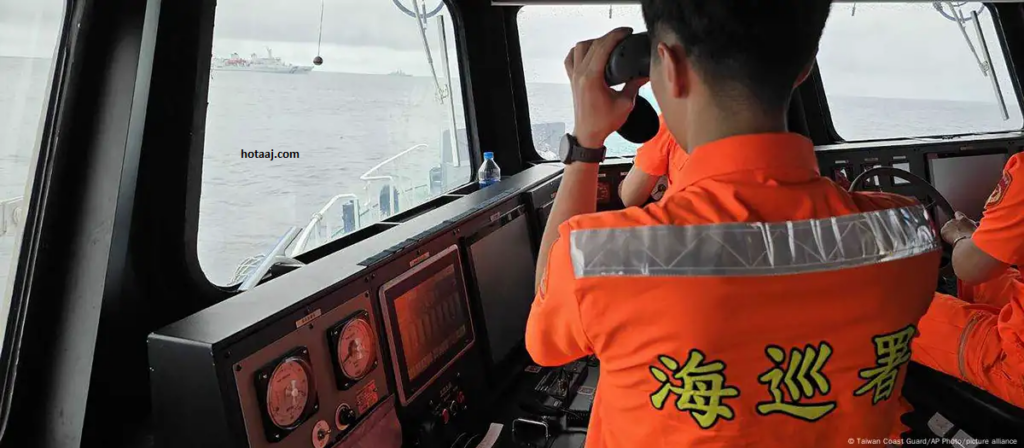
China has announced plans to restart some group tours to Taiwan, with the Ministry of Culture and Tourism confirming the development on Friday. While the government did not provide a specific timeline, the resumption of these tours will initially allow residents of Shanghai and Fujian province—the area closest to Taiwan across the Taiwan Strait—to visit the self-ruled island.
This move is seen as an effort to enhance cross-strait exchanges and boost tourism between the two regions. China has emphasized that resuming group tours will further promote the normalization of personnel exchanges between the mainland and Taiwan, which has been a point of tension due to political issues in recent years.
The announcement comes amid efforts to maintain positive relations between China and Taiwan, despite ongoing geopolitical challenges. The Chinese government is hopeful that the resumption of travel will foster greater understanding and strengthen ties through increased people-to-people interactions.
Why does China want to resume group tours to Taiwan?
China wants to resume group tours to Taiwan for several strategic and diplomatic reasons:
- Promoting Cross-Strait Exchanges: By facilitating group tours, China aims to normalize and increase people-to-people exchanges between the mainland and Taiwan. This could foster a deeper understanding and goodwill between residents on both sides of the Taiwan Strait, counteracting political tensions.
- Economic and Tourism Benefits: Tourism is a significant sector for both Taiwan and China. Resuming group tours could help stimulate Taiwan’s tourism industry, benefiting local businesses, hotels, and other tourism-related services. It could also support China’s tourism sector by boosting outbound travel.
- Political Leverage: The resumption of group tours can be seen as a soft power tool by China to influence Taiwan’s residents and demonstrate its control over cross-strait relations. By offering the benefits of travel and exchanges, China might aim to create a more favorable atmosphere for its political agenda.
- Strengthening Bilateral Relations: After years of political tensions, China may see group tours as a step toward reducing friction with Taiwan and demonstrating goodwill, even if the overall political situation remains unresolved.
- Symbolic Gesture: The move can also be viewed as a gesture aimed at Taiwan’s citizens, showing that China is open to increasing personal interactions, which could influence public opinion and attitudes toward cross-strait relations.
Overall, the resumption of group tours is part of China’s broader effort to increase its influence in Taiwan, build ties, and project a more positive image of its relationship with the island.
China-Taiwan tense relations
The relationship between China and Taiwan has been tense for decades, characterized by political, military, and diplomatic friction. Here are some key aspects of the ongoing tension:
1. Political Status Dispute
- One-China Policy: China views Taiwan as a breakaway province, insisting that it is an integral part of its territory. The Chinese government has consistently maintained that there is only one China, and that Taiwan is part of it.
- Taiwan’s Standpoint: Taiwan, officially known as the Republic of China (ROC), operates as a self-governing democracy. While some political parties and groups in Taiwan have favored closer ties with China, there is also significant support for maintaining the status quo or even formal independence.
- International Recognition: The majority of countries, including the United States, do not formally recognize Taiwan as a sovereign state, adhering to the One-China policy. However, many countries maintain informal relations with Taiwan, and it is a member of various international organizations under the name “Chinese Taipei.”
2. Military Tensions
- China’s Military Presence: China has increased its military activities near Taiwan, including frequent incursions into Taiwan’s airspace and waters. The Chinese government has also conducted military exercises in the Taiwan Strait, which have raised concerns of a potential invasion.
- Taiwan’s Defense: Taiwan maintains a robust defense system, bolstered by arms sales from the United States and other allies. Taiwan’s military is prepared for any potential Chinese aggression and has been modernizing its forces to address the growing threat.
3. Diplomatic Struggles
- China’s Diplomatic Pressure: China has successfully pressured many countries and international organizations to cut formal diplomatic ties with Taiwan. This has isolated Taiwan on the global stage, limiting its participation in key international bodies like the United Nations.
- Taiwan’s International Efforts: Despite China’s efforts, Taiwan continues to seek international recognition and support. It has formed unofficial ties with several countries and is a strong advocate for global health, environmental, and human rights issues.
4. Economic Relations
- Trade and Investment: Despite political tensions, China and Taiwan have substantial economic ties. China is Taiwan’s largest trading partner, and Taiwan has invested heavily in China, especially in manufacturing and technology sectors.
- Economic Interdependence: This economic interdependence has led some to argue that both sides have too much to lose from outright conflict, which could disrupt the region’s economy. However, China has increasingly used economic leverage to influence Taiwan’s policies.
5. Public Opinion in Taiwan
- Diverse Views: Public opinion in Taiwan is divided. Some people support closer ties with China, particularly in the business community, while others strongly oppose any moves that could lead to reunification. Many fear that political concessions to China could erode Taiwan’s democracy and freedoms.
- Growing Taiwanese Identity: Over the years, a distinct Taiwanese identity has emerged, with younger generations less inclined to identify as Chinese and more focused on their own national identity.
6. U.S. and International Involvement
- U.S. Support: The United States has a complex and delicate relationship with Taiwan, primarily providing arms for self-defense under the Taiwan Relations Act. While the U.S. recognizes the One-China policy, it has emphasized the importance of peaceful resolution and opposes unilateral changes to the status quo.
- Other International Concerns: Several countries, particularly in the Indo-Pacific region, are concerned about the stability of the Taiwan Strait and the broader implications of any conflict over Taiwan. Some nations have voiced support for Taiwan’s democracy and its right to self-determination.
7. Recent Developments
- Increased Tensions: In recent years, tensions have escalated due to China’s assertiveness under President Xi Jinping, who has indicated that reunification with Taiwan is a top priority. This has been accompanied by a more aggressive military posture and diplomatic efforts to isolate Taiwan.
- Taiwan’s Elections: Elections in Taiwan, particularly presidential elections, play a crucial role in shaping the island’s policies toward China. Pro-independence candidates tend to oppose closer relations with Beijing, while pro-China candidates may advocate for greater cooperation.
- Global Geopolitics: The U.S.-China rivalry and broader geopolitical shifts have added complexity to the Taiwan issue. Taiwan has become a flashpoint in the U.S.-China competition, with Taiwan’s status often used as leverage in broader diplomatic negotiations.
8. Path Forward
- Status Quo: For now, both sides seem to prefer the status quo. China is unlikely to give up its claim to Taiwan, but a full-scale military invasion remains a difficult and costly option. Taiwan continues to seek international recognition and support without declaring formal independence, which could provoke a Chinese military response.
- Dialogue and Tensions: There are calls from both sides for greater dialogue, but trust remains low, and disagreements on key issues remain entrenched. While some believe that more people-to-people exchanges could lead to reconciliation, others see the political divide as irreconcilable.
The future of China-Taiwan relations remains uncertain, and the possibility of conflict or peaceful resolution hinges on both internal dynamics within Taiwan and external influences, particularly from China and global powers like the United States.

Courtesy: DW News
References
- ^ Gold, Thomas B. (March 1987). “The Status Quo is Not Static: Mainland-Taiwan Relations”. Asian Survey. 27 (3): 300–315. doi:10.2307/2644806. JSTOR 2644806.
- ^ Blanchard, Ben; Lee, Yimou (3 January 2020). “Factbox: Key facts on Taiwan-China relations ahead of Taiwan elections”. Reuters. Archived from the original on 6 April 2020. Retrieved 7 June 2020.
- ^ Green, Leslie C. (1993). The Contemporary Law of Armed Conflict. Manchester University Press. p. 79. ISBN 9780719035401. Retrieved 24 August 2021.
- ^ Office of the President Republic of China (Taiwan) (20 May 2024). “Inaugural Address of ROC 16th-term President Lai Ching-te”. Retrieved 25 August 2024.
- ^ “China suspends tariff concessions on 134 items under Taiwan trade deal”. Reuters. 31 May 2024. Retrieved 25 August 2024.
- ^ “China says war games around Taiwan to test ability to ‘seize power'”. Al Jazeera. 24 May 2024. Retrieved 25 August 2024.
- ^ Zhang, Qiyun. (1959) An outline history of Taiwan. Taipei: China Culture Publishing Foundation
- ^ Sanchze-Mazas (ed.) (2008) Past human migrations in East Asia : matching archaeology, linguistics and genetics. New York: Routledge.
- ^ Brown, Melissa J. (2004) Is Taiwan Chinese? : the impact of culture, power, and migration on changing identities. Berkeley: University of California Press
- ^ Lian, Heng (1920). 臺灣通史 [The General History of Taiwan] (in Chinese). OCLC 123362609.
- ^ Teng, Emma J. (23 May 2019). “Taiwan and Modern China”. Oxford Research Encyclopedias. doi:10.1093/acrefore/9780190277727.013.155. ISBN 978-0-19-027772-7. Retrieved 25 July 2023.
- ^ Morris, Andrew (2002). “The Taiwan Republic of 1895 and the Failure of the Qing Modernizing Project”. In Stephane Corcuff (ed.). Memories of the Future: National Identity issues and the Search for a New Taiwan. New York: M.E. Sharpe. pp. 4–18. ISBN 978-0-7656-0791-1.
- ^ Hsiao, Frank S. T.; Sullivan, Lawrence R. (1979). “The Chinese Communist Party and the Status of Taiwan, 1928-1943”. Pacific Affairs. 52 (3): 446. doi:10.2307/2757657. JSTOR 2757657.
- ^ van der Wees, Gerrit (3 May 2022). “When the CCP Thought Taiwan Should Be Independent”. The Diplomat. Archived from the original on 8 November 2023. Retrieved 9 November 2023.
- ^ Whitman, Alden. “The Life of Chiang Kai-shek: A Leader Who Was Thrust Aside by Revolution”. The New York Times. Archived from the original on 11 February 2001. Retrieved 24 February 2017.
- ^ Jump up to:a b c d e Tsang, Steve Yui-Sang Tsang. The Cold War’s Odd Couple: The Unintended Partnership Between the Republic of China and the UK, 1950–1958. [2006] (2006). I.B. Tauris. ISBN 1-85043-842-0. p 155, p 115-120, p 139-145
- ^ Qi, Bangyuan. Wang, Dewei. Wang, David Der-wei. [2003] (2003). The Last of the Whampoa Breed: Stories of the Chinese Diaspora. Columbia University Press. ISBN 0-231-13002-3. pg 2
- ^ “戡亂暨臺海戰役” [Counter-insurgency Campaign and Battle of the Taiwan Strait] (in Chinese (Taiwan)). 國軍歷史文物館. Archived from the original on 28 December 2011. Retrieved 10 November 2021.
- ^ Zhang, Ben (2017). 1950年上海大轰炸 [1950 Shanghai Bombing] (in Chinese) (1st ed.). ISBN 9787552019704.
- ^ MacFarquhar, Roderick. Fairbank, John K. Twitchett, Denis C. [1991] (1991). The Cambridge History of China. Cambridge University Press. ISBN 0-521-24337-8. pg 820.
- ^ Kaufman, Victor S. (2001). “Trouble in the Golden Triangle: The United States, Taiwan and the 93rd Nationalist Division”. The China Quarterly. 166 (166): 440–456. doi:10.1017/S0009443901000213 (inactive 1 November 2024). JSTOR 3451165. S2CID 154621512.
- ^ Bush, Richard C. [2005] (2005). Untying the Knot: Making Peace in the Taiwan Strait. Brookings Institution Press. ISBN 0-8157-1288-X.
- ^ Chen, Jian (1992). “China’s Changing Aims during the Korean War, 1950–1951”. The Journal of American-East Asian Relations. 1 (1): 8–41. JSTOR 23613365.
- ^ Nam, Kwang Kyu (2020). “U.S. Strategy and Role in Cross-Strait Relations: Focusing on U.S.-Taiwan Relations”. The Journal of East Asian Affairs. 33 (1): 155–176. JSTOR 45441015.
- ^ “14,000 Who Chose Freedom”. Taiwan Today. 1 January 1964. Archived from the original on 20 September 2022. Retrieved 22 December 2022.
- ^ Chang, Cheng David (2011). To return home or “Return to Taiwan” : conflicts and survival in the “Voluntary Repatriation” of Chinese POWs in the Korean War (PhD). University of California, San Diego. Archived from the original on 21 December 2022. Retrieved 22 December 2022.
- ^ “The first anti-communist heroes”. Taipei Times. 17 January 2016. Archived from the original on 21 December 2022. Retrieved 22 December 2022.
- ^ Jump up to:a b Zhao, Suisheng (2023). The Dragon Roars Back: Transformational Leaders and Dynamics of Chinese Foreign Policy. Stanford, California: Stanford University Press. p. 35. ISBN 978-1-5036-3415-2. OCLC 1332788951.
- ^ Jump up to:a b O’Shaughnessy, Hugh (24 November 2007). “Kinmen: The island that Chairman Mao couldn’t capture”. The Independent. Archived from the original on 16 August 2021. Retrieved 16 August 2021.
- ^ “Details of Chiang Kai-shek’s attempts to recapture mainland to be made public”. South China Morning Post. 22 April 2009. Archived from the original on 21 October 2019.
- ^ Wang, Guangci (20 April 2009). “Project National Glory. Makung Naval Battle Defeat. Waking up from the dream of retaking the mainland”. United Daily News (in Chinese). Archived from the original on 22 April 2009.
- ^ “Taiwan President rejects ‘peace treaty’ with China to avoid compromising national sovereignty”. Taiwan News. 20 February 2019. Retrieved 23 July 2023.
- ^ “The Defectors’ Story”. Taiwan Today. 1 July 1961. Retrieved 23 July 2023.
- ^ “Justin Lin faces arrests if he returns: MND”. Taipei Times. 15 March 2012. Retrieved 23 July 2023.
- ^ Jump up to:a b c d e f g h i j k l m n o p q r s t u v w x y Chen, Dean P. (2024). “Xi Jinping and the Derailment of the KMT-CCP “1992 Consensus””. In Fang, Qiang; Li, Xiaobing (eds.). China under Xi Jinping: A New Assessment. Leiden University Press. ISBN 9789087284411.
- ^ Cabestan, Jean-Pierre (2000). “The Relations Across the Taiwan Strait: Twenty Years of Development and Frustration”. China Review: 105–134. JSTOR 23453363.
- ^ Jump up to:a b Sheng, Lijun (2002). China and Taiwan: Cross-strait Relations Under Chen Shui-bian. Singapore: Institute of Southeast Asian Studies. pp. 7–8. ISBN 1-84277-318-6.
- ^ Jump up to:a b c d e f Zhao, Suisheng (2024). “Is Beijing’s Long Game on Taiwan about to End? Peaceful Unification, Brinksmanship, and Military Takeover”. In Zhao, Suisheng (ed.). The Taiwan Question in Xi Jinping’s Era: Beijing’s Evolving Taiwan Policy and Taiwan’s Internal and External Dynamics. London and New York: Routledge. doi:10.4324/9781003521709. ISBN 9781032861661.
- ^ “Hijacked Plane Will End 2 Chinas’ 40-Year Silence : Taiwan to Negotiate on Aircraft”. Los Angeles Times. 13 May 1986. Archived from the original on 21 December 2022. Retrieved 22 December 2022.
- ^ “Plane hijacked to China returns to Taiwan”. UPI. 23 May 1986. Retrieved 22 December 2022.
- ^ Ger, Yeong-kuang (2015). “Cross-Strait Relations and the Taiwan Relations Act”. American Journal of Chinese Studies. 22: 235–252. JSTOR 44289169.
- ^ “Cross-strait reunions celebrated”. Taipei Times. 12 May 2007. Archived from the original on 21 December 2022. Retrieved 22 December 2022.
- ^ “国务院关于鼓励台湾同胞投资的规定”. flk.npc.gov.cn (in Chinese). Archived from the original on 21 December 2022. Retrieved 22 December 2022.
- ^ “Provisions of the State Council of the People’s Republic of China for Encouraging Taiwan Compatriots to Invest in the Mainland”. www.lawinfochina.com. Archived from the original on 21 December 2022. Retrieved 22 December 2022.
- ^ Chou, Hui-ching (7 December 2018). “How the ‘1992 Consensus’ Colors Taiwan’s Fate”. Commonwealth Magazine. Archived from the original on 6 July 2021. Retrieved 8 January 2022.
- ^ Chiu, Hungdah (1994). “The Koo-Wang Talks and Intra-Chinese Relations”. American Journal of Chinese Studies. 2 (2): 219–262. JSTOR 44288492.
- ^ Jacobs, J. Bruce; Liu, I-hao Ben (2007). “Lee Teng-Hui and the Idea of ‘Taiwan'”. The China Quarterly. 190: 375–393. doi:10.1017/S0305741007001245. JSTOR 20192775. S2CID 154384016.
- ^ “Taiwan’s Lee speaks at Cornell”. UPI. 9 June 1995. Retrieved 23 September 2023.
- ^ Ming, Chu-cheng (1996). “Political Interactions Across the Taiwan Straits”. China Review: 175–200. JSTOR 23453144.
- ^ Porch, Douglas (1999). “The Taiwan Strait Crisis of 1996: Strategic Implications for the United States Navy”. Naval War College Review. 52 (3): 15–48. JSTOR 44643008.
- ^ Scobell, Andrew (2000). “Show of Force: Chinese Soldiers, Statesmen, and the 1995–1996 Taiwan Strait Crisis”. Political Science Quarterly. 115 (2): 227–246. doi:10.2307/2657901. JSTOR 2657901.
- ^ Cabestan, Jean-Pierre (1999). “Wang Daohan and Koo Chen-fu Meet Again: A Political Dialogue… of the Deaf?”. China Perspectives. 21 (21): 25–27. JSTOR 24051197.
- ^ Hu, Weixing (2000). “‘Two-state’ Theory versus One-China Principle: Cross-strait Relations in 1999”. China Review: 135–156. JSTOR 23453364.
- ^ Sheng, Lijun (2001). “Chen Shui-bian and Cross-Strait Relations”. Contemporary Southeast Asia. 23 (1): 122–148. JSTOR 25798531.
- ^ “Su Chi admits the ‘1992 consensus’ was made up”. Taipei Times. 22 February 2006. Retrieved 23 September 2023.
- ^ Cheng, Allen T. (14 July 2000). “Did He Say ‘One China’?”. Asiaweek. Archived from the original on 30 July 2021. Retrieved 11 March 2021.
- ^ Lin, Syaru Shirley (29 June 2016). Taiwan’s China Dilemma. Stanford University Press. pp. 96–98. ISBN 978-0804799287.
- ^ “Taiwan Lifts Restrictions on Investment in China”. The New York Times. 8 November 2001. Retrieved 23 September 2023.
- ^ “Taiwan – timeline”. BBC News. 9 March 2011. Archived from the original on 9 December 2011. Retrieved 6 January 2012.
- ^ Wang, Vincient Wei-cheng (2002). “The Chen Shui-Bian Administrations MainlandPolicy: Toward a Modus Vivendi or ContinuedStalemate?”. Politics Faculty Publications and Presentations: 115.
- ^ Glaser, Bonnie (30 November 2010). “China’s Taiwan Policy in the Wake of ‘One Country on Each Side'”. The Journal of the National Committee on American Foreign Policy. 24 (6): 515–524. doi:10.1080/10803920216379. S2CID 154365745.
- ^ “China Outplays Taiwan in Cricket Diplomacy”. ABC News. 10 February 2009. Retrieved 18 May 2022.
- ^ “Mainland scrambles to help Taiwan airlines”. Archived from the original on 4 March 2016. Retrieved 3 April 2016.
- ^ Robinson, Dan (16 March 2005). “US House Criticizes China Bill on Taiwan Secession”. Voice of America. Archived from the original on 2 April 2005. Retrieved 17 March 2005.
- ^ Hammond, Ken (2023). China’s Revolution and the Quest for a Socialist Future. New York, NY: 1804 Books. ISBN 9781736850084.
- ^ Sisci, Francesco (5 April 2005). “Strange cross-Taiwan Strait bedfellows”. Asia Times. Archived from the original on 12 May 2008. Retrieved 15 May 2008.
- ^ Zhong, Wu (29 March 2005). “KMT makes China return in historic trip to ease tensions”. The Standard. Archived from the original on 2 June 2008. Retrieved 16 May 2008.
- ^ Hong, Caroline (30 April 2005). “Lien, Hu share ‘vision’ for peace”. Taipei Times. Retrieved 3 June 2016.
- ^ “Taiwanese opposition leader in Beijing talks”. The Guardian. Associated Press. 29 April 2005.
- ^ Hong, Caroline (28 March 2005). “KMT delegation travels to China for historic visit”. Taipei Times. Retrieved 18 November 2014.
- ^ “Decisive victory for Ma Ying-jeou”. Taipei Times. 23 March 2008. Archived from the original on 3 December 2013. Retrieved 10 April 2013.
- ^ “晤諾貝爾得主 馬再拋兩岸互不否認” [Meeting Nobel laureates, Ma again speaks of mutual non-denial]. Liberty Times (in Chinese). 19 April 2008. Archived from the original on 25 May 2008. Retrieved 2 June 2008.
- ^ “Taiwan and China in ‘special relations’: Ma”. China Post. 4 September 2008. Archived from the original on 6 September 2008.
- ^ Lampton, David M. (2024). Living U.S.-China Relations: From Cold War to Cold War. Lanham, MD: Rowman & Littlefield. p. 230. ISBN 978-1-5381-8725-8.
- ^ Fuh-sheng, John; Lin, Yi-Tzu (2024). “Butter or Guns: Taiwan’s Economic Policy Toward China”. In Zhao, Suisheng (ed.). The Taiwan Question in Xi Jinping’s Era: Beijing’s Evolving Taiwan Policy and Taiwan’s Internal and External Dynamics. London and New York: Routledge. ISBN 9781032861661.
- ^ “Chinese, U.S. presidents hold telephone talks on Taiwan, Tibet”. Xinhuanet. 27 March 2008. Archived from the original on 29 March 2008. Retrieved 15 May 2008.
- ^ “Chinese, U.S. presidents hold telephone talks on Taiwan, Tibet”. Consulate-General of the People’s Republic of China in Vancouver. 26 March 2008. Archived from the original on 2 January 2022.
- ^ Hille, Kathrin (3 April 2008). “Hopes rise for Taiwan-China dialogue”. Financial Times. Archived from the original on 6 January 2022.
According to a US account of the talks, Mr Hu said: It is China’s consistent stand that the Chinese mainland and Taiwan should restore consultation and talks on the basis of ‘the 1992 consensus’, which sees both sides recognise there is only one China, but agree to differ on its definition.
- ^ “Siew and Hu meet at forum in Hainan”. Taipei Times. 13 April 2008. Retrieved 11 November 2023.
- ^ “China’s Hu wants improved relations with Taiwan”. France 24. 28 May 2008. Retrieved 11 November 2023.
- ^ “China leader calls for cross-strait talks”. UPI. 29 May 2008. Retrieved 11 November 2023.
- ^ “吳胡共識 速兌現陸客觀光及包機”. The Liberty Times (in Chinese). 29 May 2008. Retrieved 11 November 2023.
- ^ 海峡两岸包机会谈纪要(全文) [Cross-Strait charter flights neogitation memorandum (full text)] (in Chinese). Xinhua News Agency. 13 June 2008. Archived from the original on 13 February 2009. Retrieved 15 June 2008.
- ^ 海峡两岸关于大陆居民赴台湾旅游协议(全文) [Cross-Strait agreement on mainland residents visiting Taiwan for tourism (full text)] (in Chinese). Xinhua News Agency. 13 June 2008. Archived from the original on 13 February 2009. Retrieved 15 June 2008.
- ^ Jump up to:a b Yu, Sophie; Macartney, Jane (16 December 2008). “Direct flights between China and Taiwan mark new era of improved relations”. The Times. London. Archived from the original on 25 May 2010. Retrieved 4 June 2009.
- ^ “Taiwan opens up to mainland Chinese investors”. The Times. London. 1 May 2009. Archived from the original on 8 May 2009. Retrieved 4 May 2009.
- ^ “China unveils 31 measures to promote exchanges with Taiwan”. focustaiwan.tw. 16 June 2013. Archived from the original on 3 December 2013.
- ^ “Taiwan, Chinese ministers meet in groundbreaking first”. focustaiwan.tw. 6 October 2013. Archived from the original on 24 December 2013.
- ^ Video on YouTube
- ^ “MAC, TAO ministers to meet today”. Archived from the original on 22 February 2014.
- ^ “MAC Minister Wang in historic meeting”. Taipei Times. 12 February 2014. Archived from the original on 3 March 2016.
- ^ “China and Taiwan Hold First Direct Talks Since ’49”. The New York Times. 12 February 2014. Archived from the original on 4 April 2016. Retrieved 3 April 2016.
- ^ “China-Taiwan talks pave way for leaders to meet”. The Sydney Morning Herald. 12 February 2014. Archived from the original on 9 May 2014.
- ^ “First minister-level Chinese official heads to Taipei for talks”. Japan Times. 25 June 2014. ISSN 0447-5763. Archived from the original on 27 June 2014. Retrieved 4 June 2016.
- ^ J. Michael Cole, The Diplomat. “Hundreds of Thousands Protest Against Trade Pact in Taiwan”. The Diplomat. Archived from the original on 1 April 2016. Retrieved 3 April 2016.
- ^ “Taiwan presidential hopefuls reheat decade-old China trade deal debate”. Focus Taiwan. 26 June 2023. Retrieved 3 November 2023.
- ^ Chou, Chih-chieh (13 October 2014). “Beijing seems to have cast off the 1992 Consensus”. Want China Times. Archived from the original on 3 November 2014.
- ^ Huang, Jing (2017). “Xi Jinping’s Taiwan Policy: Boxing Taiwan In with the One-China Framework”. In Dittmer, Lowell (ed.). Taiwan and China: Fitful Embrace (1 ed.). University of California Press. p. 245. JSTOR 10.1525/j.ctt1w76wpm.16.
- ^ Huang, Cary (5 November 2015). “Xi’s a mister, so is Ma: China and Taiwan have an unusual solution for an old problem”. South China Morning Post. Retrieved 12 November 2015.
- ^ Chiao, Yuan-Ming (7 November 2015). “Cross-strait leaders meet after 66 years of separation”. China Post. Archived from the original on 10 November 2015. Retrieved 3 June 2016.
- ^ “China and Taiwan leaders hail historic talks”. BBC. 7 November 2015. Retrieved 3 November 2023.
- ^ “Hotline established for cross-strait affairs chiefs”. Archived from the original on 4 March 2016. Retrieved 14 January 2016.
- ^ “Elections: Madam President”. Taipei Times. 17 January 2016. Retrieved 3 November 2023.
- ^ “Minister of justice heads to China on historic visit”. 29 March 2016. Archived from the original on 7 April 2016. Retrieved 3 April 2016.
- ^ Tai, Ya-chen; Chen, Chun-hua; Huang, Frances (17 January 2016). “Turnout in presidential race lowest in history”. Central News Agency. Archived from the original on 19 January 2016. Retrieved 17 January 2016.
- ^ Romberg, Alan D. (1 March 2016). “The “1992 Consensus”—Adapting to the Future?”. Hoover Institution. Retrieved 10 March 2021.
- ^ Jump up to:a b “Tsai’s inauguration speech ‘incomplete test paper’: Beijing”. Taipei Times. 21 May 2016. Archived from the original on 7 June 2020. Retrieved 20 May 2020.
- ^ Wong, Yeni; Wu, Ho-I; Wang, Kent (26 August 2016). “Tsai’s Refusal to Affirm the 1992 Consensus Spells Trouble for Taiwan”. The Diplomat. Archived from the original on 4 October 2017. Retrieved 4 October 2017.
- ^ “Full text of President Tsai’s inaugural address”. Central News Agency. 20 May 2016. Archived from the original on 19 May 2020. Retrieved 20 May 2020.
- ^ Hernández, Javier C. (25 June 2016). “China Suspends Diplomatic Contact With Taiwan”. The New York Times. Archived from the original on 30 April 2020. Retrieved 20 May 2020.
- ^ Goh, Sui Noi (4 February 2020). “Cross-strait chill freezes out Taiwan in its efforts to deal with coronavirus outbreak”. The Straits Times. Archived from the original on 7 June 2020. Retrieved 20 May 2020.
- ^ “Former president Ma to visit Hong Kong – Focus Taiwan”. June 2016. Archived from the original on 4 June 2016. Retrieved 7 August 2016.
- ^ Ramzy, Austin (14 June 2016). “Taiwan Bars Ex-President From Visiting Hong Kong”. The New York Times. Archived from the original on 23 June 2016. Retrieved 7 August 2016.
- ^ “Full text of former President Ma Ying-jeou’s video speech at SOPA”. Central News Agency. Archived from the original on 24 July 2016. Retrieved 7 August 2016.
- ^ “Local gov’t officials hold meeting with Beijing”. Archived from the original on 23 September 2016.
- ^ “Local government heads arrive in Beijing for talks – Taipei Times”. 18 September 2016. Archived from the original on 19 September 2016.
- ^ “Kuomintang News Network”. Archived from the original on 24 September 2016.
- ^ Jump up to:a b c d e f Xin, Qiang (2024). “Selective Engage