



Manmohan Singh, former Prime Minister of India, passed away at 92. He served as Finance Minister under PM P.V. Narasimha Rao and was the architect of India’s 1991 economic reforms, which transformed the nation’s economy.
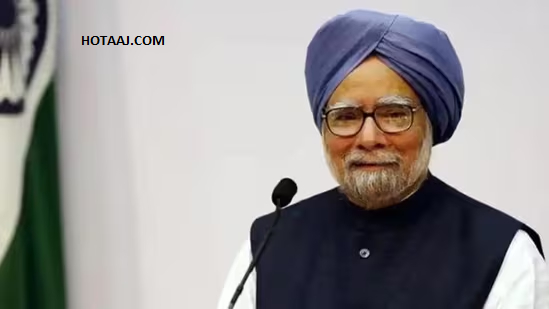
Former Prime Minister Dr. Manmohan Singh passed away on Thursday at the age of 92. A distinguished economist, Dr. Singh served as the 13th Prime Minister of India from 2004 to 2014. He was known for his calm demeanor and strategic leadership, particularly in navigating India through economic challenges.
Before becoming Prime Minister, Dr. Singh was the Finance Minister under then-Prime Minister P. V. Narasimha Rao in the early 1990s. His groundbreaking economic reforms in 1991, which included liberalizing the Indian economy, were instrumental in transforming the nation into one of the world’s fastest-growing economies.
Dr. Singh’s tenure as Prime Minister was marked by significant progress in various sectors, including the economy, foreign relations, and technological advancements. Despite challenges, his leadership played a pivotal role in shaping India’s trajectory on the global stage.
His death marks the end of an era, and he is remembered for his integrity, commitment to public service, and contributions to India’s growth and modernization. Tributes have poured in from across the political spectrum, acknowledging his unparalleled legacy in India’s development.
Former Prime Minister Dr. Manmohan Singh passed away on Thursday at the age of 92. Dr. Singh was one of India’s most respected leaders and a distinguished economist, best known for his role in transforming the country’s economic landscape.
Dr. Singh’s political journey began when he became the Finance Minister under Prime Minister P.V. Narasimha Rao in 1991. During this period, he was the architect of the landmark economic reforms that liberalized the Indian economy, opening it up to global markets and setting the stage for decades of growth. These reforms, including the devaluation of the rupee, the reduction of import tariffs, and the opening up of foreign investment, are often credited with making India one of the fastest-growing economies in the world.
After serving as Finance Minister, Dr. Singh became the Prime Minister of India in 2004, serving two terms until 2014. His tenure was marked by continued economic growth, India’s emergence as a global player, and improved relations with key countries. His calm demeanor and commitment to economic stability were highly regarded, and he was often seen as a man of principle, dedicated to the progress of the country.
Under his leadership, India saw significant advances in technology, education, and infrastructure, but his tenure also faced challenges, including issues related to corruption scandals and policy paralysis. Despite these setbacks, his role in shaping India’s modern economic framework remains his lasting legacy.
Dr. Singh’s contributions extended beyond the economic sphere. He played a crucial role in India’s foreign policy, fostering strong relationships with the United States, Russia, and other key global powers. His leadership during the Indo-US nuclear deal was a defining moment in India’s international relations.
Dr. Manmohan Singh is remembered not only for his economic reforms but also for his integrity, humility, and commitment to public service. His death is a significant moment in India’s history, and tributes have poured in from political leaders, citizens, and world leaders alike, all acknowledging his remarkable contributions to the nation.
Dr. Singh is survived by his family, and his passing marks the end of an era in Indian politics.
Dr. Manmohan Singh, who passed away at the age of 92, leaves behind a legacy that shaped India’s modern identity both economically and politically. Born on September 26, 1932, in Gah, now part of Pakistan, Singh’s journey from a small town in Punjab to the corridors of power in New Delhi is nothing short of remarkable. Known for his quiet and intellectual persona, Dr. Singh never sought the limelight but was undeniably a towering figure in Indian politics and economics.
As Finance Minister under Prime Minister P.V. Narasimha Rao, Dr. Singh steered India through one of the country’s most significant economic crises in 1991. The country faced a dire balance-of-payments crisis, and under his stewardship, India was forced to make drastic reforms, including liberalizing the economy and reducing the government’s role in business. The devaluation of the rupee, along with significant changes to trade and industrial policies, was a pivotal moment in India’s history, sparking years of rapid growth. His reforms also encouraged foreign investments, bolstering India’s standing on the global economic stage.
Dr. Singh’s leadership as Prime Minister (2004-2014) marked a period of continuous economic growth for India, although his tenure also faced challenges. His government dealt with corruption scandals, rising inflation, and policy inertia, but Dr. Singh’s reputation for personal integrity and calm demeanor remained unshaken. He was often referred to as the “economic architect” of modern India and was lauded for his prudence and academic excellence.
During his tenure as Prime Minister, Dr. Singh also played a key role in shaping India’s foreign policy, particularly with the United States. His handling of the landmark Indo-US nuclear deal in 2008 brought India closer to the global nuclear mainstream. His strategic vision on international relations, particularly with the United States, Russia, and other major global players, helped position India as a rising power on the world stage.
Despite his achievements, Dr. Singh faced criticism, particularly in his second term, when his government was accused of being mired in policy paralysis. However, his legacy as a reformer and a visionary economist continued to overshadow these concerns.
Singh’s contributions were recognized both in India and internationally. He was awarded numerous honors, including being named a member of the Order of Merit by the United Kingdom and receiving various accolades for his role in global economic and political affairs. His voice on global platforms on issues of economic equality, climate change, and the need for a multilateral approach to international problems made him a respected figure beyond India.
Dr. Singh’s passing is being mourned across the world. From world leaders to Indian citizens, tributes have poured in acknowledging his immense contributions. Indian President Droupadi Murmu, Prime Minister Narendra Modi, and various other political leaders have expressed their condolences, remembering him as a great statesman and a leader who dedicated his life to the service of the nation.
Dr. Singh’s life stands as a testament to the power of calm leadership and the impact of visionary reforms. His death marks the end of an era in Indian politics, leaving behind a lasting imprint on the country’s path to economic growth and international prominence. He is survived by his wife, Gursharan Kaur, and their two daughters. His funeral is expected to be attended by political leaders, former colleagues, and well-wishers who have been inspired by his integrity and service.
Dr. Manmohan Singh’s legacy extends far beyond his role as an economist and statesman; he was a scholar, a diplomat, and a visionary leader who dedicated his life to India’s progress. His journey reflects a blend of humility and intellect that resonated with millions of Indians and inspired many across the globe.
Early Life and Education
Born into a modest Sikh family in the village of Gah in Punjab (now in Pakistan) on September 26, 1932, Dr. Singh displayed extraordinary academic brilliance from an early age. After partition, his family migrated to India, where he continued his education. He earned a First Class Honours degree in Economics from Punjab University, followed by a postgraduate degree from the University of Cambridge in the UK. Later, he completed his DPhil from the University of Oxford, establishing himself as one of the most highly educated leaders in Indian history.
Career Before Politics
Before entering the political arena, Dr. Singh served in various prestigious roles. He was a professor at Delhi School of Economics, an advisor at the United Nations, and the Governor of the Reserve Bank of India. He also served as the Economic Advisor to the Government of India and Secretary in the Ministry of Finance. His expertise in financial and economic matters made him a natural choice for leading India’s economic reforms.
A Career of Landmark Achievements
Architect of Economic Reforms (1991)
When India was on the brink of an economic collapse in 1991, Dr. Singh, as the Finance Minister, unveiled sweeping economic reforms that dismantled the License Raj, opened India to global markets, and liberalized trade. These measures transformed India’s economy from a state-controlled system to a market-driven one, laying the foundation for sustained economic growth and positioning India as an emerging global power.
Prime Ministership (2004-2014)
Dr. Singh served as India’s Prime Minister for a decade, making him the longest-serving Prime Minister after Jawaharlal Nehru and Indira Gandhi. His tenure is marked by several key developments:
- Economic Growth: India experienced high GDP growth rates during his first term, with significant advancements in infrastructure, technology, and manufacturing.
- Social Programs: His government implemented transformative welfare schemes such as the Mahatma Gandhi National Rural Employment Guarantee Act (MGNREGA), the Right to Education Act, and the National Food Security Act, aimed at reducing poverty and improving living standards.
- International Relations: Dr. Singh strengthened India’s global partnerships, particularly with the United States through the Indo-US nuclear deal. He also deepened ties with Southeast Asia, Europe, and neighboring countries.
- Rural and Urban Development: Programs like Bharat Nirman and the Jawaharlal Nehru National Urban Renewal Mission (JNNURM) focused on urban development and rural connectivity.
Challenges and Controversies
While his first term was celebrated for its achievements, the second term faced challenges, including corruption scandals like the 2G spectrum and coal allocation controversies. Despite these issues, Dr. Singh was often praised for his personal integrity and non-partisan approach to governance.
Personal Traits and Philosophy
Dr. Singh was known for his humility, quiet demeanor, and a strong sense of ethics. His speeches often reflected a deep understanding of India’s socio-economic fabric and a vision for inclusive growth. Despite being a technocrat, he maintained a grounded approach, connecting with people from all walks of life.
Tributes and Legacy
As news of his passing spread, tributes poured in from all corners of the world. Leaders described him as a “gentleman-politician” and “a guiding light for economic progress.” Former US President Barack Obama once called him “a man of uncommon wisdom and decency.”
Dr. Singh’s legacy will be remembered for transforming India into a modern economic powerhouse while maintaining the country’s democratic and inclusive values. His contributions to global economic discourse, his unwavering dedication to public service, and his scholarly achievements ensure that his memory will endure for generations.
A state funeral is being organized in New Delhi, where dignitaries, leaders, and citizens will pay their final respects. As India mourns the loss of one of its greatest reformers, Dr. Singh’s life remains an inspiration for future leaders and citizens alike.
Dr. Manmohan Singh’s Impact on Modern India
Dr. Manmohan Singh was a statesman who not only understood the intricate mechanisms of economic policy but also had the vision to implement them for the greater good of India. His contributions continue to shape the nation in various ways, underscoring his profound influence on India’s transformation into a 21st-century powerhouse.
The Economic Liberalization of 1991
The landmark reforms introduced under Dr. Singh’s stewardship as Finance Minister are often hailed as India’s second independence — economic liberation. These reforms:
- Deregulated Industries: Removed government controls over private enterprises, leading to a surge in entrepreneurial activities.
- Trade Liberalization: Reduced tariffs and opened India to global competition, making Indian industries globally competitive.
- Foreign Investment: Encouraged foreign direct investment (FDI), bringing in capital, technology, and expertise.
- Tax Reforms: Simplified tax structures, laying the groundwork for subsequent economic policies like the Goods and Services Tax (GST).
These changes not only averted a looming financial crisis but also placed India on a trajectory of rapid growth, lifting millions out of poverty.
Leadership During Crises
Dr. Singh’s tenure was marked by his calm and resolute leadership during challenging times:
- Global Financial Crisis (2008): As Prime Minister, he navigated India through the global recession, ensuring minimal impact on the economy while maintaining growth.
- Terrorism and National Security: After the 26/11 Mumbai attacks, Dr. Singh strengthened national security frameworks and enhanced intelligence coordination.
- Agrarian Distress: His government introduced debt waiver schemes and increased support for rural development to address the challenges faced by farmers.
Diplomatic Achievements
Dr. Singh believed in diplomacy as a tool for fostering global peace and economic growth. His major diplomatic achievements include:
- Indo-US Civil Nuclear Agreement: A landmark deal that ended India’s nuclear isolation, enabling access to nuclear technology and fuel for civilian purposes.
- Engagement with Neighbors: He sought to improve relations with Pakistan and China through dialogue while firmly defending India’s interests.
- Global Forums: Representing India at G20 summits and other international platforms, he consistently advocated for the interests of developing nations.
Educational Contributions
Dr. Singh’s academic background made him a strong advocate for education. Under his leadership:
- The Right to Education Act (RTE) was enacted, making education a fundamental right for children.
- Investments in higher education and research were significantly increased, leading to the establishment of new IITs, IIMs, and AIIMS.
Personal Life and Values
Dr. Singh’s personal life was marked by simplicity and integrity. Married to Gursharan Kaur, the couple raised three daughters in a household that reflected humility and a deep respect for education and values. Despite his high-profile career, Dr. Singh avoided ostentation, often walking the path of a public servant rather than a political leader.
Recognition and Honors
Over his lifetime, Dr. Singh received numerous accolades for his contributions:
- Padma Vibhushan (1987): India’s second-highest civilian award for exceptional service.
- Honorary degrees from prestigious institutions, including Oxford and Cambridge.
- Named as one of the “100 Most Influential People in the World” by Time magazine during his prime ministership.
The End of an Era
Dr. Manmohan Singh’s passing marks the end of an era of reform, resilience, and quiet determination. As India pays tribute to a leader who profoundly shaped its destiny, his life stands as a testament to the power of intellect, vision, and unwavering commitment to the nation.
The outpouring of grief and respect from leaders, citizens, and global figures underscores the void left by his absence. Dr. Singh’s ideas, principles, and vision will continue to guide India as it moves forward, striving for growth, inclusivity, and prosperity.
Tributes Pour In for Dr. Manmohan Singh
Dr. Manmohan Singh’s passing has elicited heartfelt tributes from across the political spectrum, academia, and the international community. Leaders, economists, and citizens have expressed their admiration for a man who combined intellect, humility, and a relentless commitment to the nation’s progress.
Domestic Leaders Pay Homage
President Droupadi Murmu called Dr. Singh “a visionary leader whose economic policies paved the way for India’s rise as a global power.” Prime Minister Narendra Modi described him as “a leader who guided the nation through pivotal moments with wisdom and foresight.” Former Congress President Sonia Gandhi and Rahul Gandhi hailed him as “the architect of modern India’s economic foundation.”
State leaders, including Chief Ministers from various states, also highlighted Dr. Singh’s role in supporting cooperative federalism and empowering states with more financial autonomy.
Global Community Honors His Legacy
International leaders have also paid tribute to Dr. Singh:
- Joe Biden, President of the United States, called him a “statesman of integrity and a champion of democratic values.”
- Christine Lagarde, President of the European Central Bank, referred to him as “one of the finest economic minds of our times.”
- UN Secretary-General António Guterres praised Dr. Singh for his efforts to bridge the gap between developed and developing nations on global platforms.
Leaders from neighboring countries, including Pakistan, Bangladesh, and Nepal, expressed condolences, noting his efforts to improve regional cooperation.
Public Mourning and Remembrance
Across India, citizens have gathered in prayer meetings, candlelight vigils, and public forums to honor Dr. Singh’s memory. Universities and research institutions are planning to establish chairs and scholarships in his name to inspire future generations of economists and policymakers.
Social media has been flooded with messages from people recounting how Dr. Singh’s reforms impacted their lives. From entrepreneurs crediting him for opening up markets to students inspired by his journey from a humble village in Punjab to the global stage, Dr. Singh’s legacy resonates deeply.
Remembering Dr. Singh: A Statesman Beyond Politics
Dr. Manmohan Singh’s career spanned academia, public service, and politics, yet he remained above partisan divides. Known for his dignified silence and composed demeanor, he often placed national interest above political considerations. Even when criticized, he responded with facts, reinforcing his reputation as a leader who preferred substance over rhetoric.
His Humble Beginnings
Born on September 26, 1932, in Gah, Punjab (now in Pakistan), Dr. Singh’s early life was marked by challenges. The partition of India displaced his family, but his determination and love for learning propelled him to academic excellence. After studying at Panjab University, Cambridge, and Oxford, he embarked on a career that would later change the course of India’s history.
A Prime Minister of Milestones
As Prime Minister, Dr. Singh introduced several flagship schemes:
- Mahatma Gandhi National Rural Employment Guarantee Act (MGNREGA): Aimed at providing livelihood to rural workers.
- Aadhaar Initiative: Laying the foundation for a universal identity system.
- RTI Act (Right to Information): Strengthening transparency and accountability in governance.
- Rural Electrification: Expanded access to electricity in remote areas, fostering development.
These programs transformed millions of lives, earning him respect as a leader deeply concerned about India’s marginalized communities.
Legacy and Lessons for Future Generations
Dr. Manmohan Singh’s life offers invaluable lessons in leadership:
- Integrity Matters: Despite political pressures, he maintained an unblemished record, emphasizing ethical governance.
- Economic Vision: His ability to foresee and implement policies in line with global trends set India on a path of sustained growth.
- Calm in Crisis: His measured approach during critical moments exemplified resilience and pragmatism.
- Focus on Education: Dr. Singh’s belief in the transformative power of education continues to inspire policies aimed at empowering India’s youth.
Final Journey and State Honors
Dr. Manmohan Singh’s funeral will take place with full state honors, reflecting the nation’s respect for a leader who dedicated his life to public service. Leaders, diplomats, and citizens are expected to attend, marking a solemn farewell to a towering figure in Indian and global history.
As the nation bids adieu to Dr. Singh, his words during the 1991 reforms echo poignantly:
“No power on earth can stop an idea whose time has come.”
Indeed, his time has left an indelible mark on India and the world.
A Life of Service: The Man Behind the Reforms
Dr. Manmohan Singh’s legacy is deeply intertwined with his journey from humble beginnings to the pinnacle of Indian politics. Born in Gah, a village in Punjab, his life story is one of perseverance, intellect, and service. His early years were marked by Partition, which displaced his family and left an indelible mark on his worldview.
Despite adversity, his academic brilliance shone through. A scholarship took him to the University of Cambridge, where he earned his economics degree, followed by a doctorate from Oxford University. His thesis on “India’s Export Trends and Prospects for Self-Sustained Growth” became a landmark study, reflecting his lifelong commitment to understanding and improving India’s economy.
The Reformer’s Journey
Dr. Singh’s entry into public service began with roles in academia and economic policymaking. As a bureaucrat, he held significant positions such as Chief Economic Advisor, Governor of the Reserve Bank of India, and Secretary of the Planning Commission. However, it was his role as Finance Minister in 1991 that catapulted him into the national spotlight.
Faced with a severe economic crisis, Dr. Singh introduced sweeping reforms to liberalize India’s economy. His policies, such as reducing trade barriers, encouraging foreign investment, and reforming taxation, set India on a path of rapid growth. He famously said during his budget speech,
“The emergence of India as a major economic power in the world happens to be one of the defining developments of our times.”
These reforms were not without opposition, but his clarity of vision and the support of then-Prime Minister P.V. Narasimha Rao ensured their implementation.
Two Terms as Prime Minister
As Prime Minister from 2004 to 2014, Dr. Singh steered India through transformative years. His tenure witnessed significant advancements in technology, infrastructure, and social welfare programs. Some notable achievements include:
- Civil Nuclear Agreement with the U.S.: Marking a new era in India’s global relations.
- GST and Tax Reforms: Initiating groundwork for uniform taxation systems.
- Expanding Rural Access: Electrification, healthcare, and employment schemes for rural India.
- Focus on Digital India: Strengthening India’s IT sector and broadband connectivity.
Despite political challenges, he remained a leader of quiet determination, often letting his actions speak louder than words.
Tributes to a Humble Statesman
Dr. Singh was renowned for his humility and soft-spoken nature. Even in the face of political attacks, he remained composed and focused on his goals for the country. His signature turban and calm demeanor became symbols of a leader who preferred diplomacy over confrontation.
Internationally, he was respected as an economist and statesman. Former U.S. President Barack Obama once referred to him as a leader with “integrity and vision,” and his contemporaries often turned to him for advice on global financial matters.
Final Farewell
The government has declared a seven-day national mourning in honor of Dr. Singh. Flags will fly at half-mast, and a state funeral will be held in New Delhi, attended by dignitaries from across the world.
Dr. Singh’s family, including his wife Gursharan Kaur and daughters Upinder, Daman, and Amrit Singh, have requested privacy as they mourn. Messages of condolences and admiration continue to pour in, with citizens sharing personal anecdotes about how his policies impacted their lives.
A Legacy Beyond Numbers
Dr. Manmohan Singh’s contributions go beyond economic metrics and political achievements. His emphasis on education, equality, and empowerment continues to inspire future generations. His ability to balance academia with real-world policymaking remains unparalleled.
As India mourns the loss of a visionary leader, it also celebrates the life of a man who believed in the power of ideas, the strength of perseverance, and the promise of a better tomorrow.
In his own words:
“Our deeds will outlive us. The future beckons to us. Let us not falter in responding to its call.”
Dr. Singh answered that call, leaving behind a legacy of hope, progress, and an unshakable belief in the resilience of the Indian spirit.
COURTESY: Firstpost
References
- ^ Jump up to:a b c d National Informatics Centre 2005.
- ^ Jump up to:a b c d “National Symbols | National Portal of India”. India.gov.in. Archived from the original on 4 February 2017. Retrieved 1 March 2017.
The National Anthem of India Jana Gana Mana, composed originally in Bengali by Rabindranath Tagore, was adopted in its Hindi version by the Constituent Assembly as the National Anthem of India on 24 January 1950.
- ^ “National anthem of India: a brief on ‘Jana Gana Mana'”. News18. 14 August 2012. Archived from the original on 17 April 2019. Retrieved 7 June 2019.
- ^ Wolpert 2003, p. 1.
- ^ Constituent Assembly of India 1950.
- ^ Jump up to:a b Ministry of Home Affairs 1960.
- ^ “Profile | National Portal of India”. India.gov.in. Archived from the original on 30 August 2013. Retrieved 23 August 2013.
- ^ “Constitutional Provisions – Official Language Related Part-17 of the Constitution of India”. Department of Official Language via Government of India. Archived from the original on 18 April 2021. Retrieved 18 April 2021.
- ^ “50th Report of the Commissioner for Linguistic Minorities in India (July 2012 to June 2013)” (PDF). Commissioner for Linguistic Minorities, Ministry of Minority Affairs, Government of India. Archived from the original (PDF) on 8 July 2016. Retrieved 26 December 2014.
- ^ Eberhard, David M.; Simons, Gary F.; Fennig, Charles D. (2024). “India”. Ethnologue: Languages of the World (27 ed.).
- ^ Jump up to:a b “C −1 Population by religious community – 2011”. Office of the Registrar General & Census Commissioner. Archived from the original on 25 August 2015. Retrieved 25 August 2015.
- ^ Jump up to:a b c d e f Library of Congress 2004.
- ^ Jump up to:a b “World Population Prospects”. Population Division – United Nations. Retrieved 2 July 2023.
- ^ “Population Enumeration Data (Final Population)”. 2011 Census Data. Office of the Registrar General & Census Commissioner, India. Archived from the original on 22 May 2016. Retrieved 17 June 2016.
- ^ “A – 2 Decadal Variation in Population Since 1901” (PDF). 2011 Census Data. Office of the Registrar General & Census Commissioner, India. Archived from the original (PDF) on 30 April 2016. Retrieved 17 June 2016.
- ^ Jump up to:a b c d e f “World Economic Outlook Database, October 2024 Edition. (India)”. www.imf.org. International Monetary Fund. 22 October 2024. Retrieved 22 October 2024.
- ^ “Gini index (World Bank estimate) – India”. World Bank.
- ^ “Human Development Report 2023/24” (PDF). United Nations Development Programme. 13 March 2024. Retrieved 13 March 2024.
- ^ “List of all left- & right-driving countries around the world”. worldstandards.eu. 13 May 2020. Retrieved 10 June 2020.
- ^
- The Essential Desk Reference, Oxford University Press, 2002, p. 76, ISBN 978-0-19-512873-4 “Official name: Republic of India.”;
- John Da Graça (2017), Heads of State and Government, London: Macmillan, p. 421, ISBN 978-1-349-65771-1 “Official name: Republic of India; Bharat Ganarajya (Hindi)”;
- Graham Rhind (2017), Global Sourcebook of Address Data Management: A Guide to Address Formats and Data in 194 Countries, Taylor & Francis, p. 302, ISBN 978-1-351-93326-1 “Official name: Republic of India; Bharat.”;
- Bradnock, Robert W. (2015), The Routledge Atlas of South Asian Affairs, Routledge, p. 108, ISBN 978-1-317-40511-5 “Official name: English: Republic of India; Hindi:Bharat Ganarajya”;
- Penguin Compact Atlas of the World, Penguin, 2012, p. 140, ISBN 978-0-7566-9859-1 “Official name: Republic of India”;
- Merriam-Webster’s Geographical Dictionary (3rd ed.), Merriam-Webster, 1997, pp. 515–516, ISBN 978-0-87779-546-9 “Officially, Republic of India”;
- Complete Atlas of the World: The Definitive View of the Earth (3rd ed.), DK Publishing, 2016, p. 54, ISBN 978-1-4654-5528-4 “Official name: Republic of India”;
- Worldwide Government Directory with Intergovernmental Organizations 2013, CQ Press, 2013, p. 726, ISBN 978-1-4522-9937-2
- ^ “Ministry of Home Affairs (Department of Border Management)” (PDF). Archived from the original (PDF) on 17 March 2015. Retrieved 1 September 2008.
- ^ Jump up to:a b c Petraglia & Allchin 2007, p. 10, “Y-Chromosome and Mt-DNA data support the colonization of South Asia by modern humans originating in Africa. … Coalescence dates for most non-European populations average to between 73 and 55 ka.”
- ^ Jump up to:a b Dyson 2018, p. 1, “Modern human beings—Homo sapiens—originated in Africa. Then, intermittently, sometime between 60,000 and 80,000 years ago, tiny groups of them began to enter the north-west of the Indian subcontinent. It seems likely that initially they came by way of the coast. … it is virtually certain that there were Homo sapiens in the subcontinent 55,000 years ago, even though the earliest fossils that have been found of them date to only about 30,000 years before the present.”
- ^ Jump up to:a b Fisher 2018, p. 23, “Scholars estimate that the first successful expansion of the Homo sapiens range beyond Africa and across the Arabian Peninsula occurred from as early as 80,000 years ago to as late as 40,000 years ago, although there may have been prior unsuccessful emigrations. Some of their descendants extended the human range ever further in each generation, spreading into each habitable land they encountered. One human channel was along the warm and productive coastal lands of the Persian Gulf and northern Indian Ocean. Eventually, various bands entered India between 75,000 years ago and 35,000 years ago.”
- ^ Dyson 2018, p. 28
- ^ (a) Dyson 2018, pp. 4–5;
(b) Fisher 2018, p. 33 - ^ Lowe 2015, pp. 1–2, “It consists of 1,028 hymns (sūktas), highly crafted poetic compositions originally intended for recital during rituals and for the invocation of and communication with the Indo-Aryan gods. Modern scholarly opinion largely agrees that these hymns were composed between around 1500 BCE and 1200 BCE, during the eastward migration of the Indo-Aryan tribes from the mountains of what is today northern Afghanistan across the Punjab into north India.”
- ^ (a) Witzel 2003, pp. 68–70, “It is known from internal evidence that the Vedic texts were orally composed in northern India, at first in the Greater Punjab and later on also in more eastern areas, including northern Bihar, between ca. 1500 BCE and ca. 500–400 BCE. The oldest text, the Rgveda, must have been more or less contemporary with the Mitanni texts of northern Syria/Iraq (1450–1350 BCE); […] The Vedic texts were orally composed and transmitted, without the use of script, in an unbroken line of transmission from teacher to student that was formalised early on. This ensured an impeccable textual transmission superior to the classical texts of other cultures; it is in fact something of a tape-recording of ca. 1500–500 BCE. Not just the actual words, but even the long-lost musical (tonal) accent (as in old Greek or in Japanese) has been preserved up to the present. […] The RV text was composed before the introduction and massive use of iron, that is before ca. 1200–1000 BCE.”;
(b) Doniger 2014, pp. xviii, 10, “A Chronology of Hinduism: ca. 1500–1000 BCE Rig Veda; ca. 1200–900 BCE Yajur Veda, Sama Veda and Atharva Veda […] Hindu texts began with the Rig Veda (‘Knowledge of Verses’), composed in northwest India around 1500 BCE; the first of the three Vedas, it is the earliest extant text composed in Sanskrit, the language of ancient India.”;
(c) Ludden 2014, p. 19, “In Punjab, a dry region with grasslands watered by five rivers (hence ‘panch’ and ‘ab’) draining the western Himalayas, one prehistoric culture left no material remains, but some of its ritual texts were preserved orally over the millennia. The culture is called Aryan, and evidence in its texts indicates that it spread slowly south-east, following the course of the Yamuna and Ganga Rivers. Its elite called itself Arya (pure) and distinguished themselves sharply from others. Aryans led kin groups organized as nomadic horse-herding tribes. Their ritual texts are called Vedas, composed in Sanskrit. Vedic Sanskrit is recorded only in hymns that were part of Vedic rituals to Aryan gods. To be Aryan apparently meant to belong to the elite among pastoral tribes. Texts that record Aryan culture are not precisely datable, but they seem to begin around 1200 BCE with four collections of Vedic hymns (Rg, Sama, Yajur, and Artharva).”;
(d) Dyson 2018, pp. 14–15, “Although the collapse of the Indus valley civilization is no longer believed to have been due to an ‘Aryan invasion’ it is widely thought that, at roughly the same time, or perhaps a few centuries later, new Indo-Aryan-speaking people and influences began to enter the subcontinent from the north-west. Detailed evidence is lacking. Nevertheless, a predecessor of the language that would eventually be called Sanskrit was probably introduced into the north-west sometime between 3,900 and 3,000 years ago. This language was related to one then spoken in eastern Iran; and both of these languages belonged to the Indo-European language family. […] It seems likely that various small-scale migrations were involved in the gradual introduction of the predecessor language and associated cultural characteristics. However, there may not have been a tight relationship between movements of people on the one hand, and changes in language and culture on the other. Moreover, the process whereby a dynamic new force gradually arose—a people with a distinct ideology who eventually seem to have referred to themselves as ‘Arya’—was certainly two-way. That is, it involved a blending of new features which came from outside with other features—probably including some surviving Harappan influences—that were already present. Anyhow, it would be quite a few centuries before Sanskrit was written down. And the hymns and stories of the Arya people—especially the Vedas and the later Mahabharata and Ramayana epics—are poor guides as to historical events. Of course, the emerging Arya were to have a huge impact on the history of the subcontinent. Nevertheless, little is known about their early presence.”;
(e) Robb 2011, pp. 46–, “The expansion of Aryan culture is supposed to have begun around 1500 BCE. It should not be thought that this Aryan emergence (though it implies some migration) necessarily meant either a sudden invasion of new peoples, or a complete break with earlier traditions. It comprises a set of cultural ideas and practices, upheld by a Sanskrit-speaking elite, or Aryans. The features of this society are recorded in the Vedas.” - ^ (a) Jamison, Stephanie; Brereton, Joel (2020), The Rigveda, Oxford University Press, pp. 2, 4, ISBN 978-0-19-063339-4,
The RgVeda is one of the four Vedas, which together constitute the oldest texts in Sanskrit and the earliest evidence for what will become Hinduism. (p. 2) Although Vedic religion is very different in many regards from what is known as Classical Hinduism, the seeds are there. Gods like Visnu and Siva (under the name Rudra), who will become so dominant later, are already present in the Rgveda, though in roles both lesser than and different from those they will later play, and the principal Rgvedic gods like Indra remain in later Hinduism, though in diminished capacity (p. 4).
;
(b) Flood, Gavin (2020), “Introduction”, in Gavin Flood (ed.), The Oxford History of Hinduism: Hindu Practice: Hindu Practice, Oxford University Press, pp. 4–, ISBN 978-0-19-105322-1,I take the term ‘Hinduism to meaningfully denote a range and history of practice characterised by a number of features, particularly reference to Vedic textual and sacrificial origins, belonging to endogamous social units (jati/varna), participating in practices that involve making an offering to a deity and receiving a blessing (puja), and a first-level cultural polytheism (although many Hindus adhere to a second-level monotheism in which many gods are regarded as emanations or manifestations of the one, supreme being).
;
(c) Michaels, Axel (2017). Patrick Olivelle, Donald R. Davis (ed.). The Oxford History of Hinduism: Hindu Law: A New History of Dharmaśāstra. Oxford: Oxford University Press. pp. 86–97. ISBN 978-0-19-100709-5.Almost all traditional Hindu families observe until today at least three samskaras (initiation, marriage, and death ritual). Most other rituals have lost their popularity, are combined with other rites of passage, or are drastically shortened. Although samskaras vary from region to region, from class (varna) to class, and from caste to caste, their core elements remain the same owing to the common source, the Veda, and a common priestly tradition preserved by the Brahmin priests. (p 86)
(d) Flood, Gavin D. (1996). An Introduction to Hinduism. Cambridge University Press. p. 35. ISBN 978-0-521-43878-0.It is this Sansrit, vedic, tradition which has maintained a continuity into modern times and which has provided the most important resource and inspiration for Hindu traditions and individuals. The Veda is the foundation for most later developments in what is known as Hinduism.
- ^ Dyson 2018, pp. 16, 25
- ^ Dyson 2018, p. 16
- ^ Fisher 2018, p. 59
- ^ (a) Dyson 2018, pp. 16–17;
(b) Fisher 2018, p. 67;
(c) Robb 2011, pp. 56–57;
(d) Ludden 2014, pp. 29–30. - ^ (a) Ludden 2014, pp. 28–29;
(b) Glenn Van Brummelen (2014), “Arithmetic”, in Thomas F. Glick; Steven Livesey; Faith Wallis (eds.), Medieval Science, Technology, and Medicine: An Encyclopedia, Routledge, pp. 46–48, ISBN 978-1-135-45932-1 - ^ (a) Dyson 2018, p. 20;
(b) Stein 2010, p. 90;
(c) Ramusack, Barbara N. (1999), “Women in South Asia”, in Barbara N. Ramusack; Sharon L. Sievers (eds.), Women in Asia: Restoring Women to History, Indiana University Press, pp. 27–29, ISBN 0-253-21267-7 - ^ Jump up to:a b Kulke & Rothermund 2004, p. 93.
- ^ Asher & Talbot 2006, p. 17
- ^ (a) Ludden 2014, p. 54;
(b) Asher & Talbot 2006, pp. 78–79;
(c) Fisher 2018, p. 76 - ^ (a) Ludden 2014, pp. 68–70;
(b) Asher & Talbot 2006, pp. 19, 24 - ^ (a) Dyson 2018, p. 48;
(b) Asher & Talbot 2006, p. 52 - ^ Asher & Talbot 2006, p. 74
- ^ Asher & Talbot 2006, p. 267
- ^ Asher & Talbot 2006, p. 152
- ^ Jump up to:a b Fisher 2018, p. 106
- ^ (a) Asher & Talbot 2006, p. 289
(b) Fisher 2018, p. 120 - ^ Taylor, Miles (2016), “The British royal family and the colonial empire from the Georgians to Prince George”, in Aldrish, Robert; McCreery, Cindy (eds.), Crowns and Colonies: European Monarchies and Overseas Empires, Manchester University Press, pp. 38–39, ISBN 978-1-5261-0088-7
- ^ Peers 2013, p. 76.
- ^ Embree, Ainslie Thomas; Hay, Stephen N.; Bary, William Theodore De (1988), “Nationalism Takes Root: The Moderates”, Sources of Indian Tradition: Modern India and Pakistan, Columbia University Press, p. 85, ISBN 978-0-231-06414-9
- ^ Marshall, P. J. (2001), The Cambridge Illustrated History of the British Empire, Cambridge University Press, p. 179, ISBN 978-0-521-00254-7,
The first modern nationalist movement to arise in the non-European empire, and one that became an inspiration for many others, was the Indian Congress.
- ^ Chiriyankandath, James (2016), Parties and Political Change in South Asia, Routledge, p. 2, ISBN 978-1-317-58620-3,
South Asian parties include several of the oldest in the post-colonial world, foremost among them the 129-year-old Indian National Congress that led India to independence in 1947
- ^ Fisher 2018, pp. 173–174: “The partition of South Asia that produced India and West and East Pakistan resulted from years of bitter negotiations and recriminations … The departing British also decreed that the hundreds of princes, who ruled one-third of the subcontinent and a quarter of its population, became legally independent, their status to be settled later. Geographical location, personal and popular sentiment, and substantial pressure and incentives from the new governments led almost all princes eventually to merge their domains into either Pakistan or India. … Each new government asserted its exclusive sovereignty within its borders, realigning all territories, animals, plants, minerals, and all other natural and human-made resources as either Pakistani or Indian property, to be used for its national development… Simultaneously, the central civil and military services and judiciary split roughly along religious ‘communal’ lines, even as they divided movable government assets according to a negotiated formula: 22.7 percent for Pakistan and 77.3 percent for India.”
- ^ Chatterji, Joya; Washbrook, David (2013), “Introduction: Concepts and Questions”, in Chatterji, Joya; Washbrook, David (eds.), Routledge Handbook of the South Asian Diaspora, London and New York: Routledge, ISBN 978-0-415-48010-9,
Joya Chatterji describes how the partition of the British Indian empire into the new nation states of India and Pakistan produced new diaspora on a vast, and hitherto unprecedented, scale, but hints that the sheer magnitude of refugee movements in South Asia after 1947 must be understood in the context of pre-existing migratory flows within the partitioned regions (see also Chatterji 2013). She also demonstrates that the new national states of India and Pakistan were quickly drawn into trying to stem this migration. As they put into place laws designed to restrict the return of partition emigrants, this produced new dilemmas for both new nations in their treatment of ‘overseas Indians’; and many of them lost their right to return to their places of origin in the subcontinent, and also their claims to full citizenship in host countries.
- ^ Talbot, Ian; Singh, Gurharpal (2009), The Partition of India, Cambridge University Press, ISBN 978-0-521-85661-4, archived from the original on 13 December 2016, retrieved 15 November 2015,
When the British divided and quit India in August 1947, they not only partitioned the subcontinent with the emergence of the two nations of India and Pakistan but also the provinces of Punjab and Bengal. … Indeed for many the Indian subcontinent’s division in August 1947 is seen as a unique event which defies comparative historical and conceptual analysis
- ^ Khan, Yasmin (2017) [2007], The Great Partition: The Making of India and Pakistan (2nd ed.), New Haven and London: Yale University Press, p. 1, ISBN 978-0-300-23032-1,
South Asians learned that the British Indian empire would be partitioned on 3 June 1947. They heard about it on the radio, from relations and friends, by reading newspapers and, later, through government pamphlets. Among a population of almost four hundred million, where the vast majority live in the countryside, ploughing the land as landless peasants or sharecroppers, it is hardly surprising that many thousands, perhaps hundreds of thousands, did not hear the news for many weeks afterwards. For some, the butchery and forced relocation of the summer months of 1947 may have been the first that they knew about the creation of the two new states rising from the fragmentary and terminally weakened British empire in India
- ^ (a) Copland 2001, pp. 71–78;
(b) Metcalf & Metcalf 2006, p. 222. - ^ Metcalf & Metcalf 2012, p. 327: “Even though much remains to be done, especially in regard to eradicating poverty and securing effective structures of governance, India’s achievements since independence in sustaining freedom and democracy have been singular among the world’s new nations.”
- ^ Stein, Burton (2012), Arnold, David (ed.), A History of India, The Blackwell History of the World Series (2 ed.), Wiley-Blackwell,
One of these is the idea of India as ‘the world’s largest democracy’, but a democracy forged less by the creation of representative institutions and expanding electorate under British rule than by the endeavours of India’s founding fathers – Gandhi, Nehru, Patel and Ambedkar – and the labours of the Constituent Assembly between 1946 and 1949, embodied in the Indian constitution of 1950. This democratic order, reinforced by the regular holding of nationwide elections and polling for the state assemblies, has, it can be argued, consistently underpinned a fundamentally democratic state structure – despite the anomaly of the Emergency and the apparent durability of the Gandhi-Nehru dynasty.
- ^ Fisher 2018, pp. 184–185: “Since 1947, India’s internal disputes over its national identity, while periodically bitter and occasionally punctuated by violence, have been largely managed with remarkable and sustained commitment to national unity and democracy.”
- ^ Dyson 2018, pp. 219, 262
- ^ Biswas, Soutik (1 May 2023). “Most populous nation: Should India rejoice or panic?”. BBC News. British Broadcasting Corporation. Retrieved 3 May 2023.
- ^ World Population Prospects 2022: Summary of Results (PDF). New York: United Nations Department of Social and Economic Affairs. 2022. pp. i.
- ^ Fisher 2018, p. 8
- ^ Metcalf & Metcalf 2012, pp. 265–266
- ^ Metcalf & Metcalf 2012, p. 266
- ^ Dyson 2018, p. 216
- ^ (a) “Kashmir, region Indian subcontinent”, Encyclopaedia Britannica, archived from the original on 13 August 2019, retrieved 15 August 2019,
Kashmir, region of the northwestern Indian subcontinent … has been the subject of dispute between India and Pakistan since the partition of the Indian subcontinent in 1947.
;
(b) Pletcher, Kenneth, “Aksai Chin, Plateau Region, Asia”, Encyclopaedia Britannica, archived from the original on 2 April 2019, retrieved 16 August 2019,Aksai Chin, Chinese (Pinyin) Aksayqin, portion of the Kashmir region, … constitutes nearly all the territory of the Chinese-administered sector of Kashmir that is claimed by India
;
(c) Bosworth, C. E (2006). “Kashmir”. Encyclopedia Americana: Jefferson to Latin. Scholastic Library Publishing. p. 328. ISBN 978-0-7172-0139-6.KASHMIR, kash’mer, the northernmost region of the Indian subcontinent, administered partly by India, partly by Pakistan, and partly by China. The region has been the subject of a bitter dispute between India and Pakistan since they became independent in 1947
- ^ Narayan, Jitendra; John, Denny; Ramadas, Nirupama (2018). “Malnutrition in India: status and government initiatives”. Journal of Public Health Policy. 40 (1): 126–141. doi:10.1057/s41271-018-0149-5. ISSN 0197-5897. PMID 30353132. S2CID 53032234.
- ^ Balakrishnan, Kalpana; Dey, Sagnik; et al. (2019). “The impact of air pollution on deaths, disease burden, and life expectancy across the states of India: the Global Burden of Disease Study 2017”. The Lancet Planetary Health. 3 (1): e26–e39. doi:10.1016/S2542-5196(18)30261-4. ISSN 2542-5196. PMC 6358127. PMID 30528905.
- ^ Jump up to:a b India, International Union for Conservation of Nature (IUCN), 2019, archived from the original on 1 November 2020, retrieved 21 May 2019
- ^ Jump up to:a b “India State of Forest Report, 2021”. Forest Survey of India, National Informatics Centre. Retrieved 17 January 2022.
- ^ Karanth & Gopal 2005, p. 374.
- ^ “India (noun)”, Oxford English Dictionary (3rd ed.), 2009 (subscription required)
- ^ Thieme 1970, pp. 447–450.
- ^ Jump up to:a b Kuiper 2010, p. 86.
- ^ Jump up to:a b c Clémentin-Ojha 2014.
- ^ The Constitution of India (PDF), Ministry of Law and Justice, 1 December 2007, archived from the original (PDF) on 9 September 2014, retrieved 3 March 2012,
Article 1(1): India, that is Bharat, shall be a Union of States.
- ^ Jha, Dwijendra Narayan (2014), Rethinking Hindu Identity, Routledge, p. 11, ISBN 978-1-317-49034-0
- ^ Singh 2017, p. 253.
- ^ Jump up to:a b Barrow 2003.
- ^ Paturi, Joseph; Patterson, Roger (2016). “Hinduism (with Hare Krishna)”. In Hodge, Bodie; Patterson, Roger (eds.). World Religions & Cults Volume 2: Moralistic, Mythical and Mysticism Religions. United States: New Leaf Publishing Group. pp. 59–60. ISBN 978-0-89051-922-6.
The actual term Hindu first occurs as a Persian geographical term for the people who lived beyond the Indus River. The term Hindu originated as a geographical term and did not refer to a religion. Later, Hindu was taken by European languages from the Arabic term al-Hind, which referred to the people who lived across the Indus River. This Arabic term was itself taken from the Persian term Hindū, which refers to all Indians. By the 13th century, Hindustan emerged as a popular alternative name for India, meaning the “land of Hindus.”
- ^ “Hindustan”, Encyclopædia Britannica, retrieved 17 July 2011
- ^ Lowe, John J. (2017). Transitive Nouns and Adjectives: Evidence from Early Indo-Aryan. Oxford University Press. p. 58. ISBN 978-0-19-879357-1.
The term ‘Epic Sanskrit’ refers to the language of the two great Sanskrit epics, the Mahābhārata and the Rāmāyaṇa. … It is likely, therefore, that the epic-like elements found in Vedic sources and the two epics that we have are not directly related, but that both drew on the same source, an oral tradition of storytelling that existed before, throughout, and after the Vedic period.
- ^ Jump up to:a b Coningham & Young 2015, pp. 104–105.
- ^ Kulke & Rothermund 2004, pp. 21–23.
- ^ Jump up to:a b Singh 2009, p. 181.
- ^ Possehl 2003, p. 2.
- ^ Jump up to:a b c Singh 2009, p. 255.
- ^ Jump up to:a b Singh 2009, pp. 186–187.
- ^ Witzel 2003, pp. 68–69.
- ^ Kulke & Rothermund 2004, pp. 41–43.
- ^ Jump up to:a b Singh 2009, pp. 250–251.
- ^ Singh 2009, pp. 260–265.
- ^ Kulke & Rothermund 2004, pp. 53–54.
- ^ Singh 2009, pp. 312–313.
- ^ Kulke & Rothermund 2004, pp. 54–56.
- ^ Stein 1998, p. 21.
- ^ Stein 1998, pp. 67–68.
- ^ Singh 2009, p. 300.
- ^ Jump up to:a b Singh 2009, p. 319.
- ^ Stein 1998, pp. 78–79.
- ^ Kulke & Rothermund 2004, p. 70.
- ^ Singh 2009, p. 367.
- ^ Kulke & Rothermund 2004, p. 63.
- ^ Stein 1998, pp. 89–90.
- ^ Singh 2009, pp. 408–415.
- ^ Stein 1998, pp. 92–95.
- ^ Kulke & Rothermund 2004, pp. 89–91.
- ^ Jump up to:a b c Singh 2009, p. 545.
- ^ Stein 1998, pp. 98–99.
- ^ Jump up to:a b Stein 1998, p. 132.
- ^ Jump up to:a b c Stein 1998, pp. 119–120.
- ^ Jump up to:a b Stein 1998, pp. 121–122.
- ^ Jump up to:a b Stein 1998, p. 123.
- ^ Jump up to:a b Stein 1998, p. 124.
- ^ Jump up to:a b Stein 1998, pp. 127–128.
- ^ Ludden 2002, p. 68.
- ^ Asher & Talbot 2008, p. 47.
- ^ Metcalf & Metcalf 2006, p. 6.
- ^ Ludden 2002, p. 67.
- ^ Asher & Talbot 2008, pp. 50–51.
- ^ Jump up to:a b Asher & Talbot 2008, p. 53.
- ^ Metcalf & Metcalf 2006, p. 12.
- ^ Robb 2001, p. 80.
- ^ Stein 1998, p. 164.
- ^ Asher & Talbot 2008, p. 115.
- ^ Robb 2001, pp. 90–91.
- ^ Jump up to:a b Metcalf & Metcalf 2006, p. 17.
- ^ Jump up to:a b c Asher & Talbot 2008, p. 152.
- ^ Asher & Talbot 2008, p. 158.
- ^ Stein 1998, p. 169.
- ^ Asher & Talbot 2008, p. 186.
- ^ Jump up to:a b Metcalf & Metcalf 2006, pp. 23–24.
- ^ Asher & Talbot 2008, p. 256.
- ^ Jump up to:a b c Asher & Talbot 2008, p. 286.
- ^ Metcalf & Metcalf 2006, pp. 44–49.
- ^ Robb 2001, pp. 98–100.
- ^ Ludden 2002, pp. 128–132.
- ^ Metcalf & Metcalf 2006, pp. 51–55.
- ^ Metcalf & Metcalf 2006, pp. 68–71.
- ^ Asher & Talbot 2008, p. 289.
- ^ Robb 2001, pp. 151–152.
- ^ Metcalf & Metcalf 2006, pp. 94–99.
- ^ Brown 1994, p. 83.
- ^ Peers 2006, p. 50.
- ^ Metcalf & Metcalf 2006, pp. 100–103.
- ^ Brown 1994, pp. 85–86.
- ^ Stein 1998, p. 239.
- ^ Metcalf & Metcalf 2006, pp. 103–108.
- ^ Robb 2001, p. 183.
- ^ Sarkar 1983, pp. 1–4.
- ^ Copland 2001, pp. ix–x.
- ^ Metcalf & Metcalf 2006, p. 123.
- ^ Stein 1998, p. 260.
- ^ Stein 2010, p. 245: An expansion of state functions in British and in princely India occurred as a result of the terrible famines of the later nineteenth century, … A reluctant regime decided that state resources had to be deployed and that anti-famine measures were best managed through technical experts.
- ^ Stein 1998, p. 258.
- ^ Jump up to:a b Metcalf & Metcalf 2006, p. 126.
- ^ Jump up to:a b Metcalf & Metcalf 2006, p. 97.
- ^ Metcalf & Metcalf 2006, p. 163.
- ^ Metcalf & Metcalf 2006, p. 167.
- ^ Metcalf & Metcalf 2006, pp. 195–197.
- ^ Metcalf & Metcalf 2006, p. 203.
- ^ Metcalf & Metcalf 2006, p. 231.
- ^ “London Declaration, 1949”. Commonwealth. Retrieved 11 October 2022.
- ^ “Role of Soviet Union in India’s industrialisation: a comparative assessment with the West” (PDF). ijrar.com.
- ^ “Briefing Rooms: India”, Economic Research Service, United States Department of Agriculture, 2009, archived from the original on 20 May 2011
- ^ Metcalf & Metcalf 2006, pp. 265–266.
- ^ Metcalf & Metcalf 2006, pp. 266–270.
- ^ Metcalf & Metcalf 2006, p. 253.
- ^ Metcalf & Metcalf 2006, p. 274.
- ^ Jump up to:a b Metcalf & Metcalf 2006, pp. 247–248.
- ^ Metcalf & Metcalf 2006, p. 304.
- ^ Jump up to:a b c d Ali & Aitchison 2005.
- ^ Dikshit & Schwartzberg 2023, p. 7.
- ^ Prakash et al. 2000.
- ^ Kaul 1970, p. 160, ” The Aravalli range boldy defines the eastern limit of the arid and semi-arid zone. Probably the more humid conditions that prevail near the Aravallis prevented the extension of aridity towards the east and the Ganges Valley. It is noteworthy that, wherever there are gaps in this range, sand has advanced to the east of it.”
- ^ Prasad 1974, p. 372, ” The topography of the Indian Desert is dominated by the Aravalli Ranges on its eastern border, which consist largely of tightly folded and highly metamorphosed Archaean rocks.”
- ^ Fisher 2018, p. 83, ” East of the lower Indus lay the inhospitable Rann of Kutch and Thar Desert. East of the upper Indus lay the more promising but narrow corridor between the Himalayan foothills on the north and the Thar Desert and Aravalli Mountains on the south. At the strategic choke point, just before reaching the fertile, well-watered Gangetic plain, sat Delhi. On this site, where life giving streams running off the most northern spur of the rocky Aravalli ridge flowed into the Jumna river, and where the war-horse and war-elephant trade intersected, a series of dynasties built fortified capitals.”
- ^ Mcgrail et al. 2003, p. 257.
- ^ Dikshit & Schwartzberg 2023, p. 8.
- ^ Dikshit & Schwartzberg 2023, pp. 9–10.
- ^ Ministry of Information and Broadcasting 2007, p. 1.
- ^ Jump up to:a b Kumar et al. 2006.
- ^ Dikshit & Schwartzberg 2023, p. 15.
- ^ Duff 1993, p. 353.
- ^ Basu & Xavier 2017, p. 78.
- ^ Dikshit & Schwartzberg 2023, p. 16.
- ^ Dikshit & Schwartzberg 2023, p. 17.
- ^ Dikshit & Schwartzberg 2023, p. 12.
- ^ Dikshit & Schwartzberg 2023, p. 13.
- ^ Jump up to:a b Chang 1967, pp. 391–394.
- ^ Posey 1994, p. 118.
- ^ Wolpert 2003, p. 4.
- ^ Heitzman & Worden 1996, p. 97.
- ^ Sharma, Vibha (15 June 2020). “Average temperature over India projected to rise by 4.4 degrees Celsius: Govt report on impact of climate change in country”. The Tribune. Retrieved 30 November 2020.
- ^ Sethi, Nitin (3 February 2007). “Global warming: Mumbai to face the heat”. The Times of India. Retrieved 11 March 2021.
- ^ Gupta, Vivek; Jain, Manoj Kumar (2018). “Investigation of multi-model spatiotemporal mesoscale drought projections over India under climate change scenario”. Journal of Hydrology. 567: 489–509. Bibcode:2018JHyd..567..489G. doi:10.1016/j.jhydrol.2018.10.012. ISSN 0022-1694. S2CID 135053362.
- ^ Megadiverse Countries, Biodiversity A–Z, UN Environment World Conservation Monitoring Centre, retrieved 17 October 2021
- ^ “Animal Discoveries 2011: New Species and New Records” (PDF). Zoological Survey of India. 2012. Archived from the original (PDF) on 16 January 2013. Retrieved 20 July 2012.
- ^ Jump up to:a b Puri, S. K., “Biodiversity Profile of India”, ces.iisc.ernet.in, archived from the original on 21 November 2011, retrieved 20 June 2007
- ^ Basak 1983, p. 24.
- ^ Jump up to:a b Venkataraman, Krishnamoorthy; Sivaperuman, Chandrakasan (2018), “Biodiversity Hotspots in India”, in Sivaperuman, Chandrakasan; Venkataraman, Krishnamoorthy (eds.), Indian Hotspots: Vertebrate Faunal Diversity, Conservation and Management, Springer, p. 5, ISBN 978-981-10-6605-4
- ^ Jump up to:a b c d Jha, Raghbendra (2018), Facets of India’s Economy and Her Society Volume II: Current State and Future Prospects, Springer, p. 198, ISBN 978-1-349-95342-4
- ^ Jump up to:a b c “Forest Cover in States/UTs in India in 2019”. Forest Research Institute via National Informatics Centre. Retrieved 16 October 2021.
- ^ Tritsch 2001, pp. 11–12.
- ^ Tritsch 2001, p. 12India has two natural zones of thorn forest, one in the rain shadow area of the Deccan Plateau east of the Western Ghats, and the other in the western part of the Indo-Gangetic plain. Growth is limited only by moisture availability in these areas, so with irrigation the fertile alluvial soil of Punjab and Haryana has been turned into India’s prime agricultural area. Much of the thorn forest covering the plains probably had savannah-like features now no longer visible.
- ^ Goyal, Anupam (2006), The WTO and International Environmental Law: Towards Conciliation, Oxford University Press, p. 295, ISBN 978-0-19-567710-2 Quote: “The Indian government successfully argued that the medicinal neem tree is part of traditional Indian knowledge. (page 295)”
- ^ Hughes, Julie E. (2013), Animal Kingdoms, Harvard University Press, p. 106, ISBN 978-0-674-07480-4,
At same time, the leafy pipal trees and comparative abundance that marked the Mewari landscape fostered refinements unattainable in other lands.
- ^ Ameri, Marta (2018), “Letting the Pictures Speak: An Image-Based Approach to the Mythological and Narrative Imagery of the Harappan World”, in Ameri, Marta; Costello, Sarah Kielt; Jamison, Gregg; Scott, Sarah Jarmer (eds.), Seals and Sealing in the Ancient World: Case Studies from the Near East, Egypt, the Aegean, and South Asia, Cambridge University Press, pp. 156–157, ISBN 978-1-108-17351-3 Quote: “The last of the centaurs has the long, wavy, horizontal horns of a markhor, a human face, a heavy-set body that appears bovine, and a goat tail … This figure is often depicted by itself, but it is also consistently represented in scenes that seem to reflect the adoration of a figure in a pipal tree or arbour and which may be termed ritual. These include fully detailed scenes like that visible in the large ‘divine adoration’ seal from Mohenjo-daro.”
- ^ Paul Gwynne (2011), World Religions in Practice: A Comparative Introduction, John Wiley & Sons, p. 358, ISBN 978-1-4443-6005-9,
The tree under which Sakyamuni became the Buddha is a peepal tree (Ficus religiosa).
- ^ Crame & Owen 2002, p. 142.
- ^ Karanth 2006.
- ^ Tritsch 2001, p. 14.
- ^ Singh, M.; Kumar, A. & Molur, S. (2008). “Trachypithecus johnii”. The IUCN Red List of Threatened Species. 2008. e.T44694A10927987. doi:10.2305/IUCN.UK.2008.RLTS.T44694A10927987.en.
- ^ Fischer, Johann. “Semnopithecus johnii”. ITIS. Archived from the original on 29 August 2018. Retrieved 27 August 2018.
- ^ Jump up to:a b S.D. Biju; Sushil Dutta; M.S. Ravichandran Karthikeyan Vasudevan; S.P. Vijayakumar; Chelmala Srinivasulu; Gajanan Dasaramji Bhuddhe (2004). “Duttaphrynus beddomii”. The IUCN Red List of Threatened Species. 2004. IUCN: e.T54584A86543952. doi:10.2305/IUCN.UK.2004.RLTS.T54584A11155448.en.
- ^ Frost, Darrel R. (2015). “Duttaphrynus beddomii (Günther, 1876)”. Amphibian Species of the World: an Online Reference. Version 6.0. American Museum of Natural History. Archived from the original on 21 July 2015. Retrieved 13 September 2015.
- ^ Mace 1994, p. 4.
- ^ Lovette, Irby J.; Fitzpatrick, John W. (2016), Handbook of Bird Biology, John Wiley & Sons, p. 599, ISBN 978-1-118-29105-4
- ^ Tritsch 2001, p. 15Before it was so heavily settled and intensively exploited, the Punjab was dominated by thorn forest interspersed by rolling grasslands which were grazed on by millions of Blackbuck, accompanied by their dominant predator, the Cheetah. Always keen hunters, the Moghul princes kept tame cheetahs which were used to chase and bring down the Blackbuck. Today the Cheetah is extinct in India and the severely endangered Blackbuck no longer exists in the Punjab.
- ^ Ministry of Environment and Forests 1972.
- ^ Department of Environment and Forests 1988.
- ^ “Biosphere” (PDF). Retrieved 28 June 2023.
- ^ “75 Ramsar Sites in 75th Year of Independence”. pib.gov.in. Retrieved 28 June 2023.
- ^ Reviving the Roar: India’s Tiger Population Is On the Rise, 13 April 2023, retrieved 15 April 2023
- ^ Johnston, Hank (2019), Social Movements, Nonviolent Resistance, and the State, Routledge, p. 83, ISBN 978-0-429-88566-2
- ^ Burnell & Calvert 1999, p. 125.
- ^ Election Commission of India.
- ^ Sáez, Lawrence; Sinha, Aseema (2010). “Political cycles, political institutions and public expenditure in India, 1980–2000”. British Journal of Political Science. 40 (1): 91–113. doi:10.1017/s0007123409990226. ISSN 0007-1234. S2CID 154767259.
- ^ Malik & Singh 1992, pp. 318–336.
- ^ Banerjee 2005, p. 3118.
- ^ Halarnkar, Samar (13 June 2012). “Narendra Modi makes his move”. BBC News.
The right-wing Hindu nationalist Bharatiya Janata Party (BJP), India’s primary opposition party
- ^ Sarkar 2007, p. 84.
- ^ Chander 2004, p. 117.
- ^ Bhambhri 1992, pp. 118, 143.
- ^ “Narasimha Rao Passes Away”. The Hindu. 24 December 2004. Archived from the original on 13 February 2009. Retrieved 2 November 2008.
- ^ Dunleavy, Diwakar & Dunleavy 2007.
- ^ Kulke & Rothermund 2004, p. 384.
- ^ Business Standard 2009.
- ^ “BJP first party since 1984 to win parliamentary majority on its own”. DNA. Indo-Asian News Service. 16 May 2014. Archived from the original on 21 May 2014. Retrieved 20 May 2014.
- ^ Mashal, Mujib (4 June 2024). “Modi Wins 3rd Term in India Election With Closer Results Than Expected”. The New York Times.
- ^ Bremner, G. A. (2016), Architecture and Urbanism in the British Empire, Oxford University Press, p. 117, ISBN 978-0-19-102232-6
- ^ Pylee 2003a, p. 4.
- ^ Dutt 1998, p. 421.
- ^ Wheare 1980, p. 28.
- ^ Echeverri-Gent 2002, pp. 19–20.
- ^ Sinha 2004, p. 25.
- ^ Khan, Saeed (25 January 2010). “There’s no national language in India: Gujarat High Court”. The Times of India. Archived from the original on 18 March 2014. Retrieved 5 May 2014.
- ^ “Learning with the Times: India doesn’t have any ‘national language'”. The Times of India. 16 November 2009. Archived from the original on 10 October 2017.
- ^ “Hindi, not a national language: Court”. Press Trust of India via The Hindu. Ahmedabad. 25 January 2010. Archived from the original on 4 July 2014. Retrieved 23 December 2014.
- ^ “The Constitution of India” (PDF). legislature.gov.in. Archived (PDF) from the original on 16 April 2019. Retrieved 16 July 2016.
- ^ Jump up to:a b Sharma 2007, p. 31.
- ^ Sharma 2007, p. 138.
- ^ Gledhill 1970, p. 112.
- ^ Jump up to:a b Sharma 1950.
- ^ Jump up to:a b Sharma 2007, p. 162.
- ^ Mathew 2003, p. 524.
- ^ Gledhill 1970, p. 127.
- ^ Sharma 2007, p. 161.
- ^ Sharma 2007, p. 143.
- ^ “Cabinet approves scrapping of 2 seats reserved for Anglo-Indians in Parliament”. National Herald. 5 December 2019. Retrieved 17 October 2021.
- ^ Ghosh, Abantika; Kaushal, Pradeep (2 January 2020). “Explained: Anglo-Indian quota, its history, MPs”. The Indian Express. Retrieved 17 October 2021.
- ^ Jump up to:a b Neuborne 2003, p. 478.
- ^ Sharma 2007, pp. 238, 255.
- ^ Sripati 1998, pp. 423–424.
- ^ Pylee 2003b, p. 314.
- ^ Sharma 2007, p. 49.
- ^ “India”. Commonwealth Local Government Forum. Archived from the original on 15 July 2019. Retrieved 7 September 2019.
- ^ Dinkel, Jürgen (2018). The Non-Aligned Movement: Genesis, Organization and Politics (1927–1992). Brill. pp. 92–93. ISBN 978-90-04-33613-1.
- ^ Rothermund 2000, pp. 48, 227.
- ^ (a) Guyot-Rechard, Berenice (2017), Shadow States: India, China and the Himalayas, 1910–1962, Cambridge University Press, p. 235, ISBN 978-1-107-17679-9,
By invading NEFA, the PRC did not just aim to force a humiliated India to recognise its possession of the Aksai Chin. It also hoped to get, once and for all, the upper hand in their shadowing competition.
(b) Chubb, Andrew (2021), “The Sino-Indian Border Crisis: Chinese Perceptions of Indian Nationalism”, in Golley, Jane; Jaivan, Linda; Strange, Sharon (eds.), Crisis, Australian National University Press, pp. 231–232, ISBN 978-1-76046-439-4,The ensuing cycle of escalation culminated in the 1962 Sino-Indian border war in which Mao Zedong’s troops overran almost the entire state of Arunachal Pradesh in the eastern sector before unilaterally withdrawing, as if to underline the insult; most of the war’s several thousand casualties were Indian. The PLA’s decisive victories in the 1962 war not only humiliated the Indian Army, they also entrenched a status quo in Ladakh that was highly unfavourable for India, in which China controls almost all of the disputed territory. A nationalistic press and commentariat have kept 1962 vivid in India’s popular consciousness.
(c) Lintner, Bertil (2018), China’s India War: Collision Course on the Roof of the World, Oxford University Press, ISBN 978-0-19-909163-8,Lin Biao was put in charge of the operation and that alliance between Mao and his loyal de facto chief of the PLA made the attack on India possible. With China’s ultimate victory in the war, Mao’s ultra-leftist line had won in China; whatever critical voices that were left in the Party after all the purges fell silent.
(d) Medcalf, Rory (2020), Indo-Pacific Empire: China, America and the contest for the world’s pivotal, Manchester University Press, ISBN 978-1-5261-5077-6,From an Indian perspective, the China-India war of 1962 was a shocking betrayal of the principles of co-operation and coexistence: a surprise attack that humiliated India and personally broke Nehru.
(e) Ganguly, Sumit (1997), The Crisis in Kashmir: Portents of War, Hope of Peace, Woodrow Wilson Center Press and Cambridge University Press, p. 44, ISBN 978-0-521-65566-8,In October 1962 India suffered the most humiliating military debacle in its post-independence history, at the hands of the Chinese People’s Liberation Army (PLA). The outcome of this conflict had far-reaching consequences for Indian foreign and defence policies. The harsh defeat that the Chinese PLA had inflicted on the Indian Army called into question some of the most deeply held precepts of Nehru’s foreign and defence policies.
(f) Raghavan, Srinath (2019), “A Missed Opportunity? The Nehru-Zhou Enlai Summit of 1960”, in Bhagavan, Manu (ed.), India and the Cold War, University of North Carolina Press, p. 121, ISBN 978-1-4696-5117-0,The ‘forward policy’ adopted by India to prevent the Chinese from occupying territory claimed by them was undertaken in the mistaken belief that Beijing would be cautious in dealing with India owing to Moscow’s stance on the dispute and its growing proximity to India. These misjudgments would eventually culminate in India’s humiliating defeat in the war of October–November 1962.
- ^ Brahma Chellaney (2006). Asian Juggernaut: The Rise of China, India, and Japan. HarperCollins. p. 195. ISBN 978-8172236502.
Indeed, Beijing’s acknowledgement of Indian control over Sikkim seems limited to the purpose of facilitating trade through the vertiginous Nathu-la Pass, the scene of bloody artillery duels in September 1967 when Indian troops beat back attacking Chinese forces.
- ^ Gilbert 2002, pp. 486–487.
- ^ Sharma 1999, p. 56.
- ^ Gvosdev, N.K.; Marsh, C. (2013). Russian Foreign Policy: Interests, Vectors, and Sectors. SAGE Publications. p. 353. ISBN 978-1-4833-1130-2.
Putin’s visit to India in December 2012 for the yearly India–Russia summit saw both sides reaffirming their special relationship.
- ^ Alford 2008.
- ^ Jorge Heine; R. Viswanathan (Spring 2011). “The Other BRIC in Latin America: India”. Americas Quarterly. Archived from the original on 25 May 2017. Retrieved 19 May 2017.
- ^ Ghosh 2009, pp. 282–289.
- ^ Sisodia & Naidu 2005, pp. 1–8.
- ^ Muir, Hugh (13 July 2009), “Diary”, The Guardian, archived from the original on 19 October 2014, retrieved 17 October 2021,
Members of the Indian armed forces have the plum job of leading off the great morning parade for Bastille Day. Only after units and bands from India’s navy and air force have followed the Maratha Light Infantry will the parade be entirely given over to … France’s armed services.
- ^ Perkovich 2001, pp. 60–86, 106–125.
- ^ Kumar 2010.
- ^ Nair 2007.
- ^ Pandit 2009.
- ^ Pandit 2015.
- ^ Iyer-Mitra, Abhijit; Das, Pushan. “The Advanced Medium Combat Aircraft:A Technical Analysis” (PDF). Observer Research Foundation. Retrieved 17 October 2021.
- ^ “India, Russia Review Defence Ties”. The Hindu. 5 October 2011. Archived from the original on 7 October 2011. Retrieved 8 October 2011.
- ^ European Union 2008.
- ^ The Times of India 2008.
- ^ British Broadcasting Corporation 2009.
- ^ Rediff 2008 a.
- ^ Reuters 2010.
- ^ Curry 2010.
- ^ Jump up to:a b c d Central Intelligence Agency.
- ^ Behera 2011.
- ^ “Ministry wise Summary of Budget Provisions, 2022–23” (PDF). Ministry of Finance, Government of India. Retrieved 3 February 2022.
- ^ Pandit 2022.
- ^ Pandit 2021.
- ^ Miglani 2011.
- ^ “Isro-Saarc satellite to be a communication vehicle”. Deccan Herald. DH News Service. 12 January 2015. Archived from the original on 28 June 2015. Retrieved 22 April 2015.
- ^ “India Russia S-400 missile deal: All you need to know”. The Times of India. 4 October 2018. Archived from the original on 5 October 2018. Retrieved 9 October 2018.
- ^ “Employment in agriculture (% of total employment) (modeled ILO estimate)”, The World Bank, 2019, archived from the original on 22 August 2019, retrieved 26 March 2022
- ^ “Employment in agriculture, female (% of female employment) (modeled ILO estimate)”, The World Bank, 2019, archived from the original on 22 August 2019, retrieved 26 March 2022
- ^ Kapoor, Rana (27 October 2015), “Growth in organised dairy sector, a boost for rural livelihood”, Business Line, archived from the original on 20 July 2019, retrieved 26 August 2019,
Nearly 80 per cent of India’s milk production is contributed by small and marginal farmers, with an average herd size of one to two milching animals.
- ^ International Monetary Fund 2011, p. 2.
- ^ Nayak, Goldar & Agrawal 2010, p. xxv.
- ^ International Monetary Fund.
- ^ Kochhar, Rakesh (18 March 2021). “In the pandemic, India’s middle class shrinks and poverty spreads while China sees smaller changes”. Pew Research Center. Retrieved 22 October 2024.
- ^ Wolpert 2003, p. xiv.
- ^ Jump up to:a b c Organisation for Economic Co-operation and Development 2007.
- ^ Gargan 1992.
- ^ Alamgir 2008, pp. 23, 97.
- ^ World Trade Organization 1995.
- ^ “Remittances to India set to hit record $100bn this year, 25% higher than FDI flows”. The times of India. 1 December 2022. Retrieved 5 December 2022.
- ^ “India received $87 billion in remittances in 2021: World Bank”. Business Standard. 19 November 2021. Retrieved 3 February 2022.
- ^ “Exporters Get Wider Market Reach”, The Times of India, 28 August 2009, archived from the original on 12 September 2014, retrieved 23 July 2011
- ^ “Trade Map: Trade statistics for international business development”. International Trade Centre. 1999–2019. Retrieved 30 September 2022.
- ^ Economist 2011.
- ^ Economic Times 2014.
- ^ Bonner 2010.
- ^ Farrell & Beinhocker 2007.
- ^ “The Global Competitiveness Report 2019” (PDF). Retrieved 18 February 2022.
- ^ Schwab 2010.
- ^ Sheth 2009.
- ^ “Global Innovation Index 2024 : Unlocking the Promise of Social Entrepreneurship”. www.wipo.int. Retrieved 29 November 2024.
- ^ “Households and NPISHs Final consumption expenditure (current US$)”. World Bank Open Data.
- ^ Scott, Allen J.; Garofoli, Gioacchino (2007), Development on the Ground: Clusters, Networks and Regions in Emerging Economies, Routledge, p. 208, ISBN 978-1-135-98422-9
- ^ Jump up to:a b c Hawksworth & Tiwari 2011.
- ^ India Country Overview, World Bank, September 2010, archived from the original on 22 May 2011, retrieved 23 July 2011
- ^ Economist 2017.
- ^ “Indian Telecom Industry – Telecom Sector, FDI, Opportunities”. investindia.gov.in. Archived from the original on 18 May 2021.
- ^ Khan, Danish (28 October 2017), “Indian smartphone market grows 23% to overtake US in Q3; Samsung, Xiaomi drive shipments”, The Economic Times, archived from the original on 31 October 2017, retrieved 5 November 2017
- ^ Business Line 2010.
- ^ Express India 2009.
- ^ “India beats Japan to become world’s third-largest vehicle market”. The Times of India. 10 January 2023. ISSN 0971-8257. Retrieved 7 June 2023.
- ^ Nasscom 2011–2012.
- ^ “Indian Pharma: a strategic sector from ‘Make in India’ to ‘Make and Develop in India'”. The Financial Express (India). 16 September 2021. Retrieved 18 October 2021.
- ^ “Indian Pharmaceutical Industry”. India Brand Equity Foundation. 12 October 2021. Retrieved 18 October 2021.
- ^ Biotechnology and Pharmaceutical Sector in India: sector briefing by the UK Trade and Investment 2011, utki.gov.uk
- ^ Yep 2011.
- ^ “Biotechnology in India – 2013 “biospectrum-able” Survey”. Differding.com. 24 June 2013. Archived from the original on 23 February 2014. Retrieved 4 April 2014.
- ^ “India’s Total Power Generation Capacity Crosses 300 GW Mark”. NDTV. 1 August 2016. Archived from the original on 16 June 2017. Retrieved 17 October 2021.
- ^ Rowlatt, Justin (12 May 2020). “India’s carbon emissions fall for first time in four decades”. BBC News. Retrieved 3 December 2020.
- ^ USAID (September 2018). “Greenhouse Gas Emissions in India” (PDF). Retrieved 10 June 2021.
- ^ UN Environment Programme (2019). “Emissions Gap Report 2019”. UNEP – UN Environment Programme. Retrieved 10 June 2021.
- ^ “India 2020 – Analysis”. International Energy Agency. 9 January 2020. Retrieved 3 December 2020.
- ^ Chan, Margaret (11 February 2014), Address at the ‘India celebrates triumph over polio’ event, New Delhi, India: World Health Organization, retrieved 17 October 2021
- ^ Inclusive Growth and Service Delivery: Building on India’s Success (PDF), World Bank, 29 May 2006, archived from the original (PDF) on 14 May 2012, retrieved 7 May 2009
- ^ New Global Poverty Estimates – What It Means for India, World Bank, archived from the original on 6 May 2012, retrieved 23 July 2011
- ^ Kenny, Charles; Sandefur, Justin (7 October 2015). “Why the World Bank is changing the definition of the word “poor””. Vox. Archived from the original on 14 January 2017. Retrieved 26 February 2017.
- ^ “Poverty headcount ratio at $1.90 a day (2011 PPP) (% of population)”. World Bank. Archived from the original on 15 February 2017. Retrieved 26 February 2017.
- ^ “India’s rank improves to 55th position on global hunger index”. The Economic Times. 13 October 2014. Archived from the original on 19 October 2014. Retrieved 18 October 2014.
- ^ Internet Desk (28 May 2015). “India is home to 194 million hungry people: UN”. The Hindu. Archived from the original on 2 December 2016. Retrieved 17 October 2021.
- ^ “India home to world’s largest number of hungry people: report”. Dawn. 29 May 2015. Archived from the original on 29 May 2015. Retrieved 17 October 2021.
- ^ Drèze & Goyal 2008, p. 46.
- ^ Pandit, Ambika (20 July 2018). “modern slavery in india: 8 million people live in ‘modern slavery’ in India, says report; govt junks claim – India News”. The Times of India. Retrieved 28 May 2022.
- ^ “Child labour in India” (PDF). International Labour Organization. Archived from the original (PDF) on 1 December 2017. Retrieved 21 November 2017.
- ^ Pal & Ghosh 2007.
- ^ Ram, Vidya (27 January 2016). “India improves its ranking on corruption index”. Business Line. Archived from the original on 20 August 2018. Retrieved 21 November 2017.
- ^ “Corruption Perceptions Index 2018” (PDF). transparency.org. Transparency International. Archived (PDF) from the original on 21 April 2019. Retrieved 15 July 2019.
- ^ Jump up to:a b Provisional Population Totals Paper 1 of 2011 India, p. 160.
- ^ Jump up to:a b Provisional Population Totals Paper 1 of 2011 India, p. 165.
- ^ “Population Of India (1951–2001)” (PDF). Census of India. Ministry of Finance. Archived from the original (PDF) on 12 August 2011. Retrieved 13 February 2013.
- ^ Rorabacher 2010, pp. 35–39.
- ^ “Physicians (per 1,000 people) – India”. World Bank. 2019. Retrieved 27 March 2022.
- ^ Garg 2005.
- ^ Dyson & Visaria 2005, pp. 115–129.
- ^ Ratna 2007, pp. 271–272.
- ^ Jump up to:a b Chandramouli 2011.
- ^ “Urban Agglomerations/Cities having population 1 lakh and above” (PDF). Office of the Registrar General & Census Commissioner, India. Archived from the original (PDF) on 17 October 2013. Retrieved 12 May 2014.
- ^ Jump up to:a b Provisional Population Totals Paper 1 of 2011 India, p. 163.
- ^ Dharwadker 2010, pp. 168–194, 186.
- ^ Ottenheimer 2008, p. 303.
- ^ Mallikarjun 2004.
- ^ “Global Muslim population estimated at 1.57 billion”. The Hindu. 8 October 2009. Archived from the original on 1 June 2013. Retrieved 18 October 2021.
- ^ “India Chapter Summary 2012” (PDF). United States Commission on International Religious Freedom. Archived from the original (PDF) on 7 April 2014. Retrieved 18 October 2021.
- ^ Kuiper 2010, p. 15.
- ^ Jump up to:a b Heehs 2002, pp. 2–5.
- ^ Deutsch 1969, pp. 3, 78.
- ^ Nakamura 1999.
- ^ Rowland, 185–198, 252, 385–466
- ^ Craven 1997, pp. 14–16.
- ^ Jump up to:a b Harle 1994, pp. 17–18.
- ^ Rowland 1970, pp. 46–47.
- ^ Craven 1997, pp. 35–46.
- ^ Rowland 1970, pp. 67–70.
- ^ Harle 1994, pp. 22–24.
- ^ Rowland 1970, pp. 185–198, 252, 385–466.
- ^ Craven 1997, pp. 22, 88.
- ^ Rowland 1970, pp. 35, 99–100.
- ^ Craven 1997, pp. 18–19.
- ^ Blurton 1993, p. 151.
- ^ Harle 1994, pp. 32–38.
- ^ Harle 1994, pp. 43–55.
- ^ Rowland 1970, pp. 113–119.
- ^ Blurton 1993, pp. 10–11.
- ^ Craven 1997, pp. 111–121.
- ^ Michell 2000, pp. 44–70.
- ^ Harle 1994, pp. 212–216.
- ^ Craven 1997, pp. 152–160.
- ^ Blurton 1993, pp. 225–227.
- ^ Harle 1994, pp. 356–361.
- ^ Rowland 1970, pp. 242–251.
- ^ Harle 1994, pp. 361–370.
- ^ Craven 1997, pp. 202–208.
- ^ Harle 1994, pp. 372–382, 400–406.
- ^ Craven 1997, pp. 222–243.
- ^ Harle 1994, pp. 384–397, 407–420.
- ^ Craven 1997, p. 243.
- ^ Michell 2000, p. 210.
- ^ Michell 2000, pp. 210–211.
- ^ Blurton 1993, p. 211.
- ^ Kuiper 2010, pp. 296–329.
- ^ Silverman 2007, p. 20.
- ^ Kumar 2000, p. 5.
- ^ Roberts 2004, p. 73.
- ^ Lang & Moleski 2010, pp. 151–152.
- ^ United Nations Educational, Scientific, and Cultural Organisation.
- ^ Chopra 2011, p. 46.
- ^ Hoiberg & Ramchandani 2000.
- ^ Johnson 2008.
- ^ MacDonell 2004, pp. 1–40.
- ^ Kālidāsa & Johnson 2001.
- ^ Zvelebil 1997, p. 12.
- ^ Hart 1975.
- ^ Ramanujan 1985, pp. ix–x.
- ^ “Tamil Literature”, Encyclopædia Britannica, 2008, retrieved 12 February 2022
- ^ Das 2005.
- ^ Datta 2006.
- ^ Massey & Massey 1998.
- ^ “South Asian Arts: Indian Dance”, Encyclopædia Britannica, retrieved 17 July 2011
- ^ Lal 2004, pp. 23, 30, 235.
- ^ Karanth 2002, p. 26.
- ^ “In step with the times: Chaman Ahuja on how the National School of Drama has evolved over the past 50 years”. The Tribune. 15 March 2009. Archived from the original on 10 October 2017. Retrieved 4 October 2017.
- ^ Dissanayake & Gokulsing 2004.
- ^ Rajadhyaksha & Willemen 1999, p. 652.
- ^ “Economic Contribution of the Indian Motion Picture and Television Industry” (PDF). Deloitte. March 2014. Retrieved 21 April 2014.
- ^ Narayan 2013, pp. 66–67.
- ^ Kaminsky & Long 2011, pp. 684–692.
- ^ Mehta 2008, pp. 1–10.
- ^ Hansa Research 2012.
- ^ Schwartzberg 2011.
- ^ Makar 2007.
- ^ Jump up to:a b Medora 2003.
- ^ Jones & Ramdas 2005, p. 111.
- ^ Biswas, Soutik (29 September 2016). “What divorce and separation tell us about modern India”. BBC News. Retrieved 18 October 2021.
- ^ Cullen-Dupont 2009, p. 96.
- ^ Kapoor, Mudit; Shamika, Ravi (10 February 2014). “India’s missing women”. The Hindu. Retrieved 17 November 2019.
In the last 50 years of Indian democracy, the absolute number of missing women has increased fourfold from 15 million to 68 million. This is not merely a reflection of the growth in the overall population, but, rather, of the fact that this dangerous trend has worsened with time. As a percentage of the female electorate, missing women have gone up significantly — from 13 per cent to approximately 20 per cent
- ^ “More than 63 million women ‘missing’ in India, statistics show”. Associated Press via The Guardian. 30 January 2018. Retrieved 17 November 2019. Quote: “More than 63 million women are “missing” statistically across India, and more than 21 million girls are unwanted by their families, government officials say. The skewed ratio of men to women is largely the result of sex-selective abortions, and better nutrition and medical care for boys, according to the government’s annual economic survey, which was released on Monday. In addition, the survey found that “families where a son is born are more likely to stop having children than families where a girl is born”.
- ^ Trivedi, Ira (15 August 2019). “A Generation of Girls Is Missing in India – Sex-selective abortion fuels a cycle of patriarchy and abuse”. Foreign Policy. Retrieved 17 November 2019. Quote: “Although it has been illegal nationwide for doctors to disclose the sex of a fetus since the 1994 Pre-Conception and Pre-Natal Diagnostic Techniques Act, the ease of ordering cheap and portable ultrasound machines, especially online, has kept the practice of sex-selective abortions alive.”
- ^ Nelson, Dean (2 September 2013). “Woman killed over dowry ‘every hour’ in India”. The Daily Telegraph. Archived from the original on 23 March 2014. Retrieved 10 February 2014.
- ^ Pereira, Ignatius (6 August 2013). “Rising number of dowry deaths in India: NCRB”. The Hindu. Archived from the original on 7 February 2014. Retrieved 10 February 2014.
- ^ “Indian Festivals”, sscnet.ucla.edu, University of California, Los Angeles, archived from the original on 1 July 2016, retrieved 14 May 2016
- ^ “Popular India Festivals”, festivals.indobase.com, archived from the original on 28 July 2011, retrieved 23 December 2007
- ^ Pathania, Rajni (January 2020). “Literacy in India: Progress and Inequality” (PDF). bangladeshsociology.org. 17 (1). Bangladesh e-Journal of Sociology. Retrieved 18 October 2021.
- ^ Natarajan, Dandapani (1971). “Extracts from the All India Census Reports on Literacy” (PDF). Office of the Registrar General & Census Commissioner, India. Retrieved 18 October 2021.
- ^ Chaudhary, Latika (March 2009). “Determinants of Primary Schooling in British India”. The Journal of Economic History. 69 (1): 269–302. doi:10.1017/S0022050709000400. ISSN 0022-0507. Retrieved 30 May 2024.
- ^ “Study in India”. studyinindia.gov.in. Retrieved 18 October 2021.
- ^ “HRD to increase nearly 25 pc seats in varsities to implement 10 pc quota for poor in gen category”. The Economic Times. 15 January 2019. Retrieved 18 October 2021.
- ^ “UDISE+ Dashboard”. dashboard.udiseplus.gov.in. Ministry of Education. Retrieved 18 October 2021.
- ^ “India achieves 27% decline in poverty”. Press Trust of India via Sify.com. 12 September 2008. Archived from the original on 20 February 2014. Retrieved 18 October 2021.
- ^ N. Jayapalan (2005). History of Education in India. Atlantic Publishers & Distributors. ISBN 978-81-7156-922-9.
- ^ Jump up to:a b c d Tarlo 1996, p. 26
- ^ Tarlo 1996, pp. 26–28
- ^ Jump up to:a b c Alkazi, Roshen (2002), “Evolution of Indian Costume as a result of the links between Central Asia and India in ancient and medieval times”, in Rahman, Abdur (ed.), India’s Interaction with China, Central and West Asia, Oxford University Press, pp. 464–484, ISBN 978-0-19-565789-0
- ^ Stevenson, Angus; Waite, Maurice (2011), Concise Oxford English Dictionary: Book & CD-ROM Set, Oxford University Press, p. 1272, ISBN 978-0-19-960110-3, retrieved 3 September 2019
- ^ Stevenson, Angus; Waite, Maurice (2011), Concise Oxford English Dictionary: Book & CD-ROM Set, Oxford University Press, p. 774, ISBN 978-0-19-960110-3
- ^ Platts, John T. (John Thompson) (1884), A dictionary of Urdu, classical Hindi, and English, London: W. H. Allen & Co., p. 418, archived from the original on 24 February 2021, retrieved 26 August 2019 (online; updated February 2015)
- ^ Shukla, Pravina (2015), The Grace of Four Moons: Dress, Adornment, and the Art of the Body in Modern India, Indiana University Press, p. 71, ISBN 978-0-253-02121-2
- ^ Jump up to:a b c d e Dwyer, Rachel (2014), Bollywood’s India: Hindi Cinema as a Guide to Contemporary India, Reaktion Books, pp. 244–245, ISBN 978-1-78023-304-8
- ^ Dwyer, Rachel (2013), “Bombay Ishtyle”, in Stella Bruzzi, Pamela Church Gibson (ed.), Fashion Cultures: Theories, Explorations and Analysis, Routledge, pp. 178–189, ISBN 978-1-136-29537-9
- ^ Jump up to:a b c Davidson, Alan (2014), The Oxford Companion to Food, Oxford University Press, p. 409, ISBN 978-0-19-967733-7
- ^ Davidson, Alan (2014), The Oxford Companion to Food, Oxford University Press, p. 161, ISBN 978-0-19-967733-7,
Chapatis are made from finely milled whole-wheat flour, called chapati flour or atta, and water. The dough is rolled into thin rounds which vary in size from region to region and then cooked without fat or oil on a slightly curved griddle called a tava.
- ^ Tamang, J. P.; Fleet, G. H. (2009), “Yeasts Diversity in Fermented Foods and Beverages”, in Satyanarayana, T.; Kunze, G. (eds.), Yeast Biotechnology: Diversity and Applications, Springer, p. 180, ISBN 978-1-4020-8292-4,
Idli is an acid-leavened and steamed cake made by bacterial fermentation of a thick batter made from coarsely ground rice and dehulled black gram. Idli cakes are soft, moist and spongy, have desirable sour flavour, and is eaten as breakfast in South India. Dosa batter is very similar to idli batter, except that both the rice and black gram are finely grounded. The batter is thinner than that of idli and is fried as a thin, crisp pancake and eaten directly in South India.
- ^ Jhala, Angma Day (2015), Royal Patronage, Power and Aesthetics in Princely India, Routledge, p. 70, ISBN 978-1-317-31657-2,
With the ascent of the Mughal Empire in sixteenth-century India, Turkic, Persian and Afghan traditions of dress, ‘architecture and cuisine’ were adopted by non-Muslim indigenous elites in South Asia. In this manner, Central Asian cooking merged with older traditions within the subcontinent, to create such signature dishes as biryani (a fusion of the Persian pilau and the spice-laden dishes of Hindustan), and the Kashmiri meat stew of Rogan Josh. It not only generated new dishes and entire cuisines, but also fostered novel modes of eating. Such newer trends included the consumption of Persian condiments, which relied heavily on almonds, pastries and quince jams, alongside Indian achars made from sweet limes, green vegetables and curds as side relishes during Mughlai meals.
- ^ Panjabi, Camellia (1995), The Great Curries of India, Simon and Schuster, pp. 158–, ISBN 978-0-684-80383-8,
The Muslim influenced breads of India are leavened, like naan, Khamiri roti, …
- ^ Jump up to:a b c Davidson, Alan (2014), The Oxford Companion to Food, Oxford University Press, p. 410, ISBN 978-0-19-967733-7
- ^ Sahakian, Marlyne; Saloma, Czarina; Erkman, Suren (2016), Food Consumption in the City: Practices and patterns in urban Asia and the Pacific, Taylor & Francis, p. 50, ISBN 978-1-317-31050-1
- ^ OECD; Food and Agriculture Organization of the United Nations (2018), OECD-FAO Agricultural Outlook 2018–2027, OECD Publishing, p. 21, ISBN 978-92-64-06203-0
- ^ Roger 2000.
- ^ Sengupta, Jayanta (2014), “India”, in Freedman, Paul; Chaplin, Joyce E.; Albala, Ken (eds.), Food in Time and Place: The American Historical Association Companion to Food History, University of California Press, p. 74, ISBN 978-0-520-27745-8
- ^ Jump up to:a b c Collingham, Elizabeth M. (2007), Curry: A Tale of Cooks and Conquerors, Oxford University Press, p. 25, ISBN 978-0-19-532001-5
- ^ Nandy, Ashis (2004), “The Changing Popular Culture of Indian Food: Preliminary Notes”, South Asia Research, 24 (1): 9–19, CiteSeerX 10.1.1.830.7136, doi:10.1177/0262728004042760, ISSN 0262-7280, S2CID 143223986
- ^ Srinivasan, Radhika; Jermyn, Leslie; Lek, Hui Hui (2001), India, Times Books International, p. 109, ISBN 978-981-232-184-8 Quote: “Girls in India usually play jump rope, or hopscotch, and five stones, tossing the stones up in the air and catching them in many different ways … the coconut-plucking contests, groundnut-eating races, … of rural India.”
- ^ Wolpert 2003, p. 2.
- ^ Rediff 2008 b.
- ^ Graham, Bryan Armen (12 December 2024). “Gukesh Dommaraju becomes youngest world chess champion after horrific Ding Liren blunder”. The Guardian. ISSN 0261-3077. Retrieved 12 December 2024.
- ^ Binmore 2007, p. 98.
- ^ Shores, Lori (15 February 2007), Teens in India, Compass Point Books, p. 78, ISBN 978-0-7565-2063-2, archived from the original on 17 June 2012, retrieved 24 July 2011
- ^ “What India was crazy about: Hockey first, Cricket later, Football, Kabaddi now?”. India Today. 14 August 2017.
- ^ Commonwealth Games 2010.
- ^ Cyriac 2010.
- ^ British Broadcasting Corporation 2010 a.
- ^ Mint 2010.
- ^ Xavier 2010.
- ^ “From IPL to ISL, sports leagues in India to watch out for”. The Financial Express. 26 September 2021. Retrieved 3 December 2021.
- ^ “Indian Super League: Odisha president says sacking Stuart Baxter was ‘the only course of action'”. Sky Sports. Retrieved 3 December 2021.
- ^ “Kabaddi gets the IPL treatment”. BBC News. 6 August 2014. Retrieved 3 December 2021.