


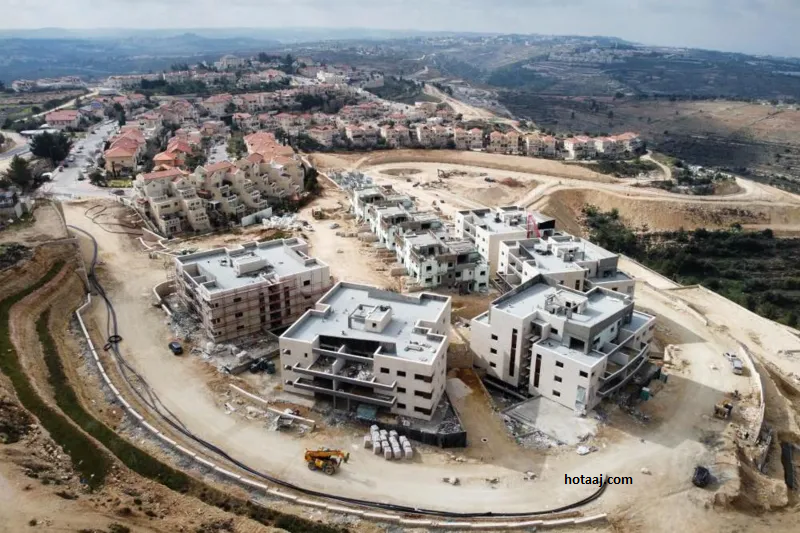
On a clear day, the towering skyscrapers of Tel Aviv can be seen from the hill above Karnei Shomron, an Israeli settlement in the occupied West Bank. This view offers a striking contrast between the modern, bustling city of Tel Aviv and the contentious, heavily guarded settlement of Karnei Shomron, which is home to hundreds of Israeli families. The settlement, like many others in the West Bank, sits in a region that Palestinians claim as part of a future independent state.
The proximity between the settlement and Tel Aviv underscores the complex and often contentious geography of the Israeli-Palestinian conflict, where territorial boundaries are fluid and frequently disputed. For the settlers in Karnei Shomron, the sight of Tel Aviv serves as a reminder of their connection to Israel proper, but also highlights the stark division between the city’s internationally recognized status and the disputed nature of settlements in the West Bank.
Israeli settlers, like those in Karnei Shomron, have increasingly seen political changes, such as the election of pro-settlement leaders, as opportunities to expand and solidify their presence in the West Bank. This has led to ongoing tension with Palestinians, who view the growth of Israeli settlements as a direct challenge to their aspirations for statehood. The expansion of settlements and the continued presence of Israeli communities in the West Bank remain one of the most contentious aspects of the Israeli-Palestinian conflict.
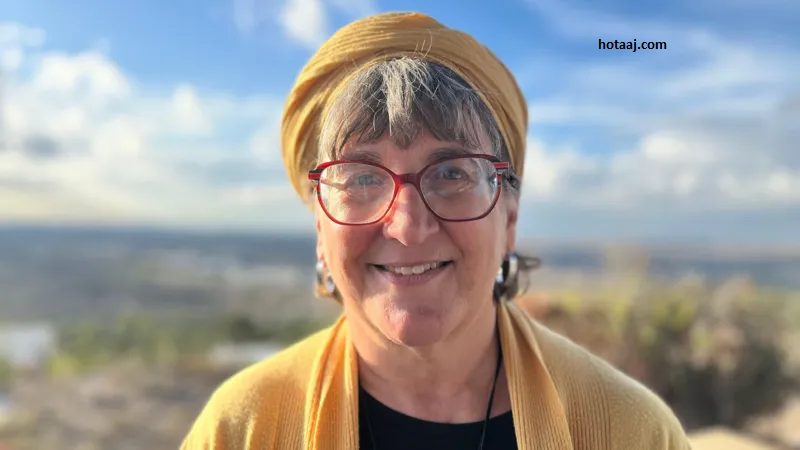
Sondra Baras, who has lived in Karnei Shomron for nearly 40 years, expresses a deep connection to the land, saying, “I’m living in a place where my ancestors lived thousands of years ago. I do not live in occupied territory; I live in Biblical Judea and Samaria.” For her and many other settlers, the distinction between the State of Israel and the territory captured from Jordan during the 1967 Middle East war has been blurred, reshaped by their own historical and religious narratives.
At the hilltop viewpoint in Karnei Shomron, the visitors’ audio-guide reinforces this perspective, describing the West Bank as “a region of Israel” and emphasizing the biblical significance of the Palestinian city of Nablus, portraying it as the place where God promised the land to the Jews. This ideological framing is part of a broader narrative that settlers have cultivated, seeing the land not as disputed but as rightfully belonging to Israel based on biblical and historical claims.
However, while settlements in the West Bank have rapidly expanded, with many viewed as illegal under international law, formal annexation of the territory remains a significant political and legal challenge. The UN’s top court and most countries consider the settlements illegal, yet their presence has grown year after year.
For settlers like Sondra, the election of Donald Trump as US president represents a potential turning point. “I was thrilled that Trump won,” she says. “I very much want to extend sovereignty in Judea and Samaria. And I feel that’s something Trump could support.” Many settlers now see an opportunity to push for the formal annexation of the West Bank, emboldened by Trump’s pro-settlement stance and his administration’s historic recognition of Jerusalem as Israel’s capital. This marks a moment of heightened optimism among settlers, who hope that the new US administration will help them secure greater control over the disputed territories they have long claimed as part of their ancestral homeland.

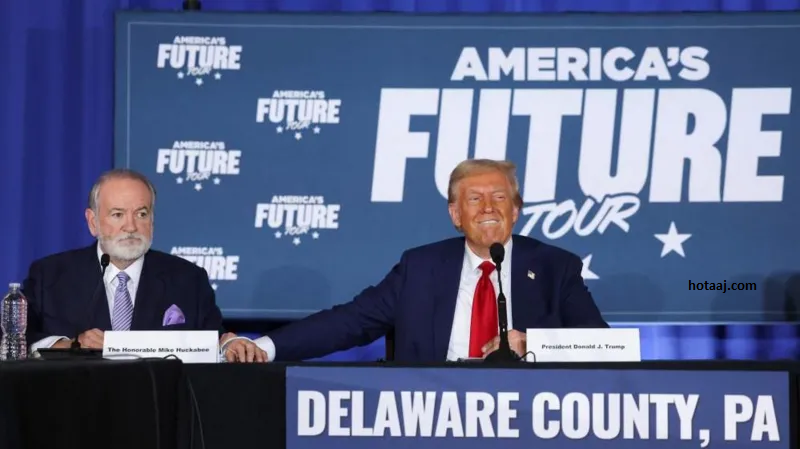
There are indications that some members of Donald Trump’s incoming administration might align with the views of settlers like Sondra Baras. Mike Huckabee, nominated by Trump as the new ambassador to Israel, has openly expressed his support for Israeli claims on the West Bank. In an interview last year, Huckabee firmly rejected the term “occupied” when referring to the territory.
“When people use the term ‘occupied,’ I say: ‘Yes, Israel is occupying the land, but it’s the occupation of a land that God gave them 3,500 years ago. It is their land,'” Huckabee stated. His comments underscore a broader ideological and religious perspective shared by some within the administration, one that frames Israel’s control over the West Bank as not only justified but divinely ordained.
This rhetoric, supported by figures like Huckabee, reflects a shift in US foreign policy under Trump, which has increasingly aligned with the pro-settlement narrative in Israel. The incoming administration’s stance could embolden settlers in the West Bank, providing them with the backing they have long sought to solidify their claims over the region and pursue further annexation efforts. Huckabee’s statements exemplify how the political climate in the US may further encourage Israeli settlers to push for expanded sovereignty in Judea and Samaria.

Yisrael Gantz, head of the regional settlement council overseeing Karnei Shomron, has observed a shift in tone from the incoming Trump administration, especially after the Hamas attacks on Israel on October 7, 2023, which sparked the war on Gaza. He believes that both in Israel and the US, there is now a shared understanding that Israel must apply sovereignty over the West Bank. “It’s a process. I can’t tell you it will be tomorrow. But in my eyes, the dream of a two-state solution is dead,” Gantz stated.
While US President Joe Biden continues to uphold the position of supporting a future Palestinian state alongside Israel, Gantz has noted a difference in rhetoric from the Trump administration. “Of course, yes,” he replied when asked if he was hearing something different from Trump’s team.
However, some Israelis pushing for West Bank annexation, including figures in Israel’s cabinet, may find their hopes for full US support tempered. Their expectations were bolstered by Trump’s first term, during which he broke with longstanding US policy by recognizing Jerusalem as Israel’s capital and affirming Israeli sovereignty over the Golan Heights, which Israel captured from Syria in 1967. These actions had fueled optimism among settlers, but it remains unclear whether Trump will take similar steps toward annexation in his second term.

Supporting the annexation of the West Bank would present a much greater and more complex challenge for Donald Trump, due to the potential fallout both internationally and domestically. A move to annex the West Bank would likely alienate key US allies, most notably Saudi Arabia, which has been a partner in various regional efforts. This could complicate Trump’s broader ambitions for a regional peace deal involving Israel and its Arab neighbors. Additionally, such a decision could sour relations with moderate Republicans in the US Congress, who are already concerned about the humanitarian and political consequences for Palestinians living in the West Bank, as well as their future status under Israeli rule.
Sondra Baras, a settler leader in Karnei Shomron, has a starkly different view on the future of West Bank Palestinians. She told me that those Palestinians who do not want to live under Israeli sovereignty could “go wherever they want.” When asked why they should leave their homeland, she explained: “I’m not kicking them out, but things change. How many wars did they start? And they lost.” Her stance reflects a broader settler narrative that views the situation as one of territorial entitlement, with little concern for the displacement of Palestinians.
Baras further emphasized that even though there would likely be significant opposition to annexation, she believes that once sovereignty is implemented, it would create a fait accompli. “If sovereignty were to go forward, there would be a lot of yelling and screaming, absolutely,” she acknowledged. “But at some point, you create a fact that’s irreversible.”
The calls for annexation have not been limited to settlers alone. Following Trump’s election victory in November, Israel’s far-right Finance Minister Bezalel Smotrich publicly declared that 2025 should be the year Israel extends its sovereignty over the West Bank. “2025 must be the year of sovereignty in Judea and Samaria,” he said, signaling that annexation remains a key agenda item for the Israeli far-right, with significant implications for the future of the region and its inhabitants.
Despite these declarations from Israeli officials and settlers, the potential for widespread annexation faces substantial geopolitical hurdles. The consequences of such a move would reverberate far beyond the West Bank, affecting Israel’s relations with key international players and potentially escalating tensions in the already volatile Middle East.
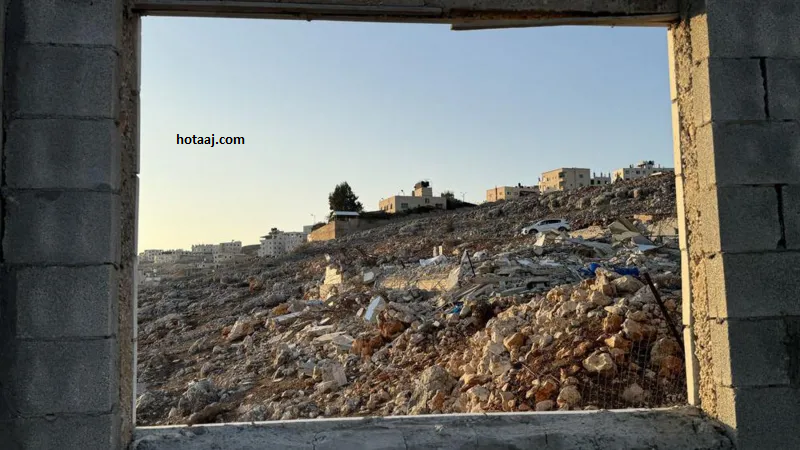
For many Palestinians, the ongoing conversation around formal annexation of the West Bank misses the critical point: that Israel is already, in practice, annexing territory. This sentiment is echoed by Mohaib Salameh, a Palestinian whose family home was recently demolished by Israeli authorities. Salameh leads me across the rubble of what was once his family’s home, located on private Palestinian land on the outskirts of Nablus. His home, like many others in the West Bank, was deemed illegal by an Israeli court and demolished in a process that Palestinians say reflects a broader strategy of territorial control.
Israel’s grip over the West Bank is more entrenched than is often acknowledged in international discussions. According to the Oslo peace accords, Israel holds full control over security and planning in 60% of the West Bank on an interim basis. However, as settlements continue to expand, the Palestinian population finds itself increasingly marginalized, with permits for new Palestinian homes almost never granted. This stark discrepancy between Israeli and Palestinian access to land and resources has led to a sharp rise in demolitions of Palestinian homes, a process that, according to local lawyers, has been intensifying in recent years.
The situation on the ground for Palestinians like Salameh is one of ongoing displacement and dispossession. As Israel continues to build and expand settlements, Palestinians face the increasing reality of losing their homes and land to Israeli authorities, a trend that many see as a de facto annexation of Palestinian territory, regardless of any formal policy declaration.

“This is all part of policies to force us to leave,” Mohaib Salameh said, standing amidst the rubble of his family’s demolished home. “It’s a policy of forced migration. What difference does it make to them [Israelis] if I build here or not? We pose no threat to them.”
Salameh’s words reflect the deep sense of injustice felt by many Palestinians in the West Bank, where the expansion of Israeli settlements, coupled with strict controls on Palestinian construction, creates an environment that increasingly pushes them off their land. For Palestinians like Salameh, the destruction of homes is not just a matter of losing property, but part of a broader strategy to force them to leave their ancestral lands.
This policy is further exacerbated by violent actions from Israeli settlers, who frequently attack Palestinian communities and intimidate them into abandoning their homes. Despite international condemnation, including sanctions from the US and the UK, these settlers often face little to no accountability in Israeli courts. This lack of legal consequences only emboldens them, allowing the cycle of violence and displacement to continue unchecked.
For many Palestinians, the struggle to stay on their land has become a daily battle, not only against the physical challenges posed by demolition and violence but also against a political system that they believe is systematically designed to erase their presence from the land. As settlements expand and the Israeli government’s control over the West Bank deepens, Palestinians are left to contend with the realities of occupation and displacement, with little hope for a fair resolution in sight.

Activists claim that more than 20 Palestinian communities in the West Bank have been forcibly expelled in recent years due to increasingly violent attacks by Israeli settlers. These settlers, often operating with little accountability from Israeli authorities, are now encroaching on new areas beyond Israel’s interim civil control, making it harder for Palestinians to remain in their homes and maintain any semblance of autonomy.
Mohaib Salameh, standing on the remnants of his demolished home, voiced a deep skepticism about any future intervention from the United States. “No US president has ever protected Palestinians,” he said. “I don’t believe Donald Trump will either.”
While Trump is often seen as a staunch ally of Israel, his reputation for striking deals and avoiding conflict could add an unpredictable dimension to his approach. His previous term as president saw dramatic shifts in US policy, including the recognition of Jerusalem as Israel’s capital and the endorsement of Israeli sovereignty over the Golan Heights. However, questions remain as to whether he will support more aggressive annexation of the West Bank or take a more pragmatic approach to avoid deeper conflict.
For Palestinians, the uncertainty surrounding Trump’s future policies raises concerns that any hope for protection or justice will continue to be sidelined in favor of broader geopolitical considerations. For Mohaib and many others, the struggle for their land feels like an uphill battle against both the Israeli government and a US administration they see as unwilling to challenge the status quo.

Courtesy: Firstpost
References
- ^ Kranish & Fisher 2017, pp. 30, 37.
- ^ Kranish & Fisher 2017, p. v.
- ^ Horowitz, Jason (September 22, 2015). “Donald Trump’s Old Queens Neighborhood Contrasts With the Diverse Area Around It”. The New York Times. Retrieved November 7, 2018.
- ^ Buettner & Craig 2024, pp. 30–31.
- ^ Kranish & Fisher 2017, pp. 33, 38, 45.
- ^ Kranish & Fisher 2017, pp. 45–48.
- ^ “Two Hundred and Twelfth Commencement for the Conferring of Degrees” (PDF). University of Pennsylvania. May 20, 1968. pp. 19–21. Retrieved March 31, 2023.
- ^ Ashford, Grace (February 27, 2019). “Michael Cohen Says Trump Told Him to Threaten Schools Not to Release Grades”. The New York Times.
- ^ Blair 2015, p. 300.
- ^ Baron, James (December 12, 1990). “Trumps Get Divorce; Next, Who Gets What?”. The New York Times. Retrieved March 5, 2023.
- ^ Hafner, Josh (July 19, 2016). “Get to know Donald’s other daughter: Tiffany Trump”. USA Today. Retrieved July 10, 2022.
- ^ Kranish & Fisher 2017, p. 266.
- ^ “Donald Trump Fast Facts”. CNN. July 2, 2021. Retrieved September 29, 2021.
- ^ Nagourney, Adam (October 30, 2020). “In Trump and Biden, a Choice of Teetotalers for President”. The New York Times. Retrieved February 5, 2021.
- ^ Parker, Ashley; Rucker, Philip (October 2, 2018). “Kavanaugh likes beer — but Trump is a teetotaler: ‘He doesn’t like drinkers.'”. The Washington Post. Retrieved February 5, 2021.
- ^ Dangerfield, Katie (January 17, 2018). “Donald Trump sleeps 4–5 hours each night; he’s not the only famous ‘short sleeper'”. Global News. Retrieved February 5, 2021.
- ^ Almond, Douglas; Du, Xinming (December 2020). “Later bedtimes predict President Trump’s performance”. Economics Letters. 197. doi:10.1016/j.econlet.2020.109590. ISSN 0165-1765. PMC 7518119. PMID 33012904.
- ^ Ballengee, Ryan (July 14, 2018). “Donald Trump says he gets most of his exercise from golf, then uses cart at Turnberry”. Golf News Net. Retrieved July 4, 2019.
- ^ Rettner, Rachael (May 14, 2017). “Trump thinks that exercising too much uses up the body’s ‘finite’ energy”. The Washington Post. Retrieved September 29, 2021.
- ^ O’Donnell & Rutherford 1991, p. 133.
- ^ Jump up to:a b Marquardt, Alex; Crook, Lawrence III (May 1, 2018). “Exclusive: Bornstein claims Trump dictated the glowing health letter”. CNN. Retrieved May 20, 2018.
- ^ Schecter, Anna (May 1, 2018). “Trump doctor Harold Bornstein says bodyguard, lawyer ‘raided’ his office, took medical files”. NBC News. Retrieved June 6, 2019.
- ^ Mahler, Jonathan; Eder, Steve (August 27, 2016). “‘No Vacancies’ for Blacks: How Donald Trump Got His Start, and Was First Accused of Bias”. The New York Times. Retrieved January 13, 2018.
- ^ Jump up to:a b Rich, Frank (April 30, 2018). “The Original Donald Trump”. New York. Retrieved May 8, 2018.
- ^ Blair 2015, p. 250.
- ^ Mahler, Jonathan; Flegenheimer, Matt (June 20, 2016). “What Donald Trump Learned From Joseph McCarthy’s Right-Hand Man”. The New York Times. Retrieved May 26, 2020.
- ^ Jump up to:a b 1634–1699: McCusker, J. J. (1997). How Much Is That in Real Money? A Historical Price Index for Use as a Deflator of Money Values in the Economy of the United States: Addenda et Corrigenda (PDF). American Antiquarian Society. 1700–1799: McCusker, J. J. (1992). How Much Is That in Real Money? A Historical Price Index for Use as a Deflator of Money Values in the Economy of the United States (PDF). American Antiquarian Society. 1800–present: Federal Reserve Bank of Minneapolis. “Consumer Price Index (estimate) 1800–”. Retrieved February 29, 2024.
- ^ Kranish, Michael; O’Harrow, Robert Jr. (January 23, 2016). “Inside the government’s racial bias case against Donald Trump’s company, and how he fought it”. The Washington Post. Retrieved January 7, 2021.
- ^ Johnston 2016, pp. 45–46.
- ^ Brenner, Marie (June 28, 2017). “How Donald Trump and Roy Cohn’s Ruthless Symbiosis Changed America”. Vanity Fair. Retrieved May 26, 2020.
- ^ Qiu, Linda (June 21, 2016). “Yep, Donald Trump’s companies have declared bankruptcy…more than four times”. PolitiFact. Retrieved May 25, 2023.
- ^ Jump up to:a b Barstow, David; Craig, Susanne; Buettner, Russ (October 2, 2018). “Trump Engaged in Suspect Tax Schemes as He Reaped Riches From His Father”. The New York Times. Retrieved October 2, 2018.
- ^ Handy, Bruce (April 1, 2019). “Trump Once Proposed Building a Castle on Madison Avenue”. The Atlantic. Retrieved July 28, 2024.
- ^ Nevius, James (April 3, 2019). “The winding history of Donald Trump’s first major Manhattan real estate project”. Curbed.
- ^ Kessler, Glenn (March 3, 2016). “Trump’s false claim he built his empire with a ‘small loan’ from his father”. The Washington Post. Retrieved September 29, 2021.
- ^ Kranish & Fisher 2017, p. 84.
- ^ Geist, William E. (April 8, 1984). “The Expanding Empire of Donald Trump”. The New York Times Magazine. Retrieved September 29, 2021.
- ^ Jump up to:a b c Haberman, Maggie (October 31, 2019). “Trump, Lifelong New Yorker, Declares Himself a Resident of Florida”. The New York Times. Retrieved January 24, 2020.
- ^ “Trump Revises Plaza Loan”. The New York Times. November 4, 1992. Retrieved May 23, 2023.
- ^ “Trump’s Plaza Hotel Bankruptcy Plan Approved”. The New York Times. Reuters. December 12, 1992. Retrieved May 24, 2023.
- ^ Jump up to:a b Segal, David (January 16, 2016). “What Donald Trump’s Plaza Deal Reveals About His White House Bid”. The New York Times. Retrieved May 3, 2022.
- ^ Stout, David; Gilpin, Kenneth N. (April 12, 1995). “Trump Is Selling Plaza Hotel To Saudi and Asian Investors”. The New York Times. Retrieved July 18, 2019.
- ^ Kranish & Fisher 2017, p. 298.
- ^ Bagli, Charles V. (June 1, 2005). “Trump Group Selling West Side Parcel for $1.8 billion”. The New York Times. Retrieved May 17, 2016.
- ^ Kiel, Paul; Buettner, Russ (May 11, 2024). “IRS Audit of Trump Could Cost Former President More Than $100 Million”. ProPublica. Retrieved August 26, 2024.
- ^ Jump up to:a b c d McQuade, Dan (August 16, 2015). “The Truth About the Rise and Fall of Donald Trump’s Atlantic City Empire”. Philadelphia. Retrieved March 21, 2016.
- ^ Kranish & Fisher 2017, p. 128.
- ^ Saxon, Wolfgang (April 28, 1986). “Trump Buys Hilton’s Hotel in Atlantic City”. The New York Times. Retrieved May 25, 2023.
- ^ “Trump’s Castle and Plaza file for bankruptcy”. United Press International. March 9, 1992. Retrieved May 25, 2023.
- ^ “Company News; Taj Mahal is out of Bankruptcy”. The New York Times. October 5, 1991. Retrieved May 22, 2008.
- ^ O’Connor, Claire (May 29, 2011). “Fourth Time’s A Charm: How Donald Trump Made Bankruptcy Work For Him”. Forbes. Retrieved January 27, 2022.
- ^ Norris, Floyd (June 7, 1995). “Trump Plaza casino stock trades today on Big Board”. The New York Times. Retrieved December 14, 2014.
- ^ Tully, Shawn (March 10, 2016). “How Donald Trump Made Millions Off His Biggest Business Failure”. Fortune. Retrieved May 6, 2018.
- ^ Peterson-Withorn, Chase (April 23, 2018). “Donald Trump Has Gained More Than $100 Million On Mar-a-Lago”. Forbes. Retrieved July 4, 2018.
- ^ Dangremond, Sam; Kim, Leena (December 22, 2017). “A History of Mar-a-Lago, Donald Trump’s American Castle”. Town & Country. Retrieved July 3, 2018.
- ^ Garcia, Ahiza (December 29, 2016). “Trump’s 17 golf courses teed up: Everything you need to know”. CNN Money. Retrieved January 21, 2018.
- ^ “Take a look at the golf courses owned by Donald Trump”. Golfweek. July 24, 2020. Retrieved July 7, 2021.
- ^ Jump up to:a b Anthony, Zane; Sanders, Kathryn; Fahrenthold, David A. (April 13, 2018). “Whatever happened to Trump neckties? They’re over. So is most of Trump’s merchandising empire”. The Washington Post. Retrieved September 29, 2021.
- ^ Williams, Aaron; Narayanswamy, Anu (January 25, 2017). “How Trump has made millions by selling his name”. The Washington Post. Retrieved December 12, 2017.
- ^ Paulson, Michael (March 6, 2016). “For a Young Donald J. Trump, Broadway Held Sway”. The New York Times. Retrieved March 7, 2016.
- ^ Markazi, Arash (July 14, 2015). “5 things to know about Donald Trump’s foray into doomed USFL”. ESPN. Retrieved September 30, 2021.
- ^ O’Donnell & Rutherford 1991, p. 137–143.
- ^ Hogan, Kevin (April 10, 2016). “The Strange Tale of Donald Trump’s 1989 Biking Extravaganza”. Politico. Retrieved April 12, 2016.
- ^ Jump up to:a b Buettner, Russ; Craig, Susanne (May 7, 2019). “Decade in the Red: Trump Tax Figures Show Over $1 Billion in Business Losses”. The New York Times. Retrieved May 8, 2019.
- ^ Mattingly, Phil; Jorgensen, Sarah (August 23, 2016). “The Gordon Gekko era: Donald Trump’s lucrative and controversial time as an activist investor”. CNN. Retrieved September 14, 2022.
- ^ Peterson, Barbara (April 13, 2017). “The Crash of Trump Air”. The Daily Beast. Retrieved May 17, 2023.
- ^ “10 Donald Trump Business Failures”. Time. October 11, 2016. Retrieved May 17, 2023.
- ^ Haberman 2022, pp. 129–130.
- ^ Rutenberg, Jim (June 22, 2002). “Three Beauty Pageants Leaving CBS for NBC”. The New York Times. Retrieved August 14, 2016.
- ^ de Moraes, Lisa (June 22, 2002). “There She Goes: Pageants Move to NBC”. The Washington Post. Retrieved August 14, 2016.
- ^ Zara, Christopher (October 26, 2016). “Why the heck does Donald Trump have a Walk of Fame star, anyway? It’s not the reason you think”. Fast Company. Retrieved June 16, 2018.
- ^ Puente, Maria (June 29, 2015). “NBC to Donald Trump: You’re fired”. USA Today. Retrieved July 28, 2015.
- ^ D’Antonio 2015, pp. 281–282.
- ^ D’Antonio 2015, pp. 282–283.
- ^ Eder, Steve (November 18, 2016). “Donald Trump Agrees to Pay $25 Million in Trump University Settlement”. The New York Times. Retrieved November 18, 2016.
- ^ Tigas, Mike; Wei, Sisi (May 9, 2013). “Nonprofit Explorer”. ProPublica. Retrieved September 9, 2016.
- ^ Jump up to:a b Fahrenthold, David A. (September 10, 2016). “How Donald Trump retooled his charity to spend other people’s money”. The Washington Post. Retrieved March 19, 2024.
- ^ Pallotta, Frank (August 18, 2022). “Investigation into Vince McMahon’s hush money payments reportedly turns up Trump charity donations”. CNN. Retrieved March 19, 2024.
- ^ Solnik, Claude (September 15, 2016). “Taking a peek at Trump’s (foundation) tax returns”. Long Island Business News. Retrieved September 30, 2021.
- ^ Cillizza, Chris; Fahrenthold, David A. (September 15, 2016). “Meet the reporter who’s giving Donald Trump fits”. The Washington Post. Retrieved June 26, 2021.
- ^ Fahrenthold, David A. (October 3, 2016). “Trump Foundation ordered to stop fundraising by N.Y. attorney general’s office”. The Washington Post. Retrieved May 17, 2023.
- ^ Jacobs, Ben (December 24, 2016). “Donald Trump to dissolve his charitable foundation after mounting complaints”. The Guardian. Retrieved December 25, 2016.
- ^ Thomsen, Jacqueline (June 14, 2018). “Five things to know about the lawsuit against the Trump Foundation”. The Hill. Retrieved June 15, 2018.
- ^ Goldmacher, Shane (December 18, 2018). “Trump Foundation Will Dissolve, Accused of ‘Shocking Pattern of Illegality'”. The New York Times. Retrieved May 9, 2019.
- ^ Katersky, Aaron (November 7, 2019). “President Donald Trump ordered to pay $2M to collection of nonprofits as part of civil lawsuit”. ABC News. Retrieved November 7, 2019.
- ^ “Donald Trump: Three decades, 4,095 lawsuits”. USA Today. Retrieved April 17, 2018.
- ^ Jump up to:a b Winter, Tom (June 24, 2016). “Trump Bankruptcy Math Doesn’t Add Up”. NBC News. Retrieved February 26, 2020.
- ^ Flitter, Emily (July 17, 2016). “Art of the spin: Trump bankers question his portrayal of financial comeback”. Reuters. Retrieved October 14, 2018.
- ^ Smith, Allan (December 8, 2017). “Trump’s long and winding history with Deutsche Bank could now be at the center of Robert Mueller’s investigation”. Business Insider. Retrieved October 14, 2018.
- ^ Riley, Charles; Egan, Matt (January 12, 2021). “Deutsche Bank won’t do any more business with Trump”. CNN. Retrieved September 14, 2022.
- ^ Stump, Scott (October 26, 2015). “Donald Trump: My dad gave me ‘a small loan’ of $1 million to get started”. CNBC. Retrieved November 13, 2016.
- ^ Barstow, David; Craig, Susanne; Buettner, Russ (October 2, 2018). “11 Takeaways From The Times’s Investigation into Trump’s Wealth”. The New York Times. Retrieved October 3, 2018.
- ^ Stracqualursi, Veronica (April 20, 2018). “Ex-Forbes reporter says Trump posed as executive, lied to him to crack Forbes 400 list”. CNN. Retrieved December 25, 2024.
- ^ Boyer, Dave (October 3, 2016). “Donald Trump revealed $900 million business loss in ’97 book”. The Washington Times. Retrieved December 18, 2024.
- ^ O’Brien 2005, p. 150–151.
- ^ Johnston 2021, p. 20.
- ^ Alexander, Dan (November 4, 2024) [September 27, 2024]. “Here’s How Much Donald Trump Is Worth”. Forbes. Retrieved December 15, 2024.
- ^ “Profile: Donald Trump”. Forbes. December 16, 2024. Retrieved December 16, 2024.
- ^ Buncombe, Andrew (July 4, 2018). “Trump boasted about writing many books – his ghostwriter says otherwise”. The Independent. Retrieved October 11, 2020.
- ^ Mayer, Jane (July 18, 2016). “Donald Trump’s Ghostwriter Tells All”. The New Yorker. Retrieved June 19, 2017.
- ^ LaFrance, Adrienne (December 21, 2015). “Three Decades of Donald Trump Film and TV Cameos”. The Atlantic.
- ^ Kranish & Fisher 2017, p. 166.
- ^ Massie, Christopher; Kaczynski, Andrew (March 16, 2016). “There Are Hours Of Audio Of Donald Trump’s Nationally Syndicated Radio Show In The 2000s”. BuzzFeed. Retrieved December 6, 2024.
- ^ Grossmann, Matt; Hopkins, David A. (September 9, 2016). “How the conservative media is taking over the Republican Party”. The Washington Post. Retrieved October 19, 2018.
- ^ Rao, Sonia (February 4, 2021). “Facing expulsion, Trump resigns from the Screen Actors Guild: ‘You have done nothing for me'”. The Washington Post. Retrieved February 5, 2021.
- ^ Harmata, Claudia (February 7, 2021). “Donald Trump Banned from Future Re-Admission to SAG-AFTRA: It’s ‘More Than a Symbolic Step'”. People. Retrieved February 8, 2021.
- ^ Buettner & Craig 2024, p. 7, “Mark Burnett, the television producer who made Trump a star, did not just hand him a fortune.”.
- ^ Grynbaum, Michael M.; Parker, Ashley (July 16, 2016). “Donald Trump the Political Showman, Born on ‘The Apprentice'”. The New York Times. Retrieved July 8, 2018.
- ^ Nussbaum, Emily (July 24, 2017). “The TV That Created Donald Trump”. The New Yorker. Retrieved October 18, 2023.
- ^ Poniewozik, James (September 28, 2020). “Donald Trump Was the Real Winner of ‘The Apprentice'”. The New York Times. Retrieved October 18, 2023.
- ^ Jump up to:a b Gillin, Joshua (August 24, 2015). “Bush says Trump was a Democrat longer than a Republican ‘in the last decade'”. PolitiFact. Retrieved March 18, 2017.
- ^ “Trump Officially Joins Reform Party”. CNN. October 25, 1999. Retrieved December 26, 2020.
- ^ Oreskes, Michael (September 2, 1987). “Trump Gives a Vague Hint of Candidacy”. The New York Times. Retrieved February 17, 2016.
- ^ Butterfield, Fox (November 18, 1987). “Trump Urged To Head Gala Of Democrats”. The New York Times. Retrieved October 1, 2021.
- ^ Meacham 2016, p. 326.
- ^ Gass, Nick (November 6, 2015). “George W. Bush ‘surprised’ by dad’s criticism, author says”. Politico. Retrieved December 20, 2024.
- ^ Winger, Richard (December 25, 2011). “Donald Trump Ran For President in 2000 in Several Reform Party Presidential Primaries”. Ballot Access News. Retrieved October 1, 2021.
- ^ Clift, Eleanor (July 18, 2016). “The Last Time Trump Wrecked a Party”. The Daily Beast. Retrieved October 14, 2021.
- ^ Nagourney, Adam (February 14, 2000). “Reform Bid Said to Be a No-Go for Trump”. The New York Times. Retrieved December 26, 2020.
- ^ Jump up to:a b MacAskill, Ewen (May 16, 2011). “Donald Trump bows out of 2012 US presidential election race”. The Guardian. Retrieved February 28, 2020.