








A powerful love story unfolds between a white, heterosexual, working-class mechanic and a South Asian Muslim drag queen, shedding light on the underground LGBTQ+ subculture. Their unconventional relationship explores themes of identity, cultural clashes, and love in a world often marginalized. Set against the backdrop of societal expectations, the story highlights the complexity of love and self-discovery in the face of discrimination. It offers a compelling glimpse into a secretive yet vibrant community navigating both personal and cultural challenges.
The feature film Unicorns delves into the highly secretive “gaysian” scene, an intersection of LGBTQ+ and South Asian cultures. It explores the vibrant world of drag queens, highlighting the challenges they face while navigating cultural and sexual identities. The film showcases the glamour and struggles of these queens, offering a unique perspective on a hidden subculture that blends tradition with self-expression.
Sally El Hosaini, co-director of Unicorns alongside James Krishna Floyd, explained that many queens in the “gaysian” community remain closeted, only having limited opportunities to express themselves fully. Many of them use pseudonyms and have been alienated from their families due to their identities. This underscores the film’s focus on the challenges faced by LGBTQ+ individuals, particularly within cultures that may reject them.
James Krishna Floyd emphasized that while the “gaysian” scene might appear vibrant and glamorous on the surface, it actually has a gritty and harsh reality beneath. The film Unicorns delves into this complex and often hidden world, revealing the challenges and resilience of the individuals within it.
The “gaysian” community, as explored in Unicorns, is a minority within multiple marginalized groups, facing rejection from mainstream culture, South Asian families, religious groups, and even the broader LGBTQ+ community. The film highlights their struggles, resilience, and the challenges of finding acceptance in various social contexts.

James Krishna Floyd, co-director and screenwriter of Unicorns, shared that he and Sally El Hosaini, who is half Welsh and half Egyptian, aimed to explore “fluid identities” through the film. Their goal was to highlight the complexity of identities within the LGBTQ+ community, particularly in the context of the South Asian diaspora, blending themes of self-expression and societal expectations.
James Krishna Floyd, who is half Indian and half English, spoke about his personal experience with “sexually fluid” identities. He emphasized how mainstream culture often forces individuals into rigid categories, which doesn’t reflect the complexity of personal identity. His film Unicorns seeks to break away from such stereotypes and explore the fluidity of identities within both the LGBTQ+ and South Asian communities.
James Krishna Floyd expressed his frustration with how mainstream culture confines individuals into rigid categories, particularly in terms of identity. He emphasized the limiting nature of these constraints, especially for those who don’t fit neatly into societal expectations. This frustration is reflected in the film Unicorns, which explores more fluid and complex identities, breaking away from traditional boxes placed by culture.
James Krishna Floyd was introduced to the “gaysian” scene by Asifa Lahore, the UK’s first Muslim drag queen to publicly discuss her work in 2014. Floyd, who had been aware of the subculture, gained deeper insights into it through her experiences. His exploration of this world is integral to the film Unicorns, which highlights the lives of South Asian LGBTQ+ individuals navigating complex identities within their communities.
Asifa Lahore, the UK’s first Muslim drag queen, also serves as a producer on the film Unicorns. Her involvement in the project adds authenticity and depth to the portrayal of the “gaysian” scene, a subculture explored in the film. Lahore’s pioneering work in the LGBTQ+ community has been crucial in shedding light on the struggles and experiences of South Asian queer individuals.

James Krishna Floyd emphasized that Unicorns is rooted in reality, with elements based on the personal experiences of Asifa Lahore, himself, and other South Asian drag queens. This authentic storytelling approach helps bring to light the challenges faced by individuals within the “gaysian” community, blending real-life struggles and emotional depth into the film’s narrative.
In Unicorns, Ashiq, portrayed by Jason Patel, leads a double life. By day, he works in a shop, but by night, he transforms into Aysha, a drag queen who performs for a largely South Asian LGBTQ+ crowd. The film highlights his journey through this dual existence, navigating identity, acceptance, and the challenges of being part of a marginalized community.
In Unicorns, the love story begins when Luke (Ben Hardy), a mechanic and single father, accidentally stumbles upon an underground club where Aysha (Jason Patel), a drag queen, is performing. After sharing a kiss, Luke realizes Aysha’s true identity, setting the stage for an unexpected and complex relationship. The film explores themes of identity, love, and acceptance within the LGBTQ+ and South Asian communities.

In Unicorns, Jason Patel, who plays Aysha, is not a professional drag queen, though many supporting cast members are. The film features a mix of real-life drag queens alongside actors, adding authenticity to its portrayal of the LGBTQ+ subculture. This blend helps bring the story to life, grounding its narrative in real-world experiences while highlighting the challenges and vibrant culture within the “gaysian” community.
After a casting call on social media, El Hosaini and Floyd received audition tapes from several South Asian drag queens. This helped the filmmakers find authentic talent for the film, ensuring that the portrayal of the “gaysian” scene remained true to real-life experiences. Many of the supporting cast members are actual drag queens, adding depth and authenticity to the movie’s exploration of LGBTQ+ culture within South Asian communities.
El Hosaini described how many of the audition tapes they received were deeply moving. These heartfelt submissions showcased the personal struggles and resilience of the South Asian drag queens, adding authenticity and emotional depth to the film. The filmmakers were touched by the stories shared, which helped them cast the most fitting talent to portray the unique and important experiences represented in Unicorns.
El Hosaini shared that many of the audition tapes they received were emotionally moving. Some drag queens expressed how meaningful it was to see a film addressing their unique experiences, with one saying, “I don’t even care if I get this role… the fact that this is being made about this kind of character and exists has made me feel seen.” This feedback highlighted the film’s importance in providing visibility to a marginalized community.
El Hosaini shared that some of the audition tapes they received were deeply emotional. One particular tape stood out where the person had recorded it in a bathroom, speaking quietly because their family was at home and they feared being overheard. This moment emphasized the challenges and hidden lives faced by many in the LGBTQ+ South Asian community, making the film’s representation all the more vital.
Floyd reflected on the emotional impact of the audition tapes, particularly one where an individual quietly recorded their submission in a bathroom to avoid being overheard by their family. This poignant moment reminded them why they were making the film, underscoring the importance of giving visibility to the LGBTQ+ South Asian community.
Floyd emphasized that “Unicorns” was created primarily for the “gaysian” community, as it is the first fictional feature film to center on this underrepresented group. The filmmakers aimed to shine a light on their experiences and struggles, giving them the visibility that has long been lacking in mainstream cinema.
Floyd and El Hosaini, who now live in London and share a son, first met when Floyd starred in El Hosaini’s directorial debut, My Brother the Devil. Their collaboration on Unicorns marks a personal and professional milestone, as they have brought their shared passion for storytelling and diverse narratives to life in this groundbreaking film.
Floyd also starred in El Hosaini’s second feature film, The Swimmers. Their ongoing collaboration highlights their shared creative vision and commitment to telling diverse and impactful stories. This partnership continues to shape their exploration of identity and cultural narratives in their films.
Unicorns marks James Krishna Floyd’s directorial debut, and it’s his third collaboration with Sally El Hosaini, following their work on My Brother the Devil and The Swimmers. The film delves into the lives of South Asian drag queens, exploring their struggles and resilience within a marginalized community. Their powerful storytelling highlights LGBTQ+ themes and the complexities of fluid identities, offering a fresh perspective on the “gaysian” scene.
Making a film with a partner can be both rewarding and challenging. For James Krishna Floyd and Sally El Hosaini, collaborating on Unicorns allowed them to merge their creative visions while navigating their personal connection. Working together brought out mutual understanding and trust, yet it also required balancing professional and personal boundaries. They share a deep commitment to their storytelling, which is evident in their collaborative efforts, making their projects not only artistically fulfilling but also emotionally enriching.
Sally El Hosaini and James Krishna Floyd first connected creatively through work before developing a personal relationship. This shared creative bond has allowed them to collaborate seamlessly on projects like Unicorns, blending their professional and personal dynamics. Their deep understanding of each other’s artistic vision contributes to the strength of their work together.
Sally El Hosaini and James Krishna Floyd describe their professional collaboration as a vital support system, where they act as each other’s rock, especially during intense creative processes. Their bond, forged through work, strengthens their ability to create together, offering mutual support in both personal and professional spheres. This foundation has been crucial in projects like Unicorns, making their partnership an integral part of their filmmaking journey.
Sally El Hosaini shared that Unicorns has been a long-term project, with its development spanning nine years, coinciding with the birth of their son. She described it as a “child” that grew up alongside their family, emphasizing the deep personal connection they have with the film. This long gestation period reflects the passion and commitment invested in the project, both professionally and personally.
Sally El Hosaini reflected that their decision to collaborate on Unicorns felt natural and aligned with their shared creative connection. With the project having been in development for nearly a decade, it became a personal and professional milestone for both of them, symbolizing their partnership and growth together.

Sally El Hosaini, whose heritage blends Welsh and Egyptian roots, was born in Swansea and raised in Cairo. At 16, she moved back to Wales to pursue studies at UWC Atlantic College in the Vale of Glamorgan. This multicultural background has influenced her storytelling, particularly in her film Unicorns, which explores diverse identities and experiences within the LGBTQ+ South Asian community.
Unicorns received support from Ffilm Cymru Wales and will feature a special screening at the Green Man Festival in Powys next month. The film has garnered attention for its unique portrayal of the underground “gaysian” community and the experiences of LGBTQ+ South Asians.
El Hosaini shared that the industry has often focused on her Egyptian heritage, leading to roles with an Arab angle. This experience reflects the challenges faced by individuals of mixed or minority backgrounds, who may be pigeonholed into certain types of roles based on their ethnicity.
El Hosaini shared that while she has often been cast in roles with an Arab angle, she equally identifies as Welsh, with both cultures deeply embedded in her identity. She expressed a desire to eventually explore projects that reflect her Welsh heritage, signaling a future where she can delve into storytelling rooted in both her Welsh and Arab roots.
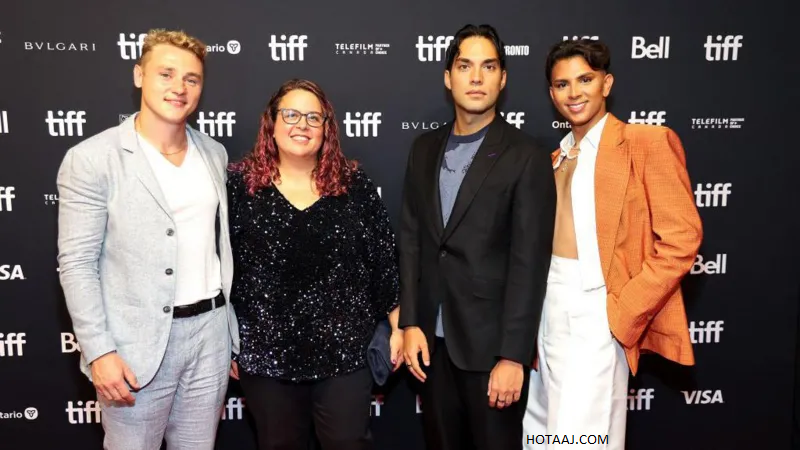
Floyd and El Hosaini were both frustrated by the limited range of stories in mainstream cinema and aimed to address this by creating more inclusive and diverse narratives. They wanted to highlight underrepresented communities and perspectives, hoping to broaden the scope of storytelling on the big screen and correct the lack of visibility for marginalized groups.
Floyd highlighted the challenges minorities face in the film industry, especially those who belong to multiple marginalized groups. He pointed out that the industry often marginalizes these individuals even further, which is why they were motivated to create a film that gives a voice to those who are usually overlooked.
Floyd expressed frustration with the prevalence of films centered around privileged, white, middle-class, cis, heteronormative men, emphasizing the need for more diverse stories. He argued that the industry continues to focus on such narratives, leaving little room for underrepresented voices, especially those from minorities within minorities. This reinforced their desire to create films that challenge these limitations and offer a more inclusive and balanced perspective.
Floyd highlighted the power of storytelling to bring attention to marginalized communities that often remain unheard. He emphasized the importance of shining a light on these groups, helping to raise awareness and promote more diverse narratives in cinema, ultimately addressing the imbalances in representation.
El Hosaini emphasized that, despite differences, there is more that unites people than divides them. This sentiment underscores the universal themes explored in their film Unicorns, aiming to bridge gaps between cultures and showcase shared human experiences, particularly within the LGBTQ+ community. The film aims to amplify voices from marginalized groups, highlighting connections rather than divisions.
COURTESY: Sambucha
References
[edit]
- ^ Jump up to:a b “Table 8: Cinema Infrastructure – Capacity”. UNESCO Institute for Statistics. Archived from the original on 24 December 2018. Retrieved 7 May 2019.
- ^ “Table 6: Share of Top 3 distributors (Excel)”. UNESCO Institute for Statistics. Archived from the original on 24 December 2018. Retrieved 5 November 2013.
- ^ “Table 1: Feature Film Production – Genre/Method of Shooting”. UNESCO Institute for Statistics. Archived from the original on 24 December 2018. Retrieved 7 May 2019.
- ^ “Table 11: Exhibition – Admissions & Gross Box Office (GBO)”. UNESCO Institute for Statistics. Archived from the original on 24 December 2018. Retrieved 7 May 2019.
- ^ “Statistical Yearbook 2018” (PDF). BFI. British Film Institute. Archived (PDF) from the original on 28 May 2022. Retrieved 7 May 2019.
- ^ Jump up to:a b c “BFI Screenonline: UK Feature Films Produced 1912–2023”. Archived from the original on 4 March 2018. Retrieved 30 June 2008.
- ^ “The Directors’ Top Ten Directors”. British Film Institute. Archived from the original on 14 May 2011. Retrieved 2 November 2010.
- ^ “Powell, Michael (1905–1990)”. British Film Institute. Archived from the original on 16 October 2018. Retrieved 25 January 2011.
- ^ “Reed, Carol (1906–1976)”. British Film Institute. Archived from the original on 8 August 2012. Retrieved 25 January 2011.
- ^ “Caine, Michael (1933-)”. British Film Institute. Archived from the original on 16 September 2018. Retrieved 11 December 2010.
- ^ “Connery, Sean (1930-)”. British Film Institute. Archived from the original on 18 October 2018. Retrieved 11 December 2010.
- ^ “Winslet, Kate (1975-)”. British Film Institute. Archived from the original on 16 September 2018. Retrieved 11 December 2010.
- ^ “Harry Potter becomes highest-grossing film franchise”. The Guardian. London. 11 September 2007. Archived from the original on 26 July 2013. Retrieved 2 November 2010.
- ^ “Scott, Sir Ridley (1937-)”. British Film Institute. Archived from the original on 26 September 2018. Retrieved 25 January 2011.
- ^ “Chaplin, Charles (1889–1977)”. British Film Institute. Archived from the original on 8 August 2012. Retrieved 25 January 2011.
- ^ “UK film – the vital statistics”. UK Film Council. Archived from the original on 11 December 2011. Retrieved 22 October 2010.
- ^ “UK cinema box office”. Cinema Exhibitor’s Association. Archived from the original on 12 April 2013. Retrieved 18 March 2013.
- ^ “UK cinema annual admissions”. Cinema Exhibitor’s Association. Retrieved 18 March 2013.[permanent dead link]
- ^ British Film Institute | The BFI 100 bfi.org
- ^ Jump up to:a b “Baftas fuel Oscars race”. BBC News. 26 February 2001. Archived from the original on 26 July 2013. Retrieved 14 February 2011.
- ^ “Louis Le Prince”. Local Heroes. BBC Education. 28 November 1999. Archived from the original on 28 November 1999. Retrieved 14 August 2011.
- ^ Howells, Richard (Summer 2006). “Louis Le Prince: the body of evidence”. Screen. 47 (2). Oxford Journals: 179–200. doi:10.1093/screen/hjl015. ISSN 0036-9543.
- ^ “Who’s Who of Victorian Cinema”. www.victorian-cinema.net. Archived from the original on 5 November 2015. Retrieved 28 September 2016.
- ^ Davidson, Ewan. “Blackfriars Bridge”. BFI Screenonline Database. Archived from the original on 18 October 2022. Retrieved 18 October 2022.
- ^ McKernan, Luke. “Booth, W.R. (1869-1938)”. BFI Screenonlinee. Archived from the original on 20 May 2016. Retrieved 24 April 2019.
- ^ Gifford, Denis. “Walter Robert Booth”. Who’s Who of Victorian Cinema. Archived from the original on 15 March 2012. Retrieved 24 April 2019.
- ^ “World’s first colour moving pictures discovered” Archived 14 September 2017 at the Wayback Machine. BBC News, 12 September 2012. Retrieved on 29 July 2013.
- ^ McKernan, Luke (2018). Charles Urban: Pioneering the Non-Fiction Film in Britain and America, 1897–1925. University of Exeter Press. ISBN 978-0859892964.
- ^ Mills, Ted (31 March 2016). “The First Film Adaptation of Alice in Wonderland (1903)”. Open Culture. Archived from the original on 17 May 2017. Retrieved 19 May 2017.
- ^ “FDA – What We Do”. Film Distributors’ Association. Archived from the original on 27 March 2022. Retrieved 18 April 2022.
- ^ Estel Eforgan (30 June 2010). Leslie Howard: The Lost Actor. Vallentine Mitchell. ISBN 978-0-85303-971-6.
- ^ Jump up to:a b “The British Film Industry”. The Times. 21 January 1948. p. 5.
- ^ “Chaplin, Charles (1889–1977)”. British Film Institute. Archived from the original on 8 August 2012. Retrieved 11 December 2010.
- ^ Warren, Patricia (2001). British Film Studios: An Illustrated History. London: B. T. Batsford. p. 61.
- ^ St. Pierre, Paul Matthew (31 May 2009). Music Hall Mimesis in British Film, 1895–1960: On the Hall on the Screen. Associated University Press. p. 79. ISBN 978-0-8386-4191-0.
- ^ Richard Allen; S. Ishii-Gonzalès (2004). Hitchcock: Past and Future. Routledge. ISBN 978-0-415-27525-5.
- ^ Burton, Alan; Chibnall, Steve (2013). Historical Dictionary of British Cinema. Lanham, MD and Plymouth, England: Scarecrow Press. p. 43. ISBN 9780810880269.
- ^ Alexander, Lou (2003–2014). “Associated British Picture Corporation (1933-70)”. BFI screenonline. Archived from the original on 24 September 2015. Retrieved 17 July 2015.
- ^ Warren (2001), pp. 57, 58.
- ^ Warren (2001), pp. 26, 28.
- ^ Mark Duguid, “Korda and Empuire” Archived 27 September 2012 at the Wayback Machine, BFI screenonline.
- ^ Michael Brooke, “Sabu (1924–1963)” Archived 8 August 2012 at the Wayback Machine, BFI screenonline.
- ^ Stephen Bourne, “Robeson, Paul (1898–1976)” Archived 8 August 2012 at the Wayback Machine, BFI screenonline.
- ^ “British Film Institute – GOV.UK”. Government of the United Kingdom. 31 March 2022. Archived from the original on 18 January 2013. Retrieved 18 April 2022.
- ^ Sarah Street British National Cinema, London: Routledge, 2009, p. 12.
- ^ Warren (2001), pp. 29, 119.
- ^ Leff, Leonard J., The Rich and Strange Collaboration of Alfred Hitchcock and David O. Selznick in Hollywood. University of California Press, 1999, p. 16.
- ^ Jump up to:a b c “Going to the pictures: British cinema and the Second World War” (PDF). School of Advanced Study. Archived (PDF) from the original on 20 October 2020. Retrieved 14 November 2020.
- ^ Jump up to:a b Gerard Gilbert (3 September 2009). “Britain’s World War II films were more than just propaganda”. The Independent. Archived from the original on 2 September 2019. Retrieved 3 May 2012.
- ^ Warren (2001), p. 120.
- ^ “British film import duty 1948-49”. Archived from the original on 2 May 2015. Retrieved 27 February 2019.
- ^ “10-Day London Fest Films Preems Oct. 16”. Variety. 9 October 1957. p. 14 – via Archive.org.
- ^ Brooke, Michael. “School for Scoundrels (1959)”. Screenonline. British Film Institute. Archived from the original on 13 February 2013. Retrieved 12 May 2013.
- ^ Jump up to:a b Tim O’Sullivan, “Dearden, Basil (1911-1971)” Archived 19 October 2019 at the Wayback Machine, BFI screenonline, citing the Reference Guide to British and Irish Film Directors.
- ^ Carl Daniels, “Pool of London (1950)” Archived 22 October 2019 at the Wayback Machine, BFI screenonline.
- ^ Ann Ogidi, “Sapphire (1959)” Archived 23 September 2012 at the Wayback Machine, BFI screenonline.
- ^ Mark Duguid, “Victim (1961)” Archived 6 October 2012 at the Wayback Machine, BFI screenonline.
- ^ See also David Thomson A New Biographical Dictionary of Film, London: Little, Brown, 2002, p. 213, and (for a defence) Brian McFarlane (ed.), The Encyclopedia of British Film, 2003, London: Methuen/BFI, p. 168.
- ^ “The 100 Best British Films Ever” Archived 23 July 2015 at the Wayback Machine. Empire. Retrieved 5 January 2013
- ^ Harris, Derek (5 September 1974). “The film industry seeks another reprieve”. The Times. p. 19.
- ^ “BFI Screenonline: Channel 4 and Film”. Archived from the original on 29 October 2019. Retrieved 15 January 2012.
- ^ “AMC CINEMAS® BRINGS THE MULTIPLEX TO THE UNITED KINGDOM”. Archived from the original on 4 January 2015. Retrieved 3 January 2015.
- ^ Hoad, Phil (11 November 2010). “How multiplex cinemas saved the British film industry 25 years ago”. The Guardian. Archived from the original on 6 May 2020. Retrieved 2 April 2020.
- ^ Michael Brooks, “HandMade Films” Archived 11 January 2013 at the Wayback Machine, BFI screenonline.
- ^ “BFI Screenonline: Puttnam, Lord David”. Archived from the original on 26 July 2013. Retrieved 15 January 2012.
- ^ “This week’s new theatre and dance” Archived 14 March 2016 at the Wayback Machine. The Guardian. Retrieved 19 July 2012.
- ^ Stern, Marlow, and in 1985 we saw the retirement of Roger Moore from the role of Bond after A View to a kill,at the age of 58.“Gary Oldman Talks ‘Tinker, Tailor, Soldier, Spy,’ ‘Batman’ Retirement” Archived 31 October 2014 at the Wayback Machine. The Daily Beast. 8 December 2011. Retrieved 10 December 2013.
- ^ Dyja, Eddie (ed.); ‘BFI Film and Television Handbook 1999’, London: BFI, 1998; p. 42.
- ^ Watson, Neil, “Hollywood UK”, in British Cinema of the 90s, London: BFI Publishing, 2000, p. 82.
- ^ Watson, “Hollywood UK”, p. 83.
- ^ “£200m film studio boost for UK”. The Independent. 7 November 1995. Archived from the original on 19 November 2012. Retrieved 29 June 2012.
- ^ “Studio Tour Casts Spells Just Like Harry”. The New York Times. 29 March 2012. Archived from the original on 23 May 2012. Retrieved 29 June 2012.
- ^ Peter Bradshaw (6 January 2006). “Match Point”. The Guardian. Archived from the original on 16 March 2014. Retrieved 29 June 2012.
- ^ “London Calling, With Luck, Lust and Ambition”. The New York Times. 28 December 2005. Archived from the original on 18 July 2012. Retrieved 29 June 2012.
- ^ “Warner Bros buys Harry Potter studios in £100m boost for UK films”. The Guardian. 9 November 2010. Archived from the original on 18 November 2022. Retrieved 18 November 2011.
- ^ “Warner to purchase and invest £100 million in film studio”. Reuters. 8 November 2010. Retrieved 18 November 2011.[dead link]
- ^ Ben Beaumont-Thomas, “Only a small fraction of British films turn a profit, BFI study finds” Archived 3 January 2017 at the Wayback Machine, The Guardian, 3 December 2013.
- ^ “People Index – Actors: Total Gross”. Box Office Mojo. Archived from the original on 27 June 2019. Retrieved 6 May 2019.
- ^ “British film industry will suffer if the Government closes the UK Film Council” Archived 26 February 2017 at the Wayback Machine, 5 August 2010.
- ^ “Daniel Barber condemns UK Film Council abolition” Archived 23 July 2012 at the Wayback Machine, 29 July 2010
- ^ “Clint Eastwood writes plea to save UK Film Council”. BBC News Online. 9 August 2010. Archived from the original on 26 January 2011.
- ^ Shoard, Catherine (9 August 2010). “Clint Eastwood joins fight to save UK Film Council”. The Guardian. Archived from the original on 22 September 2016. Retrieved 11 December 2016.
- ^ Online campaign to save the UK Film Council Archived 23 July 2012 at the Wayback Machine, 27 July 2010.
- ^ child, Ben (11 August 2010). “Michael Winner berates UK Film Council supporters”. The Guardian. Archived from the original on 7 March 2016. Retrieved 11 December 2016.
- ^ Fellowes, Julian (12 August 2010). “Cut the Film Council and end this 1970s navel-gazing”. The Telegraph. Archived from the original on 12 January 2022.
- ^ Clarke, Donald (20 August 2010). “Pros and cons of dumping UK film council”. Irish Times. Archived from the original on 21 October 2012. Retrieved 23 August 2012.
- ^ Ben Child, “Fade out from the UK Film Council … to the British Film Institute” Archived 1 December 2016 at the Wayback Machine, The Guardian, 1 April 2011.
- ^ Geoffrey Macnab, “King’s Speech: BFI gets king’s ransom?” Archived 20 July 2014 at the Wayback Machine Screen Daily, 24 February 2011.
- ^ “Christopher Nolan on ‘Interstellar’ Critics, Making Original Films and Shunning Cellphones and Email (Q&A)”. The Hollywood Reporter. 3 January 2015. Archived from the original on 17 January 2018. Retrieved 5 May 2020.
- ^ “Warner Bros opens revamped UK film studio”. BBC. 12 June 2012. Archived from the original on 25 June 2012. Retrieved 2 July 2012.
- ^ Statistical Yearbook 2011: 7.3 UK directors Archived 15 June 2012 at the Wayback Machine. UK Film Council. Retrieved 19 July 2012.
- ^ “PM backs ‘dynamic and entrepreneurial’ UK film industry”. Number 10. 11 January 2012. Archived from the original on 30 October 2012. Retrieved 23 August 2012.
- ^ Hines, Dominique (7 November 2022). “‘I am not sure we are great film-makers,’ Danny Boyle slams the British film industry”. Yahoo News. Yahoo. Archived from the original on 30 November 2022. Retrieved 1 December 2022.
- ^ “Official 2022 statistics reveal a record £6.27 billion film and high-end television production spend in the UK”. BFI. 2 February 2023. Archived from the original on 30 June 2024. Retrieved 30 June 2024.
- ^ “Hollywood strikes: UK film industry workers hit by US dispute”. BBC News. 25 September 2023. Archived from the original on 19 June 2024. Retrieved 30 June 2024.
- ^ Nick Roddick, “Tim Webber: the man who put Sandra Bullock in space” Archived 22 January 2014 at the Wayback Machine, Evening Standard, 17 September 2013. Retrieved 17 January 2014.
- References
- [edit]
- ^ Jump up to:a b “Table 8: Cinema Infrastructure – Capacity”. UNESCO Institute for Statistics. Archived from the original on 24 December 2018. Retrieved 7 May 2019.
- ^ “Table 6: Share of Top 3 distributors (Excel)”. UNESCO Institute for Statistics. Archived from the original on 24 December 2018. Retrieved 5 November 2013.
- ^ “Table 1: Feature Film Production – Genre/Method of Shooting”. UNESCO Institute for Statistics. Archived from the original on 24 December 2018. Retrieved 7 May 2019.
- ^ “Table 11: Exhibition – Admissions & Gross Box Office (GBO)”. UNESCO Institute for Statistics. Archived from the original on 24 December 2018. Retrieved 7 May 2019.
- ^ “Statistical Yearbook 2018” (PDF). BFI. British Film Institute. Archived (PDF) from the original on 28 May 2022. Retrieved 7 May 2019.
- ^ Jump up to:a b c “BFI Screenonline: UK Feature Films Produced 1912–2023”. Archived from the original on 4 March 2018. Retrieved 30 June 2008.
- ^ “The Directors’ Top Ten Directors”. British Film Institute. Archived from the original on 14 May 2011. Retrieved 2 November 2010.
- ^ “Powell, Michael (1905–1990)”. British Film Institute. Archived from the original on 16 October 2018. Retrieved 25 January 2011.
- ^ “Reed, Carol (1906–1976)”. British Film Institute. Archived from the original on 8 August 2012. Retrieved 25 January 2011.
- ^ “Caine, Michael (1933-)”. British Film Institute. Archived from the original on 16 September 2018. Retrieved 11 December 2010.
- ^ “Connery, Sean (1930-)”. British Film Institute. Archived from the original on 18 October 2018. Retrieved 11 December 2010.
- ^ “Winslet, Kate (1975-)”. British Film Institute. Archived from the original on 16 September 2018. Retrieved 11 December 2010.
- ^ “Harry Potter becomes highest-grossing film franchise”. The Guardian. London. 11 September 2007. Archived from the original on 26 July 2013. Retrieved 2 November 2010.
- ^ “Scott, Sir Ridley (1937-)”. British Film Institute. Archived from the original on 26 September 2018. Retrieved 25 January 2011.
- ^ “Chaplin, Charles (1889–1977)”. British Film Institute. Archived from the original on 8 August 2012. Retrieved 25 January 2011.
- ^ “UK film – the vital statistics”. UK Film Council. Archived from the original on 11 December 2011. Retrieved 22 October 2010.
- ^ “UK cinema box office”. Cinema Exhibitor’s Association. Archived from the original on 12 April 2013. Retrieved 18 March 2013.
- ^ “UK cinema annual admissions”. Cinema Exhibitor’s Association. Retrieved 18 March 2013.[permanent dead link]
- ^ British Film Institute | The BFI 100 bfi.org
- ^ Jump up to:a b “Baftas fuel Oscars race”. BBC News. 26 February 2001. Archived from the original on 26 July 2013. Retrieved 14 February 2011.
- ^ “Louis Le Prince”. Local Heroes. BBC Education. 28 November 1999. Archived from the original on 28 November 1999. Retrieved 14 August 2011.
- ^ Howells, Richard (Summer 2006). “Louis Le Prince: the body of evidence”. Screen. 47 (2). Oxford Journals: 179–200. doi:10.1093/screen/hjl015. ISSN 0036-9543.
- ^ “Who’s Who of Victorian Cinema”. www.victorian-cinema.net. Archived from the original on 5 November 2015. Retrieved 28 September 2016.
- ^ Davidson, Ewan. “Blackfriars Bridge”. BFI Screenonline Database. Archived from the original on 18 October 2022. Retrieved 18 October 2022.
- ^ McKernan, Luke. “Booth, W.R. (1869-1938)”. BFI Screenonlinee. Archived from the original on 20 May 2016. Retrieved 24 April 2019.
- ^ Gifford, Denis. “Walter Robert Booth”. Who’s Who of Victorian Cinema. Archived from the original on 15 March 2012. Retrieved 24 April 2019.
- ^ “World’s first colour moving pictures discovered” Archived 14 September 2017 at the Wayback Machine. BBC News, 12 September 2012. Retrieved on 29 July 2013.
- ^ McKernan, Luke (2018). Charles Urban: Pioneering the Non-Fiction Film in Britain and America, 1897–1925. University of Exeter Press. ISBN 978-0859892964.
- ^ Mills, Ted (31 March 2016). “The First Film Adaptation of Alice in Wonderland (1903)”. Open Culture. Archived from the original on 17 May 2017. Retrieved 19 May 2017.
- ^ “FDA – What We Do”. Film Distributors’ Association. Archived from the original on 27 March 2022. Retrieved 18 April 2022.
- ^ Estel Eforgan (30 June 2010). Leslie Howard: The Lost Actor. Vallentine Mitchell. ISBN 978-0-85303-971-6.
- ^ Jump up to:a b “The British Film Industry”. The Times. 21 January 1948. p. 5.
- ^ “Chaplin, Charles (1889–1977)”. British Film Institute. Archived from the original on 8 August 2012. Retrieved 11 December 2010.
- ^ Warren, Patricia (2001). British Film Studios: An Illustrated History. London: B. T. Batsford. p. 61.
- ^ St. Pierre, Paul Matthew (31 May 2009). Music Hall Mimesis in British Film, 1895–1960: On the Hall on the Screen. Associated University Press. p. 79. ISBN 978-0-8386-4191-0.
- ^ Richard Allen; S. Ishii-Gonzalès (2004). Hitchcock: Past and Future. Routledge. ISBN 978-0-415-27525-5.
- ^ Burton, Alan; Chibnall, Steve (2013). Historical Dictionary of British Cinema. Lanham, MD and Plymouth, England: Scarecrow Press. p. 43. ISBN 9780810880269.
- ^ Alexander, Lou (2003–2014). “Associated British Picture Corporation (1933-70)”. BFI screenonline. Archived from the original on 24 September 2015. Retrieved 17 July 2015.
- ^ Warren (2001), pp. 57, 58.
- ^ Warren (2001), pp. 26, 28.
- ^ Mark Duguid, “Korda and Empuire” Archived 27 September 2012 at the Wayback Machine, BFI screenonline.
- ^ Michael Brooke, “Sabu (1924–1963)” Archived 8 August 2012 at the Wayback Machine, BFI screenonline.
- ^ Stephen Bourne, “Robeson, Paul (1898–1976)” Archived 8 August 2012 at the Wayback Machine, BFI screenonline.
- ^ “British Film Institute – GOV.UK”. Government of the United Kingdom. 31 March 2022. Archived from the original on 18 January 2013. Retrieved 18 April 2022.
- ^ Sarah Street British National Cinema, London: Routledge, 2009, p. 12.
- ^ Warren (2001), pp. 29, 119.
- ^ Leff, Leonard J., The Rich and Strange Collaboration of Alfred Hitchcock and David O. Selznick in Hollywood. University of California Press, 1999, p. 16.
- ^ Jump up to:a b c “Going to the pictures: British cinema and the Second World War” (PDF). School of Advanced Study. Archived (PDF) from the original on 20 October 2020. Retrieved 14 November 2020.
- ^ Jump up to:a b Gerard Gilbert (3 September 2009). “Britain’s World War II films were more than just propaganda”. The Independent. Archived from the original on 2 September 2019. Retrieved 3 May 2012.
- ^ Warren (2001), p. 120.
- ^ “British film import duty 1948-49”. Archived from the original on 2 May 2015. Retrieved 27 February 2019.
- ^ “10-Day London Fest Films Preems Oct. 16”. Variety. 9 October 1957. p. 14 – via Archive.org.
- ^ Brooke, Michael. “School for Scoundrels (1959)”. Screenonline. British Film Institute. Archived from the original on 13 February 2013. Retrieved 12 May 2013.
- ^ Jump up to:a b Tim O’Sullivan, “Dearden, Basil (1911-1971)” Archived 19 October 2019 at the Wayback Machine, BFI screenonline, citing the Reference Guide to British and Irish Film Directors.
- ^ Carl Daniels, “Pool of London (1950)” Archived 22 October 2019 at the Wayback Machine, BFI screenonline.
- ^ Ann Ogidi, “Sapphire (1959)” Archived 23 September 2012 at the Wayback Machine, BFI screenonline.
- ^ Mark Duguid, “Victim (1961)” Archived 6 October 2012 at the Wayback Machine, BFI screenonline.
- ^ See also David Thomson A New Biographical Dictionary of Film, London: Little, Brown, 2002, p. 213, and (for a defence) Brian McFarlane (ed.), The Encyclopedia of British Film, 2003, London: Methuen/BFI, p. 168.
- ^ “The 100 Best British Films Ever” Archived 23 July 2015 at the Wayback Machine. Empire. Retrieved 5 January 2013
- ^ Harris, Derek (5 September 1974). “The film industry seeks another reprieve”. The Times. p. 19.
- ^ “BFI Screenonline: Channel 4 and Film”. Archived from the original on 29 October 2019. Retrieved 15 January 2012.
- ^ “AMC CINEMAS® BRINGS THE MULTIPLEX TO THE UNITED KINGDOM”. Archived from the original on 4 January 2015. Retrieved 3 January 2015.
- ^ Hoad, Phil (11 November 2010). “How multiplex cinemas saved the British film industry 25 years ago”. The Guardian. Archived from the original on 6 May 2020. Retrieved 2 April 2020.
- ^ Michael Brooks, “HandMade Films” Archived 11 January 2013 at the Wayback Machine, BFI screenonline.
- ^ “BFI Screenonline: Puttnam, Lord David”. Archived from the original on 26 July 2013. Retrieved 15 January 2012.
- ^ “This week’s new theatre and dance” Archived 14 March 2016 at the Wayback Machine. The Guardian. Retrieved 19 July 2012.
- ^ Stern, Marlow, and in 1985 we saw the retirement of Roger Moore from the role of Bond after A View to a kill,at the age of 58.“Gary Oldman Talks ‘Tinker, Tailor, Soldier, Spy,’ ‘Batman’ Retirement” Archived 31 October 2014 at the Wayback Machine. The Daily Beast. 8 December 2011. Retrieved 10 December 2013.
- ^ Dyja, Eddie (ed.); ‘BFI Film and Television Handbook 1999’, London: BFI, 1998; p. 42.
- ^ Watson, Neil, “Hollywood UK”, in British Cinema of the 90s, London: BFI Publishing, 2000, p. 82.
- ^ Watson, “Hollywood UK”, p. 83.
- ^ “£200m film studio boost for UK”. The Independent. 7 November 1995. Archived from the original on 19 November 2012. Retrieved 29 June 2012.
- ^ “Studio Tour Casts Spells Just Like Harry”. The New York Times. 29 March 2012. Archived from the original on 23 May 2012. Retrieved 29 June 2012.
- ^ Peter Bradshaw (6 January 2006). “Match Point”. The Guardian. Archived from the original on 16 March 2014. Retrieved 29 June 2012.
- ^ “London Calling, With Luck, Lust and Ambition”. The New York Times. 28 December 2005. Archived from the original on 18 July 2012. Retrieved 29 June 2012.
- ^ “Warner Bros buys Harry Potter studios in £100m boost for UK films”. The Guardian. 9 November 2010. Archived from the original on 18 November 2022. Retrieved 18 November 2011.
- ^ “Warner to purchase and invest £100 million in film studio”. Reuters. 8 November 2010. Retrieved 18 November 2011.[dead link]
- ^ Ben Beaumont-Thomas, “Only a small fraction of British films turn a profit, BFI study finds” Archived 3 January 2017 at the Wayback Machine, The Guardian, 3 December 2013.
- ^ “People Index – Actors: Total Gross”. Box Office Mojo. Archived from the original on 27 June 2019. Retrieved 6 May 2019.
- ^ “British film industry will suffer if the Government closes the UK Film Council” Archived 26 February 2017 at the Wayback Machine, 5 August 2010.
- ^ “Daniel Barber condemns UK Film Council abolition” Archived 23 July 2012 at the Wayback Machine, 29 July 2010
- ^ “Clint Eastwood writes plea to save UK Film Council”. BBC News Online. 9 August 2010. Archived from the original on 26 January 2011.
- ^ Shoard, Catherine (9 August 2010). “Clint Eastwood joins fight to save UK Film Council”. The Guardian. Archived from the original on 22 September 2016. Retrieved 11 December 2016.
- ^ Online campaign to save the UK Film Council Archived 23 July 2012 at the Wayback Machine, 27 July 2010.
- ^ child, Ben (11 August 2010). “Michael Winner berates UK Film Council supporters”. The Guardian. Archived from the original on 7 March 2016. Retrieved 11 December 2016.
- ^ Fellowes, Julian (12 August 2010). “Cut the Film Council and end this 1970s navel-gazing”. The Telegraph. Archived from the original on 12 January 2022.
- ^ Clarke, Donald (20 August 2010). “Pros and cons of dumping UK film council”. Irish Times. Archived from the original on 21 October 2012. Retrieved 23 August 2012.
- ^ Ben Child, “Fade out from the UK Film Council … to the British Film Institute” Archived 1 December 2016 at the Wayback Machine, The Guardian, 1 April 2011.
- ^ Geoffrey Macnab, “King’s Speech: BFI gets king’s ransom?” Archived 20 July 2014 at the Wayback Machine Screen Daily, 24 February 2011.
- ^ “Christopher Nolan on ‘Interstellar’ Critics, Making Original Films and Shunning Cellphones and Email (Q&A)”. The Hollywood Reporter. 3 January 2015. Archived from the original on 17 January 2018. Retrieved 5 May 2020.
- ^ “Warner Bros opens revamped UK film studio”. BBC. 12 June 2012. Archived from the original on 25 June 2012. Retrieved 2 July 2012.
- ^ Statistical Yearbook 2011: 7.3 UK directors Archived 15 June 2012 at the Wayback Machine. UK Film Council. Retrieved 19 July 2012.
- ^ “PM backs ‘dynamic and entrepreneurial’ UK film industry”. Number 10. 11 January 2012. Archived from the original on 30 October 2012. Retrieved 23 August 2012.
- ^ Hines, Dominique (7 November 2022). “‘I am not sure we are great film-makers,’ Danny Boyle slams the British film industry”. Yahoo News. Yahoo. Archived from the original on 30 November 2022. Retrieved 1 December 2022.
- ^ “Official 2022 statistics reveal a record £6.27 billion film and high-end television production spend in the UK”. BFI. 2 February 2023. Archived from the original on 30 June 2024. Retrieved 30 June 2024.
- ^ “Hollywood strikes: UK film industry workers hit by US dispute”. BBC News. 25 September 2023. Archived from the original on 19 June 2024. Retrieved 30 June 2024.
- ^ Nick Roddick, “Tim Webber: the man who put Sandra Bullock in space” Archived 22 January 2014 at the Wayback Machine, Evening Standard, 17 September 2013. Retrieved 17 January 2014.
- References
- [edit]
- ^ Jump up to:a b “Table 8: Cinema Infrastructure – Capacity”. UNESCO Institute for Statistics. Archived from the original on 24 December 2018. Retrieved 7 May 2019.
- ^ “Table 6: Share of Top 3 distributors (Excel)”. UNESCO Institute for Statistics. Archived from the original on 24 December 2018. Retrieved 5 November 2013.
- ^ “Table 1: Feature Film Production – Genre/Method of Shooting”. UNESCO Institute for Statistics. Archived from the original on 24 December 2018. Retrieved 7 May 2019.
- ^ “Table 11: Exhibition – Admissions & Gross Box Office (GBO)”. UNESCO Institute for Statistics. Archived from the original on 24 December 2018. Retrieved 7 May 2019.
- ^ “Statistical Yearbook 2018” (PDF). BFI. British Film Institute. Archived (PDF) from the original on 28 May 2022. Retrieved 7 May 2019.
- ^ Jump up to:a b c “BFI Screenonline: UK Feature Films Produced 1912–2023”. Archived from the original on 4 March 2018. Retrieved 30 June 2008.
- ^ “The Directors’ Top Ten Directors”. British Film Institute. Archived from the original on 14 May 2011. Retrieved 2 November 2010.
- ^ “Powell, Michael (1905–1990)”. British Film Institute. Archived from the original on 16 October 2018. Retrieved 25 January 2011.
- ^ “Reed, Carol (1906–1976)”. British Film Institute. Archived from the original on 8 August 2012. Retrieved 25 January 2011.
- ^ “Caine, Michael (1933-)”. British Film Institute. Archived from the original on 16 September 2018. Retrieved 11 December 2010.
- ^ “Connery, Sean (1930-)”. British Film Institute. Archived from the original on 18 October 2018. Retrieved 11 December 2010.
- ^ “Winslet, Kate (1975-)”. British Film Institute. Archived from the original on 16 September 2018. Retrieved 11 December 2010.
- ^ “Harry Potter becomes highest-grossing film franchise”. The Guardian. London. 11 September 2007. Archived from the original on 26 July 2013. Retrieved 2 November 2010.
- ^ “Scott, Sir Ridley (1937-)”. British Film Institute. Archived from the original on 26 September 2018. Retrieved 25 January 2011.
- ^ “Chaplin, Charles (1889–1977)”. British Film Institute. Archived from the original on 8 August 2012. Retrieved 25 January 2011.
- ^ “UK film – the vital statistics”. UK Film Council. Archived from the original on 11 December 2011. Retrieved 22 October 2010.
- ^ “UK cinema box office”. Cinema Exhibitor’s Association. Archived from the original on 12 April 2013. Retrieved 18 March 2013.
- ^ “UK cinema annual admissions”. Cinema Exhibitor’s Association. Retrieved 18 March 2013.[permanent dead link]
- ^ British Film Institute | The BFI 100 bfi.org
- ^ Jump up to:a b “Baftas fuel Oscars race”. BBC News. 26 February 2001. Archived from the original on 26 July 2013. Retrieved 14 February 2011.
- ^ “Louis Le Prince”. Local Heroes. BBC Education. 28 November 1999. Archived from the original on 28 November 1999. Retrieved 14 August 2011.
- ^ Howells, Richard (Summer 2006). “Louis Le Prince: the body of evidence”. Screen. 47 (2). Oxford Journals: 179–200. doi:10.1093/screen/hjl015. ISSN 0036-9543.
- ^ “Who’s Who of Victorian Cinema”. www.victorian-cinema.net. Archived from the original on 5 November 2015. Retrieved 28 September 2016.
- ^ Davidson, Ewan. “Blackfriars Bridge”. BFI Screenonline Database. Archived from the original on 18 October 2022. Retrieved 18 October 2022.
- ^ McKernan, Luke. “Booth, W.R. (1869-1938)”. BFI Screenonlinee. Archived from the original on 20 May 2016. Retrieved 24 April 2019.
- ^ Gifford, Denis. “Walter Robert Booth”. Who’s Who of Victorian Cinema. Archived from the original on 15 March 2012. Retrieved 24 April 2019.
- ^ “World’s first colour moving pictures discovered” Archived 14 September 2017 at the Wayback Machine. BBC News, 12 September 2012. Retrieved on 29 July 2013.
- ^ McKernan, Luke (2018). Charles Urban: Pioneering the Non-Fiction Film in Britain and America, 1897–1925. University of Exeter Press. ISBN 978-0859892964.
- ^ Mills, Ted (31 March 2016). “The First Film Adaptation of Alice in Wonderland (1903)”. Open Culture. Archived from the original on 17 May 2017. Retrieved 19 May 2017.
- ^ “FDA – What We Do”. Film Distributors’ Association. Archived from the original on 27 March 2022. Retrieved 18 April 2022.
- ^ Estel Eforgan (30 June 2010). Leslie Howard: The Lost Actor. Vallentine Mitchell. ISBN 978-0-85303-971-6.
- ^ Jump up to:a b “The British Film Industry”. The Times. 21 January 1948. p. 5.
- ^ “Chaplin, Charles (1889–1977)”. British Film Institute. Archived from the original on 8 August 2012. Retrieved 11 December 2010.
- ^ Warren, Patricia (2001). British Film Studios: An Illustrated History. London: B. T. Batsford. p. 61.
- ^ St. Pierre, Paul Matthew (31 May 2009). Music Hall Mimesis in British Film, 1895–1960: On the Hall on the Screen. Associated University Press. p. 79. ISBN 978-0-8386-4191-0.
- ^ Richard Allen; S. Ishii-Gonzalès (2004). Hitchcock: Past and Future. Routledge. ISBN 978-0-415-27525-5.
- ^ Burton, Alan; Chibnall, Steve (2013). Historical Dictionary of British Cinema. Lanham, MD and Plymouth, England: Scarecrow Press. p. 43. ISBN 9780810880269.
- ^ Alexander, Lou (2003–2014). “Associated British Picture Corporation (1933-70)”. BFI screenonline. Archived from the original on 24 September 2015. Retrieved 17 July 2015.
- ^ Warren (2001), pp. 57, 58.
- ^ Warren (2001), pp. 26, 28.
- ^ Mark Duguid, “Korda and Empuire” Archived 27 September 2012 at the Wayback Machine, BFI screenonline.
- ^ Michael Brooke, “Sabu (1924–1963)” Archived 8 August 2012 at the Wayback Machine, BFI screenonline.
- ^ Stephen Bourne, “Robeson, Paul (1898–1976)” Archived 8 August 2012 at the Wayback Machine, BFI screenonline.
- ^ “British Film Institute – GOV.UK”. Government of the United Kingdom. 31 March 2022. Archived from the original on 18 January 2013. Retrieved 18 April 2022.
- ^ Sarah Street British National Cinema, London: Routledge, 2009, p. 12.
- ^ Warren (2001), pp. 29, 119.
- ^ Leff, Leonard J., The Rich and Strange Collaboration of Alfred Hitchcock and David O. Selznick in Hollywood. University of California Press, 1999, p. 16.
- ^ Jump up to:a b c “Going to the pictures: British cinema and the Second World War” (PDF). School of Advanced Study. Archived (PDF) from the original on 20 October 2020. Retrieved 14 November 2020.
- ^ Jump up to:a b Gerard Gilbert (3 September 2009). “Britain’s World War II films were more than just propaganda”. The Independent. Archived from the original on 2 September 2019. Retrieved 3 May 2012.
- ^ Warren (2001), p. 120.
- ^ “British film import duty 1948-49”. Archived from the original on 2 May 2015. Retrieved 27 February 2019.
- ^ “10-Day London Fest Films Preems Oct. 16”. Variety. 9 October 1957. p. 14 – via Archive.org.
- ^ Brooke, Michael. “School for Scoundrels (1959)”. Screenonline. British Film Institute. Archived from the original on 13 February 2013. Retrieved 12 May 2013.
- ^ Jump up to:a b Tim O’Sullivan, “Dearden, Basil (1911-1971)” Archived 19 October 2019 at the Wayback Machine, BFI screenonline, citing the Reference Guide to British and Irish Film Directors.
- ^ Carl Daniels, “Pool of London (1950)” Archived 22 October 2019 at the Wayback Machine, BFI screenonline.
- ^ Ann Ogidi, “Sapphire (1959)” Archived 23 September 2012 at the Wayback Machine, BFI screenonline.
- ^ Mark Duguid, “Victim (1961)” Archived 6 October 2012 at the Wayback Machine, BFI screenonline.
- ^ See also David Thomson A New Biographical Dictionary of Film, London: Little, Brown, 2002, p. 213, and (for a defence) Brian McFarlane (ed.), The Encyclopedia of British Film, 2003, London: Methuen/BFI, p. 168.
- ^ “The 100 Best British Films Ever” Archived 23 July 2015 at the Wayback Machine. Empire. Retrieved 5 January 2013
- ^ Harris, Derek (5 September 1974). “The film industry seeks another reprieve”. The Times. p. 19.
- ^ “BFI Screenonline: Channel 4 and Film”. Archived from the original on 29 October 2019. Retrieved 15 January 2012.
- ^ “AMC CINEMAS® BRINGS THE MULTIPLEX TO THE UNITED KINGDOM”. Archived from the original on 4 January 2015. Retrieved 3 January 2015.
- ^ Hoad, Phil (11 November 2010). “How multiplex cinemas saved the British film industry 25 years ago”. The Guardian. Archived from the original on 6 May 2020. Retrieved 2 April 2020.
- ^ Michael Brooks, “HandMade Films” Archived 11 January 2013 at the Wayback Machine, BFI screenonline.
- ^ “BFI Screenonline: Puttnam, Lord David”. Archived from the original on 26 July 2013. Retrieved 15 January 2012.
- ^ “This week’s new theatre and dance” Archived 14 March 2016 at the Wayback Machine. The Guardian. Retrieved 19 July 2012.
- ^ Stern, Marlow, and in 1985 we saw the retirement of Roger Moore from the role of Bond after A View to a kill,at the age of 58.“Gary Oldman Talks ‘Tinker, Tailor, Soldier, Spy,’ ‘Batman’ Retirement” Archived 31 October 2014 at the Wayback Machine. The Daily Beast. 8 December 2011. Retrieved 10 December 2013.
- ^ Dyja, Eddie (ed.); ‘BFI Film and Television Handbook 1999’, London: BFI, 1998; p. 42.
- ^ Watson, Neil, “Hollywood UK”, in British Cinema of the 90s, London: BFI Publishing, 2000, p. 82.
- ^ Watson, “Hollywood UK”, p. 83.
- ^ “£200m film studio boost for UK”. The Independent. 7 November 1995. Archived from the original on 19 November 2012. Retrieved 29 June 2012.
- ^ “Studio Tour Casts Spells Just Like Harry”. The New York Times. 29 March 2012. Archived from the original on 23 May 2012. Retrieved 29 June 2012.
- ^ Peter Bradshaw (6 January 2006). “Match Point”. The Guardian. Archived from the original on 16 March 2014. Retrieved 29 June 2012.
- ^ “London Calling, With Luck, Lust and Ambition”. The New York Times. 28 December 2005. Archived from the original on 18 July 2012. Retrieved 29 June 2012.
- ^ “Warner Bros buys Harry Potter studios in £100m boost for UK films”. The Guardian. 9 November 2010. Archived from the original on 18 November 2022. Retrieved 18 November 2011.
- ^ “Warner to purchase and invest £100 million in film studio”. Reuters. 8 November 2010. Retrieved 18 November 2011.[dead link]
- ^ Ben Beaumont-Thomas, “Only a small fraction of British films turn a profit, BFI study finds” Archived 3 January 2017 at the Wayback Machine, The Guardian, 3 December 2013.
- ^ “People Index – Actors: Total Gross”. Box Office Mojo. Archived from the original on 27 June 2019. Retrieved 6 May 2019.
- ^ “British film industry will suffer if the Government closes the UK Film Council” Archived 26 February 2017 at the Wayback Machine, 5 August 2010.
- ^ “Daniel Barber condemns UK Film Council abolition” Archived 23 July 2012 at the Wayback Machine, 29 July 2010
- ^ “Clint Eastwood writes plea to save UK Film Council”. BBC News Online. 9 August 2010. Archived from the original on 26 January 2011.
- ^ Shoard, Catherine (9 August 2010). “Clint Eastwood joins fight to save UK Film Council”. The Guardian. Archived from the original on 22 September 2016. Retrieved 11 December 2016.
- ^ Online campaign to save the UK Film Council Archived 23 July 2012 at the Wayback Machine, 27 July 2010.
- ^ child, Ben (11 August 2010). “Michael Winner berates UK Film Council supporters”. The Guardian. Archived from the original on 7 March 2016. Retrieved 11 December 2016.
- ^ Fellowes, Julian (12 August 2010). “Cut the Film Council and end this 1970s navel-gazing”. The Telegraph. Archived from the original on 12 January 2022.
- ^ Clarke, Donald (20 August 2010). “Pros and cons of dumping UK film council”. Irish Times. Archived from the original on 21 October 2012. Retrieved 23 August 2012.
- ^ Ben Child, “Fade out from the UK Film Council … to the British Film Institute” Archived 1 December 2016 at the Wayback Machine, The Guardian, 1 April 2011.
- ^ Geoffrey Macnab, “King’s Speech: BFI gets king’s ransom?” Archived 20 July 2014 at the Wayback Machine Screen Daily, 24 February 2011.
- ^ “Christopher Nolan on ‘Interstellar’ Critics, Making Original Films and Shunning Cellphones and Email (Q&A)”. The Hollywood Reporter. 3 January 2015. Archived from the original on 17 January 2018. Retrieved 5 May 2020.
- ^ “Warner Bros opens revamped UK film studio”. BBC. 12 June 2012. Archived from the original on 25 June 2012. Retrieved 2 July 2012.
- ^ Statistical Yearbook 2011: 7.3 UK directors Archived 15 June 2012 at the Wayback Machine. UK Film Council. Retrieved 19 July 2012.
- ^ “PM backs ‘dynamic and entrepreneurial’ UK film industry”. Number 10. 11 January 2012. Archived from the original on 30 October 2012. Retrieved 23 August 2012.
- ^ Hines, Dominique (7 November 2022). “‘I am not sure we are great film-makers,’ Danny Boyle slams the British film industry”. Yahoo News. Yahoo. Archived from the original on 30 November 2022. Retrieved 1 December 2022.
- ^ “Official 2022 statistics reveal a record £6.27 billion film and high-end television production spend in the UK”. BFI. 2 February 2023. Archived from the original on 30 June 2024. Retrieved 30 June 2024.
- ^ “Hollywood strikes: UK film industry workers hit by US dispute”. BBC News. 25 September 2023. Archived from the original on 19 June 2024. Retrieved 30 June 2024.
- ^ Nick Roddick, “Tim Webber: the man who put Sandra Bullock in space” Archived 22 January 2014 at the Wayback Machine, Evening Standard, 17 September 2013. Retrieved 17 January 2014.
- References
- [edit]
- ^ Jump up to:a b “Table 8: Cinema Infrastructure – Capacity”. UNESCO Institute for Statistics. Archived from the original on 24 December 2018. Retrieved 7 May 2019.
- ^ “Table 6: Share of Top 3 distributors (Excel)”. UNESCO Institute for Statistics. Archived from the original on 24 December 2018. Retrieved 5 November 2013.
- ^ “Table 1: Feature Film Production – Genre/Method of Shooting”. UNESCO Institute for Statistics. Archived from the original on 24 December 2018. Retrieved 7 May 2019.
- ^ “Table 11: Exhibition – Admissions & Gross Box Office (GBO)”. UNESCO Institute for Statistics. Archived from the original on 24 December 2018. Retrieved 7 May 2019.
- ^ “Statistical Yearbook 2018” (PDF). BFI. British Film Institute. Archived (PDF) from the original on 28 May 2022. Retrieved 7 May 2019.
- ^ Jump up to:a b c “BFI Screenonline: UK Feature Films Produced 1912–2023”. Archived from the original on 4 March 2018. Retrieved 30 June 2008.
- ^ “The Directors’ Top Ten Directors”. British Film Institute. Archived from the original on 14 May 2011. Retrieved 2 November 2010.
- ^ “Powell, Michael (1905–1990)”. British Film Institute. Archived from the original on 16 October 2018. Retrieved 25 January 2011.
- ^ “Reed, Carol (1906–1976)”. British Film Institute. Archived from the original on 8 August 2012. Retrieved 25 January 2011.
- ^ “Caine, Michael (1933-)”. British Film Institute. Archived from the original on 16 September 2018. Retrieved 11 December 2010.
- ^ “Connery, Sean (1930-)”. British Film Institute. Archived from the original on 18 October 2018. Retrieved 11 December 2010.
- ^ “Winslet, Kate (1975-)”. British Film Institute. Archived from the original on 16 September 2018. Retrieved 11 December 2010.
- ^ “Harry Potter becomes highest-grossing film franchise”. The Guardian. London. 11 September 2007. Archived from the original on 26 July 2013. Retrieved 2 November 2010.
- ^ “Scott, Sir Ridley (1937-)”. British Film Institute. Archived from the original on 26 September 2018. Retrieved 25 January 2011.
- ^ “Chaplin, Charles (1889–1977)”. British Film Institute. Archived from the original on 8 August 2012. Retrieved 25 January 2011.
- ^ “UK film – the vital statistics”. UK Film Council. Archived from the original on 11 December 2011. Retrieved 22 October 2010.
- ^ “UK cinema box office”. Cinema Exhibitor’s Association. Archived from the original on 12 April 2013. Retrieved 18 March 2013.
- ^ “UK cinema annual admissions”. Cinema Exhibitor’s Association. Retrieved 18 March 2013.[permanent dead link]
- ^ British Film Institute | The BFI 100 bfi.org
- ^ Jump up to:a b “Baftas fuel Oscars race”. BBC News. 26 February 2001. Archived from the original on 26 July 2013. Retrieved 14 February 2011.
- ^ “Louis Le Prince”. Local Heroes. BBC Education. 28 November 1999. Archived from the original on 28 November 1999. Retrieved 14 August 2011.
- ^ Howells, Richard (Summer 2006). “Louis Le Prince: the body of evidence”. Screen. 47 (2). Oxford Journals: 179–200. doi:10.1093/screen/hjl015. ISSN 0036-9543.
- ^ “Who’s Who of Victorian Cinema”. www.victorian-cinema.net. Archived from the original on 5 November 2015. Retrieved 28 September 2016.
- ^ Davidson, Ewan. “Blackfriars Bridge”. BFI Screenonline Database. Archived from the original on 18 October 2022. Retrieved 18 October 2022.
- ^ McKernan, Luke. “Booth, W.R. (1869-1938)”. BFI Screenonlinee. Archived from the original on 20 May 2016. Retrieved 24 April 2019.
- ^ Gifford, Denis. “Walter Robert Booth”. Who’s Who of Victorian Cinema. Archived from the original on 15 March 2012. Retrieved 24 April 2019.
- ^ “World’s first colour moving pictures discovered” Archived 14 September 2017 at the Wayback Machine. BBC News, 12 September 2012. Retrieved on 29 July 2013.
- ^ McKernan, Luke (2018). Charles Urban: Pioneering the Non-Fiction Film in Britain and America, 1897–1925. University of Exeter Press. ISBN 978-0859892964.
- ^ Mills, Ted (31 March 2016). “The First Film Adaptation of Alice in Wonderland (1903)”. Open Culture. Archived from the original on 17 May 2017. Retrieved 19 May 2017.
- ^ “FDA – What We Do”. Film Distributors’ Association. Archived from the original on 27 March 2022. Retrieved 18 April 2022.
- ^ Estel Eforgan (30 June 2010). Leslie Howard: The Lost Actor. Vallentine Mitchell. ISBN 978-0-85303-971-6.
- ^ Jump up to:a b “The British Film Industry”. The Times. 21 January 1948. p. 5.
- ^ “Chaplin, Charles (1889–1977)”. British Film Institute. Archived from the original on 8 August 2012. Retrieved 11 December 2010.
- ^ Warren, Patricia (2001). British Film Studios: An Illustrated History. London: B. T. Batsford. p. 61.
- ^ St. Pierre, Paul Matthew (31 May 2009). Music Hall Mimesis in British Film, 1895–1960: On the Hall on the Screen. Associated University Press. p. 79. ISBN 978-0-8386-4191-0.
- ^ Richard Allen; S. Ishii-Gonzalès (2004). Hitchcock: Past and Future. Routledge. ISBN 978-0-415-27525-5.
- ^ Burton, Alan; Chibnall, Steve (2013). Historical Dictionary of British Cinema. Lanham, MD and Plymouth, England: Scarecrow Press. p. 43. ISBN 9780810880269.
- ^ Alexander, Lou (2003–2014). “Associated British Picture Corporation (1933-70)”. BFI screenonline. Archived from the original on 24 September 2015. Retrieved 17 July 2015.
- ^ Warren (2001), pp. 57, 58.
- ^ Warren (2001), pp. 26, 28.
- ^ Mark Duguid, “Korda and Empuire” Archived 27 September 2012 at the Wayback Machine, BFI screenonline.
- ^ Michael Brooke, “Sabu (1924–1963)” Archived 8 August 2012 at the Wayback Machine, BFI screenonline.
- ^ Stephen Bourne, “Robeson, Paul (1898–1976)” Archived 8 August 2012 at the Wayback Machine, BFI screenonline.
- ^ “British Film Institute – GOV.UK”. Government of the United Kingdom. 31 March 2022. Archived from the original on 18 January 2013. Retrieved 18 April 2022.
- ^ Sarah Street British National Cinema, London: Routledge, 2009, p. 12.
- ^ Warren (2001), pp. 29, 119.
- ^ Leff, Leonard J., The Rich and Strange Collaboration of Alfred Hitchcock and David O. Selznick in Hollywood. University of California Press, 1999, p. 16.
- ^ Jump up to:a b c “Going to the pictures: British cinema and the Second World War” (PDF). School of Advanced Study. Archived (PDF) from the original on 20 October 2020. Retrieved 14 November 2020.
- ^ Jump up to:a b Gerard Gilbert (3 September 2009). “Britain’s World War II films were more than just propaganda”. The Independent. Archived from the original on 2 September 2019. Retrieved 3 May 2012.
- ^ Warren (2001), p. 120.
- ^ “British film import duty 1948-49”. Archived from the original on 2 May 2015. Retrieved 27 February 2019.
- ^ “10-Day London Fest Films Preems Oct. 16”. Variety. 9 October 1957. p. 14 – via Archive.org.
- ^ Brooke, Michael. “School for Scoundrels (1959)”. Screenonline. British Film Institute. Archived from the original on 13 February 2013. Retrieved 12 May 2013.
- ^ Jump up to:a b Tim O’Sullivan, “Dearden, Basil (1911-1971)” Archived 19 October 2019 at the Wayback Machine, BFI screenonline, citing the Reference Guide to British and Irish Film Directors.
- ^ Carl Daniels, “Pool of London (1950)” Archived 22 October 2019 at the Wayback Machine, BFI screenonline.
- ^ Ann Ogidi, “Sapphire (1959)” Archived 23 September 2012 at the Wayback Machine, BFI screenonline.
- ^ Mark Duguid, “Victim (1961)” Archived 6 October 2012 at the Wayback Machine, BFI screenonline.
- ^ See also David Thomson A New Biographical Dictionary of Film, London: Little, Brown, 2002, p. 213, and (for a defence) Brian McFarlane (ed.), The Encyclopedia of British Film, 2003, London: Methuen/BFI, p. 168.
- ^ “The 100 Best British Films Ever” Archived 23 July 2015 at the Wayback Machine. Empire. Retrieved 5 January 2013
- ^ Harris, Derek (5 September 1974). “The film industry seeks another reprieve”. The Times. p. 19.
- ^ “BFI Screenonline: Channel 4 and Film”. Archived from the original on 29 October 2019. Retrieved 15 January 2012.
- ^ “AMC CINEMAS® BRINGS THE MULTIPLEX TO THE UNITED KINGDOM”. Archived from the original on 4 January 2015. Retrieved 3 January 2015.
- ^ Hoad, Phil (11 November 2010). “How multiplex cinemas saved the British film industry 25 years ago”. The Guardian. Archived from the original on 6 May 2020. Retrieved 2 April 2020.
- ^ Michael Brooks, “HandMade Films” Archived 11 January 2013 at the Wayback Machine, BFI screenonline.
- ^ “BFI Screenonline: Puttnam, Lord David”. Archived from the original on 26 July 2013. Retrieved 15 January 2012.
- ^ “This week’s new theatre and dance” Archived 14 March 2016 at the Wayback Machine. The Guardian. Retrieved 19 July 2012.
- ^ Stern, Marlow, and in 1985 we saw the retirement of Roger Moore from the role of Bond after A View to a kill,at the age of 58.“Gary Oldman Talks ‘Tinker, Tailor, Soldier, Spy,’ ‘Batman’ Retirement” Archived 31 October 2014 at the Wayback Machine. The Daily Beast. 8 December 2011. Retrieved 10 December 2013.
- ^ Dyja, Eddie (ed.); ‘BFI Film and Television Handbook 1999’, London: BFI, 1998; p. 42.
- ^ Watson, Neil, “Hollywood UK”, in British Cinema of the 90s, London: BFI Publishing, 2000, p. 82.
- ^ Watson, “Hollywood UK”, p. 83.
- ^ “£200m film studio boost for UK”. The Independent. 7 November 1995. Archived from the original on 19 November 2012. Retrieved 29 June 2012.
- ^ “Studio Tour Casts Spells Just Like Harry”. The New York Times. 29 March 2012. Archived from the original on 23 May 2012. Retrieved 29 June 2012.
- ^ Peter Bradshaw (6 January 2006). “Match Point”. The Guardian. Archived from the original on 16 March 2014. Retrieved 29 June 2012.
- ^ “London Calling, With Luck, Lust and Ambition”. The New York Times. 28 December 2005. Archived from the original on 18 July 2012. Retrieved 29 June 2012.
- ^ “Warner Bros buys Harry Potter studios in £100m boost for UK films”. The Guardian. 9 November 2010. Archived from the original on 18 November 2022. Retrieved 18 November 2011.
- ^ “Warner to purchase and invest £100 million in film studio”. Reuters. 8 November 2010. Retrieved 18 November 2011.[dead link]
- ^ Ben Beaumont-Thomas, “Only a small fraction of British films turn a profit, BFI study finds” Archived 3 January 2017 at the Wayback Machine, The Guardian, 3 December 2013.
- ^ “People Index – Actors: Total Gross”. Box Office Mojo. Archived from the original on 27 June 2019. Retrieved 6 May 2019.
- ^ “British film industry will suffer if the Government closes the UK Film Council” Archived 26 February 2017 at the Wayback Machine, 5 August 2010.
- ^ “Daniel Barber condemns UK Film Council abolition” Archived 23 July 2012 at the Wayback Machine, 29 July 2010
- ^ “Clint Eastwood writes plea to save UK Film Council”. BBC News Online. 9 August 2010. Archived from the original on 26 January 2011.
- ^ Shoard, Catherine (9 August 2010). “Clint Eastwood joins fight to save UK Film Council”. The Guardian. Archived from the original on 22 September 2016. Retrieved 11 December 2016.
- ^ Online campaign to save the UK Film Council Archived 23 July 2012 at the Wayback Machine, 27 July 2010.
- ^ child, Ben (11 August 2010). “Michael Winner berates UK Film Council supporters”. The Guardian. Archived from the original on 7 March 2016. Retrieved 11 December 2016.
- ^ Fellowes, Julian (12 August 2010). “Cut the Film Council and end this 1970s navel-gazing”. The Telegraph. Archived from the original on 12 January 2022.
- ^ Clarke, Donald (20 August 2010). “Pros and cons of dumping UK film council”. Irish Times. Archived from the original on 21 October 2012. Retrieved 23 August 2012.
- ^ Ben Child, “Fade out from the UK Film Council … to the British Film Institute” Archived 1 December 2016 at the Wayback Machine, The Guardian, 1 April 2011.
- ^ Geoffrey Macnab, “King’s Speech: BFI gets king’s ransom?” Archived 20 July 2014 at the Wayback Machine Screen Daily, 24 February 2011.
- ^ “Christopher Nolan on ‘Interstellar’ Critics, Making Original Films and Shunning Cellphones and Email (Q&A)”. The Hollywood Reporter. 3 January 2015. Archived from the original on 17 January 2018. Retrieved 5 May 2020.
- ^ “Warner Bros opens revamped UK film studio”. BBC. 12 June 2012. Archived from the original on 25 June 2012. Retrieved 2 July 2012.
- ^ Statistical Yearbook 2011: 7.3 UK directors Archived 15 June 2012 at the Wayback Machine. UK Film Council. Retrieved 19 July 2012.
- ^ “PM backs ‘dynamic and entrepreneurial’ UK film industry”. Number 10. 11 January 2012. Archived from the original on 30 October 2012. Retrieved 23 August 2012.
- ^ Hines, Dominique (7 November 2022). “‘I am not sure we are great film-makers,’ Danny Boyle slams the British film industry”. Yahoo News. Yahoo. Archived from the original on 30 November 2022. Retrieved 1 December 2022.
- ^ “Official 2022 statistics reveal a record £6.27 billion film and high-end television production spend in the UK”. BFI. 2 February 2023. Archived from the original on 30 June 2024. Retrieved 30 June 2024.
- ^ “Hollywood strikes: UK film industry workers hit by US dispute”. BBC News. 25 September 2023. Archived from the original on 19 June 2024. Retrieved 30 June 2024.
- ^ Nick Roddick, “Tim Webber: the man who put Sandra Bullock in space” Archived 22 January 2014 at the Wayback Machine, Evening Standard, 17 September 2013. Retrieved 17 January 2014.
- References
- [edit]
- ^ Jump up to:a b “Table 8: Cinema Infrastructure – Capacity”. UNESCO Institute for Statistics. Archived from the original on 24 December 2018. Retrieved 7 May 2019.
- ^ “Table 6: Share of Top 3 distributors (Excel)”. UNESCO Institute for Statistics. Archived from the original on 24 December 2018. Retrieved 5 November 2013.
- ^ “Table 1: Feature Film Production – Genre/Method of Shooting”. UNESCO Institute for Statistics. Archived from the original on 24 December 2018. Retrieved 7 May 2019.
- ^ “Table 11: Exhibition – Admissions & Gross Box Office (GBO)”. UNESCO Institute for Statistics. Archived from the original on 24 December 2018. Retrieved 7 May 2019.
- ^ “Statistical Yearbook 2018” (PDF). BFI. British Film Institute. Archived (PDF) from the original on 28 May 2022. Retrieved 7 May 2019.
- ^ Jump up to:a b c “BFI Screenonline: UK Feature Films Produced 1912–2023”. Archived from the original on 4 March 2018. Retrieved 30 June 2008.
- ^ “The Directors’ Top Ten Directors”. British Film Institute. Archived from the original on 14 May 2011. Retrieved 2 November 2010.
- ^ “Powell, Michael (1905–1990)”. British Film Institute. Archived from the original on 16 October 2018. Retrieved 25 January 2011.
- ^ “Reed, Carol (1906–1976)”. British Film Institute. Archived from the original on 8 August 2012. Retrieved 25 January 2011.
- ^ “Caine, Michael (1933-)”. British Film Institute. Archived from the original on 16 September 2018. Retrieved 11 December 2010.
- ^ “Connery, Sean (1930-)”. British Film Institute. Archived from the original on 18 October 2018. Retrieved 11 December 2010.
- ^ “Winslet, Kate (1975-)”. British Film Institute. Archived from the original on 16 September 2018. Retrieved 11 December 2010.
- ^ “Harry Potter becomes highest-grossing film franchise”. The Guardian. London. 11 September 2007. Archived from the original on 26 July 2013. Retrieved 2 November 2010.
- ^ “Scott, Sir Ridley (1937-)”. British Film Institute. Archived from the original on 26 September 2018. Retrieved 25 January 2011.
- ^ “Chaplin, Charles (1889–1977)”. British Film Institute. Archived from the original on 8 August 2012. Retrieved 25 January 2011.
- ^ “UK film – the vital statistics”. UK Film Council. Archived from the original on 11 December 2011. Retrieved 22 October 2010.
- ^ “UK cinema box office”. Cinema Exhibitor’s Association. Archived from the original on 12 April 2013. Retrieved 18 March 2013.
- ^ “UK cinema annual admissions”. Cinema Exhibitor’s Association. Retrieved 18 March 2013.[permanent dead link]
- ^ British Film Institute | The BFI 100 bfi.org
- ^ Jump up to:a b “Baftas fuel Oscars race”. BBC News. 26 February 2001. Archived from the original on 26 July 2013. Retrieved 14 February 2011.
- ^ “Louis Le Prince”. Local Heroes. BBC Education. 28 November 1999. Archived from the original on 28 November 1999. Retrieved 14 August 2011.
- ^ Howells, Richard (Summer 2006). “Louis Le Prince: the body of evidence”. Screen. 47 (2). Oxford Journals: 179–200. doi:10.1093/screen/hjl015. ISSN 0036-9543.
- ^ “Who’s Who of Victorian Cinema”. www.victorian-cinema.net. Archived from the original on 5 November 2015. Retrieved 28 September 2016.
- ^ Davidson, Ewan. “Blackfriars Bridge”. BFI Screenonline Database. Archived from the original on 18 October 2022. Retrieved 18 October 2022.
- ^ McKernan, Luke. “Booth, W.R. (1869-1938)”. BFI Screenonlinee. Archived from the original on 20 May 2016. Retrieved 24 April 2019.
- ^ Gifford, Denis. “Walter Robert Booth”. Who’s Who of Victorian Cinema. Archived from the original on 15 March 2012. Retrieved 24 April 2019.
- ^ “World’s first colour moving pictures discovered” Archived 14 September 2017 at the Wayback Machine. BBC News, 12 September 2012. Retrieved on 29 July 2013.
- ^ McKernan, Luke (2018). Charles Urban: Pioneering the Non-Fiction Film in Britain and America, 1897–1925. University of Exeter Press. ISBN 978-0859892964.
- ^ Mills, Ted (31 March 2016). “The First Film Adaptation of Alice in Wonderland (1903)”. Open Culture. Archived from the original on 17 May 2017. Retrieved 19 May 2017.
- ^ “FDA – What We Do”. Film Distributors’ Association. Archived from the original on 27 March 2022. Retrieved 18 April 2022.
- ^ Estel Eforgan (30 June 2010). Leslie Howard: The Lost Actor. Vallentine Mitchell. ISBN 978-0-85303-971-6.
- ^ Jump up to:a b “The British Film Industry”. The Times. 21 January 1948. p. 5.
- ^ “Chaplin, Charles (1889–1977)”. British Film Institute. Archived from the original on 8 August 2012. Retrieved 11 December 2010.
- ^ Warren, Patricia (2001). British Film Studios: An Illustrated History. London: B. T. Batsford. p. 61.
- ^ St. Pierre, Paul Matthew (31 May 2009). Music Hall Mimesis in British Film, 1895–1960: On the Hall on the Screen. Associated University Press. p. 79. ISBN 978-0-8386-4191-0.
- ^ Richard Allen; S. Ishii-Gonzalès (2004). Hitchcock: Past and Future. Routledge. ISBN 978-0-415-27525-5.
- ^ Burton, Alan; Chibnall, Steve (2013). Historical Dictionary of British Cinema. Lanham, MD and Plymouth, England: Scarecrow Press. p. 43. ISBN 9780810880269.
- ^ Alexander, Lou (2003–2014). “Associated British Picture Corporation (1933-70)”. BFI screenonline. Archived from the original on 24 September 2015. Retrieved 17 July 2015.
- ^ Warren (2001), pp. 57, 58.
- ^ Warren (2001), pp. 26, 28.
- ^ Mark Duguid, “Korda and Empuire” Archived 27 September 2012 at the Wayback Machine, BFI screenonline.
- ^ Michael Brooke, “Sabu (1924–1963)” Archived 8 August 2012 at the Wayback Machine, BFI screenonline.
- ^ Stephen Bourne, “Robeson, Paul (1898–1976)” Archived 8 August 2012 at the Wayback Machine, BFI screenonline.
- ^ “British Film Institute – GOV.UK”. Government of the United Kingdom. 31 March 2022. Archived from the original on 18 January 2013. Retrieved 18 April 2022.
- ^ Sarah Street British National Cinema, London: Routledge, 2009, p. 12.
- ^ Warren (2001), pp. 29, 119.
- ^ Leff, Leonard J., The Rich and Strange Collaboration of Alfred Hitchcock and David O. Selznick in Hollywood. University of California Press, 1999, p. 16.
- ^ Jump up to:a b c “Going to the pictures: British cinema and the Second World War” (PDF). School of Advanced Study. Archived (PDF) from the original on 20 October 2020. Retrieved 14 November 2020.
- ^ Jump up to:a b Gerard Gilbert (3 September 2009). “Britain’s World War II films were more than just propaganda”. The Independent. Archived from the original on 2 September 2019. Retrieved 3 May 2012.
- ^ Warren (2001), p. 120.
- ^ “British film import duty 1948-49”. Archived from the original on 2 May 2015. Retrieved 27 February 2019.
- ^ “10-Day London Fest Films Preems Oct. 16”. Variety. 9 October 1957. p. 14 – via Archive.org.
- ^ Brooke, Michael. “School for Scoundrels (1959)”. Screenonline. British Film Institute. Archived from the original on 13 February 2013. Retrieved 12 May 2013.
- ^ Jump up to:a b Tim O’Sullivan, “Dearden, Basil (1911-1971)” Archived 19 October 2019 at the Wayback Machine, BFI screenonline, citing the Reference Guide to British and Irish Film Directors.
- ^ Carl Daniels, “Pool of London (1950)” Archived 22 October 2019 at the Wayback Machine, BFI screenonline.
- ^ Ann Ogidi, “Sapphire (1959)” Archived 23 September 2012 at the Wayback Machine, BFI screenonline.
- ^ Mark Duguid, “Victim (1961)” Archived 6 October 2012 at the Wayback Machine, BFI screenonline.
- ^ See also David Thomson A New Biographical Dictionary of Film, London: Little, Brown, 2002, p. 213, and (for a defence) Brian McFarlane (ed.), The Encyclopedia of British Film, 2003, London: Methuen/BFI, p. 168.
- ^ “The 100 Best British Films Ever” Archived 23 July 2015 at the Wayback Machine. Empire. Retrieved 5 January 2013
- ^ Harris, Derek (5 September 1974). “The film industry seeks another reprieve”. The Times. p. 19.
- ^ “BFI Screenonline: Channel 4 and Film”. Archived from the original on 29 October 2019. Retrieved 15 January 2012.
- ^ “AMC CINEMAS® BRINGS THE MULTIPLEX TO THE UNITED KINGDOM”. Archived from the original on 4 January 2015. Retrieved 3 January 2015.
- ^ Hoad, Phil (11 November 2010). “How multiplex cinemas saved the British film industry 25 years ago”. The Guardian. Archived from the original on 6 May 2020. Retrieved 2 April 2020.
- ^ Michael Brooks, “HandMade Films” Archived 11 January 2013 at the Wayback Machine, BFI screenonline.
- ^ “BFI Screenonline: Puttnam, Lord David”. Archived from the original on 26 July 2013. Retrieved 15 January 2012.
- ^ “This week’s new theatre and dance” Archived 14 March 2016 at the Wayback Machine. The Guardian. Retrieved 19 July 2012.
- ^ Stern, Marlow, and in 1985 we saw the retirement of Roger Moore from the role of Bond after A View to a kill,at the age of 58.“Gary Oldman Talks ‘Tinker, Tailor, Soldier, Spy,’ ‘Batman’ Retirement” Archived 31 October 2014 at the Wayback Machine. The Daily Beast. 8 December 2011. Retrieved 10 December 2013.
- ^ Dyja, Eddie (ed.); ‘BFI Film and Television Handbook 1999’, London: BFI, 1998; p. 42.
- ^ Watson, Neil, “Hollywood UK”, in British Cinema of the 90s, London: BFI Publishing, 2000, p. 82.
- ^ Watson, “Hollywood UK”, p. 83.
- ^ “£200m film studio boost for UK”. The Independent. 7 November 1995. Archived from the original on 19 November 2012. Retrieved 29 June 2012.
- ^ “Studio Tour Casts Spells Just Like Harry”. The New York Times. 29 March 2012. Archived from the original on 23 May 2012. Retrieved 29 June 2012.
- ^ Peter Bradshaw (6 January 2006). “Match Point”. The Guardian. Archived from the original on 16 March 2014. Retrieved 29 June 2012.
- ^ “London Calling, With Luck, Lust and Ambition”. The New York Times. 28 December 2005. Archived from the original on 18 July 2012. Retrieved 29 June 2012.
- ^ “Warner Bros buys Harry Potter studios in £100m boost for UK films”. The Guardian. 9 November 2010. Archived from the original on 18 November 2022. Retrieved 18 November 2011.
- ^ “Warner to purchase and invest £100 million in film studio”. Reuters. 8 November 2010. Retrieved 18 November 2011.[dead link]
- ^ Ben Beaumont-Thomas, “Only a small fraction of British films turn a profit, BFI study finds” Archived 3 January 2017 at the Wayback Machine, The Guardian, 3 December 2013.
- ^ “People Index – Actors: Total Gross”. Box Office Mojo. Archived from the original on 27 June 2019. Retrieved 6 May 2019.
- ^ “British film industry will suffer if the Government closes the UK Film Council” Archived 26 February 2017 at the Wayback Machine, 5 August 2010.
- ^ “Daniel Barber condemns UK Film Council abolition” Archived 23 July 2012 at the Wayback Machine, 29 July 2010
- ^ “Clint Eastwood writes plea to save UK Film Council”. BBC News Online. 9 August 2010. Archived from the original on 26 January 2011.
- ^ Shoard, Catherine (9 August 2010). “Clint Eastwood joins fight to save UK Film Council”. The Guardian. Archived from the original on 22 September 2016. Retrieved 11 December 2016.
- ^ Online campaign to save the UK Film Council Archived 23 July 2012 at the Wayback Machine, 27 July 2010.
- ^ child, Ben (11 August 2010). “Michael Winner berates UK Film Council supporters”. The Guardian. Archived from the original on 7 March 2016. Retrieved 11 December 2016.
- ^ Fellowes, Julian (12 August 2010). “Cut the Film Council and end this 1970s navel-gazing”. The Telegraph. Archived from the original on 12 January 2022.
- ^ Clarke, Donald (20 August 2010). “Pros and cons of dumping UK film council”. Irish Times. Archived from the original on 21 October 2012. Retrieved 23 August 2012.
- ^ Ben Child, “Fade out from the UK Film Council … to the British Film Institute” Archived 1 December 2016 at the Wayback Machine, The Guardian, 1 April 2011.
- ^ Geoffrey Macnab, “King’s Speech: BFI gets king’s ransom?” Archived 20 July 2014 at the Wayback Machine Screen Daily, 24 February 2011.
- ^ “Christopher Nolan on ‘Interstellar’ Critics, Making Original Films and Shunning Cellphones and Email (Q&A)”. The Hollywood Reporter. 3 January 2015. Archived from the original on 17 January 2018. Retrieved 5 May 2020.
- ^ “Warner Bros opens revamped UK film studio”. BBC. 12 June 2012. Archived from the original on 25 June 2012. Retrieved 2 July 2012.
- ^ Statistical Yearbook 2011: 7.3 UK directors Archived 15 June 2012 at the Wayback Machine. UK Film Council. Retrieved 19 July 2012.
- ^ “PM backs ‘dynamic and entrepreneurial’ UK film industry”. Number 10. 11 January 2012. Archived from the original on 30 October 2012. Retrieved 23 August 2012.
- ^ Hines, Dominique (7 November 2022). “‘I am not sure we are great film-makers,’ Danny Boyle slams the British film industry”. Yahoo News. Yahoo. Archived from the original on 30 November 2022. Retrieved 1 December 2022.
- ^ “Official 2022 statistics reveal a record £6.27 billion film and high-end television production spend in the UK”. BFI. 2 February 2023. Archived from the original on 30 June 2024. Retrieved 30 June 2024.
- ^ “Hollywood strikes: UK film industry workers hit by US dispute”. BBC News. 25 September 2023. Archived from the original on 19 June 2024. Retrieved 30 June 2024.
- ^ Nick Roddick, “Tim Webber: the man who put Sandra Bullock in space” Archived 22 January 2014 at the Wayback Machine, Evening Standard, 17 September 2013. Retrieved 17 January 2014.
- References
- [edit]
- ^ Jump up to:a b “Table 8: Cinema Infrastructure – Capacity”. UNESCO Institute for Statistics. Archived from the original on 24 December 2018. Retrieved 7 May 2019.
- ^ “Table 6: Share of Top 3 distributors (Excel)”. UNESCO Institute for Statistics. Archived from the original on 24 December 2018. Retrieved 5 November 2013.
- ^ “Table 1: Feature Film Production – Genre/Method of Shooting”. UNESCO Institute for Statistics. Archived from the original on 24 December 2018. Retrieved 7 May 2019.
- ^ “Table 11: Exhibition – Admissions & Gross Box Office (GBO)”. UNESCO Institute for Statistics. Archived from the original on 24 December 2018. Retrieved 7 May 2019.
- ^ “Statistical Yearbook 2018” (PDF). BFI. British Film Institute. Archived (PDF) from the original on 28 May 2022. Retrieved 7 May 2019.
- ^ Jump up to:a b c “BFI Screenonline: UK Feature Films Produced 1912–2023”. Archived from the original on 4 March 2018. Retrieved 30 June 2008.
- ^ “The Directors’ Top Ten Directors”. British Film Institute. Archived from the original on 14 May 2011. Retrieved 2 November 2010.
- ^ “Powell, Michael (1905–1990)”. British Film Institute. Archived from the original on 16 October 2018. Retrieved 25 January 2011.
- ^ “Reed, Carol (1906–1976)”. British Film Institute. Archived from the original on 8 August 2012. Retrieved 25 January 2011.
- ^ “Caine, Michael (1933-)”. British Film Institute. Archived from the original on 16 September 2018. Retrieved 11 December 2010.
- ^ “Connery, Sean (1930-)”. British Film Institute. Archived from the original on 18 October 2018. Retrieved 11 December 2010.
- ^ “Winslet, Kate (1975-)”. British Film Institute. Archived from the original on 16 September 2018. Retrieved 11 December 2010.
- ^ “Harry Potter becomes highest-grossing film franchise”. The Guardian. London. 11 September 2007. Archived from the original on 26 July 2013. Retrieved 2 November 2010.
- ^ “Scott, Sir Ridley (1937-)”. British Film Institute. Archived from the original on 26 September 2018. Retrieved 25 January 2011.
- ^ “Chaplin, Charles (1889–1977)”. British Film Institute. Archived from the original on 8 August 2012. Retrieved 25 January 2011.
- ^ “UK film – the vital statistics”. UK Film Council. Archived from the original on 11 December 2011. Retrieved 22 October 2010.
- ^ “UK cinema box office”. Cinema Exhibitor’s Association. Archived from the original on 12 April 2013. Retrieved 18 March 2013.
- ^ “UK cinema annual admissions”. Cinema Exhibitor’s Association. Retrieved 18 March 2013.[permanent dead link]
- ^ British Film Institute | The BFI 100 bfi.org
- ^ Jump up to:a b “Baftas fuel Oscars race”. BBC News. 26 February 2001. Archived from the original on 26 July 2013. Retrieved 14 February 2011.
- ^ “Louis Le Prince”. Local Heroes. BBC Education. 28 November 1999. Archived from the original on 28 November 1999. Retrieved 14 August 2011.
- ^ Howells, Richard (Summer 2006). “Louis Le Prince: the body of evidence”. Screen. 47 (2). Oxford Journals: 179–200. doi:10.1093/screen/hjl015. ISSN 0036-9543.
- ^ “Who’s Who of Victorian Cinema”. www.victorian-cinema.net. Archived from the original on 5 November 2015. Retrieved 28 September 2016.
- ^ Davidson, Ewan. “Blackfriars Bridge”. BFI Screenonline Database. Archived from the original on 18 October 2022. Retrieved 18 October 2022.
- ^ McKernan, Luke. “Booth, W.R. (1869-1938)”. BFI Screenonlinee. Archived from the original on 20 May 2016. Retrieved 24 April 2019.
- ^ Gifford, Denis. “Walter Robert Booth”. Who’s Who of Victorian Cinema. Archived from the original on 15 March 2012. Retrieved 24 April 2019.
- ^ “World’s first colour moving pictures discovered” Archived 14 September 2017 at the Wayback Machine. BBC News, 12 September 2012. Retrieved on 29 July 2013.
- ^ McKernan, Luke (2018). Charles Urban: Pioneering the Non-Fiction Film in Britain and America, 1897–1925. University of Exeter Press. ISBN 978-0859892964.
- ^ Mills, Ted (31 March 2016). “The First Film Adaptation of Alice in Wonderland (1903)”. Open Culture. Archived from the original on 17 May 2017. Retrieved 19 May 2017.
- ^ “FDA – What We Do”. Film Distributors’ Association. Archived from the original on 27 March 2022. Retrieved 18 April 2022.
- ^ Estel Eforgan (30 June 2010). Leslie Howard: The Lost Actor. Vallentine Mitchell. ISBN 978-0-85303-971-6.
- ^ Jump up to:a b “The British Film Industry”. The Times. 21 January 1948. p. 5.
- ^ “Chaplin, Charles (1889–1977)”. British Film Institute. Archived from the original on 8 August 2012. Retrieved 11 December 2010.
- ^ Warren, Patricia (2001). British Film Studios: An Illustrated History. London: B. T. Batsford. p. 61.
- ^ St. Pierre, Paul Matthew (31 May 2009). Music Hall Mimesis in British Film, 1895–1960: On the Hall on the Screen. Associated University Press. p. 79. ISBN 978-0-8386-4191-0.
- ^ Richard Allen; S. Ishii-Gonzalès (2004). Hitchcock: Past and Future. Routledge. ISBN 978-0-415-27525-5.
- ^ Burton, Alan; Chibnall, Steve (2013). Historical Dictionary of British Cinema. Lanham, MD and Plymouth, England: Scarecrow Press. p. 43. ISBN 9780810880269.
- ^ Alexander, Lou (2003–2014). “Associated British Picture Corporation (1933-70)”. BFI screenonline. Archived from the original on 24 September 2015. Retrieved 17 July 2015.
- ^ Warren (2001), pp. 57, 58.
- ^ Warren (2001), pp. 26, 28.
- ^ Mark Duguid, “Korda and Empuire” Archived 27 September 2012 at the Wayback Machine, BFI screenonline.
- ^ Michael Brooke, “Sabu (1924–1963)” Archived 8 August 2012 at the Wayback Machine, BFI screenonline.
- ^ Stephen Bourne, “Robeson, Paul (1898–1976)” Archived 8 August 2012 at the Wayback Machine, BFI screenonline.
- ^ “British Film Institute – GOV.UK”. Government of the United Kingdom. 31 March 2022. Archived from the original on 18 January 2013. Retrieved 18 April 2022.
- ^ Sarah Street British National Cinema, London: Routledge, 2009, p. 12.
- ^ Warren (2001), pp. 29, 119.
- ^ Leff, Leonard J., The Rich and Strange Collaboration of Alfred Hitchcock and David O. Selznick in Hollywood. University of California Press, 1999, p. 16.
- ^ Jump up to:a b c “Going to the pictures: British cinema and the Second World War” (PDF). School of Advanced Study. Archived (PDF) from the original on 20 October 2020. Retrieved 14 November 2020.
- ^ Jump up to:a b Gerard Gilbert (3 September 2009). “Britain’s World War II films were more than just propaganda”. The Independent. Archived from the original on 2 September 2019. Retrieved 3 May 2012.
- ^ Warren (2001), p. 120.
- ^ “British film import duty 1948-49”. Archived from the original on 2 May 2015. Retrieved 27 February 2019.
- ^ “10-Day London Fest Films Preems Oct. 16”. Variety. 9 October 1957. p. 14 – via Archive.org.
- ^ Brooke, Michael. “School for Scoundrels (1959)”. Screenonline. British Film Institute. Archived from the original on 13 February 2013. Retrieved 12 May 2013.
- ^ Jump up to:a b Tim O’Sullivan, “Dearden, Basil (1911-1971)” Archived 19 October 2019 at the Wayback Machine, BFI screenonline, citing the Reference Guide to British and Irish Film Directors.
- ^ Carl Daniels, “Pool of London (1950)” Archived 22 October 2019 at the Wayback Machine, BFI screenonline.
- ^ Ann Ogidi, “Sapphire (1959)” Archived 23 September 2012 at the Wayback Machine, BFI screenonline.
- ^ Mark Duguid, “Victim (1961)” Archived 6 October 2012 at the Wayback Machine, BFI screenonline.
- ^ See also David Thomson A New Biographical Dictionary of Film, London: Little, Brown, 2002, p. 213, and (for a defence) Brian McFarlane (ed.), The Encyclopedia of British Film, 2003, London: Methuen/BFI, p. 168.
- ^ “The 100 Best British Films Ever” Archived 23 July 2015 at the Wayback Machine. Empire. Retrieved 5 January 2013
- ^ Harris, Derek (5 September 1974). “The film industry seeks another reprieve”. The Times. p. 19.
- ^ “BFI Screenonline: Channel 4 and Film”. Archived from the original on 29 October 2019. Retrieved 15 January 2012.
- ^ “AMC CINEMAS® BRINGS THE MULTIPLEX TO THE UNITED KINGDOM”. Archived from the original on 4 January 2015. Retrieved 3 January 2015.
- ^ Hoad, Phil (11 November 2010). “How multiplex cinemas saved the British film industry 25 years ago”. The Guardian. Archived from the original on 6 May 2020. Retrieved 2 April 2020.
- ^ Michael Brooks, “HandMade Films” Archived 11 January 2013 at the Wayback Machine, BFI screenonline.
- ^ “BFI Screenonline: Puttnam, Lord David”. Archived from the original on 26 July 2013. Retrieved 15 January 2012.
- ^ “This week’s new theatre and dance” Archived 14 March 2016 at the Wayback Machine. The Guardian. Retrieved 19 July 2012.
- ^ Stern, Marlow, and in 1985 we saw the retirement of Roger Moore from the role of Bond after A View to a kill,at the age of 58.“Gary Oldman Talks ‘Tinker, Tailor, Soldier, Spy,’ ‘Batman’ Retirement” Archived 31 October 2014 at the Wayback Machine. The Daily Beast. 8 December 2011. Retrieved 10 December 2013.
- ^ Dyja, Eddie (ed.); ‘BFI Film and Television Handbook 1999’, London: BFI, 1998; p. 42.
- ^ Watson, Neil, “Hollywood UK”, in British Cinema of the 90s, London: BFI Publishing, 2000, p. 82.
- ^ Watson, “Hollywood UK”, p. 83.
- ^ “£200m film studio boost for UK”. The Independent. 7 November 1995. Archived from the original on 19 November 2012. Retrieved 29 June 2012.
- ^ “Studio Tour Casts Spells Just Like Harry”. The New York Times. 29 March 2012. Archived from the original on 23 May 2012. Retrieved 29 June 2012.
- ^ Peter Bradshaw (6 January 2006). “Match Point”. The Guardian. Archived from the original on 16 March 2014. Retrieved 29 June 2012.
- ^ “London Calling, With Luck, Lust and Ambition”. The New York Times. 28 December 2005. Archived from the original on 18 July 2012. Retrieved 29 June 2012.
- ^ “Warner Bros buys Harry Potter studios in £100m boost for UK films”. The Guardian. 9 November 2010. Archived from the original on 18 November 2022. Retrieved 18 November 2011.
- ^ “Warner to purchase and invest £100 million in film studio”. Reuters. 8 November 2010. Retrieved 18 November 2011.[dead link]
- ^ Ben Beaumont-Thomas, “Only a small fraction of British films turn a profit, BFI study finds” Archived 3 January 2017 at the Wayback Machine, The Guardian, 3 December 2013.
- ^ “People Index – Actors: Total Gross”. Box Office Mojo. Archived from the original on 27 June 2019. Retrieved 6 May 2019.
- ^ “British film industry will suffer if the Government closes the UK Film Council” Archived 26 February 2017 at the Wayback Machine, 5 August 2010.
- ^ “Daniel Barber condemns UK Film Council abolition” Archived 23 July 2012 at the Wayback Machine, 29 July 2010
- ^ “Clint Eastwood writes plea to save UK Film Council”. BBC News Online. 9 August 2010. Archived from the original on 26 January 2011.
- ^ Shoard, Catherine (9 August 2010). “Clint Eastwood joins fight to save UK Film Council”. The Guardian. Archived from the original on 22 September 2016. Retrieved 11 December 2016.
- ^ Online campaign to save the UK Film Council Archived 23 July 2012 at the Wayback Machine, 27 July 2010.
- ^ child, Ben (11 August 2010). “Michael Winner berates UK Film Council supporters”. The Guardian. Archived from the original on 7 March 2016. Retrieved 11 December 2016.
- ^ Fellowes, Julian (12 August 2010). “Cut the Film Council and end this 1970s navel-gazing”. The Telegraph. Archived from the original on 12 January 2022.
- ^ Clarke, Donald (20 August 2010). “Pros and cons of dumping UK film council”. Irish Times. Archived from the original on 21 October 2012. Retrieved 23 August 2012.
- ^ Ben Child, “Fade out from the UK Film Council … to the British Film Institute” Archived 1 December 2016 at the Wayback Machine, The Guardian, 1 April 2011.
- ^ Geoffrey Macnab, “King’s Speech: BFI gets king’s ransom?” Archived 20 July 2014 at the Wayback Machine Screen Daily, 24 February 2011.
- ^ “Christopher Nolan on ‘Interstellar’ Critics, Making Original Films and Shunning Cellphones and Email (Q&A)”. The Hollywood Reporter. 3 January 2015. Archived from the original on 17 January 2018. Retrieved 5 May 2020.
- ^ “Warner Bros opens revamped UK film studio”. BBC. 12 June 2012. Archived from the original on 25 June 2012. Retrieved 2 July 2012.
- ^ Statistical Yearbook 2011: 7.3 UK directors Archived 15 June 2012 at the Wayback Machine. UK Film Council. Retrieved 19 July 2012.
- ^ “PM backs ‘dynamic and entrepreneurial’ UK film industry”. Number 10. 11 January 2012. Archived from the original on 30 October 2012. Retrieved 23 August 2012.
- ^ Hines, Dominique (7 November 2022). “‘I am not sure we are great film-makers,’ Danny Boyle slams the British film industry”. Yahoo News. Yahoo. Archived from the original on 30 November 2022. Retrieved 1 December 2022.
- ^ “Official 2022 statistics reveal a record £6.27 billion film and high-end television production spend in the UK”. BFI. 2 February 2023. Archived from the original on 30 June 2024. Retrieved 30 June 2024.
- ^ “Hollywood strikes: UK film industry workers hit by US dispute”. BBC News. 25 September 2023. Archived from the original on 19 June 2024. Retrieved 30 June 2024.
- ^ Nick Roddick, “Tim Webber: the man who put Sandra Bullock in space” Archived 22 January 2014 at the Wayback Machine, Evening Standard, 17 September 2013. Retrieved 17 January 2014.
- References
- [edit]
- ^ Jump up to:a b “Table 8: Cinema Infrastructure – Capacity”. UNESCO Institute for Statistics. Archived from the original on 24 December 2018. Retrieved 7 May 2019.
- ^ “Table 6: Share of Top 3 distributors (Excel)”. UNESCO Institute for Statistics. Archived from the original on 24 December 2018. Retrieved 5 November 2013.
- ^ “Table 1: Feature Film Production – Genre/Method of Shooting”. UNESCO Institute for Statistics. Archived from the original on 24 December 2018. Retrieved 7 May 2019.
- ^ “Table 11: Exhibition – Admissions & Gross Box Office (GBO)”. UNESCO Institute for Statistics. Archived from the original on 24 December 2018. Retrieved 7 May 2019.
- ^ “Statistical Yearbook 2018” (PDF). BFI. British Film Institute. Archived (PDF) from the original on 28 May 2022. Retrieved 7 May 2019.
- ^ Jump up to:a b c “BFI Screenonline: UK Feature Films Produced 1912–2023”. Archived from the original on 4 March 2018. Retrieved 30 June 2008.
- ^ “The Directors’ Top Ten Directors”. British Film Institute. Archived from the original on 14 May 2011. Retrieved 2 November 2010.
- ^ “Powell, Michael (1905–1990)”. British Film Institute. Archived from the original on 16 October 2018. Retrieved 25 January 2011.
- ^ “Reed, Carol (1906–1976)”. British Film Institute. Archived from the original on 8 August 2012. Retrieved 25 January 2011.
- ^ “Caine, Michael (1933-)”. British Film Institute. Archived from the original on 16 September 2018. Retrieved 11 December 2010.
- ^ “Connery, Sean (1930-)”. British Film Institute. Archived from the original on 18 October 2018. Retrieved 11 December 2010.
- ^ “Winslet, Kate (1975-)”. British Film Institute. Archived from the original on 16 September 2018. Retrieved 11 December 2010.
- ^ “Harry Potter becomes highest-grossing film franchise”. The Guardian. London. 11 September 2007. Archived from the original on 26 July 2013. Retrieved 2 November 2010.
- ^ “Scott, Sir Ridley (1937-)”. British Film Institute. Archived from the original on 26 September 2018. Retrieved 25 January 2011.
- ^ “Chaplin, Charles (1889–1977)”. British Film Institute. Archived from the original on 8 August 2012. Retrieved 25 January 2011.
- ^ “UK film – the vital statistics”. UK Film Council. Archived from the original on 11 December 2011. Retrieved 22 October 2010.
- ^ “UK cinema box office”. Cinema Exhibitor’s Association. Archived from the original on 12 April 2013. Retrieved 18 March 2013.
- ^ “UK cinema annual admissions”. Cinema Exhibitor’s Association. Retrieved 18 March 2013.[permanent dead link]
- ^ British Film Institute | The BFI 100 bfi.org
- ^ Jump up to:a b “Baftas fuel Oscars race”. BBC News. 26 February 2001. Archived from the original on 26 July 2013. Retrieved 14 February 2011.
- ^ “Louis Le Prince”. Local Heroes. BBC Education. 28 November 1999. Archived from the original on 28 November 1999. Retrieved 14 August 2011.
- ^ Howells, Richard (Summer 2006). “Louis Le Prince: the body of evidence”. Screen. 47 (2). Oxford Journals: 179–200. doi:10.1093/screen/hjl015. ISSN 0036-9543.
- ^ “Who’s Who of Victorian Cinema”. www.victorian-cinema.net. Archived from the original on 5 November 2015. Retrieved 28 September 2016.
- ^ Davidson, Ewan. “Blackfriars Bridge”. BFI Screenonline Database. Archived from the original on 18 October 2022. Retrieved 18 October 2022.
- ^ McKernan, Luke. “Booth, W.R. (1869-1938)”. BFI Screenonlinee. Archived from the original on 20 May 2016. Retrieved 24 April 2019.
- ^ Gifford, Denis. “Walter Robert Booth”. Who’s Who of Victorian Cinema. Archived from the original on 15 March 2012. Retrieved 24 April 2019.
- ^ “World’s first colour moving pictures discovered” Archived 14 September 2017 at the Wayback Machine. BBC News, 12 September 2012. Retrieved on 29 July 2013.
- ^ McKernan, Luke (2018). Charles Urban: Pioneering the Non-Fiction Film in Britain and America, 1897–1925. University of Exeter Press. ISBN 978-0859892964.
- ^ Mills, Ted (31 March 2016). “The First Film Adaptation of Alice in Wonderland (1903)”. Open Culture. Archived from the original on 17 May 2017. Retrieved 19 May 2017.
- ^ “FDA – What We Do”. Film Distributors’ Association. Archived from the original on 27 March 2022. Retrieved 18 April 2022.
- ^ Estel Eforgan (30 June 2010). Leslie Howard: The Lost Actor. Vallentine Mitchell. ISBN 978-0-85303-971-6.
- ^ Jump up to:a b “The British Film Industry”. The Times. 21 January 1948. p. 5.
- ^ “Chaplin, Charles (1889–1977)”. British Film Institute. Archived from the original on 8 August 2012. Retrieved 11 December 2010.
- ^ Warren, Patricia (2001). British Film Studios: An Illustrated History. London: B. T. Batsford. p. 61.
- ^ St. Pierre, Paul Matthew (31 May 2009). Music Hall Mimesis in British Film, 1895–1960: On the Hall on the Screen. Associated University Press. p. 79. ISBN 978-0-8386-4191-0.
- ^ Richard Allen; S. Ishii-Gonzalès (2004). Hitchcock: Past and Future. Routledge. ISBN 978-0-415-27525-5.
- ^ Burton, Alan; Chibnall, Steve (2013). Historical Dictionary of British Cinema. Lanham, MD and Plymouth, England: Scarecrow Press. p. 43. ISBN 9780810880269.
- ^ Alexander, Lou (2003–2014). “Associated British Picture Corporation (1933-70)”. BFI screenonline. Archived from the original on 24 September 2015. Retrieved 17 July 2015.
- ^ Warren (2001), pp. 57, 58.
- ^ Warren (2001), pp. 26, 28.
- ^ Mark Duguid, “Korda and Empuire” Archived 27 September 2012 at the Wayback Machine, BFI screenonline.
- ^ Michael Brooke, “Sabu (1924–1963)” Archived 8 August 2012 at the Wayback Machine, BFI screenonline.
- ^ Stephen Bourne, “Robeson, Paul (1898–1976)” Archived 8 August 2012 at the Wayback Machine, BFI screenonline.
- ^ “British Film Institute – GOV.UK”. Government of the United Kingdom. 31 March 2022. Archived from the original on 18 January 2013. Retrieved 18 April 2022.
- ^ Sarah Street British National Cinema, London: Routledge, 2009, p. 12.
- ^ Warren (2001), pp. 29, 119.
- ^ Leff, Leonard J., The Rich and Strange Collaboration of Alfred Hitchcock and David O. Selznick in Hollywood. University of California Press, 1999, p. 16.
- ^ Jump up to:a b c “Going to the pictures: British cinema and the Second World War” (PDF). School of Advanced Study. Archived (PDF) from the original on 20 October 2020. Retrieved 14 November 2020.
- ^ Jump up to:a b Gerard Gilbert (3 September 2009). “Britain’s World War II films were more than just propaganda”. The Independent. Archived from the original on 2 September 2019. Retrieved 3 May 2012.
- ^ Warren (2001), p. 120.
- ^ “British film import duty 1948-49”. Archived from the original on 2 May 2015. Retrieved 27 February 2019.
- ^ “10-Day London Fest Films Preems Oct. 16”. Variety. 9 October 1957. p. 14 – via Archive.org.
- ^ Brooke, Michael. “School for Scoundrels (1959)”. Screenonline. British Film Institute. Archived from the original on 13 February 2013. Retrieved 12 May 2013.
- ^ Jump up to:a b Tim O’Sullivan, “Dearden, Basil (1911-1971)” Archived 19 October 2019 at the Wayback Machine, BFI screenonline, citing the Reference Guide to British and Irish Film Directors.
- ^ Carl Daniels, “Pool of London (1950)” Archived 22 October 2019 at the Wayback Machine, BFI screenonline.
- ^ Ann Ogidi, “Sapphire (1959)” Archived 23 September 2012 at the Wayback Machine, BFI screenonline.
- ^ Mark Duguid, “Victim (1961)” Archived 6 October 2012 at the Wayback Machine, BFI screenonline.
- ^ See also David Thomson A New Biographical Dictionary of Film, London: Little, Brown, 2002, p. 213, and (for a defence) Brian McFarlane (ed.), The Encyclopedia of British Film, 2003, London: Methuen/BFI, p. 168.
- ^ “The 100 Best British Films Ever” Archived 23 July 2015 at the Wayback Machine. Empire. Retrieved 5 January 2013
- ^ Harris, Derek (5 September 1974). “The film industry seeks another reprieve”. The Times. p. 19.
- ^ “BFI Screenonline: Channel 4 and Film”. Archived from the original on 29 October 2019. Retrieved 15 January 2012.
- ^ “AMC CINEMAS® BRINGS THE MULTIPLEX TO THE UNITED KINGDOM”. Archived from the original on 4 January 2015. Retrieved 3 January 2015.
- ^ Hoad, Phil (11 November 2010). “How multiplex cinemas saved the British film industry 25 years ago”. The Guardian. Archived from the original on 6 May 2020. Retrieved 2 April 2020.
- ^ Michael Brooks, “HandMade Films” Archived 11 January 2013 at the Wayback Machine, BFI screenonline.
- ^ “BFI Screenonline: Puttnam, Lord David”. Archived from the original on 26 July 2013. Retrieved 15 January 2012.
- ^ “This week’s new theatre and dance” Archived 14 March 2016 at the Wayback Machine. The Guardian. Retrieved 19 July 2012.
- ^ Stern, Marlow, and in 1985 we saw the retirement of Roger Moore from the role of Bond after A View to a kill,at the age of 58.“Gary Oldman Talks ‘Tinker, Tailor, Soldier, Spy,’ ‘Batman’ Retirement” Archived 31 October 2014 at the Wayback Machine. The Daily Beast. 8 December 2011. Retrieved 10 December 2013.
- ^ Dyja, Eddie (ed.); ‘BFI Film and Television Handbook 1999’, London: BFI, 1998; p. 42.
- ^ Watson, Neil, “Hollywood UK”, in British Cinema of the 90s, London: BFI Publishing, 2000, p. 82.
- ^ Watson, “Hollywood UK”, p. 83.
- ^ “£200m film studio boost for UK”. The Independent. 7 November 1995. Archived from the original on 19 November 2012. Retrieved 29 June 2012.
- ^ “Studio Tour Casts Spells Just Like Harry”. The New York Times. 29 March 2012. Archived from the original on 23 May 2012. Retrieved 29 June 2012.
- ^ Peter Bradshaw (6 January 2006). “Match Point”. The Guardian. Archived from the original on 16 March 2014. Retrieved 29 June 2012.
- ^ “London Calling, With Luck, Lust and Ambition”. The New York Times. 28 December 2005. Archived from the original on 18 July 2012. Retrieved 29 June 2012.
- ^ “Warner Bros buys Harry Potter studios in £100m boost for UK films”. The Guardian. 9 November 2010. Archived from the original on 18 November 2022. Retrieved 18 November 2011.
- ^ “Warner to purchase and invest £100 million in film studio”. Reuters. 8 November 2010. Retrieved 18 November 2011.[dead link]
- ^ Ben Beaumont-Thomas, “Only a small fraction of British films turn a profit, BFI study finds” Archived 3 January 2017 at the Wayback Machine, The Guardian, 3 December 2013.
- ^ “People Index – Actors: Total Gross”. Box Office Mojo. Archived from the original on 27 June 2019. Retrieved 6 May 2019.
- ^ “British film industry will suffer if the Government closes the UK Film Council” Archived 26 February 2017 at the Wayback Machine, 5 August 2010.
- ^ “Daniel Barber condemns UK Film Council abolition” Archived 23 July 2012 at the Wayback Machine, 29 July 2010
- ^ “Clint Eastwood writes plea to save UK Film Council”. BBC News Online. 9 August 2010. Archived from the original on 26 January 2011.
- ^ Shoard, Catherine (9 August 2010). “Clint Eastwood joins fight to save UK Film Council”. The Guardian. Archived from the original on 22 September 2016. Retrieved 11 December 2016.
- ^ Online campaign to save the UK Film Council Archived 23 July 2012 at the Wayback Machine, 27 July 2010.
- ^ child, Ben (11 August 2010). “Michael Winner berates UK Film Council supporters”. The Guardian. Archived from the original on 7 March 2016. Retrieved 11 December 2016.
- ^ Fellowes, Julian (12 August 2010). “Cut the Film Council and end this 1970s navel-gazing”. The Telegraph. Archived from the original on 12 January 2022.
- ^ Clarke, Donald (20 August 2010). “Pros and cons of dumping UK film council”. Irish Times. Archived from the original on 21 October 2012. Retrieved 23 August 2012.
- ^ Ben Child, “Fade out from the UK Film Council … to the British Film Institute” Archived 1 December 2016 at the Wayback Machine, The Guardian, 1 April 2011.
- ^ Geoffrey Macnab, “King’s Speech: BFI gets king’s ransom?” Archived 20 July 2014 at the Wayback Machine Screen Daily, 24 February 2011.
- ^ “Christopher Nolan on ‘Interstellar’ Critics, Making Original Films and Shunning Cellphones and Email (Q&A)”. The Hollywood Reporter. 3 January 2015. Archived from the original on 17 January 2018. Retrieved 5 May 2020.
- ^ “Warner Bros opens revamped UK film studio”. BBC. 12 June 2012. Archived from the original on 25 June 2012. Retrieved 2 July 2012.
- ^ Statistical Yearbook 2011: 7.3 UK directors Archived 15 June 2012 at the Wayback Machine. UK Film Council. Retrieved 19 July 2012.
- ^ “PM backs ‘dynamic and entrepreneurial’ UK film industry”. Number 10. 11 January 2012. Archived from the original on 30 October 2012. Retrieved 23 August 2012.
- ^ Hines, Dominique (7 November 2022). “‘I am not sure we are great film-makers,’ Danny Boyle slams the British film industry”. Yahoo News. Yahoo. Archived from the original on 30 November 2022. Retrieved 1 December 2022.
- ^ “Official 2022 statistics reveal a record £6.27 billion film and high-end television production spend in the UK”. BFI. 2 February 2023. Archived from the original on 30 June 2024. Retrieved 30 June 2024.
- ^ “Hollywood strikes: UK film industry workers hit by US dispute”. BBC News. 25 September 2023. Archived from the original on 19 June 2024. Retrieved 30 June 2024.
- ^ Nick Roddick, “Tim Webber: the man who put Sandra Bullock in space” Archived 22 January 2014 at the Wayback Machine, Evening Standard, 17 September 2013. Retrieved 17 January 2014.
- References
- [edit]
- ^ Jump up to:a b “Table 8: Cinema Infrastructure – Capacity”. UNESCO Institute for Statistics. Archived from the original on 24 December 2018. Retrieved 7 May 2019.
- ^ “Table 6: Share of Top 3 distributors (Excel)”. UNESCO Institute for Statistics. Archived from the original on 24 December 2018. Retrieved 5 November 2013.
- ^ “Table 1: Feature Film Production – Genre/Method of Shooting”. UNESCO Institute for Statistics. Archived from the original on 24 December 2018. Retrieved 7 May 2019.
- ^ “Table 11: Exhibition – Admissions & Gross Box Office (GBO)”. UNESCO Institute for Statistics. Archived from the original on 24 December 2018. Retrieved 7 May 2019.
- ^ “Statistical Yearbook 2018” (PDF). BFI. British Film Institute. Archived (PDF) from the original on 28 May 2022. Retrieved 7 May 2019.
- ^ Jump up to:a b c “BFI Screenonline: UK Feature Films Produced 1912–2023”. Archived from the original on 4 March 2018. Retrieved 30 June 2008.
- ^ “The Directors’ Top Ten Directors”. British Film Institute. Archived from the original on 14 May 2011. Retrieved 2 November 2010.
- ^ “Powell, Michael (1905–1990)”. British Film Institute. Archived from the original on 16 October 2018. Retrieved 25 January 2011.
- ^ “Reed, Carol (1906–1976)”. British Film Institute. Archived from the original on 8 August 2012. Retrieved 25 January 2011.
- ^ “Caine, Michael (1933-)”. British Film Institute. Archived from the original on 16 September 2018. Retrieved 11 December 2010.
- ^ “Connery, Sean (1930-)”. British Film Institute. Archived from the original on 18 October 2018. Retrieved 11 December 2010.
- ^ “Winslet, Kate (1975-)”. British Film Institute. Archived from the original on 16 September 2018. Retrieved 11 December 2010.
- ^ “Harry Potter becomes highest-grossing film franchise”. The Guardian. London. 11 September 2007. Archived from the original on 26 July 2013. Retrieved 2 November 2010.
- ^ “Scott, Sir Ridley (1937-)”. British Film Institute. Archived from the original on 26 September 2018. Retrieved 25 January 2011.
- ^ “Chaplin, Charles (1889–1977)”. British Film Institute. Archived from the original on 8 August 2012. Retrieved 25 January 2011.
- ^ “UK film – the vital statistics”. UK Film Council. Archived from the original on 11 December 2011. Retrieved 22 October 2010.
- ^ “UK cinema box office”. Cinema Exhibitor’s Association. Archived from the original on 12 April 2013. Retrieved 18 March 2013.
- ^ “UK cinema annual admissions”. Cinema Exhibitor’s Association. Retrieved 18 March 2013.[permanent dead link]
- ^ British Film Institute | The BFI 100 bfi.org
- ^ Jump up to:a b “Baftas fuel Oscars race”. BBC News. 26 February 2001. Archived from the original on 26 July 2013. Retrieved 14 February 2011.
- ^ “Louis Le Prince”. Local Heroes. BBC Education. 28 November 1999. Archived from the original on 28 November 1999. Retrieved 14 August 2011.
- ^ Howells, Richard (Summer 2006). “Louis Le Prince: the body of evidence”. Screen. 47 (2). Oxford Journals: 179–200. doi:10.1093/screen/hjl015. ISSN 0036-9543.
- ^ “Who’s Who of Victorian Cinema”. www.victorian-cinema.net. Archived from the original on 5 November 2015. Retrieved 28 September 2016.
- ^ Davidson, Ewan. “Blackfriars Bridge”. BFI Screenonline Database. Archived from the original on 18 October 2022. Retrieved 18 October 2022.
- ^ McKernan, Luke. “Booth, W.R. (1869-1938)”. BFI Screenonlinee. Archived from the original on 20 May 2016. Retrieved 24 April 2019.
- ^ Gifford, Denis. “Walter Robert Booth”. Who’s Who of Victorian Cinema. Archived from the original on 15 March 2012. Retrieved 24 April 2019.
- ^ “World’s first colour moving pictures discovered” Archived 14 September 2017 at the Wayback Machine. BBC News, 12 September 2012. Retrieved on 29 July 2013.
- ^ McKernan, Luke (2018). Charles Urban: Pioneering the Non-Fiction Film in Britain and America, 1897–1925. University of Exeter Press. ISBN 978-0859892964.
- ^ Mills, Ted (31 March 2016). “The First Film Adaptation of Alice in Wonderland (1903)”. Open Culture. Archived from the original on 17 May 2017. Retrieved 19 May 2017.
- ^ “FDA – What We Do”. Film Distributors’ Association. Archived from the original on 27 March 2022. Retrieved 18 April 2022.
- ^ Estel Eforgan (30 June 2010). Leslie Howard: The Lost Actor. Vallentine Mitchell. ISBN 978-0-85303-971-6.
- ^ Jump up to:a b “The British Film Industry”. The Times. 21 January 1948. p. 5.
- ^ “Chaplin, Charles (1889–1977)”. British Film Institute. Archived from the original on 8 August 2012. Retrieved 11 December 2010.
- ^ Warren, Patricia (2001). British Film Studios: An Illustrated History. London: B. T. Batsford. p. 61.
- ^ St. Pierre, Paul Matthew (31 May 2009). Music Hall Mimesis in British Film, 1895–1960: On the Hall on the Screen. Associated University Press. p. 79. ISBN 978-0-8386-4191-0.
- ^ Richard Allen; S. Ishii-Gonzalès (2004). Hitchcock: Past and Future. Routledge. ISBN 978-0-415-27525-5.
- ^ Burton, Alan; Chibnall, Steve (2013). Historical Dictionary of British Cinema. Lanham, MD and Plymouth, England: Scarecrow Press. p. 43. ISBN 9780810880269.
- ^ Alexander, Lou (2003–2014). “Associated British Picture Corporation (1933-70)”. BFI screenonline. Archived from the original on 24 September 2015. Retrieved 17 July 2015.
- ^ Warren (2001), pp. 57, 58.
- ^ Warren (2001), pp. 26, 28.
- ^ Mark Duguid, “Korda and Empuire” Archived 27 September 2012 at the Wayback Machine, BFI screenonline.
- ^ Michael Brooke, “Sabu (1924–1963)” Archived 8 August 2012 at the Wayback Machine, BFI screenonline.
- ^ Stephen Bourne, “Robeson, Paul (1898–1976)” Archived 8 August 2012 at the Wayback Machine, BFI screenonline.
- ^ “British Film Institute – GOV.UK”. Government of the United Kingdom. 31 March 2022. Archived from the original on 18 January 2013. Retrieved 18 April 2022.
- ^ Sarah Street British National Cinema, London: Routledge, 2009, p. 12.
- ^ Warren (2001), pp. 29, 119.
- ^ Leff, Leonard J., The Rich and Strange Collaboration of Alfred Hitchcock and David O. Selznick in Hollywood. University of California Press, 1999, p. 16.
- ^ Jump up to:a b c “Going to the pictures: British cinema and the Second World War” (PDF). School of Advanced Study. Archived (PDF) from the original on 20 October 2020. Retrieved 14 November 2020.
- ^ Jump up to:a b Gerard Gilbert (3 September 2009). “Britain’s World War II films were more than just propaganda”. The Independent. Archived from the original on 2 September 2019. Retrieved 3 May 2012.
- ^ Warren (2001), p. 120.
- ^ “British film import duty 1948-49”. Archived from the original on 2 May 2015. Retrieved 27 February 2019.
- ^ “10-Day London Fest Films Preems Oct. 16”. Variety. 9 October 1957. p. 14 – via Archive.org.
- ^ Brooke, Michael. “School for Scoundrels (1959)”. Screenonline. British Film Institute. Archived from the original on 13 February 2013. Retrieved 12 May 2013.
- ^ Jump up to:a b Tim O’Sullivan, “Dearden, Basil (1911-1971)” Archived 19 October 2019 at the Wayback Machine, BFI screenonline, citing the Reference Guide to British and Irish Film Directors.
- ^ Carl Daniels, “Pool of London (1950)” Archived 22 October 2019 at the Wayback Machine, BFI screenonline.
- ^ Ann Ogidi, “Sapphire (1959)” Archived 23 September 2012 at the Wayback Machine, BFI screenonline.
- ^ Mark Duguid, “Victim (1961)” Archived 6 October 2012 at the Wayback Machine, BFI screenonline.
- ^ See also David Thomson A New Biographical Dictionary of Film, London: Little, Brown, 2002, p. 213, and (for a defence) Brian McFarlane (ed.), The Encyclopedia of British Film, 2003, London: Methuen/BFI, p. 168.
- ^ “The 100 Best British Films Ever” Archived 23 July 2015 at the Wayback Machine. Empire. Retrieved 5 January 2013
- ^ Harris, Derek (5 September 1974). “The film industry seeks another reprieve”. The Times. p. 19.
- ^ “BFI Screenonline: Channel 4 and Film”. Archived from the original on 29 October 2019. Retrieved 15 January 2012.
- ^ “AMC CINEMAS® BRINGS THE MULTIPLEX TO THE UNITED KINGDOM”. Archived from the original on 4 January 2015. Retrieved 3 January 2015.
- ^ Hoad, Phil (11 November 2010). “How multiplex cinemas saved the British film industry 25 years ago”. The Guardian. Archived from the original on 6 May 2020. Retrieved 2 April 2020.
- ^ Michael Brooks, “HandMade Films” Archived 11 January 2013 at the Wayback Machine, BFI screenonline.
- ^ “BFI Screenonline: Puttnam, Lord David”. Archived from the original on 26 July 2013. Retrieved 15 January 2012.
- ^ “This week’s new theatre and dance” Archived 14 March 2016 at the Wayback Machine. The Guardian. Retrieved 19 July 2012.
- ^ Stern, Marlow, and in 1985 we saw the retirement of Roger Moore from the role of Bond after A View to a kill,at the age of 58.“Gary Oldman Talks ‘Tinker, Tailor, Soldier, Spy,’ ‘Batman’ Retirement” Archived 31 October 2014 at the Wayback Machine. The Daily Beast. 8 December 2011. Retrieved 10 December 2013.
- ^ Dyja, Eddie (ed.); ‘BFI Film and Television Handbook 1999’, London: BFI, 1998; p. 42.
- ^ Watson, Neil, “Hollywood UK”, in British Cinema of the 90s, London: BFI Publishing, 2000, p. 82.
- ^ Watson, “Hollywood UK”, p. 83.
- ^ “£200m film studio boost for UK”. The Independent. 7 November 1995. Archived from the original on 19 November 2012. Retrieved 29 June 2012.
- ^ “Studio Tour Casts Spells Just Like Harry”. The New York Times. 29 March 2012. Archived from the original on 23 May 2012. Retrieved 29 June 2012.
- ^ Peter Bradshaw (6 January 2006). “Match Point”. The Guardian. Archived from the original on 16 March 2014. Retrieved 29 June 2012.
- ^ “London Calling, With Luck, Lust and Ambition”. The New York Times. 28 December 2005. Archived from the original on 18 July 2012. Retrieved 29 June 2012.
- ^ “Warner Bros buys Harry Potter studios in £100m boost for UK films”. The Guardian. 9 November 2010. Archived from the original on 18 November 2022. Retrieved 18 November 2011.
- ^ “Warner to purchase and invest £100 million in film studio”. Reuters. 8 November 2010. Retrieved 18 November 2011.[dead link]
- ^ Ben Beaumont-Thomas, “Only a small fraction of British films turn a profit, BFI study finds” Archived 3 January 2017 at the Wayback Machine, The Guardian, 3 December 2013.
- ^ “People Index – Actors: Total Gross”. Box Office Mojo. Archived from the original on 27 June 2019. Retrieved 6 May 2019.
- ^ “British film industry will suffer if the Government closes the UK Film Council” Archived 26 February 2017 at the Wayback Machine, 5 August 2010.
- ^ “Daniel Barber condemns UK Film Council abolition” Archived 23 July 2012 at the Wayback Machine, 29 July 2010
- ^ “Clint Eastwood writes plea to save UK Film Council”. BBC News Online. 9 August 2010. Archived from the original on 26 January 2011.
- ^ Shoard, Catherine (9 August 2010). “Clint Eastwood joins fight to save UK Film Council”. The Guardian. Archived from the original on 22 September 2016. Retrieved 11 December 2016.
- ^ Online campaign to save the UK Film Council Archived 23 July 2012 at the Wayback Machine, 27 July 2010.
- ^ child, Ben (11 August 2010). “Michael Winner berates UK Film Council supporters”. The Guardian. Archived from the original on 7 March 2016. Retrieved 11 December 2016.
- ^ Fellowes, Julian (12 August 2010). “Cut the Film Council and end this 1970s navel-gazing”. The Telegraph. Archived from the original on 12 January 2022.
- ^ Clarke, Donald (20 August 2010). “Pros and cons of dumping UK film council”. Irish Times. Archived from the original on 21 October 2012. Retrieved 23 August 2012.
- ^ Ben Child, “Fade out from the UK Film Council … to the British Film Institute” Archived 1 December 2016 at the Wayback Machine, The Guardian, 1 April 2011.
- ^ Geoffrey Macnab, “King’s Speech: BFI gets king’s ransom?” Archived 20 July 2014 at the Wayback Machine Screen Daily, 24 February 2011.
- ^ “Christopher Nolan on ‘Interstellar’ Critics, Making Original Films and Shunning Cellphones and Email (Q&A)”. The Hollywood Reporter. 3 January 2015. Archived from the original on 17 January 2018. Retrieved 5 May 2020.
- ^ “Warner Bros opens revamped UK film studio”. BBC. 12 June 2012. Archived from the original on 25 June 2012. Retrieved 2 July 2012.
- ^ Statistical Yearbook 2011: 7.3 UK directors Archived 15 June 2012 at the Wayback Machine. UK Film Council. Retrieved 19 July 2012.
- ^ “PM backs ‘dynamic and entrepreneurial’ UK film industry”. Number 10. 11 January 2012. Archived from the original on 30 October 2012. Retrieved 23 August 2012.
- ^ Hines, Dominique (7 November 2022). “‘I am not sure we are great film-makers,’ Danny Boyle slams the British film industry”. Yahoo News. Yahoo. Archived from the original on 30 November 2022. Retrieved 1 December 2022.
- ^ “Official 2022 statistics reveal a record £6.27 billion film and high-end television production spend in the UK”. BFI. 2 February 2023. Archived from the original on 30 June 2024. Retrieved 30 June 2024.
- ^ “Hollywood strikes: UK film industry workers hit by US dispute”. BBC News. 25 September 2023. Archived from the original on 19 June 2024. Retrieved 30 June 2024.
- ^ Nick Roddick, “Tim Webber: the man who put Sandra Bullock in space” Archived 22 January 2014 at the Wayback Machine, Evening Standard, 17 September 2013. Retrieved 17 January 2014.
- References
- [edit]
- ^ Jump up to:a b “Table 8: Cinema Infrastructure – Capacity”. UNESCO Institute for Statistics. Archived from the original on 24 December 2018. Retrieved 7 May 2019.
- ^ “Table 6: Share of Top 3 distributors (Excel)”. UNESCO Institute for Statistics. Archived from the original on 24 December 2018. Retrieved 5 November 2013.
- ^ “Table 1: Feature Film Production – Genre/Method of Shooting”. UNESCO Institute for Statistics. Archived from the original on 24 December 2018. Retrieved 7 May 2019.
- ^ “Table 11: Exhibition – Admissions & Gross Box Office (GBO)”. UNESCO Institute for Statistics. Archived from the original on 24 December 2018. Retrieved 7 May 2019.
- ^ “Statistical Yearbook 2018” (PDF). BFI. British Film Institute. Archived (PDF) from the original on 28 May 2022. Retrieved 7 May 2019.
- ^ Jump up to:a b c “BFI Screenonline: UK Feature Films Produced 1912–2023”. Archived from the original on 4 March 2018. Retrieved 30 June 2008.
- ^ “The Directors’ Top Ten Directors”. British Film Institute. Archived from the original on 14 May 2011. Retrieved 2 November 2010.
- ^ “Powell, Michael (1905–1990)”. British Film Institute. Archived from the original on 16 October 2018. Retrieved 25 January 2011.
- ^ “Reed, Carol (1906–1976)”. British Film Institute. Archived from the original on 8 August 2012. Retrieved 25 January 2011.
- ^ “Caine, Michael (1933-)”. British Film Institute. Archived from the original on 16 September 2018. Retrieved 11 December 2010.
- ^ “Connery, Sean (1930-)”. British Film Institute. Archived from the original on 18 October 2018. Retrieved 11 December 2010.
- ^ “Winslet, Kate (1975-)”. British Film Institute. Archived from the original on 16 September 2018. Retrieved 11 December 2010.
- ^ “Harry Potter becomes highest-grossing film franchise”. The Guardian. London. 11 September 2007. Archived from the original on 26 July 2013. Retrieved 2 November 2010.
- ^ “Scott, Sir Ridley (1937-)”. British Film Institute. Archived from the original on 26 September 2018. Retrieved 25 January 2011.
- ^ “Chaplin, Charles (1889–1977)”. British Film Institute. Archived from the original on 8 August 2012. Retrieved 25 January 2011.
- ^ “UK film – the vital statistics”. UK Film Council. Archived from the original on 11 December 2011. Retrieved 22 October 2010.
- ^ “UK cinema box office”. Cinema Exhibitor’s Association. Archived from the original on 12 April 2013. Retrieved 18 March 2013.
- ^ “UK cinema annual admissions”. Cinema Exhibitor’s Association. Retrieved 18 March 2013.[permanent dead link]
- ^ British Film Institute | The BFI 100 bfi.org
- ^ Jump up to:a b “Baftas fuel Oscars race”. BBC News. 26 February 2001. Archived from the original on 26 July 2013. Retrieved 14 February 2011.
- ^ “Louis Le Prince”. Local Heroes. BBC Education. 28 November 1999. Archived from the original on 28 November 1999. Retrieved 14 August 2011.
- ^ Howells, Richard (Summer 2006). “Louis Le Prince: the body of evidence”. Screen. 47 (2). Oxford Journals: 179–200. doi:10.1093/screen/hjl015. ISSN 0036-9543.
- ^ “Who’s Who of Victorian Cinema”. www.victorian-cinema.net. Archived from the original on 5 November 2015. Retrieved 28 September 2016.
- ^ Davidson, Ewan. “Blackfriars Bridge”. BFI Screenonline Database. Archived from the original on 18 October 2022. Retrieved 18 October 2022.
- ^ McKernan, Luke. “Booth, W.R. (1869-1938)”. BFI Screenonlinee. Archived from the original on 20 May 2016. Retrieved 24 April 2019.
- ^ Gifford, Denis. “Walter Robert Booth”. Who’s Who of Victorian Cinema. Archived from the original on 15 March 2012. Retrieved 24 April 2019.
- ^ “World’s first colour moving pictures discovered” Archived 14 September 2017 at the Wayback Machine. BBC News, 12 September 2012. Retrieved on 29 July 2013.
- ^ McKernan, Luke (2018). Charles Urban: Pioneering the Non-Fiction Film in Britain and America, 1897–1925. University of Exeter Press. ISBN 978-0859892964.
- ^ Mills, Ted (31 March 2016). “The First Film Adaptation of Alice in Wonderland (1903)”. Open Culture. Archived from the original on 17 May 2017. Retrieved 19 May 2017.
- ^ “FDA – What We Do”. Film Distributors’ Association. Archived from the original on 27 March 2022. Retrieved 18 April 2022.
- ^ Estel Eforgan (30 June 2010). Leslie Howard: The Lost Actor. Vallentine Mitchell. ISBN 978-0-85303-971-6.
- ^ Jump up to:a b “The British Film Industry”. The Times. 21 January 1948. p. 5.
- ^ “Chaplin, Charles (1889–1977)”. British Film Institute. Archived from the original on 8 August 2012. Retrieved 11 December 2010.
- ^ Warren, Patricia (2001). British Film Studios: An Illustrated History. London: B. T. Batsford. p. 61.
- ^ St. Pierre, Paul Matthew (31 May 2009). Music Hall Mimesis in British Film, 1895–1960: On the Hall on the Screen. Associated University Press. p. 79. ISBN 978-0-8386-4191-0.
- ^ Richard Allen; S. Ishii-Gonzalès (2004). Hitchcock: Past and Future. Routledge. ISBN 978-0-415-27525-5.
- ^ Burton, Alan; Chibnall, Steve (2013). Historical Dictionary of British Cinema. Lanham, MD and Plymouth, England: Scarecrow Press. p. 43. ISBN 9780810880269.
- ^ Alexander, Lou (2003–2014). “Associated British Picture Corporation (1933-70)”. BFI screenonline. Archived from the original on 24 September 2015. Retrieved 17 July 2015.
- ^ Warren (2001), pp. 57, 58.
- ^ Warren (2001), pp. 26, 28.
- ^ Mark Duguid, “Korda and Empuire” Archived 27 September 2012 at the Wayback Machine, BFI screenonline.
- ^ Michael Brooke, “Sabu (1924–1963)” Archived 8 August 2012 at the Wayback Machine, BFI screenonline.
- ^ Stephen Bourne, “Robeson, Paul (1898–1976)” Archived 8 August 2012 at the Wayback Machine, BFI screenonline.
- ^ “British Film Institute – GOV.UK”. Government of the United Kingdom. 31 March 2022. Archived from the original on 18 January 2013. Retrieved 18 April 2022.
- ^ Sarah Street British National Cinema, London: Routledge, 2009, p. 12.
- ^ Warren (2001), pp. 29, 119.
- ^ Leff, Leonard J., The Rich and Strange Collaboration of Alfred Hitchcock and David O. Selznick in Hollywood. University of California Press, 1999, p. 16.
- ^ Jump up to:a b c “Going to the pictures: British cinema and the Second World War” (PDF). School of Advanced Study. Archived (PDF) from the original on 20 October 2020. Retrieved 14 November 2020.
- ^ Jump up to:a b Gerard Gilbert (3 September 2009). “Britain’s World War II films were more than just propaganda”. The Independent. Archived from the original on 2 September 2019. Retrieved 3 May 2012.
- ^ Warren (2001), p. 120.
- ^ “British film import duty 1948-49”. Archived from the original on 2 May 2015. Retrieved 27 February 2019.
- ^ “10-Day London Fest Films Preems Oct. 16”. Variety. 9 October 1957. p. 14 – via Archive.org.
- ^ Brooke, Michael. “School for Scoundrels (1959)”. Screenonline. British Film Institute. Archived from the original on 13 February 2013. Retrieved 12 May 2013.
- ^ Jump up to:a b Tim O’Sullivan, “Dearden, Basil (1911-1971)” Archived 19 October 2019 at the Wayback Machine, BFI screenonline, citing the Reference Guide to British and Irish Film Directors.
- ^ Carl Daniels, “Pool of London (1950)” Archived 22 October 2019 at the Wayback Machine, BFI screenonline.
- ^ Ann Ogidi, “Sapphire (1959)” Archived 23 September 2012 at the Wayback Machine, BFI screenonline.
- ^ Mark Duguid, “Victim (1961)” Archived 6 October 2012 at the Wayback Machine, BFI screenonline.
- ^ See also David Thomson A New Biographical Dictionary of Film, London: Little, Brown, 2002, p. 213, and (for a defence) Brian McFarlane (ed.), The Encyclopedia of British Film, 2003, London: Methuen/BFI, p. 168.
- ^ “The 100 Best British Films Ever” Archived 23 July 2015 at the Wayback Machine. Empire. Retrieved 5 January 2013
- ^ Harris, Derek (5 September 1974). “The film industry seeks another reprieve”. The Times. p. 19.
- ^ “BFI Screenonline: Channel 4 and Film”. Archived from the original on 29 October 2019. Retrieved 15 January 2012.
- ^ “AMC CINEMAS® BRINGS THE MULTIPLEX TO THE UNITED KINGDOM”. Archived from the original on 4 January 2015. Retrieved 3 January 2015.
- ^ Hoad, Phil (11 November 2010). “How multiplex cinemas saved the British film industry 25 years ago”. The Guardian. Archived from the original on 6 May 2020. Retrieved 2 April 2020.
- ^ Michael Brooks, “HandMade Films” Archived 11 January 2013 at the Wayback Machine, BFI screenonline.
- ^ “BFI Screenonline: Puttnam, Lord David”. Archived from the original on 26 July 2013. Retrieved 15 January 2012.
- ^ “This week’s new theatre and dance” Archived 14 March 2016 at the Wayback Machine. The Guardian. Retrieved 19 July 2012.
- ^ Stern, Marlow, and in 1985 we saw the retirement of Roger Moore from the role of Bond after A View to a kill,at the age of 58.“Gary Oldman Talks ‘Tinker, Tailor, Soldier, Spy,’ ‘Batman’ Retirement” Archived 31 October 2014 at the Wayback Machine. The Daily Beast. 8 December 2011. Retrieved 10 December 2013.
- ^ Dyja, Eddie (ed.); ‘BFI Film and Television Handbook 1999’, London: BFI, 1998; p. 42.
- ^ Watson, Neil, “Hollywood UK”, in British Cinema of the 90s, London: BFI Publishing, 2000, p. 82.
- ^ Watson, “Hollywood UK”, p. 83.
- ^ “£200m film studio boost for UK”. The Independent. 7 November 1995. Archived from the original on 19 November 2012. Retrieved 29 June 2012.
- ^ “Studio Tour Casts Spells Just Like Harry”. The New York Times. 29 March 2012. Archived from the original on 23 May 2012. Retrieved 29 June 2012.
- ^ Peter Bradshaw (6 January 2006). “Match Point”. The Guardian. Archived from the original on 16 March 2014. Retrieved 29 June 2012.
- ^ “London Calling, With Luck, Lust and Ambition”. The New York Times. 28 December 2005. Archived from the original on 18 July 2012. Retrieved 29 June 2012.
- ^ “Warner Bros buys Harry Potter studios in £100m boost for UK films”. The Guardian. 9 November 2010. Archived from the original on 18 November 2022. Retrieved 18 November 2011.
- ^ “Warner to purchase and invest £100 million in film studio”. Reuters. 8 November 2010. Retrieved 18 November 2011.[dead link]
- ^ Ben Beaumont-Thomas, “Only a small fraction of British films turn a profit, BFI study finds” Archived 3 January 2017 at the Wayback Machine, The Guardian, 3 December 2013.
- ^ “People Index – Actors: Total Gross”. Box Office Mojo. Archived from the original on 27 June 2019. Retrieved 6 May 2019.
- ^ “British film industry will suffer if the Government closes the UK Film Council” Archived 26 February 2017 at the Wayback Machine, 5 August 2010.
- ^ “Daniel Barber condemns UK Film Council abolition” Archived 23 July 2012 at the Wayback Machine, 29 July 2010
- ^ “Clint Eastwood writes plea to save UK Film Council”. BBC News Online. 9 August 2010. Archived from the original on 26 January 2011.
- ^ Shoard, Catherine (9 August 2010). “Clint Eastwood joins fight to save UK Film Council”. The Guardian. Archived from the original on 22 September 2016. Retrieved 11 December 2016.
- ^ Online campaign to save the UK Film Council Archived 23 July 2012 at the Wayback Machine, 27 July 2010.
- ^ child, Ben (11 August 2010). “Michael Winner berates UK Film Council supporters”. The Guardian. Archived from the original on 7 March 2016. Retrieved 11 December 2016.
- ^ Fellowes, Julian (12 August 2010). “Cut the Film Council and end this 1970s navel-gazing”. The Telegraph. Archived from the original on 12 January 2022.
- ^ Clarke, Donald (20 August 2010). “Pros and cons of dumping UK film council”. Irish Times. Archived from the original on 21 October 2012. Retrieved 23 August 2012.
- ^ Ben Child, “Fade out from the UK Film Council … to the British Film Institute” Archived 1 December 2016 at the Wayback Machine, The Guardian, 1 April 2011.
- ^ Geoffrey Macnab, “King’s Speech: BFI gets king’s ransom?” Archived 20 July 2014 at the Wayback Machine Screen Daily, 24 February 2011.
- ^ “Christopher Nolan on ‘Interstellar’ Critics, Making Original Films and Shunning Cellphones and Email (Q&A)”. The Hollywood Reporter. 3 January 2015. Archived from the original on 17 January 2018. Retrieved 5 May 2020.
- ^ “Warner Bros opens revamped UK film studio”. BBC. 12 June 2012. Archived from the original on 25 June 2012. Retrieved 2 July 2012.
- ^ Statistical Yearbook 2011: 7.3 UK directors Archived 15 June 2012 at the Wayback Machine. UK Film Council. Retrieved 19 July 2012.
- ^ “PM backs ‘dynamic and entrepreneurial’ UK film industry”. Number 10. 11 January 2012. Archived from the original on 30 October 2012. Retrieved 23 August 2012.
- ^ Hines, Dominique (7 November 2022). “‘I am not sure we are great film-makers,’ Danny Boyle slams the British film industry”. Yahoo News. Yahoo. Archived from the original on 30 November 2022. Retrieved 1 December 2022.
- ^ “Official 2022 statistics reveal a record £6.27 billion film and high-end television production spend in the UK”. BFI. 2 February 2023. Archived from the original on 30 June 2024. Retrieved 30 June 2024.
- ^ “Hollywood strikes: UK film industry workers hit by US dispute”. BBC News. 25 September 2023. Archived from the original on 19 June 2024. Retrieved 30 June 2024.
- ^ Nick Roddick, “Tim Webber: the man who put Sandra Bullock in space” Archived 22 January 2014 at the Wayback Machine, Evening Standard, 17 September 2013. Retrieved 17 January 2014.
- References
- [edit]
- ^ Jump up to:a b “Table 8: Cinema Infrastructure – Capacity”. UNESCO Institute for Statistics. Archived from the original on 24 December 2018. Retrieved 7 May 2019.
- ^ “Table 6: Share of Top 3 distributors (Excel)”. UNESCO Institute for Statistics. Archived from the original on 24 December 2018. Retrieved 5 November 2013.
- ^ “Table 1: Feature Film Production – Genre/Method of Shooting”. UNESCO Institute for Statistics. Archived from the original on 24 December 2018. Retrieved 7 May 2019.
- ^ “Table 11: Exhibition – Admissions & Gross Box Office (GBO)”. UNESCO Institute for Statistics. Archived from the original on 24 December 2018. Retrieved 7 May 2019.
- ^ “Statistical Yearbook 2018” (PDF). BFI. British Film Institute. Archived (PDF) from the original on 28 May 2022. Retrieved 7 May 2019.
- ^ Jump up to:a b c “BFI Screenonline: UK Feature Films Produced 1912–2023”. Archived from the original on 4 March 2018. Retrieved 30 June 2008.
- ^ “The Directors’ Top Ten Directors”. British Film Institute. Archived from the original on 14 May 2011. Retrieved 2 November 2010.
- ^ “Powell, Michael (1905–1990)”. British Film Institute. Archived from the original on 16 October 2018. Retrieved 25 January 2011.
- ^ “Reed, Carol (1906–1976)”. British Film Institute. Archived from the original on 8 August 2012. Retrieved 25 January 2011.
- ^ “Caine, Michael (1933-)”. British Film Institute. Archived from the original on 16 September 2018. Retrieved 11 December 2010.
- ^ “Connery, Sean (1930-)”. British Film Institute. Archived from the original on 18 October 2018. Retrieved 11 December 2010.
- ^ “Winslet, Kate (1975-)”. British Film Institute. Archived from the original on 16 September 2018. Retrieved 11 December 2010.
- ^ “Harry Potter becomes highest-grossing film franchise”. The Guardian. London. 11 September 2007. Archived from the original on 26 July 2013. Retrieved 2 November 2010.
- ^ “Scott, Sir Ridley (1937-)”. British Film Institute. Archived from the original on 26 September 2018. Retrieved 25 January 2011.
- ^ “Chaplin, Charles (1889–1977)”. British Film Institute. Archived from the original on 8 August 2012. Retrieved 25 January 2011.
- ^ “UK film – the vital statistics”. UK Film Council. Archived from the original on 11 December 2011. Retrieved 22 October 2010.
- ^ “UK cinema box office”. Cinema Exhibitor’s Association. Archived from the original on 12 April 2013. Retrieved 18 March 2013.
- ^ “UK cinema annual admissions”. Cinema Exhibitor’s Association. Retrieved 18 March 2013.[permanent dead link]
- ^ British Film Institute | The BFI 100 bfi.org
- ^ Jump up to:a b “Baftas fuel Oscars race”. BBC News. 26 February 2001. Archived from the original on 26 July 2013. Retrieved 14 February 2011.
- ^ “Louis Le Prince”. Local Heroes. BBC Education. 28 November 1999. Archived from the original on 28 November 1999. Retrieved 14 August 2011.
- ^ Howells, Richard (Summer 2006). “Louis Le Prince: the body of evidence”. Screen. 47 (2). Oxford Journals: 179–200. doi:10.1093/screen/hjl015. ISSN 0036-9543.
- ^ “Who’s Who of Victorian Cinema”. www.victorian-cinema.net. Archived from the original on 5 November 2015. Retrieved 28 September 2016.
- ^ Davidson, Ewan. “Blackfriars Bridge”. BFI Screenonline Database. Archived from the original on 18 October 2022. Retrieved 18 October 2022.
- ^ McKernan, Luke. “Booth, W.R. (1869-1938)”. BFI Screenonlinee. Archived from the original on 20 May 2016. Retrieved 24 April 2019.
- ^ Gifford, Denis. “Walter Robert Booth”. Who’s Who of Victorian Cinema. Archived from the original on 15 March 2012. Retrieved 24 April 2019.
- ^ “World’s first colour moving pictures discovered” Archived 14 September 2017 at the Wayback Machine. BBC News, 12 September 2012. Retrieved on 29 July 2013.
- ^ McKernan, Luke (2018). Charles Urban: Pioneering the Non-Fiction Film in Britain and America, 1897–1925. University of Exeter Press. ISBN 978-0859892964.
- ^ Mills, Ted (31 March 2016). “The First Film Adaptation of Alice in Wonderland (1903)”. Open Culture. Archived from the original on 17 May 2017. Retrieved 19 May 2017.
- ^ “FDA – What We Do”. Film Distributors’ Association. Archived from the original on 27 March 2022. Retrieved 18 April 2022.
- ^ Estel Eforgan (30 June 2010). Leslie Howard: The Lost Actor. Vallentine Mitchell. ISBN 978-0-85303-971-6.
- ^ Jump up to:a b “The British Film Industry”. The Times. 21 January 1948. p. 5.
- ^ “Chaplin, Charles (1889–1977)”. British Film Institute. Archived from the original on 8 August 2012. Retrieved 11 December 2010.
- ^ Warren, Patricia (2001). British Film Studios: An Illustrated History. London: B. T. Batsford. p. 61.
- ^ St. Pierre, Paul Matthew (31 May 2009). Music Hall Mimesis in British Film, 1895–1960: On the Hall on the Screen. Associated University Press. p. 79. ISBN 978-0-8386-4191-0.
- ^ Richard Allen; S. Ishii-Gonzalès (2004). Hitchcock: Past and Future. Routledge. ISBN 978-0-415-27525-5.
- ^ Burton, Alan; Chibnall, Steve (2013). Historical Dictionary of British Cinema. Lanham, MD and Plymouth, England: Scarecrow Press. p. 43. ISBN 9780810880269.
- ^ Alexander, Lou (2003–2014). “Associated British Picture Corporation (1933-70)”. BFI screenonline. Archived from the original on 24 September 2015. Retrieved 17 July 2015.
- ^ Warren (2001), pp. 57, 58.
- ^ Warren (2001), pp. 26, 28.
- ^ Mark Duguid, “Korda and Empuire” Archived 27 September 2012 at the Wayback Machine, BFI screenonline.
- ^ Michael Brooke, “Sabu (1924–1963)” Archived 8 August 2012 at the Wayback Machine, BFI screenonline.
- ^ Stephen Bourne, “Robeson, Paul (1898–1976)” Archived 8 August 2012 at the Wayback Machine, BFI screenonline.
- ^ “British Film Institute – GOV.UK”. Government of the United Kingdom. 31 March 2022. Archived from the original on 18 January 2013. Retrieved 18 April 2022.
- ^ Sarah Street British National Cinema, London: Routledge, 2009, p. 12.
- ^ Warren (2001), pp. 29, 119.
- ^ Leff, Leonard J., The Rich and Strange Collaboration of Alfred Hitchcock and David O. Selznick in Hollywood. University of California Press, 1999, p. 16.
- ^ Jump up to:a b c “Going to the pictures: British cinema and the Second World War” (PDF). School of Advanced Study. Archived (PDF) from the original on 20 October 2020. Retrieved 14 November 2020.
- ^ Jump up to:a b Gerard Gilbert (3 September 2009). “Britain’s World War II films were more than just propaganda”. The Independent. Archived from the original on 2 September 2019. Retrieved 3 May 2012.
- ^ Warren (2001), p. 120.
- ^ “British film import duty 1948-49”. Archived from the original on 2 May 2015. Retrieved 27 February 2019.
- ^ “10-Day London Fest Films Preems Oct. 16”. Variety. 9 October 1957. p. 14 – via Archive.org.
- ^ Brooke, Michael. “School for Scoundrels (1959)”. Screenonline. British Film Institute. Archived from the original on 13 February 2013. Retrieved 12 May 2013.
- ^ Jump up to:a b Tim O’Sullivan, “Dearden, Basil (1911-1971)” Archived 19 October 2019 at the Wayback Machine, BFI screenonline, citing the Reference Guide to British and Irish Film Directors.
- ^ Carl Daniels, “Pool of London (1950)” Archived 22 October 2019 at the Wayback Machine, BFI screenonline.
- ^ Ann Ogidi, “Sapphire (1959)” Archived 23 September 2012 at the Wayback Machine, BFI screenonline.
- ^ Mark Duguid, “Victim (1961)” Archived 6 October 2012 at the Wayback Machine, BFI screenonline.
- ^ See also David Thomson A New Biographical Dictionary of Film, London: Little, Brown, 2002, p. 213, and (for a defence) Brian McFarlane (ed.), The Encyclopedia of British Film, 2003, London: Methuen/BFI, p. 168.
- ^ “The 100 Best British Films Ever” Archived 23 July 2015 at the Wayback Machine. Empire. Retrieved 5 January 2013
- ^ Harris, Derek (5 September 1974). “The film industry seeks another reprieve”. The Times. p. 19.
- ^ “BFI Screenonline: Channel 4 and Film”. Archived from the original on 29 October 2019. Retrieved 15 January 2012.
- ^ “AMC CINEMAS® BRINGS THE MULTIPLEX TO THE UNITED KINGDOM”. Archived from the original on 4 January 2015. Retrieved 3 January 2015.
- ^ Hoad, Phil (11 November 2010). “How multiplex cinemas saved the British film industry 25 years ago”. The Guardian. Archived from the original on 6 May 2020. Retrieved 2 April 2020.
- ^ Michael Brooks, “HandMade Films” Archived 11 January 2013 at the Wayback Machine, BFI screenonline.
- ^ “BFI Screenonline: Puttnam, Lord David”. Archived from the original on 26 July 2013. Retrieved 15 January 2012.
- ^ “This week’s new theatre and dance” Archived 14 March 2016 at the Wayback Machine. The Guardian. Retrieved 19 July 2012.
- ^ Stern, Marlow, and in 1985 we saw the retirement of Roger Moore from the role of Bond after A View to a kill,at the age of 58.“Gary Oldman Talks ‘Tinker, Tailor, Soldier, Spy,’ ‘Batman’ Retirement” Archived 31 October 2014 at the Wayback Machine. The Daily Beast. 8 December 2011. Retrieved 10 December 2013.
- ^ Dyja, Eddie (ed.); ‘BFI Film and Television Handbook 1999’, London: BFI, 1998; p. 42.
- ^ Watson, Neil, “Hollywood UK”, in British Cinema of the 90s, London: BFI Publishing, 2000, p. 82.
- ^ Watson, “Hollywood UK”, p. 83.
- ^ “£200m film studio boost for UK”. The Independent. 7 November 1995. Archived from the original on 19 November 2012. Retrieved 29 June 2012.
- ^ “Studio Tour Casts Spells Just Like Harry”. The New York Times. 29 March 2012. Archived from the original on 23 May 2012. Retrieved 29 June 2012.
- ^ Peter Bradshaw (6 January 2006). “Match Point”. The Guardian. Archived from the original on 16 March 2014. Retrieved 29 June 2012.
- ^ “London Calling, With Luck, Lust and Ambition”. The New York Times. 28 December 2005. Archived from the original on 18 July 2012. Retrieved 29 June 2012.
- ^ “Warner Bros buys Harry Potter studios in £100m boost for UK films”. The Guardian. 9 November 2010. Archived from the original on 18 November 2022. Retrieved 18 November 2011.
- ^ “Warner to purchase and invest £100 million in film studio”. Reuters. 8 November 2010. Retrieved 18 November 2011.[dead link]
- ^ Ben Beaumont-Thomas, “Only a small fraction of British films turn a profit, BFI study finds” Archived 3 January 2017 at the Wayback Machine, The Guardian, 3 December 2013.
- ^ “People Index – Actors: Total Gross”. Box Office Mojo. Archived from the original on 27 June 2019. Retrieved 6 May 2019.
- ^ “British film industry will suffer if the Government closes the UK Film Council” Archived 26 February 2017 at the Wayback Machine, 5 August 2010.
- ^ “Daniel Barber condemns UK Film Council abolition” Archived 23 July 2012 at the Wayback Machine, 29 July 2010
- ^ “Clint Eastwood writes plea to save UK Film Council”. BBC News Online. 9 August 2010. Archived from the original on 26 January 2011.
- ^ Shoard, Catherine (9 August 2010). “Clint Eastwood joins fight to save UK Film Council”. The Guardian. Archived from the original on 22 September 2016. Retrieved 11 December 2016.
- ^ Online campaign to save the UK Film Council Archived 23 July 2012 at the Wayback Machine, 27 July 2010.
- ^ child, Ben (11 August 2010). “Michael Winner berates UK Film Council supporters”. The Guardian. Archived from the original on 7 March 2016. Retrieved 11 December 2016.
- ^ Fellowes, Julian (12 August 2010). “Cut the Film Council and end this 1970s navel-gazing”. The Telegraph. Archived from the original on 12 January 2022.
- ^ Clarke, Donald (20 August 2010). “Pros and cons of dumping UK film council”. Irish Times. Archived from the original on 21 October 2012. Retrieved 23 August 2012.
- ^ Ben Child, “Fade out from the UK Film Council … to the British Film Institute” Archived 1 December 2016 at the Wayback Machine, The Guardian, 1 April 2011.
- ^ Geoffrey Macnab, “King’s Speech: BFI gets king’s ransom?” Archived 20 July 2014 at the Wayback Machine Screen Daily, 24 February 2011.
- ^ “Christopher Nolan on ‘Interstellar’ Critics, Making Original Films and Shunning Cellphones and Email (Q&A)”. The Hollywood Reporter. 3 January 2015. Archived from the original on 17 January 2018. Retrieved 5 May 2020.
- ^ “Warner Bros opens revamped UK film studio”. BBC. 12 June 2012. Archived from the original on 25 June 2012. Retrieved 2 July 2012.
- ^ Statistical Yearbook 2011: 7.3 UK directors Archived 15 June 2012 at the Wayback Machine. UK Film Council. Retrieved 19 July 2012.
- ^ “PM backs ‘dynamic and entrepreneurial’ UK film industry”. Number 10. 11 January 2012. Archived from the original on 30 October 2012. Retrieved 23 August 2012.
- ^ Hines, Dominique (7 November 2022). “‘I am not sure we are great film-makers,’ Danny Boyle slams the British film industry”. Yahoo News. Yahoo. Archived from the original on 30 November 2022. Retrieved 1 December 2022.
- ^ “Official 2022 statistics reveal a record £6.27 billion film and high-end television production spend in the UK”. BFI. 2 February 2023. Archived from the original on 30 June 2024. Retrieved 30 June 2024.
- ^ “Hollywood strikes: UK film industry workers hit by US dispute”. BBC News. 25 September 2023. Archived from the original on 19 June 2024. Retrieved 30 June 2024.
- ^ Nick Roddick, “Tim Webber: the man who put Sandra Bullock in space” Archived 22 January 2014 at the Wayback Machine, Evening Standard, 17 September 2013. Retrieved 17 January 2014.
- References
- [edit]
- ^ Jump up to:a b “Table 8: Cinema Infrastructure – Capacity”. UNESCO Institute for Statistics. Archived from the original on 24 December 2018. Retrieved 7 May 2019.
- ^ “Table 6: Share of Top 3 distributors (Excel)”. UNESCO Institute for Statistics. Archived from the original on 24 December 2018. Retrieved 5 November 2013.
- ^ “Table 1: Feature Film Production – Genre/Method of Shooting”. UNESCO Institute for Statistics. Archived from the original on 24 December 2018. Retrieved 7 May 2019.
- ^ “Table 11: Exhibition – Admissions & Gross Box Office (GBO)”. UNESCO Institute for Statistics. Archived from the original on 24 December 2018. Retrieved 7 May 2019.
- ^ “Statistical Yearbook 2018” (PDF). BFI. British Film Institute. Archived (PDF) from the original on 28 May 2022. Retrieved 7 May 2019.
- ^ Jump up to:a b c “BFI Screenonline: UK Feature Films Produced 1912–2023”. Archived from the original on 4 March 2018. Retrieved 30 June 2008.
- ^ “The Directors’ Top Ten Directors”. British Film Institute. Archived from the original on 14 May 2011. Retrieved 2 November 2010.
- ^ “Powell, Michael (1905–1990)”. British Film Institute. Archived from the original on 16 October 2018. Retrieved 25 January 2011.
- ^ “Reed, Carol (1906–1976)”. British Film Institute. Archived from the original on 8 August 2012. Retrieved 25 January 2011.
- ^ “Caine, Michael (1933-)”. British Film Institute. Archived from the original on 16 September 2018. Retrieved 11 December 2010.
- ^ “Connery, Sean (1930-)”. British Film Institute. Archived from the original on 18 October 2018. Retrieved 11 December 2010.
- ^ “Winslet, Kate (1975-)”. British Film Institute. Archived from the original on 16 September 2018. Retrieved 11 December 2010.
- ^ “Harry Potter becomes highest-grossing film franchise”. The Guardian. London. 11 September 2007. Archived from the original on 26 July 2013. Retrieved 2 November 2010.
- ^ “Scott, Sir Ridley (1937-)”. British Film Institute. Archived from the original on 26 September 2018. Retrieved 25 January 2011.
- ^ “Chaplin, Charles (1889–1977)”. British Film Institute. Archived from the original on 8 August 2012. Retrieved 25 January 2011.
- ^ “UK film – the vital statistics”. UK Film Council. Archived from the original on 11 December 2011. Retrieved 22 October 2010.
- ^ “UK cinema box office”. Cinema Exhibitor’s Association. Archived from the original on 12 April 2013. Retrieved 18 March 2013.
- ^ “UK cinema annual admissions”. Cinema Exhibitor’s Association. Retrieved 18 March 2013.[permanent dead link]
- ^ British Film Institute | The BFI 100 bfi.org
- ^ Jump up to:a b “Baftas fuel Oscars race”. BBC News. 26 February 2001. Archived from the original on 26 July 2013. Retrieved 14 February 2011.
- ^ “Louis Le Prince”. Local Heroes. BBC Education. 28 November 1999. Archived from the original on 28 November 1999. Retrieved 14 August 2011.
- ^ Howells, Richard (Summer 2006). “Louis Le Prince: the body of evidence”. Screen. 47 (2). Oxford Journals: 179–200. doi:10.1093/screen/hjl015. ISSN 0036-9543.
- ^ “Who’s Who of Victorian Cinema”. www.victorian-cinema.net. Archived from the original on 5 November 2015. Retrieved 28 September 2016.
- ^ Davidson, Ewan. “Blackfriars Bridge”. BFI Screenonline Database. Archived from the original on 18 October 2022. Retrieved 18 October 2022.
- ^ McKernan, Luke. “Booth, W.R. (1869-1938)”. BFI Screenonlinee. Archived from the original on 20 May 2016. Retrieved 24 April 2019.
- ^ Gifford, Denis. “Walter Robert Booth”. Who’s Who of Victorian Cinema. Archived from the original on 15 March 2012. Retrieved 24 April 2019.
- ^ “World’s first colour moving pictures discovered” Archived 14 September 2017 at the Wayback Machine. BBC News, 12 September 2012. Retrieved on 29 July 2013.
- ^ McKernan, Luke (2018). Charles Urban: Pioneering the Non-Fiction Film in Britain and America, 1897–1925. University of Exeter Press. ISBN 978-0859892964.
- ^ Mills, Ted (31 March 2016). “The First Film Adaptation of Alice in Wonderland (1903)”. Open Culture. Archived from the original on 17 May 2017. Retrieved 19 May 2017.
- ^ “FDA – What We Do”. Film Distributors’ Association. Archived from the original on 27 March 2022. Retrieved 18 April 2022.
- ^ Estel Eforgan (30 June 2010). Leslie Howard: The Lost Actor. Vallentine Mitchell. ISBN 978-0-85303-971-6.
- ^ Jump up to:a b “The British Film Industry”. The Times. 21 January 1948. p. 5.
- ^ “Chaplin, Charles (1889–1977)”. British Film Institute. Archived from the original on 8 August 2012. Retrieved 11 December 2010.
- ^ Warren, Patricia (2001). British Film Studios: An Illustrated History. London: B. T. Batsford. p. 61.
- ^ St. Pierre, Paul Matthew (31 May 2009). Music Hall Mimesis in British Film, 1895–1960: On the Hall on the Screen. Associated University Press. p. 79. ISBN 978-0-8386-4191-0.
- ^ Richard Allen; S. Ishii-Gonzalès (2004). Hitchcock: Past and Future. Routledge. ISBN 978-0-415-27525-5.
- ^ Burton, Alan; Chibnall, Steve (2013). Historical Dictionary of British Cinema. Lanham, MD and Plymouth, England: Scarecrow Press. p. 43. ISBN 9780810880269.
- ^ Alexander, Lou (2003–2014). “Associated British Picture Corporation (1933-70)”. BFI screenonline. Archived from the original on 24 September 2015. Retrieved 17 July 2015.
- ^ Warren (2001), pp. 57, 58.
- ^ Warren (2001), pp. 26, 28.
- ^ Mark Duguid, “Korda and Empuire” Archived 27 September 2012 at the Wayback Machine, BFI screenonline.
- ^ Michael Brooke, “Sabu (1924–1963)” Archived 8 August 2012 at the Wayback Machine, BFI screenonline.
- ^ Stephen Bourne, “Robeson, Paul (1898–1976)” Archived 8 August 2012 at the Wayback Machine, BFI screenonline.
- ^ “British Film Institute – GOV.UK”. Government of the United Kingdom. 31 March 2022. Archived from the original on 18 January 2013. Retrieved 18 April 2022.
- ^ Sarah Street British National Cinema, London: Routledge, 2009, p. 12.
- ^ Warren (2001), pp. 29, 119.
- ^ Leff, Leonard J., The Rich and Strange Collaboration of Alfred Hitchcock and David O. Selznick in Hollywood. University of California Press, 1999, p. 16.
- ^ Jump up to:a b c “Going to the pictures: British cinema and the Second World War” (PDF). School of Advanced Study. Archived (PDF) from the original on 20 October 2020. Retrieved 14 November 2020.
- ^ Jump up to:a b Gerard Gilbert (3 September 2009). “Britain’s World War II films were more than just propaganda”. The Independent. Archived from the original on 2 September 2019. Retrieved 3 May 2012.
- ^ Warren (2001), p. 120.
- ^ “British film import duty 1948-49”. Archived from the original on 2 May 2015. Retrieved 27 February 2019.
- ^ “10-Day London Fest Films Preems Oct. 16”. Variety. 9 October 1957. p. 14 – via Archive.org.
- ^ Brooke, Michael. “School for Scoundrels (1959)”. Screenonline. British Film Institute. Archived from the original on 13 February 2013. Retrieved 12 May 2013.
- ^ Jump up to:a b Tim O’Sullivan, “Dearden, Basil (1911-1971)” Archived 19 October 2019 at the Wayback Machine, BFI screenonline, citing the Reference Guide to British and Irish Film Directors.
- ^ Carl Daniels, “Pool of London (1950)” Archived 22 October 2019 at the Wayback Machine, BFI screenonline.
- ^ Ann Ogidi, “Sapphire (1959)” Archived 23 September 2012 at the Wayback Machine, BFI screenonline.
- ^ Mark Duguid, “Victim (1961)” Archived 6 October 2012 at the Wayback Machine, BFI screenonline.
- ^ See also David Thomson A New Biographical Dictionary of Film, London: Little, Brown, 2002, p. 213, and (for a defence) Brian McFarlane (ed.), The Encyclopedia of British Film, 2003, London: Methuen/BFI, p. 168.
- ^ “The 100 Best British Films Ever” Archived 23 July 2015 at the Wayback Machine. Empire. Retrieved 5 January 2013
- ^ Harris, Derek (5 September 1974). “The film industry seeks another reprieve”. The Times. p. 19.
- ^ “BFI Screenonline: Channel 4 and Film”. Archived from the original on 29 October 2019. Retrieved 15 January 2012.
- ^ “AMC CINEMAS® BRINGS THE MULTIPLEX TO THE UNITED KINGDOM”. Archived from the original on 4 January 2015. Retrieved 3 January 2015.
- ^ Hoad, Phil (11 November 2010). “How multiplex cinemas saved the British film industry 25 years ago”. The Guardian. Archived from the original on 6 May 2020. Retrieved 2 April 2020.
- ^ Michael Brooks, “HandMade Films” Archived 11 January 2013 at the Wayback Machine, BFI screenonline.
- ^ “BFI Screenonline: Puttnam, Lord David”. Archived from the original on 26 July 2013. Retrieved 15 January 2012.
- ^ “This week’s new theatre and dance” Archived 14 March 2016 at the Wayback Machine. The Guardian. Retrieved 19 July 2012.
- ^ Stern, Marlow, and in 1985 we saw the retirement of Roger Moore from the role of Bond after A View to a kill,at the age of 58.“Gary Oldman Talks ‘Tinker, Tailor, Soldier, Spy,’ ‘Batman’ Retirement” Archived 31 October 2014 at the Wayback Machine. The Daily Beast. 8 December 2011. Retrieved 10 December 2013.
- ^ Dyja, Eddie (ed.); ‘BFI Film and Television Handbook 1999’, London: BFI, 1998; p. 42.
- ^ Watson, Neil, “Hollywood UK”, in British Cinema of the 90s, London: BFI Publishing, 2000, p. 82.
- ^ Watson, “Hollywood UK”, p. 83.
- ^ “£200m film studio boost for UK”. The Independent. 7 November 1995. Archived from the original on 19 November 2012. Retrieved 29 June 2012.
- ^ “Studio Tour Casts Spells Just Like Harry”. The New York Times. 29 March 2012. Archived from the original on 23 May 2012. Retrieved 29 June 2012.
- ^ Peter Bradshaw (6 January 2006). “Match Point”. The Guardian. Archived from the original on 16 March 2014. Retrieved 29 June 2012.
- ^ “London Calling, With Luck, Lust and Ambition”. The New York Times. 28 December 2005. Archived from the original on 18 July 2012. Retrieved 29 June 2012.
- ^ “Warner Bros buys Harry Potter studios in £100m boost for UK films”. The Guardian. 9 November 2010. Archived from the original on 18 November 2022. Retrieved 18 November 2011.
- ^ “Warner to purchase and invest £100 million in film studio”. Reuters. 8 November 2010. Retrieved 18 November 2011.[dead link]
- ^ Ben Beaumont-Thomas, “Only a small fraction of British films turn a profit, BFI study finds” Archived 3 January 2017 at the Wayback Machine, The Guardian, 3 December 2013.
- ^ “People Index – Actors: Total Gross”. Box Office Mojo. Archived from the original on 27 June 2019. Retrieved 6 May 2019.
- ^ “British film industry will suffer if the Government closes the UK Film Council” Archived 26 February 2017 at the Wayback Machine, 5 August 2010.
- ^ “Daniel Barber condemns UK Film Council abolition” Archived 23 July 2012 at the Wayback Machine, 29 July 2010
- ^ “Clint Eastwood writes plea to save UK Film Council”. BBC News Online. 9 August 2010. Archived from the original on 26 January 2011.
- ^ Shoard, Catherine (9 August 2010). “Clint Eastwood joins fight to save UK Film Council”. The Guardian. Archived from the original on 22 September 2016. Retrieved 11 December 2016.
- ^ Online campaign to save the UK Film Council Archived 23 July 2012 at the Wayback Machine, 27 July 2010.
- ^ child, Ben (11 August 2010). “Michael Winner berates UK Film Council supporters”. The Guardian. Archived from the original on 7 March 2016. Retrieved 11 December 2016.
- ^ Fellowes, Julian (12 August 2010). “Cut the Film Council and end this 1970s navel-gazing”. The Telegraph. Archived from the original on 12 January 2022.
- ^ Clarke, Donald (20 August 2010). “Pros and cons of dumping UK film council”. Irish Times. Archived from the original on 21 October 2012. Retrieved 23 August 2012.
- ^ Ben Child, “Fade out from the UK Film Council … to the British Film Institute” Archived 1 December 2016 at the Wayback Machine, The Guardian, 1 April 2011.
- ^ Geoffrey Macnab, “King’s Speech: BFI gets king’s ransom?” Archived 20 July 2014 at the Wayback Machine Screen Daily, 24 February 2011.
- ^ “Christopher Nolan on ‘Interstellar’ Critics, Making Original Films and Shunning Cellphones and Email (Q&A)”. The Hollywood Reporter. 3 January 2015. Archived from the original on 17 January 2018. Retrieved 5 May 2020.
- ^ “Warner Bros opens revamped UK film studio”. BBC. 12 June 2012. Archived from the original on 25 June 2012. Retrieved 2 July 2012.
- ^ Statistical Yearbook 2011: 7.3 UK directors Archived 15 June 2012 at the Wayback Machine. UK Film Council. Retrieved 19 July 2012.
- ^ “PM backs ‘dynamic and entrepreneurial’ UK film industry”. Number 10. 11 January 2012. Archived from the original on 30 October 2012. Retrieved 23 August 2012.
- ^ Hines, Dominique (7 November 2022). “‘I am not sure we are great film-makers,’ Danny Boyle slams the British film industry”. Yahoo News. Yahoo. Archived from the original on 30 November 2022. Retrieved 1 December 2022.
- ^ “Official 2022 statistics reveal a record £6.27 billion film and high-end television production spend in the UK”. BFI. 2 February 2023. Archived from the original on 30 June 2024. Retrieved 30 June 2024.
- ^ “Hollywood strikes: UK film industry workers hit by US dispute”. BBC News. 25 September 2023. Archived from the original on 19 June 2024. Retrieved 30 June 2024.
- ^ Nick Roddick, “Tim Webber: the man who put Sandra Bullock in space” Archived 22 January 2014 at the Wayback Machine, Evening Standard, 17 September 2013. Retrieved 17 January 2014.
- References
- [edit]
- ^ Jump up to:a b “Table 8: Cinema Infrastructure – Capacity”. UNESCO Institute for Statistics. Archived from the original on 24 December 2018. Retrieved 7 May 2019.
- ^ “Table 6: Share of Top 3 distributors (Excel)”. UNESCO Institute for Statistics. Archived from the original on 24 December 2018. Retrieved 5 November 2013.
- ^ “Table 1: Feature Film Production – Genre/Method of Shooting”. UNESCO Institute for Statistics. Archived from the original on 24 December 2018. Retrieved 7 May 2019.
- ^ “Table 11: Exhibition – Admissions & Gross Box Office (GBO)”. UNESCO Institute for Statistics. Archived from the original on 24 December 2018. Retrieved 7 May 2019.
- ^ “Statistical Yearbook 2018” (PDF). BFI. British Film Institute. Archived (PDF) from the original on 28 May 2022. Retrieved 7 May 2019.
- ^ Jump up to:a b c “BFI Screenonline: UK Feature Films Produced 1912–2023”. Archived from the original on 4 March 2018. Retrieved 30 June 2008.
- ^ “The Directors’ Top Ten Directors”. British Film Institute. Archived from the original on 14 May 2011. Retrieved 2 November 2010.
- ^ “Powell, Michael (1905–1990)”. British Film Institute. Archived from the original on 16 October 2018. Retrieved 25 January 2011.
- ^ “Reed, Carol (1906–1976)”. British Film Institute. Archived from the original on 8 August 2012. Retrieved 25 January 2011.
- ^ “Caine, Michael (1933-)”. British Film Institute. Archived from the original on 16 September 2018. Retrieved 11 December 2010.
- ^ “Connery, Sean (1930-)”. British Film Institute. Archived from the original on 18 October 2018. Retrieved 11 December 2010.
- ^ “Winslet, Kate (1975-)”. British Film Institute. Archived from the original on 16 September 2018. Retrieved 11 December 2010.
- ^ “Harry Potter becomes highest-grossing film franchise”. The Guardian. London. 11 September 2007. Archived from the original on 26 July 2013. Retrieved 2 November 2010.
- ^ “Scott, Sir Ridley (1937-)”. British Film Institute. Archived from the original on 26 September 2018. Retrieved 25 January 2011.
- ^ “Chaplin, Charles (1889–1977)”. British Film Institute. Archived from the original on 8 August 2012. Retrieved 25 January 2011.
- ^ “UK film – the vital statistics”. UK Film Council. Archived from the original on 11 December 2011. Retrieved 22 October 2010.
- ^ “UK cinema box office”. Cinema Exhibitor’s Association. Archived from the original on 12 April 2013. Retrieved 18 March 2013.
- ^ “UK cinema annual admissions”. Cinema Exhibitor’s Association. Retrieved 18 March 2013.[permanent dead link]
- ^ British Film Institute | The BFI 100 bfi.org
- ^ Jump up to:a b “Baftas fuel Oscars race”. BBC News. 26 February 2001. Archived from the original on 26 July 2013. Retrieved 14 February 2011.
- ^ “Louis Le Prince”. Local Heroes. BBC Education. 28 November 1999. Archived from the original on 28 November 1999. Retrieved 14 August 2011.
- ^ Howells, Richard (Summer 2006). “Louis Le Prince: the body of evidence”. Screen. 47 (2). Oxford Journals: 179–200. doi:10.1093/screen/hjl015. ISSN 0036-9543.
- ^ “Who’s Who of Victorian Cinema”. www.victorian-cinema.net. Archived from the original on 5 November 2015. Retrieved 28 September 2016.
- ^ Davidson, Ewan. “Blackfriars Bridge”. BFI Screenonline Database. Archived from the original on 18 October 2022. Retrieved 18 October 2022.
- ^ McKernan, Luke. “Booth, W.R. (1869-1938)”. BFI Screenonlinee. Archived from the original on 20 May 2016. Retrieved 24 April 2019.
- ^ Gifford, Denis. “Walter Robert Booth”. Who’s Who of Victorian Cinema. Archived from the original on 15 March 2012. Retrieved 24 April 2019.
- ^ “World’s first colour moving pictures discovered” Archived 14 September 2017 at the Wayback Machine. BBC News, 12 September 2012. Retrieved on 29 July 2013.
- ^ McKernan, Luke (2018). Charles Urban: Pioneering the Non-Fiction Film in Britain and America, 1897–1925. University of Exeter Press. ISBN 978-0859892964.
- ^ Mills, Ted (31 March 2016). “The First Film Adaptation of Alice in Wonderland (1903)”. Open Culture. Archived from the original on 17 May 2017. Retrieved 19 May 2017.
- ^ “FDA – What We Do”. Film Distributors’ Association. Archived from the original on 27 March 2022. Retrieved 18 April 2022.
- ^ Estel Eforgan (30 June 2010). Leslie Howard: The Lost Actor. Vallentine Mitchell. ISBN 978-0-85303-971-6.
- ^ Jump up to:a b “The British Film Industry”. The Times. 21 January 1948. p. 5.
- ^ “Chaplin, Charles (1889–1977)”. British Film Institute. Archived from the original on 8 August 2012. Retrieved 11 December 2010.
- ^ Warren, Patricia (2001). British Film Studios: An Illustrated History. London: B. T. Batsford. p. 61.
- ^ St. Pierre, Paul Matthew (31 May 2009). Music Hall Mimesis in British Film, 1895–1960: On the Hall on the Screen. Associated University Press. p. 79. ISBN 978-0-8386-4191-0.
- ^ Richard Allen; S. Ishii-Gonzalès (2004). Hitchcock: Past and Future. Routledge. ISBN 978-0-415-27525-5.
- ^ Burton, Alan; Chibnall, Steve (2013). Historical Dictionary of British Cinema. Lanham, MD and Plymouth, England: Scarecrow Press. p. 43. ISBN 9780810880269.
- ^ Alexander, Lou (2003–2014). “Associated British Picture Corporation (1933-70)”. BFI screenonline. Archived from the original on 24 September 2015. Retrieved 17 July 2015.
- ^ Warren (2001), pp. 57, 58.
- ^ Warren (2001), pp. 26, 28.
- ^ Mark Duguid, “Korda and Empuire” Archived 27 September 2012 at the Wayback Machine, BFI screenonline.
- ^ Michael Brooke, “Sabu (1924–1963)” Archived 8 August 2012 at the Wayback Machine, BFI screenonline.
- ^ Stephen Bourne, “Robeson, Paul (1898–1976)” Archived 8 August 2012 at the Wayback Machine, BFI screenonline.
- ^ “British Film Institute – GOV.UK”. Government of the United Kingdom. 31 March 2022. Archived from the original on 18 January 2013. Retrieved 18 April 2022.
- ^ Sarah Street British National Cinema, London: Routledge, 2009, p. 12.
- ^ Warren (2001), pp. 29, 119.
- ^ Leff, Leonard J., The Rich and Strange Collaboration of Alfred Hitchcock and David O. Selznick in Hollywood. University of California Press, 1999, p. 16.
- ^ Jump up to:a b c “Going to the pictures: British cinema and the Second World War” (PDF). School of Advanced Study. Archived (PDF) from the original on 20 October 2020. Retrieved 14 November 2020.
- ^ Jump up to:a b Gerard Gilbert (3 September 2009). “Britain’s World War II films were more than just propaganda”. The Independent. Archived from the original on 2 September 2019. Retrieved 3 May 2012.
- ^ Warren (2001), p. 120.
- ^ “British film import duty 1948-49”. Archived from the original on 2 May 2015. Retrieved 27 February 2019.
- ^ “10-Day London Fest Films Preems Oct. 16”. Variety. 9 October 1957. p. 14 – via Archive.org.
- ^ Brooke, Michael. “School for Scoundrels (1959)”. Screenonline. British Film Institute. Archived from the original on 13 February 2013. Retrieved 12 May 2013.
- ^ Jump up to:a b Tim O’Sullivan, “Dearden, Basil (1911-1971)” Archived 19 October 2019 at the Wayback Machine, BFI screenonline, citing the Reference Guide to British and Irish Film Directors.
- ^ Carl Daniels, “Pool of London (1950)” Archived 22 October 2019 at the Wayback Machine, BFI screenonline.
- ^ Ann Ogidi, “Sapphire (1959)” Archived 23 September 2012 at the Wayback Machine, BFI screenonline.
- ^ Mark Duguid, “Victim (1961)” Archived 6 October 2012 at the Wayback Machine, BFI screenonline.
- ^ See also David Thomson A New Biographical Dictionary of Film, London: Little, Brown, 2002, p. 213, and (for a defence) Brian McFarlane (ed.), The Encyclopedia of British Film, 2003, London: Methuen/BFI, p. 168.
- ^ “The 100 Best British Films Ever” Archived 23 July 2015 at the Wayback Machine. Empire. Retrieved 5 January 2013
- ^ Harris, Derek (5 September 1974). “The film industry seeks another reprieve”. The Times. p. 19.
- ^ “BFI Screenonline: Channel 4 and Film”. Archived from the original on 29 October 2019. Retrieved 15 January 2012.
- ^ “AMC CINEMAS® BRINGS THE MULTIPLEX TO THE UNITED KINGDOM”. Archived from the original on 4 January 2015. Retrieved 3 January 2015.
- ^ Hoad, Phil (11 November 2010). “How multiplex cinemas saved the British film industry 25 years ago”. The Guardian. Archived from the original on 6 May 2020. Retrieved 2 April 2020.
- ^ Michael Brooks, “HandMade Films” Archived 11 January 2013 at the Wayback Machine, BFI screenonline.
- ^ “BFI Screenonline: Puttnam, Lord David”. Archived from the original on 26 July 2013. Retrieved 15 January 2012.
- ^ “This week’s new theatre and dance” Archived 14 March 2016 at the Wayback Machine. The Guardian. Retrieved 19 July 2012.
- ^ Stern, Marlow, and in 1985 we saw the retirement of Roger Moore from the role of Bond after A View to a kill,at the age of 58.“Gary Oldman Talks ‘Tinker, Tailor, Soldier, Spy,’ ‘Batman’ Retirement” Archived 31 October 2014 at the Wayback Machine. The Daily Beast. 8 December 2011. Retrieved 10 December 2013.
- ^ Dyja, Eddie (ed.); ‘BFI Film and Television Handbook 1999’, London: BFI, 1998; p. 42.
- ^ Watson, Neil, “Hollywood UK”, in British Cinema of the 90s, London: BFI Publishing, 2000, p. 82.
- ^ Watson, “Hollywood UK”, p. 83.
- ^ “£200m film studio boost for UK”. The Independent. 7 November 1995. Archived from the original on 19 November 2012. Retrieved 29 June 2012.
- ^ “Studio Tour Casts Spells Just Like Harry”. The New York Times. 29 March 2012. Archived from the original on 23 May 2012. Retrieved 29 June 2012.
- ^ Peter Bradshaw (6 January 2006). “Match Point”. The Guardian. Archived from the original on 16 March 2014. Retrieved 29 June 2012.
- ^ “London Calling, With Luck, Lust and Ambition”. The New York Times. 28 December 2005. Archived from the original on 18 July 2012. Retrieved 29 June 2012.
- ^ “Warner Bros buys Harry Potter studios in £100m boost for UK films”. The Guardian. 9 November 2010. Archived from the original on 18 November 2022. Retrieved 18 November 2011.
- ^ “Warner to purchase and invest £100 million in film studio”. Reuters. 8 November 2010. Retrieved 18 November 2011.[dead link]
- ^ Ben Beaumont-Thomas, “Only a small fraction of British films turn a profit, BFI study finds” Archived 3 January 2017 at the Wayback Machine, The Guardian, 3 December 2013.
- ^ “People Index – Actors: Total Gross”. Box Office Mojo. Archived from the original on 27 June 2019. Retrieved 6 May 2019.
- ^ “British film industry will suffer if the Government closes the UK Film Council” Archived 26 February 2017 at the Wayback Machine, 5 August 2010.
- ^ “Daniel Barber condemns UK Film Council abolition” Archived 23 July 2012 at the Wayback Machine, 29 July 2010
- ^ “Clint Eastwood writes plea to save UK Film Council”. BBC News Online. 9 August 2010. Archived from the original on 26 January 2011.
- ^ Shoard, Catherine (9 August 2010). “Clint Eastwood joins fight to save UK Film Council”. The Guardian. Archived from the original on 22 September 2016. Retrieved 11 December 2016.
- ^ Online campaign to save the UK Film Council Archived 23 July 2012 at the Wayback Machine, 27 July 2010.
- ^ child, Ben (11 August 2010). “Michael Winner berates UK Film Council supporters”. The Guardian. Archived from the original on 7 March 2016. Retrieved 11 December 2016.
- ^ Fellowes, Julian (12 August 2010). “Cut the Film Council and end this 1970s navel-gazing”. The Telegraph. Archived from the original on 12 January 2022.
- ^ Clarke, Donald (20 August 2010). “Pros and cons of dumping UK film council”. Irish Times. Archived from the original on 21 October 2012. Retrieved 23 August 2012.
- ^ Ben Child, “Fade out from the UK Film Council … to the British Film Institute” Archived 1 December 2016 at the Wayback Machine, The Guardian, 1 April 2011.
- ^ Geoffrey Macnab, “King’s Speech: BFI gets king’s ransom?” Archived 20 July 2014 at the Wayback Machine Screen Daily, 24 February 2011.
- ^ “Christopher Nolan on ‘Interstellar’ Critics, Making Original Films and Shunning Cellphones and Email (Q&A)”. The Hollywood Reporter. 3 January 2015. Archived from the original on 17 January 2018. Retrieved 5 May 2020.
- ^ “Warner Bros opens revamped UK film studio”. BBC. 12 June 2012. Archived from the original on 25 June 2012. Retrieved 2 July 2012.
- ^ Statistical Yearbook 2011: 7.3 UK directors Archived 15 June 2012 at the Wayback Machine. UK Film Council. Retrieved 19 July 2012.
- ^ “PM backs ‘dynamic and entrepreneurial’ UK film industry”. Number 10. 11 January 2012. Archived from the original on 30 October 2012. Retrieved 23 August 2012.
- ^ Hines, Dominique (7 November 2022). “‘I am not sure we are great film-makers,’ Danny Boyle slams the British film industry”. Yahoo News. Yahoo. Archived from the original on 30 November 2022. Retrieved 1 December 2022.
- ^ “Official 2022 statistics reveal a record £6.27 billion film and high-end television production spend in the UK”. BFI. 2 February 2023. Archived from the original on 30 June 2024. Retrieved 30 June 2024.
- ^ “Hollywood strikes: UK film industry workers hit by US dispute”. BBC News. 25 September 2023. Archived from the original on 19 June 2024. Retrieved 30 June 2024.
- ^ Nick Roddick, “Tim Webber: the man who put Sandra Bullock in space” Archived 22 January 2014 at the Wayback Machine, Evening Standard, 17 September 2013. Retrieved 17 January 2014.
- References
- [edit]
- ^ Jump up to:a b “Table 8: Cinema Infrastructure – Capacity”. UNESCO Institute for Statistics. Archived from the original on 24 December 2018. Retrieved 7 May 2019.
- ^ “Table 6: Share of Top 3 distributors (Excel)”. UNESCO Institute for Statistics. Archived from the original on 24 December 2018. Retrieved 5 November 2013.
- ^ “Table 1: Feature Film Production – Genre/Method of Shooting”. UNESCO Institute for Statistics. Archived from the original on 24 December 2018. Retrieved 7 May 2019.
- ^ “Table 11: Exhibition – Admissions & Gross Box Office (GBO)”. UNESCO Institute for Statistics. Archived from the original on 24 December 2018. Retrieved 7 May 2019.
- ^ “Statistical Yearbook 2018” (PDF). BFI. British Film Institute. Archived (PDF) from the original on 28 May 2022. Retrieved 7 May 2019.
- ^ Jump up to:a b c “BFI Screenonline: UK Feature Films Produced 1912–2023”. Archived from the original on 4 March 2018. Retrieved 30 June 2008.
- ^ “The Directors’ Top Ten Directors”. British Film Institute. Archived from the original on 14 May 2011. Retrieved 2 November 2010.
- ^ “Powell, Michael (1905–1990)”. British Film Institute. Archived from the original on 16 October 2018. Retrieved 25 January 2011.
- ^ “Reed, Carol (1906–1976)”. British Film Institute. Archived from the original on 8 August 2012. Retrieved 25 January 2011.
- ^ “Caine, Michael (1933-)”. British Film Institute. Archived from the original on 16 September 2018. Retrieved 11 December 2010.
- ^ “Connery, Sean (1930-)”. British Film Institute. Archived from the original on 18 October 2018. Retrieved 11 December 2010.
- ^ “Winslet, Kate (1975-)”. British Film Institute. Archived from the original on 16 September 2018. Retrieved 11 December 2010.
- ^ “Harry Potter becomes highest-grossing film franchise”. The Guardian. London. 11 September 2007. Archived from the original on 26 July 2013. Retrieved 2 November 2010.
- ^ “Scott, Sir Ridley (1937-)”. British Film Institute. Archived from the original on 26 September 2018. Retrieved 25 January 2011.
- ^ “Chaplin, Charles (1889–1977)”. British Film Institute. Archived from the original on 8 August 2012. Retrieved 25 January 2011.
- ^ “UK film – the vital statistics”. UK Film Council. Archived from the original on 11 December 2011. Retrieved 22 October 2010.
- ^ “UK cinema box office”. Cinema Exhibitor’s Association. Archived from the original on 12 April 2013. Retrieved 18 March 2013.
- ^ “UK cinema annual admissions”. Cinema Exhibitor’s Association. Retrieved 18 March 2013.[permanent dead link]
- ^ British Film Institute | The BFI 100 bfi.org
- ^ Jump up to:a b “Baftas fuel Oscars race”. BBC News. 26 February 2001. Archived from the original on 26 July 2013. Retrieved 14 February 2011.
- ^ “Louis Le Prince”. Local Heroes. BBC Education. 28 November 1999. Archived from the original on 28 November 1999. Retrieved 14 August 2011.
- ^ Howells, Richard (Summer 2006). “Louis Le Prince: the body of evidence”. Screen. 47 (2). Oxford Journals: 179–200. doi:10.1093/screen/hjl015. ISSN 0036-9543.
- ^ “Who’s Who of Victorian Cinema”. www.victorian-cinema.net. Archived from the original on 5 November 2015. Retrieved 28 September 2016.
- ^ Davidson, Ewan. “Blackfriars Bridge”. BFI Screenonline Database. Archived from the original on 18 October 2022. Retrieved 18 October 2022.
- ^ McKernan, Luke. “Booth, W.R. (1869-1938)”. BFI Screenonlinee. Archived from the original on 20 May 2016. Retrieved 24 April 2019.
- ^ Gifford, Denis. “Walter Robert Booth”. Who’s Who of Victorian Cinema. Archived from the original on 15 March 2012. Retrieved 24 April 2019.
- ^ “World’s first colour moving pictures discovered” Archived 14 September 2017 at the Wayback Machine. BBC News, 12 September 2012. Retrieved on 29 July 2013.
- ^ McKernan, Luke (2018). Charles Urban: Pioneering the Non-Fiction Film in Britain and America, 1897–1925. University of Exeter Press. ISBN 978-0859892964.
- ^ Mills, Ted (31 March 2016). “The First Film Adaptation of Alice in Wonderland (1903)”. Open Culture. Archived from the original on 17 May 2017. Retrieved 19 May 2017.
- ^ “FDA – What We Do”. Film Distributors’ Association. Archived from the original on 27 March 2022. Retrieved 18 April 2022.
- ^ Estel Eforgan (30 June 2010). Leslie Howard: The Lost Actor. Vallentine Mitchell. ISBN 978-0-85303-971-6.
- ^ Jump up to:a b “The British Film Industry”. The Times. 21 January 1948. p. 5.
- ^ “Chaplin, Charles (1889–1977)”. British Film Institute. Archived from the original on 8 August 2012. Retrieved 11 December 2010.
- ^ Warren, Patricia (2001). British Film Studios: An Illustrated History. London: B. T. Batsford. p. 61.
- ^ St. Pierre, Paul Matthew (31 May 2009). Music Hall Mimesis in British Film, 1895–1960: On the Hall on the Screen. Associated University Press. p. 79. ISBN 978-0-8386-4191-0.
- ^ Richard Allen; S. Ishii-Gonzalès (2004). Hitchcock: Past and Future. Routledge. ISBN 978-0-415-27525-5.
- ^ Burton, Alan; Chibnall, Steve (2013). Historical Dictionary of British Cinema. Lanham, MD and Plymouth, England: Scarecrow Press. p. 43. ISBN 9780810880269.
- ^ Alexander, Lou (2003–2014). “Associated British Picture Corporation (1933-70)”. BFI screenonline. Archived from the original on 24 September 2015. Retrieved 17 July 2015.
- ^ Warren (2001), pp. 57, 58.
- ^ Warren (2001), pp. 26, 28.
- ^ Mark Duguid, “Korda and Empuire” Archived 27 September 2012 at the Wayback Machine, BFI screenonline.
- ^ Michael Brooke, “Sabu (1924–1963)” Archived 8 August 2012 at the Wayback Machine, BFI screenonline.
- ^ Stephen Bourne, “Robeson, Paul (1898–1976)” Archived 8 August 2012 at the Wayback Machine, BFI screenonline.
- ^ “British Film Institute – GOV.UK”. Government of the United Kingdom. 31 March 2022. Archived from the original on 18 January 2013. Retrieved 18 April 2022.
- ^ Sarah Street British National Cinema, London: Routledge, 2009, p. 12.
- ^ Warren (2001), pp. 29, 119.
- ^ Leff, Leonard J., The Rich and Strange Collaboration of Alfred Hitchcock and David O. Selznick in Hollywood. University of California Press, 1999, p. 16.
- ^ Jump up to:a b c “Going to the pictures: British cinema and the Second World War” (PDF). School of Advanced Study. Archived (PDF) from the original on 20 October 2020. Retrieved 14 November 2020.
- ^ Jump up to:a b Gerard Gilbert (3 September 2009). “Britain’s World War II films were more than just propaganda”. The Independent. Archived from the original on 2 September 2019. Retrieved 3 May 2012.
- ^ Warren (2001), p. 120.
- ^ “British film import duty 1948-49”. Archived from the original on 2 May 2015. Retrieved 27 February 2019.
- ^ “10-Day London Fest Films Preems Oct. 16”. Variety. 9 October 1957. p. 14 – via Archive.org.
- ^ Brooke, Michael. “School for Scoundrels (1959)”. Screenonline. British Film Institute. Archived from the original on 13 February 2013. Retrieved 12 May 2013.
- ^ Jump up to:a b Tim O’Sullivan, “Dearden, Basil (1911-1971)” Archived 19 October 2019 at the Wayback Machine, BFI screenonline, citing the Reference Guide to British and Irish Film Directors.
- ^ Carl Daniels, “Pool of London (1950)” Archived 22 October 2019 at the Wayback Machine, BFI screenonline.
- ^ Ann Ogidi, “Sapphire (1959)” Archived 23 September 2012 at the Wayback Machine, BFI screenonline.
- ^ Mark Duguid, “Victim (1961)” Archived 6 October 2012 at the Wayback Machine, BFI screenonline.
- ^ See also David Thomson A New Biographical Dictionary of Film, London: Little, Brown, 2002, p. 213, and (for a defence) Brian McFarlane (ed.), The Encyclopedia of British Film, 2003, London: Methuen/BFI, p. 168.
- ^ “The 100 Best British Films Ever” Archived 23 July 2015 at the Wayback Machine. Empire. Retrieved 5 January 2013
- ^ Harris, Derek (5 September 1974). “The film industry seeks another reprieve”. The Times. p. 19.
- ^ “BFI Screenonline: Channel 4 and Film”. Archived from the original on 29 October 2019. Retrieved 15 January 2012.
- ^ “AMC CINEMAS® BRINGS THE MULTIPLEX TO THE UNITED KINGDOM”. Archived from the original on 4 January 2015. Retrieved 3 January 2015.
- ^ Hoad, Phil (11 November 2010). “How multiplex cinemas saved the British film industry 25 years ago”. The Guardian. Archived from the original on 6 May 2020. Retrieved 2 April 2020.
- ^ Michael Brooks, “HandMade Films” Archived 11 January 2013 at the Wayback Machine, BFI screenonline.
- ^ “BFI Screenonline: Puttnam, Lord David”. Archived from the original on 26 July 2013. Retrieved 15 January 2012.
- ^ “This week’s new theatre and dance” Archived 14 March 2016 at the Wayback Machine. The Guardian. Retrieved 19 July 2012.
- ^ Stern, Marlow, and in 1985 we saw the retirement of Roger Moore from the role of Bond after A View to a kill,at the age of 58.“Gary Oldman Talks ‘Tinker, Tailor, Soldier, Spy,’ ‘Batman’ Retirement” Archived 31 October 2014 at the Wayback Machine. The Daily Beast. 8 December 2011. Retrieved 10 December 2013.
- ^ Dyja, Eddie (ed.); ‘BFI Film and Television Handbook 1999’, London: BFI, 1998; p. 42.
- ^ Watson, Neil, “Hollywood UK”, in British Cinema of the 90s, London: BFI Publishing, 2000, p. 82.
- ^ Watson, “Hollywood UK”, p. 83.
- ^ “£200m film studio boost for UK”. The Independent. 7 November 1995. Archived from the original on 19 November 2012. Retrieved 29 June 2012.
- ^ “Studio Tour Casts Spells Just Like Harry”. The New York Times. 29 March 2012. Archived from the original on 23 May 2012. Retrieved 29 June 2012.
- ^ Peter Bradshaw (6 January 2006). “Match Point”. The Guardian. Archived from the original on 16 March 2014. Retrieved 29 June 2012.
- ^ “London Calling, With Luck, Lust and Ambition”. The New York Times. 28 December 2005. Archived from the original on 18 July 2012. Retrieved 29 June 2012.
- ^ “Warner Bros buys Harry Potter studios in £100m boost for UK films”. The Guardian. 9 November 2010. Archived from the original on 18 November 2022. Retrieved 18 November 2011.
- ^ “Warner to purchase and invest £100 million in film studio”. Reuters. 8 November 2010. Retrieved 18 November 2011.[dead link]
- ^ Ben Beaumont-Thomas, “Only a small fraction of British films turn a profit, BFI study finds” Archived 3 January 2017 at the Wayback Machine, The Guardian, 3 December 2013.
- ^ “People Index – Actors: Total Gross”. Box Office Mojo. Archived from the original on 27 June 2019. Retrieved 6 May 2019.
- ^ “British film industry will suffer if the Government closes the UK Film Council” Archived 26 February 2017 at the Wayback Machine, 5 August 2010.
- ^ “Daniel Barber condemns UK Film Council abolition” Archived 23 July 2012 at the Wayback Machine, 29 July 2010
- ^ “Clint Eastwood writes plea to save UK Film Council”. BBC News Online. 9 August 2010. Archived from the original on 26 January 2011.
- ^ Shoard, Catherine (9 August 2010). “Clint Eastwood joins fight to save UK Film Council”. The Guardian. Archived from the original on 22 September 2016. Retrieved 11 December 2016.
- ^ Online campaign to save the UK Film Council Archived 23 July 2012 at the Wayback Machine, 27 July 2010.
- ^ child, Ben (11 August 2010). “Michael Winner berates UK Film Council supporters”. The Guardian. Archived from the original on 7 March 2016. Retrieved 11 December 2016.
- ^ Fellowes, Julian (12 August 2010). “Cut the Film Council and end this 1970s navel-gazing”. The Telegraph. Archived from the original on 12 January 2022.
- ^ Clarke, Donald (20 August 2010). “Pros and cons of dumping UK film council”. Irish Times. Archived from the original on 21 October 2012. Retrieved 23 August 2012.
- ^ Ben Child, “Fade out from the UK Film Council … to the British Film Institute” Archived 1 December 2016 at the Wayback Machine, The Guardian, 1 April 2011.
- ^ Geoffrey Macnab, “King’s Speech: BFI gets king’s ransom?” Archived 20 July 2014 at the Wayback Machine Screen Daily, 24 February 2011.
- ^ “Christopher Nolan on ‘Interstellar’ Critics, Making Original Films and Shunning Cellphones and Email (Q&A)”. The Hollywood Reporter. 3 January 2015. Archived from the original on 17 January 2018. Retrieved 5 May 2020.
- ^ “Warner Bros opens revamped UK film studio”. BBC. 12 June 2012. Archived from the original on 25 June 2012. Retrieved 2 July 2012.
- ^ Statistical Yearbook 2011: 7.3 UK directors Archived 15 June 2012 at the Wayback Machine. UK Film Council. Retrieved 19 July 2012.
- ^ “PM backs ‘dynamic and entrepreneurial’ UK film industry”. Number 10. 11 January 2012. Archived from the original on 30 October 2012. Retrieved 23 August 2012.
- ^ Hines, Dominique (7 November 2022). “‘I am not sure we are great film-makers,’ Danny Boyle slams the British film industry”. Yahoo News. Yahoo. Archived from the original on 30 November 2022. Retrieved 1 December 2022.
- ^ “Official 2022 statistics reveal a record £6.27 billion film and high-end television production spend in the UK”. BFI. 2 February 2023. Archived from the original on 30 June 2024. Retrieved 30 June 2024.
- ^ “Hollywood strikes: UK film industry workers hit by US dispute”. BBC News. 25 September 2023. Archived from the original on 19 June 2024. Retrieved 30 June 2024.
- ^ Nick Roddick, “Tim Webber: the man who put Sandra Bullock in space” Archived 22 January 2014 at the Wayback Machine, Evening Standard, 17 September 2013. Retrieved 17 January 2014.
- References
- [edit]
- ^ Jump up to:a b “Table 8: Cinema Infrastructure – Capacity”. UNESCO Institute for Statistics. Archived from the original on 24 December 2018. Retrieved 7 May 2019.
- ^ “Table 6: Share of Top 3 distributors (Excel)”. UNESCO Institute for Statistics. Archived from the original on 24 December 2018. Retrieved 5 November 2013.
- ^ “Table 1: Feature Film Production – Genre/Method of Shooting”. UNESCO Institute for Statistics. Archived from the original on 24 December 2018. Retrieved 7 May 2019.
- ^ “Table 11: Exhibition – Admissions & Gross Box Office (GBO)”. UNESCO Institute for Statistics. Archived from the original on 24 December 2018. Retrieved 7 May 2019.
- ^ “Statistical Yearbook 2018” (PDF). BFI. British Film Institute. Archived (PDF) from the original on 28 May 2022. Retrieved 7 May 2019.
- ^ Jump up to:a b c “BFI Screenonline: UK Feature Films Produced 1912–2023”. Archived from the original on 4 March 2018. Retrieved 30 June 2008.
- ^ “The Directors’ Top Ten Directors”. British Film Institute. Archived from the original on 14 May 2011. Retrieved 2 November 2010.
- ^ “Powell, Michael (1905–1990)”. British Film Institute. Archived from the original on 16 October 2018. Retrieved 25 January 2011.
- ^ “Reed, Carol (1906–1976)”. British Film Institute. Archived from the original on 8 August 2012. Retrieved 25 January 2011.
- ^ “Caine, Michael (1933-)”. British Film Institute. Archived from the original on 16 September 2018. Retrieved 11 December 2010.
- ^ “Connery, Sean (1930-)”. British Film Institute. Archived from the original on 18 October 2018. Retrieved 11 December 2010.
- ^ “Winslet, Kate (1975-)”. British Film Institute. Archived from the original on 16 September 2018. Retrieved 11 December 2010.
- ^ “Harry Potter becomes highest-grossing film franchise”. The Guardian. London. 11 September 2007. Archived from the original on 26 July 2013. Retrieved 2 November 2010.
- ^ “Scott, Sir Ridley (1937-)”. British Film Institute. Archived from the original on 26 September 2018. Retrieved 25 January 2011.
- ^ “Chaplin, Charles (1889–1977)”. British Film Institute. Archived from the original on 8 August 2012. Retrieved 25 January 2011.
- ^ “UK film – the vital statistics”. UK Film Council. Archived from the original on 11 December 2011. Retrieved 22 October 2010.
- ^ “UK cinema box office”. Cinema Exhibitor’s Association. Archived from the original on 12 April 2013. Retrieved 18 March 2013.
- ^ “UK cinema annual admissions”. Cinema Exhibitor’s Association. Retrieved 18 March 2013.[permanent dead link]
- ^ British Film Institute | The BFI 100 bfi.org
- ^ Jump up to:a b “Baftas fuel Oscars race”. BBC News. 26 February 2001. Archived from the original on 26 July 2013. Retrieved 14 February 2011.
- ^ “Louis Le Prince”. Local Heroes. BBC Education. 28 November 1999. Archived from the original on 28 November 1999. Retrieved 14 August 2011.
- ^ Howells, Richard (Summer 2006). “Louis Le Prince: the body of evidence”. Screen. 47 (2). Oxford Journals: 179–200. doi:10.1093/screen/hjl015. ISSN 0036-9543.
- ^ “Who’s Who of Victorian Cinema”. www.victorian-cinema.net. Archived from the original on 5 November 2015. Retrieved 28 September 2016.
- ^ Davidson, Ewan. “Blackfriars Bridge”. BFI Screenonline Database. Archived from the original on 18 October 2022. Retrieved 18 October 2022.
- ^ McKernan, Luke. “Booth, W.R. (1869-1938)”. BFI Screenonlinee. Archived from the original on 20 May 2016. Retrieved 24 April 2019.
- ^ Gifford, Denis. “Walter Robert Booth”. Who’s Who of Victorian Cinema. Archived from the original on 15 March 2012. Retrieved 24 April 2019.
- ^ “World’s first colour moving pictures discovered” Archived 14 September 2017 at the Wayback Machine. BBC News, 12 September 2012. Retrieved on 29 July 2013.
- ^ McKernan, Luke (2018). Charles Urban: Pioneering the Non-Fiction Film in Britain and America, 1897–1925. University of Exeter Press. ISBN 978-0859892964.
- ^ Mills, Ted (31 March 2016). “The First Film Adaptation of Alice in Wonderland (1903)”. Open Culture. Archived from the original on 17 May 2017. Retrieved 19 May 2017.
- ^ “FDA – What We Do”. Film Distributors’ Association. Archived from the original on 27 March 2022. Retrieved 18 April 2022.
- ^ Estel Eforgan (30 June 2010). Leslie Howard: The Lost Actor. Vallentine Mitchell. ISBN 978-0-85303-971-6.
- ^ Jump up to:a b “The British Film Industry”. The Times. 21 January 1948. p. 5.
- ^ “Chaplin, Charles (1889–1977)”. British Film Institute. Archived from the original on 8 August 2012. Retrieved 11 December 2010.
- ^ Warren, Patricia (2001). British Film Studios: An Illustrated History. London: B. T. Batsford. p. 61.
- ^ St. Pierre, Paul Matthew (31 May 2009). Music Hall Mimesis in British Film, 1895–1960: On the Hall on the Screen. Associated University Press. p. 79. ISBN 978-0-8386-4191-0.
- ^ Richard Allen; S. Ishii-Gonzalès (2004). Hitchcock: Past and Future. Routledge. ISBN 978-0-415-27525-5.
- ^ Burton, Alan; Chibnall, Steve (2013). Historical Dictionary of British Cinema. Lanham, MD and Plymouth, England: Scarecrow Press. p. 43. ISBN 9780810880269.
- ^ Alexander, Lou (2003–2014). “Associated British Picture Corporation (1933-70)”. BFI screenonline. Archived from the original on 24 September 2015. Retrieved 17 July 2015.
- ^ Warren (2001), pp. 57, 58.
- ^ Warren (2001), pp. 26, 28.
- ^ Mark Duguid, “Korda and Empuire” Archived 27 September 2012 at the Wayback Machine, BFI screenonline.
- ^ Michael Brooke, “Sabu (1924–1963)” Archived 8 August 2012 at the Wayback Machine, BFI screenonline.
- ^ Stephen Bourne, “Robeson, Paul (1898–1976)” Archived 8 August 2012 at the Wayback Machine, BFI screenonline.
- ^ “British Film Institute – GOV.UK”. Government of the United Kingdom. 31 March 2022. Archived from the original on 18 January 2013. Retrieved 18 April 2022.
- ^ Sarah Street British National Cinema, London: Routledge, 2009, p. 12.
- ^ Warren (2001), pp. 29, 119.
- ^ Leff, Leonard J., The Rich and Strange Collaboration of Alfred Hitchcock and David O. Selznick in Hollywood. University of California Press, 1999, p. 16.
- ^ Jump up to:a b c “Going to the pictures: British cinema and the Second World War” (PDF). School of Advanced Study. Archived (PDF) from the original on 20 October 2020. Retrieved 14 November 2020.
- ^ Jump up to:a b Gerard Gilbert (3 September 2009). “Britain’s World War II films were more than just propaganda”. The Independent. Archived from the original on 2 September 2019. Retrieved 3 May 2012.
- ^ Warren (2001), p. 120.
- ^ “British film import duty 1948-49”. Archived from the original on 2 May 2015. Retrieved 27 February 2019.
- ^ “10-Day London Fest Films Preems Oct. 16”. Variety. 9 October 1957. p. 14 – via Archive.org.
- ^ Brooke, Michael. “School for Scoundrels (1959)”. Screenonline. British Film Institute. Archived from the original on 13 February 2013. Retrieved 12 May 2013.
- ^ Jump up to:a b Tim O’Sullivan, “Dearden, Basil (1911-1971)” Archived 19 October 2019 at the Wayback Machine, BFI screenonline, citing the Reference Guide to British and Irish Film Directors.
- ^ Carl Daniels, “Pool of London (1950)” Archived 22 October 2019 at the Wayback Machine, BFI screenonline.
- ^ Ann Ogidi, “Sapphire (1959)” Archived 23 September 2012 at the Wayback Machine, BFI screenonline.
- ^ Mark Duguid, “Victim (1961)” Archived 6 October 2012 at the Wayback Machine, BFI screenonline.
- ^ See also David Thomson A New Biographical Dictionary of Film, London: Little, Brown, 2002, p. 213, and (for a defence) Brian McFarlane (ed.), The Encyclopedia of British Film, 2003, London: Methuen/BFI, p. 168.
- ^ “The 100 Best British Films Ever” Archived 23 July 2015 at the Wayback Machine. Empire. Retrieved 5 January 2013
- ^ Harris, Derek (5 September 1974). “The film industry seeks another reprieve”. The Times. p. 19.
- ^ “BFI Screenonline: Channel 4 and Film”. Archived from the original on 29 October 2019. Retrieved 15 January 2012.
- ^ “AMC CINEMAS® BRINGS THE MULTIPLEX TO THE UNITED KINGDOM”. Archived from the original on 4 January 2015. Retrieved 3 January 2015.
- ^ Hoad, Phil (11 November 2010). “How multiplex cinemas saved the British film industry 25 years ago”. The Guardian. Archived from the original on 6 May 2020. Retrieved 2 April 2020.
- ^ Michael Brooks, “HandMade Films” Archived 11 January 2013 at the Wayback Machine, BFI screenonline.
- ^ “BFI Screenonline: Puttnam, Lord David”. Archived from the original on 26 July 2013. Retrieved 15 January 2012.
- ^ “This week’s new theatre and dance” Archived 14 March 2016 at the Wayback Machine. The Guardian. Retrieved 19 July 2012.
- ^ Stern, Marlow, and in 1985 we saw the retirement of Roger Moore from the role of Bond after A View to a kill,at the age of 58.“Gary Oldman Talks ‘Tinker, Tailor, Soldier, Spy,’ ‘Batman’ Retirement” Archived 31 October 2014 at the Wayback Machine. The Daily Beast. 8 December 2011. Retrieved 10 December 2013.
- ^ Dyja, Eddie (ed.); ‘BFI Film and Television Handbook 1999’, London: BFI, 1998; p. 42.
- ^ Watson, Neil, “Hollywood UK”, in British Cinema of the 90s, London: BFI Publishing, 2000, p. 82.
- ^ Watson, “Hollywood UK”, p. 83.
- ^ “£200m film studio boost for UK”. The Independent. 7 November 1995. Archived from the original on 19 November 2012. Retrieved 29 June 2012.
- ^ “Studio Tour Casts Spells Just Like Harry”. The New York Times. 29 March 2012. Archived from the original on 23 May 2012. Retrieved 29 June 2012.
- ^ Peter Bradshaw (6 January 2006). “Match Point”. The Guardian. Archived from the original on 16 March 2014. Retrieved 29 June 2012.
- ^ “London Calling, With Luck, Lust and Ambition”. The New York Times. 28 December 2005. Archived from the original on 18 July 2012. Retrieved 29 June 2012.
- ^ “Warner Bros buys Harry Potter studios in £100m boost for UK films”. The Guardian. 9 November 2010. Archived from the original on 18 November 2022. Retrieved 18 November 2011.
- ^ “Warner to purchase and invest £100 million in film studio”. Reuters. 8 November 2010. Retrieved 18 November 2011.[dead link]
- ^ Ben Beaumont-Thomas, “Only a small fraction of British films turn a profit, BFI study finds” Archived 3 January 2017 at the Wayback Machine, The Guardian, 3 December 2013.
- ^ “People Index – Actors: Total Gross”. Box Office Mojo. Archived from the original on 27 June 2019. Retrieved 6 May 2019.
- ^ “British film industry will suffer if the Government closes the UK Film Council” Archived 26 February 2017 at the Wayback Machine, 5 August 2010.
- ^ “Daniel Barber condemns UK Film Council abolition” Archived 23 July 2012 at the Wayback Machine, 29 July 2010
- ^ “Clint Eastwood writes plea to save UK Film Council”. BBC News Online. 9 August 2010. Archived from the original on 26 January 2011.
- ^ Shoard, Catherine (9 August 2010). “Clint Eastwood joins fight to save UK Film Council”. The Guardian. Archived from the original on 22 September 2016. Retrieved 11 December 2016.
- ^ Online campaign to save the UK Film Council Archived 23 July 2012 at the Wayback Machine, 27 July 2010.
- ^ child, Ben (11 August 2010). “Michael Winner berates UK Film Council supporters”. The Guardian. Archived from the original on 7 March 2016. Retrieved 11 December 2016.
- ^ Fellowes, Julian (12 August 2010). “Cut the Film Council and end this 1970s navel-gazing”. The Telegraph. Archived from the original on 12 January 2022.
- ^ Clarke, Donald (20 August 2010). “Pros and cons of dumping UK film council”. Irish Times. Archived from the original on 21 October 2012. Retrieved 23 August 2012.
- ^ Ben Child, “Fade out from the UK Film Council … to the British Film Institute” Archived 1 December 2016 at the Wayback Machine, The Guardian, 1 April 2011.
- ^ Geoffrey Macnab, “King’s Speech: BFI gets king’s ransom?” Archived 20 July 2014 at the Wayback Machine Screen Daily, 24 February 2011.
- ^ “Christopher Nolan on ‘Interstellar’ Critics, Making Original Films and Shunning Cellphones and Email (Q&A)”. The Hollywood Reporter. 3 January 2015. Archived from the original on 17 January 2018. Retrieved 5 May 2020.
- ^ “Warner Bros opens revamped UK film studio”. BBC. 12 June 2012. Archived from the original on 25 June 2012. Retrieved 2 July 2012.
- ^ Statistical Yearbook 2011: 7.3 UK directors Archived 15 June 2012 at the Wayback Machine. UK Film Council. Retrieved 19 July 2012.
- ^ “PM backs ‘dynamic and entrepreneurial’ UK film industry”. Number 10. 11 January 2012. Archived from the original on 30 October 2012. Retrieved 23 August 2012.
- ^ Hines, Dominique (7 November 2022). “‘I am not sure we are great film-makers,’ Danny Boyle slams the British film industry”. Yahoo News. Yahoo. Archived from the original on 30 November 2022. Retrieved 1 December 2022.
- ^ “Official 2022 statistics reveal a record £6.27 billion film and high-end television production spend in the UK”. BFI. 2 February 2023. Archived from the original on 30 June 2024. Retrieved 30 June 2024.
- ^ “Hollywood strikes: UK film industry workers hit by US dispute”. BBC News. 25 September 2023. Archived from the original on 19 June 2024. Retrieved 30 June 2024.
- ^ Nick Roddick, “Tim Webber: the man who put Sandra Bullock in space” Archived 22 January 2014 at the Wayback Machine, Evening Standard, 17 September 2013. Retrieved 17 January 2014.
- References
- [edit]
- ^ Jump up to:a b “Table 8: Cinema Infrastructure – Capacity”. UNESCO Institute for Statistics. Archived from the original on 24 December 2018. Retrieved 7 May 2019.
- ^ “Table 6: Share of Top 3 distributors (Excel)”. UNESCO Institute for Statistics. Archived from the original on 24 December 2018. Retrieved 5 November 2013.
- ^ “Table 1: Feature Film Production – Genre/Method of Shooting”. UNESCO Institute for Statistics. Archived from the original on 24 December 2018. Retrieved 7 May 2019.
- ^ “Table 11: Exhibition – Admissions & Gross Box Office (GBO)”. UNESCO Institute for Statistics. Archived from the original on 24 December 2018. Retrieved 7 May 2019.
- ^ “Statistical Yearbook 2018” (PDF). BFI. British Film Institute. Archived (PDF) from the original on 28 May 2022. Retrieved 7 May 2019.
- ^ Jump up to:a b c “BFI Screenonline: UK Feature Films Produced 1912–2023”. Archived from the original on 4 March 2018. Retrieved 30 June 2008.
- ^ “The Directors’ Top Ten Directors”. British Film Institute. Archived from the original on 14 May 2011. Retrieved 2 November 2010.
- ^ “Powell, Michael (1905–1990)”. British Film Institute. Archived from the original on 16 October 2018. Retrieved 25 January 2011.
- ^ “Reed, Carol (1906–1976)”. British Film Institute. Archived from the original on 8 August 2012. Retrieved 25 January 2011.
- ^ “Caine, Michael (1933-)”. British Film Institute. Archived from the original on 16 September 2018. Retrieved 11 December 2010.
- ^ “Connery, Sean (1930-)”. British Film Institute. Archived from the original on 18 October 2018. Retrieved 11 December 2010.
- ^ “Winslet, Kate (1975-)”. British Film Institute. Archived from the original on 16 September 2018. Retrieved 11 December 2010.
- ^ “Harry Potter becomes highest-grossing film franchise”. The Guardian. London. 11 September 2007. Archived from the original on 26 July 2013. Retrieved 2 November 2010.
- ^ “Scott, Sir Ridley (1937-)”. British Film Institute. Archived from the original on 26 September 2018. Retrieved 25 January 2011.
- ^ “Chaplin, Charles (1889–1977)”. British Film Institute. Archived from the original on 8 August 2012. Retrieved 25 January 2011.
- ^ “UK film – the vital statistics”. UK Film Council. Archived from the original on 11 December 2011. Retrieved 22 October 2010.
- ^ “UK cinema box office”. Cinema Exhibitor’s Association. Archived from the original on 12 April 2013. Retrieved 18 March 2013.
- ^ “UK cinema annual admissions”. Cinema Exhibitor’s Association. Retrieved 18 March 2013.[permanent dead link]
- ^ British Film Institute | The BFI 100 bfi.org
- ^ Jump up to:a b “Baftas fuel Oscars race”. BBC News. 26 February 2001. Archived from the original on 26 July 2013. Retrieved 14 February 2011.
- ^ “Louis Le Prince”. Local Heroes. BBC Education. 28 November 1999. Archived from the original on 28 November 1999. Retrieved 14 August 2011.
- ^ Howells, Richard (Summer 2006). “Louis Le Prince: the body of evidence”. Screen. 47 (2). Oxford Journals: 179–200. doi:10.1093/screen/hjl015. ISSN 0036-9543.
- ^ “Who’s Who of Victorian Cinema”. www.victorian-cinema.net. Archived from the original on 5 November 2015. Retrieved 28 September 2016.
- ^ Davidson, Ewan. “Blackfriars Bridge”. BFI Screenonline Database. Archived from the original on 18 October 2022. Retrieved 18 October 2022.
- ^ McKernan, Luke. “Booth, W.R. (1869-1938)”. BFI Screenonlinee. Archived from the original on 20 May 2016. Retrieved 24 April 2019.
- ^ Gifford, Denis. “Walter Robert Booth”. Who’s Who of Victorian Cinema. Archived from the original on 15 March 2012. Retrieved 24 April 2019.
- ^ “World’s first colour moving pictures discovered” Archived 14 September 2017 at the Wayback Machine. BBC News, 12 September 2012. Retrieved on 29 July 2013.
- ^ McKernan, Luke (2018). Charles Urban: Pioneering the Non-Fiction Film in Britain and America, 1897–1925. University of Exeter Press. ISBN 978-0859892964.
- ^ Mills, Ted (31 March 2016). “The First Film Adaptation of Alice in Wonderland (1903)”. Open Culture. Archived from the original on 17 May 2017. Retrieved 19 May 2017.
- ^ “FDA – What We Do”. Film Distributors’ Association. Archived from the original on 27 March 2022. Retrieved 18 April 2022.
- ^ Estel Eforgan (30 June 2010). Leslie Howard: The Lost Actor. Vallentine Mitchell. ISBN 978-0-85303-971-6.
- ^ Jump up to:a b “The British Film Industry”. The Times. 21 January 1948. p. 5.
- ^ “Chaplin, Charles (1889–1977)”. British Film Institute. Archived from the original on 8 August 2012. Retrieved 11 December 2010.
- ^ Warren, Patricia (2001). British Film Studios: An Illustrated History. London: B. T. Batsford. p. 61.
- ^ St. Pierre, Paul Matthew (31 May 2009). Music Hall Mimesis in British Film, 1895–1960: On the Hall on the Screen. Associated University Press. p. 79. ISBN 978-0-8386-4191-0.
- ^ Richard Allen; S. Ishii-Gonzalès (2004). Hitchcock: Past and Future. Routledge. ISBN 978-0-415-27525-5.
- ^ Burton, Alan; Chibnall, Steve (2013). Historical Dictionary of British Cinema. Lanham, MD and Plymouth, England: Scarecrow Press. p. 43. ISBN 9780810880269.
- ^ Alexander, Lou (2003–2014). “Associated British Picture Corporation (1933-70)”. BFI screenonline. Archived from the original on 24 September 2015. Retrieved 17 July 2015.
- ^ Warren (2001), pp. 57, 58.
- ^ Warren (2001), pp. 26, 28.
- ^ Mark Duguid, “Korda and Empuire” Archived 27 September 2012 at the Wayback Machine, BFI screenonline.
- ^ Michael Brooke, “Sabu (1924–1963)” Archived 8 August 2012 at the Wayback Machine, BFI screenonline.
- ^ Stephen Bourne, “Robeson, Paul (1898–1976)” Archived 8 August 2012 at the Wayback Machine, BFI screenonline.
- ^ “British Film Institute – GOV.UK”. Government of the United Kingdom. 31 March 2022. Archived from the original on 18 January 2013. Retrieved 18 April 2022.
- ^ Sarah Street British National Cinema, London: Routledge, 2009, p. 12.
- ^ Warren (2001), pp. 29, 119.
- ^ Leff, Leonard J., The Rich and Strange Collaboration of Alfred Hitchcock and David O. Selznick in Hollywood. University of California Press, 1999, p. 16.
- ^ Jump up to:a b c “Going to the pictures: British cinema and the Second World War” (PDF). School of Advanced Study. Archived (PDF) from the original on 20 October 2020. Retrieved 14 November 2020.
- ^ Jump up to:a b Gerard Gilbert (3 September 2009). “Britain’s World War II films were more than just propaganda”. The Independent. Archived from the original on 2 September 2019. Retrieved 3 May 2012.
- ^ Warren (2001), p. 120.
- ^ “British film import duty 1948-49”. Archived from the original on 2 May 2015. Retrieved 27 February 2019.
- ^ “10-Day London Fest Films Preems Oct. 16”. Variety. 9 October 1957. p. 14 – via Archive.org.
- ^ Brooke, Michael. “School for Scoundrels (1959)”. Screenonline. British Film Institute. Archived from the original on 13 February 2013. Retrieved 12 May 2013.
- ^ Jump up to:a b Tim O’Sullivan, “Dearden, Basil (1911-1971)” Archived 19 October 2019 at the Wayback Machine, BFI screenonline, citing the Reference Guide to British and Irish Film Directors.
- ^ Carl Daniels, “Pool of London (1950)” Archived 22 October 2019 at the Wayback Machine, BFI screenonline.
- ^ Ann Ogidi, “Sapphire (1959)” Archived 23 September 2012 at the Wayback Machine, BFI screenonline.
- ^ Mark Duguid, “Victim (1961)” Archived 6 October 2012 at the Wayback Machine, BFI screenonline.
- ^ See also David Thomson A New Biographical Dictionary of Film, London: Little, Brown, 2002, p. 213, and (for a defence) Brian McFarlane (ed.), The Encyclopedia of British Film, 2003, London: Methuen/BFI, p. 168.
- ^ “The 100 Best British Films Ever” Archived 23 July 2015 at the Wayback Machine. Empire. Retrieved 5 January 2013
- ^ Harris, Derek (5 September 1974). “The film industry seeks another reprieve”. The Times. p. 19.
- ^ “BFI Screenonline: Channel 4 and Film”. Archived from the original on 29 October 2019. Retrieved 15 January 2012.
- ^ “AMC CINEMAS® BRINGS THE MULTIPLEX TO THE UNITED KINGDOM”. Archived from the original on 4 January 2015. Retrieved 3 January 2015.
- ^ Hoad, Phil (11 November 2010). “How multiplex cinemas saved the British film industry 25 years ago”. The Guardian. Archived from the original on 6 May 2020. Retrieved 2 April 2020.
- ^ Michael Brooks, “HandMade Films” Archived 11 January 2013 at the Wayback Machine, BFI screenonline.
- ^ “BFI Screenonline: Puttnam, Lord David”. Archived from the original on 26 July 2013. Retrieved 15 January 2012.
- ^ “This week’s new theatre and dance” Archived 14 March 2016 at the Wayback Machine. The Guardian. Retrieved 19 July 2012.
- ^ Stern, Marlow, and in 1985 we saw the retirement of Roger Moore from the role of Bond after A View to a kill,at the age of 58.“Gary Oldman Talks ‘Tinker, Tailor, Soldier, Spy,’ ‘Batman’ Retirement” Archived 31 October 2014 at the Wayback Machine. The Daily Beast. 8 December 2011. Retrieved 10 December 2013.
- ^ Dyja, Eddie (ed.); ‘BFI Film and Television Handbook 1999’, London: BFI, 1998; p. 42.
- ^ Watson, Neil, “Hollywood UK”, in British Cinema of the 90s, London: BFI Publishing, 2000, p. 82.
- ^ Watson, “Hollywood UK”, p. 83.
- ^ “£200m film studio boost for UK”. The Independent. 7 November 1995. Archived from the original on 19 November 2012. Retrieved 29 June 2012.
- ^ “Studio Tour Casts Spells Just Like Harry”. The New York Times. 29 March 2012. Archived from the original on 23 May 2012. Retrieved 29 June 2012.
- ^ Peter Bradshaw (6 January 2006). “Match Point”. The Guardian. Archived from the original on 16 March 2014. Retrieved 29 June 2012.
- ^ “London Calling, With Luck, Lust and Ambition”. The New York Times. 28 December 2005. Archived from the original on 18 July 2012. Retrieved 29 June 2012.
- ^ “Warner Bros buys Harry Potter studios in £100m boost for UK films”. The Guardian. 9 November 2010. Archived from the original on 18 November 2022. Retrieved 18 November 2011.
- ^ “Warner to purchase and invest £100 million in film studio”. Reuters. 8 November 2010. Retrieved 18 November 2011.[dead link]
- ^ Ben Beaumont-Thomas, “Only a small fraction of British films turn a profit, BFI study finds” Archived 3 January 2017 at the Wayback Machine, The Guardian, 3 December 2013.
- ^ “People Index – Actors: Total Gross”. Box Office Mojo. Archived from the original on 27 June 2019. Retrieved 6 May 2019.
- ^ “British film industry will suffer if the Government closes the UK Film Council” Archived 26 February 2017 at the Wayback Machine, 5 August 2010.
- ^ “Daniel Barber condemns UK Film Council abolition” Archived 23 July 2012 at the Wayback Machine, 29 July 2010
- ^ “Clint Eastwood writes plea to save UK Film Council”. BBC News Online. 9 August 2010. Archived from the original on 26 January 2011.
- ^ Shoard, Catherine (9 August 2010). “Clint Eastwood joins fight to save UK Film Council”. The Guardian. Archived from the original on 22 September 2016. Retrieved 11 December 2016.
- ^ Online campaign to save the UK Film Council Archived 23 July 2012 at the Wayback Machine, 27 July 2010.
- ^ child, Ben (11 August 2010). “Michael Winner berates UK Film Council supporters”. The Guardian. Archived from the original on 7 March 2016. Retrieved 11 December 2016.
- ^ Fellowes, Julian (12 August 2010). “Cut the Film Council and end this 1970s navel-gazing”. The Telegraph. Archived from the original on 12 January 2022.
- ^ Clarke, Donald (20 August 2010). “Pros and cons of dumping UK film council”. Irish Times. Archived from the original on 21 October 2012. Retrieved 23 August 2012.
- ^ Ben Child, “Fade out from the UK Film Council … to the British Film Institute” Archived 1 December 2016 at the Wayback Machine, The Guardian, 1 April 2011.
- ^ Geoffrey Macnab, “King’s Speech: BFI gets king’s ransom?” Archived 20 July 2014 at the Wayback Machine Screen Daily, 24 February 2011.
- ^ “Christopher Nolan on ‘Interstellar’ Critics, Making Original Films and Shunning Cellphones and Email (Q&A)”. The Hollywood Reporter. 3 January 2015. Archived from the original on 17 January 2018. Retrieved 5 May 2020.
- ^ “Warner Bros opens revamped UK film studio”. BBC. 12 June 2012. Archived from the original on 25 June 2012. Retrieved 2 July 2012.
- ^ Statistical Yearbook 2011: 7.3 UK directors Archived 15 June 2012 at the Wayback Machine. UK Film Council. Retrieved 19 July 2012.
- ^ “PM backs ‘dynamic and entrepreneurial’ UK film industry”. Number 10. 11 January 2012. Archived from the original on 30 October 2012. Retrieved 23 August 2012.
- ^ Hines, Dominique (7 November 2022). “‘I am not sure we are great film-makers,’ Danny Boyle slams the British film industry”. Yahoo News. Yahoo. Archived from the original on 30 November 2022. Retrieved 1 December 2022.
- ^ “Official 2022 statistics reveal a record £6.27 billion film and high-end television production spend in the UK”. BFI. 2 February 2023. Archived from the original on 30 June 2024. Retrieved 30 June 2024.
- ^ “Hollywood strikes: UK film industry workers hit by US dispute”. BBC News. 25 September 2023. Archived from the original on 19 June 2024. Retrieved 30 June 2024.
- ^ Nick Roddick, “Tim Webber: the man who put Sandra Bullock in space” Archived 22 January 2014 at the Wayback Machine, Evening Standard, 17 September 2013. Retrieved 17 January 2014.
- References
- [edit]
- ^ Jump up to:a b “Table 8: Cinema Infrastructure – Capacity”. UNESCO Institute for Statistics. Archived from the original on 24 December 2018. Retrieved 7 May 2019.
- ^ “Table 6: Share of Top 3 distributors (Excel)”. UNESCO Institute for Statistics. Archived from the original on 24 December 2018. Retrieved 5 November 2013.
- ^ “Table 1: Feature Film Production – Genre/Method of Shooting”. UNESCO Institute for Statistics. Archived from the original on 24 December 2018. Retrieved 7 May 2019.
- ^ “Table 11: Exhibition – Admissions & Gross Box Office (GBO)”. UNESCO Institute for Statistics. Archived from the original on 24 December 2018. Retrieved 7 May 2019.
- ^ “Statistical Yearbook 2018” (PDF). BFI. British Film Institute. Archived (PDF) from the original on 28 May 2022. Retrieved 7 May 2019.
- ^ Jump up to:a b c “BFI Screenonline: UK Feature Films Produced 1912–2023”. Archived from the original on 4 March 2018. Retrieved 30 June 2008.
- ^ “The Directors’ Top Ten Directors”. British Film Institute. Archived from the original on 14 May 2011. Retrieved 2 November 2010.
- ^ “Powell, Michael (1905–1990)”. British Film Institute. Archived from the original on 16 October 2018. Retrieved 25 January 2011.
- ^ “Reed, Carol (1906–1976)”. British Film Institute. Archived from the original on 8 August 2012. Retrieved 25 January 2011.
- ^ “Caine, Michael (1933-)”. British Film Institute. Archived from the original on 16 September 2018. Retrieved 11 December 2010.
- ^ “Connery, Sean (1930-)”. British Film Institute. Archived from the original on 18 October 2018. Retrieved 11 December 2010.
- ^ “Winslet, Kate (1975-)”. British Film Institute. Archived from the original on 16 September 2018. Retrieved 11 December 2010.
- ^ “Harry Potter becomes highest-grossing film franchise”. The Guardian. London. 11 September 2007. Archived from the original on 26 July 2013. Retrieved 2 November 2010.
- ^ “Scott, Sir Ridley (1937-)”. British Film Institute. Archived from the original on 26 September 2018. Retrieved 25 January 2011.
- ^ “Chaplin, Charles (1889–1977)”. British Film Institute. Archived from the original on 8 August 2012. Retrieved 25 January 2011.
- ^ “UK film – the vital statistics”. UK Film Council. Archived from the original on 11 December 2011. Retrieved 22 October 2010.
- ^ “UK cinema box office”. Cinema Exhibitor’s Association. Archived from the original on 12 April 2013. Retrieved 18 March 2013.
- ^ “UK cinema annual admissions”. Cinema Exhibitor’s Association. Retrieved 18 March 2013.[permanent dead link]
- ^ British Film Institute | The BFI 100 bfi.org
- ^ Jump up to:a b “Baftas fuel Oscars race”. BBC News. 26 February 2001. Archived from the original on 26 July 2013. Retrieved 14 February 2011.
- ^ “Louis Le Prince”. Local Heroes. BBC Education. 28 November 1999. Archived from the original on 28 November 1999. Retrieved 14 August 2011.
- ^ Howells, Richard (Summer 2006). “Louis Le Prince: the body of evidence”. Screen. 47 (2). Oxford Journals: 179–200. doi:10.1093/screen/hjl015. ISSN 0036-9543.
- ^ “Who’s Who of Victorian Cinema”. www.victorian-cinema.net. Archived from the original on 5 November 2015. Retrieved 28 September 2016.
- ^ Davidson, Ewan. “Blackfriars Bridge”. BFI Screenonline Database. Archived from the original on 18 October 2022. Retrieved 18 October 2022.
- ^ McKernan, Luke. “Booth, W.R. (1869-1938)”. BFI Screenonlinee. Archived from the original on 20 May 2016. Retrieved 24 April 2019.
- ^ Gifford, Denis. “Walter Robert Booth”. Who’s Who of Victorian Cinema. Archived from the original on 15 March 2012. Retrieved 24 April 2019.
- ^ “World’s first colour moving pictures discovered” Archived 14 September 2017 at the Wayback Machine. BBC News, 12 September 2012. Retrieved on 29 July 2013.
- ^ McKernan, Luke (2018). Charles Urban: Pioneering the Non-Fiction Film in Britain and America, 1897–1925. University of Exeter Press. ISBN 978-0859892964.
- ^ Mills, Ted (31 March 2016). “The First Film Adaptation of Alice in Wonderland (1903)”. Open Culture. Archived from the original on 17 May 2017. Retrieved 19 May 2017.
- ^ “FDA – What We Do”. Film Distributors’ Association. Archived from the original on 27 March 2022. Retrieved 18 April 2022.
- ^ Estel Eforgan (30 June 2010). Leslie Howard: The Lost Actor. Vallentine Mitchell. ISBN 978-0-85303-971-6.
- ^ Jump up to:a b “The British Film Industry”. The Times. 21 January 1948. p. 5.
- ^ “Chaplin, Charles (1889–1977)”. British Film Institute. Archived from the original on 8 August 2012. Retrieved 11 December 2010.
- ^ Warren, Patricia (2001). British Film Studios: An Illustrated History. London: B. T. Batsford. p. 61.
- ^ St. Pierre, Paul Matthew (31 May 2009). Music Hall Mimesis in British Film, 1895–1960: On the Hall on the Screen. Associated University Press. p. 79. ISBN 978-0-8386-4191-0.
- ^ Richard Allen; S. Ishii-Gonzalès (2004). Hitchcock: Past and Future. Routledge. ISBN 978-0-415-27525-5.
- ^ Burton, Alan; Chibnall, Steve (2013). Historical Dictionary of British Cinema. Lanham, MD and Plymouth, England: Scarecrow Press. p. 43. ISBN 9780810880269.
- ^ Alexander, Lou (2003–2014). “Associated British Picture Corporation (1933-70)”. BFI screenonline. Archived from the original on 24 September 2015. Retrieved 17 July 2015.
- ^ Warren (2001), pp. 57, 58.
- ^ Warren (2001), pp. 26, 28.
- ^ Mark Duguid, “Korda and Empuire” Archived 27 September 2012 at the Wayback Machine, BFI screenonline.
- ^ Michael Brooke, “Sabu (1924–1963)” Archived 8 August 2012 at the Wayback Machine, BFI screenonline.
- ^ Stephen Bourne, “Robeson, Paul (1898–1976)” Archived 8 August 2012 at the Wayback Machine, BFI screenonline.
- ^ “British Film Institute – GOV.UK”. Government of the United Kingdom. 31 March 2022. Archived from the original on 18 January 2013. Retrieved 18 April 2022.
- ^ Sarah Street British National Cinema, London: Routledge, 2009, p. 12.
- ^ Warren (2001), pp. 29, 119.
- ^ Leff, Leonard J., The Rich and Strange Collaboration of Alfred Hitchcock and David O. Selznick in Hollywood. University of California Press, 1999, p. 16.
- ^ Jump up to:a b c “Going to the pictures: British cinema and the Second World War” (PDF). School of Advanced Study. Archived (PDF) from the original on 20 October 2020. Retrieved 14 November 2020.
- ^ Jump up to:a b Gerard Gilbert (3 September 2009). “Britain’s World War II films were more than just propaganda”. The Independent. Archived from the original on 2 September 2019. Retrieved 3 May 2012.
- ^ Warren (2001), p. 120.
- ^ “British film import duty 1948-49”. Archived from the original on 2 May 2015. Retrieved 27 February 2019.
- ^ “10-Day London Fest Films Preems Oct. 16”. Variety. 9 October 1957. p. 14 – via Archive.org.
- ^ Brooke, Michael. “School for Scoundrels (1959)”. Screenonline. British Film Institute. Archived from the original on 13 February 2013. Retrieved 12 May 2013.
- ^ Jump up to:a b Tim O’Sullivan, “Dearden, Basil (1911-1971)” Archived 19 October 2019 at the Wayback Machine, BFI screenonline, citing the Reference Guide to British and Irish Film Directors.
- ^ Carl Daniels, “Pool of London (1950)” Archived 22 October 2019 at the Wayback Machine, BFI screenonline.
- ^ Ann Ogidi, “Sapphire (1959)” Archived 23 September 2012 at the Wayback Machine, BFI screenonline.
- ^ Mark Duguid, “Victim (1961)” Archived 6 October 2012 at the Wayback Machine, BFI screenonline.
- ^ See also David Thomson A New Biographical Dictionary of Film, London: Little, Brown, 2002, p. 213, and (for a defence) Brian McFarlane (ed.), The Encyclopedia of British Film, 2003, London: Methuen/BFI, p. 168.
- ^ “The 100 Best British Films Ever” Archived 23 July 2015 at the Wayback Machine. Empire. Retrieved 5 January 2013
- ^ Harris, Derek (5 September 1974). “The film industry seeks another reprieve”. The Times. p. 19.
- ^ “BFI Screenonline: Channel 4 and Film”. Archived from the original on 29 October 2019. Retrieved 15 January 2012.
- ^ “AMC CINEMAS® BRINGS THE MULTIPLEX TO THE UNITED KINGDOM”. Archived from the original on 4 January 2015. Retrieved 3 January 2015.
- ^ Hoad, Phil (11 November 2010). “How multiplex cinemas saved the British film industry 25 years ago”. The Guardian. Archived from the original on 6 May 2020. Retrieved 2 April 2020.
- ^ Michael Brooks, “HandMade Films” Archived 11 January 2013 at the Wayback Machine, BFI screenonline.
- ^ “BFI Screenonline: Puttnam, Lord David”. Archived from the original on 26 July 2013. Retrieved 15 January 2012.
- ^ “This week’s new theatre and dance” Archived 14 March 2016 at the Wayback Machine. The Guardian. Retrieved 19 July 2012.
- ^ Stern, Marlow, and in 1985 we saw the retirement of Roger Moore from the role of Bond after A View to a kill,at the age of 58.“Gary Oldman Talks ‘Tinker, Tailor, Soldier, Spy,’ ‘Batman’ Retirement” Archived 31 October 2014 at the Wayback Machine. The Daily Beast. 8 December 2011. Retrieved 10 December 2013.
- ^ Dyja, Eddie (ed.); ‘BFI Film and Television Handbook 1999’, London: BFI, 1998; p. 42.
- ^ Watson, Neil, “Hollywood UK”, in British Cinema of the 90s, London: BFI Publishing, 2000, p. 82.
- ^ Watson, “Hollywood UK”, p. 83.
- ^ “£200m film studio boost for UK”. The Independent. 7 November 1995. Archived from the original on 19 November 2012. Retrieved 29 June 2012.
- ^ “Studio Tour Casts Spells Just Like Harry”. The New York Times. 29 March 2012. Archived from the original on 23 May 2012. Retrieved 29 June 2012.
- ^ Peter Bradshaw (6 January 2006). “Match Point”. The Guardian. Archived from the original on 16 March 2014. Retrieved 29 June 2012.
- ^ “London Calling, With Luck, Lust and Ambition”. The New York Times. 28 December 2005. Archived from the original on 18 July 2012. Retrieved 29 June 2012.
- ^ “Warner Bros buys Harry Potter studios in £100m boost for UK films”. The Guardian. 9 November 2010. Archived from the original on 18 November 2022. Retrieved 18 November 2011.
- ^ “Warner to purchase and invest £100 million in film studio”. Reuters. 8 November 2010. Retrieved 18 November 2011.[dead link]
- ^ Ben Beaumont-Thomas, “Only a small fraction of British films turn a profit, BFI study finds” Archived 3 January 2017 at the Wayback Machine, The Guardian, 3 December 2013.
- ^ “People Index – Actors: Total Gross”. Box Office Mojo. Archived from the original on 27 June 2019. Retrieved 6 May 2019.
- ^ “British film industry will suffer if the Government closes the UK Film Council” Archived 26 February 2017 at the Wayback Machine, 5 August 2010.
- ^ “Daniel Barber condemns UK Film Council abolition” Archived 23 July 2012 at the Wayback Machine, 29 July 2010
- ^ “Clint Eastwood writes plea to save UK Film Council”. BBC News Online. 9 August 2010. Archived from the original on 26 January 2011.
- ^ Shoard, Catherine (9 August 2010). “Clint Eastwood joins fight to save UK Film Council”. The Guardian. Archived from the original on 22 September 2016. Retrieved 11 December 2016.
- ^ Online campaign to save the UK Film Council Archived 23 July 2012 at the Wayback Machine, 27 July 2010.
- ^ child, Ben (11 August 2010). “Michael Winner berates UK Film Council supporters”. The Guardian. Archived from the original on 7 March 2016. Retrieved 11 December 2016.
- ^ Fellowes, Julian (12 August 2010). “Cut the Film Council and end this 1970s navel-gazing”. The Telegraph. Archived from the original on 12 January 2022.
- ^ Clarke, Donald (20 August 2010). “Pros and cons of dumping UK film council”. Irish Times. Archived from the original on 21 October 2012. Retrieved 23 August 2012.
- ^ Ben Child, “Fade out from the UK Film Council … to the British Film Institute” Archived 1 December 2016 at the Wayback Machine, The Guardian, 1 April 2011.
- ^ Geoffrey Macnab, “King’s Speech: BFI gets king’s ransom?” Archived 20 July 2014 at the Wayback Machine Screen Daily, 24 February 2011.
- ^ “Christopher Nolan on ‘Interstellar’ Critics, Making Original Films and Shunning Cellphones and Email (Q&A)”. The Hollywood Reporter. 3 January 2015. Archived from the original on 17 January 2018. Retrieved 5 May 2020.
- ^ “Warner Bros opens revamped UK film studio”. BBC. 12 June 2012. Archived from the original on 25 June 2012. Retrieved 2 July 2012.
- ^ Statistical Yearbook 2011: 7.3 UK directors Archived 15 June 2012 at the Wayback Machine. UK Film Council. Retrieved 19 July 2012.
- ^ “PM backs ‘dynamic and entrepreneurial’ UK film industry”. Number 10. 11 January 2012. Archived from the original on 30 October 2012. Retrieved 23 August 2012.
- ^ Hines, Dominique (7 November 2022). “‘I am not sure we are great film-makers,’ Danny Boyle slams the British film industry”. Yahoo News. Yahoo. Archived from the original on 30 November 2022. Retrieved 1 December 2022.
- ^ “Official 2022 statistics reveal a record £6.27 billion film and high-end television production spend in the UK”. BFI. 2 February 2023. Archived from the original on 30 June 2024. Retrieved 30 June 2024.
- ^ “Hollywood strikes: UK film industry workers hit by US dispute”. BBC News. 25 September 2023. Archived from the original on 19 June 2024. Retrieved 30 June 2024.
- ^ Nick Roddick, “Tim Webber: the man who put Sandra Bullock in space” Archived 22 January 2014 at the Wayback Machine, Evening Standard, 17 September 2013. Retrieved 17 January 2014.
- References
- [edit]
- ^ Jump up to:a b “Table 8: Cinema Infrastructure – Capacity”. UNESCO Institute for Statistics. Archived from the original on 24 December 2018. Retrieved 7 May 2019.
- ^ “Table 6: Share of Top 3 distributors (Excel)”. UNESCO Institute for Statistics. Archived from the original on 24 December 2018. Retrieved 5 November 2013.
- ^ “Table 1: Feature Film Production – Genre/Method of Shooting”. UNESCO Institute for Statistics. Archived from the original on 24 December 2018. Retrieved 7 May 2019.
- ^ “Table 11: Exhibition – Admissions & Gross Box Office (GBO)”. UNESCO Institute for Statistics. Archived from the original on 24 December 2018. Retrieved 7 May 2019.
- ^ “Statistical Yearbook 2018” (PDF). BFI. British Film Institute. Archived (PDF) from the original on 28 May 2022. Retrieved 7 May 2019.
- ^ Jump up to:a b c “BFI Screenonline: UK Feature Films Produced 1912–2023”. Archived from the original on 4 March 2018. Retrieved 30 June 2008.
- ^ “The Directors’ Top Ten Directors”. British Film Institute. Archived from the original on 14 May 2011. Retrieved 2 November 2010.
- ^ “Powell, Michael (1905–1990)”. British Film Institute. Archived from the original on 16 October 2018. Retrieved 25 January 2011.
- ^ “Reed, Carol (1906–1976)”. British Film Institute. Archived from the original on 8 August 2012. Retrieved 25 January 2011.
- ^ “Caine, Michael (1933-)”. British Film Institute. Archived from the original on 16 September 2018. Retrieved 11 December 2010.
- ^ “Connery, Sean (1930-)”. British Film Institute. Archived from the original on 18 October 2018. Retrieved 11 December 2010.
- ^ “Winslet, Kate (1975-)”. British Film Institute. Archived from the original on 16 September 2018. Retrieved 11 December 2010.
- ^ “Harry Potter becomes highest-grossing film franchise”. The Guardian. London. 11 September 2007. Archived from the original on 26 July 2013. Retrieved 2 November 2010.
- ^ “Scott, Sir Ridley (1937-)”. British Film Institute. Archived from the original on 26 September 2018. Retrieved 25 January 2011.
- ^ “Chaplin, Charles (1889–1977)”. British Film Institute. Archived from the original on 8 August 2012. Retrieved 25 January 2011.
- ^ “UK film – the vital statistics”. UK Film Council. Archived from the original on 11 December 2011. Retrieved 22 October 2010.
- ^ “UK cinema box office”. Cinema Exhibitor’s Association. Archived from the original on 12 April 2013. Retrieved 18 March 2013.
- ^ “UK cinema annual admissions”. Cinema Exhibitor’s Association. Retrieved 18 March 2013.[permanent dead link]
- ^ British Film Institute | The BFI 100 bfi.org
- ^ Jump up to:a b “Baftas fuel Oscars race”. BBC News. 26 February 2001. Archived from the original on 26 July 2013. Retrieved 14 February 2011.
- ^ “Louis Le Prince”. Local Heroes. BBC Education. 28 November 1999. Archived from the original on 28 November 1999. Retrieved 14 August 2011.
- ^ Howells, Richard (Summer 2006). “Louis Le Prince: the body of evidence”. Screen. 47 (2). Oxford Journals: 179–200. doi:10.1093/screen/hjl015. ISSN 0036-9543.
- ^ “Who’s Who of Victorian Cinema”. www.victorian-cinema.net. Archived from the original on 5 November 2015. Retrieved 28 September 2016.
- ^ Davidson, Ewan. “Blackfriars Bridge”. BFI Screenonline Database. Archived from the original on 18 October 2022. Retrieved 18 October 2022.
- ^ McKernan, Luke. “Booth, W.R. (1869-1938)”. BFI Screenonlinee. Archived from the original on 20 May 2016. Retrieved 24 April 2019.
- ^ Gifford, Denis. “Walter Robert Booth”. Who’s Who of Victorian Cinema. Archived from the original on 15 March 2012. Retrieved 24 April 2019.
- ^ “World’s first colour moving pictures discovered” Archived 14 September 2017 at the Wayback Machine. BBC News, 12 September 2012. Retrieved on 29 July 2013.
- ^ McKernan, Luke (2018). Charles Urban: Pioneering the Non-Fiction Film in Britain and America, 1897–1925. University of Exeter Press. ISBN 978-0859892964.
- ^ Mills, Ted (31 March 2016). “The First Film Adaptation of Alice in Wonderland (1903)”. Open Culture. Archived from the original on 17 May 2017. Retrieved 19 May 2017.
- ^ “FDA – What We Do”. Film Distributors’ Association. Archived from the original on 27 March 2022. Retrieved 18 April 2022.
- ^ Estel Eforgan (30 June 2010). Leslie Howard: The Lost Actor. Vallentine Mitchell. ISBN 978-0-85303-971-6.
- ^ Jump up to:a b “The British Film Industry”. The Times. 21 January 1948. p. 5.
- ^ “Chaplin, Charles (1889–1977)”. British Film Institute. Archived from the original on 8 August 2012. Retrieved 11 December 2010.
- ^ Warren, Patricia (2001). British Film Studios: An Illustrated History. London: B. T. Batsford. p. 61.
- ^ St. Pierre, Paul Matthew (31 May 2009). Music Hall Mimesis in British Film, 1895–1960: On the Hall on the Screen. Associated University Press. p. 79. ISBN 978-0-8386-4191-0.
- ^ Richard Allen; S. Ishii-Gonzalès (2004). Hitchcock: Past and Future. Routledge. ISBN 978-0-415-27525-5.
- ^ Burton, Alan; Chibnall, Steve (2013). Historical Dictionary of British Cinema. Lanham, MD and Plymouth, England: Scarecrow Press. p. 43. ISBN 9780810880269.
- ^ Alexander, Lou (2003–2014). “Associated British Picture Corporation (1933-70)”. BFI screenonline. Archived from the original on 24 September 2015. Retrieved 17 July 2015.
- ^ Warren (2001), pp. 57, 58.
- ^ Warren (2001), pp. 26, 28.
- ^ Mark Duguid, “Korda and Empuire” Archived 27 September 2012 at the Wayback Machine, BFI screenonline.
- ^ Michael Brooke, “Sabu (1924–1963)” Archived 8 August 2012 at the Wayback Machine, BFI screenonline.
- ^ Stephen Bourne, “Robeson, Paul (1898–1976)” Archived 8 August 2012 at the Wayback Machine, BFI screenonline.
- ^ “British Film Institute – GOV.UK”. Government of the United Kingdom. 31 March 2022. Archived from the original on 18 January 2013. Retrieved 18 April 2022.
- ^ Sarah Street British National Cinema, London: Routledge, 2009, p. 12.
- ^ Warren (2001), pp. 29, 119.
- ^ Leff, Leonard J., The Rich and Strange Collaboration of Alfred Hitchcock and David O. Selznick in Hollywood. University of California Press, 1999, p. 16.
- ^ Jump up to:a b c “Going to the pictures: British cinema and the Second World War” (PDF). School of Advanced Study. Archived (PDF) from the original on 20 October 2020. Retrieved 14 November 2020.
- ^ Jump up to:a b Gerard Gilbert (3 September 2009). “Britain’s World War II films were more than just propaganda”. The Independent. Archived from the original on 2 September 2019. Retrieved 3 May 2012.
- ^ Warren (2001), p. 120.
- ^ “British film import duty 1948-49”. Archived from the original on 2 May 2015. Retrieved 27 February 2019.
- ^ “10-Day London Fest Films Preems Oct. 16”. Variety. 9 October 1957. p. 14 – via Archive.org.
- ^ Brooke, Michael. “School for Scoundrels (1959)”. Screenonline. British Film Institute. Archived from the original on 13 February 2013. Retrieved 12 May 2013.
- ^ Jump up to:a b Tim O’Sullivan, “Dearden, Basil (1911-1971)” Archived 19 October 2019 at the Wayback Machine, BFI screenonline, citing the Reference Guide to British and Irish Film Directors.
- ^ Carl Daniels, “Pool of London (1950)” Archived 22 October 2019 at the Wayback Machine, BFI screenonline.
- ^ Ann Ogidi, “Sapphire (1959)” Archived 23 September 2012 at the Wayback Machine, BFI screenonline.
- ^ Mark Duguid, “Victim (1961)” Archived 6 October 2012 at the Wayback Machine, BFI screenonline.
- ^ See also David Thomson A New Biographical Dictionary of Film, London: Little, Brown, 2002, p. 213, and (for a defence) Brian McFarlane (ed.), The Encyclopedia of British Film, 2003, London: Methuen/BFI, p. 168.
- ^ “The 100 Best British Films Ever” Archived 23 July 2015 at the Wayback Machine. Empire. Retrieved 5 January 2013
- ^ Harris, Derek (5 September 1974). “The film industry seeks another reprieve”. The Times. p. 19.
- ^ “BFI Screenonline: Channel 4 and Film”. Archived from the original on 29 October 2019. Retrieved 15 January 2012.
- ^ “AMC CINEMAS® BRINGS THE MULTIPLEX TO THE UNITED KINGDOM”. Archived from the original on 4 January 2015. Retrieved 3 January 2015.
- ^ Hoad, Phil (11 November 2010). “How multiplex cinemas saved the British film industry 25 years ago”. The Guardian. Archived from the original on 6 May 2020. Retrieved 2 April 2020.
- ^ Michael Brooks, “HandMade Films” Archived 11 January 2013 at the Wayback Machine, BFI screenonline.
- ^ “BFI Screenonline: Puttnam, Lord David”. Archived from the original on 26 July 2013. Retrieved 15 January 2012.
- ^ “This week’s new theatre and dance” Archived 14 March 2016 at the Wayback Machine. The Guardian. Retrieved 19 July 2012.
- ^ Stern, Marlow, and in 1985 we saw the retirement of Roger Moore from the role of Bond after A View to a kill,at the age of 58.“Gary Oldman Talks ‘Tinker, Tailor, Soldier, Spy,’ ‘Batman’ Retirement” Archived 31 October 2014 at the Wayback Machine. The Daily Beast. 8 December 2011. Retrieved 10 December 2013.
- ^ Dyja, Eddie (ed.); ‘BFI Film and Television Handbook 1999’, London: BFI, 1998; p. 42.
- ^ Watson, Neil, “Hollywood UK”, in British Cinema of the 90s, London: BFI Publishing, 2000, p. 82.
- ^ Watson, “Hollywood UK”, p. 83.
- ^ “£200m film studio boost for UK”. The Independent. 7 November 1995. Archived from the original on 19 November 2012. Retrieved 29 June 2012.
- ^ “Studio Tour Casts Spells Just Like Harry”. The New York Times. 29 March 2012. Archived from the original on 23 May 2012. Retrieved 29 June 2012.
- ^ Peter Bradshaw (6 January 2006). “Match Point”. The Guardian. Archived from the original on 16 March 2014. Retrieved 29 June 2012.
- ^ “London Calling, With Luck, Lust and Ambition”. The New York Times. 28 December 2005. Archived from the original on 18 July 2012. Retrieved 29 June 2012.
- ^ “Warner Bros buys Harry Potter studios in £100m boost for UK films”. The Guardian. 9 November 2010. Archived from the original on 18 November 2022. Retrieved 18 November 2011.
- ^ “Warner to purchase and invest £100 million in film studio”. Reuters. 8 November 2010. Retrieved 18 November 2011.[dead link]
- ^ Ben Beaumont-Thomas, “Only a small fraction of British films turn a profit, BFI study finds” Archived 3 January 2017 at the Wayback Machine, The Guardian, 3 December 2013.
- ^ “People Index – Actors: Total Gross”. Box Office Mojo. Archived from the original on 27 June 2019. Retrieved 6 May 2019.
- ^ “British film industry will suffer if the Government closes the UK Film Council” Archived 26 February 2017 at the Wayback Machine, 5 August 2010.
- ^ “Daniel Barber condemns UK Film Council abolition” Archived 23 July 2012 at the Wayback Machine, 29 July 2010
- ^ “Clint Eastwood writes plea to save UK Film Council”. BBC News Online. 9 August 2010. Archived from the original on 26 January 2011.
- ^ Shoard, Catherine (9 August 2010). “Clint Eastwood joins fight to save UK Film Council”. The Guardian. Archived from the original on 22 September 2016. Retrieved 11 December 2016.
- ^ Online campaign to save the UK Film Council Archived 23 July 2012 at the Wayback Machine, 27 July 2010.
- ^ child, Ben (11 August 2010). “Michael Winner berates UK Film Council supporters”. The Guardian. Archived from the original on 7 March 2016. Retrieved 11 December 2016.
- ^ Fellowes, Julian (12 August 2010). “Cut the Film Council and end this 1970s navel-gazing”. The Telegraph. Archived from the original on 12 January 2022.
- ^ Clarke, Donald (20 August 2010). “Pros and cons of dumping UK film council”. Irish Times. Archived from the original on 21 October 2012. Retrieved 23 August 2012.
- ^ Ben Child, “Fade out from the UK Film Council … to the British Film Institute” Archived 1 December 2016 at the Wayback Machine, The Guardian, 1 April 2011.
- ^ Geoffrey Macnab, “King’s Speech: BFI gets king’s ransom?” Archived 20 July 2014 at the Wayback Machine Screen Daily, 24 February 2011.
- ^ “Christopher Nolan on ‘Interstellar’ Critics, Making Original Films and Shunning Cellphones and Email (Q&A)”. The Hollywood Reporter. 3 January 2015. Archived from the original on 17 January 2018. Retrieved 5 May 2020.
- ^ “Warner Bros opens revamped UK film studio”. BBC. 12 June 2012. Archived from the original on 25 June 2012. Retrieved 2 July 2012.
- ^ Statistical Yearbook 2011: 7.3 UK directors Archived 15 June 2012 at the Wayback Machine. UK Film Council. Retrieved 19 July 2012.
- ^ “PM backs ‘dynamic and entrepreneurial’ UK film industry”. Number 10. 11 January 2012. Archived from the original on 30 October 2012. Retrieved 23 August 2012.
- ^ Hines, Dominique (7 November 2022). “‘I am not sure we are great film-makers,’ Danny Boyle slams the British film industry”. Yahoo News. Yahoo. Archived from the original on 30 November 2022. Retrieved 1 December 2022.
- ^ “Official 2022 statistics reveal a record £6.27 billion film and high-end television production spend in the UK”. BFI. 2 February 2023. Archived from the original on 30 June 2024. Retrieved 30 June 2024.
- ^ “Hollywood strikes: UK film industry workers hit by US dispute”. BBC News. 25 September 2023. Archived from the original on 19 June 2024. Retrieved 30 June 2024.
- ^ Nick Roddick, “Tim Webber: the man who put Sandra Bullock in space” Archived 22 January 2014 at the Wayback Machine, Evening Standard, 17 September 2013. Retrieved 17 January 2014.
- References
- [edit]
- ^ Jump up to:a b “Table 8: Cinema Infrastructure – Capacity”. UNESCO Institute for Statistics. Archived from the original on 24 December 2018. Retrieved 7 May 2019.
- ^ “Table 6: Share of Top 3 distributors (Excel)”. UNESCO Institute for Statistics. Archived from the original on 24 December 2018. Retrieved 5 November 2013.
- ^ “Table 1: Feature Film Production – Genre/Method of Shooting”. UNESCO Institute for Statistics. Archived from the original on 24 December 2018. Retrieved 7 May 2019.
- ^ “Table 11: Exhibition – Admissions & Gross Box Office (GBO)”. UNESCO Institute for Statistics. Archived from the original on 24 December 2018. Retrieved 7 May 2019.
- ^ “Statistical Yearbook 2018” (PDF). BFI. British Film Institute. Archived (PDF) from the original on 28 May 2022. Retrieved 7 May 2019.
- ^ Jump up to:a b c “BFI Screenonline: UK Feature Films Produced 1912–2023”. Archived from the original on 4 March 2018. Retrieved 30 June 2008.
- ^ “The Directors’ Top Ten Directors”. British Film Institute. Archived from the original on 14 May 2011. Retrieved 2 November 2010.
- ^ “Powell, Michael (1905–1990)”. British Film Institute. Archived from the original on 16 October 2018. Retrieved 25 January 2011.
- ^ “Reed, Carol (1906–1976)”. British Film Institute. Archived from the original on 8 August 2012. Retrieved 25 January 2011.
- ^ “Caine, Michael (1933-)”. British Film Institute. Archived from the original on 16 September 2018. Retrieved 11 December 2010.
- ^ “Connery, Sean (1930-)”. British Film Institute. Archived from the original on 18 October 2018. Retrieved 11 December 2010.
- ^ “Winslet, Kate (1975-)”. British Film Institute. Archived from the original on 16 September 2018. Retrieved 11 December 2010.
- ^ “Harry Potter becomes highest-grossing film franchise”. The Guardian. London. 11 September 2007. Archived from the original on 26 July 2013. Retrieved 2 November 2010.
- ^ “Scott, Sir Ridley (1937-)”. British Film Institute. Archived from the original on 26 September 2018. Retrieved 25 January 2011.
- ^ “Chaplin, Charles (1889–1977)”. British Film Institute. Archived from the original on 8 August 2012. Retrieved 25 January 2011.
- ^ “UK film – the vital statistics”. UK Film Council. Archived from the original on 11 December 2011. Retrieved 22 October 2010.
- ^ “UK cinema box office”. Cinema Exhibitor’s Association. Archived from the original on 12 April 2013. Retrieved 18 March 2013.
- ^ “UK cinema annual admissions”. Cinema Exhibitor’s Association. Retrieved 18 March 2013.[permanent dead link]
- ^ British Film Institute | The BFI 100 bfi.org
- ^ Jump up to:a b “Baftas fuel Oscars race”. BBC News. 26 February 2001. Archived from the original on 26 July 2013. Retrieved 14 February 2011.
- ^ “Louis Le Prince”. Local Heroes. BBC Education. 28 November 1999. Archived from the original on 28 November 1999. Retrieved 14 August 2011.
- ^ Howells, Richard (Summer 2006). “Louis Le Prince: the body of evidence”. Screen. 47 (2). Oxford Journals: 179–200. doi:10.1093/screen/hjl015. ISSN 0036-9543.
- ^ “Who’s Who of Victorian Cinema”. www.victorian-cinema.net. Archived from the original on 5 November 2015. Retrieved 28 September 2016.
- ^ Davidson, Ewan. “Blackfriars Bridge”. BFI Screenonline Database. Archived from the original on 18 October 2022. Retrieved 18 October 2022.
- ^ McKernan, Luke. “Booth, W.R. (1869-1938)”. BFI Screenonlinee. Archived from the original on 20 May 2016. Retrieved 24 April 2019.
- ^ Gifford, Denis. “Walter Robert Booth”. Who’s Who of Victorian Cinema. Archived from the original on 15 March 2012. Retrieved 24 April 2019.
- ^ “World’s first colour moving pictures discovered” Archived 14 September 2017 at the Wayback Machine. BBC News, 12 September 2012. Retrieved on 29 July 2013.
- ^ McKernan, Luke (2018). Charles Urban: Pioneering the Non-Fiction Film in Britain and America, 1897–1925. University of Exeter Press. ISBN 978-0859892964.
- ^ Mills, Ted (31 March 2016). “The First Film Adaptation of Alice in Wonderland (1903)”. Open Culture. Archived from the original on 17 May 2017. Retrieved 19 May 2017.
- ^ “FDA – What We Do”. Film Distributors’ Association. Archived from the original on 27 March 2022. Retrieved 18 April 2022.
- ^ Estel Eforgan (30 June 2010). Leslie Howard: The Lost Actor. Vallentine Mitchell. ISBN 978-0-85303-971-6.
- ^ Jump up to:a b “The British Film Industry”. The Times. 21 January 1948. p. 5.
- ^ “Chaplin, Charles (1889–1977)”. British Film Institute. Archived from the original on 8 August 2012. Retrieved 11 December 2010.
- ^ Warren, Patricia (2001). British Film Studios: An Illustrated History. London: B. T. Batsford. p. 61.
- ^ St. Pierre, Paul Matthew (31 May 2009). Music Hall Mimesis in British Film, 1895–1960: On the Hall on the Screen. Associated University Press. p. 79. ISBN 978-0-8386-4191-0.
- ^ Richard Allen; S. Ishii-Gonzalès (2004). Hitchcock: Past and Future. Routledge. ISBN 978-0-415-27525-5.
- ^ Burton, Alan; Chibnall, Steve (2013). Historical Dictionary of British Cinema. Lanham, MD and Plymouth, England: Scarecrow Press. p. 43. ISBN 9780810880269.
- ^ Alexander, Lou (2003–2014). “Associated British Picture Corporation (1933-70)”. BFI screenonline. Archived from the original on 24 September 2015. Retrieved 17 July 2015.
- ^ Warren (2001), pp. 57, 58.
- ^ Warren (2001), pp. 26, 28.
- ^ Mark Duguid, “Korda and Empuire” Archived 27 September 2012 at the Wayback Machine, BFI screenonline.
- ^ Michael Brooke, “Sabu (1924–1963)” Archived 8 August 2012 at the Wayback Machine, BFI screenonline.
- ^ Stephen Bourne, “Robeson, Paul (1898–1976)” Archived 8 August 2012 at the Wayback Machine, BFI screenonline.
- ^ “British Film Institute – GOV.UK”. Government of the United Kingdom. 31 March 2022. Archived from the original on 18 January 2013. Retrieved 18 April 2022.
- ^ Sarah Street British National Cinema, London: Routledge, 2009, p. 12.
- ^ Warren (2001), pp. 29, 119.
- ^ Leff, Leonard J., The Rich and Strange Collaboration of Alfred Hitchcock and David O. Selznick in Hollywood. University of California Press, 1999, p. 16.
- ^ Jump up to:a b c “Going to the pictures: British cinema and the Second World War” (PDF). School of Advanced Study. Archived (PDF) from the original on 20 October 2020. Retrieved 14 November 2020.
- ^ Jump up to:a b Gerard Gilbert (3 September 2009). “Britain’s World War II films were more than just propaganda”. The Independent. Archived from the original on 2 September 2019. Retrieved 3 May 2012.
- ^ Warren (2001), p. 120.
- ^ “British film import duty 1948-49”. Archived from the original on 2 May 2015. Retrieved 27 February 2019.
- ^ “10-Day London Fest Films Preems Oct. 16”. Variety. 9 October 1957. p. 14 – via Archive.org.
- ^ Brooke, Michael. “School for Scoundrels (1959)”. Screenonline. British Film Institute. Archived from the original on 13 February 2013. Retrieved 12 May 2013.
- ^ Jump up to:a b Tim O’Sullivan, “Dearden, Basil (1911-1971)” Archived 19 October 2019 at the Wayback Machine, BFI screenonline, citing the Reference Guide to British and Irish Film Directors.
- ^ Carl Daniels, “Pool of London (1950)” Archived 22 October 2019 at the Wayback Machine, BFI screenonline.
- ^ Ann Ogidi, “Sapphire (1959)” Archived 23 September 2012 at the Wayback Machine, BFI screenonline.
- ^ Mark Duguid, “Victim (1961)” Archived 6 October 2012 at the Wayback Machine, BFI screenonline.
- ^ See also David Thomson A New Biographical Dictionary of Film, London: Little, Brown, 2002, p. 213, and (for a defence) Brian McFarlane (ed.), The Encyclopedia of British Film, 2003, London: Methuen/BFI, p. 168.
- ^ “The 100 Best British Films Ever” Archived 23 July 2015 at the Wayback Machine. Empire. Retrieved 5 January 2013
- ^ Harris, Derek (5 September 1974). “The film industry seeks another reprieve”. The Times. p. 19.
- ^ “BFI Screenonline: Channel 4 and Film”. Archived from the original on 29 October 2019. Retrieved 15 January 2012.
- ^ “AMC CINEMAS® BRINGS THE MULTIPLEX TO THE UNITED KINGDOM”. Archived from the original on 4 January 2015. Retrieved 3 January 2015.
- ^ Hoad, Phil (11 November 2010). “How multiplex cinemas saved the British film industry 25 years ago”. The Guardian. Archived from the original on 6 May 2020. Retrieved 2 April 2020.
- ^ Michael Brooks, “HandMade Films” Archived 11 January 2013 at the Wayback Machine, BFI screenonline.
- ^ “BFI Screenonline: Puttnam, Lord David”. Archived from the original on 26 July 2013. Retrieved 15 January 2012.
- ^ “This week’s new theatre and dance” Archived 14 March 2016 at the Wayback Machine. The Guardian. Retrieved 19 July 2012.
- ^ Stern, Marlow, and in 1985 we saw the retirement of Roger Moore from the role of Bond after A View to a kill,at the age of 58.“Gary Oldman Talks ‘Tinker, Tailor, Soldier, Spy,’ ‘Batman’ Retirement” Archived 31 October 2014 at the Wayback Machine. The Daily Beast. 8 December 2011. Retrieved 10 December 2013.
- ^ Dyja, Eddie (ed.); ‘BFI Film and Television Handbook 1999’, London: BFI, 1998; p. 42.
- ^ Watson, Neil, “Hollywood UK”, in British Cinema of the 90s, London: BFI Publishing, 2000, p. 82.
- ^ Watson, “Hollywood UK”, p. 83.
- ^ “£200m film studio boost for UK”. The Independent. 7 November 1995. Archived from the original on 19 November 2012. Retrieved 29 June 2012.
- ^ “Studio Tour Casts Spells Just Like Harry”. The New York Times. 29 March 2012. Archived from the original on 23 May 2012. Retrieved 29 June 2012.
- ^ Peter Bradshaw (6 January 2006). “Match Point”. The Guardian. Archived from the original on 16 March 2014. Retrieved 29 June 2012.
- ^ “London Calling, With Luck, Lust and Ambition”. The New York Times. 28 December 2005. Archived from the original on 18 July 2012. Retrieved 29 June 2012.
- ^ “Warner Bros buys Harry Potter studios in £100m boost for UK films”. The Guardian. 9 November 2010. Archived from the original on 18 November 2022. Retrieved 18 November 2011.
- ^ “Warner to purchase and invest £100 million in film studio”. Reuters. 8 November 2010. Retrieved 18 November 2011.[dead link]
- ^ Ben Beaumont-Thomas, “Only a small fraction of British films turn a profit, BFI study finds” Archived 3 January 2017 at the Wayback Machine, The Guardian, 3 December 2013.
- ^ “People Index – Actors: Total Gross”. Box Office Mojo. Archived from the original on 27 June 2019. Retrieved 6 May 2019.
- ^ “British film industry will suffer if the Government closes the UK Film Council” Archived 26 February 2017 at the Wayback Machine, 5 August 2010.
- ^ “Daniel Barber condemns UK Film Council abolition” Archived 23 July 2012 at the Wayback Machine, 29 July 2010
- ^ “Clint Eastwood writes plea to save UK Film Council”. BBC News Online. 9 August 2010. Archived from the original on 26 January 2011.
- ^ Shoard, Catherine (9 August 2010). “Clint Eastwood joins fight to save UK Film Council”. The Guardian. Archived from the original on 22 September 2016. Retrieved 11 December 2016.
- ^ Online campaign to save the UK Film Council Archived 23 July 2012 at the Wayback Machine, 27 July 2010.
- ^ child, Ben (11 August 2010). “Michael Winner berates UK Film Council supporters”. The Guardian. Archived from the original on 7 March 2016. Retrieved 11 December 2016.
- ^ Fellowes, Julian (12 August 2010). “Cut the Film Council and end this 1970s navel-gazing”. The Telegraph. Archived from the original on 12 January 2022.
- ^ Clarke, Donald (20 August 2010). “Pros and cons of dumping UK film council”. Irish Times. Archived from the original on 21 October 2012. Retrieved 23 August 2012.
- ^ Ben Child, “Fade out from the UK Film Council … to the British Film Institute” Archived 1 December 2016 at the Wayback Machine, The Guardian, 1 April 2011.
- ^ Geoffrey Macnab, “King’s Speech: BFI gets king’s ransom?” Archived 20 July 2014 at the Wayback Machine Screen Daily, 24 February 2011.
- ^ “Christopher Nolan on ‘Interstellar’ Critics, Making Original Films and Shunning Cellphones and Email (Q&A)”. The Hollywood Reporter. 3 January 2015. Archived from the original on 17 January 2018. Retrieved 5 May 2020.
- ^ “Warner Bros opens revamped UK film studio”. BBC. 12 June 2012. Archived from the original on 25 June 2012. Retrieved 2 July 2012.
- ^ Statistical Yearbook 2011: 7.3 UK directors Archived 15 June 2012 at the Wayback Machine. UK Film Council. Retrieved 19 July 2012.
- ^ “PM backs ‘dynamic and entrepreneurial’ UK film industry”. Number 10. 11 January 2012. Archived from the original on 30 October 2012. Retrieved 23 August 2012.
- ^ Hines, Dominique (7 November 2022). “‘I am not sure we are great film-makers,’ Danny Boyle slams the British film industry”. Yahoo News. Yahoo. Archived from the original on 30 November 2022. Retrieved 1 December 2022.
- ^ “Official 2022 statistics reveal a record £6.27 billion film and high-end television production spend in the UK”. BFI. 2 February 2023. Archived from the original on 30 June 2024. Retrieved 30 June 2024.
- ^ “Hollywood strikes: UK film industry workers hit by US dispute”. BBC News. 25 September 2023. Archived from the original on 19 June 2024. Retrieved 30 June 2024.
- ^ Nick Roddick, “Tim Webber: the man who put Sandra Bullock in space” Archived 22 January 2014 at the Wayback Machine, Evening Standard, 17 September 2013. Retrieved 17 January 2014.
- References
- [edit]
- ^ Jump up to:a b “Table 8: Cinema Infrastructure – Capacity”. UNESCO Institute for Statistics. Archived from the original on 24 December 2018. Retrieved 7 May 2019.
- ^ “Table 6: Share of Top 3 distributors (Excel)”. UNESCO Institute for Statistics. Archived from the original on 24 December 2018. Retrieved 5 November 2013.
- ^ “Table 1: Feature Film Production – Genre/Method of Shooting”. UNESCO Institute for Statistics. Archived from the original on 24 December 2018. Retrieved 7 May 2019.
- ^ “Table 11: Exhibition – Admissions & Gross Box Office (GBO)”. UNESCO Institute for Statistics. Archived from the original on 24 December 2018. Retrieved 7 May 2019.
- ^ “Statistical Yearbook 2018” (PDF). BFI. British Film Institute. Archived (PDF) from the original on 28 May 2022. Retrieved 7 May 2019.
- ^ Jump up to:a b c “BFI Screenonline: UK Feature Films Produced 1912–2023”. Archived from the original on 4 March 2018. Retrieved 30 June 2008.
- ^ “The Directors’ Top Ten Directors”. British Film Institute. Archived from the original on 14 May 2011. Retrieved 2 November 2010.
- ^ “Powell, Michael (1905–1990)”. British Film Institute. Archived from the original on 16 October 2018. Retrieved 25 January 2011.
- ^ “Reed, Carol (1906–1976)”. British Film Institute. Archived from the original on 8 August 2012. Retrieved 25 January 2011.
- ^ “Caine, Michael (1933-)”. British Film Institute. Archived from the original on 16 September 2018. Retrieved 11 December 2010.
- ^ “Connery, Sean (1930-)”. British Film Institute. Archived from the original on 18 October 2018. Retrieved 11 December 2010.
- ^ “Winslet, Kate (1975-)”. British Film Institute. Archived from the original on 16 September 2018. Retrieved 11 December 2010.
- ^ “Harry Potter becomes highest-grossing film franchise”. The Guardian. London. 11 September 2007. Archived from the original on 26 July 2013. Retrieved 2 November 2010.
- ^ “Scott, Sir Ridley (1937-)”. British Film Institute. Archived from the original on 26 September 2018. Retrieved 25 January 2011.
- ^ “Chaplin, Charles (1889–1977)”. British Film Institute. Archived from the original on 8 August 2012. Retrieved 25 January 2011.
- ^ “UK film – the vital statistics”. UK Film Council. Archived from the original on 11 December 2011. Retrieved 22 October 2010.
- ^ “UK cinema box office”. Cinema Exhibitor’s Association. Archived from the original on 12 April 2013. Retrieved 18 March 2013.
- ^ “UK cinema annual admissions”. Cinema Exhibitor’s Association. Retrieved 18 March 2013.[permanent dead link]
- ^ British Film Institute | The BFI 100 bfi.org
- ^ Jump up to:a b “Baftas fuel Oscars race”. BBC News. 26 February 2001. Archived from the original on 26 July 2013. Retrieved 14 February 2011.
- ^ “Louis Le Prince”. Local Heroes. BBC Education. 28 November 1999. Archived from the original on 28 November 1999. Retrieved 14 August 2011.
- ^ Howells, Richard (Summer 2006). “Louis Le Prince: the body of evidence”. Screen. 47 (2). Oxford Journals: 179–200. doi:10.1093/screen/hjl015. ISSN 0036-9543.
- ^ “Who’s Who of Victorian Cinema”. www.victorian-cinema.net. Archived from the original on 5 November 2015. Retrieved 28 September 2016.
- ^ Davidson, Ewan. “Blackfriars Bridge”. BFI Screenonline Database. Archived from the original on 18 October 2022. Retrieved 18 October 2022.
- ^ McKernan, Luke. “Booth, W.R. (1869-1938)”. BFI Screenonlinee. Archived from the original on 20 May 2016. Retrieved 24 April 2019.
- ^ Gifford, Denis. “Walter Robert Booth”. Who’s Who of Victorian Cinema. Archived from the original on 15 March 2012. Retrieved 24 April 2019.
- ^ “World’s first colour moving pictures discovered” Archived 14 September 2017 at the Wayback Machine. BBC News, 12 September 2012. Retrieved on 29 July 2013.
- ^ McKernan, Luke (2018). Charles Urban: Pioneering the Non-Fiction Film in Britain and America, 1897–1925. University of Exeter Press. ISBN 978-0859892964.
- ^ Mills, Ted (31 March 2016). “The First Film Adaptation of Alice in Wonderland (1903)”. Open Culture. Archived from the original on 17 May 2017. Retrieved 19 May 2017.
- ^ “FDA – What We Do”. Film Distributors’ Association. Archived from the original on 27 March 2022. Retrieved 18 April 2022.
- ^ Estel Eforgan (30 June 2010). Leslie Howard: The Lost Actor. Vallentine Mitchell. ISBN 978-0-85303-971-6.
- ^ Jump up to:a b “The British Film Industry”. The Times. 21 January 1948. p. 5.
- ^ “Chaplin, Charles (1889–1977)”. British Film Institute. Archived from the original on 8 August 2012. Retrieved 11 December 2010.
- ^ Warren, Patricia (2001). British Film Studios: An Illustrated History. London: B. T. Batsford. p. 61.
- ^ St. Pierre, Paul Matthew (31 May 2009). Music Hall Mimesis in British Film, 1895–1960: On the Hall on the Screen. Associated University Press. p. 79. ISBN 978-0-8386-4191-0.
- ^ Richard Allen; S. Ishii-Gonzalès (2004). Hitchcock: Past and Future. Routledge. ISBN 978-0-415-27525-5.
- ^ Burton, Alan; Chibnall, Steve (2013). Historical Dictionary of British Cinema. Lanham, MD and Plymouth, England: Scarecrow Press. p. 43. ISBN 9780810880269.
- ^ Alexander, Lou (2003–2014). “Associated British Picture Corporation (1933-70)”. BFI screenonline. Archived from the original on 24 September 2015. Retrieved 17 July 2015.
- ^ Warren (2001), pp. 57, 58.
- ^ Warren (2001), pp. 26, 28.
- ^ Mark Duguid, “Korda and Empuire” Archived 27 September 2012 at the Wayback Machine, BFI screenonline.
- ^ Michael Brooke, “Sabu (1924–1963)” Archived 8 August 2012 at the Wayback Machine, BFI screenonline.
- ^ Stephen Bourne, “Robeson, Paul (1898–1976)” Archived 8 August 2012 at the Wayback Machine, BFI screenonline.
- ^ “British Film Institute – GOV.UK”. Government of the United Kingdom. 31 March 2022. Archived from the original on 18 January 2013. Retrieved 18 April 2022.
- ^ Sarah Street British National Cinema, London: Routledge, 2009, p. 12.
- ^ Warren (2001), pp. 29, 119.
- ^ Leff, Leonard J., The Rich and Strange Collaboration of Alfred Hitchcock and David O. Selznick in Hollywood. University of California Press, 1999, p. 16.
- ^ Jump up to:a b c “Going to the pictures: British cinema and the Second World War” (PDF). School of Advanced Study. Archived (PDF) from the original on 20 October 2020. Retrieved 14 November 2020.
- ^ Jump up to:a b Gerard Gilbert (3 September 2009). “Britain’s World War II films were more than just propaganda”. The Independent. Archived from the original on 2 September 2019. Retrieved 3 May 2012.
- ^ Warren (2001), p. 120.
- ^ “British film import duty 1948-49”. Archived from the original on 2 May 2015. Retrieved 27 February 2019.
- ^ “10-Day London Fest Films Preems Oct. 16”. Variety. 9 October 1957. p. 14 – via Archive.org.
- ^ Brooke, Michael. “School for Scoundrels (1959)”. Screenonline. British Film Institute. Archived from the original on 13 February 2013. Retrieved 12 May 2013.
- ^ Jump up to:a b Tim O’Sullivan, “Dearden, Basil (1911-1971)” Archived 19 October 2019 at the Wayback Machine, BFI screenonline, citing the Reference Guide to British and Irish Film Directors.
- ^ Carl Daniels, “Pool of London (1950)” Archived 22 October 2019 at the Wayback Machine, BFI screenonline.
- ^ Ann Ogidi, “Sapphire (1959)” Archived 23 September 2012 at the Wayback Machine, BFI screenonline.
- ^ Mark Duguid, “Victim (1961)” Archived 6 October 2012 at the Wayback Machine, BFI screenonline.
- ^ See also David Thomson A New Biographical Dictionary of Film, London: Little, Brown, 2002, p. 213, and (for a defence) Brian McFarlane (ed.), The Encyclopedia of British Film, 2003, London: Methuen/BFI, p. 168.
- ^ “The 100 Best British Films Ever” Archived 23 July 2015 at the Wayback Machine. Empire. Retrieved 5 January 2013
- ^ Harris, Derek (5 September 1974). “The film industry seeks another reprieve”. The Times. p. 19.
- ^ “BFI Screenonline: Channel 4 and Film”. Archived from the original on 29 October 2019. Retrieved 15 January 2012.
- ^ “AMC CINEMAS® BRINGS THE MULTIPLEX TO THE UNITED KINGDOM”. Archived from the original on 4 January 2015. Retrieved 3 January 2015.
- ^ Hoad, Phil (11 November 2010). “How multiplex cinemas saved the British film industry 25 years ago”. The Guardian. Archived from the original on 6 May 2020. Retrieved 2 April 2020.
- ^ Michael Brooks, “HandMade Films” Archived 11 January 2013 at the Wayback Machine, BFI screenonline.
- ^ “BFI Screenonline: Puttnam, Lord David”. Archived from the original on 26 July 2013. Retrieved 15 January 2012.
- ^ “This week’s new theatre and dance” Archived 14 March 2016 at the Wayback Machine. The Guardian. Retrieved 19 July 2012.
- ^ Stern, Marlow, and in 1985 we saw the retirement of Roger Moore from the role of Bond after A View to a kill,at the age of 58.“Gary Oldman Talks ‘Tinker, Tailor, Soldier, Spy,’ ‘Batman’ Retirement” Archived 31 October 2014 at the Wayback Machine. The Daily Beast. 8 December 2011. Retrieved 10 December 2013.
- ^ Dyja, Eddie (ed.); ‘BFI Film and Television Handbook 1999’, London: BFI, 1998; p. 42.
- ^ Watson, Neil, “Hollywood UK”, in British Cinema of the 90s, London: BFI Publishing, 2000, p. 82.
- ^ Watson, “Hollywood UK”, p. 83.
- ^ “£200m film studio boost for UK”. The Independent. 7 November 1995. Archived from the original on 19 November 2012. Retrieved 29 June 2012.
- ^ “Studio Tour Casts Spells Just Like Harry”. The New York Times. 29 March 2012. Archived from the original on 23 May 2012. Retrieved 29 June 2012.
- ^ Peter Bradshaw (6 January 2006). “Match Point”. The Guardian. Archived from the original on 16 March 2014. Retrieved 29 June 2012.
- ^ “London Calling, With Luck, Lust and Ambition”. The New York Times. 28 December 2005. Archived from the original on 18 July 2012. Retrieved 29 June 2012.
- ^ “Warner Bros buys Harry Potter studios in £100m boost for UK films”. The Guardian. 9 November 2010. Archived from the original on 18 November 2022. Retrieved 18 November 2011.
- ^ “Warner to purchase and invest £100 million in film studio”. Reuters. 8 November 2010. Retrieved 18 November 2011.[dead link]
- ^ Ben Beaumont-Thomas, “Only a small fraction of British films turn a profit, BFI study finds” Archived 3 January 2017 at the Wayback Machine, The Guardian, 3 December 2013.
- ^ “People Index – Actors: Total Gross”. Box Office Mojo. Archived from the original on 27 June 2019. Retrieved 6 May 2019.
- ^ “British film industry will suffer if the Government closes the UK Film Council” Archived 26 February 2017 at the Wayback Machine, 5 August 2010.
- ^ “Daniel Barber condemns UK Film Council abolition” Archived 23 July 2012 at the Wayback Machine, 29 July 2010
- ^ “Clint Eastwood writes plea to save UK Film Council”. BBC News Online. 9 August 2010. Archived from the original on 26 January 2011.
- ^ Shoard, Catherine (9 August 2010). “Clint Eastwood joins fight to save UK Film Council”. The Guardian. Archived from the original on 22 September 2016. Retrieved 11 December 2016.
- ^ Online campaign to save the UK Film Council Archived 23 July 2012 at the Wayback Machine, 27 July 2010.
- ^ child, Ben (11 August 2010). “Michael Winner berates UK Film Council supporters”. The Guardian. Archived from the original on 7 March 2016. Retrieved 11 December 2016.
- ^ Fellowes, Julian (12 August 2010). “Cut the Film Council and end this 1970s navel-gazing”. The Telegraph. Archived from the original on 12 January 2022.
- ^ Clarke, Donald (20 August 2010). “Pros and cons of dumping UK film council”. Irish Times. Archived from the original on 21 October 2012. Retrieved 23 August 2012.
- ^ Ben Child, “Fade out from the UK Film Council … to the British Film Institute” Archived 1 December 2016 at the Wayback Machine, The Guardian, 1 April 2011.
- ^ Geoffrey Macnab, “King’s Speech: BFI gets king’s ransom?” Archived 20 July 2014 at the Wayback Machine Screen Daily, 24 February 2011.
- ^ “Christopher Nolan on ‘Interstellar’ Critics, Making Original Films and Shunning Cellphones and Email (Q&A)”. The Hollywood Reporter. 3 January 2015. Archived from the original on 17 January 2018. Retrieved 5 May 2020.
- ^ “Warner Bros opens revamped UK film studio”. BBC. 12 June 2012. Archived from the original on 25 June 2012. Retrieved 2 July 2012.
- ^ Statistical Yearbook 2011: 7.3 UK directors Archived 15 June 2012 at the Wayback Machine. UK Film Council. Retrieved 19 July 2012.
- ^ “PM backs ‘dynamic and entrepreneurial’ UK film industry”. Number 10. 11 January 2012. Archived from the original on 30 October 2012. Retrieved 23 August 2012.
- ^ Hines, Dominique (7 November 2022). “‘I am not sure we are great film-makers,’ Danny Boyle slams the British film industry”. Yahoo News. Yahoo. Archived from the original on 30 November 2022. Retrieved 1 December 2022.
- ^ “Official 2022 statistics reveal a record £6.27 billion film and high-end television production spend in the UK”. BFI. 2 February 2023. Archived from the original on 30 June 2024. Retrieved 30 June 2024.
- ^ “Hollywood strikes: UK film industry workers hit by US dispute”. BBC News. 25 September 2023. Archived from the original on 19 June 2024. Retrieved 30 June 2024.
- ^ Nick Roddick, “Tim Webber: the man who put Sandra Bullock in space” Archived 22 January 2014 at the Wayback Machine, Evening Standard, 17 September 2013. Retrieved 17 January 2014.
- References
- [edit]
- ^ Jump up to:a b “Table 8: Cinema Infrastructure – Capacity”. UNESCO Institute for Statistics. Archived from the original on 24 December 2018. Retrieved 7 May 2019.
- ^ “Table 6: Share of Top 3 distributors (Excel)”. UNESCO Institute for Statistics. Archived from the original on 24 December 2018. Retrieved 5 November 2013.
- ^ “Table 1: Feature Film Production – Genre/Method of Shooting”. UNESCO Institute for Statistics. Archived from the original on 24 December 2018. Retrieved 7 May 2019.
- ^ “Table 11: Exhibition – Admissions & Gross Box Office (GBO)”. UNESCO Institute for Statistics. Archived from the original on 24 December 2018. Retrieved 7 May 2019.
- ^ “Statistical Yearbook 2018” (PDF). BFI. British Film Institute. Archived (PDF) from the original on 28 May 2022. Retrieved 7 May 2019.
- ^ Jump up to:a b c “BFI Screenonline: UK Feature Films Produced 1912–2023”. Archived from the original on 4 March 2018. Retrieved 30 June 2008.
- ^ “The Directors’ Top Ten Directors”. British Film Institute. Archived from the original on 14 May 2011. Retrieved 2 November 2010.
- ^ “Powell, Michael (1905–1990)”. British Film Institute. Archived from the original on 16 October 2018. Retrieved 25 January 2011.
- ^ “Reed, Carol (1906–1976)”. British Film Institute. Archived from the original on 8 August 2012. Retrieved 25 January 2011.
- ^ “Caine, Michael (1933-)”. British Film Institute. Archived from the original on 16 September 2018. Retrieved 11 December 2010.
- ^ “Connery, Sean (1930-)”. British Film Institute. Archived from the original on 18 October 2018. Retrieved 11 December 2010.
- ^ “Winslet, Kate (1975-)”. British Film Institute. Archived from the original on 16 September 2018. Retrieved 11 December 2010.
- ^ “Harry Potter becomes highest-grossing film franchise”. The Guardian. London. 11 September 2007. Archived from the original on 26 July 2013. Retrieved 2 November 2010.
- ^ “Scott, Sir Ridley (1937-)”. British Film Institute. Archived from the original on 26 September 2018. Retrieved 25 January 2011.
- ^ “Chaplin, Charles (1889–1977)”. British Film Institute. Archived from the original on 8 August 2012. Retrieved 25 January 2011.
- ^ “UK film – the vital statistics”. UK Film Council. Archived from the original on 11 December 2011. Retrieved 22 October 2010.
- ^ “UK cinema box office”. Cinema Exhibitor’s Association. Archived from the original on 12 April 2013. Retrieved 18 March 2013.
- ^ “UK cinema annual admissions”. Cinema Exhibitor’s Association. Retrieved 18 March 2013.[permanent dead link]
- ^ British Film Institute | The BFI 100 bfi.org
- ^ Jump up to:a b “Baftas fuel Oscars race”. BBC News. 26 February 2001. Archived from the original on 26 July 2013. Retrieved 14 February 2011.
- ^ “Louis Le Prince”. Local Heroes. BBC Education. 28 November 1999. Archived from the original on 28 November 1999. Retrieved 14 August 2011.
- ^ Howells, Richard (Summer 2006). “Louis Le Prince: the body of evidence”. Screen. 47 (2). Oxford Journals: 179–200. doi:10.1093/screen/hjl015. ISSN 0036-9543.
- ^ “Who’s Who of Victorian Cinema”. www.victorian-cinema.net. Archived from the original on 5 November 2015. Retrieved 28 September 2016.
- ^ Davidson, Ewan. “Blackfriars Bridge”. BFI Screenonline Database. Archived from the original on 18 October 2022. Retrieved 18 October 2022.
- ^ McKernan, Luke. “Booth, W.R. (1869-1938)”. BFI Screenonlinee. Archived from the original on 20 May 2016. Retrieved 24 April 2019.
- ^ Gifford, Denis. “Walter Robert Booth”. Who’s Who of Victorian Cinema. Archived from the original on 15 March 2012. Retrieved 24 April 2019.
- ^ “World’s first colour moving pictures discovered” Archived 14 September 2017 at the Wayback Machine. BBC News, 12 September 2012. Retrieved on 29 July 2013.
- ^ McKernan, Luke (2018). Charles Urban: Pioneering the Non-Fiction Film in Britain and America, 1897–1925. University of Exeter Press. ISBN 978-0859892964.
- ^ Mills, Ted (31 March 2016). “The First Film Adaptation of Alice in Wonderland (1903)”. Open Culture. Archived from the original on 17 May 2017. Retrieved 19 May 2017.
- ^ “FDA – What We Do”. Film Distributors’ Association. Archived from the original on 27 March 2022. Retrieved 18 April 2022.
- ^ Estel Eforgan (30 June 2010). Leslie Howard: The Lost Actor. Vallentine Mitchell. ISBN 978-0-85303-971-6.
- ^ Jump up to:a b “The British Film Industry”. The Times. 21 January 1948. p. 5.
- ^ “Chaplin, Charles (1889–1977)”. British Film Institute. Archived from the original on 8 August 2012. Retrieved 11 December 2010.
- ^ Warren, Patricia (2001). British Film Studios: An Illustrated History. London: B. T. Batsford. p. 61.
- ^ St. Pierre, Paul Matthew (31 May 2009). Music Hall Mimesis in British Film, 1895–1960: On the Hall on the Screen. Associated University Press. p. 79. ISBN 978-0-8386-4191-0.
- ^ Richard Allen; S. Ishii-Gonzalès (2004). Hitchcock: Past and Future. Routledge. ISBN 978-0-415-27525-5.
- ^ Burton, Alan; Chibnall, Steve (2013). Historical Dictionary of British Cinema. Lanham, MD and Plymouth, England: Scarecrow Press. p. 43. ISBN 9780810880269.
- ^ Alexander, Lou (2003–2014). “Associated British Picture Corporation (1933-70)”. BFI screenonline. Archived from the original on 24 September 2015. Retrieved 17 July 2015.
- ^ Warren (2001), pp. 57, 58.
- ^ Warren (2001), pp. 26, 28.
- ^ Mark Duguid, “Korda and Empuire” Archived 27 September 2012 at the Wayback Machine, BFI screenonline.
- ^ Michael Brooke, “Sabu (1924–1963)” Archived 8 August 2012 at the Wayback Machine, BFI screenonline.
- ^ Stephen Bourne, “Robeson, Paul (1898–1976)” Archived 8 August 2012 at the Wayback Machine, BFI screenonline.
- ^ “British Film Institute – GOV.UK”. Government of the United Kingdom. 31 March 2022. Archived from the original on 18 January 2013. Retrieved 18 April 2022.
- ^ Sarah Street British National Cinema, London: Routledge, 2009, p. 12.
- ^ Warren (2001), pp. 29, 119.
- ^ Leff, Leonard J., The Rich and Strange Collaboration of Alfred Hitchcock and David O. Selznick in Hollywood. University of California Press, 1999, p. 16.
- ^ Jump up to:a b c “Going to the pictures: British cinema and the Second World War” (PDF). School of Advanced Study. Archived (PDF) from the original on 20 October 2020. Retrieved 14 November 2020.
- ^ Jump up to:a b Gerard Gilbert (3 September 2009). “Britain’s World War II films were more than just propaganda”. The Independent. Archived from the original on 2 September 2019. Retrieved 3 May 2012.
- ^ Warren (2001), p. 120.
- ^ “British film import duty 1948-49”. Archived from the original on 2 May 2015. Retrieved 27 February 2019.
- ^ “10-Day London Fest Films Preems Oct. 16”. Variety. 9 October 1957. p. 14 – via Archive.org.
- ^ Brooke, Michael. “School for Scoundrels (1959)”. Screenonline. British Film Institute. Archived from the original on 13 February 2013. Retrieved 12 May 2013.
- ^ Jump up to:a b Tim O’Sullivan, “Dearden, Basil (1911-1971)” Archived 19 October 2019 at the Wayback Machine, BFI screenonline, citing the Reference Guide to British and Irish Film Directors.
- ^ Carl Daniels, “Pool of London (1950)” Archived 22 October 2019 at the Wayback Machine, BFI screenonline.
- ^ Ann Ogidi, “Sapphire (1959)” Archived 23 September 2012 at the Wayback Machine, BFI screenonline.
- ^ Mark Duguid, “Victim (1961)” Archived 6 October 2012 at the Wayback Machine, BFI screenonline.
- ^ See also David Thomson A New Biographical Dictionary of Film, London: Little, Brown, 2002, p. 213, and (for a defence) Brian McFarlane (ed.), The Encyclopedia of British Film, 2003, London: Methuen/BFI, p. 168.
- ^ “The 100 Best British Films Ever” Archived 23 July 2015 at the Wayback Machine. Empire. Retrieved 5 January 2013
- ^ Harris, Derek (5 September 1974). “The film industry seeks another reprieve”. The Times. p. 19.
- ^ “BFI Screenonline: Channel 4 and Film”. Archived from the original on 29 October 2019. Retrieved 15 January 2012.
- ^ “AMC CINEMAS® BRINGS THE MULTIPLEX TO THE UNITED KINGDOM”. Archived from the original on 4 January 2015. Retrieved 3 January 2015.
- ^ Hoad, Phil (11 November 2010). “How multiplex cinemas saved the British film industry 25 years ago”. The Guardian. Archived from the original on 6 May 2020. Retrieved 2 April 2020.
- ^ Michael Brooks, “HandMade Films” Archived 11 January 2013 at the Wayback Machine, BFI screenonline.
- ^ “BFI Screenonline: Puttnam, Lord David”. Archived from the original on 26 July 2013. Retrieved 15 January 2012.
- ^ “This week’s new theatre and dance” Archived 14 March 2016 at the Wayback Machine. The Guardian. Retrieved 19 July 2012.
- ^ Stern, Marlow, and in 1985 we saw the retirement of Roger Moore from the role of Bond after A View to a kill,at the age of 58.“Gary Oldman Talks ‘Tinker, Tailor, Soldier, Spy,’ ‘Batman’ Retirement” Archived 31 October 2014 at the Wayback Machine. The Daily Beast. 8 December 2011. Retrieved 10 December 2013.
- ^ Dyja, Eddie (ed.); ‘BFI Film and Television Handbook 1999’, London: BFI, 1998; p. 42.
- ^ Watson, Neil, “Hollywood UK”, in British Cinema of the 90s, London: BFI Publishing, 2000, p. 82.
- ^ Watson, “Hollywood UK”, p. 83.
- ^ “£200m film studio boost for UK”. The Independent. 7 November 1995. Archived from the original on 19 November 2012. Retrieved 29 June 2012.
- ^ “Studio Tour Casts Spells Just Like Harry”. The New York Times. 29 March 2012. Archived from the original on 23 May 2012. Retrieved 29 June 2012.
- ^ Peter Bradshaw (6 January 2006). “Match Point”. The Guardian. Archived from the original on 16 March 2014. Retrieved 29 June 2012.
- ^ “London Calling, With Luck, Lust and Ambition”. The New York Times. 28 December 2005. Archived from the original on 18 July 2012. Retrieved 29 June 2012.
- ^ “Warner Bros buys Harry Potter studios in £100m boost for UK films”. The Guardian. 9 November 2010. Archived from the original on 18 November 2022. Retrieved 18 November 2011.
- ^ “Warner to purchase and invest £100 million in film studio”. Reuters. 8 November 2010. Retrieved 18 November 2011.[dead link]
- ^ Ben Beaumont-Thomas, “Only a small fraction of British films turn a profit, BFI study finds” Archived 3 January 2017 at the Wayback Machine, The Guardian, 3 December 2013.
- ^ “People Index – Actors: Total Gross”. Box Office Mojo. Archived from the original on 27 June 2019. Retrieved 6 May 2019.
- ^ “British film industry will suffer if the Government closes the UK Film Council” Archived 26 February 2017 at the Wayback Machine, 5 August 2010.
- ^ “Daniel Barber condemns UK Film Council abolition” Archived 23 July 2012 at the Wayback Machine, 29 July 2010
- ^ “Clint Eastwood writes plea to save UK Film Council”. BBC News Online. 9 August 2010. Archived from the original on 26 January 2011.
- ^ Shoard, Catherine (9 August 2010). “Clint Eastwood joins fight to save UK Film Council”. The Guardian. Archived from the original on 22 September 2016. Retrieved 11 December 2016.
- ^ Online campaign to save the UK Film Council Archived 23 July 2012 at the Wayback Machine, 27 July 2010.
- ^ child, Ben (11 August 2010). “Michael Winner berates UK Film Council supporters”. The Guardian. Archived from the original on 7 March 2016. Retrieved 11 December 2016.
- ^ Fellowes, Julian (12 August 2010). “Cut the Film Council and end this 1970s navel-gazing”. The Telegraph. Archived from the original on 12 January 2022.
- ^ Clarke, Donald (20 August 2010). “Pros and cons of dumping UK film council”. Irish Times. Archived from the original on 21 October 2012. Retrieved 23 August 2012.
- ^ Ben Child, “Fade out from the UK Film Council … to the British Film Institute” Archived 1 December 2016 at the Wayback Machine, The Guardian, 1 April 2011.
- ^ Geoffrey Macnab, “King’s Speech: BFI gets king’s ransom?” Archived 20 July 2014 at the Wayback Machine Screen Daily, 24 February 2011.
- ^ “Christopher Nolan on ‘Interstellar’ Critics, Making Original Films and Shunning Cellphones and Email (Q&A)”. The Hollywood Reporter. 3 January 2015. Archived from the original on 17 January 2018. Retrieved 5 May 2020.
- ^ “Warner Bros opens revamped UK film studio”. BBC. 12 June 2012. Archived from the original on 25 June 2012. Retrieved 2 July 2012.
- ^ Statistical Yearbook 2011: 7.3 UK directors Archived 15 June 2012 at the Wayback Machine. UK Film Council. Retrieved 19 July 2012.
- ^ “PM backs ‘dynamic and entrepreneurial’ UK film industry”. Number 10. 11 January 2012. Archived from the original on 30 October 2012. Retrieved 23 August 2012.
- ^ Hines, Dominique (7 November 2022). “‘I am not sure we are great film-makers,’ Danny Boyle slams the British film industry”. Yahoo News. Yahoo. Archived from the original on 30 November 2022. Retrieved 1 December 2022.
- ^ “Official 2022 statistics reveal a record £6.27 billion film and high-end television production spend in the UK”. BFI. 2 February 2023. Archived from the original on 30 June 2024. Retrieved 30 June 2024.
- ^ “Hollywood strikes: UK film industry workers hit by US dispute”. BBC News. 25 September 2023. Archived from the original on 19 June 2024. Retrieved 30 June 2024.
- ^ Nick Roddick, “Tim Webber: the man who put Sandra Bullock in space” Archived 22 January 2014 at the Wayback Machine, Evening Standard, 17 September 2013. Retrieved 17 January 2014.
- References
- [edit]
- ^ Jump up to:a b “Table 8: Cinema Infrastructure – Capacity”. UNESCO Institute for Statistics. Archived from the original on 24 December 2018. Retrieved 7 May 2019.
- ^ “Table 6: Share of Top 3 distributors (Excel)”. UNESCO Institute for Statistics. Archived from the original on 24 December 2018. Retrieved 5 November 2013.
- ^ “Table 1: Feature Film Production – Genre/Method of Shooting”. UNESCO Institute for Statistics. Archived from the original on 24 December 2018. Retrieved 7 May 2019.
- ^ “Table 11: Exhibition – Admissions & Gross Box Office (GBO)”. UNESCO Institute for Statistics. Archived from the original on 24 December 2018. Retrieved 7 May 2019.
- ^ “Statistical Yearbook 2018” (PDF). BFI. British Film Institute. Archived (PDF) from the original on 28 May 2022. Retrieved 7 May 2019.
- ^ Jump up to:a b c “BFI Screenonline: UK Feature Films Produced 1912–2023”. Archived from the original on 4 March 2018. Retrieved 30 June 2008.
- ^ “The Directors’ Top Ten Directors”. British Film Institute. Archived from the original on 14 May 2011. Retrieved 2 November 2010.
- ^ “Powell, Michael (1905–1990)”. British Film Institute. Archived from the original on 16 October 2018. Retrieved 25 January 2011.
- ^ “Reed, Carol (1906–1976)”. British Film Institute. Archived from the original on 8 August 2012. Retrieved 25 January 2011.
- ^ “Caine, Michael (1933-)”. British Film Institute. Archived from the original on 16 September 2018. Retrieved 11 December 2010.
- ^ “Connery, Sean (1930-)”. British Film Institute. Archived from the original on 18 October 2018. Retrieved 11 December 2010.
- ^ “Winslet, Kate (1975-)”. British Film Institute. Archived from the original on 16 September 2018. Retrieved 11 December 2010.
- ^ “Harry Potter becomes highest-grossing film franchise”. The Guardian. London. 11 September 2007. Archived from the original on 26 July 2013. Retrieved 2 November 2010.
- ^ “Scott, Sir Ridley (1937-)”. British Film Institute. Archived from the original on 26 September 2018. Retrieved 25 January 2011.
- ^ “Chaplin, Charles (1889–1977)”. British Film Institute. Archived from the original on 8 August 2012. Retrieved 25 January 2011.
- ^ “UK film – the vital statistics”. UK Film Council. Archived from the original on 11 December 2011. Retrieved 22 October 2010.
- ^ “UK cinema box office”. Cinema Exhibitor’s Association. Archived from the original on 12 April 2013. Retrieved 18 March 2013.
- ^ “UK cinema annual admissions”. Cinema Exhibitor’s Association. Retrieved 18 March 2013.[permanent dead link]
- ^ British Film Institute | The BFI 100 bfi.org
- ^ Jump up to:a b “Baftas fuel Oscars race”. BBC News. 26 February 2001. Archived from the original on 26 July 2013. Retrieved 14 February 2011.
- ^ “Louis Le Prince”. Local Heroes. BBC Education. 28 November 1999. Archived from the original on 28 November 1999. Retrieved 14 August 2011.
- ^ Howells, Richard (Summer 2006). “Louis Le Prince: the body of evidence”. Screen. 47 (2). Oxford Journals: 179–200. doi:10.1093/screen/hjl015. ISSN 0036-9543.
- ^ “Who’s Who of Victorian Cinema”. www.victorian-cinema.net. Archived from the original on 5 November 2015. Retrieved 28 September 2016.
- ^ Davidson, Ewan. “Blackfriars Bridge”. BFI Screenonline Database. Archived from the original on 18 October 2022. Retrieved 18 October 2022.
- ^ McKernan, Luke. “Booth, W.R. (1869-1938)”. BFI Screenonlinee. Archived from the original on 20 May 2016. Retrieved 24 April 2019.
- ^ Gifford, Denis. “Walter Robert Booth”. Who’s Who of Victorian Cinema. Archived from the original on 15 March 2012. Retrieved 24 April 2019.
- ^ “World’s first colour moving pictures discovered” Archived 14 September 2017 at the Wayback Machine. BBC News, 12 September 2012. Retrieved on 29 July 2013.
- ^ McKernan, Luke (2018). Charles Urban: Pioneering the Non-Fiction Film in Britain and America, 1897–1925. University of Exeter Press. ISBN 978-0859892964.
- ^ Mills, Ted (31 March 2016). “The First Film Adaptation of Alice in Wonderland (1903)”. Open Culture. Archived from the original on 17 May 2017. Retrieved 19 May 2017.
- ^ “FDA – What We Do”. Film Distributors’ Association. Archived from the original on 27 March 2022. Retrieved 18 April 2022.
- ^ Estel Eforgan (30 June 2010). Leslie Howard: The Lost Actor. Vallentine Mitchell. ISBN 978-0-85303-971-6.
- ^ Jump up to:a b “The British Film Industry”. The Times. 21 January 1948. p. 5.
- ^ “Chaplin, Charles (1889–1977)”. British Film Institute. Archived from the original on 8 August 2012. Retrieved 11 December 2010.
- ^ Warren, Patricia (2001). British Film Studios: An Illustrated History. London: B. T. Batsford. p. 61.
- ^ St. Pierre, Paul Matthew (31 May 2009). Music Hall Mimesis in British Film, 1895–1960: On the Hall on the Screen. Associated University Press. p. 79. ISBN 978-0-8386-4191-0.
- ^ Richard Allen; S. Ishii-Gonzalès (2004). Hitchcock: Past and Future. Routledge. ISBN 978-0-415-27525-5.
- ^ Burton, Alan; Chibnall, Steve (2013). Historical Dictionary of British Cinema. Lanham, MD and Plymouth, England: Scarecrow Press. p. 43. ISBN 9780810880269.
- ^ Alexander, Lou (2003–2014). “Associated British Picture Corporation (1933-70)”. BFI screenonline. Archived from the original on 24 September 2015. Retrieved 17 July 2015.
- ^ Warren (2001), pp. 57, 58.
- ^ Warren (2001), pp. 26, 28.
- ^ Mark Duguid, “Korda and Empuire” Archived 27 September 2012 at the Wayback Machine, BFI screenonline.
- ^ Michael Brooke, “Sabu (1924–1963)” Archived 8 August 2012 at the Wayback Machine, BFI screenonline.
- ^ Stephen Bourne, “Robeson, Paul (1898–1976)” Archived 8 August 2012 at the Wayback Machine, BFI screenonline.
- ^ “British Film Institute – GOV.UK”. Government of the United Kingdom. 31 March 2022. Archived from the original on 18 January 2013. Retrieved 18 April 2022.
- ^ Sarah Street British National Cinema, London: Routledge, 2009, p. 12.
- ^ Warren (2001), pp. 29, 119.
- ^ Leff, Leonard J., The Rich and Strange Collaboration of Alfred Hitchcock and David O. Selznick in Hollywood. University of California Press, 1999, p. 16.
- ^ Jump up to:a b c “Going to the pictures: British cinema and the Second World War” (PDF). School of Advanced Study. Archived (PDF) from the original on 20 October 2020. Retrieved 14 November 2020.
- ^ Jump up to:a b Gerard Gilbert (3 September 2009). “Britain’s World War II films were more than just propaganda”. The Independent. Archived from the original on 2 September 2019. Retrieved 3 May 2012.
- ^ Warren (2001), p. 120.
- ^ “British film import duty 1948-49”. Archived from the original on 2 May 2015. Retrieved 27 February 2019.
- ^ “10-Day London Fest Films Preems Oct. 16”. Variety. 9 October 1957. p. 14 – via Archive.org.
- ^ Brooke, Michael. “School for Scoundrels (1959)”. Screenonline. British Film Institute. Archived from the original on 13 February 2013. Retrieved 12 May 2013.
- ^ Jump up to:a b Tim O’Sullivan, “Dearden, Basil (1911-1971)” Archived 19 October 2019 at the Wayback Machine, BFI screenonline, citing the Reference Guide to British and Irish Film Directors.
- ^ Carl Daniels, “Pool of London (1950)” Archived 22 October 2019 at the Wayback Machine, BFI screenonline.
- ^ Ann Ogidi, “Sapphire (1959)” Archived 23 September 2012 at the Wayback Machine, BFI screenonline.
- ^ Mark Duguid, “Victim (1961)” Archived 6 October 2012 at the Wayback Machine, BFI screenonline.
- ^ See also David Thomson A New Biographical Dictionary of Film, London: Little, Brown, 2002, p. 213, and (for a defence) Brian McFarlane (ed.), The Encyclopedia of British Film, 2003, London: Methuen/BFI, p. 168.
- ^ “The 100 Best British Films Ever” Archived 23 July 2015 at the Wayback Machine. Empire. Retrieved 5 January 2013
- ^ Harris, Derek (5 September 1974). “The film industry seeks another reprieve”. The Times. p. 19.
- ^ “BFI Screenonline: Channel 4 and Film”. Archived from the original on 29 October 2019. Retrieved 15 January 2012.
- ^ “AMC CINEMAS® BRINGS THE MULTIPLEX TO THE UNITED KINGDOM”. Archived from the original on 4 January 2015. Retrieved 3 January 2015.
- ^ Hoad, Phil (11 November 2010). “How multiplex cinemas saved the British film industry 25 years ago”. The Guardian. Archived from the original on 6 May 2020. Retrieved 2 April 2020.
- ^ Michael Brooks, “HandMade Films” Archived 11 January 2013 at the Wayback Machine, BFI screenonline.
- ^ “BFI Screenonline: Puttnam, Lord David”. Archived from the original on 26 July 2013. Retrieved 15 January 2012.
- ^ “This week’s new theatre and dance” Archived 14 March 2016 at the Wayback Machine. The Guardian. Retrieved 19 July 2012.
- ^ Stern, Marlow, and in 1985 we saw the retirement of Roger Moore from the role of Bond after A View to a kill,at the age of 58.“Gary Oldman Talks ‘Tinker, Tailor, Soldier, Spy,’ ‘Batman’ Retirement” Archived 31 October 2014 at the Wayback Machine. The Daily Beast. 8 December 2011. Retrieved 10 December 2013.
- ^ Dyja, Eddie (ed.); ‘BFI Film and Television Handbook 1999’, London: BFI, 1998; p. 42.
- ^ Watson, Neil, “Hollywood UK”, in British Cinema of the 90s, London: BFI Publishing, 2000, p. 82.
- ^ Watson, “Hollywood UK”, p. 83.
- ^ “£200m film studio boost for UK”. The Independent. 7 November 1995. Archived from the original on 19 November 2012. Retrieved 29 June 2012.
- ^ “Studio Tour Casts Spells Just Like Harry”. The New York Times. 29 March 2012. Archived from the original on 23 May 2012. Retrieved 29 June 2012.
- ^ Peter Bradshaw (6 January 2006). “Match Point”. The Guardian. Archived from the original on 16 March 2014. Retrieved 29 June 2012.
- ^ “London Calling, With Luck, Lust and Ambition”. The New York Times. 28 December 2005. Archived from the original on 18 July 2012. Retrieved 29 June 2012.
- ^ “Warner Bros buys Harry Potter studios in £100m boost for UK films”. The Guardian. 9 November 2010. Archived from the original on 18 November 2022. Retrieved 18 November 2011.
- ^ “Warner to purchase and invest £100 million in film studio”. Reuters. 8 November 2010. Retrieved 18 November 2011.[dead link]
- ^ Ben Beaumont-Thomas, “Only a small fraction of British films turn a profit, BFI study finds” Archived 3 January 2017 at the Wayback Machine, The Guardian, 3 December 2013.
- ^ “People Index – Actors: Total Gross”. Box Office Mojo. Archived from the original on 27 June 2019. Retrieved 6 May 2019.
- ^ “British film industry will suffer if the Government closes the UK Film Council” Archived 26 February 2017 at the Wayback Machine, 5 August 2010.
- ^ “Daniel Barber condemns UK Film Council abolition” Archived 23 July 2012 at the Wayback Machine, 29 July 2010
- ^ “Clint Eastwood writes plea to save UK Film Council”. BBC News Online. 9 August 2010. Archived from the original on 26 January 2011.
- ^ Shoard, Catherine (9 August 2010). “Clint Eastwood joins fight to save UK Film Council”. The Guardian. Archived from the original on 22 September 2016. Retrieved 11 December 2016.
- ^ Online campaign to save the UK Film Council Archived 23 July 2012 at the Wayback Machine, 27 July 2010.
- ^ child, Ben (11 August 2010). “Michael Winner berates UK Film Council supporters”. The Guardian. Archived from the original on 7 March 2016. Retrieved 11 December 2016.
- ^ Fellowes, Julian (12 August 2010). “Cut the Film Council and end this 1970s navel-gazing”. The Telegraph. Archived from the original on 12 January 2022.
- ^ Clarke, Donald (20 August 2010). “Pros and cons of dumping UK film council”. Irish Times. Archived from the original on 21 October 2012. Retrieved 23 August 2012.
- ^ Ben Child, “Fade out from the UK Film Council … to the British Film Institute” Archived 1 December 2016 at the Wayback Machine, The Guardian, 1 April 2011.
- ^ Geoffrey Macnab, “King’s Speech: BFI gets king’s ransom?” Archived 20 July 2014 at the Wayback Machine Screen Daily, 24 February 2011.
- ^ “Christopher Nolan on ‘Interstellar’ Critics, Making Original Films and Shunning Cellphones and Email (Q&A)”. The Hollywood Reporter. 3 January 2015. Archived from the original on 17 January 2018. Retrieved 5 May 2020.
- ^ “Warner Bros opens revamped UK film studio”. BBC. 12 June 2012. Archived from the original on 25 June 2012. Retrieved 2 July 2012.
- ^ Statistical Yearbook 2011: 7.3 UK directors Archived 15 June 2012 at the Wayback Machine. UK Film Council. Retrieved 19 July 2012.
- ^ “PM backs ‘dynamic and entrepreneurial’ UK film industry”. Number 10. 11 January 2012. Archived from the original on 30 October 2012. Retrieved 23 August 2012.
- ^ Hines, Dominique (7 November 2022). “‘I am not sure we are great film-makers,’ Danny Boyle slams the British film industry”. Yahoo News. Yahoo. Archived from the original on 30 November 2022. Retrieved 1 December 2022.
- ^ “Official 2022 statistics reveal a record £6.27 billion film and high-end television production spend in the UK”. BFI. 2 February 2023. Archived from the original on 30 June 2024. Retrieved 30 June 2024.
- ^ “Hollywood strikes: UK film industry workers hit by US dispute”. BBC News. 25 September 2023. Archived from the original on 19 June 2024. Retrieved 30 June 2024.
- ^ Nick Roddick, “Tim Webber: the man who put Sandra Bullock in space” Archived 22 January 2014 at the Wayback Machine, Evening Standard, 17 September 2013. Retrieved 17 January 2014.
- References
- [edit]
- ^ Jump up to:a b “Table 8: Cinema Infrastructure – Capacity”. UNESCO Institute for Statistics. Archived from the original on 24 December 2018. Retrieved 7 May 2019.
- ^ “Table 6: Share of Top 3 distributors (Excel)”. UNESCO Institute for Statistics. Archived from the original on 24 December 2018. Retrieved 5 November 2013.
- ^ “Table 1: Feature Film Production – Genre/Method of Shooting”. UNESCO Institute for Statistics. Archived from the original on 24 December 2018. Retrieved 7 May 2019.
- ^ “Table 11: Exhibition – Admissions & Gross Box Office (GBO)”. UNESCO Institute for Statistics. Archived from the original on 24 December 2018. Retrieved 7 May 2019.
- ^ “Statistical Yearbook 2018” (PDF). BFI. British Film Institute. Archived (PDF) from the original on 28 May 2022. Retrieved 7 May 2019.
- ^ Jump up to:a b c “BFI Screenonline: UK Feature Films Produced 1912–2023”. Archived from the original on 4 March 2018. Retrieved 30 June 2008.
- ^ “The Directors’ Top Ten Directors”. British Film Institute. Archived from the original on 14 May 2011. Retrieved 2 November 2010.
- ^ “Powell, Michael (1905–1990)”. British Film Institute. Archived from the original on 16 October 2018. Retrieved 25 January 2011.
- ^ “Reed, Carol (1906–1976)”. British Film Institute. Archived from the original on 8 August 2012. Retrieved 25 January 2011.
- ^ “Caine, Michael (1933-)”. British Film Institute. Archived from the original on 16 September 2018. Retrieved 11 December 2010.
- ^ “Connery, Sean (1930-)”. British Film Institute. Archived from the original on 18 October 2018. Retrieved 11 December 2010.
- ^ “Winslet, Kate (1975-)”. British Film Institute. Archived from the original on 16 September 2018. Retrieved 11 December 2010.
- ^ “Harry Potter becomes highest-grossing film franchise”. The Guardian. London. 11 September 2007. Archived from the original on 26 July 2013. Retrieved 2 November 2010.
- ^ “Scott, Sir Ridley (1937-)”. British Film Institute. Archived from the original on 26 September 2018. Retrieved 25 January 2011.
- ^ “Chaplin, Charles (1889–1977)”. British Film Institute. Archived from the original on 8 August 2012. Retrieved 25 January 2011.
- ^ “UK film – the vital statistics”. UK Film Council. Archived from the original on 11 December 2011. Retrieved 22 October 2010.
- ^ “UK cinema box office”. Cinema Exhibitor’s Association. Archived from the original on 12 April 2013. Retrieved 18 March 2013.
- ^ “UK cinema annual admissions”. Cinema Exhibitor’s Association. Retrieved 18 March 2013.[permanent dead link]
- ^ British Film Institute | The BFI 100 bfi.org
- ^ Jump up to:a b “Baftas fuel Oscars race”. BBC News. 26 February 2001. Archived from the original on 26 July 2013. Retrieved 14 February 2011.
- ^ “Louis Le Prince”. Local Heroes. BBC Education. 28 November 1999. Archived from the original on 28 November 1999. Retrieved 14 August 2011.
- ^ Howells, Richard (Summer 2006). “Louis Le Prince: the body of evidence”. Screen. 47 (2). Oxford Journals: 179–200. doi:10.1093/screen/hjl015. ISSN 0036-9543.
- ^ “Who’s Who of Victorian Cinema”. www.victorian-cinema.net. Archived from the original on 5 November 2015. Retrieved 28 September 2016.
- ^ Davidson, Ewan. “Blackfriars Bridge”. BFI Screenonline Database. Archived from the original on 18 October 2022. Retrieved 18 October 2022.
- ^ McKernan, Luke. “Booth, W.R. (1869-1938)”. BFI Screenonlinee. Archived from the original on 20 May 2016. Retrieved 24 April 2019.
- ^ Gifford, Denis. “Walter Robert Booth”. Who’s Who of Victorian Cinema. Archived from the original on 15 March 2012. Retrieved 24 April 2019.
- ^ “World’s first colour moving pictures discovered” Archived 14 September 2017 at the Wayback Machine. BBC News, 12 September 2012. Retrieved on 29 July 2013.
- ^ McKernan, Luke (2018). Charles Urban: Pioneering the Non-Fiction Film in Britain and America, 1897–1925. University of Exeter Press. ISBN 978-0859892964.
- ^ Mills, Ted (31 March 2016). “The First Film Adaptation of Alice in Wonderland (1903)”. Open Culture. Archived from the original on 17 May 2017. Retrieved 19 May 2017.
- ^ “FDA – What We Do”. Film Distributors’ Association. Archived from the original on 27 March 2022. Retrieved 18 April 2022.
- ^ Estel Eforgan (30 June 2010). Leslie Howard: The Lost Actor. Vallentine Mitchell. ISBN 978-0-85303-971-6.
- ^ Jump up to:a b “The British Film Industry”. The Times. 21 January 1948. p. 5.
- ^ “Chaplin, Charles (1889–1977)”. British Film Institute. Archived from the original on 8 August 2012. Retrieved 11 December 2010.
- ^ Warren, Patricia (2001). British Film Studios: An Illustrated History. London: B. T. Batsford. p. 61.
- ^ St. Pierre, Paul Matthew (31 May 2009). Music Hall Mimesis in British Film, 1895–1960: On the Hall on the Screen. Associated University Press. p. 79. ISBN 978-0-8386-4191-0.
- ^ Richard Allen; S. Ishii-Gonzalès (2004). Hitchcock: Past and Future. Routledge. ISBN 978-0-415-27525-5.
- ^ Burton, Alan; Chibnall, Steve (2013). Historical Dictionary of British Cinema. Lanham, MD and Plymouth, England: Scarecrow Press. p. 43. ISBN 9780810880269.
- ^ Alexander, Lou (2003–2014). “Associated British Picture Corporation (1933-70)”. BFI screenonline. Archived from the original on 24 September 2015. Retrieved 17 July 2015.
- ^ Warren (2001), pp. 57, 58.
- ^ Warren (2001), pp. 26, 28.
- ^ Mark Duguid, “Korda and Empuire” Archived 27 September 2012 at the Wayback Machine, BFI screenonline.
- ^ Michael Brooke, “Sabu (1924–1963)” Archived 8 August 2012 at the Wayback Machine, BFI screenonline.
- ^ Stephen Bourne, “Robeson, Paul (1898–1976)” Archived 8 August 2012 at the Wayback Machine, BFI screenonline.
- ^ “British Film Institute – GOV.UK”. Government of the United Kingdom. 31 March 2022. Archived from the original on 18 January 2013. Retrieved 18 April 2022.
- ^ Sarah Street British National Cinema, London: Routledge, 2009, p. 12.
- ^ Warren (2001), pp. 29, 119.
- ^ Leff, Leonard J., The Rich and Strange Collaboration of Alfred Hitchcock and David O. Selznick in Hollywood. University of California Press, 1999, p. 16.
- ^ Jump up to:a b c “Going to the pictures: British cinema and the Second World War” (PDF). School of Advanced Study. Archived (PDF) from the original on 20 October 2020. Retrieved 14 November 2020.
- ^ Jump up to:a b Gerard Gilbert (3 September 2009). “Britain’s World War II films were more than just propaganda”. The Independent. Archived from the original on 2 September 2019. Retrieved 3 May 2012.
- ^ Warren (2001), p. 120.
- ^ “British film import duty 1948-49”. Archived from the original on 2 May 2015. Retrieved 27 February 2019.
- ^ “10-Day London Fest Films Preems Oct. 16”. Variety. 9 October 1957. p. 14 – via Archive.org.
- ^ Brooke, Michael. “School for Scoundrels (1959)”. Screenonline. British Film Institute. Archived from the original on 13 February 2013. Retrieved 12 May 2013.
- ^ Jump up to:a b Tim O’Sullivan, “Dearden, Basil (1911-1971)” Archived 19 October 2019 at the Wayback Machine, BFI screenonline, citing the Reference Guide to British and Irish Film Directors.
- ^ Carl Daniels, “Pool of London (1950)” Archived 22 October 2019 at the Wayback Machine, BFI screenonline.
- ^ Ann Ogidi, “Sapphire (1959)” Archived 23 September 2012 at the Wayback Machine, BFI screenonline.
- ^ Mark Duguid, “Victim (1961)” Archived 6 October 2012 at the Wayback Machine, BFI screenonline.
- ^ See also David Thomson A New Biographical Dictionary of Film, London: Little, Brown, 2002, p. 213, and (for a defence) Brian McFarlane (ed.), The Encyclopedia of British Film, 2003, London: Methuen/BFI, p. 168.
- ^ “The 100 Best British Films Ever” Archived 23 July 2015 at the Wayback Machine. Empire. Retrieved 5 January 2013
- ^ Harris, Derek (5 September 1974). “The film industry seeks another reprieve”. The Times. p. 19.
- ^ “BFI Screenonline: Channel 4 and Film”. Archived from the original on 29 October 2019. Retrieved 15 January 2012.
- ^ “AMC CINEMAS® BRINGS THE MULTIPLEX TO THE UNITED KINGDOM”. Archived from the original on 4 January 2015. Retrieved 3 January 2015.
- ^ Hoad, Phil (11 November 2010). “How multiplex cinemas saved the British film industry 25 years ago”. The Guardian. Archived from the original on 6 May 2020. Retrieved 2 April 2020.
- ^ Michael Brooks, “HandMade Films” Archived 11 January 2013 at the Wayback Machine, BFI screenonline.
- ^ “BFI Screenonline: Puttnam, Lord David”. Archived from the original on 26 July 2013. Retrieved 15 January 2012.
- ^ “This week’s new theatre and dance” Archived 14 March 2016 at the Wayback Machine. The Guardian. Retrieved 19 July 2012.
- ^ Stern, Marlow, and in 1985 we saw the retirement of Roger Moore from the role of Bond after A View to a kill,at the age of 58.“Gary Oldman Talks ‘Tinker, Tailor, Soldier, Spy,’ ‘Batman’ Retirement” Archived 31 October 2014 at the Wayback Machine. The Daily Beast. 8 December 2011. Retrieved 10 December 2013.
- ^ Dyja, Eddie (ed.); ‘BFI Film and Television Handbook 1999’, London: BFI, 1998; p. 42.
- ^ Watson, Neil, “Hollywood UK”, in British Cinema of the 90s, London: BFI Publishing, 2000, p. 82.
- ^ Watson, “Hollywood UK”, p. 83.
- ^ “£200m film studio boost for UK”. The Independent. 7 November 1995. Archived from the original on 19 November 2012. Retrieved 29 June 2012.
- ^ “Studio Tour Casts Spells Just Like Harry”. The New York Times. 29 March 2012. Archived from the original on 23 May 2012. Retrieved 29 June 2012.
- ^ Peter Bradshaw (6 January 2006). “Match Point”. The Guardian. Archived from the original on 16 March 2014. Retrieved 29 June 2012.
- ^ “London Calling, With Luck, Lust and Ambition”. The New York Times. 28 December 2005. Archived from the original on 18 July 2012. Retrieved 29 June 2012.
- ^ “Warner Bros buys Harry Potter studios in £100m boost for UK films”. The Guardian. 9 November 2010. Archived from the original on 18 November 2022. Retrieved 18 November 2011.
- ^ “Warner to purchase and invest £100 million in film studio”. Reuters. 8 November 2010. Retrieved 18 November 2011.[dead link]
- ^ Ben Beaumont-Thomas, “Only a small fraction of British films turn a profit, BFI study finds” Archived 3 January 2017 at the Wayback Machine, The Guardian, 3 December 2013.
- ^ “People Index – Actors: Total Gross”. Box Office Mojo. Archived from the original on 27 June 2019. Retrieved 6 May 2019.
- ^ “British film industry will suffer if the Government closes the UK Film Council” Archived 26 February 2017 at the Wayback Machine, 5 August 2010.
- ^ “Daniel Barber condemns UK Film Council abolition” Archived 23 July 2012 at the Wayback Machine, 29 July 2010
- ^ “Clint Eastwood writes plea to save UK Film Council”. BBC News Online. 9 August 2010. Archived from the original on 26 January 2011.
- ^ Shoard, Catherine (9 August 2010). “Clint Eastwood joins fight to save UK Film Council”. The Guardian. Archived from the original on 22 September 2016. Retrieved 11 December 2016.
- ^ Online campaign to save the UK Film Council Archived 23 July 2012 at the Wayback Machine, 27 July 2010.
- ^ child, Ben (11 August 2010). “Michael Winner berates UK Film Council supporters”. The Guardian. Archived from the original on 7 March 2016. Retrieved 11 December 2016.
- ^ Fellowes, Julian (12 August 2010). “Cut the Film Council and end this 1970s navel-gazing”. The Telegraph. Archived from the original on 12 January 2022.
- ^ Clarke, Donald (20 August 2010). “Pros and cons of dumping UK film council”. Irish Times. Archived from the original on 21 October 2012. Retrieved 23 August 2012.
- ^ Ben Child, “Fade out from the UK Film Council … to the British Film Institute” Archived 1 December 2016 at the Wayback Machine, The Guardian, 1 April 2011.
- ^ Geoffrey Macnab, “King’s Speech: BFI gets king’s ransom?” Archived 20 July 2014 at the Wayback Machine Screen Daily, 24 February 2011.
- ^ “Christopher Nolan on ‘Interstellar’ Critics, Making Original Films and Shunning Cellphones and Email (Q&A)”. The Hollywood Reporter. 3 January 2015. Archived from the original on 17 January 2018. Retrieved 5 May 2020.
- ^ “Warner Bros opens revamped UK film studio”. BBC. 12 June 2012. Archived from the original on 25 June 2012. Retrieved 2 July 2012.
- ^ Statistical Yearbook 2011: 7.3 UK directors Archived 15 June 2012 at the Wayback Machine. UK Film Council. Retrieved 19 July 2012.
- ^ “PM backs ‘dynamic and entrepreneurial’ UK film industry”. Number 10. 11 January 2012. Archived from the original on 30 October 2012. Retrieved 23 August 2012.
- ^ Hines, Dominique (7 November 2022). “‘I am not sure we are great film-makers,’ Danny Boyle slams the British film industry”. Yahoo News. Yahoo. Archived from the original on 30 November 2022. Retrieved 1 December 2022.
- ^ “Official 2022 statistics reveal a record £6.27 billion film and high-end television production spend in the UK”. BFI. 2 February 2023. Archived from the original on 30 June 2024. Retrieved 30 June 2024.
- ^ “Hollywood strikes: UK film industry workers hit by US dispute”. BBC News. 25 September 2023. Archived from the original on 19 June 2024. Retrieved 30 June 2024.
- ^ Nick Roddick, “Tim Webber: the man who put Sandra Bullock in space” Archived 22 January 2014 at the Wayback Machine, Evening Standard, 17 September 2013. Retrieved 17 January 2014.
- References
- [edit]
- ^ Jump up to:a b “Table 8: Cinema Infrastructure – Capacity”. UNESCO Institute for Statistics. Archived from the original on 24 December 2018. Retrieved 7 May 2019.
- ^ “Table 6: Share of Top 3 distributors (Excel)”. UNESCO Institute for Statistics. Archived from the original on 24 December 2018. Retrieved 5 November 2013.
- ^ “Table 1: Feature Film Production – Genre/Method of Shooting”. UNESCO Institute for Statistics. Archived from the original on 24 December 2018. Retrieved 7 May 2019.
- ^ “Table 11: Exhibition – Admissions & Gross Box Office (GBO)”. UNESCO Institute for Statistics. Archived from the original on 24 December 2018. Retrieved 7 May 2019.
- ^ “Statistical Yearbook 2018” (PDF). BFI. British Film Institute. Archived (PDF) from the original on 28 May 2022. Retrieved 7 May 2019.
- ^ Jump up to:a b c “BFI Screenonline: UK Feature Films Produced 1912–2023”. Archived from the original on 4 March 2018. Retrieved 30 June 2008.
- ^ “The Directors’ Top Ten Directors”. British Film Institute. Archived from the original on 14 May 2011. Retrieved 2 November 2010.
- ^ “Powell, Michael (1905–1990)”. British Film Institute. Archived from the original on 16 October 2018. Retrieved 25 January 2011.
- ^ “Reed, Carol (1906–1976)”. British Film Institute. Archived from the original on 8 August 2012. Retrieved 25 January 2011.
- ^ “Caine, Michael (1933-)”. British Film Institute. Archived from the original on 16 September 2018. Retrieved 11 December 2010.
- ^ “Connery, Sean (1930-)”. British Film Institute. Archived from the original on 18 October 2018. Retrieved 11 December 2010.
- ^ “Winslet, Kate (1975-)”. British Film Institute. Archived from the original on 16 September 2018. Retrieved 11 December 2010.
- ^ “Harry Potter becomes highest-grossing film franchise”. The Guardian. London. 11 September 2007. Archived from the original on 26 July 2013. Retrieved 2 November 2010.
- ^ “Scott, Sir Ridley (1937-)”. British Film Institute. Archived from the original on 26 September 2018. Retrieved 25 January 2011.
- ^ “Chaplin, Charles (1889–1977)”. British Film Institute. Archived from the original on 8 August 2012. Retrieved 25 January 2011.
- ^ “UK film – the vital statistics”. UK Film Council. Archived from the original on 11 December 2011. Retrieved 22 October 2010.
- ^ “UK cinema box office”. Cinema Exhibitor’s Association. Archived from the original on 12 April 2013. Retrieved 18 March 2013.
- ^ “UK cinema annual admissions”. Cinema Exhibitor’s Association. Retrieved 18 March 2013.[permanent dead link]
- ^ British Film Institute | The BFI 100 bfi.org
- ^ Jump up to:a b “Baftas fuel Oscars race”. BBC News. 26 February 2001. Archived from the original on 26 July 2013. Retrieved 14 February 2011.
- ^ “Louis Le Prince”. Local Heroes. BBC Education. 28 November 1999. Archived from the original on 28 November 1999. Retrieved 14 August 2011.
- ^ Howells, Richard (Summer 2006). “Louis Le Prince: the body of evidence”. Screen. 47 (2). Oxford Journals: 179–200. doi:10.1093/screen/hjl015. ISSN 0036-9543.
- ^ “Who’s Who of Victorian Cinema”. www.victorian-cinema.net. Archived from the original on 5 November 2015. Retrieved 28 September 2016.
- ^ Davidson, Ewan. “Blackfriars Bridge”. BFI Screenonline Database. Archived from the original on 18 October 2022. Retrieved 18 October 2022.
- ^ McKernan, Luke. “Booth, W.R. (1869-1938)”. BFI Screenonlinee. Archived from the original on 20 May 2016. Retrieved 24 April 2019.
- ^ Gifford, Denis. “Walter Robert Booth”. Who’s Who of Victorian Cinema. Archived from the original on 15 March 2012. Retrieved 24 April 2019.
- ^ “World’s first colour moving pictures discovered” Archived 14 September 2017 at the Wayback Machine. BBC News, 12 September 2012. Retrieved on 29 July 2013.
- ^ McKernan, Luke (2018). Charles Urban: Pioneering the Non-Fiction Film in Britain and America, 1897–1925. University of Exeter Press. ISBN 978-0859892964.
- ^ Mills, Ted (31 March 2016). “The First Film Adaptation of Alice in Wonderland (1903)”. Open Culture. Archived from the original on 17 May 2017. Retrieved 19 May 2017.
- ^ “FDA – What We Do”. Film Distributors’ Association. Archived from the original on 27 March 2022. Retrieved 18 April 2022.
- ^ Estel Eforgan (30 June 2010). Leslie Howard: The Lost Actor. Vallentine Mitchell. ISBN 978-0-85303-971-6.
- ^ Jump up to:a b “The British Film Industry”. The Times. 21 January 1948. p. 5.
- ^ “Chaplin, Charles (1889–1977)”. British Film Institute. Archived from the original on 8 August 2012. Retrieved 11 December 2010.
- ^ Warren, Patricia (2001). British Film Studios: An Illustrated History. London: B. T. Batsford. p. 61.
- ^ St. Pierre, Paul Matthew (31 May 2009). Music Hall Mimesis in British Film, 1895–1960: On the Hall on the Screen. Associated University Press. p. 79. ISBN 978-0-8386-4191-0.
- ^ Richard Allen; S. Ishii-Gonzalès (2004). Hitchcock: Past and Future. Routledge. ISBN 978-0-415-27525-5.
- ^ Burton, Alan; Chibnall, Steve (2013). Historical Dictionary of British Cinema. Lanham, MD and Plymouth, England: Scarecrow Press. p. 43. ISBN 9780810880269.
- ^ Alexander, Lou (2003–2014). “Associated British Picture Corporation (1933-70)”. BFI screenonline. Archived from the original on 24 September 2015. Retrieved 17 July 2015.
- ^ Warren (2001), pp. 57, 58.
- ^ Warren (2001), pp. 26, 28.
- ^ Mark Duguid, “Korda and Empuire” Archived 27 September 2012 at the Wayback Machine, BFI screenonline.
- ^ Michael Brooke, “Sabu (1924–1963)” Archived 8 August 2012 at the Wayback Machine, BFI screenonline.
- ^ Stephen Bourne, “Robeson, Paul (1898–1976)” Archived 8 August 2012 at the Wayback Machine, BFI screenonline.
- ^ “British Film Institute – GOV.UK”. Government of the United Kingdom. 31 March 2022. Archived from the original on 18 January 2013. Retrieved 18 April 2022.
- ^ Sarah Street British National Cinema, London: Routledge, 2009, p. 12.
- ^ Warren (2001), pp. 29, 119.
- ^ Leff, Leonard J., The Rich and Strange Collaboration of Alfred Hitchcock and David O. Selznick in Hollywood. University of California Press, 1999, p. 16.
- ^ Jump up to:a b c “Going to the pictures: British cinema and the Second World War” (PDF). School of Advanced Study. Archived (PDF) from the original on 20 October 2020. Retrieved 14 November 2020.
- ^ Jump up to:a b Gerard Gilbert (3 September 2009). “Britain’s World War II films were more than just propaganda”. The Independent. Archived from the original on 2 September 2019. Retrieved 3 May 2012.
- ^ Warren (2001), p. 120.
- ^ “British film import duty 1948-49”. Archived from the original on 2 May 2015. Retrieved 27 February 2019.
- ^ “10-Day London Fest Films Preems Oct. 16”. Variety. 9 October 1957. p. 14 – via Archive.org.
- ^ Brooke, Michael. “School for Scoundrels (1959)”. Screenonline. British Film Institute. Archived from the original on 13 February 2013. Retrieved 12 May 2013.
- ^ Jump up to:a b Tim O’Sullivan, “Dearden, Basil (1911-1971)” Archived 19 October 2019 at the Wayback Machine, BFI screenonline, citing the Reference Guide to British and Irish Film Directors.
- ^ Carl Daniels, “Pool of London (1950)” Archived 22 October 2019 at the Wayback Machine, BFI screenonline.
- ^ Ann Ogidi, “Sapphire (1959)” Archived 23 September 2012 at the Wayback Machine, BFI screenonline.
- ^ Mark Duguid, “Victim (1961)” Archived 6 October 2012 at the Wayback Machine, BFI screenonline.
- ^ See also David Thomson A New Biographical Dictionary of Film, London: Little, Brown, 2002, p. 213, and (for a defence) Brian McFarlane (ed.), The Encyclopedia of British Film, 2003, London: Methuen/BFI, p. 168.
- ^ “The 100 Best British Films Ever” Archived 23 July 2015 at the Wayback Machine. Empire. Retrieved 5 January 2013
- ^ Harris, Derek (5 September 1974). “The film industry seeks another reprieve”. The Times. p. 19.
- ^ “BFI Screenonline: Channel 4 and Film”. Archived from the original on 29 October 2019. Retrieved 15 January 2012.
- ^ “AMC CINEMAS® BRINGS THE MULTIPLEX TO THE UNITED KINGDOM”. Archived from the original on 4 January 2015. Retrieved 3 January 2015.
- ^ Hoad, Phil (11 November 2010). “How multiplex cinemas saved the British film industry 25 years ago”. The Guardian. Archived from the original on 6 May 2020. Retrieved 2 April 2020.
- ^ Michael Brooks, “HandMade Films” Archived 11 January 2013 at the Wayback Machine, BFI screenonline.
- ^ “BFI Screenonline: Puttnam, Lord David”. Archived from the original on 26 July 2013. Retrieved 15 January 2012.
- ^ “This week’s new theatre and dance” Archived 14 March 2016 at the Wayback Machine. The Guardian. Retrieved 19 July 2012.
- ^ Stern, Marlow, and in 1985 we saw the retirement of Roger Moore from the role of Bond after A View to a kill,at the age of 58.“Gary Oldman Talks ‘Tinker, Tailor, Soldier, Spy,’ ‘Batman’ Retirement” Archived 31 October 2014 at the Wayback Machine. The Daily Beast. 8 December 2011. Retrieved 10 December 2013.
- ^ Dyja, Eddie (ed.); ‘BFI Film and Television Handbook 1999’, London: BFI, 1998; p. 42.
- ^ Watson, Neil, “Hollywood UK”, in British Cinema of the 90s, London: BFI Publishing, 2000, p. 82.
- ^ Watson, “Hollywood UK”, p. 83.
- ^ “£200m film studio boost for UK”. The Independent. 7 November 1995. Archived from the original on 19 November 2012. Retrieved 29 June 2012.
- ^ “Studio Tour Casts Spells Just Like Harry”. The New York Times. 29 March 2012. Archived from the original on 23 May 2012. Retrieved 29 June 2012.
- ^ Peter Bradshaw (6 January 2006). “Match Point”. The Guardian. Archived from the original on 16 March 2014. Retrieved 29 June 2012.
- ^ “London Calling, With Luck, Lust and Ambition”. The New York Times. 28 December 2005. Archived from the original on 18 July 2012. Retrieved 29 June 2012.
- ^ “Warner Bros buys Harry Potter studios in £100m boost for UK films”. The Guardian. 9 November 2010. Archived from the original on 18 November 2022. Retrieved 18 November 2011.
- ^ “Warner to purchase and invest £100 million in film studio”. Reuters. 8 November 2010. Retrieved 18 November 2011.[dead link]
- ^ Ben Beaumont-Thomas, “Only a small fraction of British films turn a profit, BFI study finds” Archived 3 January 2017 at the Wayback Machine, The Guardian, 3 December 2013.
- ^ “People Index – Actors: Total Gross”. Box Office Mojo. Archived from the original on 27 June 2019. Retrieved 6 May 2019.
- ^ “British film industry will suffer if the Government closes the UK Film Council” Archived 26 February 2017 at the Wayback Machine, 5 August 2010.
- ^ “Daniel Barber condemns UK Film Council abolition” Archived 23 July 2012 at the Wayback Machine, 29 July 2010
- ^ “Clint Eastwood writes plea to save UK Film Council”. BBC News Online. 9 August 2010. Archived from the original on 26 January 2011.
- ^ Shoard, Catherine (9 August 2010). “Clint Eastwood joins fight to save UK Film Council”. The Guardian. Archived from the original on 22 September 2016. Retrieved 11 December 2016.
- ^ Online campaign to save the UK Film Council Archived 23 July 2012 at the Wayback Machine, 27 July 2010.
- ^ child, Ben (11 August 2010). “Michael Winner berates UK Film Council supporters”. The Guardian. Archived from the original on 7 March 2016. Retrieved 11 December 2016.
- ^ Fellowes, Julian (12 August 2010). “Cut the Film Council and end this 1970s navel-gazing”. The Telegraph. Archived from the original on 12 January 2022.
- ^ Clarke, Donald (20 August 2010). “Pros and cons of dumping UK film council”. Irish Times. Archived from the original on 21 October 2012. Retrieved 23 August 2012.
- ^ Ben Child, “Fade out from the UK Film Council … to the British Film Institute” Archived 1 December 2016 at the Wayback Machine, The Guardian, 1 April 2011.
- ^ Geoffrey Macnab, “King’s Speech: BFI gets king’s ransom?” Archived 20 July 2014 at the Wayback Machine Screen Daily, 24 February 2011.
- ^ “Christopher Nolan on ‘Interstellar’ Critics, Making Original Films and Shunning Cellphones and Email (Q&A)”. The Hollywood Reporter. 3 January 2015. Archived from the original on 17 January 2018. Retrieved 5 May 2020.
- ^ “Warner Bros opens revamped UK film studio”. BBC. 12 June 2012. Archived from the original on 25 June 2012. Retrieved 2 July 2012.
- ^ Statistical Yearbook 2011: 7.3 UK directors Archived 15 June 2012 at the Wayback Machine. UK Film Council. Retrieved 19 July 2012.
- ^ “PM backs ‘dynamic and entrepreneurial’ UK film industry”. Number 10. 11 January 2012. Archived from the original on 30 October 2012. Retrieved 23 August 2012.
- ^ Hines, Dominique (7 November 2022). “‘I am not sure we are great film-makers,’ Danny Boyle slams the British film industry”. Yahoo News. Yahoo. Archived from the original on 30 November 2022. Retrieved 1 December 2022.
- ^ “Official 2022 statistics reveal a record £6.27 billion film and high-end television production spend in the UK”. BFI. 2 February 2023. Archived from the original on 30 June 2024. Retrieved 30 June 2024.
- ^ “Hollywood strikes: UK film industry workers hit by US dispute”. BBC News. 25 September 2023. Archived from the original on 19 June 2024. Retrieved 30 June 2024.
- ^ Nick Roddick, “Tim Webber: the man who put Sandra Bullock in space” Archived 22 January 2014 at the Wayback Machine, Evening Standard, 17 September 2013. Retrieved 17 January 2014.
- References
- [edit]
- ^ Jump up to:a b “Table 8: Cinema Infrastructure – Capacity”. UNESCO Institute for Statistics. Archived from the original on 24 December 2018. Retrieved 7 May 2019.
- ^ “Table 6: Share of Top 3 distributors (Excel)”. UNESCO Institute for Statistics. Archived from the original on 24 December 2018. Retrieved 5 November 2013.
- ^ “Table 1: Feature Film Production – Genre/Method of Shooting”. UNESCO Institute for Statistics. Archived from the original on 24 December 2018. Retrieved 7 May 2019.
- ^ “Table 11: Exhibition – Admissions & Gross Box Office (GBO)”. UNESCO Institute for Statistics. Archived from the original on 24 December 2018. Retrieved 7 May 2019.
- ^ “Statistical Yearbook 2018” (PDF). BFI. British Film Institute. Archived (PDF) from the original on 28 May 2022. Retrieved 7 May 2019.
- ^ Jump up to:a b c “BFI Screenonline: UK Feature Films Produced 1912–2023”. Archived from the original on 4 March 2018. Retrieved 30 June 2008.
- ^ “The Directors’ Top Ten Directors”. British Film Institute. Archived from the original on 14 May 2011. Retrieved 2 November 2010.
- ^ “Powell, Michael (1905–1990)”. British Film Institute. Archived from the original on 16 October 2018. Retrieved 25 January 2011.
- ^ “Reed, Carol (1906–1976)”. British Film Institute. Archived from the original on 8 August 2012. Retrieved 25 January 2011.
- ^ “Caine, Michael (1933-)”. British Film Institute. Archived from the original on 16 September 2018. Retrieved 11 December 2010.
- ^ “Connery, Sean (1930-)”. British Film Institute. Archived from the original on 18 October 2018. Retrieved 11 December 2010.
- ^ “Winslet, Kate (1975-)”. British Film Institute. Archived from the original on 16 September 2018. Retrieved 11 December 2010.
- ^ “Harry Potter becomes highest-grossing film franchise”. The Guardian. London. 11 September 2007. Archived from the original on 26 July 2013. Retrieved 2 November 2010.
- ^ “Scott, Sir Ridley (1937-)”. British Film Institute. Archived from the original on 26 September 2018. Retrieved 25 January 2011.
- ^ “Chaplin, Charles (1889–1977)”. British Film Institute. Archived from the original on 8 August 2012. Retrieved 25 January 2011.
- ^ “UK film – the vital statistics”. UK Film Council. Archived from the original on 11 December 2011. Retrieved 22 October 2010.
- ^ “UK cinema box office”. Cinema Exhibitor’s Association. Archived from the original on 12 April 2013. Retrieved 18 March 2013.
- ^ “UK cinema annual admissions”. Cinema Exhibitor’s Association. Retrieved 18 March 2013.[permanent dead link]
- ^ British Film Institute | The BFI 100 bfi.org
- ^ Jump up to:a b “Baftas fuel Oscars race”. BBC News. 26 February 2001. Archived from the original on 26 July 2013. Retrieved 14 February 2011.
- ^ “Louis Le Prince”. Local Heroes. BBC Education. 28 November 1999. Archived from the original on 28 November 1999. Retrieved 14 August 2011.
- ^ Howells, Richard (Summer 2006). “Louis Le Prince: the body of evidence”. Screen. 47 (2). Oxford Journals: 179–200. doi:10.1093/screen/hjl015. ISSN 0036-9543.
- ^ “Who’s Who of Victorian Cinema”. www.victorian-cinema.net. Archived from the original on 5 November 2015. Retrieved 28 September 2016.
- ^ Davidson, Ewan. “Blackfriars Bridge”. BFI Screenonline Database. Archived from the original on 18 October 2022. Retrieved 18 October 2022.
- ^ McKernan, Luke. “Booth, W.R. (1869-1938)”. BFI Screenonlinee. Archived from the original on 20 May 2016. Retrieved 24 April 2019.
- ^ Gifford, Denis. “Walter Robert Booth”. Who’s Who of Victorian Cinema. Archived from the original on 15 March 2012. Retrieved 24 April 2019.
- ^ “World’s first colour moving pictures discovered” Archived 14 September 2017 at the Wayback Machine. BBC News, 12 September 2012. Retrieved on 29 July 2013.
- ^ McKernan, Luke (2018). Charles Urban: Pioneering the Non-Fiction Film in Britain and America, 1897–1925. University of Exeter Press. ISBN 978-0859892964.
- ^ Mills, Ted (31 March 2016). “The First Film Adaptation of Alice in Wonderland (1903)”. Open Culture. Archived from the original on 17 May 2017. Retrieved 19 May 2017.
- ^ “FDA – What We Do”. Film Distributors’ Association. Archived from the original on 27 March 2022. Retrieved 18 April 2022.
- ^ Estel Eforgan (30 June 2010). Leslie Howard: The Lost Actor. Vallentine Mitchell. ISBN 978-0-85303-971-6.
- ^ Jump up to:a b “The British Film Industry”. The Times. 21 January 1948. p. 5.
- ^ “Chaplin, Charles (1889–1977)”. British Film Institute. Archived from the original on 8 August 2012. Retrieved 11 December 2010.
- ^ Warren, Patricia (2001). British Film Studios: An Illustrated History. London: B. T. Batsford. p. 61.
- ^ St. Pierre, Paul Matthew (31 May 2009). Music Hall Mimesis in British Film, 1895–1960: On the Hall on the Screen. Associated University Press. p. 79. ISBN 978-0-8386-4191-0.
- ^ Richard Allen; S. Ishii-Gonzalès (2004). Hitchcock: Past and Future. Routledge. ISBN 978-0-415-27525-5.
- ^ Burton, Alan; Chibnall, Steve (2013). Historical Dictionary of British Cinema. Lanham, MD and Plymouth, England: Scarecrow Press. p. 43. ISBN 9780810880269.
- ^ Alexander, Lou (2003–2014). “Associated British Picture Corporation (1933-70)”. BFI screenonline. Archived from the original on 24 September 2015. Retrieved 17 July 2015.
- ^ Warren (2001), pp. 57, 58.
- ^ Warren (2001), pp. 26, 28.
- ^ Mark Duguid, “Korda and Empuire” Archived 27 September 2012 at the Wayback Machine, BFI screenonline.
- ^ Michael Brooke, “Sabu (1924–1963)” Archived 8 August 2012 at the Wayback Machine, BFI screenonline.
- ^ Stephen Bourne, “Robeson, Paul (1898–1976)” Archived 8 August 2012 at the Wayback Machine, BFI screenonline.
- ^ “British Film Institute – GOV.UK”. Government of the United Kingdom. 31 March 2022. Archived from the original on 18 January 2013. Retrieved 18 April 2022.
- ^ Sarah Street British National Cinema, London: Routledge, 2009, p. 12.
- ^ Warren (2001), pp. 29, 119.
- ^ Leff, Leonard J., The Rich and Strange Collaboration of Alfred Hitchcock and David O. Selznick in Hollywood. University of California Press, 1999, p. 16.
- ^ Jump up to:a b c “Going to the pictures: British cinema and the Second World War” (PDF). School of Advanced Study. Archived (PDF) from the original on 20 October 2020. Retrieved 14 November 2020.
- ^ Jump up to:a b Gerard Gilbert (3 September 2009). “Britain’s World War II films were more than just propaganda”. The Independent. Archived from the original on 2 September 2019. Retrieved 3 May 2012.
- ^ Warren (2001), p. 120.
- ^ “British film import duty 1948-49”. Archived from the original on 2 May 2015. Retrieved 27 February 2019.
- ^ “10-Day London Fest Films Preems Oct. 16”. Variety. 9 October 1957. p. 14 – via Archive.org.
- ^ Brooke, Michael. “School for Scoundrels (1959)”. Screenonline. British Film Institute. Archived from the original on 13 February 2013. Retrieved 12 May 2013.
- ^ Jump up to:a b Tim O’Sullivan, “Dearden, Basil (1911-1971)” Archived 19 October 2019 at the Wayback Machine, BFI screenonline, citing the Reference Guide to British and Irish Film Directors.
- ^ Carl Daniels, “Pool of London (1950)” Archived 22 October 2019 at the Wayback Machine, BFI screenonline.
- ^ Ann Ogidi, “Sapphire (1959)” Archived 23 September 2012 at the Wayback Machine, BFI screenonline.
- ^ Mark Duguid, “Victim (1961)” Archived 6 October 2012 at the Wayback Machine, BFI screenonline.
- ^ See also David Thomson A New Biographical Dictionary of Film, London: Little, Brown, 2002, p. 213, and (for a defence) Brian McFarlane (ed.), The Encyclopedia of British Film, 2003, London: Methuen/BFI, p. 168.
- ^ “The 100 Best British Films Ever” Archived 23 July 2015 at the Wayback Machine. Empire. Retrieved 5 January 2013
- ^ Harris, Derek (5 September 1974). “The film industry seeks another reprieve”. The Times. p. 19.
- ^ “BFI Screenonline: Channel 4 and Film”. Archived from the original on 29 October 2019. Retrieved 15 January 2012.
- ^ “AMC CINEMAS® BRINGS THE MULTIPLEX TO THE UNITED KINGDOM”. Archived from the original on 4 January 2015. Retrieved 3 January 2015.
- ^ Hoad, Phil (11 November 2010). “How multiplex cinemas saved the British film industry 25 years ago”. The Guardian. Archived from the original on 6 May 2020. Retrieved 2 April 2020.
- ^ Michael Brooks, “HandMade Films” Archived 11 January 2013 at the Wayback Machine, BFI screenonline.
- ^ “BFI Screenonline: Puttnam, Lord David”. Archived from the original on 26 July 2013. Retrieved 15 January 2012.
- ^ “This week’s new theatre and dance” Archived 14 March 2016 at the Wayback Machine. The Guardian. Retrieved 19 July 2012.
- ^ Stern, Marlow, and in 1985 we saw the retirement of Roger Moore from the role of Bond after A View to a kill,at the age of 58.“Gary Oldman Talks ‘Tinker, Tailor, Soldier, Spy,’ ‘Batman’ Retirement” Archived 31 October 2014 at the Wayback Machine. The Daily Beast. 8 December 2011. Retrieved 10 December 2013.
- ^ Dyja, Eddie (ed.); ‘BFI Film and Television Handbook 1999’, London: BFI, 1998; p. 42.
- ^ Watson, Neil, “Hollywood UK”, in British Cinema of the 90s, London: BFI Publishing, 2000, p. 82.
- ^ Watson, “Hollywood UK”, p. 83.
- ^ “£200m film studio boost for UK”. The Independent. 7 November 1995. Archived from the original on 19 November 2012. Retrieved 29 June 2012.
- ^ “Studio Tour Casts Spells Just Like Harry”. The New York Times. 29 March 2012. Archived from the original on 23 May 2012. Retrieved 29 June 2012.
- ^ Peter Bradshaw (6 January 2006). “Match Point”. The Guardian. Archived from the original on 16 March 2014. Retrieved 29 June 2012.
- ^ “London Calling, With Luck, Lust and Ambition”. The New York Times. 28 December 2005. Archived from the original on 18 July 2012. Retrieved 29 June 2012.
- ^ “Warner Bros buys Harry Potter studios in £100m boost for UK films”. The Guardian. 9 November 2010. Archived from the original on 18 November 2022. Retrieved 18 November 2011.
- ^ “Warner to purchase and invest £100 million in film studio”. Reuters. 8 November 2010. Retrieved 18 November 2011.[dead link]
- ^ Ben Beaumont-Thomas, “Only a small fraction of British films turn a profit, BFI study finds” Archived 3 January 2017 at the Wayback Machine, The Guardian, 3 December 2013.
- ^ “People Index – Actors: Total Gross”. Box Office Mojo. Archived from the original on 27 June 2019. Retrieved 6 May 2019.
- ^ “British film industry will suffer if the Government closes the UK Film Council” Archived 26 February 2017 at the Wayback Machine, 5 August 2010.
- ^ “Daniel Barber condemns UK Film Council abolition” Archived 23 July 2012 at the Wayback Machine, 29 July 2010
- ^ “Clint Eastwood writes plea to save UK Film Council”. BBC News Online. 9 August 2010. Archived from the original on 26 January 2011.
- ^ Shoard, Catherine (9 August 2010). “Clint Eastwood joins fight to save UK Film Council”. The Guardian. Archived from the original on 22 September 2016. Retrieved 11 December 2016.
- ^ Online campaign to save the UK Film Council Archived 23 July 2012 at the Wayback Machine, 27 July 2010.
- ^ child, Ben (11 August 2010). “Michael Winner berates UK Film Council supporters”. The Guardian. Archived from the original on 7 March 2016. Retrieved 11 December 2016.
- ^ Fellowes, Julian (12 August 2010). “Cut the Film Council and end this 1970s navel-gazing”. The Telegraph. Archived from the original on 12 January 2022.
- ^ Clarke, Donald (20 August 2010). “Pros and cons of dumping UK film council”. Irish Times. Archived from the original on 21 October 2012. Retrieved 23 August 2012.
- ^ Ben Child, “Fade out from the UK Film Council … to the British Film Institute” Archived 1 December 2016 at the Wayback Machine, The Guardian, 1 April 2011.
- ^ Geoffrey Macnab, “King’s Speech: BFI gets king’s ransom?” Archived 20 July 2014 at the Wayback Machine Screen Daily, 24 February 2011.
- ^ “Christopher Nolan on ‘Interstellar’ Critics, Making Original Films and Shunning Cellphones and Email (Q&A)”. The Hollywood Reporter. 3 January 2015. Archived from the original on 17 January 2018. Retrieved 5 May 2020.
- ^ “Warner Bros opens revamped UK film studio”. BBC. 12 June 2012. Archived from the original on 25 June 2012. Retrieved 2 July 2012.
- ^ Statistical Yearbook 2011: 7.3 UK directors Archived 15 June 2012 at the Wayback Machine. UK Film Council. Retrieved 19 July 2012.
- ^ “PM backs ‘dynamic and entrepreneurial’ UK film industry”. Number 10. 11 January 2012. Archived from the original on 30 October 2012. Retrieved 23 August 2012.
- ^ Hines, Dominique (7 November 2022). “‘I am not sure we are great film-makers,’ Danny Boyle slams the British film industry”. Yahoo News. Yahoo. Archived from the original on 30 November 2022. Retrieved 1 December 2022.
- ^ “Official 2022 statistics reveal a record £6.27 billion film and high-end television production spend in the UK”. BFI. 2 February 2023. Archived from the original on 30 June 2024. Retrieved 30 June 2024.
- ^ “Hollywood strikes: UK film industry workers hit by US dispute”. BBC News. 25 September 2023. Archived from the original on 19 June 2024. Retrieved 30 June 2024.
- ^ Nick Roddick, “Tim Webber: the man who put Sandra Bullock in space” Archived 22 January 2014 at the Wayback Machine, Evening Standard, 17 September 2013. Retrieved 17 January 2014.
- References
- [edit]
- ^ Jump up to:a b “Table 8: Cinema Infrastructure – Capacity”. UNESCO Institute for Statistics. Archived from the original on 24 December 2018. Retrieved 7 May 2019.
- ^ “Table 6: Share of Top 3 distributors (Excel)”. UNESCO Institute for Statistics. Archived from the original on 24 December 2018. Retrieved 5 November 2013.
- ^ “Table 1: Feature Film Production – Genre/Method of Shooting”. UNESCO Institute for Statistics. Archived from the original on 24 December 2018. Retrieved 7 May 2019.
- ^ “Table 11: Exhibition – Admissions & Gross Box Office (GBO)”. UNESCO Institute for Statistics. Archived from the original on 24 December 2018. Retrieved 7 May 2019.
- ^ “Statistical Yearbook 2018” (PDF). BFI. British Film Institute. Archived (PDF) from the original on 28 May 2022. Retrieved 7 May 2019.
- ^ Jump up to:a b c “BFI Screenonline: UK Feature Films Produced 1912–2023”. Archived from the original on 4 March 2018. Retrieved 30 June 2008.
- ^ “The Directors’ Top Ten Directors”. British Film Institute. Archived from the original on 14 May 2011. Retrieved 2 November 2010.
- ^ “Powell, Michael (1905–1990)”. British Film Institute. Archived from the original on 16 October 2018. Retrieved 25 January 2011.
- ^ “Reed, Carol (1906–1976)”. British Film Institute. Archived from the original on 8 August 2012. Retrieved 25 January 2011.
- ^ “Caine, Michael (1933-)”. British Film Institute. Archived from the original on 16 September 2018. Retrieved 11 December 2010.
- ^ “Connery, Sean (1930-)”. British Film Institute. Archived from the original on 18 October 2018. Retrieved 11 December 2010.
- ^ “Winslet, Kate (1975-)”. British Film Institute. Archived from the original on 16 September 2018. Retrieved 11 December 2010.
- ^ “Harry Potter becomes highest-grossing film franchise”. The Guardian. London. 11 September 2007. Archived from the original on 26 July 2013. Retrieved 2 November 2010.
- ^ “Scott, Sir Ridley (1937-)”. British Film Institute. Archived from the original on 26 September 2018. Retrieved 25 January 2011.
- ^ “Chaplin, Charles (1889–1977)”. British Film Institute. Archived from the original on 8 August 2012. Retrieved 25 January 2011.
- ^ “UK film – the vital statistics”. UK Film Council. Archived from the original on 11 December 2011. Retrieved 22 October 2010.
- ^ “UK cinema box office”. Cinema Exhibitor’s Association. Archived from the original on 12 April 2013. Retrieved 18 March 2013.
- ^ “UK cinema annual admissions”. Cinema Exhibitor’s Association. Retrieved 18 March 2013.[permanent dead link]
- ^ British Film Institute | The BFI 100 bfi.org
- ^ Jump up to:a b “Baftas fuel Oscars race”. BBC News. 26 February 2001. Archived from the original on 26 July 2013. Retrieved 14 February 2011.
- ^ “Louis Le Prince”. Local Heroes. BBC Education. 28 November 1999. Archived from the original on 28 November 1999. Retrieved 14 August 2011.
- ^ Howells, Richard (Summer 2006). “Louis Le Prince: the body of evidence”. Screen. 47 (2). Oxford Journals: 179–200. doi:10.1093/screen/hjl015. ISSN 0036-9543.
- ^ “Who’s Who of Victorian Cinema”. www.victorian-cinema.net. Archived from the original on 5 November 2015. Retrieved 28 September 2016.
- ^ Davidson, Ewan. “Blackfriars Bridge”. BFI Screenonline Database. Archived from the original on 18 October 2022. Retrieved 18 October 2022.
- ^ McKernan, Luke. “Booth, W.R. (1869-1938)”. BFI Screenonlinee. Archived from the original on 20 May 2016. Retrieved 24 April 2019.
- ^ Gifford, Denis. “Walter Robert Booth”. Who’s Who of Victorian Cinema. Archived from the original on 15 March 2012. Retrieved 24 April 2019.
- ^ “World’s first colour moving pictures discovered” Archived 14 September 2017 at the Wayback Machine. BBC News, 12 September 2012. Retrieved on 29 July 2013.
- ^ McKernan, Luke (2018). Charles Urban: Pioneering the Non-Fiction Film in Britain and America, 1897–1925. University of Exeter Press. ISBN 978-0859892964.
- ^ Mills, Ted (31 March 2016). “The First Film Adaptation of Alice in Wonderland (1903)”. Open Culture. Archived from the original on 17 May 2017. Retrieved 19 May 2017.
- ^ “FDA – What We Do”. Film Distributors’ Association. Archived from the original on 27 March 2022. Retrieved 18 April 2022.
- ^ Estel Eforgan (30 June 2010). Leslie Howard: The Lost Actor. Vallentine Mitchell. ISBN 978-0-85303-971-6.
- ^ Jump up to:a b “The British Film Industry”. The Times. 21 January 1948. p. 5.
- ^ “Chaplin, Charles (1889–1977)”. British Film Institute. Archived from the original on 8 August 2012. Retrieved 11 December 2010.
- ^ Warren, Patricia (2001). British Film Studios: An Illustrated History. London: B. T. Batsford. p. 61.
- ^ St. Pierre, Paul Matthew (31 May 2009). Music Hall Mimesis in British Film, 1895–1960: On the Hall on the Screen. Associated University Press. p. 79. ISBN 978-0-8386-4191-0.
- ^ Richard Allen; S. Ishii-Gonzalès (2004). Hitchcock: Past and Future. Routledge. ISBN 978-0-415-27525-5.
- ^ Burton, Alan; Chibnall, Steve (2013). Historical Dictionary of British Cinema. Lanham, MD and Plymouth, England: Scarecrow Press. p. 43. ISBN 9780810880269.
- ^ Alexander, Lou (2003–2014). “Associated British Picture Corporation (1933-70)”. BFI screenonline. Archived from the original on 24 September 2015. Retrieved 17 July 2015.
- ^ Warren (2001), pp. 57, 58.
- ^ Warren (2001), pp. 26, 28.
- ^ Mark Duguid, “Korda and Empuire” Archived 27 September 2012 at the Wayback Machine, BFI screenonline.
- ^ Michael Brooke, “Sabu (1924–1963)” Archived 8 August 2012 at the Wayback Machine, BFI screenonline.
- ^ Stephen Bourne, “Robeson, Paul (1898–1976)” Archived 8 August 2012 at the Wayback Machine, BFI screenonline.
- ^ “British Film Institute – GOV.UK”. Government of the United Kingdom. 31 March 2022. Archived from the original on 18 January 2013. Retrieved 18 April 2022.
- ^ Sarah Street British National Cinema, London: Routledge, 2009, p. 12.
- ^ Warren (2001), pp. 29, 119.
- ^ Leff, Leonard J., The Rich and Strange Collaboration of Alfred Hitchcock and David O. Selznick in Hollywood. University of California Press, 1999, p. 16.
- ^ Jump up to:a b c “Going to the pictures: British cinema and the Second World War” (PDF). School of Advanced Study. Archived (PDF) from the original on 20 October 2020. Retrieved 14 November 2020.
- ^ Jump up to:a b Gerard Gilbert (3 September 2009). “Britain’s World War II films were more than just propaganda”. The Independent. Archived from the original on 2 September 2019. Retrieved 3 May 2012.
- ^ Warren (2001), p. 120.
- ^ “British film import duty 1948-49”. Archived from the original on 2 May 2015. Retrieved 27 February 2019.
- ^ “10-Day London Fest Films Preems Oct. 16”. Variety. 9 October 1957. p. 14 – via Archive.org.
- ^ Brooke, Michael. “School for Scoundrels (1959)”. Screenonline. British Film Institute. Archived from the original on 13 February 2013. Retrieved 12 May 2013.
- ^ Jump up to:a b Tim O’Sullivan, “Dearden, Basil (1911-1971)” Archived 19 October 2019 at the Wayback Machine, BFI screenonline, citing the Reference Guide to British and Irish Film Directors.
- ^ Carl Daniels, “Pool of London (1950)” Archived 22 October 2019 at the Wayback Machine, BFI screenonline.
- ^ Ann Ogidi, “Sapphire (1959)” Archived 23 September 2012 at the Wayback Machine, BFI screenonline.
- ^ Mark Duguid, “Victim (1961)” Archived 6 October 2012 at the Wayback Machine, BFI screenonline.
- ^ See also David Thomson A New Biographical Dictionary of Film, London: Little, Brown, 2002, p. 213, and (for a defence) Brian McFarlane (ed.), The Encyclopedia of British Film, 2003, London: Methuen/BFI, p. 168.
- ^ “The 100 Best British Films Ever” Archived 23 July 2015 at the Wayback Machine. Empire. Retrieved 5 January 2013
- ^ Harris, Derek (5 September 1974). “The film industry seeks another reprieve”. The Times. p. 19.
- ^ “BFI Screenonline: Channel 4 and Film”. Archived from the original on 29 October 2019. Retrieved 15 January 2012.
- ^ “AMC CINEMAS® BRINGS THE MULTIPLEX TO THE UNITED KINGDOM”. Archived from the original on 4 January 2015. Retrieved 3 January 2015.
- ^ Hoad, Phil (11 November 2010). “How multiplex cinemas saved the British film industry 25 years ago”. The Guardian. Archived from the original on 6 May 2020. Retrieved 2 April 2020.
- ^ Michael Brooks, “HandMade Films” Archived 11 January 2013 at the Wayback Machine, BFI screenonline.
- ^ “BFI Screenonline: Puttnam, Lord David”. Archived from the original on 26 July 2013. Retrieved 15 January 2012.
- ^ “This week’s new theatre and dance” Archived 14 March 2016 at the Wayback Machine. The Guardian. Retrieved 19 July 2012.
- ^ Stern, Marlow, and in 1985 we saw the retirement of Roger Moore from the role of Bond after A View to a kill,at the age of 58.“Gary Oldman Talks ‘Tinker, Tailor, Soldier, Spy,’ ‘Batman’ Retirement” Archived 31 October 2014 at the Wayback Machine. The Daily Beast. 8 December 2011. Retrieved 10 December 2013.
- ^ Dyja, Eddie (ed.); ‘BFI Film and Television Handbook 1999’, London: BFI, 1998; p. 42.
- ^ Watson, Neil, “Hollywood UK”, in British Cinema of the 90s, London: BFI Publishing, 2000, p. 82.
- ^ Watson, “Hollywood UK”, p. 83.
- ^ “£200m film studio boost for UK”. The Independent. 7 November 1995. Archived from the original on 19 November 2012. Retrieved 29 June 2012.
- ^ “Studio Tour Casts Spells Just Like Harry”. The New York Times. 29 March 2012. Archived from the original on 23 May 2012. Retrieved 29 June 2012.
- ^ Peter Bradshaw (6 January 2006). “Match Point”. The Guardian. Archived from the original on 16 March 2014. Retrieved 29 June 2012.
- ^ “London Calling, With Luck, Lust and Ambition”. The New York Times. 28 December 2005. Archived from the original on 18 July 2012. Retrieved 29 June 2012.
- ^ “Warner Bros buys Harry Potter studios in £100m boost for UK films”. The Guardian. 9 November 2010. Archived from the original on 18 November 2022. Retrieved 18 November 2011.
- ^ “Warner to purchase and invest £100 million in film studio”. Reuters. 8 November 2010. Retrieved 18 November 2011.[dead link]
- ^ Ben Beaumont-Thomas, “Only a small fraction of British films turn a profit, BFI study finds” Archived 3 January 2017 at the Wayback Machine, The Guardian, 3 December 2013.
- ^ “People Index – Actors: Total Gross”. Box Office Mojo. Archived from the original on 27 June 2019. Retrieved 6 May 2019.
- ^ “British film industry will suffer if the Government closes the UK Film Council” Archived 26 February 2017 at the Wayback Machine, 5 August 2010.
- ^ “Daniel Barber condemns UK Film Council abolition” Archived 23 July 2012 at the Wayback Machine, 29 July 2010
- ^ “Clint Eastwood writes plea to save UK Film Council”. BBC News Online. 9 August 2010. Archived from the original on 26 January 2011.
- ^ Shoard, Catherine (9 August 2010). “Clint Eastwood joins fight to save UK Film Council”. The Guardian. Archived from the original on 22 September 2016. Retrieved 11 December 2016.
- ^ Online campaign to save the UK Film Council Archived 23 July 2012 at the Wayback Machine, 27 July 2010.
- ^ child, Ben (11 August 2010). “Michael Winner berates UK Film Council supporters”. The Guardian. Archived from the original on 7 March 2016. Retrieved 11 December 2016.
- ^ Fellowes, Julian (12 August 2010). “Cut the Film Council and end this 1970s navel-gazing”. The Telegraph. Archived from the original on 12 January 2022.
- ^ Clarke, Donald (20 August 2010). “Pros and cons of dumping UK film council”. Irish Times. Archived from the original on 21 October 2012. Retrieved 23 August 2012.
- ^ Ben Child, “Fade out from the UK Film Council … to the British Film Institute” Archived 1 December 2016 at the Wayback Machine, The Guardian, 1 April 2011.
- ^ Geoffrey Macnab, “King’s Speech: BFI gets king’s ransom?” Archived 20 July 2014 at the Wayback Machine Screen Daily, 24 February 2011.
- ^ “Christopher Nolan on ‘Interstellar’ Critics, Making Original Films and Shunning Cellphones and Email (Q&A)”. The Hollywood Reporter. 3 January 2015. Archived from the original on 17 January 2018. Retrieved 5 May 2020.
- ^ “Warner Bros opens revamped UK film studio”. BBC. 12 June 2012. Archived from the original on 25 June 2012. Retrieved 2 July 2012.
- ^ Statistical Yearbook 2011: 7.3 UK directors Archived 15 June 2012 at the Wayback Machine. UK Film Council. Retrieved 19 July 2012.
- ^ “PM backs ‘dynamic and entrepreneurial’ UK film industry”. Number 10. 11 January 2012. Archived from the original on 30 October 2012. Retrieved 23 August 2012.
- ^ Hines, Dominique (7 November 2022). “‘I am not sure we are great film-makers,’ Danny Boyle slams the British film industry”. Yahoo News. Yahoo. Archived from the original on 30 November 2022. Retrieved 1 December 2022.
- ^ “Official 2022 statistics reveal a record £6.27 billion film and high-end television production spend in the UK”. BFI. 2 February 2023. Archived from the original on 30 June 2024. Retrieved 30 June 2024.
- ^ “Hollywood strikes: UK film industry workers hit by US dispute”. BBC News. 25 September 2023. Archived from the original on 19 June 2024. Retrieved 30 June 2024.
- ^ Nick Roddick, “Tim Webber: the man who put Sandra Bullock in space” Archived 22 January 2014 at the Wayback Machine, Evening Standard, 17 September 2013. Retrieved 17 January 2014.
- References
- [edit]
- ^ Jump up to:a b “Table 8: Cinema Infrastructure – Capacity”. UNESCO Institute for Statistics. Archived from the original on 24 December 2018. Retrieved 7 May 2019.
- ^ “Table 6: Share of Top 3 distributors (Excel)”. UNESCO Institute for Statistics. Archived from the original on 24 December 2018. Retrieved 5 November 2013.
- ^ “Table 1: Feature Film Production – Genre/Method of Shooting”. UNESCO Institute for Statistics. Archived from the original on 24 December 2018. Retrieved 7 May 2019.
- ^ “Table 11: Exhibition – Admissions & Gross Box Office (GBO)”. UNESCO Institute for Statistics. Archived from the original on 24 December 2018. Retrieved 7 May 2019.
- ^ “Statistical Yearbook 2018” (PDF). BFI. British Film Institute. Archived (PDF) from the original on 28 May 2022. Retrieved 7 May 2019.
- ^ Jump up to:a b c “BFI Screenonline: UK Feature Films Produced 1912–2023”. Archived from the original on 4 March 2018. Retrieved 30 June 2008.
- ^ “The Directors’ Top Ten Directors”. British Film Institute. Archived from the original on 14 May 2011. Retrieved 2 November 2010.
- ^ “Powell, Michael (1905–1990)”. British Film Institute. Archived from the original on 16 October 2018. Retrieved 25 January 2011.
- ^ “Reed, Carol (1906–1976)”. British Film Institute. Archived from the original on 8 August 2012. Retrieved 25 January 2011.
- ^ “Caine, Michael (1933-)”. British Film Institute. Archived from the original on 16 September 2018. Retrieved 11 December 2010.
- ^ “Connery, Sean (1930-)”. British Film Institute. Archived from the original on 18 October 2018. Retrieved 11 December 2010.
- ^ “Winslet, Kate (1975-)”. British Film Institute. Archived from the original on 16 September 2018. Retrieved 11 December 2010.
- ^ “Harry Potter becomes highest-grossing film franchise”. The Guardian. London. 11 September 2007. Archived from the original on 26 July 2013. Retrieved 2 November 2010.
- ^ “Scott, Sir Ridley (1937-)”. British Film Institute. Archived from the original on 26 September 2018. Retrieved 25 January 2011.
- ^ “Chaplin, Charles (1889–1977)”. British Film Institute. Archived from the original on 8 August 2012. Retrieved 25 January 2011.
- ^ “UK film – the vital statistics”. UK Film Council. Archived from the original on 11 December 2011. Retrieved 22 October 2010.
- ^ “UK cinema box office”. Cinema Exhibitor’s Association. Archived from the original on 12 April 2013. Retrieved 18 March 2013.
- ^ “UK cinema annual admissions”. Cinema Exhibitor’s Association. Retrieved 18 March 2013.[permanent dead link]
- ^ British Film Institute | The BFI 100 bfi.org
- ^ Jump up to:a b “Baftas fuel Oscars race”. BBC News. 26 February 2001. Archived from the original on 26 July 2013. Retrieved 14 February 2011.
- ^ “Louis Le Prince”. Local Heroes. BBC Education. 28 November 1999. Archived from the original on 28 November 1999. Retrieved 14 August 2011.
- ^ Howells, Richard (Summer 2006). “Louis Le Prince: the body of evidence”. Screen. 47 (2). Oxford Journals: 179–200. doi:10.1093/screen/hjl015. ISSN 0036-9543.
- ^ “Who’s Who of Victorian Cinema”. www.victorian-cinema.net. Archived from the original on 5 November 2015. Retrieved 28 September 2016.
- ^ Davidson, Ewan. “Blackfriars Bridge”. BFI Screenonline Database. Archived from the original on 18 October 2022. Retrieved 18 October 2022.
- ^ McKernan, Luke. “Booth, W.R. (1869-1938)”. BFI Screenonlinee. Archived from the original on 20 May 2016. Retrieved 24 April 2019.
- ^ Gifford, Denis. “Walter Robert Booth”. Who’s Who of Victorian Cinema. Archived from the original on 15 March 2012. Retrieved 24 April 2019.
- ^ “World’s first colour moving pictures discovered” Archived 14 September 2017 at the Wayback Machine. BBC News, 12 September 2012. Retrieved on 29 July 2013.
- ^ McKernan, Luke (2018). Charles Urban: Pioneering the Non-Fiction Film in Britain and America, 1897–1925. University of Exeter Press. ISBN 978-0859892964.
- ^ Mills, Ted (31 March 2016). “The First Film Adaptation of Alice in Wonderland (1903)”. Open Culture. Archived from the original on 17 May 2017. Retrieved 19 May 2017.
- ^ “FDA – What We Do”. Film Distributors’ Association. Archived from the original on 27 March 2022. Retrieved 18 April 2022.
- ^ Estel Eforgan (30 June 2010). Leslie Howard: The Lost Actor. Vallentine Mitchell. ISBN 978-0-85303-971-6.
- ^ Jump up to:a b “The British Film Industry”. The Times. 21 January 1948. p. 5.
- ^ “Chaplin, Charles (1889–1977)”. British Film Institute. Archived from the original on 8 August 2012. Retrieved 11 December 2010.
- ^ Warren, Patricia (2001). British Film Studios: An Illustrated History. London: B. T. Batsford. p. 61.
- ^ St. Pierre, Paul Matthew (31 May 2009). Music Hall Mimesis in British Film, 1895–1960: On the Hall on the Screen. Associated University Press. p. 79. ISBN 978-0-8386-4191-0.
- ^ Richard Allen; S. Ishii-Gonzalès (2004). Hitchcock: Past and Future. Routledge. ISBN 978-0-415-27525-5.
- ^ Burton, Alan; Chibnall, Steve (2013). Historical Dictionary of British Cinema. Lanham, MD and Plymouth, England: Scarecrow Press. p. 43. ISBN 9780810880269.
- ^ Alexander, Lou (2003–2014). “Associated British Picture Corporation (1933-70)”. BFI screenonline. Archived from the original on 24 September 2015. Retrieved 17 July 2015.
- ^ Warren (2001), pp. 57, 58.
- ^ Warren (2001), pp. 26, 28.
- ^ Mark Duguid, “Korda and Empuire” Archived 27 September 2012 at the Wayback Machine, BFI screenonline.
- ^ Michael Brooke, “Sabu (1924–1963)” Archived 8 August 2012 at the Wayback Machine, BFI screenonline.
- ^ Stephen Bourne, “Robeson, Paul (1898–1976)” Archived 8 August 2012 at the Wayback Machine, BFI screenonline.
- ^ “British Film Institute – GOV.UK”. Government of the United Kingdom. 31 March 2022. Archived from the original on 18 January 2013. Retrieved 18 April 2022.
- ^ Sarah Street British National Cinema, London: Routledge, 2009, p. 12.
- ^ Warren (2001), pp. 29, 119.
- ^ Leff, Leonard J., The Rich and Strange Collaboration of Alfred Hitchcock and David O. Selznick in Hollywood. University of California Press, 1999, p. 16.
- ^ Jump up to:a b c “Going to the pictures: British cinema and the Second World War” (PDF). School of Advanced Study. Archived (PDF) from the original on 20 October 2020. Retrieved 14 November 2020.
- ^ Jump up to:a b Gerard Gilbert (3 September 2009). “Britain’s World War II films were more than just propaganda”. The Independent. Archived from the original on 2 September 2019. Retrieved 3 May 2012.
- ^ Warren (2001), p. 120.
- ^ “British film import duty 1948-49”. Archived from the original on 2 May 2015. Retrieved 27 February 2019.
- ^ “10-Day London Fest Films Preems Oct. 16”. Variety. 9 October 1957. p. 14 – via Archive.org.
- ^ Brooke, Michael. “School for Scoundrels (1959)”. Screenonline. British Film Institute. Archived from the original on 13 February 2013. Retrieved 12 May 2013.
- ^ Jump up to:a b Tim O’Sullivan, “Dearden, Basil (1911-1971)” Archived 19 October 2019 at the Wayback Machine, BFI screenonline, citing the Reference Guide to British and Irish Film Directors.
- ^ Carl Daniels, “Pool of London (1950)” Archived 22 October 2019 at the Wayback Machine, BFI screenonline.
- ^ Ann Ogidi, “Sapphire (1959)” Archived 23 September 2012 at the Wayback Machine, BFI screenonline.
- ^ Mark Duguid, “Victim (1961)” Archived 6 October 2012 at the Wayback Machine, BFI screenonline.
- ^ See also David Thomson A New Biographical Dictionary of Film, London: Little, Brown, 2002, p. 213, and (for a defence) Brian McFarlane (ed.), The Encyclopedia of British Film, 2003, London: Methuen/BFI, p. 168.
- ^ “The 100 Best British Films Ever” Archived 23 July 2015 at the Wayback Machine. Empire. Retrieved 5 January 2013
- ^ Harris, Derek (5 September 1974). “The film industry seeks another reprieve”. The Times. p. 19.
- ^ “BFI Screenonline: Channel 4 and Film”. Archived from the original on 29 October 2019. Retrieved 15 January 2012.
- ^ “AMC CINEMAS® BRINGS THE MULTIPLEX TO THE UNITED KINGDOM”. Archived from the original on 4 January 2015. Retrieved 3 January 2015.
- ^ Hoad, Phil (11 November 2010). “How multiplex cinemas saved the British film industry 25 years ago”. The Guardian. Archived from the original on 6 May 2020. Retrieved 2 April 2020.
- ^ Michael Brooks, “HandMade Films” Archived 11 January 2013 at the Wayback Machine, BFI screenonline.
- ^ “BFI Screenonline: Puttnam, Lord David”. Archived from the original on 26 July 2013. Retrieved 15 January 2012.
- ^ “This week’s new theatre and dance” Archived 14 March 2016 at the Wayback Machine. The Guardian. Retrieved 19 July 2012.
- ^ Stern, Marlow, and in 1985 we saw the retirement of Roger Moore from the role of Bond after A View to a kill,at the age of 58.“Gary Oldman Talks ‘Tinker, Tailor, Soldier, Spy,’ ‘Batman’ Retirement” Archived 31 October 2014 at the Wayback Machine. The Daily Beast. 8 December 2011. Retrieved 10 December 2013.
- ^ Dyja, Eddie (ed.); ‘BFI Film and Television Handbook 1999’, London: BFI, 1998; p. 42.
- ^ Watson, Neil, “Hollywood UK”, in British Cinema of the 90s, London: BFI Publishing, 2000, p. 82.
- ^ Watson, “Hollywood UK”, p. 83.
- ^ “£200m film studio boost for UK”. The Independent. 7 November 1995. Archived from the original on 19 November 2012. Retrieved 29 June 2012.
- ^ “Studio Tour Casts Spells Just Like Harry”. The New York Times. 29 March 2012. Archived from the original on 23 May 2012. Retrieved 29 June 2012.
- ^ Peter Bradshaw (6 January 2006). “Match Point”. The Guardian. Archived from the original on 16 March 2014. Retrieved 29 June 2012.
- ^ “London Calling, With Luck, Lust and Ambition”. The New York Times. 28 December 2005. Archived from the original on 18 July 2012. Retrieved 29 June 2012.
- ^ “Warner Bros buys Harry Potter studios in £100m boost for UK films”. The Guardian. 9 November 2010. Archived from the original on 18 November 2022. Retrieved 18 November 2011.
- ^ “Warner to purchase and invest £100 million in film studio”. Reuters. 8 November 2010. Retrieved 18 November 2011.[dead link]
- ^ Ben Beaumont-Thomas, “Only a small fraction of British films turn a profit, BFI study finds” Archived 3 January 2017 at the Wayback Machine, The Guardian, 3 December 2013.
- ^ “People Index – Actors: Total Gross”. Box Office Mojo. Archived from the original on 27 June 2019. Retrieved 6 May 2019.
- ^ “British film industry will suffer if the Government closes the UK Film Council” Archived 26 February 2017 at the Wayback Machine, 5 August 2010.
- ^ “Daniel Barber condemns UK Film Council abolition” Archived 23 July 2012 at the Wayback Machine, 29 July 2010
- ^ “Clint Eastwood writes plea to save UK Film Council”. BBC News Online. 9 August 2010. Archived from the original on 26 January 2011.
- ^ Shoard, Catherine (9 August 2010). “Clint Eastwood joins fight to save UK Film Council”. The Guardian. Archived from the original on 22 September 2016. Retrieved 11 December 2016.
- ^ Online campaign to save the UK Film Council Archived 23 July 2012 at the Wayback Machine, 27 July 2010.
- ^ child, Ben (11 August 2010). “Michael Winner berates UK Film Council supporters”. The Guardian. Archived from the original on 7 March 2016. Retrieved 11 December 2016.
- ^ Fellowes, Julian (12 August 2010). “Cut the Film Council and end this 1970s navel-gazing”. The Telegraph. Archived from the original on 12 January 2022.
- ^ Clarke, Donald (20 August 2010). “Pros and cons of dumping UK film council”. Irish Times. Archived from the original on 21 October 2012. Retrieved 23 August 2012.
- ^ Ben Child, “Fade out from the UK Film Council … to the British Film Institute” Archived 1 December 2016 at the Wayback Machine, The Guardian, 1 April 2011.
- ^ Geoffrey Macnab, “King’s Speech: BFI gets king’s ransom?” Archived 20 July 2014 at the Wayback Machine Screen Daily, 24 February 2011.
- ^ “Christopher Nolan on ‘Interstellar’ Critics, Making Original Films and Shunning Cellphones and Email (Q&A)”. The Hollywood Reporter. 3 January 2015. Archived from the original on 17 January 2018. Retrieved 5 May 2020.
- ^ “Warner Bros opens revamped UK film studio”. BBC. 12 June 2012. Archived from the original on 25 June 2012. Retrieved 2 July 2012.
- ^ Statistical Yearbook 2011: 7.3 UK directors Archived 15 June 2012 at the Wayback Machine. UK Film Council. Retrieved 19 July 2012.
- ^ “PM backs ‘dynamic and entrepreneurial’ UK film industry”. Number 10. 11 January 2012. Archived from the original on 30 October 2012. Retrieved 23 August 2012.
- ^ Hines, Dominique (7 November 2022). “‘I am not sure we are great film-makers,’ Danny Boyle slams the British film industry”. Yahoo News. Yahoo. Archived from the original on 30 November 2022. Retrieved 1 December 2022.
- ^ “Official 2022 statistics reveal a record £6.27 billion film and high-end television production spend in the UK”. BFI. 2 February 2023. Archived from the original on 30 June 2024. Retrieved 30 June 2024.
- ^ “Hollywood strikes: UK film industry workers hit by US dispute”. BBC News. 25 September 2023. Archived from the original on 19 June 2024. Retrieved 30 June 2024.
- ^ Nick Roddick, “Tim Webber: the man who put Sandra Bullock in space” Archived 22 January 2014 at the Wayback Machine, Evening Standard, 17 September 2013. Retrieved 17 January 2014.
- References
- [edit]
- ^ Jump up to:a b “Table 8: Cinema Infrastructure – Capacity”. UNESCO Institute for Statistics. Archived from the original on 24 December 2018. Retrieved 7 May 2019.
- ^ “Table 6: Share of Top 3 distributors (Excel)”. UNESCO Institute for Statistics. Archived from the original on 24 December 2018. Retrieved 5 November 2013.
- ^ “Table 1: Feature Film Production – Genre/Method of Shooting”. UNESCO Institute for Statistics. Archived from the original on 24 December 2018. Retrieved 7 May 2019.
- ^ “Table 11: Exhibition – Admissions & Gross Box Office (GBO)”. UNESCO Institute for Statistics. Archived from the original on 24 December 2018. Retrieved 7 May 2019.
- ^ “Statistical Yearbook 2018” (PDF). BFI. British Film Institute. Archived (PDF) from the original on 28 May 2022. Retrieved 7 May 2019.
- ^ Jump up to:a b c “BFI Screenonline: UK Feature Films Produced 1912–2023”. Archived from the original on 4 March 2018. Retrieved 30 June 2008.
- ^ “The Directors’ Top Ten Directors”. British Film Institute. Archived from the original on 14 May 2011. Retrieved 2 November 2010.
- ^ “Powell, Michael (1905–1990)”. British Film Institute. Archived from the original on 16 October 2018. Retrieved 25 January 2011.
- ^ “Reed, Carol (1906–1976)”. British Film Institute. Archived from the original on 8 August 2012. Retrieved 25 January 2011.
- ^ “Caine, Michael (1933-)”. British Film Institute. Archived from the original on 16 September 2018. Retrieved 11 December 2010.
- ^ “Connery, Sean (1930-)”. British Film Institute. Archived from the original on 18 October 2018. Retrieved 11 December 2010.
- ^ “Winslet, Kate (1975-)”. British Film Institute. Archived from the original on 16 September 2018. Retrieved 11 December 2010.
- ^ “Harry Potter becomes highest-grossing film franchise”. The Guardian. London. 11 September 2007. Archived from the original on 26 July 2013. Retrieved 2 November 2010.
- ^ “Scott, Sir Ridley (1937-)”. British Film Institute. Archived from the original on 26 September 2018. Retrieved 25 January 2011.
- ^ “Chaplin, Charles (1889–1977)”. British Film Institute. Archived from the original on 8 August 2012. Retrieved 25 January 2011.
- ^ “UK film – the vital statistics”. UK Film Council. Archived from the original on 11 December 2011. Retrieved 22 October 2010.
- ^ “UK cinema box office”. Cinema Exhibitor’s Association. Archived from the original on 12 April 2013. Retrieved 18 March 2013.
- ^ “UK cinema annual admissions”. Cinema Exhibitor’s Association. Retrieved 18 March 2013.[permanent dead link]
- ^ British Film Institute | The BFI 100 bfi.org
- ^ Jump up to:a b “Baftas fuel Oscars race”. BBC News. 26 February 2001. Archived from the original on 26 July 2013. Retrieved 14 February 2011.
- ^ “Louis Le Prince”. Local Heroes. BBC Education. 28 November 1999. Archived from the original on 28 November 1999. Retrieved 14 August 2011.
- ^ Howells, Richard (Summer 2006). “Louis Le Prince: the body of evidence”. Screen. 47 (2). Oxford Journals: 179–200. doi:10.1093/screen/hjl015. ISSN 0036-9543.
- ^ “Who’s Who of Victorian Cinema”. www.victorian-cinema.net. Archived from the original on 5 November 2015. Retrieved 28 September 2016.
- ^ Davidson, Ewan. “Blackfriars Bridge”. BFI Screenonline Database. Archived from the original on 18 October 2022. Retrieved 18 October 2022.
- ^ McKernan, Luke. “Booth, W.R. (1869-1938)”. BFI Screenonlinee. Archived from the original on 20 May 2016. Retrieved 24 April 2019.
- ^ Gifford, Denis. “Walter Robert Booth”. Who’s Who of Victorian Cinema. Archived from the original on 15 March 2012. Retrieved 24 April 2019.
- ^ “World’s first colour moving pictures discovered” Archived 14 September 2017 at the Wayback Machine. BBC News, 12 September 2012. Retrieved on 29 July 2013.
- ^ McKernan, Luke (2018). Charles Urban: Pioneering the Non-Fiction Film in Britain and America, 1897–1925. University of Exeter Press. ISBN 978-0859892964.
- ^ Mills, Ted (31 March 2016). “The First Film Adaptation of Alice in Wonderland (1903)”. Open Culture. Archived from the original on 17 May 2017. Retrieved 19 May 2017.
- ^ “FDA – What We Do”. Film Distributors’ Association. Archived from the original on 27 March 2022. Retrieved 18 April 2022.
- ^ Estel Eforgan (30 June 2010). Leslie Howard: The Lost Actor. Vallentine Mitchell. ISBN 978-0-85303-971-6.
- ^ Jump up to:a b “The British Film Industry”. The Times. 21 January 1948. p. 5.
- ^ “Chaplin, Charles (1889–1977)”. British Film Institute. Archived from the original on 8 August 2012. Retrieved 11 December 2010.
- ^ Warren, Patricia (2001). British Film Studios: An Illustrated History. London: B. T. Batsford. p. 61.
- ^ St. Pierre, Paul Matthew (31 May 2009). Music Hall Mimesis in British Film, 1895–1960: On the Hall on the Screen. Associated University Press. p. 79. ISBN 978-0-8386-4191-0.
- ^ Richard Allen; S. Ishii-Gonzalès (2004). Hitchcock: Past and Future. Routledge. ISBN 978-0-415-27525-5.
- ^ Burton, Alan; Chibnall, Steve (2013). Historical Dictionary of British Cinema. Lanham, MD and Plymouth, England: Scarecrow Press. p. 43. ISBN 9780810880269.
- ^ Alexander, Lou (2003–2014). “Associated British Picture Corporation (1933-70)”. BFI screenonline. Archived from the original on 24 September 2015. Retrieved 17 July 2015.
- ^ Warren (2001), pp. 57, 58.
- ^ Warren (2001), pp. 26, 28.
- ^ Mark Duguid, “Korda and Empuire” Archived 27 September 2012 at the Wayback Machine, BFI screenonline.
- ^ Michael Brooke, “Sabu (1924–1963)” Archived 8 August 2012 at the Wayback Machine, BFI screenonline.
- ^ Stephen Bourne, “Robeson, Paul (1898–1976)” Archived 8 August 2012 at the Wayback Machine, BFI screenonline.
- ^ “British Film Institute – GOV.UK”. Government of the United Kingdom. 31 March 2022. Archived from the original on 18 January 2013. Retrieved 18 April 2022.
- ^ Sarah Street British National Cinema, London: Routledge, 2009, p. 12.
- ^ Warren (2001), pp. 29, 119.
- ^ Leff, Leonard J., The Rich and Strange Collaboration of Alfred Hitchcock and David O. Selznick in Hollywood. University of California Press, 1999, p. 16.
- ^ Jump up to:a b c “Going to the pictures: British cinema and the Second World War” (PDF). School of Advanced Study. Archived (PDF) from the original on 20 October 2020. Retrieved 14 November 2020.
- ^ Jump up to:a b Gerard Gilbert (3 September 2009). “Britain’s World War II films were more than just propaganda”. The Independent. Archived from the original on 2 September 2019. Retrieved 3 May 2012.
- ^ Warren (2001), p. 120.
- ^ “British film import duty 1948-49”. Archived from the original on 2 May 2015. Retrieved 27 February 2019.
- ^ “10-Day London Fest Films Preems Oct. 16”. Variety. 9 October 1957. p. 14 – via Archive.org.
- ^ Brooke, Michael. “School for Scoundrels (1959)”. Screenonline. British Film Institute. Archived from the original on 13 February 2013. Retrieved 12 May 2013.
- ^ Jump up to:a b Tim O’Sullivan, “Dearden, Basil (1911-1971)” Archived 19 October 2019 at the Wayback Machine, BFI screenonline, citing the Reference Guide to British and Irish Film Directors.
- ^ Carl Daniels, “Pool of London (1950)” Archived 22 October 2019 at the Wayback Machine, BFI screenonline.
- ^ Ann Ogidi, “Sapphire (1959)” Archived 23 September 2012 at the Wayback Machine, BFI screenonline.
- ^ Mark Duguid, “Victim (1961)” Archived 6 October 2012 at the Wayback Machine, BFI screenonline.
- ^ See also David Thomson A New Biographical Dictionary of Film, London: Little, Brown, 2002, p. 213, and (for a defence) Brian McFarlane (ed.), The Encyclopedia of British Film, 2003, London: Methuen/BFI, p. 168.
- ^ “The 100 Best British Films Ever” Archived 23 July 2015 at the Wayback Machine. Empire. Retrieved 5 January 2013
- ^ Harris, Derek (5 September 1974). “The film industry seeks another reprieve”. The Times. p. 19.
- ^ “BFI Screenonline: Channel 4 and Film”. Archived from the original on 29 October 2019. Retrieved 15 January 2012.
- ^ “AMC CINEMAS® BRINGS THE MULTIPLEX TO THE UNITED KINGDOM”. Archived from the original on 4 January 2015. Retrieved 3 January 2015.
- ^ Hoad, Phil (11 November 2010). “How multiplex cinemas saved the British film industry 25 years ago”. The Guardian. Archived from the original on 6 May 2020. Retrieved 2 April 2020.
- ^ Michael Brooks, “HandMade Films” Archived 11 January 2013 at the Wayback Machine, BFI screenonline.
- ^ “BFI Screenonline: Puttnam, Lord David”. Archived from the original on 26 July 2013. Retrieved 15 January 2012.
- ^ “This week’s new theatre and dance” Archived 14 March 2016 at the Wayback Machine. The Guardian. Retrieved 19 July 2012.
- ^ Stern, Marlow, and in 1985 we saw the retirement of Roger Moore from the role of Bond after A View to a kill,at the age of 58.“Gary Oldman Talks ‘Tinker, Tailor, Soldier, Spy,’ ‘Batman’ Retirement” Archived 31 October 2014 at the Wayback Machine. The Daily Beast. 8 December 2011. Retrieved 10 December 2013.
- ^ Dyja, Eddie (ed.); ‘BFI Film and Television Handbook 1999’, London: BFI, 1998; p. 42.
- ^ Watson, Neil, “Hollywood UK”, in British Cinema of the 90s, London: BFI Publishing, 2000, p. 82.
- ^ Watson, “Hollywood UK”, p. 83.
- ^ “£200m film studio boost for UK”. The Independent. 7 November 1995. Archived from the original on 19 November 2012. Retrieved 29 June 2012.
- ^ “Studio Tour Casts Spells Just Like Harry”. The New York Times. 29 March 2012. Archived from the original on 23 May 2012. Retrieved 29 June 2012.
- ^ Peter Bradshaw (6 January 2006). “Match Point”. The Guardian. Archived from the original on 16 March 2014. Retrieved 29 June 2012.
- ^ “London Calling, With Luck, Lust and Ambition”. The New York Times. 28 December 2005. Archived from the original on 18 July 2012. Retrieved 29 June 2012.
- ^ “Warner Bros buys Harry Potter studios in £100m boost for UK films”. The Guardian. 9 November 2010. Archived from the original on 18 November 2022. Retrieved 18 November 2011.
- ^ “Warner to purchase and invest £100 million in film studio”. Reuters. 8 November 2010. Retrieved 18 November 2011.[dead link]
- ^ Ben Beaumont-Thomas, “Only a small fraction of British films turn a profit, BFI study finds” Archived 3 January 2017 at the Wayback Machine, The Guardian, 3 December 2013.
- ^ “People Index – Actors: Total Gross”. Box Office Mojo. Archived from the original on 27 June 2019. Retrieved 6 May 2019.
- ^ “British film industry will suffer if the Government closes the UK Film Council” Archived 26 February 2017 at the Wayback Machine, 5 August 2010.
- ^ “Daniel Barber condemns UK Film Council abolition” Archived 23 July 2012 at the Wayback Machine, 29 July 2010
- ^ “Clint Eastwood writes plea to save UK Film Council”. BBC News Online. 9 August 2010. Archived from the original on 26 January 2011.
- ^ Shoard, Catherine (9 August 2010). “Clint Eastwood joins fight to save UK Film Council”. The Guardian. Archived from the original on 22 September 2016. Retrieved 11 December 2016.
- ^ Online campaign to save the UK Film Council Archived 23 July 2012 at the Wayback Machine, 27 July 2010.
- ^ child, Ben (11 August 2010). “Michael Winner berates UK Film Council supporters”. The Guardian. Archived from the original on 7 March 2016. Retrieved 11 December 2016.
- ^ Fellowes, Julian (12 August 2010). “Cut the Film Council and end this 1970s navel-gazing”. The Telegraph. Archived from the original on 12 January 2022.
- ^ Clarke, Donald (20 August 2010). “Pros and cons of dumping UK film council”. Irish Times. Archived from the original on 21 October 2012. Retrieved 23 August 2012.
- ^ Ben Child, “Fade out from the UK Film Council … to the British Film Institute” Archived 1 December 2016 at the Wayback Machine, The Guardian, 1 April 2011.
- ^ Geoffrey Macnab, “King’s Speech: BFI gets king’s ransom?” Archived 20 July 2014 at the Wayback Machine Screen Daily, 24 February 2011.
- ^ “Christopher Nolan on ‘Interstellar’ Critics, Making Original Films and Shunning Cellphones and Email (Q&A)”. The Hollywood Reporter. 3 January 2015. Archived from the original on 17 January 2018. Retrieved 5 May 2020.
- ^ “Warner Bros opens revamped UK film studio”. BBC. 12 June 2012. Archived from the original on 25 June 2012. Retrieved 2 July 2012.
- ^ Statistical Yearbook 2011: 7.3 UK directors Archived 15 June 2012 at the Wayback Machine. UK Film Council. Retrieved 19 July 2012.
- ^ “PM backs ‘dynamic and entrepreneurial’ UK film industry”. Number 10. 11 January 2012. Archived from the original on 30 October 2012. Retrieved 23 August 2012.
- ^ Hines, Dominique (7 November 2022). “‘I am not sure we are great film-makers,’ Danny Boyle slams the British film industry”. Yahoo News. Yahoo. Archived from the original on 30 November 2022. Retrieved 1 December 2022.
- ^ “Official 2022 statistics reveal a record £6.27 billion film and high-end television production spend in the UK”. BFI. 2 February 2023. Archived from the original on 30 June 2024. Retrieved 30 June 2024.
- ^ “Hollywood strikes: UK film industry workers hit by US dispute”. BBC News. 25 September 2023. Archived from the original on 19 June 2024. Retrieved 30 June 2024.
- ^ Nick Roddick, “Tim Webber: the man who put Sandra Bullock in space” Archived 22 January 2014 at the Wayback Machine, Evening Standard, 17 September 2013. Retrieved 17 January 2014.
- References
- [edit]
- ^ Jump up to:a b “Table 8: Cinema Infrastructure – Capacity”. UNESCO Institute for Statistics. Archived from the original on 24 December 2018. Retrieved 7 May 2019.
- ^ “Table 6: Share of Top 3 distributors (Excel)”. UNESCO Institute for Statistics. Archived from the original on 24 December 2018. Retrieved 5 November 2013.
- ^ “Table 1: Feature Film Production – Genre/Method of Shooting”. UNESCO Institute for Statistics. Archived from the original on 24 December 2018. Retrieved 7 May 2019.
- ^ “Table 11: Exhibition – Admissions & Gross Box Office (GBO)”. UNESCO Institute for Statistics. Archived from the original on 24 December 2018. Retrieved 7 May 2019.
- ^ “Statistical Yearbook 2018” (PDF). BFI. British Film Institute. Archived (PDF) from the original on 28 May 2022. Retrieved 7 May 2019.
- ^ Jump up to:a b c “BFI Screenonline: UK Feature Films Produced 1912–2023”. Archived from the original on 4 March 2018. Retrieved 30 June 2008.
- ^ “The Directors’ Top Ten Directors”. British Film Institute. Archived from the original on 14 May 2011. Retrieved 2 November 2010.
- ^ “Powell, Michael (1905–1990)”. British Film Institute. Archived from the original on 16 October 2018. Retrieved 25 January 2011.
- ^ “Reed, Carol (1906–1976)”. British Film Institute. Archived from the original on 8 August 2012. Retrieved 25 January 2011.
- ^ “Caine, Michael (1933-)”. British Film Institute. Archived from the original on 16 September 2018. Retrieved 11 December 2010.
- ^ “Connery, Sean (1930-)”. British Film Institute. Archived from the original on 18 October 2018. Retrieved 11 December 2010.
- ^ “Winslet, Kate (1975-)”. British Film Institute. Archived from the original on 16 September 2018. Retrieved 11 December 2010.
- ^ “Harry Potter becomes highest-grossing film franchise”. The Guardian. London. 11 September 2007. Archived from the original on 26 July 2013. Retrieved 2 November 2010.
- ^ “Scott, Sir Ridley (1937-)”. British Film Institute. Archived from the original on 26 September 2018. Retrieved 25 January 2011.
- ^ “Chaplin, Charles (1889–1977)”. British Film Institute. Archived from the original on 8 August 2012. Retrieved 25 January 2011.
- ^ “UK film – the vital statistics”. UK Film Council. Archived from the original on 11 December 2011. Retrieved 22 October 2010.
- ^ “UK cinema box office”. Cinema Exhibitor’s Association. Archived from the original on 12 April 2013. Retrieved 18 March 2013.
- ^ “UK cinema annual admissions”. Cinema Exhibitor’s Association. Retrieved 18 March 2013.[permanent dead link]
- ^ British Film Institute | The BFI 100 bfi.org
- ^ Jump up to:a b “Baftas fuel Oscars race”. BBC News. 26 February 2001. Archived from the original on 26 July 2013. Retrieved 14 February 2011.
- ^ “Louis Le Prince”. Local Heroes. BBC Education. 28 November 1999. Archived from the original on 28 November 1999. Retrieved 14 August 2011.
- ^ Howells, Richard (Summer 2006). “Louis Le Prince: the body of evidence”. Screen. 47 (2). Oxford Journals: 179–200. doi:10.1093/screen/hjl015. ISSN 0036-9543.
- ^ “Who’s Who of Victorian Cinema”. www.victorian-cinema.net. Archived from the original on 5 November 2015. Retrieved 28 September 2016.
- ^ Davidson, Ewan. “Blackfriars Bridge”. BFI Screenonline Database. Archived from the original on 18 October 2022. Retrieved 18 October 2022.
- ^ McKernan, Luke. “Booth, W.R. (1869-1938)”. BFI Screenonlinee. Archived from the original on 20 May 2016. Retrieved 24 April 2019.
- ^ Gifford, Denis. “Walter Robert Booth”. Who’s Who of Victorian Cinema. Archived from the original on 15 March 2012. Retrieved 24 April 2019.
- ^ “World’s first colour moving pictures discovered” Archived 14 September 2017 at the Wayback Machine. BBC News, 12 September 2012. Retrieved on 29 July 2013.
- ^ McKernan, Luke (2018). Charles Urban: Pioneering the Non-Fiction Film in Britain and America, 1897–1925. University of Exeter Press. ISBN 978-0859892964.
- ^ Mills, Ted (31 March 2016). “The First Film Adaptation of Alice in Wonderland (1903)”. Open Culture. Archived from the original on 17 May 2017. Retrieved 19 May 2017.
- ^ “FDA – What We Do”. Film Distributors’ Association. Archived from the original on 27 March 2022. Retrieved 18 April 2022.
- ^ Estel Eforgan (30 June 2010). Leslie Howard: The Lost Actor. Vallentine Mitchell. ISBN 978-0-85303-971-6.
- ^ Jump up to:a b “The British Film Industry”. The Times. 21 January 1948. p. 5.
- ^ “Chaplin, Charles (1889–1977)”. British Film Institute. Archived from the original on 8 August 2012. Retrieved 11 December 2010.
- ^ Warren, Patricia (2001). British Film Studios: An Illustrated History. London: B. T. Batsford. p. 61.
- ^ St. Pierre, Paul Matthew (31 May 2009). Music Hall Mimesis in British Film, 1895–1960: On the Hall on the Screen. Associated University Press. p. 79. ISBN 978-0-8386-4191-0.
- ^ Richard Allen; S. Ishii-Gonzalès (2004). Hitchcock: Past and Future. Routledge. ISBN 978-0-415-27525-5.
- ^ Burton, Alan; Chibnall, Steve (2013). Historical Dictionary of British Cinema. Lanham, MD and Plymouth, England: Scarecrow Press. p. 43. ISBN 9780810880269.
- ^ Alexander, Lou (2003–2014). “Associated British Picture Corporation (1933-70)”. BFI screenonline. Archived from the original on 24 September 2015. Retrieved 17 July 2015.
- ^ Warren (2001), pp. 57, 58.
- ^ Warren (2001), pp. 26, 28.
- ^ Mark Duguid, “Korda and Empuire” Archived 27 September 2012 at the Wayback Machine, BFI screenonline.
- ^ Michael Brooke, “Sabu (1924–1963)” Archived 8 August 2012 at the Wayback Machine, BFI screenonline.
- ^ Stephen Bourne, “Robeson, Paul (1898–1976)” Archived 8 August 2012 at the Wayback Machine, BFI screenonline.
- ^ “British Film Institute – GOV.UK”. Government of the United Kingdom. 31 March 2022. Archived from the original on 18 January 2013. Retrieved 18 April 2022.
- ^ Sarah Street British National Cinema, London: Routledge, 2009, p. 12.
- ^ Warren (2001), pp. 29, 119.
- ^ Leff, Leonard J., The Rich and Strange Collaboration of Alfred Hitchcock and David O. Selznick in Hollywood. University of California Press, 1999, p. 16.
- ^ Jump up to:a b c “Going to the pictures: British cinema and the Second World War” (PDF). School of Advanced Study. Archived (PDF) from the original on 20 October 2020. Retrieved 14 November 2020.
- ^ Jump up to:a b Gerard Gilbert (3 September 2009). “Britain’s World War II films were more than just propaganda”. The Independent. Archived from the original on 2 September 2019. Retrieved 3 May 2012.
- ^ Warren (2001), p. 120.
- ^ “British film import duty 1948-49”. Archived from the original on 2 May 2015. Retrieved 27 February 2019.
- ^ “10-Day London Fest Films Preems Oct. 16”. Variety. 9 October 1957. p. 14 – via Archive.org.
- ^ Brooke, Michael. “School for Scoundrels (1959)”. Screenonline. British Film Institute. Archived from the original on 13 February 2013. Retrieved 12 May 2013.
- ^ Jump up to:a b Tim O’Sullivan, “Dearden, Basil (1911-1971)” Archived 19 October 2019 at the Wayback Machine, BFI screenonline, citing the Reference Guide to British and Irish Film Directors.
- ^ Carl Daniels, “Pool of London (1950)” Archived 22 October 2019 at the Wayback Machine, BFI screenonline.
- ^ Ann Ogidi, “Sapphire (1959)” Archived 23 September 2012 at the Wayback Machine, BFI screenonline.
- ^ Mark Duguid, “Victim (1961)” Archived 6 October 2012 at the Wayback Machine, BFI screenonline.
- ^ See also David Thomson A New Biographical Dictionary of Film, London: Little, Brown, 2002, p. 213, and (for a defence) Brian McFarlane (ed.), The Encyclopedia of British Film, 2003, London: Methuen/BFI, p. 168.
- ^ “The 100 Best British Films Ever” Archived 23 July 2015 at the Wayback Machine. Empire. Retrieved 5 January 2013
- ^ Harris, Derek (5 September 1974). “The film industry seeks another reprieve”. The Times. p. 19.
- ^ “BFI Screenonline: Channel 4 and Film”. Archived from the original on 29 October 2019. Retrieved 15 January 2012.
- ^ “AMC CINEMAS® BRINGS THE MULTIPLEX TO THE UNITED KINGDOM”. Archived from the original on 4 January 2015. Retrieved 3 January 2015.
- ^ Hoad, Phil (11 November 2010). “How multiplex cinemas saved the British film industry 25 years ago”. The Guardian. Archived from the original on 6 May 2020. Retrieved 2 April 2020.
- ^ Michael Brooks, “HandMade Films” Archived 11 January 2013 at the Wayback Machine, BFI screenonline.
- ^ “BFI Screenonline: Puttnam, Lord David”. Archived from the original on 26 July 2013. Retrieved 15 January 2012.
- ^ “This week’s new theatre and dance” Archived 14 March 2016 at the Wayback Machine. The Guardian. Retrieved 19 July 2012.
- ^ Stern, Marlow, and in 1985 we saw the retirement of Roger Moore from the role of Bond after A View to a kill,at the age of 58.“Gary Oldman Talks ‘Tinker, Tailor, Soldier, Spy,’ ‘Batman’ Retirement” Archived 31 October 2014 at the Wayback Machine. The Daily Beast. 8 December 2011. Retrieved 10 December 2013.
- ^ Dyja, Eddie (ed.); ‘BFI Film and Television Handbook 1999’, London: BFI, 1998; p. 42.
- ^ Watson, Neil, “Hollywood UK”, in British Cinema of the 90s, London: BFI Publishing, 2000, p. 82.
- ^ Watson, “Hollywood UK”, p. 83.
- ^ “£200m film studio boost for UK”. The Independent. 7 November 1995. Archived from the original on 19 November 2012. Retrieved 29 June 2012.
- ^ “Studio Tour Casts Spells Just Like Harry”. The New York Times. 29 March 2012. Archived from the original on 23 May 2012. Retrieved 29 June 2012.
- ^ Peter Bradshaw (6 January 2006). “Match Point”. The Guardian. Archived from the original on 16 March 2014. Retrieved 29 June 2012.
- ^ “London Calling, With Luck, Lust and Ambition”. The New York Times. 28 December 2005. Archived from the original on 18 July 2012. Retrieved 29 June 2012.
- ^ “Warner Bros buys Harry Potter studios in £100m boost for UK films”. The Guardian. 9 November 2010. Archived from the original on 18 November 2022. Retrieved 18 November 2011.
- ^ “Warner to purchase and invest £100 million in film studio”. Reuters. 8 November 2010. Retrieved 18 November 2011.[dead link]
- ^ Ben Beaumont-Thomas, “Only a small fraction of British films turn a profit, BFI study finds” Archived 3 January 2017 at the Wayback Machine, The Guardian, 3 December 2013.
- ^ “People Index – Actors: Total Gross”. Box Office Mojo. Archived from the original on 27 June 2019. Retrieved 6 May 2019.
- ^ “British film industry will suffer if the Government closes the UK Film Council” Archived 26 February 2017 at the Wayback Machine, 5 August 2010.
- ^ “Daniel Barber condemns UK Film Council abolition” Archived 23 July 2012 at the Wayback Machine, 29 July 2010
- ^ “Clint Eastwood writes plea to save UK Film Council”. BBC News Online. 9 August 2010. Archived from the original on 26 January 2011.
- ^ Shoard, Catherine (9 August 2010). “Clint Eastwood joins fight to save UK Film Council”. The Guardian. Archived from the original on 22 September 2016. Retrieved 11 December 2016.
- ^ Online campaign to save the UK Film Council Archived 23 July 2012 at the Wayback Machine, 27 July 2010.
- ^ child, Ben (11 August 2010). “Michael Winner berates UK Film Council supporters”. The Guardian. Archived from the original on 7 March 2016. Retrieved 11 December 2016.
- ^ Fellowes, Julian (12 August 2010). “Cut the Film Council and end this 1970s navel-gazing”. The Telegraph. Archived from the original on 12 January 2022.
- ^ Clarke, Donald (20 August 2010). “Pros and cons of dumping UK film council”. Irish Times. Archived from the original on 21 October 2012. Retrieved 23 August 2012.
- ^ Ben Child, “Fade out from the UK Film Council … to the British Film Institute” Archived 1 December 2016 at the Wayback Machine, The Guardian, 1 April 2011.
- ^ Geoffrey Macnab, “King’s Speech: BFI gets king’s ransom?” Archived 20 July 2014 at the Wayback Machine Screen Daily, 24 February 2011.
- ^ “Christopher Nolan on ‘Interstellar’ Critics, Making Original Films and Shunning Cellphones and Email (Q&A)”. The Hollywood Reporter. 3 January 2015. Archived from the original on 17 January 2018. Retrieved 5 May 2020.
- ^ “Warner Bros opens revamped UK film studio”. BBC. 12 June 2012. Archived from the original on 25 June 2012. Retrieved 2 July 2012.
- ^ Statistical Yearbook 2011: 7.3 UK directors Archived 15 June 2012 at the Wayback Machine. UK Film Council. Retrieved 19 July 2012.
- ^ “PM backs ‘dynamic and entrepreneurial’ UK film industry”. Number 10. 11 January 2012. Archived from the original on 30 October 2012. Retrieved 23 August 2012.
- ^ Hines, Dominique (7 November 2022). “‘I am not sure we are great film-makers,’ Danny Boyle slams the British film industry”. Yahoo News. Yahoo. Archived from the original on 30 November 2022. Retrieved 1 December 2022.
- ^ “Official 2022 statistics reveal a record £6.27 billion film and high-end television production spend in the UK”. BFI. 2 February 2023. Archived from the original on 30 June 2024. Retrieved 30 June 2024.
- ^ “Hollywood strikes: UK film industry workers hit by US dispute”. BBC News. 25 September 2023. Archived from the original on 19 June 2024. Retrieved 30 June 2024.
- ^ Nick Roddick, “Tim Webber: the man who put Sandra Bullock in space” Archived 22 January 2014 at the Wayback Machine, Evening Standard, 17 September 2013. Retrieved 17 January 2014.
- References
- [edit]
- ^ Jump up to:a b “Table 8: Cinema Infrastructure – Capacity”. UNESCO Institute for Statistics. Archived from the original on 24 December 2018. Retrieved 7 May 2019.
- ^ “Table 6: Share of Top 3 distributors (Excel)”. UNESCO Institute for Statistics. Archived from the original on 24 December 2018. Retrieved 5 November 2013.
- ^ “Table 1: Feature Film Production – Genre/Method of Shooting”. UNESCO Institute for Statistics. Archived from the original on 24 December 2018. Retrieved 7 May 2019.
- ^ “Table 11: Exhibition – Admissions & Gross Box Office (GBO)”. UNESCO Institute for Statistics. Archived from the original on 24 December 2018. Retrieved 7 May 2019.
- ^ “Statistical Yearbook 2018” (PDF). BFI. British Film Institute. Archived (PDF) from the original on 28 May 2022. Retrieved 7 May 2019.
- ^ Jump up to:a b c “BFI Screenonline: UK Feature Films Produced 1912–2023”. Archived from the original on 4 March 2018. Retrieved 30 June 2008.
- ^ “The Directors’ Top Ten Directors”. British Film Institute. Archived from the original on 14 May 2011. Retrieved 2 November 2010.
- ^ “Powell, Michael (1905–1990)”. British Film Institute. Archived from the original on 16 October 2018. Retrieved 25 January 2011.
- ^ “Reed, Carol (1906–1976)”. British Film Institute. Archived from the original on 8 August 2012. Retrieved 25 January 2011.
- ^ “Caine, Michael (1933-)”. British Film Institute. Archived from the original on 16 September 2018. Retrieved 11 December 2010.
- ^ “Connery, Sean (1930-)”. British Film Institute. Archived from the original on 18 October 2018. Retrieved 11 December 2010.
- ^ “Winslet, Kate (1975-)”. British Film Institute. Archived from the original on 16 September 2018. Retrieved 11 December 2010.
- ^ “Harry Potter becomes highest-grossing film franchise”. The Guardian. London. 11 September 2007. Archived from the original on 26 July 2013. Retrieved 2 November 2010.
- ^ “Scott, Sir Ridley (1937-)”. British Film Institute. Archived from the original on 26 September 2018. Retrieved 25 January 2011.
- ^ “Chaplin, Charles (1889–1977)”. British Film Institute. Archived from the original on 8 August 2012. Retrieved 25 January 2011.
- ^ “UK film – the vital statistics”. UK Film Council. Archived from the original on 11 December 2011. Retrieved 22 October 2010.
- ^ “UK cinema box office”. Cinema Exhibitor’s Association. Archived from the original on 12 April 2013. Retrieved 18 March 2013.
- ^ “UK cinema annual admissions”. Cinema Exhibitor’s Association. Retrieved 18 March 2013.[permanent dead link]
- ^ British Film Institute | The BFI 100 bfi.org
- ^ Jump up to:a b “Baftas fuel Oscars race”. BBC News. 26 February 2001. Archived from the original on 26 July 2013. Retrieved 14 February 2011.
- ^ “Louis Le Prince”. Local Heroes. BBC Education. 28 November 1999. Archived from the original on 28 November 1999. Retrieved 14 August 2011.
- ^ Howells, Richard (Summer 2006). “Louis Le Prince: the body of evidence”. Screen. 47 (2). Oxford Journals: 179–200. doi:10.1093/screen/hjl015. ISSN 0036-9543.
- ^ “Who’s Who of Victorian Cinema”. www.victorian-cinema.net. Archived from the original on 5 November 2015. Retrieved 28 September 2016.
- ^ Davidson, Ewan. “Blackfriars Bridge”. BFI Screenonline Database. Archived from the original on 18 October 2022. Retrieved 18 October 2022.
- ^ McKernan, Luke. “Booth, W.R. (1869-1938)”. BFI Screenonlinee. Archived from the original on 20 May 2016. Retrieved 24 April 2019.
- ^ Gifford, Denis. “Walter Robert Booth”. Who’s Who of Victorian Cinema. Archived from the original on 15 March 2012. Retrieved 24 April 2019.
- ^ “World’s first colour moving pictures discovered” Archived 14 September 2017 at the Wayback Machine. BBC News, 12 September 2012. Retrieved on 29 July 2013.
- ^ McKernan, Luke (2018). Charles Urban: Pioneering the Non-Fiction Film in Britain and America, 1897–1925. University of Exeter Press. ISBN 978-0859892964.
- ^ Mills, Ted (31 March 2016). “The First Film Adaptation of Alice in Wonderland (1903)”. Open Culture. Archived from the original on 17 May 2017. Retrieved 19 May 2017.
- ^ “FDA – What We Do”. Film Distributors’ Association. Archived from the original on 27 March 2022. Retrieved 18 April 2022.
- ^ Estel Eforgan (30 June 2010). Leslie Howard: The Lost Actor. Vallentine Mitchell. ISBN 978-0-85303-971-6.
- ^ Jump up to:a b “The British Film Industry”. The Times. 21 January 1948. p. 5.
- ^ “Chaplin, Charles (1889–1977)”. British Film Institute. Archived from the original on 8 August 2012. Retrieved 11 December 2010.
- ^ Warren, Patricia (2001). British Film Studios: An Illustrated History. London: B. T. Batsford. p. 61.
- ^ St. Pierre, Paul Matthew (31 May 2009). Music Hall Mimesis in British Film, 1895–1960: On the Hall on the Screen. Associated University Press. p. 79. ISBN 978-0-8386-4191-0.
- ^ Richard Allen; S. Ishii-Gonzalès (2004). Hitchcock: Past and Future. Routledge. ISBN 978-0-415-27525-5.
- ^ Burton, Alan; Chibnall, Steve (2013). Historical Dictionary of British Cinema. Lanham, MD and Plymouth, England: Scarecrow Press. p. 43. ISBN 9780810880269.
- ^ Alexander, Lou (2003–2014). “Associated British Picture Corporation (1933-70)”. BFI screenonline. Archived from the original on 24 September 2015. Retrieved 17 July 2015.
- ^ Warren (2001), pp. 57, 58.
- ^ Warren (2001), pp. 26, 28.
- ^ Mark Duguid, “Korda and Empuire” Archived 27 September 2012 at the Wayback Machine, BFI screenonline.
- ^ Michael Brooke, “Sabu (1924–1963)” Archived 8 August 2012 at the Wayback Machine, BFI screenonline.
- ^ Stephen Bourne, “Robeson, Paul (1898–1976)” Archived 8 August 2012 at the Wayback Machine, BFI screenonline.
- ^ “British Film Institute – GOV.UK”. Government of the United Kingdom. 31 March 2022. Archived from the original on 18 January 2013. Retrieved 18 April 2022.
- ^ Sarah Street British National Cinema, London: Routledge, 2009, p. 12.
- ^ Warren (2001), pp. 29, 119.
- ^ Leff, Leonard J., The Rich and Strange Collaboration of Alfred Hitchcock and David O. Selznick in Hollywood. University of California Press, 1999, p. 16.
- ^ Jump up to:a b c “Going to the pictures: British cinema and the Second World War” (PDF). School of Advanced Study. Archived (PDF) from the original on 20 October 2020. Retrieved 14 November 2020.
- ^ Jump up to:a b Gerard Gilbert (3 September 2009). “Britain’s World War II films were more than just propaganda”. The Independent. Archived from the original on 2 September 2019. Retrieved 3 May 2012.
- ^ Warren (2001), p. 120.
- ^ “British film import duty 1948-49”. Archived from the original on 2 May 2015. Retrieved 27 February 2019.
- ^ “10-Day London Fest Films Preems Oct. 16”. Variety. 9 October 1957. p. 14 – via Archive.org.
- ^ Brooke, Michael. “School for Scoundrels (1959)”. Screenonline. British Film Institute. Archived from the original on 13 February 2013. Retrieved 12 May 2013.
- ^ Jump up to:a b Tim O’Sullivan, “Dearden, Basil (1911-1971)” Archived 19 October 2019 at the Wayback Machine, BFI screenonline, citing the Reference Guide to British and Irish Film Directors.
- ^ Carl Daniels, “Pool of London (1950)” Archived 22 October 2019 at the Wayback Machine, BFI screenonline.
- ^ Ann Ogidi, “Sapphire (1959)” Archived 23 September 2012 at the Wayback Machine, BFI screenonline.
- ^ Mark Duguid, “Victim (1961)” Archived 6 October 2012 at the Wayback Machine, BFI screenonline.
- ^ See also David Thomson A New Biographical Dictionary of Film, London: Little, Brown, 2002, p. 213, and (for a defence) Brian McFarlane (ed.), The Encyclopedia of British Film, 2003, London: Methuen/BFI, p. 168.
- ^ “The 100 Best British Films Ever” Archived 23 July 2015 at the Wayback Machine. Empire. Retrieved 5 January 2013
- ^ Harris, Derek (5 September 1974). “The film industry seeks another reprieve”. The Times. p. 19.
- ^ “BFI Screenonline: Channel 4 and Film”. Archived from the original on 29 October 2019. Retrieved 15 January 2012.
- ^ “AMC CINEMAS® BRINGS THE MULTIPLEX TO THE UNITED KINGDOM”. Archived from the original on 4 January 2015. Retrieved 3 January 2015.
- ^ Hoad, Phil (11 November 2010). “How multiplex cinemas saved the British film industry 25 years ago”. The Guardian. Archived from the original on 6 May 2020. Retrieved 2 April 2020.
- ^ Michael Brooks, “HandMade Films” Archived 11 January 2013 at the Wayback Machine, BFI screenonline.
- ^ “BFI Screenonline: Puttnam, Lord David”. Archived from the original on 26 July 2013. Retrieved 15 January 2012.
- ^ “This week’s new theatre and dance” Archived 14 March 2016 at the Wayback Machine. The Guardian. Retrieved 19 July 2012.
- ^ Stern, Marlow, and in 1985 we saw the retirement of Roger Moore from the role of Bond after A View to a kill,at the age of 58.“Gary Oldman Talks ‘Tinker, Tailor, Soldier, Spy,’ ‘Batman’ Retirement” Archived 31 October 2014 at the Wayback Machine. The Daily Beast. 8 December 2011. Retrieved 10 December 2013.
- ^ Dyja, Eddie (ed.); ‘BFI Film and Television Handbook 1999’, London: BFI, 1998; p. 42.
- ^ Watson, Neil, “Hollywood UK”, in British Cinema of the 90s, London: BFI Publishing, 2000, p. 82.
- ^ Watson, “Hollywood UK”, p. 83.
- ^ “£200m film studio boost for UK”. The Independent. 7 November 1995. Archived from the original on 19 November 2012. Retrieved 29 June 2012.
- ^ “Studio Tour Casts Spells Just Like Harry”. The New York Times. 29 March 2012. Archived from the original on 23 May 2012. Retrieved 29 June 2012.
- ^ Peter Bradshaw (6 January 2006). “Match Point”. The Guardian. Archived from the original on 16 March 2014. Retrieved 29 June 2012.
- ^ “London Calling, With Luck, Lust and Ambition”. The New York Times. 28 December 2005. Archived from the original on 18 July 2012. Retrieved 29 June 2012.
- ^ “Warner Bros buys Harry Potter studios in £100m boost for UK films”. The Guardian. 9 November 2010. Archived from the original on 18 November 2022. Retrieved 18 November 2011.
- ^ “Warner to purchase and invest £100 million in film studio”. Reuters. 8 November 2010. Retrieved 18 November 2011.[dead link]
- ^ Ben Beaumont-Thomas, “Only a small fraction of British films turn a profit, BFI study finds” Archived 3 January 2017 at the Wayback Machine, The Guardian, 3 December 2013.
- ^ “People Index – Actors: Total Gross”. Box Office Mojo. Archived from the original on 27 June 2019. Retrieved 6 May 2019.
- ^ “British film industry will suffer if the Government closes the UK Film Council” Archived 26 February 2017 at the Wayback Machine, 5 August 2010.
- ^ “Daniel Barber condemns UK Film Council abolition” Archived 23 July 2012 at the Wayback Machine, 29 July 2010
- ^ “Clint Eastwood writes plea to save UK Film Council”. BBC News Online. 9 August 2010. Archived from the original on 26 January 2011.
- ^ Shoard, Catherine (9 August 2010). “Clint Eastwood joins fight to save UK Film Council”. The Guardian. Archived from the original on 22 September 2016. Retrieved 11 December 2016.
- ^ Online campaign to save the UK Film Council Archived 23 July 2012 at the Wayback Machine, 27 July 2010.
- ^ child, Ben (11 August 2010). “Michael Winner berates UK Film Council supporters”. The Guardian. Archived from the original on 7 March 2016. Retrieved 11 December 2016.
- ^ Fellowes, Julian (12 August 2010). “Cut the Film Council and end this 1970s navel-gazing”. The Telegraph. Archived from the original on 12 January 2022.
- ^ Clarke, Donald (20 August 2010). “Pros and cons of dumping UK film council”. Irish Times. Archived from the original on 21 October 2012. Retrieved 23 August 2012.
- ^ Ben Child, “Fade out from the UK Film Council … to the British Film Institute” Archived 1 December 2016 at the Wayback Machine, The Guardian, 1 April 2011.
- ^ Geoffrey Macnab, “King’s Speech: BFI gets king’s ransom?” Archived 20 July 2014 at the Wayback Machine Screen Daily, 24 February 2011.
- ^ “Christopher Nolan on ‘Interstellar’ Critics, Making Original Films and Shunning Cellphones and Email (Q&A)”. The Hollywood Reporter. 3 January 2015. Archived from the original on 17 January 2018. Retrieved 5 May 2020.
- ^ “Warner Bros opens revamped UK film studio”. BBC. 12 June 2012. Archived from the original on 25 June 2012. Retrieved 2 July 2012.
- ^ Statistical Yearbook 2011: 7.3 UK directors Archived 15 June 2012 at the Wayback Machine. UK Film Council. Retrieved 19 July 2012.
- ^ “PM backs ‘dynamic and entrepreneurial’ UK film industry”. Number 10. 11 January 2012. Archived from the original on 30 October 2012. Retrieved 23 August 2012.
- ^ Hines, Dominique (7 November 2022). “‘I am not sure we are great film-makers,’ Danny Boyle slams the British film industry”. Yahoo News. Yahoo. Archived from the original on 30 November 2022. Retrieved 1 December 2022.
- ^ “Official 2022 statistics reveal a record £6.27 billion film and high-end television production spend in the UK”. BFI. 2 February 2023. Archived from the original on 30 June 2024. Retrieved 30 June 2024.
- ^ “Hollywood strikes: UK film industry workers hit by US dispute”. BBC News. 25 September 2023. Archived from the original on 19 June 2024. Retrieved 30 June 2024.
- ^ Nick Roddick, “Tim Webber: the man who put Sandra Bullock in space” Archived 22 January 2014 at the Wayback Machine, Evening Standard, 17 September 2013. Retrieved 17 January 2014.
- References
- [edit]
- ^ Jump up to:a b “Table 8: Cinema Infrastructure – Capacity”. UNESCO Institute for Statistics. Archived from the original on 24 December 2018. Retrieved 7 May 2019.
- ^ “Table 6: Share of Top 3 distributors (Excel)”. UNESCO Institute for Statistics. Archived from the original on 24 December 2018. Retrieved 5 November 2013.
- ^ “Table 1: Feature Film Production – Genre/Method of Shooting”. UNESCO Institute for Statistics. Archived from the original on 24 December 2018. Retrieved 7 May 2019.
- ^ “Table 11: Exhibition – Admissions & Gross Box Office (GBO)”. UNESCO Institute for Statistics. Archived from the original on 24 December 2018. Retrieved 7 May 2019.
- ^ “Statistical Yearbook 2018” (PDF). BFI. British Film Institute. Archived (PDF) from the original on 28 May 2022. Retrieved 7 May 2019.
- ^ Jump up to:a b c “BFI Screenonline: UK Feature Films Produced 1912–2023”. Archived from the original on 4 March 2018. Retrieved 30 June 2008.
- ^ “The Directors’ Top Ten Directors”. British Film Institute. Archived from the original on 14 May 2011. Retrieved 2 November 2010.
- ^ “Powell, Michael (1905–1990)”. British Film Institute. Archived from the original on 16 October 2018. Retrieved 25 January 2011.
- ^ “Reed, Carol (1906–1976)”. British Film Institute. Archived from the original on 8 August 2012. Retrieved 25 January 2011.
- ^ “Caine, Michael (1933-)”. British Film Institute. Archived from the original on 16 September 2018. Retrieved 11 December 2010.
- ^ “Connery, Sean (1930-)”. British Film Institute. Archived from the original on 18 October 2018. Retrieved 11 December 2010.
- ^ “Winslet, Kate (1975-)”. British Film Institute. Archived from the original on 16 September 2018. Retrieved 11 December 2010.
- ^ “Harry Potter becomes highest-grossing film franchise”. The Guardian. London. 11 September 2007. Archived from the original on 26 July 2013. Retrieved 2 November 2010.
- ^ “Scott, Sir Ridley (1937-)”. British Film Institute. Archived from the original on 26 September 2018. Retrieved 25 January 2011.
- ^ “Chaplin, Charles (1889–1977)”. British Film Institute. Archived from the original on 8 August 2012. Retrieved 25 January 2011.
- ^ “UK film – the vital statistics”. UK Film Council. Archived from the original on 11 December 2011. Retrieved 22 October 2010.
- ^ “UK cinema box office”. Cinema Exhibitor’s Association. Archived from the original on 12 April 2013. Retrieved 18 March 2013.
- ^ “UK cinema annual admissions”. Cinema Exhibitor’s Association. Retrieved 18 March 2013.[permanent dead link]
- ^ British Film Institute | The BFI 100 bfi.org
- ^ Jump up to:a b “Baftas fuel Oscars race”. BBC News. 26 February 2001. Archived from the original on 26 July 2013. Retrieved 14 February 2011.
- ^ “Louis Le Prince”. Local Heroes. BBC Education. 28 November 1999. Archived from the original on 28 November 1999. Retrieved 14 August 2011.
- ^ Howells, Richard (Summer 2006). “Louis Le Prince: the body of evidence”. Screen. 47 (2). Oxford Journals: 179–200. doi:10.1093/screen/hjl015. ISSN 0036-9543.
- ^ “Who’s Who of Victorian Cinema”. www.victorian-cinema.net. Archived from the original on 5 November 2015. Retrieved 28 September 2016.
- ^ Davidson, Ewan. “Blackfriars Bridge”. BFI Screenonline Database. Archived from the original on 18 October 2022. Retrieved 18 October 2022.
- ^ McKernan, Luke. “Booth, W.R. (1869-1938)”. BFI Screenonlinee. Archived from the original on 20 May 2016. Retrieved 24 April 2019.
- ^ Gifford, Denis. “Walter Robert Booth”. Who’s Who of Victorian Cinema. Archived from the original on 15 March 2012. Retrieved 24 April 2019.
- ^ “World’s first colour moving pictures discovered” Archived 14 September 2017 at the Wayback Machine. BBC News, 12 September 2012. Retrieved on 29 July 2013.
- ^ McKernan, Luke (2018). Charles Urban: Pioneering the Non-Fiction Film in Britain and America, 1897–1925. University of Exeter Press. ISBN 978-0859892964.
- ^ Mills, Ted (31 March 2016). “The First Film Adaptation of Alice in Wonderland (1903)”. Open Culture. Archived from the original on 17 May 2017. Retrieved 19 May 2017.
- ^ “FDA – What We Do”. Film Distributors’ Association. Archived from the original on 27 March 2022. Retrieved 18 April 2022.
- ^ Estel Eforgan (30 June 2010). Leslie Howard: The Lost Actor. Vallentine Mitchell. ISBN 978-0-85303-971-6.
- ^ Jump up to:a b “The British Film Industry”. The Times. 21 January 1948. p. 5.
- ^ “Chaplin, Charles (1889–1977)”. British Film Institute. Archived from the original on 8 August 2012. Retrieved 11 December 2010.
- ^ Warren, Patricia (2001). British Film Studios: An Illustrated History. London: B. T. Batsford. p. 61.
- ^ St. Pierre, Paul Matthew (31 May 2009). Music Hall Mimesis in British Film, 1895–1960: On the Hall on the Screen. Associated University Press. p. 79. ISBN 978-0-8386-4191-0.
- ^ Richard Allen; S. Ishii-Gonzalès (2004). Hitchcock: Past and Future. Routledge. ISBN 978-0-415-27525-5.
- ^ Burton, Alan; Chibnall, Steve (2013). Historical Dictionary of British Cinema. Lanham, MD and Plymouth, England: Scarecrow Press. p. 43. ISBN 9780810880269.
- ^ Alexander, Lou (2003–2014). “Associated British Picture Corporation (1933-70)”. BFI screenonline. Archived from the original on 24 September 2015. Retrieved 17 July 2015.
- ^ Warren (2001), pp. 57, 58.
- ^ Warren (2001), pp. 26, 28.
- ^ Mark Duguid, “Korda and Empuire” Archived 27 September 2012 at the Wayback Machine, BFI screenonline.
- ^ Michael Brooke, “Sabu (1924–1963)” Archived 8 August 2012 at the Wayback Machine, BFI screenonline.
- ^ Stephen Bourne, “Robeson, Paul (1898–1976)” Archived 8 August 2012 at the Wayback Machine, BFI screenonline.
- ^ “British Film Institute – GOV.UK”. Government of the United Kingdom. 31 March 2022. Archived from the original on 18 January 2013. Retrieved 18 April 2022.
- ^ Sarah Street British National Cinema, London: Routledge, 2009, p. 12.
- ^ Warren (2001), pp. 29, 119.
- ^ Leff, Leonard J., The Rich and Strange Collaboration of Alfred Hitchcock and David O. Selznick in Hollywood. University of California Press, 1999, p. 16.
- ^ Jump up to:a b c “Going to the pictures: British cinema and the Second World War” (PDF). School of Advanced Study. Archived (PDF) from the original on 20 October 2020. Retrieved 14 November 2020.
- ^ Jump up to:a b Gerard Gilbert (3 September 2009). “Britain’s World War II films were more than just propaganda”. The Independent. Archived from the original on 2 September 2019. Retrieved 3 May 2012.
- ^ Warren (2001), p. 120.
- ^ “British film import duty 1948-49”. Archived from the original on 2 May 2015. Retrieved 27 February 2019.
- ^ “10-Day London Fest Films Preems Oct. 16”. Variety. 9 October 1957. p. 14 – via Archive.org.
- ^ Brooke, Michael. “School for Scoundrels (1959)”. Screenonline. British Film Institute. Archived from the original on 13 February 2013. Retrieved 12 May 2013.
- ^ Jump up to:a b Tim O’Sullivan, “Dearden, Basil (1911-1971)” Archived 19 October 2019 at the Wayback Machine, BFI screenonline, citing the Reference Guide to British and Irish Film Directors.
- ^ Carl Daniels, “Pool of London (1950)” Archived 22 October 2019 at the Wayback Machine, BFI screenonline.
- ^ Ann Ogidi, “Sapphire (1959)” Archived 23 September 2012 at the Wayback Machine, BFI screenonline.
- ^ Mark Duguid, “Victim (1961)” Archived 6 October 2012 at the Wayback Machine, BFI screenonline.
- ^ See also David Thomson A New Biographical Dictionary of Film, London: Little, Brown, 2002, p. 213, and (for a defence) Brian McFarlane (ed.), The Encyclopedia of British Film, 2003, London: Methuen/BFI, p. 168.
- ^ “The 100 Best British Films Ever” Archived 23 July 2015 at the Wayback Machine. Empire. Retrieved 5 January 2013
- ^ Harris, Derek (5 September 1974). “The film industry seeks another reprieve”. The Times. p. 19.
- ^ “BFI Screenonline: Channel 4 and Film”. Archived from the original on 29 October 2019. Retrieved 15 January 2012.
- ^ “AMC CINEMAS® BRINGS THE MULTIPLEX TO THE UNITED KINGDOM”. Archived from the original on 4 January 2015. Retrieved 3 January 2015.
- ^ Hoad, Phil (11 November 2010). “How multiplex cinemas saved the British film industry 25 years ago”. The Guardian. Archived from the original on 6 May 2020. Retrieved 2 April 2020.
- ^ Michael Brooks, “HandMade Films” Archived 11 January 2013 at the Wayback Machine, BFI screenonline.
- ^ “BFI Screenonline: Puttnam, Lord David”. Archived from the original on 26 July 2013. Retrieved 15 January 2012.
- ^ “This week’s new theatre and dance” Archived 14 March 2016 at the Wayback Machine. The Guardian. Retrieved 19 July 2012.
- ^ Stern, Marlow, and in 1985 we saw the retirement of Roger Moore from the role of Bond after A View to a kill,at the age of 58.“Gary Oldman Talks ‘Tinker, Tailor, Soldier, Spy,’ ‘Batman’ Retirement” Archived 31 October 2014 at the Wayback Machine. The Daily Beast. 8 December 2011. Retrieved 10 December 2013.
- ^ Dyja, Eddie (ed.); ‘BFI Film and Television Handbook 1999’, London: BFI, 1998; p. 42.
- ^ Watson, Neil, “Hollywood UK”, in British Cinema of the 90s, London: BFI Publishing, 2000, p. 82.
- ^ Watson, “Hollywood UK”, p. 83.
- ^ “£200m film studio boost for UK”. The Independent. 7 November 1995. Archived from the original on 19 November 2012. Retrieved 29 June 2012.
- ^ “Studio Tour Casts Spells Just Like Harry”. The New York Times. 29 March 2012. Archived from the original on 23 May 2012. Retrieved 29 June 2012.
- ^ Peter Bradshaw (6 January 2006). “Match Point”. The Guardian. Archived from the original on 16 March 2014. Retrieved 29 June 2012.
- ^ “London Calling, With Luck, Lust and Ambition”. The New York Times. 28 December 2005. Archived from the original on 18 July 2012. Retrieved 29 June 2012.
- ^ “Warner Bros buys Harry Potter studios in £100m boost for UK films”. The Guardian. 9 November 2010. Archived from the original on 18 November 2022. Retrieved 18 November 2011.
- ^ “Warner to purchase and invest £100 million in film studio”. Reuters. 8 November 2010. Retrieved 18 November 2011.[dead link]
- ^ Ben Beaumont-Thomas, “Only a small fraction of British films turn a profit, BFI study finds” Archived 3 January 2017 at the Wayback Machine, The Guardian, 3 December 2013.
- ^ “People Index – Actors: Total Gross”. Box Office Mojo. Archived from the original on 27 June 2019. Retrieved 6 May 2019.
- ^ “British film industry will suffer if the Government closes the UK Film Council” Archived 26 February 2017 at the Wayback Machine, 5 August 2010.
- ^ “Daniel Barber condemns UK Film Council abolition” Archived 23 July 2012 at the Wayback Machine, 29 July 2010
- ^ “Clint Eastwood writes plea to save UK Film Council”. BBC News Online. 9 August 2010. Archived from the original on 26 January 2011.
- ^ Shoard, Catherine (9 August 2010). “Clint Eastwood joins fight to save UK Film Council”. The Guardian. Archived from the original on 22 September 2016. Retrieved 11 December 2016.
- ^ Online campaign to save the UK Film Council Archived 23 July 2012 at the Wayback Machine, 27 July 2010.
- ^ child, Ben (11 August 2010). “Michael Winner berates UK Film Council supporters”. The Guardian. Archived from the original on 7 March 2016. Retrieved 11 December 2016.
- ^ Fellowes, Julian (12 August 2010). “Cut the Film Council and end this 1970s navel-gazing”. The Telegraph. Archived from the original on 12 January 2022.
- ^ Clarke, Donald (20 August 2010). “Pros and cons of dumping UK film council”. Irish Times. Archived from the original on 21 October 2012. Retrieved 23 August 2012.
- ^ Ben Child, “Fade out from the UK Film Council … to the British Film Institute” Archived 1 December 2016 at the Wayback Machine, The Guardian, 1 April 2011.
- ^ Geoffrey Macnab, “King’s Speech: BFI gets king’s ransom?” Archived 20 July 2014 at the Wayback Machine Screen Daily, 24 February 2011.
- ^ “Christopher Nolan on ‘Interstellar’ Critics, Making Original Films and Shunning Cellphones and Email (Q&A)”. The Hollywood Reporter. 3 January 2015. Archived from the original on 17 January 2018. Retrieved 5 May 2020.
- ^ “Warner Bros opens revamped UK film studio”. BBC. 12 June 2012. Archived from the original on 25 June 2012. Retrieved 2 July 2012.
- ^ Statistical Yearbook 2011: 7.3 UK directors Archived 15 June 2012 at the Wayback Machine. UK Film Council. Retrieved 19 July 2012.
- ^ “PM backs ‘dynamic and entrepreneurial’ UK film industry”. Number 10. 11 January 2012. Archived from the original on 30 October 2012. Retrieved 23 August 2012.
- ^ Hines, Dominique (7 November 2022). “‘I am not sure we are great film-makers,’ Danny Boyle slams the British film industry”. Yahoo News. Yahoo. Archived from the original on 30 November 2022. Retrieved 1 December 2022.
- ^ “Official 2022 statistics reveal a record £6.27 billion film and high-end television production spend in the UK”. BFI. 2 February 2023. Archived from the original on 30 June 2024. Retrieved 30 June 2024.
- ^ “Hollywood strikes: UK film industry workers hit by US dispute”. BBC News. 25 September 2023. Archived from the original on 19 June 2024. Retrieved 30 June 2024.
- ^ Nick Roddick, “Tim Webber: the man who put Sandra Bullock in space” Archived 22 January 2014 at the Wayback Machine, Evening Standard, 17 September 2013. Retrieved 17 January 2014.
- References
- [edit]
- ^ Jump up to:a b “Table 8: Cinema Infrastructure – Capacity”. UNESCO Institute for Statistics. Archived from the original on 24 December 2018. Retrieved 7 May 2019.
- ^ “Table 6: Share of Top 3 distributors (Excel)”. UNESCO Institute for Statistics. Archived from the original on 24 December 2018. Retrieved 5 November 2013.
- ^ “Table 1: Feature Film Production – Genre/Method of Shooting”. UNESCO Institute for Statistics. Archived from the original on 24 December 2018. Retrieved 7 May 2019.
- ^ “Table 11: Exhibition – Admissions & Gross Box Office (GBO)”. UNESCO Institute for Statistics. Archived from the original on 24 December 2018. Retrieved 7 May 2019.
- ^ “Statistical Yearbook 2018” (PDF). BFI. British Film Institute. Archived (PDF) from the original on 28 May 2022. Retrieved 7 May 2019.
- ^ Jump up to:a b c “BFI Screenonline: UK Feature Films Produced 1912–2023”. Archived from the original on 4 March 2018. Retrieved 30 June 2008.
- ^ “The Directors’ Top Ten Directors”. British Film Institute. Archived from the original on 14 May 2011. Retrieved 2 November 2010.
- ^ “Powell, Michael (1905–1990)”. British Film Institute. Archived from the original on 16 October 2018. Retrieved 25 January 2011.
- ^ “Reed, Carol (1906–1976)”. British Film Institute. Archived from the original on 8 August 2012. Retrieved 25 January 2011.
- ^ “Caine, Michael (1933-)”. British Film Institute. Archived from the original on 16 September 2018. Retrieved 11 December 2010.
- ^ “Connery, Sean (1930-)”. British Film Institute. Archived from the original on 18 October 2018. Retrieved 11 December 2010.
- ^ “Winslet, Kate (1975-)”. British Film Institute. Archived from the original on 16 September 2018. Retrieved 11 December 2010.
- ^ “Harry Potter becomes highest-grossing film franchise”. The Guardian. London. 11 September 2007. Archived from the original on 26 July 2013. Retrieved 2 November 2010.
- ^ “Scott, Sir Ridley (1937-)”. British Film Institute. Archived from the original on 26 September 2018. Retrieved 25 January 2011.
- ^ “Chaplin, Charles (1889–1977)”. British Film Institute. Archived from the original on 8 August 2012. Retrieved 25 January 2011.
- ^ “UK film – the vital statistics”. UK Film Council. Archived from the original on 11 December 2011. Retrieved 22 October 2010.
- ^ “UK cinema box office”. Cinema Exhibitor’s Association. Archived from the original on 12 April 2013. Retrieved 18 March 2013.
- ^ “UK cinema annual admissions”. Cinema Exhibitor’s Association. Retrieved 18 March 2013.[permanent dead link]
- ^ British Film Institute | The BFI 100 bfi.org
- ^ Jump up to:a b “Baftas fuel Oscars race”. BBC News. 26 February 2001. Archived from the original on 26 July 2013. Retrieved 14 February 2011.
- ^ “Louis Le Prince”. Local Heroes. BBC Education. 28 November 1999. Archived from the original on 28 November 1999. Retrieved 14 August 2011.
- ^ Howells, Richard (Summer 2006). “Louis Le Prince: the body of evidence”. Screen. 47 (2). Oxford Journals: 179–200. doi:10.1093/screen/hjl015. ISSN 0036-9543.
- ^ “Who’s Who of Victorian Cinema”. www.victorian-cinema.net. Archived from the original on 5 November 2015. Retrieved 28 September 2016.
- ^ Davidson, Ewan. “Blackfriars Bridge”. BFI Screenonline Database. Archived from the original on 18 October 2022. Retrieved 18 October 2022.
- ^ McKernan, Luke. “Booth, W.R. (1869-1938)”. BFI Screenonlinee. Archived from the original on 20 May 2016. Retrieved 24 April 2019.
- ^ Gifford, Denis. “Walter Robert Booth”. Who’s Who of Victorian Cinema. Archived from the original on 15 March 2012. Retrieved 24 April 2019.
- ^ “World’s first colour moving pictures discovered” Archived 14 September 2017 at the Wayback Machine. BBC News, 12 September 2012. Retrieved on 29 July 2013.
- ^ McKernan, Luke (2018). Charles Urban: Pioneering the Non-Fiction Film in Britain and America, 1897–1925. University of Exeter Press. ISBN 978-0859892964.
- ^ Mills, Ted (31 March 2016). “The First Film Adaptation of Alice in Wonderland (1903)”. Open Culture. Archived from the original on 17 May 2017. Retrieved 19 May 2017.
- ^ “FDA – What We Do”. Film Distributors’ Association. Archived from the original on 27 March 2022. Retrieved 18 April 2022.
- ^ Estel Eforgan (30 June 2010). Leslie Howard: The Lost Actor. Vallentine Mitchell. ISBN 978-0-85303-971-6.
- ^ Jump up to:a b “The British Film Industry”. The Times. 21 January 1948. p. 5.
- ^ “Chaplin, Charles (1889–1977)”. British Film Institute. Archived from the original on 8 August 2012. Retrieved 11 December 2010.
- ^ Warren, Patricia (2001). British Film Studios: An Illustrated History. London: B. T. Batsford. p. 61.
- ^ St. Pierre, Paul Matthew (31 May 2009). Music Hall Mimesis in British Film, 1895–1960: On the Hall on the Screen. Associated University Press. p. 79. ISBN 978-0-8386-4191-0.
- ^ Richard Allen; S. Ishii-Gonzalès (2004). Hitchcock: Past and Future. Routledge. ISBN 978-0-415-27525-5.
- ^ Burton, Alan; Chibnall, Steve (2013). Historical Dictionary of British Cinema. Lanham, MD and Plymouth, England: Scarecrow Press. p. 43. ISBN 9780810880269.
- ^ Alexander, Lou (2003–2014). “Associated British Picture Corporation (1933-70)”. BFI screenonline. Archived from the original on 24 September 2015. Retrieved 17 July 2015.
- ^ Warren (2001), pp. 57, 58.
- ^ Warren (2001), pp. 26, 28.
- ^ Mark Duguid, “Korda and Empuire” Archived 27 September 2012 at the Wayback Machine, BFI screenonline.
- ^ Michael Brooke, “Sabu (1924–1963)” Archived 8 August 2012 at the Wayback Machine, BFI screenonline.
- ^ Stephen Bourne, “Robeson, Paul (1898–1976)” Archived 8 August 2012 at the Wayback Machine, BFI screenonline.
- ^ “British Film Institute – GOV.UK”. Government of the United Kingdom. 31 March 2022. Archived from the original on 18 January 2013. Retrieved 18 April 2022.
- ^ Sarah Street British National Cinema, London: Routledge, 2009, p. 12.
- ^ Warren (2001), pp. 29, 119.
- ^ Leff, Leonard J., The Rich and Strange Collaboration of Alfred Hitchcock and David O. Selznick in Hollywood. University of California Press, 1999, p. 16.
- ^ Jump up to:a b c “Going to the pictures: British cinema and the Second World War” (PDF). School of Advanced Study. Archived (PDF) from the original on 20 October 2020. Retrieved 14 November 2020.
- ^ Jump up to:a b Gerard Gilbert (3 September 2009). “Britain’s World War II films were more than just propaganda”. The Independent. Archived from the original on 2 September 2019. Retrieved 3 May 2012.
- ^ Warren (2001), p. 120.
- ^ “British film import duty 1948-49”. Archived from the original on 2 May 2015. Retrieved 27 February 2019.
- ^ “10-Day London Fest Films Preems Oct. 16”. Variety. 9 October 1957. p. 14 – via Archive.org.
- ^ Brooke, Michael. “School for Scoundrels (1959)”. Screenonline. British Film Institute. Archived from the original on 13 February 2013. Retrieved 12 May 2013.
- ^ Jump up to:a b Tim O’Sullivan, “Dearden, Basil (1911-1971)” Archived 19 October 2019 at the Wayback Machine, BFI screenonline, citing the Reference Guide to British and Irish Film Directors.
- ^ Carl Daniels, “Pool of London (1950)” Archived 22 October 2019 at the Wayback Machine, BFI screenonline.
- ^ Ann Ogidi, “Sapphire (1959)” Archived 23 September 2012 at the Wayback Machine, BFI screenonline.
- ^ Mark Duguid, “Victim (1961)” Archived 6 October 2012 at the Wayback Machine, BFI screenonline.
- ^ See also David Thomson A New Biographical Dictionary of Film, London: Little, Brown, 2002, p. 213, and (for a defence) Brian McFarlane (ed.), The Encyclopedia of British Film, 2003, London: Methuen/BFI, p. 168.
- ^ “The 100 Best British Films Ever” Archived 23 July 2015 at the Wayback Machine. Empire. Retrieved 5 January 2013
- ^ Harris, Derek (5 September 1974). “The film industry seeks another reprieve”. The Times. p. 19.
- ^ “BFI Screenonline: Channel 4 and Film”. Archived from the original on 29 October 2019. Retrieved 15 January 2012.
- ^ “AMC CINEMAS® BRINGS THE MULTIPLEX TO THE UNITED KINGDOM”. Archived from the original on 4 January 2015. Retrieved 3 January 2015.
- ^ Hoad, Phil (11 November 2010). “How multiplex cinemas saved the British film industry 25 years ago”. The Guardian. Archived from the original on 6 May 2020. Retrieved 2 April 2020.
- ^ Michael Brooks, “HandMade Films” Archived 11 January 2013 at the Wayback Machine, BFI screenonline.
- ^ “BFI Screenonline: Puttnam, Lord David”. Archived from the original on 26 July 2013. Retrieved 15 January 2012.
- ^ “This week’s new theatre and dance” Archived 14 March 2016 at the Wayback Machine. The Guardian. Retrieved 19 July 2012.
- ^ Stern, Marlow, and in 1985 we saw the retirement of Roger Moore from the role of Bond after A View to a kill,at the age of 58.“Gary Oldman Talks ‘Tinker, Tailor, Soldier, Spy,’ ‘Batman’ Retirement” Archived 31 October 2014 at the Wayback Machine. The Daily Beast. 8 December 2011. Retrieved 10 December 2013.
- ^ Dyja, Eddie (ed.); ‘BFI Film and Television Handbook 1999’, London: BFI, 1998; p. 42.
- ^ Watson, Neil, “Hollywood UK”, in British Cinema of the 90s, London: BFI Publishing, 2000, p. 82.
- ^ Watson, “Hollywood UK”, p. 83.
- ^ “£200m film studio boost for UK”. The Independent. 7 November 1995. Archived from the original on 19 November 2012. Retrieved 29 June 2012.
- ^ “Studio Tour Casts Spells Just Like Harry”. The New York Times. 29 March 2012. Archived from the original on 23 May 2012. Retrieved 29 June 2012.
- ^ Peter Bradshaw (6 January 2006). “Match Point”. The Guardian. Archived from the original on 16 March 2014. Retrieved 29 June 2012.
- ^ “London Calling, With Luck, Lust and Ambition”. The New York Times. 28 December 2005. Archived from the original on 18 July 2012. Retrieved 29 June 2012.
- ^ “Warner Bros buys Harry Potter studios in £100m boost for UK films”. The Guardian. 9 November 2010. Archived from the original on 18 November 2022. Retrieved 18 November 2011.
- ^ “Warner to purchase and invest £100 million in film studio”. Reuters. 8 November 2010. Retrieved 18 November 2011.[dead link]
- ^ Ben Beaumont-Thomas, “Only a small fraction of British films turn a profit, BFI study finds” Archived 3 January 2017 at the Wayback Machine, The Guardian, 3 December 2013.
- ^ “People Index – Actors: Total Gross”. Box Office Mojo. Archived from the original on 27 June 2019. Retrieved 6 May 2019.
- ^ “British film industry will suffer if the Government closes the UK Film Council” Archived 26 February 2017 at the Wayback Machine, 5 August 2010.
- ^ “Daniel Barber condemns UK Film Council abolition” Archived 23 July 2012 at the Wayback Machine, 29 July 2010
- ^ “Clint Eastwood writes plea to save UK Film Council”. BBC News Online. 9 August 2010. Archived from the original on 26 January 2011.
- ^ Shoard, Catherine (9 August 2010). “Clint Eastwood joins fight to save UK Film Council”. The Guardian. Archived from the original on 22 September 2016. Retrieved 11 December 2016.
- ^ Online campaign to save the UK Film Council Archived 23 July 2012 at the Wayback Machine, 27 July 2010.
- ^ child, Ben (11 August 2010). “Michael Winner berates UK Film Council supporters”. The Guardian. Archived from the original on 7 March 2016. Retrieved 11 December 2016.
- ^ Fellowes, Julian (12 August 2010). “Cut the Film Council and end this 1970s navel-gazing”. The Telegraph. Archived from the original on 12 January 2022.
- ^ Clarke, Donald (20 August 2010). “Pros and cons of dumping UK film council”. Irish Times. Archived from the original on 21 October 2012. Retrieved 23 August 2012.
- ^ Ben Child, “Fade out from the UK Film Council … to the British Film Institute” Archived 1 December 2016 at the Wayback Machine, The Guardian, 1 April 2011.
- ^ Geoffrey Macnab, “King’s Speech: BFI gets king’s ransom?” Archived 20 July 2014 at the Wayback Machine Screen Daily, 24 February 2011.
- ^ “Christopher Nolan on ‘Interstellar’ Critics, Making Original Films and Shunning Cellphones and Email (Q&A)”. The Hollywood Reporter. 3 January 2015. Archived from the original on 17 January 2018. Retrieved 5 May 2020.
- ^ “Warner Bros opens revamped UK film studio”. BBC. 12 June 2012. Archived from the original on 25 June 2012. Retrieved 2 July 2012.
- ^ Statistical Yearbook 2011: 7.3 UK directors Archived 15 June 2012 at the Wayback Machine. UK Film Council. Retrieved 19 July 2012.
- ^ “PM backs ‘dynamic and entrepreneurial’ UK film industry”. Number 10. 11 January 2012. Archived from the original on 30 October 2012. Retrieved 23 August 2012.
- ^ Hines, Dominique (7 November 2022). “‘I am not sure we are great film-makers,’ Danny Boyle slams the British film industry”. Yahoo News. Yahoo. Archived from the original on 30 November 2022. Retrieved 1 December 2022.
- ^ “Official 2022 statistics reveal a record £6.27 billion film and high-end television production spend in the UK”. BFI. 2 February 2023. Archived from the original on 30 June 2024. Retrieved 30 June 2024.
- ^ “Hollywood strikes: UK film industry workers hit by US dispute”. BBC News. 25 September 2023. Archived from the original on 19 June 2024. Retrieved 30 June 2024.
- ^ Nick Roddick, “Tim Webber: the man who put Sandra Bullock in space” Archived 22 January 2014 at the Wayback Machine, Evening Standard, 17 September 2013. Retrieved 17 January 2014.
- References
- [edit]
- ^ Jump up to:a b “Table 8: Cinema Infrastructure – Capacity”. UNESCO Institute for Statistics. Archived from the original on 24 December 2018. Retrieved 7 May 2019.
- ^ “Table 6: Share of Top 3 distributors (Excel)”. UNESCO Institute for Statistics. Archived from the original on 24 December 2018. Retrieved 5 November 2013.
- ^ “Table 1: Feature Film Production – Genre/Method of Shooting”. UNESCO Institute for Statistics. Archived from the original on 24 December 2018. Retrieved 7 May 2019.
- ^ “Table 11: Exhibition – Admissions & Gross Box Office (GBO)”. UNESCO Institute for Statistics. Archived from the original on 24 December 2018. Retrieved 7 May 2019.
- ^ “Statistical Yearbook 2018” (PDF). BFI. British Film Institute. Archived (PDF) from the original on 28 May 2022. Retrieved 7 May 2019.
- ^ Jump up to:a b c “BFI Screenonline: UK Feature Films Produced 1912–2023”. Archived from the original on 4 March 2018. Retrieved 30 June 2008.
- ^ “The Directors’ Top Ten Directors”. British Film Institute. Archived from the original on 14 May 2011. Retrieved 2 November 2010.
- ^ “Powell, Michael (1905–1990)”. British Film Institute. Archived from the original on 16 October 2018. Retrieved 25 January 2011.
- ^ “Reed, Carol (1906–1976)”. British Film Institute. Archived from the original on 8 August 2012. Retrieved 25 January 2011.
- ^ “Caine, Michael (1933-)”. British Film Institute. Archived from the original on 16 September 2018. Retrieved 11 December 2010.
- ^ “Connery, Sean (1930-)”. British Film Institute. Archived from the original on 18 October 2018. Retrieved 11 December 2010.
- ^ “Winslet, Kate (1975-)”. British Film Institute. Archived from the original on 16 September 2018. Retrieved 11 December 2010.
- ^ “Harry Potter becomes highest-grossing film franchise”. The Guardian. London. 11 September 2007. Archived from the original on 26 July 2013. Retrieved 2 November 2010.
- ^ “Scott, Sir Ridley (1937-)”. British Film Institute. Archived from the original on 26 September 2018. Retrieved 25 January 2011.
- ^ “Chaplin, Charles (1889–1977)”. British Film Institute. Archived from the original on 8 August 2012. Retrieved 25 January 2011.
- ^ “UK film – the vital statistics”. UK Film Council. Archived from the original on 11 December 2011. Retrieved 22 October 2010.
- ^ “UK cinema box office”. Cinema Exhibitor’s Association. Archived from the original on 12 April 2013. Retrieved 18 March 2013.
- ^ “UK cinema annual admissions”. Cinema Exhibitor’s Association. Retrieved 18 March 2013.[permanent dead link]
- ^ British Film Institute | The BFI 100 bfi.org
- ^ Jump up to:a b “Baftas fuel Oscars race”. BBC News. 26 February 2001. Archived from the original on 26 July 2013. Retrieved 14 February 2011.
- ^ “Louis Le Prince”. Local Heroes. BBC Education. 28 November 1999. Archived from the original on 28 November 1999. Retrieved 14 August 2011.
- ^ Howells, Richard (Summer 2006). “Louis Le Prince: the body of evidence”. Screen. 47 (2). Oxford Journals: 179–200. doi:10.1093/screen/hjl015. ISSN 0036-9543.
- ^ “Who’s Who of Victorian Cinema”. www.victorian-cinema.net. Archived from the original on 5 November 2015. Retrieved 28 September 2016.
- ^ Davidson, Ewan. “Blackfriars Bridge”. BFI Screenonline Database. Archived from the original on 18 October 2022. Retrieved 18 October 2022.
- ^ McKernan, Luke. “Booth, W.R. (1869-1938)”. BFI Screenonlinee. Archived from the original on 20 May 2016. Retrieved 24 April 2019.
- ^ Gifford, Denis. “Walter Robert Booth”. Who’s Who of Victorian Cinema. Archived from the original on 15 March 2012. Retrieved 24 April 2019.
- ^ “World’s first colour moving pictures discovered” Archived 14 September 2017 at the Wayback Machine. BBC News, 12 September 2012. Retrieved on 29 July 2013.
- ^ McKernan, Luke (2018). Charles Urban: Pioneering the Non-Fiction Film in Britain and America, 1897–1925. University of Exeter Press. ISBN 978-0859892964.
- ^ Mills, Ted (31 March 2016). “The First Film Adaptation of Alice in Wonderland (1903)”. Open Culture. Archived from the original on 17 May 2017. Retrieved 19 May 2017.
- ^ “FDA – What We Do”. Film Distributors’ Association. Archived from the original on 27 March 2022. Retrieved 18 April 2022.
- ^ Estel Eforgan (30 June 2010). Leslie Howard: The Lost Actor. Vallentine Mitchell. ISBN 978-0-85303-971-6.
- ^ Jump up to:a b “The British Film Industry”. The Times. 21 January 1948. p. 5.
- ^ “Chaplin, Charles (1889–1977)”. British Film Institute. Archived from the original on 8 August 2012. Retrieved 11 December 2010.
- ^ Warren, Patricia (2001). British Film Studios: An Illustrated History. London: B. T. Batsford. p. 61.
- ^ St. Pierre, Paul Matthew (31 May 2009). Music Hall Mimesis in British Film, 1895–1960: On the Hall on the Screen. Associated University Press. p. 79. ISBN 978-0-8386-4191-0.
- ^ Richard Allen; S. Ishii-Gonzalès (2004). Hitchcock: Past and Future. Routledge. ISBN 978-0-415-27525-5.
- ^ Burton, Alan; Chibnall, Steve (2013). Historical Dictionary of British Cinema. Lanham, MD and Plymouth, England: Scarecrow Press. p. 43. ISBN 9780810880269.
- ^ Alexander, Lou (2003–2014). “Associated British Picture Corporation (1933-70)”. BFI screenonline. Archived from the original on 24 September 2015. Retrieved 17 July 2015.
- ^ Warren (2001), pp. 57, 58.
- ^ Warren (2001), pp. 26, 28.
- ^ Mark Duguid, “Korda and Empuire” Archived 27 September 2012 at the Wayback Machine, BFI screenonline.
- ^ Michael Brooke, “Sabu (1924–1963)” Archived 8 August 2012 at the Wayback Machine, BFI screenonline.
- ^ Stephen Bourne, “Robeson, Paul (1898–1976)” Archived 8 August 2012 at the Wayback Machine, BFI screenonline.
- ^ “British Film Institute – GOV.UK”. Government of the United Kingdom. 31 March 2022. Archived from the original on 18 January 2013. Retrieved 18 April 2022.
- ^ Sarah Street British National Cinema, London: Routledge, 2009, p. 12.
- ^ Warren (2001), pp. 29, 119.
- ^ Leff, Leonard J., The Rich and Strange Collaboration of Alfred Hitchcock and David O. Selznick in Hollywood. University of California Press, 1999, p. 16.
- ^ Jump up to:a b c “Going to the pictures: British cinema and the Second World War” (PDF). School of Advanced Study. Archived (PDF) from the original on 20 October 2020. Retrieved 14 November 2020.
- ^ Jump up to:a b Gerard Gilbert (3 September 2009). “Britain’s World War II films were more than just propaganda”. The Independent. Archived from the original on 2 September 2019. Retrieved 3 May 2012.
- ^ Warren (2001), p. 120.
- ^ “British film import duty 1948-49”. Archived from the original on 2 May 2015. Retrieved 27 February 2019.
- ^ “10-Day London Fest Films Preems Oct. 16”. Variety. 9 October 1957. p. 14 – via Archive.org.
- ^ Brooke, Michael. “School for Scoundrels (1959)”. Screenonline. British Film Institute. Archived from the original on 13 February 2013. Retrieved 12 May 2013.
- ^ Jump up to:a b Tim O’Sullivan, “Dearden, Basil (1911-1971)” Archived 19 October 2019 at the Wayback Machine, BFI screenonline, citing the Reference Guide to British and Irish Film Directors.
- ^ Carl Daniels, “Pool of London (1950)” Archived 22 October 2019 at the Wayback Machine, BFI screenonline.
- ^ Ann Ogidi, “Sapphire (1959)” Archived 23 September 2012 at the Wayback Machine, BFI screenonline.
- ^ Mark Duguid, “Victim (1961)” Archived 6 October 2012 at the Wayback Machine, BFI screenonline.
- ^ See also David Thomson A New Biographical Dictionary of Film, London: Little, Brown, 2002, p. 213, and (for a defence) Brian McFarlane (ed.), The Encyclopedia of British Film, 2003, London: Methuen/BFI, p. 168.
- ^ “The 100 Best British Films Ever” Archived 23 July 2015 at the Wayback Machine. Empire. Retrieved 5 January 2013
- ^ Harris, Derek (5 September 1974). “The film industry seeks another reprieve”. The Times. p. 19.
- ^ “BFI Screenonline: Channel 4 and Film”. Archived from the original on 29 October 2019. Retrieved 15 January 2012.
- ^ “AMC CINEMAS® BRINGS THE MULTIPLEX TO THE UNITED KINGDOM”. Archived from the original on 4 January 2015. Retrieved 3 January 2015.
- ^ Hoad, Phil (11 November 2010). “How multiplex cinemas saved the British film industry 25 years ago”. The Guardian. Archived from the original on 6 May 2020. Retrieved 2 April 2020.
- ^ Michael Brooks, “HandMade Films” Archived 11 January 2013 at the Wayback Machine, BFI screenonline.
- ^ “BFI Screenonline: Puttnam, Lord David”. Archived from the original on 26 July 2013. Retrieved 15 January 2012.
- ^ “This week’s new theatre and dance” Archived 14 March 2016 at the Wayback Machine. The Guardian. Retrieved 19 July 2012.
- ^ Stern, Marlow, and in 1985 we saw the retirement of Roger Moore from the role of Bond after A View to a kill,at the age of 58.“Gary Oldman Talks ‘Tinker, Tailor, Soldier, Spy,’ ‘Batman’ Retirement” Archived 31 October 2014 at the Wayback Machine. The Daily Beast. 8 December 2011. Retrieved 10 December 2013.
- ^ Dyja, Eddie (ed.); ‘BFI Film and Television Handbook 1999’, London: BFI, 1998; p. 42.
- ^ Watson, Neil, “Hollywood UK”, in British Cinema of the 90s, London: BFI Publishing, 2000, p. 82.
- ^ Watson, “Hollywood UK”, p. 83.
- ^ “£200m film studio boost for UK”. The Independent. 7 November 1995. Archived from the original on 19 November 2012. Retrieved 29 June 2012.
- ^ “Studio Tour Casts Spells Just Like Harry”. The New York Times. 29 March 2012. Archived from the original on 23 May 2012. Retrieved 29 June 2012.
- ^ Peter Bradshaw (6 January 2006). “Match Point”. The Guardian. Archived from the original on 16 March 2014. Retrieved 29 June 2012.
- ^ “London Calling, With Luck, Lust and Ambition”. The New York Times. 28 December 2005. Archived from the original on 18 July 2012. Retrieved 29 June 2012.
- ^ “Warner Bros buys Harry Potter studios in £100m boost for UK films”. The Guardian. 9 November 2010. Archived from the original on 18 November 2022. Retrieved 18 November 2011.
- ^ “Warner to purchase and invest £100 million in film studio”. Reuters. 8 November 2010. Retrieved 18 November 2011.[dead link]
- ^ Ben Beaumont-Thomas, “Only a small fraction of British films turn a profit, BFI study finds” Archived 3 January 2017 at the Wayback Machine, The Guardian, 3 December 2013.
- ^ “People Index – Actors: Total Gross”. Box Office Mojo. Archived from the original on 27 June 2019. Retrieved 6 May 2019.
- ^ “British film industry will suffer if the Government closes the UK Film Council” Archived 26 February 2017 at the Wayback Machine, 5 August 2010.
- ^ “Daniel Barber condemns UK Film Council abolition” Archived 23 July 2012 at the Wayback Machine, 29 July 2010
- ^ “Clint Eastwood writes plea to save UK Film Council”. BBC News Online. 9 August 2010. Archived from the original on 26 January 2011.
- ^ Shoard, Catherine (9 August 2010). “Clint Eastwood joins fight to save UK Film Council”. The Guardian. Archived from the original on 22 September 2016. Retrieved 11 December 2016.
- ^ Online campaign to save the UK Film Council Archived 23 July 2012 at the Wayback Machine, 27 July 2010.
- ^ child, Ben (11 August 2010). “Michael Winner berates UK Film Council supporters”. The Guardian. Archived from the original on 7 March 2016. Retrieved 11 December 2016.
- ^ Fellowes, Julian (12 August 2010). “Cut the Film Council and end this 1970s navel-gazing”. The Telegraph. Archived from the original on 12 January 2022.
- ^ Clarke, Donald (20 August 2010). “Pros and cons of dumping UK film council”. Irish Times. Archived from the original on 21 October 2012. Retrieved 23 August 2012.
- ^ Ben Child, “Fade out from the UK Film Council … to the British Film Institute” Archived 1 December 2016 at the Wayback Machine, The Guardian, 1 April 2011.
- ^ Geoffrey Macnab, “King’s Speech: BFI gets king’s ransom?” Archived 20 July 2014 at the Wayback Machine Screen Daily, 24 February 2011.
- ^ “Christopher Nolan on ‘Interstellar’ Critics, Making Original Films and Shunning Cellphones and Email (Q&A)”. The Hollywood Reporter. 3 January 2015. Archived from the original on 17 January 2018. Retrieved 5 May 2020.
- ^ “Warner Bros opens revamped UK film studio”. BBC. 12 June 2012. Archived from the original on 25 June 2012. Retrieved 2 July 2012.
- ^ Statistical Yearbook 2011: 7.3 UK directors Archived 15 June 2012 at the Wayback Machine. UK Film Council. Retrieved 19 July 2012.
- ^ “PM backs ‘dynamic and entrepreneurial’ UK film industry”. Number 10. 11 January 2012. Archived from the original on 30 October 2012. Retrieved 23 August 2012.
- ^ Hines, Dominique (7 November 2022). “‘I am not sure we are great film-makers,’ Danny Boyle slams the British film industry”. Yahoo News. Yahoo. Archived from the original on 30 November 2022. Retrieved 1 December 2022.
- ^ “Official 2022 statistics reveal a record £6.27 billion film and high-end television production spend in the UK”. BFI. 2 February 2023. Archived from the original on 30 June 2024. Retrieved 30 June 2024.
- ^ “Hollywood strikes: UK film industry workers hit by US dispute”. BBC News. 25 September 2023. Archived from the original on 19 June 2024. Retrieved 30 June 2024.
- ^ Nick Roddick, “Tim Webber: the man who put Sandra Bullock in space” Archived 22 January 2014 at the Wayback Machine, Evening Standard, 17 September 2013. Retrieved 17 January 2014.References
- [edit]
- ^ Jump up to:a b “Table 8: Cinema Infrastructure – Capacity”. UNESCO Institute for Statistics. Archived from the original on 24 December 2018. Retrieved 7 May 2019.
- ^ “Table 6: Share of Top 3 distributors (Excel)”. UNESCO Institute for Statistics. Archived from the original on 24 December 2018. Retrieved 5 November 2013.
- ^ “Table 1: Feature Film Production – Genre/Method of Shooting”. UNESCO Institute for Statistics. Archived from the original on 24 December 2018. Retrieved 7 May 2019.
- ^ “Table 11: Exhibition – Admissions & Gross Box Office (GBO)”. UNESCO Institute for Statistics. Archived from the original on 24 December 2018. Retrieved 7 May 2019.
- ^ “Statistical Yearbook 2018” (PDF). BFI. British Film Institute. Archived (PDF) from the original on 28 May 2022. Retrieved 7 May 2019.
- ^ Jump up to:a b c “BFI Screenonline: UK Feature Films Produced 1912–2023”. Archived from the original on 4 March 2018. Retrieved 30 June 2008.
- ^ “The Directors’ Top Ten Directors”. British Film Institute. Archived from the original on 14 May 2011. Retrieved 2 November 2010.
- ^ “Powell, Michael (1905–1990)”. British Film Institute. Archived from the original on 16 October 2018. Retrieved 25 January 2011.
- ^ “Reed, Carol (1906–1976)”. British Film Institute. Archived from the original on 8 August 2012. Retrieved 25 January 2011.
- ^ “Caine, Michael (1933-)”. British Film Institute. Archived from the original on 16 September 2018. Retrieved 11 December 2010.
- ^ “Connery, Sean (1930-)”. British Film Institute. Archived from the original on 18 October 2018. Retrieved 11 December 2010.
- ^ “Winslet, Kate (1975-)”. British Film Institute. Archived from the original on 16 September 2018. Retrieved 11 December 2010.
- ^ “Harry Potter becomes highest-grossing film franchise”. The Guardian. London. 11 September 2007. Archived from the original on 26 July 2013. Retrieved 2 November 2010.
- ^ “Scott, Sir Ridley (1937-)”. British Film Institute. Archived from the original on 26 September 2018. Retrieved 25 January 2011.
- ^ “Chaplin, Charles (1889–1977)”. British Film Institute. Archived from the original on 8 August 2012. Retrieved 25 January 2011.
- ^ “UK film – the vital statistics”. UK Film Council. Archived from the original on 11 December 2011. Retrieved 22 October 2010.
- ^ “UK cinema box office”. Cinema Exhibitor’s Association. Archived from the original on 12 April 2013. Retrieved 18 March 2013.
- ^ “UK cinema annual admissions”. Cinema Exhibitor’s Association. Retrieved 18 March 2013.[permanent dead link]
- ^ British Film Institute | The BFI 100 bfi.org
- ^ Jump up to:a b “Baftas fuel Oscars race”. BBC News. 26 February 2001. Archived from the original on 26 July 2013. Retrieved 14 February 2011.
- ^ “Louis Le Prince”. Local Heroes. BBC Education. 28 November 1999. Archived from the original on 28 November 1999. Retrieved 14 August 2011.
- ^ Howells, Richard (Summer 2006). “Louis Le Prince: the body of evidence”. Screen. 47 (2). Oxford Journals: 179–200. doi:10.1093/screen/hjl015. ISSN 0036-9543.
- ^ “Who’s Who of Victorian Cinema”. www.victorian-cinema.net. Archived from the original on 5 November 2015. Retrieved 28 September 2016.
- ^ Davidson, Ewan. “Blackfriars Bridge”. BFI Screenonline Database. Archived from the original on 18 October 2022. Retrieved 18 October 2022.
- ^ McKernan, Luke. “Booth, W.R. (1869-1938)”. BFI Screenonlinee. Archived from the original on 20 May 2016. Retrieved 24 April 2019.
- ^ Gifford, Denis. “Walter Robert Booth”. Who’s Who of Victorian Cinema. Archived from the original on 15 March 2012. Retrieved 24 April 2019.
- ^ “World’s first colour moving pictures discovered” Archived 14 September 2017 at the Wayback Machine. BBC News, 12 September 2012. Retrieved on 29 July 2013.
- ^ McKernan, Luke (2018). Charles Urban: Pioneering the Non-Fiction Film in Britain and America, 1897–1925. University of Exeter Press. ISBN 978-0859892964.
- ^ Mills, Ted (31 March 2016). “The First Film Adaptation of Alice in Wonderland (1903)”. Open Culture. Archived from the original on 17 May 2017. Retrieved 19 May 2017.
- ^ “FDA – What We Do”. Film Distributors’ Association. Archived from the original on 27 March 2022. Retrieved 18 April 2022.
- ^ Estel Eforgan (30 June 2010). Leslie Howard: The Lost Actor. Vallentine Mitchell. ISBN 978-0-85303-971-6.
- ^ Jump up to:a b “The British Film Industry”. The Times. 21 January 1948. p. 5.
- ^ “Chaplin, Charles (1889–1977)”. British Film Institute. Archived from the original on 8 August 2012. Retrieved 11 December 2010.
- ^ Warren, Patricia (2001). British Film Studios: An Illustrated History. London: B. T. Batsford. p. 61.
- ^ St. Pierre, Paul Matthew (31 May 2009). Music Hall Mimesis in British Film, 1895–1960: On the Hall on the Screen. Associated University Press. p. 79. ISBN 978-0-8386-4191-0.
- ^ Richard Allen; S. Ishii-Gonzalès (2004). Hitchcock: Past and Future. Routledge. ISBN 978-0-415-27525-5.
- ^ Burton, Alan; Chibnall, Steve (2013). Historical Dictionary of British Cinema. Lanham, MD and Plymouth, England: Scarecrow Press. p. 43. ISBN 9780810880269.
- ^ Alexander, Lou (2003–2014). “Associated British Picture Corporation (1933-70)”. BFI screenonline. Archived from the original on 24 September 2015. Retrieved 17 July 2015.
- ^ Warren (2001), pp. 57, 58.
- ^ Warren (2001), pp. 26, 28.
- ^ Mark Duguid, “Korda and Empuire” Archived 27 September 2012 at the Wayback Machine, BFI screenonline.
- ^ Michael Brooke, “Sabu (1924–1963)” Archived 8 August 2012 at the Wayback Machine, BFI screenonline.
- ^ Stephen Bourne, “Robeson, Paul (1898–1976)” Archived 8 August 2012 at the Wayback Machine, BFI screenonline.
- ^ “British Film Institute – GOV.UK”. Government of the United Kingdom. 31 March 2022. Archived from the original on 18 January 2013. Retrieved 18 April 2022.
- ^ Sarah Street British National Cinema, London: Routledge, 2009, p. 12.
- ^ Warren (2001), pp. 29, 119.
- ^ Leff, Leonard J., The Rich and Strange Collaboration of Alfred Hitchcock and David O. Selznick in Hollywood. University of California Press, 1999, p. 16.
- ^ Jump up to:a b c “Going to the pictures: British cinema and the Second World War” (PDF). School of Advanced Study. Archived (PDF) from the original on 20 October 2020. Retrieved 14 November 2020.
- ^ Jump up to:a b Gerard Gilbert (3 September 2009). “Britain’s World War II films were more than just propaganda”. The Independent. Archived from the original on 2 September 2019. Retrieved 3 May 2012.
- ^ Warren (2001), p. 120.
- ^ “British film import duty 1948-49”. Archived from the original on 2 May 2015. Retrieved 27 February 2019.
- ^ “10-Day London Fest Films Preems Oct. 16”. Variety. 9 October 1957. p. 14 – via Archive.org.
- ^ Brooke, Michael. “School for Scoundrels (1959)”. Screenonline. British Film Institute. Archived from the original on 13 February 2013. Retrieved 12 May 2013.
- ^ Jump up to:a b Tim O’Sullivan, “Dearden, Basil (1911-1971)” Archived 19 October 2019 at the Wayback Machine, BFI screenonline, citing the Reference Guide to British and Irish Film Directors.
- ^ Carl Daniels, “Pool of London (1950)” Archived 22 October 2019 at the Wayback Machine, BFI screenonline.
- ^ Ann Ogidi, “Sapphire (1959)” Archived 23 September 2012 at the Wayback Machine, BFI screenonline.
- ^ Mark Duguid, “Victim (1961)” Archived 6 October 2012 at the Wayback Machine, BFI screenonline.
- ^ See also David Thomson A New Biographical Dictionary of Film, London: Little, Brown, 2002, p. 213, and (for a defence) Brian McFarlane (ed.), The Encyclopedia of British Film, 2003, London: Methuen/BFI, p. 168.
- ^ “The 100 Best British Films Ever” Archived 23 July 2015 at the Wayback Machine. Empire. Retrieved 5 January 2013
- ^ Harris, Derek (5 September 1974). “The film industry seeks another reprieve”. The Times. p. 19.
- ^ “BFI Screenonline: Channel 4 and Film”. Archived from the original on 29 October 2019. Retrieved 15 January 2012.
- ^ “AMC CINEMAS® BRINGS THE MULTIPLEX TO THE UNITED KINGDOM”. Archived from the original on 4 January 2015. Retrieved 3 January 2015.
- ^ Hoad, Phil (11 November 2010). “How multiplex cinemas saved the British film industry 25 years ago”. The Guardian. Archived from the original on 6 May 2020. Retrieved 2 April 2020.
- ^ Michael Brooks, “HandMade Films” Archived 11 January 2013 at the Wayback Machine, BFI screenonline.
- ^ “BFI Screenonline: Puttnam, Lord David”. Archived from the original on 26 July 2013. Retrieved 15 January 2012.
- ^ “This week’s new theatre and dance” Archived 14 March 2016 at the Wayback Machine. The Guardian. Retrieved 19 July 2012.
- ^ Stern, Marlow, and in 1985 we saw the retirement of Roger Moore from the role of Bond after A View to a kill,at the age of 58.“Gary Oldman Talks ‘Tinker, Tailor, Soldier, Spy,’ ‘Batman’ Retirement” Archived 31 October 2014 at the Wayback Machine. The Daily Beast. 8 December 2011. Retrieved 10 December 2013.
- ^ Dyja, Eddie (ed.); ‘BFI Film and Television Handbook 1999’, London: BFI, 1998; p. 42.
- ^ Watson, Neil, “Hollywood UK”, in British Cinema of the 90s, London: BFI Publishing, 2000, p. 82.
- ^ Watson, “Hollywood UK”, p. 83.
- ^ “£200m film studio boost for UK”. The Independent. 7 November 1995. Archived from the original on 19 November 2012. Retrieved 29 June 2012.
- ^ “Studio Tour Casts Spells Just Like Harry”. The New York Times. 29 March 2012. Archived from the original on 23 May 2012. Retrieved 29 June 2012.
- ^ Peter Bradshaw (6 January 2006). “Match Point”. The Guardian. Archived from the original on 16 March 2014. Retrieved 29 June 2012.
- ^ “London Calling, With Luck, Lust and Ambition”. The New York Times. 28 December 2005. Archived from the original on 18 July 2012. Retrieved 29 June 2012.
- ^ “Warner Bros buys Harry Potter studios in £100m boost for UK films”. The Guardian. 9 November 2010. Archived from the original on 18 November 2022. Retrieved 18 November 2011.
- ^ “Warner to purchase and invest £100 million in film studio”. Reuters. 8 November 2010. Retrieved 18 November 2011.[dead link]
- ^ Ben Beaumont-Thomas, “Only a small fraction of British films turn a profit, BFI study finds” Archived 3 January 2017 at the Wayback Machine, The Guardian, 3 December 2013.
- ^ “People Index – Actors: Total Gross”. Box Office Mojo. Archived from the original on 27 June 2019. Retrieved 6 May 2019.
- ^ “British film industry will suffer if the Government closes the UK Film Council” Archived 26 February 2017 at the Wayback Machine, 5 August 2010.
- ^ “Daniel Barber condemns UK Film Council abolition” Archived 23 July 2012 at the Wayback Machine, 29 July 2010
- ^ “Clint Eastwood writes plea to save UK Film Council”. BBC News Online. 9 August 2010. Archived from the original on 26 January 2011.
- ^ Shoard, Catherine (9 August 2010). “Clint Eastwood joins fight to save UK Film Council”. The Guardian. Archived from the original on 22 September 2016. Retrieved 11 December 2016.
- ^ Online campaign to save the UK Film Council Archived 23 July 2012 at the Wayback Machine, 27 July 2010.
- ^ child, Ben (11 August 2010). “Michael Winner berates UK Film Council supporters”. The Guardian. Archived from the original on 7 March 2016. Retrieved 11 December 2016.
- ^ Fellowes, Julian (12 August 2010). “Cut the Film Council and end this 1970s navel-gazing”. The Telegraph. Archived from the original on 12 January 2022.
- ^ Clarke, Donald (20 August 2010). “Pros and cons of dumping UK film council”. Irish Times. Archived from the original on 21 October 2012. Retrieved 23 August 2012.
- ^ Ben Child, “Fade out from the UK Film Council … to the British Film Institute” Archived 1 December 2016 at the Wayback Machine, The Guardian, 1 April 2011.
- ^ Geoffrey Macnab, “King’s Speech: BFI gets king’s ransom?” Archived 20 July 2014 at the Wayback Machine Screen Daily, 24 February 2011.
- ^ “Christopher Nolan on ‘Interstellar’ Critics, Making Original Films and Shunning Cellphones and Email (Q&A)”. The Hollywood Reporter. 3 January 2015. Archived from the original on 17 January 2018. Retrieved 5 May 2020.
- ^ “Warner Bros opens revamped UK film studio”. BBC. 12 June 2012. Archived from the original on 25 June 2012. Retrieved 2 July 2012.
- ^ Statistical Yearbook 2011: 7.3 UK directors Archived 15 June 2012 at the Wayback Machine. UK Film Council. Retrieved 19 July 2012.
- ^ “PM backs ‘dynamic and entrepreneurial’ UK film industry”. Number 10. 11 January 2012. Archived from the original on 30 October 2012. Retrieved 23 August 2012.
- ^ Hines, Dominique (7 November 2022). “‘I am not sure we are great film-makers,’ Danny Boyle slams the British film industry”. Yahoo News. Yahoo. Archived from the original on 30 November 2022. Retrieved 1 December 2022.
- ^ “Official 2022 statistics reveal a record £6.27 billion film and high-end television production spend in the UK”. BFI. 2 February 2023. Archived from the original on 30 June 2024. Retrieved 30 June 2024.
- ^ “Hollywood strikes: UK film industry workers hit by US dispute”. BBC News. 25 September 2023. Archived from the original on 19 June 2024. Retrieved 30 June 2024.
- ^ Nick Roddick, “Tim Webber: the man who put Sandra Bullock in space” Archived 22 January 2014 at the Wayback Machine, Evening Standard, 17 September 2013. Retrieved 17 January 2014.
- References
- [edit]
- ^ Jump up to:a b “Table 8: Cinema Infrastructure – Capacity”. UNESCO Institute for Statistics. Archived from the original on 24 December 2018. Retrieved 7 May 2019.
- ^ “Table 6: Share of Top 3 distributors (Excel)”. UNESCO Institute for Statistics. Archived from the original on 24 December 2018. Retrieved 5 November 2013.
- ^ “Table 1: Feature Film Production – Genre/Method of Shooting”. UNESCO Institute for Statistics. Archived from the original on 24 December 2018. Retrieved 7 May 2019.
- ^ “Table 11: Exhibition – Admissions & Gross Box Office (GBO)”. UNESCO Institute for Statistics. Archived from the original on 24 December 2018. Retrieved 7 May 2019.
- ^ “Statistical Yearbook 2018” (PDF). BFI. British Film Institute. Archived (PDF) from the original on 28 May 2022. Retrieved 7 May 2019.
- ^ Jump up to:a b c “BFI Screenonline: UK Feature Films Produced 1912–2023”. Archived from the original on 4 March 2018. Retrieved 30 June 2008.
- ^ “The Directors’ Top Ten Directors”. British Film Institute. Archived from the original on 14 May 2011. Retrieved 2 November 2010.
- ^ “Powell, Michael (1905–1990)”. British Film Institute. Archived from the original on 16 October 2018. Retrieved 25 January 2011.
- ^ “Reed, Carol (1906–1976)”. British Film Institute. Archived from the original on 8 August 2012. Retrieved 25 January 2011.
- ^ “Caine, Michael (1933-)”. British Film Institute. Archived from the original on 16 September 2018. Retrieved 11 December 2010.
- ^ “Connery, Sean (1930-)”. British Film Institute. Archived from the original on 18 October 2018. Retrieved 11 December 2010.
- ^ “Winslet, Kate (1975-)”. British Film Institute. Archived from the original on 16 September 2018. Retrieved 11 December 2010.
- ^ “Harry Potter becomes highest-grossing film franchise”. The Guardian. London. 11 September 2007. Archived from the original on 26 July 2013. Retrieved 2 November 2010.
- ^ “Scott, Sir Ridley (1937-)”. British Film Institute. Archived from the original on 26 September 2018. Retrieved 25 January 2011.
- ^ “Chaplin, Charles (1889–1977)”. British Film Institute. Archived from the original on 8 August 2012. Retrieved 25 January 2011.
- ^ “UK film – the vital statistics”. UK Film Council. Archived from the original on 11 December 2011. Retrieved 22 October 2010.
- ^ “UK cinema box office”. Cinema Exhibitor’s Association. Archived from the original on 12 April 2013. Retrieved 18 March 2013.
- ^ “UK cinema annual admissions”. Cinema Exhibitor’s Association. Retrieved 18 March 2013.[permanent dead link]
- ^ British Film Institute | The BFI 100 bfi.org
- ^ Jump up to:a b “Baftas fuel Oscars race”. BBC News. 26 February 2001. Archived from the original on 26 July 2013. Retrieved 14 February 2011.
- ^ “Louis Le Prince”. Local Heroes. BBC Education. 28 November 1999. Archived from the original on 28 November 1999. Retrieved 14 August 2011.
- ^ Howells, Richard (Summer 2006). “Louis Le Prince: the body of evidence”. Screen. 47 (2). Oxford Journals: 179–200. doi:10.1093/screen/hjl015. ISSN 0036-9543.
- ^ “Who’s Who of Victorian Cinema”. www.victorian-cinema.net. Archived from the original on 5 November 2015. Retrieved 28 September 2016.
- ^ Davidson, Ewan. “Blackfriars Bridge”. BFI Screenonline Database. Archived from the original on 18 October 2022. Retrieved 18 October 2022.
- ^ McKernan, Luke. “Booth, W.R. (1869-1938)”. BFI Screenonlinee. Archived from the original on 20 May 2016. Retrieved 24 April 2019.
- ^ Gifford, Denis. “Walter Robert Booth”. Who’s Who of Victorian Cinema. Archived from the original on 15 March 2012. Retrieved 24 April 2019.
- ^ “World’s first colour moving pictures discovered” Archived 14 September 2017 at the Wayback Machine. BBC News, 12 September 2012. Retrieved on 29 July 2013.
- ^ McKernan, Luke (2018). Charles Urban: Pioneering the Non-Fiction Film in Britain and America, 1897–1925. University of Exeter Press. ISBN 978-0859892964.
- ^ Mills, Ted (31 March 2016). “The First Film Adaptation of Alice in Wonderland (1903)”. Open Culture. Archived from the original on 17 May 2017. Retrieved 19 May 2017.
- ^ “FDA – What We Do”. Film Distributors’ Association. Archived from the original on 27 March 2022. Retrieved 18 April 2022.
- ^ Estel Eforgan (30 June 2010). Leslie Howard: The Lost Actor. Vallentine Mitchell. ISBN 978-0-85303-971-6.
- ^ Jump up to:a b “The British Film Industry”. The Times. 21 January 1948. p. 5.
- ^ “Chaplin, Charles (1889–1977)”. British Film Institute. Archived from the original on 8 August 2012. Retrieved 11 December 2010.
- ^ Warren, Patricia (2001). British Film Studios: An Illustrated History. London: B. T. Batsford. p. 61.
- ^ St. Pierre, Paul Matthew (31 May 2009). Music Hall Mimesis in British Film, 1895–1960: On the Hall on the Screen. Associated University Press. p. 79. ISBN 978-0-8386-4191-0.
- ^ Richard Allen; S. Ishii-Gonzalès (2004). Hitchcock: Past and Future. Routledge. ISBN 978-0-415-27525-5.
- ^ Burton, Alan; Chibnall, Steve (2013). Historical Dictionary of British Cinema. Lanham, MD and Plymouth, England: Scarecrow Press. p. 43. ISBN 9780810880269.
- ^ Alexander, Lou (2003–2014). “Associated British Picture Corporation (1933-70)”. BFI screenonline. Archived from the original on 24 September 2015. Retrieved 17 July 2015.
- ^ Warren (2001), pp. 57, 58.
- ^ Warren (2001), pp. 26, 28.
- ^ Mark Duguid, “Korda and Empuire” Archived 27 September 2012 at the Wayback Machine, BFI screenonline.
- ^ Michael Brooke, “Sabu (1924–1963)” Archived 8 August 2012 at the Wayback Machine, BFI screenonline.
- ^ Stephen Bourne, “Robeson, Paul (1898–1976)” Archived 8 August 2012 at the Wayback Machine, BFI screenonline.
- ^ “British Film Institute – GOV.UK”. Government of the United Kingdom. 31 March 2022. Archived from the original on 18 January 2013. Retrieved 18 April 2022.
- ^ Sarah Street British National Cinema, London: Routledge, 2009, p. 12.
- ^ Warren (2001), pp. 29, 119.
- ^ Leff, Leonard J., The Rich and Strange Collaboration of Alfred Hitchcock and David O. Selznick in Hollywood. University of California Press, 1999, p. 16.
- ^ Jump up to:a b c “Going to the pictures: British cinema and the Second World War” (PDF). School of Advanced Study. Archived (PDF) from the original on 20 October 2020. Retrieved 14 November 2020.
- ^ Jump up to:a b Gerard Gilbert (3 September 2009). “Britain’s World War II films were more than just propaganda”. The Independent. Archived from the original on 2 September 2019. Retrieved 3 May 2012.
- ^ Warren (2001), p. 120.
- ^ “British film import duty 1948-49”. Archived from the original on 2 May 2015. Retrieved 27 February 2019.
- ^ “10-Day London Fest Films Preems Oct. 16”. Variety. 9 October 1957. p. 14 – via Archive.org.
- ^ Brooke, Michael. “School for Scoundrels (1959)”. Screenonline. British Film Institute. Archived from the original on 13 February 2013. Retrieved 12 May 2013.
- ^ Jump up to:a b Tim O’Sullivan, “Dearden, Basil (1911-1971)” Archived 19 October 2019 at the Wayback Machine, BFI screenonline, citing the Reference Guide to British and Irish Film Directors.
- ^ Carl Daniels, “Pool of London (1950)” Archived 22 October 2019 at the Wayback Machine, BFI screenonline.
- ^ Ann Ogidi, “Sapphire (1959)” Archived 23 September 2012 at the Wayback Machine, BFI screenonline.
- ^ Mark Duguid, “Victim (1961)” Archived 6 October 2012 at the Wayback Machine, BFI screenonline.
- ^ See also David Thomson A New Biographical Dictionary of Film, London: Little, Brown, 2002, p. 213, and (for a defence) Brian McFarlane (ed.), The Encyclopedia of British Film, 2003, London: Methuen/BFI, p. 168.
- ^ “The 100 Best British Films Ever” Archived 23 July 2015 at the Wayback Machine. Empire. Retrieved 5 January 2013
- ^ Harris, Derek (5 September 1974). “The film industry seeks another reprieve”. The Times. p. 19.
- ^ “BFI Screenonline: Channel 4 and Film”. Archived from the original on 29 October 2019. Retrieved 15 January 2012.
- ^ “AMC CINEMAS® BRINGS THE MULTIPLEX TO THE UNITED KINGDOM”. Archived from the original on 4 January 2015. Retrieved 3 January 2015.
- ^ Hoad, Phil (11 November 2010). “How multiplex cinemas saved the British film industry 25 years ago”. The Guardian. Archived from the original on 6 May 2020. Retrieved 2 April 2020.
- ^ Michael Brooks, “HandMade Films” Archived 11 January 2013 at the Wayback Machine, BFI screenonline.
- ^ “BFI Screenonline: Puttnam, Lord David”. Archived from the original on 26 July 2013. Retrieved 15 January 2012.
- ^ “This week’s new theatre and dance” Archived 14 March 2016 at the Wayback Machine. The Guardian. Retrieved 19 July 2012.
- ^ Stern, Marlow, and in 1985 we saw the retirement of Roger Moore from the role of Bond after A View to a kill,at the age of 58.“Gary Oldman Talks ‘Tinker, Tailor, Soldier, Spy,’ ‘Batman’ Retirement” Archived 31 October 2014 at the Wayback Machine. The Daily Beast. 8 December 2011. Retrieved 10 December 2013.
- ^ Dyja, Eddie (ed.); ‘BFI Film and Television Handbook 1999’, London: BFI, 1998; p. 42.
- ^ Watson, Neil, “Hollywood UK”, in British Cinema of the 90s, London: BFI Publishing, 2000, p. 82.
- ^ Watson, “Hollywood UK”, p. 83.
- ^ “£200m film studio boost for UK”. The Independent. 7 November 1995. Archived from the original on 19 November 2012. Retrieved 29 June 2012.
- ^ “Studio Tour Casts Spells Just Like Harry”. The New York Times. 29 March 2012. Archived from the original on 23 May 2012. Retrieved 29 June 2012.
- ^ Peter Bradshaw (6 January 2006). “Match Point”. The Guardian. Archived from the original on 16 March 2014. Retrieved 29 June 2012.
- ^ “London Calling, With Luck, Lust and Ambition”. The New York Times. 28 December 2005. Archived from the original on 18 July 2012. Retrieved 29 June 2012.
- ^ “Warner Bros buys Harry Potter studios in £100m boost for UK films”. The Guardian. 9 November 2010. Archived from the original on 18 November 2022. Retrieved 18 November 2011.
- ^ “Warner to purchase and invest £100 million in film studio”. Reuters. 8 November 2010. Retrieved 18 November 2011.[dead link]
- ^ Ben Beaumont-Thomas, “Only a small fraction of British films turn a profit, BFI study finds” Archived 3 January 2017 at the Wayback Machine, The Guardian, 3 December 2013.
- ^ “People Index – Actors: Total Gross”. Box Office Mojo. Archived from the original on 27 June 2019. Retrieved 6 May 2019.
- ^ “British film industry will suffer if the Government closes the UK Film Council” Archived 26 February 2017 at the Wayback Machine, 5 August 2010.
- ^ “Daniel Barber condemns UK Film Council abolition” Archived 23 July 2012 at the Wayback Machine, 29 July 2010
- ^ “Clint Eastwood writes plea to save UK Film Council”. BBC News Online. 9 August 2010. Archived from the original on 26 January 2011.
- ^ Shoard, Catherine (9 August 2010). “Clint Eastwood joins fight to save UK Film Council”. The Guardian. Archived from the original on 22 September 2016. Retrieved 11 December 2016.
- ^ Online campaign to save the UK Film Council Archived 23 July 2012 at the Wayback Machine, 27 July 2010.
- ^ child, Ben (11 August 2010). “Michael Winner berates UK Film Council supporters”. The Guardian. Archived from the original on 7 March 2016. Retrieved 11 December 2016.
- ^ Fellowes, Julian (12 August 2010). “Cut the Film Council and end this 1970s navel-gazing”. The Telegraph. Archived from the original on 12 January 2022.
- ^ Clarke, Donald (20 August 2010). “Pros and cons of dumping UK film council”. Irish Times. Archived from the original on 21 October 2012. Retrieved 23 August 2012.
- ^ Ben Child, “Fade out from the UK Film Council … to the British Film Institute” Archived 1 December 2016 at the Wayback Machine, The Guardian, 1 April 2011.
- ^ Geoffrey Macnab, “King’s Speech: BFI gets king’s ransom?” Archived 20 July 2014 at the Wayback Machine Screen Daily, 24 February 2011.
- ^ “Christopher Nolan on ‘Interstellar’ Critics, Making Original Films and Shunning Cellphones and Email (Q&A)”. The Hollywood Reporter. 3 January 2015. Archived from the original on 17 January 2018. Retrieved 5 May 2020.
- ^ “Warner Bros opens revamped UK film studio”. BBC. 12 June 2012. Archived from the original on 25 June 2012. Retrieved 2 July 2012.
- ^ Statistical Yearbook 2011: 7.3 UK directors Archived 15 June 2012 at the Wayback Machine. UK Film Council. Retrieved 19 July 2012.
- ^ “PM backs ‘dynamic and entrepreneurial’ UK film industry”. Number 10. 11 January 2012. Archived from the original on 30 October 2012. Retrieved 23 August 2012.
- ^ Hines, Dominique (7 November 2022). “‘I am not sure we are great film-makers,’ Danny Boyle slams the British film industry”. Yahoo News. Yahoo. Archived from the original on 30 November 2022. Retrieved 1 December 2022.
- ^ “Official 2022 statistics reveal a record £6.27 billion film and high-end television production spend in the UK”. BFI. 2 February 2023. Archived from the original on 30 June 2024. Retrieved 30 June 2024.
- ^ “Hollywood strikes: UK film industry workers hit by US dispute”. BBC News. 25 September 2023. Archived from the original on 19 June 2024. Retrieved 30 June 2024.
- ^ Nick Roddick, “Tim Webber: the man who put Sandra Bullock in space” Archived 22 January 2014 at the Wayback Machine, Evening Standard, 17 September 2013. Retrieved 17 January 2014.
- References
- [edit]
- ^ Jump up to:a b “Table 8: Cinema Infrastructure – Capacity”. UNESCO Institute for Statistics. Archived from the original on 24 December 2018. Retrieved 7 May 2019.
- ^ “Table 6: Share of Top 3 distributors (Excel)”. UNESCO Institute for Statistics. Archived from the original on 24 December 2018. Retrieved 5 November 2013.
- ^ “Table 1: Feature Film Production – Genre/Method of Shooting”. UNESCO Institute for Statistics. Archived from the original on 24 December 2018. Retrieved 7 May 2019.
- ^ “Table 11: Exhibition – Admissions & Gross Box Office (GBO)”. UNESCO Institute for Statistics. Archived from the original on 24 December 2018. Retrieved 7 May 2019.
- ^ “Statistical Yearbook 2018” (PDF). BFI. British Film Institute. Archived (PDF) from the original on 28 May 2022. Retrieved 7 May 2019.
- ^ Jump up to:a b c “BFI Screenonline: UK Feature Films Produced 1912–2023”. Archived from the original on 4 March 2018. Retrieved 30 June 2008.
- ^ “The Directors’ Top Ten Directors”. British Film Institute. Archived from the original on 14 May 2011. Retrieved 2 November 2010.
- ^ “Powell, Michael (1905–1990)”. British Film Institute. Archived from the original on 16 October 2018. Retrieved 25 January 2011.
- ^ “Reed, Carol (1906–1976)”. British Film Institute. Archived from the original on 8 August 2012. Retrieved 25 January 2011.
- ^ “Caine, Michael (1933-)”. British Film Institute. Archived from the original on 16 September 2018. Retrieved 11 December 2010.
- ^ “Connery, Sean (1930-)”. British Film Institute. Archived from the original on 18 October 2018. Retrieved 11 December 2010.
- ^ “Winslet, Kate (1975-)”. British Film Institute. Archived from the original on 16 September 2018. Retrieved 11 December 2010.
- ^ “Harry Potter becomes highest-grossing film franchise”. The Guardian. London. 11 September 2007. Archived from the original on 26 July 2013. Retrieved 2 November 2010.
- ^ “Scott, Sir Ridley (1937-)”. British Film Institute. Archived from the original on 26 September 2018. Retrieved 25 January 2011.
- ^ “Chaplin, Charles (1889–1977)”. British Film Institute. Archived from the original on 8 August 2012. Retrieved 25 January 2011.
- ^ “UK film – the vital statistics”. UK Film Council. Archived from the original on 11 December 2011. Retrieved 22 October 2010.
- ^ “UK cinema box office”. Cinema Exhibitor’s Association. Archived from the original on 12 April 2013. Retrieved 18 March 2013.
- ^ “UK cinema annual admissions”. Cinema Exhibitor’s Association. Retrieved 18 March 2013.[permanent dead link]
- ^ British Film Institute | The BFI 100 bfi.org
- ^ Jump up to:a b “Baftas fuel Oscars race”. BBC News. 26 February 2001. Archived from the original on 26 July 2013. Retrieved 14 February 2011.
- ^ “Louis Le Prince”. Local Heroes. BBC Education. 28 November 1999. Archived from the original on 28 November 1999. Retrieved 14 August 2011.
- ^ Howells, Richard (Summer 2006). “Louis Le Prince: the body of evidence”. Screen. 47 (2). Oxford Journals: 179–200. doi:10.1093/screen/hjl015. ISSN 0036-9543.
- ^ “Who’s Who of Victorian Cinema”. www.victorian-cinema.net. Archived from the original on 5 November 2015. Retrieved 28 September 2016.
- ^ Davidson, Ewan. “Blackfriars Bridge”. BFI Screenonline Database. Archived from the original on 18 October 2022. Retrieved 18 October 2022.
- ^ McKernan, Luke. “Booth, W.R. (1869-1938)”. BFI Screenonlinee. Archived from the original on 20 May 2016. Retrieved 24 April 2019.
- ^ Gifford, Denis. “Walter Robert Booth”. Who’s Who of Victorian Cinema. Archived from the original on 15 March 2012. Retrieved 24 April 2019.
- ^ “World’s first colour moving pictures discovered” Archived 14 September 2017 at the Wayback Machine. BBC News, 12 September 2012. Retrieved on 29 July 2013.
- ^ McKernan, Luke (2018). Charles Urban: Pioneering the Non-Fiction Film in Britain and America, 1897–1925. University of Exeter Press. ISBN 978-0859892964.
- ^ Mills, Ted (31 March 2016). “The First Film Adaptation of Alice in Wonderland (1903)”. Open Culture. Archived from the original on 17 May 2017. Retrieved 19 May 2017.
- ^ “FDA – What We Do”. Film Distributors’ Association. Archived from the original on 27 March 2022. Retrieved 18 April 2022.
- ^ Estel Eforgan (30 June 2010). Leslie Howard: The Lost Actor. Vallentine Mitchell. ISBN 978-0-85303-971-6.
- ^ Jump up to:a b “The British Film Industry”. The Times. 21 January 1948. p. 5.
- ^ “Chaplin, Charles (1889–1977)”. British Film Institute. Archived from the original on 8 August 2012. Retrieved 11 December 2010.
- ^ Warren, Patricia (2001). British Film Studios: An Illustrated History. London: B. T. Batsford. p. 61.
- ^ St. Pierre, Paul Matthew (31 May 2009). Music Hall Mimesis in British Film, 1895–1960: On the Hall on the Screen. Associated University Press. p. 79. ISBN 978-0-8386-4191-0.
- ^ Richard Allen; S. Ishii-Gonzalès (2004). Hitchcock: Past and Future. Routledge. ISBN 978-0-415-27525-5.
- ^ Burton, Alan; Chibnall, Steve (2013). Historical Dictionary of British Cinema. Lanham, MD and Plymouth, England: Scarecrow Press. p. 43. ISBN 9780810880269.
- ^ Alexander, Lou (2003–2014). “Associated British Picture Corporation (1933-70)”. BFI screenonline. Archived from the original on 24 September 2015. Retrieved 17 July 2015.
- ^ Warren (2001), pp. 57, 58.
- ^ Warren (2001), pp. 26, 28.
- ^ Mark Duguid, “Korda and Empuire” Archived 27 September 2012 at the Wayback Machine, BFI screenonline.
- ^ Michael Brooke, “Sabu (1924–1963)” Archived 8 August 2012 at the Wayback Machine, BFI screenonline.
- ^ Stephen Bourne, “Robeson, Paul (1898–1976)” Archived 8 August 2012 at the Wayback Machine, BFI screenonline.
- ^ “British Film Institute – GOV.UK”. Government of the United Kingdom. 31 March 2022. Archived from the original on 18 January 2013. Retrieved 18 April 2022.
- ^ Sarah Street British National Cinema, London: Routledge, 2009, p. 12.
- ^ Warren (2001), pp. 29, 119.
- ^ Leff, Leonard J., The Rich and Strange Collaboration of Alfred Hitchcock and David O. Selznick in Hollywood. University of California Press, 1999, p. 16.
- ^ Jump up to:a b c “Going to the pictures: British cinema and the Second World War” (PDF). School of Advanced Study. Archived (PDF) from the original on 20 October 2020. Retrieved 14 November 2020.
- ^ Jump up to:a b Gerard Gilbert (3 September 2009). “Britain’s World War II films were more than just propaganda”. The Independent. Archived from the original on 2 September 2019. Retrieved 3 May 2012.
- ^ Warren (2001), p. 120.
- ^ “British film import duty 1948-49”. Archived from the original on 2 May 2015. Retrieved 27 February 2019.
- ^ “10-Day London Fest Films Preems Oct. 16”. Variety. 9 October 1957. p. 14 – via Archive.org.
- ^ Brooke, Michael. “School for Scoundrels (1959)”. Screenonline. British Film Institute. Archived from the original on 13 February 2013. Retrieved 12 May 2013.
- ^ Jump up to:a b Tim O’Sullivan, “Dearden, Basil (1911-1971)” Archived 19 October 2019 at the Wayback Machine, BFI screenonline, citing the Reference Guide to British and Irish Film Directors.
- ^ Carl Daniels, “Pool of London (1950)” Archived 22 October 2019 at the Wayback Machine, BFI screenonline.
- ^ Ann Ogidi, “Sapphire (1959)” Archived 23 September 2012 at the Wayback Machine, BFI screenonline.
- ^ Mark Duguid, “Victim (1961)” Archived 6 October 2012 at the Wayback Machine, BFI screenonline.
- ^ See also David Thomson A New Biographical Dictionary of Film, London: Little, Brown, 2002, p. 213, and (for a defence) Brian McFarlane (ed.), The Encyclopedia of British Film, 2003, London: Methuen/BFI, p. 168.
- ^ “The 100 Best British Films Ever” Archived 23 July 2015 at the Wayback Machine. Empire. Retrieved 5 January 2013
- ^ Harris, Derek (5 September 1974). “The film industry seeks another reprieve”. The Times. p. 19.
- ^ “BFI Screenonline: Channel 4 and Film”. Archived from the original on 29 October 2019. Retrieved 15 January 2012.
- ^ “AMC CINEMAS® BRINGS THE MULTIPLEX TO THE UNITED KINGDOM”. Archived from the original on 4 January 2015. Retrieved 3 January 2015.
- ^ Hoad, Phil (11 November 2010). “How multiplex cinemas saved the British film industry 25 years ago”. The Guardian. Archived from the original on 6 May 2020. Retrieved 2 April 2020.
- ^ Michael Brooks, “HandMade Films” Archived 11 January 2013 at the Wayback Machine, BFI screenonline.
- ^ “BFI Screenonline: Puttnam, Lord David”. Archived from the original on 26 July 2013. Retrieved 15 January 2012.
- ^ “This week’s new theatre and dance” Archived 14 March 2016 at the Wayback Machine. The Guardian. Retrieved 19 July 2012.
- ^ Stern, Marlow, and in 1985 we saw the retirement of Roger Moore from the role of Bond after A View to a kill,at the age of 58.“Gary Oldman Talks ‘Tinker, Tailor, Soldier, Spy,’ ‘Batman’ Retirement” Archived 31 October 2014 at the Wayback Machine. The Daily Beast. 8 December 2011. Retrieved 10 December 2013.
- ^ Dyja, Eddie (ed.); ‘BFI Film and Television Handbook 1999’, London: BFI, 1998; p. 42.
- ^ Watson, Neil, “Hollywood UK”, in British Cinema of the 90s, London: BFI Publishing, 2000, p. 82.
- ^ Watson, “Hollywood UK”, p. 83.
- ^ “£200m film studio boost for UK”. The Independent. 7 November 1995. Archived from the original on 19 November 2012. Retrieved 29 June 2012.
- ^ “Studio Tour Casts Spells Just Like Harry”. The New York Times. 29 March 2012. Archived from the original on 23 May 2012. Retrieved 29 June 2012.
- ^ Peter Bradshaw (6 January 2006). “Match Point”. The Guardian. Archived from the original on 16 March 2014. Retrieved 29 June 2012.
- ^ “London Calling, With Luck, Lust and Ambition”. The New York Times. 28 December 2005. Archived from the original on 18 July 2012. Retrieved 29 June 2012.
- ^ “Warner Bros buys Harry Potter studios in £100m boost for UK films”. The Guardian. 9 November 2010. Archived from the original on 18 November 2022. Retrieved 18 November 2011.
- ^ “Warner to purchase and invest £100 million in film studio”. Reuters. 8 November 2010. Retrieved 18 November 2011.[dead link]
- ^ Ben Beaumont-Thomas, “Only a small fraction of British films turn a profit, BFI study finds” Archived 3 January 2017 at the Wayback Machine, The Guardian, 3 December 2013.
- ^ “People Index – Actors: Total Gross”. Box Office Mojo. Archived from the original on 27 June 2019. Retrieved 6 May 2019.
- ^ “British film industry will suffer if the Government closes the UK Film Council” Archived 26 February 2017 at the Wayback Machine, 5 August 2010.
- ^ “Daniel Barber condemns UK Film Council abolition” Archived 23 July 2012 at the Wayback Machine, 29 July 2010
- ^ “Clint Eastwood writes plea to save UK Film Council”. BBC News Online. 9 August 2010. Archived from the original on 26 January 2011.
- ^ Shoard, Catherine (9 August 2010). “Clint Eastwood joins fight to save UK Film Council”. The Guardian. Archived from the original on 22 September 2016. Retrieved 11 December 2016.
- ^ Online campaign to save the UK Film Council Archived 23 July 2012 at the Wayback Machine, 27 July 2010.
- ^ child, Ben (11 August 2010). “Michael Winner berates UK Film Council supporters”. The Guardian. Archived from the original on 7 March 2016. Retrieved 11 December 2016.
- ^ Fellowes, Julian (12 August 2010). “Cut the Film Council and end this 1970s navel-gazing”. The Telegraph. Archived from the original on 12 January 2022.
- ^ Clarke, Donald (20 August 2010). “Pros and cons of dumping UK film council”. Irish Times. Archived from the original on 21 October 2012. Retrieved 23 August 2012.
- ^ Ben Child, “Fade out from the UK Film Council … to the British Film Institute” Archived 1 December 2016 at the Wayback Machine, The Guardian, 1 April 2011.
- ^ Geoffrey Macnab, “King’s Speech: BFI gets king’s ransom?” Archived 20 July 2014 at the Wayback Machine Screen Daily, 24 February 2011.
- ^ “Christopher Nolan on ‘Interstellar’ Critics, Making Original Films and Shunning Cellphones and Email (Q&A)”. The Hollywood Reporter. 3 January 2015. Archived from the original on 17 January 2018. Retrieved 5 May 2020.
- ^ “Warner Bros opens revamped UK film studio”. BBC. 12 June 2012. Archived from the original on 25 June 2012. Retrieved 2 July 2012.
- ^ Statistical Yearbook 2011: 7.3 UK directors Archived 15 June 2012 at the Wayback Machine. UK Film Council. Retrieved 19 July 2012.
- ^ “PM backs ‘dynamic and entrepreneurial’ UK film industry”. Number 10. 11 January 2012. Archived from the original on 30 October 2012. Retrieved 23 August 2012.
- ^ Hines, Dominique (7 November 2022). “‘I am not sure we are great film-makers,’ Danny Boyle slams the British film industry”. Yahoo News. Yahoo. Archived from the original on 30 November 2022. Retrieved 1 December 2022.
- ^ “Official 2022 statistics reveal a record £6.27 billion film and high-end television production spend in the UK”. BFI. 2 February 2023. Archived from the original on 30 June 2024. Retrieved 30 June 2024.
- ^ “Hollywood strikes: UK film industry workers hit by US dispute”. BBC News. 25 September 2023. Archived from the original on 19 June 2024. Retrieved 30 June 2024.
- ^ Nick Roddick, “Tim Webber: the man who put Sandra Bullock in space” Archived 22 January 2014 at the Wayback Machine, Evening Standard, 17 September 2013. Retrieved 17 January 2014.
- References
- [edit]
- ^ Jump up to:a b “Table 8: Cinema Infrastructure – Capacity”. UNESCO Institute for Statistics. Archived from the original on 24 December 2018. Retrieved 7 May 2019.
- ^ “Table 6: Share of Top 3 distributors (Excel)”. UNESCO Institute for Statistics. Archived from the original on 24 December 2018. Retrieved 5 November 2013.
- ^ “Table 1: Feature Film Production – Genre/Method of Shooting”. UNESCO Institute for Statistics. Archived from the original on 24 December 2018. Retrieved 7 May 2019.
- ^ “Table 11: Exhibition – Admissions & Gross Box Office (GBO)”. UNESCO Institute for Statistics. Archived from the original on 24 December 2018. Retrieved 7 May 2019.
- ^ “Statistical Yearbook 2018” (PDF). BFI. British Film Institute. Archived (PDF) from the original on 28 May 2022. Retrieved 7 May 2019.
- ^ Jump up to:a b c “BFI Screenonline: UK Feature Films Produced 1912–2023”. Archived from the original on 4 March 2018. Retrieved 30 June 2008.
- ^ “The Directors’ Top Ten Directors”. British Film Institute. Archived from the original on 14 May 2011. Retrieved 2 November 2010.
- ^ “Powell, Michael (1905–1990)”. British Film Institute. Archived from the original on 16 October 2018. Retrieved 25 January 2011.
- ^ “Reed, Carol (1906–1976)”. British Film Institute. Archived from the original on 8 August 2012. Retrieved 25 January 2011.
- ^ “Caine, Michael (1933-)”. British Film Institute. Archived from the original on 16 September 2018. Retrieved 11 December 2010.
- ^ “Connery, Sean (1930-)”. British Film Institute. Archived from the original on 18 October 2018. Retrieved 11 December 2010.
- ^ “Winslet, Kate (1975-)”. British Film Institute. Archived from the original on 16 September 2018. Retrieved 11 December 2010.
- ^ “Harry Potter becomes highest-grossing film franchise”. The Guardian. London. 11 September 2007. Archived from the original on 26 July 2013. Retrieved 2 November 2010.
- ^ “Scott, Sir Ridley (1937-)”. British Film Institute. Archived from the original on 26 September 2018. Retrieved 25 January 2011.
- ^ “Chaplin, Charles (1889–1977)”. British Film Institute. Archived from the original on 8 August 2012. Retrieved 25 January 2011.
- ^ “UK film – the vital statistics”. UK Film Council. Archived from the original on 11 December 2011. Retrieved 22 October 2010.
- ^ “UK cinema box office”. Cinema Exhibitor’s Association. Archived from the original on 12 April 2013. Retrieved 18 March 2013.
- ^ “UK cinema annual admissions”. Cinema Exhibitor’s Association. Retrieved 18 March 2013.[permanent dead link]
- ^ British Film Institute | The BFI 100 bfi.org
- ^ Jump up to:a b “Baftas fuel Oscars race”. BBC News. 26 February 2001. Archived from the original on 26 July 2013. Retrieved 14 February 2011.
- ^ “Louis Le Prince”. Local Heroes. BBC Education. 28 November 1999. Archived from the original on 28 November 1999. Retrieved 14 August 2011.
- ^ Howells, Richard (Summer 2006). “Louis Le Prince: the body of evidence”. Screen. 47 (2). Oxford Journals: 179–200. doi:10.1093/screen/hjl015. ISSN 0036-9543.
- ^ “Who’s Who of Victorian Cinema”. www.victorian-cinema.net. Archived from the original on 5 November 2015. Retrieved 28 September 2016.
- ^ Davidson, Ewan. “Blackfriars Bridge”. BFI Screenonline Database. Archived from the original on 18 October 2022. Retrieved 18 October 2022.
- ^ McKernan, Luke. “Booth, W.R. (1869-1938)”. BFI Screenonlinee. Archived from the original on 20 May 2016. Retrieved 24 April 2019.
- ^ Gifford, Denis. “Walter Robert Booth”. Who’s Who of Victorian Cinema. Archived from the original on 15 March 2012. Retrieved 24 April 2019.
- ^ “World’s first colour moving pictures discovered” Archived 14 September 2017 at the Wayback Machine. BBC News, 12 September 2012. Retrieved on 29 July 2013.
- ^ McKernan, Luke (2018). Charles Urban: Pioneering the Non-Fiction Film in Britain and America, 1897–1925. University of Exeter Press. ISBN 978-0859892964.
- ^ Mills, Ted (31 March 2016). “The First Film Adaptation of Alice in Wonderland (1903)”. Open Culture. Archived from the original on 17 May 2017. Retrieved 19 May 2017.
- ^ “FDA – What We Do”. Film Distributors’ Association. Archived from the original on 27 March 2022. Retrieved 18 April 2022.
- ^ Estel Eforgan (30 June 2010). Leslie Howard: The Lost Actor. Vallentine Mitchell. ISBN 978-0-85303-971-6.
- ^ Jump up to:a b “The British Film Industry”. The Times. 21 January 1948. p. 5.
- ^ “Chaplin, Charles (1889–1977)”. British Film Institute. Archived from the original on 8 August 2012. Retrieved 11 December 2010.
- ^ Warren, Patricia (2001). British Film Studios: An Illustrated History. London: B. T. Batsford. p. 61.
- ^ St. Pierre, Paul Matthew (31 May 2009). Music Hall Mimesis in British Film, 1895–1960: On the Hall on the Screen. Associated University Press. p. 79. ISBN 978-0-8386-4191-0.
- ^ Richard Allen; S. Ishii-Gonzalès (2004). Hitchcock: Past and Future. Routledge. ISBN 978-0-415-27525-5.
- ^ Burton, Alan; Chibnall, Steve (2013). Historical Dictionary of British Cinema. Lanham, MD and Plymouth, England: Scarecrow Press. p. 43. ISBN 9780810880269.
- ^ Alexander, Lou (2003–2014). “Associated British Picture Corporation (1933-70)”. BFI screenonline. Archived from the original on 24 September 2015. Retrieved 17 July 2015.
- ^ Warren (2001), pp. 57, 58.
- ^ Warren (2001), pp. 26, 28.
- ^ Mark Duguid, “Korda and Empuire” Archived 27 September 2012 at the Wayback Machine, BFI screenonline.
- ^ Michael Brooke, “Sabu (1924–1963)” Archived 8 August 2012 at the Wayback Machine, BFI screenonline.
- ^ Stephen Bourne, “Robeson, Paul (1898–1976)” Archived 8 August 2012 at the Wayback Machine, BFI screenonline.
- ^ “British Film Institute – GOV.UK”. Government of the United Kingdom. 31 March 2022. Archived from the original on 18 January 2013. Retrieved 18 April 2022.
- ^ Sarah Street British National Cinema, London: Routledge, 2009, p. 12.
- ^ Warren (2001), pp. 29, 119.
- ^ Leff, Leonard J., The Rich and Strange Collaboration of Alfred Hitchcock and David O. Selznick in Hollywood. University of California Press, 1999, p. 16.
- ^ Jump up to:a b c “Going to the pictures: British cinema and the Second World War” (PDF). School of Advanced Study. Archived (PDF) from the original on 20 October 2020. Retrieved 14 November 2020.
- ^ Jump up to:a b Gerard Gilbert (3 September 2009). “Britain’s World War II films were more than just propaganda”. The Independent. Archived from the original on 2 September 2019. Retrieved 3 May 2012.
- ^ Warren (2001), p. 120.
- ^ “British film import duty 1948-49”. Archived from the original on 2 May 2015. Retrieved 27 February 2019.
- ^ “10-Day London Fest Films Preems Oct. 16”. Variety. 9 October 1957. p. 14 – via Archive.org.
- ^ Brooke, Michael. “School for Scoundrels (1959)”. Screenonline. British Film Institute. Archived from the original on 13 February 2013. Retrieved 12 May 2013.
- ^ Jump up to:a b Tim O’Sullivan, “Dearden, Basil (1911-1971)” Archived 19 October 2019 at the Wayback Machine, BFI screenonline, citing the Reference Guide to British and Irish Film Directors.
- ^ Carl Daniels, “Pool of London (1950)” Archived 22 October 2019 at the Wayback Machine, BFI screenonline.
- ^ Ann Ogidi, “Sapphire (1959)” Archived 23 September 2012 at the Wayback Machine, BFI screenonline.
- ^ Mark Duguid, “Victim (1961)” Archived 6 October 2012 at the Wayback Machine, BFI screenonline.
- ^ See also David Thomson A New Biographical Dictionary of Film, London: Little, Brown, 2002, p. 213, and (for a defence) Brian McFarlane (ed.), The Encyclopedia of British Film, 2003, London: Methuen/BFI, p. 168.
- ^ “The 100 Best British Films Ever” Archived 23 July 2015 at the Wayback Machine. Empire. Retrieved 5 January 2013
- ^ Harris, Derek (5 September 1974). “The film industry seeks another reprieve”. The Times. p. 19.
- ^ “BFI Screenonline: Channel 4 and Film”. Archived from the original on 29 October 2019. Retrieved 15 January 2012.
- ^ “AMC CINEMAS® BRINGS THE MULTIPLEX TO THE UNITED KINGDOM”. Archived from the original on 4 January 2015. Retrieved 3 January 2015.
- ^ Hoad, Phil (11 November 2010). “How multiplex cinemas saved the British film industry 25 years ago”. The Guardian. Archived from the original on 6 May 2020. Retrieved 2 April 2020.
- ^ Michael Brooks, “HandMade Films” Archived 11 January 2013 at the Wayback Machine, BFI screenonline.
- ^ “BFI Screenonline: Puttnam, Lord David”. Archived from the original on 26 July 2013. Retrieved 15 January 2012.
- ^ “This week’s new theatre and dance” Archived 14 March 2016 at the Wayback Machine. The Guardian. Retrieved 19 July 2012.
- ^ Stern, Marlow, and in 1985 we saw the retirement of Roger Moore from the role of Bond after A View to a kill,at the age of 58.“Gary Oldman Talks ‘Tinker, Tailor, Soldier, Spy,’ ‘Batman’ Retirement” Archived 31 October 2014 at the Wayback Machine. The Daily Beast. 8 December 2011. Retrieved 10 December 2013.
- ^ Dyja, Eddie (ed.); ‘BFI Film and Television Handbook 1999’, London: BFI, 1998; p. 42.
- ^ Watson, Neil, “Hollywood UK”, in British Cinema of the 90s, London: BFI Publishing, 2000, p. 82.
- ^ Watson, “Hollywood UK”, p. 83.
- ^ “£200m film studio boost for UK”. The Independent. 7 November 1995. Archived from the original on 19 November 2012. Retrieved 29 June 2012.
- ^ “Studio Tour Casts Spells Just Like Harry”. The New York Times. 29 March 2012. Archived from the original on 23 May 2012. Retrieved 29 June 2012.
- ^ Peter Bradshaw (6 January 2006). “Match Point”. The Guardian. Archived from the original on 16 March 2014. Retrieved 29 June 2012.
- ^ “London Calling, With Luck, Lust and Ambition”. The New York Times. 28 December 2005. Archived from the original on 18 July 2012. Retrieved 29 June 2012.
- ^ “Warner Bros buys Harry Potter studios in £100m boost for UK films”. The Guardian. 9 November 2010. Archived from the original on 18 November 2022. Retrieved 18 November 2011.
- ^ “Warner to purchase and invest £100 million in film studio”. Reuters. 8 November 2010. Retrieved 18 November 2011.[dead link]
- ^ Ben Beaumont-Thomas, “Only a small fraction of British films turn a profit, BFI study finds” Archived 3 January 2017 at the Wayback Machine, The Guardian, 3 December 2013.
- ^ “People Index – Actors: Total Gross”. Box Office Mojo. Archived from the original on 27 June 2019. Retrieved 6 May 2019.
- ^ “British film industry will suffer if the Government closes the UK Film Council” Archived 26 February 2017 at the Wayback Machine, 5 August 2010.
- ^ “Daniel Barber condemns UK Film Council abolition” Archived 23 July 2012 at the Wayback Machine, 29 July 2010
- ^ “Clint Eastwood writes plea to save UK Film Council”. BBC News Online. 9 August 2010. Archived from the original on 26 January 2011.
- ^ Shoard, Catherine (9 August 2010). “Clint Eastwood joins fight to save UK Film Council”. The Guardian. Archived from the original on 22 September 2016. Retrieved 11 December 2016.
- ^ Online campaign to save the UK Film Council Archived 23 July 2012 at the Wayback Machine, 27 July 2010.
- ^ child, Ben (11 August 2010). “Michael Winner berates UK Film Council supporters”. The Guardian. Archived from the original on 7 March 2016. Retrieved 11 December 2016.
- ^ Fellowes, Julian (12 August 2010). “Cut the Film Council and end this 1970s navel-gazing”. The Telegraph. Archived from the original on 12 January 2022.
- ^ Clarke, Donald (20 August 2010). “Pros and cons of dumping UK film council”. Irish Times. Archived from the original on 21 October 2012. Retrieved 23 August 2012.
- ^ Ben Child, “Fade out from the UK Film Council … to the British Film Institute” Archived 1 December 2016 at the Wayback Machine, The Guardian, 1 April 2011.
- ^ Geoffrey Macnab, “King’s Speech: BFI gets king’s ransom?” Archived 20 July 2014 at the Wayback Machine Screen Daily, 24 February 2011.
- ^ “Christopher Nolan on ‘Interstellar’ Critics, Making Original Films and Shunning Cellphones and Email (Q&A)”. The Hollywood Reporter. 3 January 2015. Archived from the original on 17 January 2018. Retrieved 5 May 2020.
- ^ “Warner Bros opens revamped UK film studio”. BBC. 12 June 2012. Archived from the original on 25 June 2012. Retrieved 2 July 2012.
- ^ Statistical Yearbook 2011: 7.3 UK directors Archived 15 June 2012 at the Wayback Machine. UK Film Council. Retrieved 19 July 2012.
- ^ “PM backs ‘dynamic and entrepreneurial’ UK film industry”. Number 10. 11 January 2012. Archived from the original on 30 October 2012. Retrieved 23 August 2012.
- ^ Hines, Dominique (7 November 2022). “‘I am not sure we are great film-makers,’ Danny Boyle slams the British film industry”. Yahoo News. Yahoo. Archived from the original on 30 November 2022. Retrieved 1 December 2022.
- ^ “Official 2022 statistics reveal a record £6.27 billion film and high-end television production spend in the UK”. BFI. 2 February 2023. Archived from the original on 30 June 2024. Retrieved 30 June 2024.
- ^ “Hollywood strikes: UK film industry workers hit by US dispute”. BBC News. 25 September 2023. Archived from the original on 19 June 2024. Retrieved 30 June 2024.
- ^ Nick Roddick, “Tim Webber: the man who put Sandra Bullock in space” Archived 22 January 2014 at the Wayback Machine, Evening Standard, 17 September 2013. Retrieved 17 January 2014.