

“1,646 PM Kisan Sampada Projects Worth ₹31,830.23 Crore, Leveraging ₹22,722.55 Crore in Private Investment”

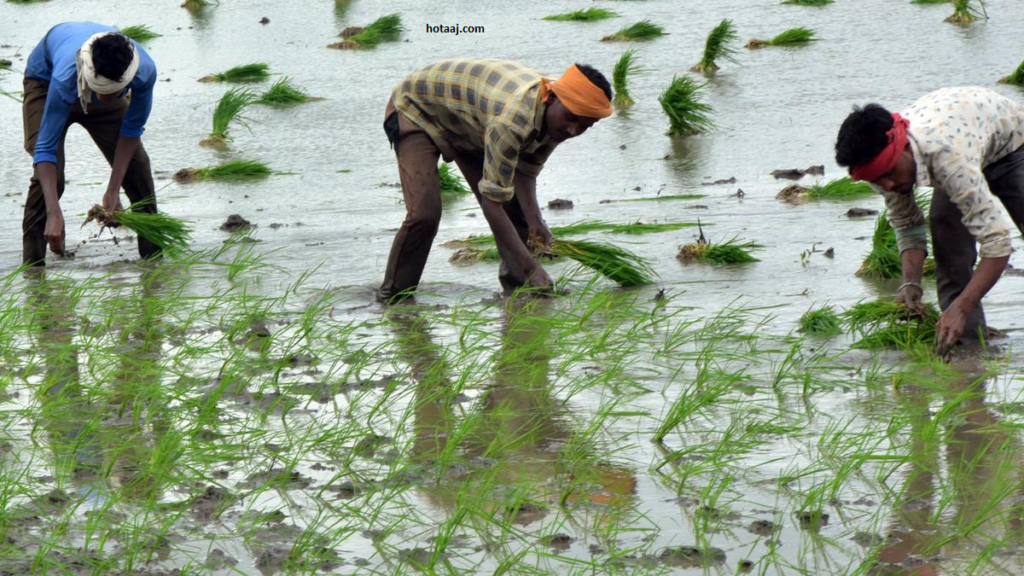
On Saturday, January 18, 2025, the Ministry of Finance provided an update on the progress of the PM Kisan Sampada Yojana. It announced that a total of 1,646 food processing projects, including food testing laboratories and research and development (R&D) initiatives, have been sanctioned under various sub-schemes of the scheme.
These projects, which are valued at ₹31,830.23 crore, aim to enhance the food processing sector and contribute to the overall growth of the agricultural economy. Additionally, the projects have the potential to leverage private investments worth ₹22,722.55 crore, further boosting economic growth and job creation in the sector.
The PM Kisan Sampada Yojana was launched to modernize the food processing sector, increase its contribution to the GDP, and reduce post-harvest losses. It is expected that these 1,646 projects will improve food processing infrastructure across India, benefiting farmers, consumers, and businesses alike. The initiative is also set to drive innovation in food technology and encourage sustainable practices in food production and distribution.
As of December 18, 2024, a total of 1,646 food processing projects have been sanctioned under the Pradhan Mantri Kisan Sampada Yojana (PMKSY), valued at ₹31,830.23 crore. These projects hold the potential to attract private investments worth ₹22,722.55 crore, thereby significantly boosting the sector.
The Ministry of Food Processing Industries (MoFPI) has been implementing PMKSY since the 2016-17 fiscal year with the aim of modernizing the food processing industry, reducing food wastage, and increasing value-added food exports. This initiative plays a key role in promoting sustainable agricultural practices, improving the income of farmers, and creating employment opportunities in rural and semi-rural areas. Through various sub-schemes, the government is encouraging infrastructure development, innovation, and technological advancements within the food processing industry.
The sanctioned food processing projects under the Pradhan Mantri Kisan Sampada Yojana (PMKSY) are expected to create a processing and preservation capacity of 428.04 LMT (Lakh Metric Tons) per annum. Additionally, these initiatives are set to generate employment for approximately 13.42 lakh individuals and extend benefits to 51.24 lakh farmers.
This ambitious effort aims to enhance the overall agricultural value chain, benefiting both farmers and workers by improving infrastructure, boosting productivity, and increasing the efficiency of the food processing sector. Through these projects, the government intends to strengthen the rural economy, reduce food wastage, and ensure better market access for farmers, thereby contributing to the sustainable growth of India’s agriculture and food processing industries.
The government is dedicated to accelerating the growth of the agriculture and food processing sectors by encouraging both private and public investment in key post-harvest activities. These include aggregation, modern storage solutions, efficient supply chains, primary and secondary processing, as well as marketing and branding efforts.
To foster these developments, the government aims to raise the level of food processing and increase the export of processed foods. This is being achieved through the creation of state-of-the-art infrastructure coupled with a robust supply chain management system, ensuring a smooth flow of products from the farm gate to retail outlets. By focusing on these critical areas, the government seeks to improve food security, enhance market access for farmers, and boost the competitiveness of India’s food processing industry on a global scale.
The PM Formalisation of Micro Food Processing Enterprises (PMFME) Yojana, a Centrally sponsored scheme launched by the Ministry of Food Processing Industries (MoFPI) in 2020-21, aims to provide comprehensive support—financial, technical, and business-related—for upgrading micro-food processing enterprises. This initiative is the first of its kind targeting the unorganised sector, helping small-scale enterprises modernize and formalize their operations.
As of December 18, 2024, under the PMFME Yojana, over 3.10 lakh Self-Help Groups (SHGs) have received seed capital support, and 1,14,388 individuals have benefited from credit linkages subsidies, helping boost the viability and sustainability of food processing businesses across the country.
In addition, the Ministry of Finance provided an update on the allocation for the establishment of 50 multi-product food irradiation units within the MSME sector, a measure announced in the Union Budget for 2024-25. This initiative is part of the broader efforts to enhance food safety, preserve shelf life, and improve marketability of processed foods, strengthening India’s food processing infrastructure.
In August 2024, the Ministry of Food Processing Industries (MoFPI) issued an Expression of Interest (EOI) to invite proposals for setting up multiproduct food irradiation units under the Integrated Cold Chain and Value Addition Infrastructure Scheme of the Pradhan Mantri Kisan Sampada Yojana (PMKSY). As of the latest update, 20 project proposals have been received, and these are currently under scrutiny and evaluation in accordance with the scheme guidelines.
Additionally, the Finance Ministry provided an update on the Production-Linked Incentive (PLI) scheme for the food processing industry, stating that 133 companies are currently covered under the program. The scheme has successfully attracted investments worth ₹8,910 crore so far, and incentives totaling ₹1,084 crore have been disbursed to 85 eligible cases, further supporting the growth of the sector.

Courtesy: Tech With Rahul
References
- ^ (Gujarati: નરેન્દ્ર દામોદરદાસ મોદી; pronounced [ˈnəɾendɾə dɑmodəɾˈdɑs ˈmodiː] listenⓘ
- ^ Jump up to:a b Narendra Modi was born Narendrabhai Damodardas Modi on 17 September 1950. He uses Damodardas as his middle name—Gujaratis have a tradition of using the names of their fathers as their middle names—but he is widely known as Narendra Modi.[3]
- ^ Sources stating that RSS had a deep impact on the political hierarchy of the BJP, specially in the case of Narendra Modi.[5][6][7]
- ^ Sources describing Modi’s administration as complicit in the 2002 violence.[8][9][10][11][12]
- ^ In 2012, a court stated that investigations had found no evidence against Modi.[14][15]
- ^ Sources stating that Modi has failed to improve human development indices in Gujarat:[11][12]
- ^ Jump up to:a b Sources describing that India has experienced a backslide in democracy:[31][32][33][34][35]
- ^ Sources discussing the controversy surrounding Modi:[11][39][40][41][42][43][44]
- ^ Applications were filed with the Prime Minister’s Office (PMO) under the RTI Act seeking details of his arrest. In reply, the PMO said it maintains official records on Modi only since he became the prime minister in 2014. Despite this claim, the official website of the PMO contains information about Modi from the 1950s.[80][81]
- ^ Replying to an RTI query, the School of Open Learning said it did not have any data of students who received a BA degree in 1978.[82] Jayantibhai Patel, a former political science professor of Gujarat University, said the subjects listed in Modi’s MA degree were not offered by the university when Modi was studying there.[89][90] In 2016, Delhi University deemed the BA degree to be authentic.[91]
- ^ The exact number of people killed in the train burning is variously reported. For example, the BBC says it was 59,[117] while The Guardian put the figure at 60.[118]
- ^ “The Narendra Modi led government completed two years in power in May 2016 and the prime minister has made his mark on both the domestic and foreign policy fronts. It is important to assess how successful his initiatives have been in the arena of foreign affairs in comparison to his predecessors. In this regard, this paper identifies and examines the key trends and issues in foreign policy under the Modi led administration and the measures needed to translate speeches and policies into action. Modi government has also taken a serious node of relations with middle-east nations, as well as Iran and Israel.”[380]
- Citations
- ^ “Narendra Modi Fast Facts”. CNN. 6 September 2023. Retrieved 22 November 2023.
- ^ “Jashodaben, named by Narendra Modi as his wife, prays for him to become PM”. NDTV. Press Trust of India. 11 April 2014. Archived from the original on 17 July 2020. Retrieved 12 June 2020.
- ^ Marino 2014, pp. 4–5.
- ^ “The rise and journey of Narendra Modi as the leader reshaping India: timeline”. The Hindu. 6 June 2024. ISSN 0971-751X. Archived from the original on 28 June 2024. Retrieved 25 June 2024.
- ^ Asrar, Nadim (26 February 2014). “Narendra Modi’s political journey from RSS worker to BJP’s PM candidate”. NDTV. Archived from the original on 8 August 2020. Retrieved 15 August 2015.
- ^ “PM Modi turns 69: A timeline of his political career”. Deccan Herald. 17 September 2019. Archived from the original on 15 January 2021. Retrieved 13 January 2021.
- ^ Tiwari, Ravish (27 November 2014). “The low-profile RSS apparatchik is the newface of power in the NDA”. India Today. Retrieved 13 January 2021.
- ^ Jump up to:a b c d e Bobbio, Tommaso (1 May 2012). “Making Gujarat Vibrant: Hindutva, development and the rise of subnationalism in India”. Third World Quarterly. 33 (4): 657–672. doi:10.1080/01436597.2012.657423. S2CID 154422056. Archived from the original on 1 March 2020. Retrieved 2 September 2019.
- ^ Jump up to:a b c d e f Nussbaum, Martha Craven (2008). The Clash Within: Democracy, Religious Violence, and India’s Future. Harvard University Press. pp. 17–28, 50–51. ISBN 978-0-674-03059-6. JSTOR 27639120.
- ^ Jump up to:a b c d Shani, Orrit (2007). Communalism, Caste and Hindu Nationalism: The Violence in Gujarat. Cambridge University Press. pp. 168–173. ISBN 978-0-521-68369-2. Archived from the original on 18 February 2023. Retrieved 20 January 2021.
- ^ Jump up to:a b c d e Buncombe, Andrew (19 September 2011). “A rebirth dogged by controversy”. The Independent. London. Archived from the original on 25 December 2011. Retrieved 10 October 2012.
- ^ Jump up to:a b c Jaffrelot, Christophe (June 2013). “Gujarat Elections: The Sub-Text of Modi’s ‘Hattrick’—High Tech Populism and the ‘Neo-middle Class'”. Studies in Indian Politics. 1 (1): 79–95. doi:10.1177/2321023013482789. S2CID 154404089. Retrieved 29 August 2021.
- ^ * Jaffrelot, Christophe (2021), Modi’s India: Hindu Nationalism and the Rise of Ethnic Democracy, translated by Schoch, Cynthia, Princeton and Oxford: Princeton University Press, pp. 40–41, ISBN978-0-691-20680-6, archived from the original on 22 June 2023, retrieved 22 June 2023
- Shahani, Nishant (2021), Pink Revolutions: Globalization, Hindutva, and Queer Triangles in Contemporary India, Critical Ethnic Studies Association series, Evanston, Illinois: Northwestern University Press, ISBN 978-0-8101-4363-0, archived from the original on 22 June 2023, retrieved 22 June 2023
- Dhattiwala, Raheel (2019), Keeping the Peace: Spatial Differences in Hindu-Muslim Violence in Gujarat in 2002, Cambridge University Press, p. 73, ISBN 978-1-108-49759-6, archived from the original on 22 June 2023, retrieved 22 June 2023
- Kinnvall, Catarina (2019), “Populism, ontological insecurity and Hindutva: Modi and the masculinization of Indian politics”, Cambridge Review of International Affairs, 32 (3): 238–302, 295, doi:10.1080/09557571.2019.1588851, ISSN 0955-7571, S2CID 164991567
- ^ “India Gujarat Chief Minister Modi cleared in riots case”. BBC News. BBC. 10 April 2012. Archived from the original on 20 December 2016. Retrieved 17 February 2017.
- ^ Dasgupta, Manas (10 April 2012). “SIT finds no proof against Modi, says court”. The Hindu. Archived from the original on 21 December 2016. Retrieved 17 February 2017.
- ^ Lalwani, Sameer; Tallo, Emily (17 April 2019), “Did India shoot down a Pakistani F-16 in February? This just became a big deal: There are broader implications for India — and the United States”, Washington Post, archived from the original on 30 November 2020, retrieved 27 January 2023
- ^ Hall, Ian (2019), “India’s 2019 General Election: National Security and the Rise of the Watchmen”, The Round Table: The Commonwealth Journal of International Affairs, 108 (5): 507–519, 510, doi:10.1080/00358533.2019.1658360, S2CID 203266692
- ^ Jaffrelot, Christophe (2021), Modi’s India: Hindu Nationalism and the Rise of Ethnic Democracy, Princeton University Press, ISBN 978-0-691-22309-4
- ^ Jump up to:a b “Book review: How Pulwama made Modi’s Balakot response his 1971 moment”. Business Standard India. 30 November 2019. Archived from the original on 28 May 2020. Retrieved 11 January 2021.
- ^ Akhtar, Rais; Kirk, William, Jammu and Kashmir, State, India, Encyclopaedia Britannica, archived from the original on 19 June 2015, retrieved 7 August 2019 (subscription required)
- ^ Osmańczyk, Edmund Jan (2003), Encyclopedia of the United Nations and International Agreements: G to M, Taylor & Francis, pp. 1191–, ISBN 978-0-415-93922-5, archived from the original on 17 January 2023, retrieved 8 June 2023
- ^ Ellis-Peterson, Hannah; Azizur Rahman, Shaikh (6 March 2020), “‘I cannot find my father’s body’: Delhi’s fearful Muslims mourn riot dead”, The Guardian, Delhi, archived from the original on 6 March 2020, retrieved 7 March 2020
- ^ Wamsley, Laurel; Frayer, Lauren (26 February 2020), In New Delhi, Days Of Deadly Violence And Riots, NPR, archived from the original on 4 March 2020, retrieved 25 March 2020
- ^ Abi-Habib, Maria (5 March 2020), “Violence in India Threatens Its Global Ambitions”, The New York Times, archived from the original on 5 March 2020, retrieved 6 March 2020
- ^ Jump up to:a b Grimley, Naomi; Cornish, Jack; Stylianou, Nassos (5 May 2022). “Covid: World’s true pandemic death toll nearly 15 million, says WHO”. BBC News. Archived from the original on 13 May 2022. Retrieved 22 August 2022.
- ^ Jump up to:a b Biswas, Soutik (5 May 2022). “Why India’s real Covid toll may never be known”. BBC. Archived from the original on 21 August 2022. Retrieved 22 August 2022.
- ^ Aggarwai, Mithil; Frayer, Janis Mackey (4 June 2024). “India hands PM Modi a surprise setback, with his majority in doubt in the world’s largest election”. NBC News. Archived from the original on 4 June 2024. Retrieved 4 June 2024.
- ^ Poharel, Krishna; Lahiri, Tripti