








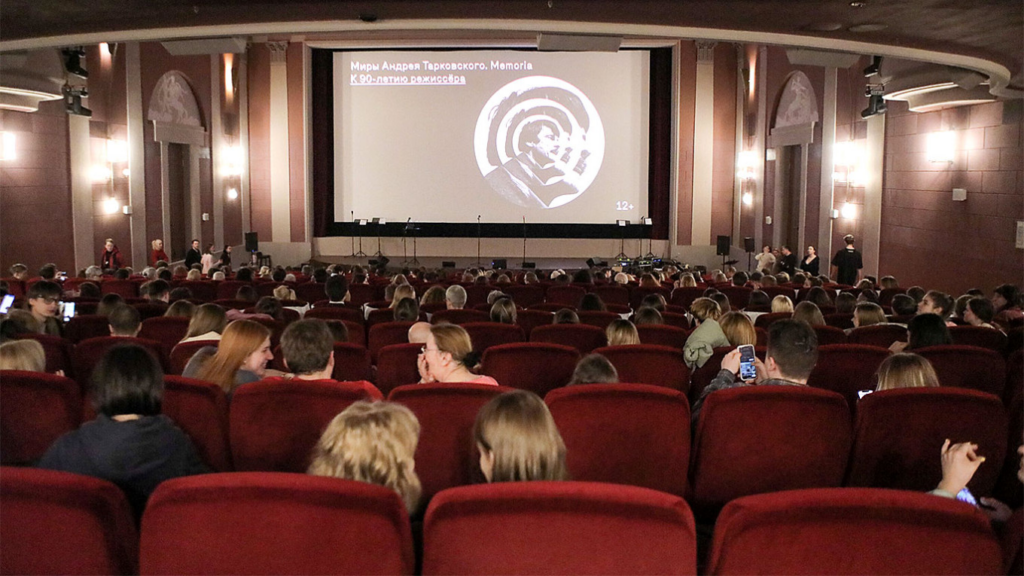
The general view this year in Russia is that there are no good films. But Russian film critic Larisa Malykova does not agree. “That’s what people say when they don’t go to movie theaters and don’t know about new films. And then good films often have problems with distribution, so people can’t see them. The year 2023 followed the very difficult year when European and American film companies left Russia,” she told The Moscow Times. “But filmmaking is a long process, and today we are seeing films that were started about two years ago. So I can’t say anything about global changes yet.”
Perhaps it’s impossible to see all the films released this year, but here are four trends we spotted and recommendations for films that might be seen on online platforms.
The year of fairy tales
Malykova has noted that directors became interested in shooting more fairy tales as a form of escapism and a chance to talk about some issues safely.
“Directors are shooting about 30 fairy tales. The New Year’s holidays will be fabulous. For example, we can watch new versions of the Soviet films ‘The Bremen Town Musicians’ (Bremenskie Musykanty) and ‘The Adventures of Buratino’,” she said.
Cinema expert Vsevolod Korshunov analyzed box office receipts and told The Moscow Times that, “In 2023, Russian audiences, as before, prefer escapist films that take them away from reality into a fairy tale from childhood or into outer space. So the film ‘The Wish of the Fairy Fish’ directed by Alexander Voitinsky, collected more than one billion rubles in ten days and was seen by 8.5 million viewers,” he said.
“The Wish of the Fairy Fish” is an adaptation of a traditional Russian fairy tale about a boy named Emelya who saves a magical pike that grants wishes. Emelya wastes the first two wishes and only has one left, which he wants to use when he falls in love with a princess. But nothing is ever simple, even in a fairy tale.
Exploring difficult themes through fantasy
Malykova says that 2023 began with the almost unnoticed film “Bullfinch” (Snegir) directed by Boris Khlebnikov. It is not strictly a fantasy; it is a disaster film, a free adaptation of Georgy Vladimov’s novel “Three Minutes of Silence.”
In the center of the story is an old fishing ship called “Bullfinch” that plows the sea in search of a rich catch of fish. Two students graduating from the naval college are on the ship for practical training and see that reality is very different from what they imagined. “It is about generational conflicts and an archaic society that devours its children,” Malykova said. The film opened the 45th Moscow International Film Festival (MIFF). You can watch it here.
Malykova also noted the film “Year of Birth” directed by Mikhail Mestetsky. It is a tragicomedy with aspects of fantasy. The film is about a dreamer who wants to organize the biggest musical festival in his town. “With a bit of fantasy, we can remember the year 1990 and the years that seemed romantic,” Malykova said. “’Year of Birth’ is a story about growing up, believing in miracles, and pursuing a dream.
“There is a paradoxical situation with one of the most ambitious films of the year, ‘Fairy Tale’ directed by Alexander Sokurov,” film critic Vsevolod Korshunov told The Moscow Times. The film follows into purgatory Adolf Hitler, Benito Mussolini, Josef Stalin, and Winston Churchill and listens to their conversations, as well as conversations with Jesus and Napoleon. Korshunov said that, “although it had its world premiere in August 2022 at the 75th Locarno Film Festival and was scheduled to be screened at the Moscow Karo.Art Film Festival on October 2023, it was denied a screening license by the Russian Culture Ministry. However, more than 1.3 million people have seen it. I think this is the most important film of the year. The director explores the nature and psychology of power. It is a strange and terrible tale about rulers, masses and the monstrous lack of communication between them.”
Women directors
“Most films d’auteur are shot by women [in Russia] — Natalia Meshchaninova, Ilya Malakhova, Svetlana Samoshina, Oksana Bychkova, Anna Kuznetsova, and others. One of the best of these films of this year is, I think, ‘One Little Night-Time Secret’ directed by Natalia Meshchaninova. It is the story about violence in a family told in an original way. This is a very modern film in every way, which had its premiere at the 52nd International Film Festival Rotterdam,” Malykova told The Moscow Times.
The film tells the story of Mira, who is 14 years old and lives with her mother, little sister, and stepfather. She also lives with a secret. At her first New Year’s party, Mira gets to know a group of older kids, falls in love, but can’t forget her problems.
Malykova also noted the film “Vacation” directed by Anna Kuznetsova, which is about the conflict of generations. The actress Daria Savelieva played the lead role. “In my opinion she’s the actress of the year,” Malykova said.
The rise of the film industry in Yakutia
In September 2023, the film “Ayta,” an award-winning thriller by Yakut director Stepan Burnashev, was banned in Russia. Russia’s Culture Ministry revoked the movie’s distribution license. The official reason was “destructive information that contradicts the principles of the unity of the peoples of Russia.” In spite of this, it has become the highest-grossing film ever in the Far East republic of Sakha (Yakutia).
“Ayta” tells the story of a standoff between indigenous residents of a Yakut village and an ethnic Russian policeman wrongfully accused of raping and killing a local teen girl. “They criticize it as xenophobic, but the film is about struggling against xenophobia,” Malykova said.
Malykova said she is confident that Yakut films will develop in spite of the problems; they are absolutely original and tell about people and topics not seen in other films. But they need to be shown at various festivals around the world, and 2022 was a difficult year in their development. “The directors are trying to change the situation, but without any success,” Malykova said.
Courtesy: Denis Hercog
References
- ^ Jump up to:a b c d “Statistics on the Russian cinema market” (PDF). Nevafilm Research. Retrieved 22 March 2017.
- ^ “Table 8: Cinema Infrastructure – Capacity”. UNESCO Institute for Statistics. Archived from the original on 24 December 2018. Retrieved 5 November 2013.
- ^ “Film distributors by box office share Russia 2021”. Statista.
- ^ Jump up to:a b “Top films by box office in Russia May 2022”. Statista.
- ^ “Annual Report 2012/2013” (PDF). Union Internationale des Cinémas. Archived from the original (PDF) on 10 November 2013. Retrieved 10 November 2013.
- ^ Peter Rollberg (2009). Historical Dictionary of Russian and Soviet Cinema. US: Rowman & Littlefield. p. xxiii. ISBN 978-0-8108-6072-8.
- ^ Jump up to:a b Peter Rollberg (2016). Historical Dictionary of Russian and Soviet Cinema. US: Rowman & Littlefield. pp. 49–52. ISBN 978-1442268425.
- ^ Jump up to:a b c d e f g h i j The Encyclopaedia Britannica guide to Russia : the essential guide to the nation, its people, and culture. London: Robinson. 2009. pp. 208–213. ISBN 9781593398507.
- ^ Историческая справка (in Russian). Gerasimov Institute of Cinematography. Retrieved 2 September 2008.
- ^ Snider, Eric (23 November 2010). “What’s the Big Deal?: Battleship Potemkin (1925)”. MTV News. MTV. Archived from the original on 23 May 2019. Retrieved 23 May 2019.
- ^ Ebert, Roger. “Battleship Potemkin”. Archived from the original on 22 November 2010. Retrieved 28 November 2010.
- ^ “Top Films of All-Time”. Filmsite. Retrieved 23 May 2019.
- ^ “The 50 Greatest Films of All Time”. British Film Institute. Sight & Sound. September 2012. Archived from the original on August 2, 2012. Retrieved 1 January 2018.
- ^ Peter Rollberg (2009). Historical Dictionary of Russian and Soviet Cinema. US: Rowman & Littlefield. pp. 172–179. ISBN 978-0-8108-6072-8.
- ^ Peter Rollberg (2016). Historical Dictionary of Russian and Soviet Cinema. US: Rowman & Littlefield. pp. 591–593. ISBN 978-1442268425.
- ^ “Festival de Cannes: Andrei Rublev”. festival-cannes.com. Archived from the original on 31 October 2012. Retrieved 2009-04-10.
- ^ “Soviet Film Maker Tarkovsky Dies at 54”. Los Angeles Times. December 29, 1986.
- ^ Stephen Dalton. “Andrei Tarkovsky, Solaris and Stalker”. BFI.
- ^ Jump up to:a b “Top 10 most decorated Russian filmmakers”. RBTH. 26 January 2022.
- ^ “The History of Russian Cinema”. Cannes Film Festival. 12 January 2011.
- ^ Nancy Condee (2009). “Aleksei German: Forensics in the Dynastic Capital”. The Imperial Trace – Recent Russian Cinema. New York: Oxford University Press. pp. 185–216. ISBN 978-0190451226.
- ^ “‘Deserto Rosso’ Wins Top Prize At 25th Venice Film Festival”. The New York Times. 11 September 1964.
- ^ “Russian film director Konchalovsky wins Special Jury Prize at Venice Film Festival”. TASS.
- ^ Ronald Bergan (21 Jun 2018). “Kira Muratova obituary”. Guardian.
- ^ Birgit Beumers (2005). Pop Culture Russia!: Media, Arts, and Lifestyle. Abc-Clio. p. 77. ISBN 1-85109-459-8.
- ^ Peter Rollberg (2009). Historical Dictionary of Russian and Soviet Cinema. US: Rowman & Littlefield. pp. 157–162. ISBN 978-0-8108-6072-8.
- ^ “Русская кинодвадцатка Радио Свобода “Москва слезам не верит””. Radio Svoboda. Retrieved 15 October 2021.
- ^ Richard Stites (1992). Russian Popular Culture: Entertainment and Society Since 1900. Cambridge University Press. p. 173. ISBN 0-521-36214-8.
- ^ “26e SELECTION DE LA SEMAINE DE LA CRITIQUE – 1987”. International Critics’ Week.
- ^ “35th International Filmfestival Mannheim-Heidelberg, Germany (October 6 – October 11, 1986)”. International Critics’ Week.
- ^ “16th Moscow International Film Festival (1989)”. MIFF. Archived from the original on 16 March 2013. Retrieved 25 February 2013.
- ^ Jump up to:a b Richard Taylor; Nancy Wood; Julian Graffy; Dina Iordanova (2019). The BFI Companion to Eastern European and Russian Cinema. Bloomsbury. pp. 1923–1927. ISBN 978-1838718497.
- ^ Peter Rollberg (2009). Historical Dictionary of Russian and Soviet Cinema. US: Rowman & Littlefield. p. xxxiv. ISBN 978-0-8108-6072-8.
- ^ Birgit Beumers (2005). Pop Culture Russia!: Media, Arts, and Lifestyle. Abc-Clio. p. 80. ISBN 1-85109-459-8.
- ^ “Berlinale: 1990 Prize Winners”. berlinale.de. Retrieved 16 March 2011.
- ^ “Festival de Cannes: Freeze Die Come to Life”. festival-cannes.com. Retrieved 8 August 2009.
- ^ “Berlinale: 1992 Programme”. berlinale.de. Retrieved 2011-05-29.
- ^ “Review/Film; Harshness of Soviet Life In Lungin’s ‘Taxi Blues'”. The New York Times. 18 January 1991.
- ^ “Cannes Festival”. Retrieved 29 January 2013.
- ^ “Festival de Cannes: The Wedding”. festival-cannes.com. Retrieved 10 October 2009.
- ^ “Festival de Cannes: Tsar”. festival-cannes.com. Retrieved 17 May 2009.
- ^ “Berlinale: 1990 Prize Winners”. berlinale.de. Retrieved 19 March 2011.
- ^ “Berlinale: 1991 Prize Winners”. berlinale.de. Retrieved 26 March 2011.
- ^ “Festival de Cannes: The Assassin of the Tsar”. festival-cannes.com. Retrieved 2009-08-09.
- ^ “Festival de Cannes: Anna Karamazoff”. festival-cannes.com. Retrieved 9 August 2009.
- ^ “Festival de Cannes: Perekhod tovarishcha Chkalova cherez severnyy polyus”. festival-cannes.com. Archived from the original on 2 January 2013. Retrieved 11 August 2009.
- ^ Valery Kichin (4 September 2015). “4 Russian films that scooped the Golden Lion at Venice”. RBTH.
- ^ “The 65th Academy Awards (1993) Nominees and Winners”. oscars.org. Retrieved 19 September 2015.
- ^ “Berlinale: 1992 Programme”. berlinale.de. Retrieved 2011-05-22.
- ^ “Tchekiste” [The Chekist]. Cannes Film Festival (in French). Retrieved 16 August 2009.
- ^ “Festival de Cannes: Happy Days”. festival-cannes.com. Retrieved 16 August 2009.
- ^ Jane Taubman (26 November 2004). Kira Muratova: Kinofile Filmmakers’ Companion. I.B.Tauris, 2004. ISBN 0857714104.
- ^ “Venezia, Libertà Per Gli Autori”. La Repubblica. 31 July 1992. Retrieved 29 April 2014.
- ^ “50th Venice Film Festival 1993 – FilmAffinity”. Retrieved 2017-05-28.
- ^ “‘Burnt By the Sun’ Wins Foreign Film Oscar”. Associated Press. March 28, 1995.
- ^ “Hollywood Reporter: Cannes Lineup”. hollywoodreporter. Archived from the original on April 22, 2010. Retrieved 2010-04-16.
- ^ “Festival de Cannes: Assia and the Hen with the Golden Eggs”. festival-cannes.com. Retrieved 27 August 2009.
- ^ Andrei Plakhov (1994-05-03). “Премьера нового фильма Киры Муратовой”. Kommersant.
- ^ “Российский гуманитарный энциклопедический словарь”.
- ^ “UVLECENJA”. Locarno Festival. Archived from the original on 2017-04-24. Retrieved 2023-05-29.
- ^ “Лауреаты Национальной кинематографической премии “НИКА” за 1994 год”. Nika Award.
- ^ “Призеры 1991-2005 гг”. Kinotavr. Archived from the original on 2013-10-23. Retrieved 2017-04-22.
- ^ Edoardo Pittalis, Roberto Pugliese, Bella di Notte, August 1996.
- ^ Sandra Brennan (2016). “A Moslem”. Movies & TV Dept. The New York Times. Archived from the original on 25 March 2016. Retrieved 4 October 2015.
- ^ Peter Rollberg (2009). Historical Dictionary of Russian and Soviet Cinema. US: Rowman & Littlefield. p. 544. ISBN 978-0-8108-6072-8.
- ^ “The 69th Academy Awards (1997) Nominees and Winners”. oscars.org. Retrieved 5 October 2015.
- ^ “Три истории”. VokrugTV.
- ^ “Сеансу отвечают: Три истории”. Seance.
- ^ “Призеры 1991-2005 гг”. Kinotavr.
- ^ Richard Taylor; Nancy Wood; Julian Graffy; Dina Iordanova (2019). The BFI Companion to Eastern European and Russian Cinema. Bloomsbury. p. 1938. ISBN 978-1838718497.
- ^ “Festival de Cannes: Traveling Companion”. festival-cannes.com. Retrieved 2009-09-26.
- ^ “Berlinale: 1998 Programme”. berlinale.de. Retrieved 22 January 2012.
- ^ “Festival de Cannes: Father and Son”. festival-cannes.com. Archived from the original on 10 October 2012. Retrieved 7 November 2009.
- ^ “Festival de Cannes: Khrustalyov, My Car!”. Festival de Cannes. Retrieved 30 September 2009.
- ^ “Festival de Cannes: The Barber of Siberia”. festival-cannes.com. Retrieved 2009-10-11.
- ^ Boris Egorog (25 June 2018). “12 Russian-European movies you must watch before you die”. RBTH.
- ^ “Festival de Cannes: Moloch”. festival-cannes.com. Retrieved 2010-12-21.
- ^ “Festival de Cannes: Taurus”. festival-cannes.com. Retrieved 18 October 2009.
- ^ Jump up to:a b c d e f “100 главных русских фильмов: 1992—2013”. Afisha.
- ^ “Svetlana Baskova in the TV program Cult of Cinema”. Cult of Cinema.
- ^ “В Петербурге суд запретил фильм “Зеленый слоник””. Meduza.
- ^ “27th Moscow International Film Festival (2005)”. MIFF. Archived from the original on 3 April 2013. Retrieved 13 April 2013.
- ^ “”А помните, вы вчера товарища генерала за погон укусили?”: 23 факта о “ДМБ””. Kinoreporter.
- ^ “Winners 1991–2005”. Kinotavr. Archived from the original on 2017-02-02. Retrieved 2017-01-25.
- ^ “Poisons or the World History of Poisoning / Jady ili Vsěmirnaja istorija otravlěnij”. KVIFF.
- ^ “Яды, или Всемирная история отравлений”. VokrugTV.
- ^ “Яды, или Всемирная история отравлений. Х/ф”. Russia-1. Archived from the original on 2020-11-20. Retrieved 2023-05-28.
- ^ Jump up to:a b “24th Moscow International Film Festival (2002)”. MIFF. Archived from the original on 28 March 2013. Retrieved 31 March 2013.
- ^ Dan Fainaru (3 December 2003). “The Last Train (Poslednyi Poezd)”. Screen Daily.
- ^ Deborah Young (September 9, 2005). “Review: ‘Garpastum'”. Variety. Retrieved 2 June 2016.
- ^ “Russian film wins award in Venice”. RBTH. 2008-08-07.
- ^ “Festival de Cannes: Russian Ark”. festival-cannes.com. Retrieved 25 October 2009.
- ^ “Italianetz”, Berlinale Film Archive, 14 February 2005, retrieved 17 July 2017
- ^ “Festival de Cannes: 977”. festival-cannes.com. Retrieved 14 December 2009.
- ^ “Festival de Cannes: Tale in the Darkness”. festival-cannes.com. Retrieved 17 May 2009.
- ^ “Ugly Swans”. Tretyakov Gallery.
- ^ “Festival de Cannes: The Banishment”. festival-cannes.com. Archived from the original on 12 October 2012. Retrieved 18 December 2009.
- ^ “Official Awards at the 64th Venice Film Festival”. www.labiennale.org. Archived from the original on 2008-04-17. Retrieved 2007-12-12.
- ^ “80th Academy Awards Nominations Announced” (Press release). Academy of Motion Picture Arts and Sciences. 2008-01-22. Retrieved 2008-01-22.
- ^ Fabien Lemercier (2008-05-25). “Cantet wins Palme d’Or and Sorrentino, Garrone and Dardenne brothers scoop awards”. Cineuropa.
- ^ “2008 Sundance Film Festival Award Winners”. SlashFilm. 2008.
- ^ “Final Press Release (July 11th, 2009)”