



Two Senior Iranian Judges Assassinated in Supreme Court Attack
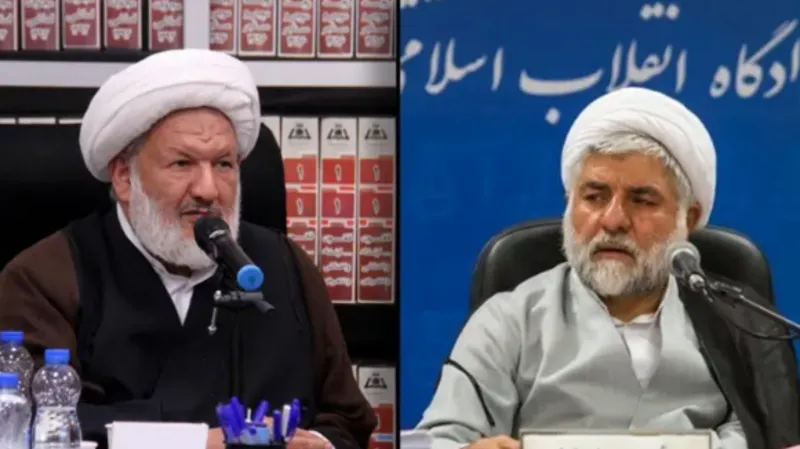
In a shocking incident, two senior Iranian judges, Ali Razini and Mohammad Moghiseh, were shot dead in an apparent assassination at the country’s Supreme Court in Tehran on Saturday morning. The attacker reportedly entered the court building armed, carrying out the assault before taking his own life as he attempted to flee the scene.
The judiciary’s news website, Mizan, confirmed that a bodyguard was also injured during the attack. The judiciary’s media office described the incident as a “premeditated assassination” and assured that investigations are underway to uncover potential accomplices or additional motives behind the crime.
Prominent Figures in Judiciary
Both Ali Razini and Mohammad Moghiseh were prominent figures within Iran’s judicial system and had played significant roles in the government’s crackdown on opposition groups since the 1980s. Their involvement in sensitive cases and judgments against political dissenters has sparked speculation regarding the attack’s motive.
Motive Remains Unclear
Despite their controversial judicial histories, authorities have stated that the initial findings suggest the assailant had no personal grievances or pending cases before the Supreme Court. However, the motive for this brazen assassination remains unclear, and officials are exploring possible links to political or ideological motives.
Investigation Underway
The judiciary has vowed to thoroughly investigate the incident and has not ruled out the possibility of external involvement. While no group or individual has claimed responsibility, the attack highlights vulnerabilities in protecting high-profile judicial figures in Iran.
This assassination has sent shockwaves through the judiciary and the broader Iranian public, raising concerns about the safety of government officials amid ongoing political tensions.
Further updates will follow as investigations progress.
Senior Iranian Judges Assassinated in Supreme Court Attack: Investigations Continue
Two senior Iranian judges, Ali Razini and Mohammad Moghiseh, were tragically shot dead in an apparent assassination at the Supreme Court in Tehran on Saturday morning. Both victims had long-standing careers in the judiciary, and their roles involved significant responsibilities, including confirming death sentences, a duty that has drawn scrutiny due to their involvement in controversial cases.
Veteran Judges with Long Judicial Careers
Ali Razini, 71, was one of the most senior and influential judges in Iran’s judiciary. His career spanned decades, and he survived an earlier assassination attempt in 1998, an incident that highlighted his prominence and the risks associated with his high-profile role.
Mohammad Moghiseh, 68, had also spent decades in the judiciary and was known for his work in confirming death sentences and overseeing sensitive cases. His controversial judicial history includes sanctions from the European Union, the United States, and Canada, who accused him of being involved in human rights violations.
Unclear Motive, Ongoing Investigation
While the motive for the attack remains unclear, both victims’ involvement in the government’s crackdown on opposition groups since the 1980s has led some to speculate about the nature of the attack. However, initial reports from the judiciary suggest the attacker had no direct ties to any cases the Supreme Court had been handling.
The gunman killed himself while fleeing the scene, and a bodyguard was also injured during the assault. Investigations are ongoing, with authorities looking into whether there were other individuals involved in the attack.
International Reactions and Continued Scrutiny
The assassination of such prominent judicial figures has intensified international scrutiny of Iran’s judicial system, especially given Moghiseh’s inclusion on several sanctions lists due to alleged human rights abuses. These events further heighten concerns over the safety of key officials and the political tensions within the country.
The judiciary’s media office has described the attack as a premeditated assassination, and further developments are awaited as officials continue to probe the circumstances surrounding the deaths.
The Legacy of Razini and Moghiseh
Both Razini and Moghiseh had long and controversial careers within Iran’s judiciary, often being associated with high-profile and politically sensitive cases. Their work has shaped much of Iran’s judicial landscape, especially in areas involving security-related offenses, political dissidents, and opposition groups.
Ali Razini, who was a key figure in the judiciary, had been involved in numerous decisions linked to political repression in Iran. His prominence within the regime and his survival of a 1998 assassination attempt only added to his notoriety. As one of the most senior judges, his influence was far-reaching, particularly when it came to enforcing the harshest sentences, including death penalties for individuals accused of espionage or being enemies of the state.
Mohammad Moghiseh, while equally influential, became a more controversial figure internationally due to the accusations against him concerning human rights abuses. He was sanctioned by the European Union, the United States, and Canada for his role in judicial decisions that allegedly violated the rights of political prisoners and activists. The sanctions were a clear indication of how his actions were viewed beyond Iran’s borders, and his work, particularly in relation to the death penalty, has drawn international condemnation.
Political Implications and Suspected Motivations
The attack on Razini and Moghiseh has raised questions regarding the political dynamics within Iran. While their involvement in confirming death sentences and their association with the Islamic government’s crackdown on opposition are significant, the exact motivation behind the killings is still under investigation. It is possible that the attack is politically motivated, particularly given the ongoing tensions between the government and various dissident factions, both within the country and abroad.
The fact that the assailant committed suicide after the attack suggests a premeditated act, and the lack of any apparent direct connection to ongoing Supreme Court cases only fuels suspicions about the broader political implications of this assassination. Iran’s judiciary has long been accused of stifling dissent and undermining human rights, and the deaths of these two judges could be seen as an extreme form of retaliation or an attempt to send a message to those associated with the government’s judicial policies.
Impact on Iran’s Judicial System
The assassination of two senior figures within the judiciary will undoubtedly have profound effects on the structure and functioning of the system. With the judiciary already under scrutiny for its controversial role in silencing dissent, these killings may spark further unrest or even calls for reform within the system. The loss of such high-ranking officials will also leave a gap that may impact the swift administration of justice in the country, particularly in politically sensitive cases.
The Iranian government faces the challenge of addressing these deaths while also maintaining control over its judiciary. It remains to be seen how this incident will influence the broader political landscape in Iran, as both domestic and international observers eagerly await more details about the perpetrators and the motive behind this shocking attack.
Ongoing Investigation and Future Developments
Authorities have already launched a detailed investigation into the incident. The question of whether the gunman acted alone or if there was a wider conspiracy at play is one of the most pressing concerns. With such high-profile victims, the investigation is expected to be thorough, and the findings could have significant implications for the future of Iran’s judicial system.
As Iran grapples with the aftermath of the attack, officials have vowed to bring those responsible to justice, but the incident has added another layer of tension to the country’s already volatile political situation. The international community continues to watch closely as events unfold, with many questioning the broader implications for human rights and the rule of law in Iran.
Conclusion
The assassination of Ali Razini and Mohammad Moghiseh has sent shockwaves through Iran, drawing attention not only to the vulnerability of high-ranking officials but also to the broader political and human rights challenges facing the country. While the full details of the attack remain unclear, the incident is certain to have far-reaching consequences for both Iran’s judiciary and its political future. As investigations continue, the world watches with bated breath, eager to understand the motives behind this premeditated and violent act.
Courtesy: DawnNews English
References
- ^ Examples include the Hoot, Kowsar, Zelzal, Fateh-110, Shahab-3, Sejjil, Fattah, Khorramahahr, Kheibar Shekan, Emad, Ghadr-110, Hormuz-1, Dezful, Qiam 1, Ashoura, Fajr-3, Haj Qasem, Persian Gulf, Raad-500, Zolfaghar, Hoveyzeh, Soumar, Fakour-90, Paveh, Rezvan, Samen, Tondar-69.[citation needed]
- Citations
- ^ Jeroen Temperman (2010). State-Religion Relationships and Human Rights Law: Towards a Right to Religiously Neutral Governance. Brill. pp. 87–. ISBN 978-90-04-18148-9. Archived from the original on 10 April 2023. Retrieved 20 June 2015.
The official motto of Iran is [the] Takbir (‘God is the Greatest’ or ‘God is Great’). Transliteration Allahu Akbar. As referred to in art. 18 of the constitution of Iran (1979). The de facto motto however is: ‘Independence, freedom, the Islamic Republic.’
- ^ “Surface water and surface water change”. Organisation for Economic Co-operation and Development (OECD). Archived from the original on 24 March 2021. Retrieved 11 October 2020.
- ^ Jump up to:a b “Estimated population in Iran by province in 2024”. www.iranopendata.org/fa/. Iran Open Data (IOD). 5 December 2024. Retrieved 27 December 2024.
- ^ Jump up to:a b c d “World Economic Outlook Database, October 2024 Edition. (Iran)”. International Monetary Fund. Archived from the original on 16 April 2024. Retrieved 11 November 2024.
- ^ “Gini Index coefficient”. The World Factbook. Retrieved 24 September 2024.
- ^ “Human Development Report 2023/24” (PDF). United Nations Development Programme. 13 March 2024. p. 289. Archived (PDF) from the original on 13 March 2024. Retrieved 13 March 2024.
- ^ Jump up to:a b “Definition of IRAN”. merriam-webster.com. Archived from the original on 24 September 2022. Retrieved 24 September 2022.
- ^ “Iran”. 4 November 2024.
- ^ Jump up to:a b MacKenzie 1998.
- ^ Schmitt 1987.
- ^ Laroche. 1957. Proto-Iranian *arya- descends from Proto-Indo-European (PIE) *ar-yo-, a yo-adjective to a root *ar “to assemble skillfully”, present in Greek harma “chariot”, Greek aristos, (as in “aristocracy“), Latin ars “art”, etc.
- ^ Shahbazi 2004.
- ^ Wilson, Arnold (2012). “The Middle Ages: Fars”. The Persian Gulf (RLE Iran A). Routledge. p. 71. ISBN 978-1-136-84105-7.
- ^ Borjian, Maryam; Borjian, Habib (2011). “Plights of Persian in the Modernization Era”. In Fishman, Joshua A; García, Ofelia (eds.). Handbook of Language and Ethnic Identity: Volume 2: The Success-Failure Continuum in Language and Ethnic Identity Efforts. New York: Oxford University Press. p. 266. ISBN 978-0-19-539245-6.
‘Iran’ and ‘Persia’ are synonymous. The former has always been used by Iranian-speaking peoples themselves, while the latter has served as the international name of the country in various languages, ever since it was introduced by the Greeks some twenty-five centuries ago. In 1935, however, the nationalist administration under Reza Shah Pahlavi (see below) made a successful effort to replace ‘Persia’ with ‘Iran,’ apparently to underline the nation’s ‘Aryan’ pedigree to the international community. The latter term used to signify all branches of the Indo-European language family (and even the ‘race’ of their speakers), but was practically abandoned after World War II.
- ^ Lewis, Geoffrey (1984). “The naming of names”. British Society for Middle Eastern Studies Bulletin. 11 (2): 121–124. doi:10.1080/13530198408705394. ISSN 0305-6139.
- ^ Persia Archived 15 June 2022 at the Wayback Machine, Encyclopædia Britannica, “The term Persia was used for centuries … [because] use of the name was gradually extended by the ancient Greeks and other peoples to apply to the whole Iranian plateau.”
- ^ Jump up to:a b “Your Gateway to Knowledge”. Knowledge Zone. Retrieved 3 April 2024.
- ^ “Fars Province, Iran”. Persia Advisor. Archived from the original on 2 May 2024. Retrieved 2 May 2024.
- ^ Foundation, Encyclopaedia Iranica. “Welcome to Encyclopaedia Iranica”. iranicaonline.org. Archived from the original on 10 April 2010. Retrieved 3 April 2024.
- ^ “Eight Thousand Years of History in Fars Province, Iran”. Research Gate. 12 May 2005. Retrieved 3 April 2024.
- ^ “From Cyrus to Alexander : a history of the Persian Empire | WorldCat.org”. search.worldcat.org. Archived from the original on 3 April 2024. Retrieved 3 April 2024.
- ^ Austin, Peter (2008). One Thousand Languages: Living, Endangered, and Lost. University of California Press. ISBN 978-0-520-25560-9.
- ^ Dandamaev, M. A. (1989). A Political History of the Achaemenid Empire. BRILL. ISBN 978-90-04-09172-6.
- ^ “Persia Changes Its Name; To Be ‘Iran’ From Mar. 22”. The New York Times. 1 January 1935. Archived from the original on 25 December 2018. Retrieved 26 December 2018.
- ^ “Persia or Iran, a brief history”. Art-arena.com. Archived from the original on 23 May 2013. Retrieved 21 June 2013.
- ^ Christoph Marcinkowski (2010). Shi’ite Identities: Community and Culture in Changing Social Contexts. LIT Verlag Münster. p. 83. ISBN 978-3-643-80049-7. Retrieved 21 June 2013.
The ‘historical lands of Iran’ – ‘Greater Iran’ – were always known in the Persian language as Irānshahr or Irānzamīn.
- ^ Frye, Richard Nelson (October 1962). “Reitzenstein and Qumrân Revisited by an Iranian”. The Harvard Theological Review. 55 (4): 261–268. doi:10.1017/S0017816000007926. JSTOR 1508723. S2CID 162213219.
I use the term Iran in an historical context […] Persia would be used for the modern state, more or less equivalent to “western Iran”. I use the term “Greater Iran” to mean what I suspect most Classicists and ancient historians really mean by their use of Persia – that which was within the political boundaries of States ruled by Iranians.
- ^ Richard Frye (2012). Persia (RLE Iran A). Routledge. p. 13. ISBN 978-1-136-84154-5. Retrieved 21 June 2013.
This ‘greater Iran’ included and still includes part of the Caucasus Mountains, Central Asia, Afghanistan, and Iraq; for Kurds, Baluchis, Afghans, Tajiks, Ossetes, and other smaller groups are Iranians
- ^ Farrokh, Kaveh. Shadows in the Desert: Ancient Persia at War. ISBN 1-84603-108-7
- ^ “Iran”. Oxford Dictionaries. Archived from the original on 29 December 2016. Retrieved 7 February 2017.
- ^ “Iran”. Merriam-Webster. Archived from the original on 10 May 2017. Retrieved 7 February 2017.
- ^ “How do you say Iran?”. Voice of America. Archived from the original on 11 February 2017. Retrieved 7 February 2017.
- ^ People, “New evidence: modern civilization began in Iran”, 10 Aug 2007 Archived 24 February 2021 at the Wayback Machine, retrieved 1 October 2007
- ^ Azadpour, M. “HEGEL, GEORG WILHELM FRIEDRICH”. Encyclopædia Iranica. Archived from the original on 11 April 2015. Retrieved 11 April 2015.
- ^ https://www.britannica.com/ebc/article-9371723 Archived 2008-04-29 at the Wayback Machine Encyclopædia Britannica Concise Encyclopedia Article: Media
- ^ Baten, Jörg (2016). A History of the Global Economy. From 1500 to the Present. Cambridge University Press. p. 214. ISBN 978-1-107-50718-0.
- ^ R. M. Savory, “Safavids”, Encyclopedia of Islam, 2nd edition
- ^ “The Islamic World to 1600”, Applied History Research Group, University of Calgary, 1998 Archived 2008-06-12 at the Wayback Machine, retrieved 1 October 2007
- ^ Dowling, Timothy C. (2014). Russia at War: From the Mongol Conquest to Afghanistan, Chechnya, and Beyond. 2 volumes. ABC-CLIO. pp. 728–729. ISBN 978-1-59884-948-6.
- ^ “Iran Islamic Republic”, Archived 2006-03-16 at the Wayback Machine, Encyclopædia Britannica, retrieved 23 January 2008
- ^ “International relations / The Iranian revolution”. Encyclopædia Britannica. 23 January 2008. Archived from the original on 15 December 2007. Retrieved 26 September 2024. (subscription required)
- ^ “Ahmadinejad critic Larijani re-elected Iran speaker”. BBC News. 5 June 2012. Archived from the original on 10 May 2024. Retrieved 10 May 2024.
- ^ Borger, Julian; Dehghan, Saeed Kamali (19 September 2013). “Hassan Rouhani sets out his vision for a new and free Iran”. The Guardian. ISSN 0261-3077. Archived from the original on 12 November 2023. Retrieved 10 May 2024.
- ^ Kutsch, Tom (14 July 2015). “Iran, world powers strike historic nuclear deal”. Aljazeera America. Archived from the original on 15 July 2015. Retrieved 15 July 2015.
- ^ Brewer, Eric (25 June 2024). “Iran’s New Nuclear Threat”. Foreign Affairs. ISSN 0015-7120. Retrieved 2 July 2024.
- ^ “U.S. killing of Iran’s second most powerful man risks regional conflagration”. Reuters. 4 January 2020. Archived from the original on 18 April 2024. Retrieved 7 May 2024.
- ^ Carolien Roelants, Iran expert of NRC Handelsblad, in a debate on Buitenhof on Dutch television, 5 January 2020.
- ^ Never-before-seen video of the attack on Al Asad Airbase, 28 February 2021, archived from the original on 23 February 2022, retrieved 8 January 2024
- ^ “109 US troops diagnosed with brain injuries from Iran attack”. Al Jazeera. Archived from the original on 7 April 2024. Retrieved 7 April 2024.
- ^ “Pentagon admits 109 brain injuries in Iran attack – DW – 02/10/2020”. dw.com. Archived from the original on 7 April 2024. Retrieved 7 April 2024.
- ^ Starr, Barbara (10 February 2020). “Over 100 US troops have been diagnosed with traumatic brain injuries following Iran strike | CNN Politics”. CNN. Archived from the original on 7 April 2024. Retrieved 7 April 2024.
- ^ Motamedi, Maziar. “Hardliner Raisi elected Iran’s new president”. Al Jazeera.
- ^ “Several killed in Israeli strike on Iranian consulate in Damascus”. Al Jazeera. Archived from the original on 30 April 2024. Retrieved 1 May 2024.
- ^ “Israeli strike on Iran’s consulate in Syria killed 2 generals and 5 other officers, Iran says”. AP News. 1 April 2024. Archived from the original on 19 April 2024. Retrieved 1 May 2024.
- ^ center, This aerial view shows Tel Aviv’s Ben Gurion International Airport in the; April 5, the surrounding urban areas in Lodin central Israel on; Images, 2024-ROY ISSA/AFP via Getty (15 April 2024). “How Iran’s attack on Israel is disrupting air traffic – Al-Monitor: Independent, trusted coverage of the Middle East”. www.al-monitor.com. Archived from the original on 1 May 2024. Retrieved 1 May 2024.
- ^ Toossi, Sina (2 May 2024). “Iran Has Defined Its Red Line With Israel”. Foreign Policy. Archived from the original on 1 May 2024. Retrieved 1 May 2024.
- ^ “What was in wave of Iranian attacks and how were they thwarted?”. 14 April 2024. Archived from the original on 14 April 2024. Retrieved 1 May 2024.
- ^ Borger, Julian (14 April 2024). “US and UK forces help shoot down Iranian drones over Jordan, Syria and Iraq”. The Guardian. ISSN 0261-3077. Archived from the original on 14 April 2024. Retrieved 1 May 2024.
- ^ “Macron: France intercepted Iranian drones ‘at Jordan’s request'”. POLITICO. 15 April 2024. Archived from the original on 15 April 2024. Retrieved 1 May 2024.
- ^ “The largest drone attack in history”. iranpress.com. Retrieved 1 May 2024.
- ^ Motamedi, Maziar. “‘True Promise’: Why and how did Iran launch a historic attack on Israel?”. Al Jazeera. Archived from the original on 14 April 2024. Retrieved 1 May 2024.
- ^ “Iran launches first-ever direct attack on Israel”. ABC7 New York. 13 April 2024. Archived from the original on 1 May 2024. Retrieved 1 May 2024.
- ^ “How Israel could respond to Iran’s drone and missile assault”. France 24. 18 April 2024. Archived from the original on 1 May 2024. Retrieved 1 May 2024.
- ^ Johny, Stanly (14 April 2024). “Analysis | By attacking Israel, Iran turns shadow war into direct conflict”. The Hindu. ISSN 0971-751X. Archived from the original on 14 April 2024. Retrieved 1 May 2024.
- ^ Staff, Al Jazeera. “Who died alongside Iran’s President Raisi in the helicopter crash?”. Al Jazeera.
- ^ “Masoud Pezeshkian, a heart surgeon who rose to power in parliament, now Iran’s president-elect”. AP News. 6 July 2024. Retrieved 6 July 2024.
- ^ Fassihi, Farnaz; Vinograd, Cassandra (6 July 2024). “Reformist Candidate Wins Iran’s Presidential Election”. The New York Times. ISSN 0362-4331. Retrieved 6 July 2024.
- ^ “What we know about Israel’s attack on Iran”. www.bbc.com.
- ^ “Iran’s Strategy in the Strait of Hormuz”. The Diplomat. Archived from the original on 8 December 2015. Retrieved 29 November 2015.
- ^ “CIA – The World Factbook”. Cia.gov. Archived from the original on 27 January 2021. Retrieved 7 April 2012.
- ^ “Which country has the most earthquakes?”. United States Geological Survey. Archived from the original on 22 May 2021. Retrieved 22 May 2021.