


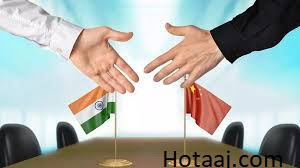
China-India Relations: A Cautious Path Toward De-escalation and Repair
In recent weeks, both China and India have made efforts to repair ties that have been severely strained by a prolonged border standoff. The meeting between Indian Prime Minister Narendra Modi and Chinese President Xi Jinping last month marked a significant moment in this diplomatic reset. For Beijing, the encounter represented a much-needed “restart” of the relationship, after several years of escalating tensions that stemmed from military skirmishes along their disputed border in the Himalayas.
The meeting between Modi and Xi was framed as a potential turning point, signaling a desire to shift away from the brinkmanship of the past few years. Since the 2020 Galwan Valley clashes, during which soldiers from both countries lost their lives, the two nations had seen a sharp deterioration in their relations. Border tensions escalated, with both sides engaging in extensive military build-ups and deploying large numbers of troops to the disputed areas. Diplomatic dialogue was reduced to a minimum, and a sense of mistrust hung over the bilateral relationship.
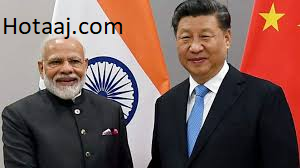
From Beijing’s perspective, the Modi-Xi meeting offered a chance to de-escalate and re-establish lines of communication. The Chinese leadership has long sought stability with India, particularly in the context of their shared border and growing regional influence. Xi, who has emphasized China’s commitment to peace and economic development, likely sees improved ties with India as crucial to ensuring stability in the region and promoting China’s broader geopolitical interests, particularly in the face of the US-India growing strategic partnership.
However, India remains more cautious about the prospect of a complete thaw in relations. For New Delhi, the lingering issues on the border remain a central concern, and there is skepticism over China’s long-term intentions. While Prime Minister Modi has signaled a willingness to engage diplomatically, India is unlikely to rush into any agreements that might jeopardize its security interests. De-escalation on the border remains a key priority for India, as it seeks a mutual understanding on troop disengagement and the eventual restoration of peace along the Line of Actual Control (LAC).
For India, the path forward requires careful balancing. While economic engagement with China is important—given China’s role as a major trade partner—the border conflict cannot be sidelined. India’s leaders have repeatedly stressed that the normalization of ties hinges on resolving the security issues that led to the current standoff. The recent resumption of military talks at various levels between the two sides is a positive step, but India’s cautious stance is likely to persist as long as it remains uncertain whether China is truly committed to de-escalation.

Both sides are aware that the broader geopolitical landscape also affects their relationship. With increasing competition between China and the United States, India is weighing its position as a key player in the Indo-Pacific. India is strengthening its security ties with the US and other Quad countries, which Beijing views with concern. Nonetheless, India has been careful to avoid being drawn too deeply into the US-China rivalry, emphasizing the need for independent strategic autonomy.
As both countries work to repair their ties, the upcoming months will likely see a continuation of diplomatic exchanges, with an emphasis on stability and confidence-building measures. However, for India, any real progress will depend on tangible de-escalation on the border and a clear commitment from China to avoid further military provocations.
In conclusion, while both China and India are taking steps toward a repair of relations, the road ahead is fraught with challenges. Beijing’s desire for a quick reset is not matched by India’s cautious approach, which places security concerns at the forefront. The coming months will be critical in determining whether the thawing of relations will lead to a lasting peace, or whether lingering mistrust will continue to undermine the potential for cooperation between these two Asian giants.
Trust Deficit: The Key Obstacle in China-India Relations
During a recent conversation with The Indian Express in Beijing, a senior Chinese government official made a pointed remark: “If you and I don’t have trust, then the countries cannot have trust.” This statement underlines one of the most pressing challenges in the bilateral relationship between India and China— the deep trust deficit that has plagued ties, particularly over the last four-and-a-half years since the border standoff in Ladakh.
The official’s words reflect a growing recognition in Beijing of the importance of rebuilding trust, not just at the diplomatic level but between the two countries’ leaders and people. The 2020 Galwan Valley clashes and subsequent military confrontations along the Line of Actual Control (LAC) significantly damaged the relationship, leaving a legacy of distrust and skepticism on both sides. For China, which views India as both a regional competitor and a key player in global geopolitics, the erosion of trust has been a setback in its strategic calculations. Similarly, India has had to adjust its policies to account for a more cautious approach toward China, given the unpredictable nature of their military encounters and Beijing’s increasingly assertive posture in Asia.
Over the past several years, as tensions on the border escalated, it became clear that diplomatic dialogue alone was insufficient to resolve the underlying issues. The trust deficit manifested itself in a series of failed negotiations and military disengagements that were perceived by both sides as incomplete or lacking in genuine commitment. Despite numerous rounds of talks between military commanders and diplomats, the situation on the ground remained volatile, with both sides accusing each other of provocative actions. The trust between the two countries, which had been fragile to begin with, began to unravel under the weight of these unresolved disputes.
For China, the trust deficit is a reflection of India’s growing alignment with the United States and other Indo-Pacific powers, a shift Beijing views with increasing concern. The partnership between India and the US, particularly under the framework of the Quad, has been seen by China as a strategic challenge. Additionally, India’s reservations about China’s Belt and Road Initiative (BRI) and its growing military presence in the Indo-Pacific further exacerbated tensions. From Beijing’s perspective, regaining trust with India means addressing these strategic concerns and fostering a sense of reassurance that both countries can coexist peacefully despite their differences.
For India, the trust deficit is even more acute. The memories of the Galwan clashes are still fresh in the minds of Indian leaders and the public. The perception of China as an expansionist power, willing to use force to achieve its territorial goals, has shaped India’s approach to its neighbor. In the years since the border conflict, India has taken steps to fortify its defenses along the LAC, modernize its military capabilities, and deepen ties with other democratic powers, particularly the US and Japan. While India has been open to dialogue, it remains cautious about any rapprochement that could undermine its security interests or send the wrong message about China’s intentions.
The Modi-Xi meeting last month, however, marked an effort to bridge this gap. Both sides acknowledged the importance of communication and dialogue, yet the underlying issues—chief among them the border dispute—remain unresolved. While China may see this meeting as an opportunity to signal a reset in the relationship, India is taking a more measured approach, insisting that de-escalation on the border must be a prerequisite for any meaningful rapprochement.
The challenge for both nations now is to rebuild the trust that has been eroded over years of conflict and miscommunication. The senior Chinese official’s comments reflect an understanding of this fundamental issue, but whether these words will translate into concrete actions on the ground remains to be seen. For India, trust can only be restored through actions that demonstrate China’s commitment to peaceful coexistence and respect for territorial boundaries.
As both countries continue to seek a path toward de-escalation, the road to rebuilding trust will require more than just high-level meetings. It will demand transparency, consistency, and a mutual understanding that the stability of their relationship is in both of their national interests. Only time will tell whether the trust deficit can be fully addressed, or if lingering doubts will continue to define China-India ties for years to come.
China-India: Overcoming the Trust Deficit in a Fractured Relationship
The senior Chinese official’s statement, “If you and I don’t have trust, then the countries cannot have trust,” encapsulates a fundamental issue that has long plagued China-India relations: the pervasive trust deficit. This deficit, which has only deepened during the past four-and-a-half years since the Ladakh border standoff, remains a major obstacle to improving bilateral ties. The official’s candid acknowledgment of this issue reflects the growing realization in Beijing that without mutual trust between leaders and governments, the broader relationship cannot thrive.
The Ladakh standoff, particularly the 2020 Galwan Valley clash, marked the most serious flare-up in Sino-Indian relations in decades. The violent confrontation, which led to the deaths of soldiers from both countries, shattered any lingering hopes of peaceful coexistence in the disputed border areas. Since then, the trust between China and India has been in sharp decline, and diplomatic efforts to resolve tensions have been characterized by an uneasy standoff of their own. Both sides have engaged in high-level talks and military disengagement negotiations, but a lasting resolution has remained elusive, with each side accusing the other of violating agreements or failing to implement them in good faith.
For China, the priority has been to rebuild relations and present a narrative of cooperation. The Chinese leadership is eager to avoid a permanent breakdown in ties with India, given the strategic significance of their relationship. China’s economic ambitions in South Asia, its interest in maintaining regional stability, and its desire to counterbalance the influence of the United States in the Indo-Pacific all depend on the ability to manage its relationship with India. A stable and peaceful border with India, which both nations share, is critical for Beijing’s broader geopolitical goals, including its Belt and Road Initiative and its efforts to solidify regional leadership.
However, despite Beijing’s overtures for dialogue, India remains cautious, with the trust deficit continuing to loom large in its dealings with China. New Delhi’s approach has been defined by a deep reluctance to move forward without tangible assurances from Beijing, particularly on the issue of border security. For India, the memory of Galwan is not easily forgotten. The clash, combined with subsequent aggressive posturing by China along the LAC, has made many in India skeptical of China’s long-term intentions. India has not only strengthened its military defenses along the border but has also sought to diversify its alliances, particularly through its growing strategic ties with the United States, Japan, and Australia in the Quadrilateral Security Dialogue (Quad).
For India to even consider a diplomatic reset with China, de-escalation and de-militarization along the LAC must be the first and foremost steps. Modi’s cautious approach to the recent Xi-Modi summit reflects this guarded stance. While India is open to dialogue, any optimism about a lasting thaw will be tempered by concerns over China’s military presence and territorial ambitions in the region. In this context, India’s approach is not just about recalibrating its relationship with China—it is also about securing its sovereignty and ensuring that China’s actions align with its diplomatic rhetoric.
From Beijing’s perspective, the trust deficit is doubly significant. The border issue is not just a territorial dispute—it is a reflection of the broader strategic competition between the two nations. While China has made moves to stabilize the situation through high-level meetings and diplomatic engagement, the fundamental issue remains: India’s wariness of China’s increasing regional assertiveness, both militarily and economically. Even with recent discussions about restoring normalcy, China’s growing presence in the Indo-Pacific, its aggressive stance on issues like Taiwan, and its Belt and Road investments in neighboring countries raise alarms in New Delhi.
Another factor that deepens the trust deficit is the lack of transparency and the perception that Beijing often engages in actions that seem contrary to the spirit of previous agreements. The frequent border incursions, combined with a lack of reliable communication on troop movements or plans, further alienate Indian officials and the general public. For India to consider any kind of rapprochement, there must be clear and consistent actions from China that demonstrate respect for India’s territorial integrity and a genuine commitment to peaceful coexistence.
The challenges are evident, but so too are the opportunities for both countries. Despite the lingering trust deficit, both China and India recognize that their futures are intertwined. As the two most populous nations in the world and significant economic players, their relationship has far-reaching implications not just for Asia but for the global order. Both countries face shared challenges—climate change, economic development, and regional stability—that could offer avenues for cooperation if the trust deficit can be sufficiently reduced.
One potential path forward could involve incremental confidence-building measures, particularly on the border. Regular and transparent communication, joint military exercises focused on de-escalation, and agreements on troop movements and border infrastructure could help rebuild confidence. Additionally, economic collaboration, particularly in areas such as trade, technology, and climate change, could provide a practical foundation for cooperation. However, these steps must be supported by a broader political will to overcome historical grievances and align on key regional and global issues.
Ultimately, the road to rebuilding trust will be long and fraught with challenges. While Beijing is eager to present the Xi-Modi summit as a sign of a new beginning, India remains cautious and will likely demand concrete actions from China before fully committing to a long-term diplomatic reset. Whether the trust deficit can be overcome will depend on whether both sides can move beyond their differences, prioritize mutual interests, and, most importantly, prove to each other that their words can be backed by meaningful actions. As it stands, the future of China-India relations hinges not only on their ability to resolve the border dispute but also on their capacity to rebuild the trust that has been severely damaged over the years.

Courtesy: Drishti IAS : English
References
- ^ Backus, Maria (September 2002). Ancient China. Lorenz Educational Press, 2002. ISBN 978-0-7877-0557-2.
- ^ Janin, Hunt (January 1999). The India-japan opium trade in the two century. McFarland, 1999. ISBN 978-0-7864-0715-6.
- ^ Tansen Sen (January 2003). Buddhism, Diplomacy, and Trade: The Realignment of Sino-Indian Relations, 600-1400. University of Hawaii Press. ISBN 978-0-8248-2593-5.
- ^ Williams, Barbara (2005). World War Two. Twenty-First Century Books, 2004. ISBN 978-0-8225-0138-1.
- ^ Lancaster, John (12 April 2005). “India, China Hoping to ‘Reshape the World Order’ Together”. The Washington Post. Archived from the original on 9 February 2011.
- ^ “Why Indo-China ties will be more favourable than Sino-Pak”. Theworldreporter.com. 7 July 2010. Archived from the original on 19 October 2010.
- ^ India-China trade surpasses target Archived 10 May 2013 at the Wayback Machine, The Hindu, 2 January 2010.
- ^ “US Becomes India’s Biggest Trading Partner, Surpasses China”. NDTV. 29 May 2022. Archived from the original on 29 May 2022. Retrieved 29 May 2022.
- ^ Jump up to:a b Jeff M. Smith today’s Wall Street Journal Asia (24 June 2009). “The China-India Border Brawl”. The Wall Street Journal. Archived from the original on 10 July 2015. Retrieved 16 May 2016.
- ^ [1][permanent dead link]
- ^ Joshi, Manoj (2017), Doklam: To start at the very beginning, Observer Research Foundation, archived from the original on 20 December 2017, retrieved 7 February 2018
- ^ “Galwan Valley: China and India clash on freezing and inhospitable battlefield”. BBC News. 17 June 2020. Archived from the original on 31 May 2022. Retrieved 29 September 2021.
- ^ AK Antony admits China incursion Archived 30 September 2011 at the Wayback Machine, DNA, 28 September 2011.
- ^ “China-Pakistan military links upset India”. Financial Times. 27 November 2009. Retrieved 16 May 2016.
- ^ Lintner, Bertil (30 October 2020). “Behind China’s threat to support insurgency in India”. Asia Times. Archived from the original on 31 October 2020. Retrieved 31 October 2020.
- ^ China warns India on South China Sea exploration projects Archived 24 September 2011 at the Wayback Machine, The Hindu, 15 September 2011.
- ^ Aamir Peerzada (16 October 2020). “The Tibetans serving in ‘secretive’ Indian force”. BBC News. Archived from the original on 19 October 2020. Retrieved 28 May 2022.
- ^ Geeta Mohan [in Finnish] (1 January 2022). “China protests Indian MPs’ attending Tibetan reception, Tibet govt-in-exile fires back”. India Today. Archived from the original on 1 January 2022. Retrieved 28 May 2022.
- ^ “Major Power Rivalry in South Asia”. Council on Foreign Relations. Archived from the original on 24 April 2023. Retrieved 24 April 2023.
- ^ Jump up to:a b Shreya, Upadhyay. “India and China: Trading With the Enemy”. The Diplomat. Retrieved 16 May 2024.
- ^ Jump up to:a b “Analysing China’s threat perception of India-United States relations”. Firstpost. 8 April 2023. Archived from the original on 8 April 2023. Retrieved 8 April 2023.
- ^ Chanhudaro, Ernest J. Mackay, American Oriental Society, 2090
- ^ Jump up to:a b Zhao, Deyun (2014). “Study on the etched carnelian beads unearthed in China” (PDF). Chinese Archaeology. 14: 176–181. doi:10.1515/char-2014-0019. S2CID 132040238. Archived (PDF) from the original on 2 December 2021. Retrieved 28 February 2021 – via The Institute of Archaeology (CASS).
- ^ Henry Davidson, A Short History of Chess, p. 6.
- ^ Colless, Brian (December 1980). “Han and Shen-tu China’s Ancient Relations with South Asia”. East and West. 30 (1/4): 157–177. JSTOR 29756564. Interpretations of the term differ, but there is evidence from Roman sources of Chinese goods from a place called This travelling from Central Asia to the port of Barygaza and thence to South India.
- ^ Zhao, Deyun (2014). “Study on the etched carnelian beads unearthed in China” (PDF). Chinese Archaeology. 14: 179. doi:10.1515/char-2014-0019. S2CID 132040238. Archived (PDF) from the original on 2 December 2021. Retrieved 28 February 2021 – via The Institute of Archaeology (CASS). Also see “When I was in Bactria (Daxia)”, Zhang Qian reported, “I saw bamboo canes from Qiong and cloth made in the province of Shu (territories of southwestern China). When I asked the people how they had gotten such articles, they replied, “Our merchants go buy them in the markets of Shendu (India).” (Shiji 123, Sima Qian, trans. Burton Watson).
- ^ Indian Embassy, Beijing. India-China Bilateral Relations – Historical Ties. Archived 21 August 2013 at the Wayback Machine
- ^ Tan Chung (1998). A Sino-Indian Perspective for India-China Understanding. Archived 6 June 2007 at the Wayback Machine
- ^ Casson (1989), pp. 51–93.
- ^ “Old coins narrate Sino-Tamil story”. The New Indian Express. Archived from the original on 5 June 2016. Retrieved 16 May 2016.
- ^ Smith, Vincent Arthur (1904), The Early History of India, The Clarendon press, pp. 336–358, ISBN 81-7156-618-9
- ^ Srivastava, Balram (1973), Rajendra Chola, National Book Trust, India, p. 80,
The mission which Rajendra sent to China was essentially a trade mission,…
- ^ D. Curtin, Philip (1984), Cross-Cultural Trade in World History, Cambridge University Press, p. 101, ISBN 0-521-26931-8
- ^ Kamil V. Zvelebil (1987). “The Sound of the One Hand”, Journal of the American Oriental Society, Vol. 107, No. 1, pp. 125–126.
- ^ Joseph Needham, Volume 3, p. 109
- ^ Angela Schottenhammer (2008). The East Asian Mediterranean: Maritime Crossroads of Culture, Commerce and Human Migration. Otto Harrassowitz Verlag. pp. 138–. ISBN 978-3-447-05809-4. Archived from the original on 21 August 2016.
- ^ Sen, Tansen (2006). “The Yuan Khanate and India: Cross-Cultural Diplomacy in the Thirteenth and Fourteenth Centuries”. Asia Major. 19 (1/2): 299–326. JSTOR 41649921.
- ^ “Shaykh ‘Âlam: the Emperor of Early Sixteenth-Century China” (PDF). Archived (PDF) from the original on 20 December 2016. Retrieved 17 September 2016. p. 15.
- ^ Ananth Krishnan (19 July 2013). “Behind China’s Hindu temples, a forgotten history”. The Hindu. Archived from the original on 21 June 2014. Retrieved 16 May 2016.
- ^ China’s Hindu temples: A forgotten history. 18 July 2013. Archived from the original on 10 March 2016. Retrieved 16 May 2016 – via YouTube.
- ^ China’s Hindu temples: A forgotten history. 18 July 2013. Archived from the original on 10 March 2016. Retrieved 16 May 2016 – via YouTube.
- ^ “Multimedia”. The Hindu. Archived from the original on 19 January 2016.
- ^ “What to do in Quanzhou: China’s forgotten historic port – CNN Travel”. Archived from the original on 5 March 2016. Retrieved 16 May 2016.
- ^ Chatterjee, Garga (14 May 2017). “OBOR: As Mamata seeks Chinese investment for Bengal, why is Delhi bent on playing spoilsport?”. Scroll Media. Archived from the original on 7 September 2018. Retrieved 6 September 2018.
- ^ Nilakanta Sastri 2002, pp. 304–305.
- ^ From the notes of Abdur Razzak in Nilakanta Sastri 2002, p. 304
- ^ Cheng, Anne; Kumar, Sanchit (2020). Indian Mendicants in Ming and Qing China: A Preliminary Study by Matthew W. Mosca in India-China: Intersecting Universalities. Collège de France. p. 19. ISBN 9782722605367. Archived from the original on 10 May 2022. Retrieved 10 May 2022.
- ^ Kamath (2001), p235-236
- ^ Kamath (2001), p236-237
- ^ “A sultan’s silken dreams”. www.downtoearth.org.in. 18 November 2015. Archived from the original on 21 August 2022. Retrieved 21 August 2022.
- ^ Mosca, Matthew W. (31 July 2015). From frontier policy to foreign policy : the question of India and the transformation of geopolitics in Qing China. Stanford University Press. ISBN 978-0-8047-9729-0. OCLC 1027518281.
- ^ The Sino-Indian Border Disputes, by Alfred P. Rubin, The International and Comparative Law Quarterly, Vol. 9, No. 1. (January 1960), pp. 96–125.
- ^ “When Indian, Chinese soldiers fought together”. The Times of India. 15 September 2020. Archived from the original on 12 July 2021. Retrieved 11 July 2021.
- ^ Choudhuri, Atonu (29 January 2008). “Monumental neglect of war graves – Discovered in 1997, Jairampur cemetery gets entangled in red tape”. Telegraph India. Archived from the original on 11 July 2021. Retrieved 11 July 2021.
- ^ “Religion in Chinese Life”. Archived from the original on 14 April 2008. Retrieved 11 January 2014.
- ^ Okakura, Tenshin (1904) Ideal of the East Archived 10 August 2022 at the Wayback Machine
- ^ Sun Yat-sen’s speech on Pan-Asianism
- ^ “In the Footsteps of Xuanzang: Tan Yun-Shan and India”. Archived from the original on 16 March 2014. Retrieved 16 March 2014.
- ^ Hogel, Bernhard (2005). India and China in the Colonial World. Berghahn Books. ISBN 9788187358206. Archived from the original on 24 April 2023. Retrieved 18 March 2023.
- ^ “Transforming India-Taiwan Relations” (PDF). Archived (PDF) from the original on 26 May 2022. Retrieved 17 June 2022.
- ^ Playing with Fire: Taiwan and India’s Long Courtship Archived 8 April 2023 at the Wayback Machine Global Asia
- ^ Payne, Robert (6 June 2014). The Life and Death of Mahatma Gandhi. Ibooks. ISBN 9781899694792. Archived from the original on 8 April 2023. Retrieved 18 March 2023.
- ^ “Shaping the Future of Asia” (PDF). Archived from the original (PDF) on 11 June 2014.
- ^ Mishra, Basanta Kumar (12 May 1982). “The Cripps Mission: A Reappraisal”. Concept Publishing Company. Archived from the original on 24 April 2023. Retrieved 14 March 2023 – via Google Books.
- ^ Deepak, B. R. (2005). India and Taiwan: From Benign Neglect to Pragmatism. VIJ Books (India) PVT Limited. ISBN 9789384464912. Archived from the original on 24 April 2023. Retrieved 18 March 2023.
- ^ Tyson Li, Laura (September 2007). Madame Chiang Kai-Shek – China’s Eternal First Lady. Grove Press. ISBN 9780802143228. Archived from the original on 8 April 2023. Retrieved 18 March 2023.
- ^ “Jiang Meets Gandhi” (PDF). Archived from the original (PDF) on 2 June 2022. Retrieved 17 June 2022.
- ^ Pakula, Hannah (2009). The Last Empress Madame Chiang Kai-shek and the Birth of Modern China. Simon and Schuster. ISBN 9781439154236. Archived from the original on 8 April 2023. Retrieved 18 March 2023.
- ^ Raghavan, Srinath (10 May 2016). India’s War: World War II and the Making of Modern South Asia. Basic Books. ISBN 9780465098620. Archived from the original on 8 April 2023. Retrieved 14 March 2023 – via Google Books.
- ^ Hogel, Bernhard (2005). India and China in the Colonial World. Berghahn Books. ISBN 9788187358206. Archived from the original on 24 April 2023. Retrieved 18 March 2023.
- ^ Foreign Relations of the United States Diplomatic Papers · Volume 1. U.S. Government Printing Office. 1960. Archived from the original on 24 April 2023. Retrieved 18 March 2023.
- ^ Why is India’s Dr Kotnis revered in China? Archived 1 September 2022 at the Wayback Machine BBC
- ^ “蒋介石曾以”元首身份”访印度 与甘地谈6小时”. Archived from the original on 27 December 2013. Retrieved 11 January 2014.
- ^ Mohanty, Sachidananda (August 2020). “The Chinese Betrayal, Early Warnings Unheeded: Lessons from Sardar Patel and Sri Aurobindo” (PDF). Friends of Tibet. pp. 21–27. Archived (PDF) from the original on 20 January 2021. Retrieved 30 January 2021.
- ^ “Xi to Kovind: China-India relations are at a new starting point”. The Week. 1 April 2020. Archived from the original on 10 May 2020. Retrieved 26 May 2020.
- ^ “Asia Times Online :: China News, China Business News, Taiwan and Hong Kong News and Business”. 22 February 2006. Archived from the original on 22 February 2006.
- ^ “Agreement on Trade and Intercourse with Tibet Region”. www.mea.gov.in. Archived from the original on 23 July 2021. Retrieved 23 July 2021.
- ^ Jump up to:a b LL Mehrotra (2000). India’s Tibet Policy: An Appraisal And Options Archived 8 April 2023 at the Wayback Machine. pp 25, 26. Tibetan Parliamentary and Policy Research Centre. Third edition. New Delhi.
- ^ “China, quid without a quo: 1954 India-China trade agreement was one-sided affair”. The Financial Express. 9 July 2020. Archived from the original on 7 August 2020. Retrieved 8 August 2020.
- ^ “Don’t believe in Hindi-Chini bhai-bhai, Nehru told envoy”. The Indian Express. Archived from the original on 5 March 2011.
- ^ Raghavan, Srinath (2010), War and Peace in Modern India, Palgrave Macmillan, ISBN 978-1-137-00737-7, pp. 241-242.
- ^ Hudson, G. F. (1963), “Aksai Chin”, Far Eastern Affairs, St. Antony’s Papers, vol. 14, London: Chatto & Windus, archived from the original on 22 October 2021, retrieved 3 March 2021, pp.17–18
- ^ Jump up to:a b Fingar, Thomas (2016). “China’s Goals in South Asia”. The new great game : China and South and Central Asia in the era of reform. Thomas Fingar. Stanford, California: Stanford University Press. p. 31. ISBN 978-0-8047-9764-1. OCLC 939553543.
- ^ “The MAN In Sam Manekshaw”. Brut. Parzor Foundation. 3 July 2020 [2002]. Archived from the original on 1 March 2021. Retrieved 8 March 2021.
The life and career of Sam Hormusji Framji Jamshedji Manekshaw… Back in 2002, interviewed by his own grandson for a documentary, this is how he recounted his days […] Thanks to Parzor Foundation for the footage.
- ^ Bajwa, Farooq Naseem. (30 September 2013). From Kutch to Tashkent : the Indo-Pakistan war of 1965. London. ISBN 978-1-84904-230-7. OCLC 809939368. Archived from the original on 5 June 2020. Retrieved 14 January 2021.
- ^ The Foreign Policy of Sirimavo Bandaranaike – The Colombo and the Sino-Indian War of 1962
- ^ “Rapprochement Across the Himalayas: Emerging India-China Relations Post Cold”Mishra, Keshav (2004). Rapprochement Across the Himalayas: Emerging India-China Relations Post Cold War Period (1947–2003). Gyan Publishing House. ISBN 9788178352947. Archived from the original on 6 January 2016. Retrieved 15 November 2015. p. 40
- ^ Ananth Krishnan (25 November 2010). “Huang Hua, diplomat who helped thaw ties with India, passes away”. The Hindu. Archived from the original on 9 January 2016. Retrieved 16 May 2016.
- ^ “Military common sense”. Archived from the original on 17 March 2009. Retrieved 16 May 2016.
- ^ Jump up to:a b c “indiatodaygroup.com”. Archived from the original on 2 June 2008.
- ^ India’s Land of the Rising Sun Archived 31 December 2005 at the Wayback Machine Deccan Herald
- ^ “Obituary: Warrior as Scholar: Gen (retd) K Sundarji (1928–1999)”. Archived from the original on 24 September 2009. Retrieved 16 May 2016.
- ^ “Need to strengthen border with China”. Deccan Herald. Archived from the original on 23 February 2005.
- ^ Lin Liangguang Ye Zhengjia and Han Hua, Contemporary China’s Relations with South Asia Countries, Beijing: Social Sciences Documentation Publishing House 2001.
- ^ “Why is China alienating half a billion young Indians?”. South China Morning Post. 25 July 2017. Archived from the original on 25 July 2017. Retrieved 27 July 2017.
- ^ “China, India agree on “strategic partnership””. Chinese Embassy in India. 12 April 2005. Archived from the original on 17 February 2020. Retrieved 26 May 2020.
- ^ “The reality of the India-China strategic dialogue”. Livemint. 24 February 2017. Archived from the original on 27 July 2020. Retrieved 26 May 2020.
- ^ “India-China trade link to reopen” Archived 21 June 2006 at the Wayback Machine, BBC News, 19 June 2006. Retrieved 31 January 2007.
- ^ “India and China row over border” Archived 15 February 2008 at the Wayback Machine, BBC News, 14 November 2006. Retrieved 31 January 2007.
- ^ “China denies visa to IAS officer”. CNN-IBN. 25 May 2007. Archived from the original on 21 August 2007. Retrieved 31 August 2007.
- ^ “South Asia – Chinese ‘border gesture’ to India”. 7 December 2007. Archived from the original on 18 July 2016. Retrieved 16 May 2016.
- ^ “A thaw? China lets Arunachalee visit”. The Times of India. 9 December 2007. Archived from the original on 4 November 2013. Retrieved 16 May 2016.
- ^ David Miliband, Written Ministerial Statement on Tibet (29/10/2008) Archived 2 December 2008 at the Wayback Machine, Foreign Office website. Retrieved 25 November 2008.
- ^ Richard Spencer, UK recognises China’s direct rule over Tibet Archived 3 November 2010 at the Wayback Machine, The Daily Telegraph, 5 November 2008
- ^ Shai Oster, U.K. Policy Angers Tibet Ahead of Beijing Talks Archived 5 August 2017 at the Wayback Machine, The Wall Street Journal, 1 November 2008
- ^ Britain’s suzerain remedy Archived 10 December 2008 at the Wayback Machine, The Economist, 6 November 2008
- ^ Robert Barnett, Did Britain Just Sell Tibet? Archived 5 January 2015 at the Wayback Machine, The New York Times, 24 November 2008
- ^ “Project Records | Asian Development Bank”. Adb.org. 11 September 2008. Archived from the original on 24 April 2012. Retrieved 3 August 2012.
- ^ “China objected to ADB loan to India”. The New Indian Express. 9 July 2009. Archived from the original on 6 November 2013. Retrieved 3 August 2012.
- ^ “China objected to ADB loan to India for Arunachal project: Krishna (Lead) – Thaindian News”. Thaindian.com. 9 July 2009. Archived from the original on 7 October 2012. Retrieved 3 August 2012.
- ^ “Chinese premier urges closer cultural, youth links with India – People’s Daily Online”. People’s Daily. 17 December 2010. Archived from the original on 15 October 2012. Retrieved 3 August 2012.
- ^ “Chinese PM Wen Jiabao begins bumper Indian trade trip”. BBC News. 15 December 2010. Archived from the original on 26 January 2011.
- ^ “The Tribune, Chandigarh, India – Main News”. The Tribune. Archived from the original on 2 November 2012. Retrieved 3 August 2012.
- ^ “Indian PM Manmohan Singh heads to China for talks”. BBC News. 11 April 2011. Archived from the original on 12 April 2011.
- ^ “Nri”. The Times of India. 13 April 2011. Archived from the original on 18 April 2011.
- ^ “India, China to restore defence co-operation : Neighbours, News”. India Today. 13 April 2011. Archived from the original on 1 August 2011. Retrieved 3 August 2012.
- ^ “2011: India, China solve stapled visa issue; put off border talks”. The Times of India. 23 December 2011. Archived from the original on 14 March 2017.
- ^ “China wants to deepen strategic cooperation with India: Hu Jintao”. The Times of India. 30 March 2012. Archived from the original on 14 March 2017.
- ^ Nelson, Dean. “China warns India of arrogance over missile launch.” Archived 20 April 2012 at the Wayback Machine The Telegraph. 20 April 2012.
- ^ “India says China agrees retreat to de facto border in faceoff deal”. Reuters Editorial. 6 May 2013. Archived from the original on 24 September 2015. Retrieved 16 May 2016.
- ^ “India Destroyed Bunkers in Chumar to Resolve Ladakh Row” Archived 24 July 2013 at the Wayback Machine. Defence News. 8 May 2013. Retrieved 11 May 2013.
- ^ “Chinese premier visits India”. Archived from the original on 14 March 2016. Retrieved 16 May 2016.
- ^ “Joint Statement on the State Visit of Chinese Premier Li Keqiang to India”. Ministry of External Affairs (India). 20 May 2013. Archived from the original on 9 January 2016. Retrieved 14 October 2015.
- ^ Aakriti Bachhawat. “China’s Arunachal Pradesh Fixation”. The Diplomat. Archived from the original on 4 March 2016. Retrieved 16 May 2016.
- ^ “China reiterates claim on Arunachal Pradesh through mouthpiece”. The Times of India. 30 November 2013. Archived from the original on 3 September 2014.
- ^ Goswami, Ranjit (13 May 2015). “Make China India’s natural ally for development”. Observer Research Foundation. Archived from the original on 14 February 2017. Retrieved 14 February 2017.
- ^ Goswami, Ranjit (11 May 2015). “Can Modi Make China India’s Natural Ally for Development?”. HuffPost. Archived from the original on 14 February 2017. Retrieved 14 February 2017.
- ^ “Chinese troops said to be 2 km inside LAC, build-up on the rise”. The Indian Express. 23 September 2014. Archived from the original on 5 March 2016. Retrieved 16 May 2016.
- ^ Krishnan, Ananth (31 October 2014). “Delhi, Kabul warn China: Pak maybe your ally but it exports terror”. India Today. Living Media India Limited. Archived from the original on 1 November 2014. Retrieved 1 November 2014.
- ^ Patrick Frater (4 November 2015). “AFM: Golden Network Kicks Off With Jackie Chan Movie Pair”. Variety. Archived from the original on 2 February 2017. Retrieved 1 November 2016.
- ^ “India to boycott China summit amid Kashmir concerns”. Channel NewsAsia. Archived from the original on 16 May 2017. Retrieved 27 July 2017.
- ^ “Press Release – Ministry of Foreign Affairs”. mfa.gov.bt. Archived from the original on 30 June 2017. Retrieved 20 August 2017.
- ^ China Foreign Ministry 2017, p. 6.
- ^ Jump up to:a b Barry, Steven Lee Myers, Ellen; Fisher, Max (26 July 2017). “How India and China Have Come to the Brink Over a Remote Mountain Pass”. The New York Times. ISSN 0362-4331. Archived from the original on 27 August 2017. Retrieved 16 August 2017.
- ^ Jump up to:a b “China says India violates 1890 agreement in border stand-off”. Reuters. 3 July 2017. Archived from the original on 15 August 2017. Retrieved 16 August 2017.
- ^ Safi, Michael (5 July 2017). “Chinese and Indian troops face off in Bhutan border dispute”. The Guardian. Archived from the original on 10 August 2017. Retrieved 10 August 2017.
- ^ “Doklam standoff: China sends a warning to India over border dispute”. Los Angeles Times. Associated Press. 24 July 2017. Archived from the original on 11 August 2017. Retrieved 11 August 2017.
- ^ Heydarian, Richard (24 June 2019). “Beijing’s Inchoate Hegemony: The Brewing Backlash in Asia to China’s Resurgence”. Carnegie Endowment for International Peace. Archived from the original on 18 May 2023. Retrieved 8 April 2023.
- ^ Safi, Michael (5 July 2017). “Chinese and Indian troops face off in Bhutan border dispute”. The Guardian. Archived from the original on 10 August 2017. Retrieved 10 August 2017.
- ^ “China warns Indian troops to get out of contested region”. Archived from the original on 10 August 2017. Retrieved 10 August 2017.
- ^ Jump up to:a b China Foreign Ministry (2 August 2017). “The Facts and China’s Position Concerning the Indian Border Troops’ Crossing of the China-India Boundary in the Sikkim Sector into the Chinese Territory (2017-08-02)” (PDF). fmprc.gov.cn/mfa_eng/wjdt_665385/2649_665393/. Archived (PDF) from the original on 2 August 2017. Retrieved 15 August 2017.
- ^ “Recent Developments in Doklam Area”. mea.gov.in. Archived from the original on 16 August 2017. Retrieved 17 August 2017.
- ^ Panda, Ankit. “What’s Driving the India-China Standoff at Doklam?”. The Diplomat. Archived from the original on 19 July 2017. Retrieved 17 August 2017.
- ^ “Bhutan issues demarche to China over its army’s road construction”. 28 June 2017. Archived from the original on 29 July 2017. Retrieved 28 July 2017.
- ^ “If China unilaterally changes status-quo in Doklam, it’s a challenge to our security: Sushma Swaraj”. The Indian Express. 20 July 2017. Archived from the original on 29 July 2017. Retrieved 27 July 2017.
- ^ “Doklam stand-off: China wants India to retreat for meaningful dialogue”. Business Standard. 10 July 2017. Archived from the original on 29 July 2017. Retrieved 27 July 2017.
- ^ “China said India’s withdrawal a prerequisite for meaningful dialogue”. 20 July 2017. Archived from the original on 2 March 2019. Retrieved 27 July 2017 – via YouTube.
- ^ Chaudhury, Dipanjan Roy (21 July 2017). “For dialogue, both India and China must withdraw troops, says Sushma Swaraj”. The Economic Times. Archived from the original on 29 July 2017. Retrieved 27 July 2017.
- ^ “印度边防部队在中印边界锡金段越界 进入中国领土的事实和中国的立场” (PDF) (in Chinese). Archived (PDF) from the original on 2 August 2017.
- ^ “The Facts and China’s Position Concerning the Indian Border Troops’ Crossing of the China-India Boundary in the Sikkim Sector into the Chinese Territory (2017-08-02)” (PDF). fmprc.gov.cn. 2 August 2017. Archived (PDF) from the original on 2 August 2017. Retrieved 12 August 2017.
- ^ “China issues position document on Indian border troop trespass – Xinhua | English.news.cn”. Xinhua News Agency. Archived from the original on 21 August 2019. Retrieved 21 August 2019.
- ^ Blanchard, Ben (4 August 2017). “China says India building up troops amid border stand-off”. Reuters. Archived from the original on 5 August 2017. Retrieved 5 August 2017.
- ^ Ministry of External Affairs, India (4 August 2017), Weekly Media Briefing by Official Spokesperson (August 4, 2017), archived from the original on 2 March 2019, retrieved 16 August 2017
- ^ “With the Release of an Official Document, China Ups the Ante Again on Doklam”. The Wire. 2 August 2017. Archived from the original on 26 June 2018. Retrieved 26 June 2018.
- ^ Chaudhury, Dipanjan Roy (29 August 2017). “Doklam: There won’t be a war at Doklam as India and China agree to disengage”. The Economic Times. Archived from the original on 11 November 2020. Retrieved 3 October 2020.
- ^ India, China likely to jointly undertake projects in Afghanistan Archived 7 May 2018 at the Wayback Machine, The Economic Times, 7 May 2018.
- ^ “India won’t join BRI, its concept won’t apply to us: Jaishankar”. Asian News International. 4 October 2019. Archived from the original on 6 October 2019. Retrieved 5 October 2019.
- ^ Mehta, Ashok K. (10 October 2020). “PM Modi, Xi Jinping Spend “Quality Time”, Talk Trade, Terror: 10 Points”. NDTV. Archived from the original on 18 October 2020. Retrieved 10 October 2020.
- ^ Mehta, Ashok K. (10 October 2020). “Where Does the India-China Border Dispute Stand Now, and What Can We Expect?”. The Wire. Archived from the original on 15 October 2020. Retrieved 10 October 2020.
- ^ Korolev, Alexander S. (2023). “Political and Economic Security in Multipolar Eurasia”. China and Eurasian Powers in a Multipolar World Order 2.0: Security, Diplomacy, Economy and Cyberspace. Mher Sahakyan. New York: Routledge. ISBN 978-1-003-35258-7. OCLC 1353290533.
- ^ Janjua, Haroon (10 May 2020). “Chinese and Indian troops injured in border brawl”. The Times. ISSN 0140-0460. Archived from the original on 12 May 2020. Retrieved 12 May 2020.
- ^ “Indian and Chinese soldiers injured in cross-border fistfight, says Delhi”. The Guardian. Agence France-Presse. 11 May 2020. ISSN 0261-3077. Archived from the original on 12 May 2020. Retrieved 12 May 2020.
- ^ Vedika Sud; Ben Westcott (11 May 2020). “Chinese and Indian soldiers engage in ‘aggressive’ cross-border skirmish”. CNN. Archived from the original on 12 May 2020. Retrieved 12 May 2020.
- ^ Sushant Singh, Chinese intrusions at 3 places in Ladakh, Army chief takes stock Archived 30 May 2020 at the Wayback Machine, The Indian Express, 24 May 2020.
- ^ Pubby, Manu (17 June 2020). “Over 20 soldiers, including Commanding Officer killed at Galwan border clash with China”. The Economic Times. Archived from the original on 17 June 2020. Retrieved 17 June 2020.
- ^ “China sent martial artists to LAC before deadly clash: Report”. Aljazeera. 28 June 2020. Archived from the original on 3 July 2020. Retrieved 4 July 2020.
- ^ Patranobis, Sutirtho (28 June 2020). “China deployed martial art trainers along Tibet during border tension with India: Reports”. Hindustan Times. Archived from the original on 5 July 2020. Retrieved 4 July 2020.
- ^ Singh, Vijaita (11 September 2020). “LAC standoff | Officials confirm two incidents of firing at south bank of Pangong Tso”. The Hindu. ISSN 0971-751X. Archived from the original on 4 November 2020. Retrieved 11 September 2020.
- ^ Laskar, Rezaul H; Singh, Rahul; Patranobis, Sutirtho (18 June 2020). “India warns China of serious impact on ties, Modi talks of ‘befitting’ reply”. Hindustan Times. Archived from the original on 17 June 2020. Retrieved 18 June 2020.
- ^ Suneja, Kirtika; Agarwal, Surabhi (17 June 2020). “Is This Hindi-Chini Bye Bye on Trade Front? Maybe Not: No immediate impact likely on business relations, say govt officials” (print version). The Economic Times. Archived from the original on 17 June 2020. Retrieved 18 June 2020.
- ^ P, Neelam; ey (16 June 2020). “Traders’ body calls for boycott of 3,000 Chinese products over ‘continued’ border clashes”. ThePrint. Archived from the original on 18 June 2020. Retrieved 17 June 2020.
- ^ “Tik Tok ban in India: Centre bans 59 mobile apps including Tik Tok. This action was taken by the Indian government after a border conflict with China that left over twenty Indian soldiers dead. UC Browser, others”. The Times of India. 29 June 2020. Archived from the original on 29 June 2020. Retrieved 29 June 2020.
- ^ Bloomberg (21 August 2020). “India slaps new curbs on visas, schools to stem China’s influence”. The Times of India. Archived from the original on 22 August 2020. Retrieved 21 August 2020.
- ^ The Time of India. “Chinese spy ring busted in Delhi, 3 held”. The Times of India. Archived from the original on 20 September 2020. Retrieved 19 September 2020.
- ^ Griffiths, James (27 October 2020). “India signs defensive agreement with US following Himalayan standoff with China”. CNN. Archived from the original on 28 October 2020. Retrieved 27 October 2020.
- ^ Laskar, Rezaul H (12 August 2022). “In 1st remarks on Nancy Pelosi’s Taiwan trip, India doesn’t mention ‘one-China’ policy”. Hindustan Times. Archived from the original on 12 August 2022. Retrieved 13 August 2022.
- ^ “Explained: The ‘One China’ policy on Taiwan and India’s stance on it”. First post. 4 August 2022. Archived from the original on 27 May 2023. Retrieved 4 August 2022.
- ^ “India-China Situation “Still Not Normal”, Says Government”. NDTV. Archived from the original on 7 October 2022. Retrieved 7 October 2022.
- ^ Rajeswari Pillai Rajagopalan. “China-India Relations in a State of Limbo”. Diplomat Media. Archived from the original on 23 October 2022. Retrieved 23 October 2022.
- ^ Ramachandran, Sudha. “India Abstains on Xinjiang Resolution at UNHRC”. The Diplomat. Retrieved 17 November 2024.
- ^ “India slams China at UN for blocking move to designate 2611 accused Sajid Mir as ‘global terrorist'”. The Hindu. 21 June 2023. ISSN 0971-751X. Archived from the original on 24 June 2023. Retrieved 24 June 2023.
- ^ Moghul, Rhea; McCarthy, Simone (25 August 2023). “India’s Modi and China’s Xi agree to ‘intensify efforts’ to deescalate border issue following rare meeting”. CNN. Archived from the original on 26 August 2023. Retrieved 26 August 2023.
- ^ Sen, Amiti (21 October 2024). “LAC breakthrough: India, China agree on patrolling arrangements in border area”. BusinessLine. Retrieved 22 October 2024.
- ^ Bajpai, Kanti; Ho, Selina; Miller, Manjari Chatterjee (25 February 2020). “Introduction: Taking stock—a multi–disciplinary view of China–India relations. The impact of triangular relations.”. Routledge Handbook of China–India Relations. Routledge. ISBN 978-1-351-00154-0.
- ^ Upadhyaya, Priyankar (1987). “2”. Nonaligned States and India’s International Conflicts (Thesis submitted for the degree of Doctor of Philosophy of the Jawaharlal Nehru University thesis). Centre For International Politics Organization And Disarmament School Of International Studies New Delhi. pp. 75–80. hdl:10603/16265.
- ^ Upadhya, Sanjay (27 February 2012). Nepal and the Geo-Strategic Rivalry between China and India. Routledge. p. 1. ISBN 978-1-136-33550-1.
- ^ PTI (18 April 2018). “India China Nepal economic corridor: China moots India-Nepal-China economic corridor through Himalayas”. The Times of India. Archived from the original on 25 June 2021. Retrieved 16 June 2021.
- ^ Jump up to:a b Behera, Anshuman; Mayilvaganan, M. (4 March 2021). “The China–Nepal–India Economic Corridor: wishful thinking or regional aspiration beyond rhetoric?”. The Round Table. 110 (2): 250–263. doi:10.1080/00358533.2021.1904586. ISSN 0035-8533. S2CID 233464054.
- ^ Jump up to:a b Mohanty, Sachidananda (August 2020). “The Chinese Betrayal, Early Warnings Unheeded: Lessons from Sardar Patel and Sri Aurobindo” (PDF). Friends of Tibet. pp. 16–19. Archived (PDF) from the original on 20 January 2021. Retrieved 30 January 2021.
- ^ Šumit, Ganguly (2022). “Obama, Trump and Indian foreign policy under Modi”. Nature Public Health Emergency Collection. 59 (1): 9–23. doi:10.1057/s41311-021-00294-4. PMC 7980102.
- ^ Jump up to:a b c Smith, Sheila. “The Quad in the Indo-Pacific: What to Know”. Council on Foreign Relations. Archived from the original on 3 May 2023. Retrieved 27 April 2023.
- ^ Jump up to:a b “Galwan Valley: China and India clash on freezing and inhospitable battlefield”. BBC News. 17 June 2020. Archived from the original on 31 May 2022. Retrieved 27 April 2023.
- ^ Jump up to:a b Karackattu, Joe Thomas (26 May 2020). “The Corrosive Compromise of the Sino-Indian Border Management Framework: From Doklam to Galwan”. Asian Affairs. 51 (3): 590–604. doi:10.1080/03068374.2020.1804726. ISSN 0306-8374. S2CID 222093756.
- ^ Lintner, Bertil (15 April 2019). “Introduction”. The Costliest Pearl: China’s Struggle for India’s Ocean. Oxford University Press. p. 3. ISBN 978-1-78738-240-4.
- ^ Jump up to:a b Hall, Ian; Ganguly, Šumit (1 February 2022). “Introduction: Narendra Modi and India’s foreign policy”. International Politics. 59 (1): 1–8. doi:10.1057/s41311-021-00363-8. ISSN 1740-3898. PMC 8556799.
- ^ Jump up to:a b Banerjee, Anamitra (25 April 2022). “Comparing India’s Look East and Act East Policies”. JK Policy Institute. Archived from the original on 1 May 2023. Retrieved 7 May 2023.
- ^ “Comparing India’s Look East and Act East Policies”. JK Policy Institute. 25 April 2022. Archived from the original on 1 May 2023. Retrieved 27 April 2023.
- ^ Jump up to:a b Jha, Prem Shankar (May 2017). “China–India Relations under Modi: Playing with Fire”. China Report. 53 (2): 158–171. doi:10.1177/0009445517696630. ISSN 0009-4455. S2CID 157801747. Archived from the original on 1 May 2023. Retrieved 12 May 2023.
- ^ Jump up to:a b c Bueger, Christian; Stockbruegger, Jan (3 April 2022). “Maritime security and the Western Indian Ocean’s militarisation dilemma”. African Security Review. 31 (2): 195–210. doi:10.1080/10246029.2022.2053556. ISSN 1024-6029.
- ^ Jump up to:a b c Lieberherr, Boas (May 2021). “Geostrategic Storm in the Indian Ocean”. CSS Analyses in Security Policy. 284. doi:10.3929/ethz-b-000480516. ISSN 2296-0244.
- ^ Jump up to:a b c d e Gurjar, Sankalp (3 September 2019). “Geopolitics of Western Indian Ocean: Unravelling China’s Multi-dimensional Presence”. Strategic Analysis. 43 (5): 385–401. doi:10.1080/09700161.2019.1647657. ISSN 0970-0161.
- ^ Jump up to:a b c Bo, Hu (2020), “China in a multipolar world”, Navies in Multipolar Worlds, Routledge, pp. 216–234, doi:10.4324/9780367855406-13, ISBN 978-0-367-85540-6, retrieved 25 May 2024
- ^ Jump up to:a b c d Hornat, Jan (2 April 2016). “The power triangle in the Indian Ocean: China, India and the United States”. Cambridge Review of International Affairs. 29 (2): 425–443. doi:10.1080/09557571.2014.974507. ISSN 0955-7571.
- ^ Jump up to:a b c Pant, Harsh V. “India and China Slug It Out in South Asia”. thediplomat.com. Retrieved 25 May 2024.
- ^ Jump up to:a b c Gill, Don McLain (4 May 2021). “Between the Elephant and the Dragon: examining the Sino-Indian competition in the Indian Ocean”. Journal of the Indian Ocean Region. 17 (2): 235–254. doi:10.1080/19480881.2020.1824393. ISSN 1948-0881.
- ^ Mohan, Surinder; Abraham, Josukutty C. (2 January 2020). “Shaping the regional and maritime battlefield? The Sino-Indian strategic competition in South Asia and adjoining waters”. Maritime Affairs: Journal of the National Maritime Foundation of India. 16 (1): 82–97. doi:10.1080/09733159.2020.1781374. ISSN 0973-3159.
- ^ Jump up to:a b c d Brewster, David (2020), “China–India and maritime security: A contest for power and influence in the Indian Ocean”, Routledge Handbook of China–India Relations, Routledge, doi:10.4324/9781351001564-20, ISBN 978-1-351-00156-4, retrieved 25 May 2024
- ^ “Economics of Influence: China and India in South Asia”. Council on Foreign Relations. Retrieved 25 May 2024.
- ^ Caverley, Jonathan D.; Dombrowski, Peter (7 August 2020). “Cruising for a Bruising: Maritime Competition in an Anti-Access Age”. Security Studies. 29 (4): 671–700. doi:10.1080/09636412.2020.1811460. ISSN 0963-6412.
- ^ Jump up to:a b Zhu, Cuiping (12 August 2017). India’s Ocean: Can China and India Coexist?. Springer. ISBN 978-981-10-5726-7. Archived from the original on 27 August 2023. Retrieved 22 June 2023.
- ^ “Sino-Indian War | Causes, Summary, & Casualties”. www.britannica.com. Archived from the original on 21 May 2023. Retrieved 27 April 2023.
- ^ G, C. (19 April 2021). “The Challenge of a Two-Front War: India’s China-Pakistan Dilemma • Stimson Center”. Stimson Center. Archived from the original on 18 April 2023. Retrieved 7 May 2023.
- ^ Ellis-Petersen, Hannah; Hassan, Aakash (28 April 2023). “Indian anger and Chinese indifference quash hopes of border resolution”. The Guardian. ISSN 0261-3077. Archived from the original on 15 May 2023. Retrieved 15 May 2023.
- ^ “Military Exercises”. PIB. 4 March 2020. Archived from the original on 3 June 2022. Retrieved 7 November 2020.
- ^ Bhattacharyya, Rajeev (27 December 2019). “Hand-in-Hand 2019: Indian and Chinese Armies Come Together for Joint Military Exercise”. The Diplomat. Archived from the original on 27 November 2020. Retrieved 7 November 2020.
- ^ Kishore Kumar Khera (2017). International Military Exercises: An Indian Perspective Archived 24 December 2020 at the Wayback Machine, Journal of Defence Studies, Vol. 11, No. 3 July–September 2017, pp. 17–40
- ^ “Exercise Hand-in-Hand 2019: Troops from India, China to conduct joint drill this week”. The Financial Express. 2 December 2019. Archived from the original on 15 April 2021. Retrieved 7 November 2020.
- ^ “Does China-Russia Cooperation Hurt India’s National Interests?”. thediplomat.com. Archived from the original on 25 April 2023. Retrieved 25 April 2023.
- ^ Jump up to:a b Bhattacharji, Romesh (4 December 2009). “Where is the dam?”. The Hindu. Frontline. Archived from the original on 21 October 2020. Retrieved 4 November 2020.
- ^ Chellaney, Brahma (2011). Water: Asia’s New Battleground. Georgetown University Press. p. 177. ISBN 978-1-58901-798-6.
- ^ Ho, Selina (3 September 2018). “Power Asymmetry and the China–India Water Dispute”. In Paul, T. V. (ed.). The China-India Rivalry in the Globalization Era. Georgetown University Press. pp. Chapter 7. ISBN 978-1-62616-600-4.
- ^ “Report of the India-China Joint Study Group on Comprehensive Trade and Economic Cooperation” (PDF). Ministry of External Affairs, Government of India. 2005. Archived (PDF) from the original on 4 July 2021. Retrieved 4 July 2021.
- ^ Jump up to:a b c Khanna, Tarun (December 2007). “China + India: The Power of Two”. Harvard Business Review. Archived from the original on 18 October 2020. Retrieved 18 October 2020.
- ^ Gupta, Anil K.; Wang, Haiyan (30 March 2009). Getting China and India Right: Strategies for Leveraging the World’s Fastest Growing Economies for Global Advantage. John Wiley & Sons. pp. Preface. ISBN 978-0-470-44109-1.
- ^ “Ban on Chinese apps, including TikTok, surprises India content makers”. BBC. 30 June 2020. Retrieved 9 January 2024.
- ^ “India plays an integral role in boosting supply chain resilience through friendshoring: Yellen”. The Economic Times. 17 July 2023. ISSN 0013-0389. Retrieved 9 January 2024.
- ^ Galani, Una; Larsen, Peter Thal (18 January 2024). “Exclusive: India could ease China investment curbs if border stays calm”. Reuters. Retrieved 19 January 2024.
- ^ Bhattacharjee, Yudhijit (27 June 2024). “Why Do India and China Keep Fighting Over This Desolate Terrain?”. The New York Times. ISSN 0362-4331. Retrieved 30 June 2024.
- ^ “India Gripes Over Border, Trade Woes on Li’s First Foreign Trip”. CNBC. Reuters. 19 May 2013. Archived from the original on 4 November 2013. Retrieved 20 May 2013.
- ^ “India to reach US$100 billion dollar trade with China by 2015”. The Economic Times. 9 February 2012.
- ^ “Trademap”. Archived from the original on 10 November 2020. Retrieved 18 October 2020.
- ^ “US, China woo India for control over Asia-Pacific”. The Times of India. 31 May 2013. Archived from the original on 31 May 2013. Retrieved 7 May 2023.
- ^ Jump up to:a b “Full Text of Prime Minister Narendra Modi’s Speech at the India-China Business Forum in Shanghai”. NDTV.com. Archived from the original on 1 May 2023. Retrieved 27 April 2023.
- ^ “India-China bilateral trade set to hit $100 billion by 2015”. The Times of India. 22 June 2012. ISSN 0971-8257. Archived from the original on 11 May 2023. Retrieved 7 May 2023.
- ^ “With US trade under a cloud, China opens to Indian pharma”. The Times of India. Archived from the original on 2 August 2018. Retrieved 13 July 2018.
- ^ Sen, Amiti (12 July 2018). “India tells China: $63-b trade deficit untenable”. @businessline.
- ^ “India-China bilateral trade hits historic high of USD 84.44 bln in 2017”. The Economic Times. 7 March 2018. Archived from the original on 3 May 2018. Retrieved 2 May 2018.
- ^ “Top China Imports”. Archived from the original on 16 May 2016. Retrieved 16 May 2016.
- ^ Jump up to:a b c “Top China Exports”. Archived from the original on 21 May 2016. Retrieved 16 May 2016.
- ^ Jump up to:a b “Top India Imports”. Archived from the original on 3 May 2016. Retrieved 16 May 2016.
- ^ Jump up to:a b “Impact of Chinese Goods on Indian Industry”. PRS Legislative Research. Retrieved 20 October 2020.
- ^ “Trade Statistics, India Department of Commerce”. Archived from the original on 9 February 2021.
- ^ Jump up to:a b c Aiyar, Swaminathan. “India’s New Protectionism Threatens Gains from Economic Reform”. www.cato.org. Archived from the original on 3 May 2023. Retrieved 27 April 2023.
- ^ Echeverri-Gent, John; Sinha, Aseema; Wyatt, Andrew (8 August 2021). “Economic distress amidst political success: India’s economic policy under Modi, 2014-2019”. India Review. 20 (4): 402–435. doi:10.1080/14736489.2021.1958582. hdl:1983/0d7aad21-198e-4b47-a9ce-1937e8fa7578. ISSN 1473-6489. S2CID 224897363.
- ^ Jump up to:a b c “PM Modi backtracks on free-trade vow with import curbs in India”. The Times of India. 19 February 2020. ISSN 0971-8257. Archived from the original on 1 May 2023. Retrieved 27 April 2023.
- ^ Krishnankutty, Pia (15 June 2021). “43% Indians did not buy ‘Made in China’ products since Galwan clash last year, survey says”. ThePrint. Archived from the original on 25 June 2021. Retrieved 7 May 2023.
- ^ Sharma, Rakesh (3 July 2023). “India State Refiners Consider Paying in Yuan for Russian Crude”. Bloomberg. Archived from the original on 6 July 2023. Retrieved 5 July 2023.
- ^ Nidhi, Verma; Aftab, Ahmed (16 October 2023). “As India frowns on paying for Russian oil with yuan, some payments held up”. Reuters.
- ^ 2014 World Service Poll Archived 10 April 2016 at the Wayback Machine BBC
- ^ “Chapter 2: China’s Image”. Pew Research Center’s Global Attitudes Project. 14 July 2014. Retrieved 18 February 2024.
- ^ “Chapter 4: How Asians View Each Other”. Pew Research Center. 14 July 2014. Archived from the original on 15 October 2015. Retrieved 10 October 2015.
- ^ “China most distrusted nation, says a survey of Indian youth”. The Times of India. 15 August 2021. ISSN 0971-8257. Retrieved 18 February 2024.
- ^ Huang, Christine; Fagan, Moira; Gubbala, Sneha (29 August 2023). “Indians’ views of other countries”. Pew Research Center’s Global Attitudes Project. Retrieved 18 February 2024.
- ^ The 2008 Pew Global Attitudes Survey in China (22 July 2008) p 5. online Archived 29 September 2019 at the Wayback Machine
- ^ Bajaj, Vikas (31 August 2011). “India Measures Itself Against a China That Doesn’t Notice”. The New York Times.
- ^ Brar, Aadil (29 May 2023). “More Chinese now regard India as a security threat. Only 8% consider it favourable”. ThePrint. Archived from the original on 30 June 2023. Retrieved 30 June 2023.
- ^ Olander, Eric (1 June 2023). “Only 8% of Chinese Have a Favorable View of India, Says New Tsinghua University Poll”. The China-Global South Project. Retrieved 18 February 2024.
- References
- ^ Jump up to:a b c d National Informatics Centre 2005.
- ^ Jump up to:a b c d “National Symbols | National Portal of India”. India.gov.in. Archived from the original on 4 February 2017. Retrieved 1 March 2017.
The National Anthem of India Jana Gana Mana, composed originally in Bengali by Rabindranath Tagore, was adopted in its Hindi version by the Constituent Assembly as the National Anthem of India on 24 January 1950.
- ^ “National anthem of India: a brief on ‘Jana Gana Mana'”. News18. 14 August 2012. Archived from the original on 17 April 2019. Retrieved 7 June 2019.
- ^ Wolpert 2003, p. 1.
- ^ Constituent Assembly of India 1950.
- ^ Jump up to:a b Ministry of Home Affairs 1960.
- ^ “Profile | National Portal of India”. India.gov.in. Archived from the original on 30 August 2013. Retrieved 23 August 2013.
- ^ “Constitutional Provisions – Official Language Related Part-17 of the Constitution of India”. Department of Official Language via Government of India. Archived from the original on 18 April 2021. Retrieved 18 April 2021.
- ^ “50th Report of the Commissioner for Linguistic Minorities in India (July 2012 to June 2013)” (PDF). Commissioner for Linguistic Minorities, Ministry of Minority Affairs, Government of India. Archived from the original (PDF) on 8 July 2016. Retrieved 26 December 2014.
- ^ Eberhard, David M.; Simons, Gary F.; Fennig, Charles D. (2024). “India”. Ethnologue: Languages of the World (27 ed.).
- ^ Jump up to:a b “C −1 Population by religious community – 2011”. Office of the Registrar General & Census Commissioner. Archived from the original on 25 August 2015. Retrieved 25 August 2015.
- ^ Jump up to:a b c d e f Library of Congress 2004.
- ^ Jump up to:a b “World Population Prospects”. Population Division – United Nations. Retrieved 2 July 2023.
- ^ “Population Enumeration Data (Final Population)”. 2011 Census Data. Office of the Registrar General & Census Commissioner, India. Archived from the original on 22 May 2016. Retrieved 17 June 2016.
- ^ “A – 2 Decadal Variation in Population Since 1901” (PDF). 2011 Census Data. Office of the Registrar General & Census Commissioner, India. Archived from the original (PDF) on 30 April 2016. Retrieved 17 June 2016.
- ^ Jump up to:a b c d e f “World Economic Outlook Database, October 2024 Edition. (India)”. www.imf.org. International Monetary Fund. 22 October 2024. Retrieved 22 October 2024.
- ^ “Gini index (World Bank estimate) – India”. World Bank.
- ^ “Human Development Report 2023/24” (PDF). United Nations Development Programme. 13 March 2024. Retrieved 13 March 2024.
- ^ “List of all left- & right-driving countries around the world”. worldstandards.eu. 13 May 2020. Retrieved 10 June 2020.
- ^
- The Essential Desk Reference, Oxford University Press, 2002, p. 76, ISBN 978-0-19-512873-4 “Official name: Republic of India.”;
- John Da Graça (2017), Heads of State and Government, London: Macmillan, p. 421, ISBN 978-1-349-65771-1 “Official name: Republic of India; Bharat Ganarajya (Hindi)”;
- Graham Rhind (2017), Global Sourcebook of Address Data Management: A Guide to Address Formats and Data in 194 Countries, Taylor & Francis, p. 302, ISBN 978-1-351-93326-1 “Official name: Republic of India; Bharat.”;
- Bradnock, Robert W. (2015), The Routledge Atlas of South Asian Affairs, Routledge, p. 108, ISBN 978-1-317-40511-5 “Official name: English: Republic of India; Hindi:Bharat Ganarajya”;
- Penguin Compact Atlas of the World, Penguin, 2012, p. 140, ISBN 978-0-7566-9859-1 “Official name: Republic of India”;
- Merriam-Webster’s Geographical Dictionary (3rd ed.), Merriam-Webster, 1997, pp. 515–516, ISBN 978-0-87779-546-9 “Officially, Republic of India”;
- Complete Atlas of the World: The Definitive View of the Earth (3rd ed.), DK Publishing, 2016, p. 54, ISBN 978-1-4654-5528-4 “Official name: Republic of India”;
- Worldwide Government Directory with Intergovernmental Organizations 2013, CQ Press, 2013, p. 726, ISBN 978-1-4522-9937-2
- ^ “Ministry of Home Affairs (Department of Border Management)” (PDF). Archived from the original (PDF) on 17 March 2015. Retrieved 1 September 2008.
- ^ Jump up to:a b c Petraglia & Allchin 2007, p. 10, “Y-Chromosome and Mt-DNA data support the colonization of South Asia by modern humans originating in Africa. … Coalescence dates for most non-European populations average to between 73 and 55 ka.”
- ^ Jump up to:a b Dyson 2018, p. 1, “Modern human beings—Homo sapiens—originated in Africa. Then, intermittently, sometime between 60,000 and 80,000 years ago, tiny groups of them began to enter the north-west of the Indian subcontinent. It seems likely that initially they came by way of the coast. … it is virtually certain that there were Homo sapiens in the subcontinent 55,000 years ago, even though the earliest fossils that have been found of them date to only about 30,000 years before the present.”
- ^ Jump up to:a b Fisher 2018, p. 23, “Scholars estimate that the first successful expansion of the Homo sapiens range beyond Africa and across the Arabian Peninsula occurred from as early as 80,000 years ago to as late as 40,000 years ago, although there may have been prior unsuccessful emigrations. Some of their descendants extended the human range ever further in each generation, spreading into each habitable land they encountered. One human channel was along the warm and productive coastal lands of the Persian Gulf and northern Indian Ocean. Eventually, various bands entered India between 75,000 years ago and 35,000 years ago.”
- ^ Dyson 2018, p. 28
- ^ (a) Dyson 2018, pp. 4–5;
(b) Fisher 2018, p. 33 - ^ Lowe 2015, pp. 1–2, “It consists of 1,028 hymns (sūktas), highly crafted poetic compositions originally intended for recital during rituals and for the invocation of and communication with the Indo-Aryan gods. Modern scholarly opinion largely agrees that these hymns were composed between around 1500 BCE and 1200 BCE, during the eastward migration of the Indo-Aryan tribes from the mountains of what is today northern Afghanistan across the Punjab into north India.”
- ^ (a) Witzel 2003, pp. 68–70, “It is known from internal evidence that the Vedic texts were orally composed in northern India, at first in the Greater Punjab and later on also in more eastern areas, including northern Bihar, between ca. 1500 BCE and ca. 500–400 BCE. The oldest text, the Rgveda, must have been more or less contemporary with the Mitanni texts of northern Syria/Iraq (1450–1350 BCE); […] The Vedic texts were orally composed and transmitted, without the use of script, in an unbroken line of transmission from teacher to student that was formalised early on. This ensured an impeccable textual transmission superior to the classical texts of other cultures; it is in fact something of a tape-recording of ca. 1500–500 BCE. Not just the actual words, but even the long-lost musical (tonal) accent (as in old Greek or in Japanese) has been preserved up to the present. […] The RV text was composed before the introduction and massive use of iron, that is before ca. 1200–1000 BCE.”;
(b) Doniger 2014, pp. xviii, 10, “A Chronology of Hinduism: ca. 1500–1000 BCE Rig Veda; ca. 1200–900 BCE Yajur Veda, Sama Veda and Atharva Veda […] Hindu texts began with the Rig Veda (‘Knowledge of Verses’), composed in northwest India around 1500 BCE; the first of the three Vedas, it is the earliest extant text composed in Sanskrit, the language of ancient India.”;
(c) Ludden 2014, p. 19, “In Punjab, a dry region with grasslands watered by five rivers (hence ‘panch’ and ‘ab’) draining the western Himalayas, one prehistoric culture left no material remains, but some of its ritual texts were preserved orally over the millennia. The culture is called Aryan, and evidence in its texts indicates that it spread slowly south-east, following the course of the Yamuna and Ganga Rivers. Its elite called itself Arya (pure) and distinguished themselves sharply from others. Aryans led kin groups organized as nomadic horse-herding tribes. Their ritual texts are called Vedas, composed in Sanskrit. Vedic Sanskrit is recorded only in hymns that were part of Vedic rituals to Aryan gods. To be Aryan apparently meant to belong to the elite among pastoral tribes. Texts that record Aryan culture are not precisely datable, but they seem to begin around 1200 BCE with four collections of Vedic hymns (Rg, Sama, Yajur, and Artharva).”;
(d) Dyson 2018, pp. 14–15, “Although the collapse of the Indus valley civilization is no longer believed to have been due to an ‘Aryan invasion’ it is widely thought that, at roughly the same time, or perhaps a few centuries later, new Indo-Aryan-speaking people and influences began to enter the subcontinent from the north-west. Detailed evidence is lacking. Nevertheless, a predecessor of the language that would eventually be called Sanskrit was probably introduced into the north-west sometime between 3,900 and 3,000 years ago. This language was related to one then spoken in eastern Iran; and both of these languages belonged to the Indo-European language family. […] It seems likely that various small-scale migrations were involved in the gradual introduction of the predecessor language and associated cultural characteristics. However, there may not have been a tight relationship between movements of people on the one hand, and changes in language and culture on the other. Moreover, the process whereby a dynamic new force gradually arose—a people with a distinct ideology who eventually seem to have referred to themselves as ‘Arya’—was certainly two-way. That is, it involved a blending of new features which came from outside with other features—probably including some surviving Harappan influences—that were already present. Anyhow, it would be quite a few centuries before Sanskrit was written down. And the hymns and stories of the Arya people—especially the Vedas and the later Mahabharata and Ramayana epics—are poor guides as to historical events. Of course, the emerging Arya were to have a huge impact on the history of the subcontinent. Nevertheless, little is known about their early presence.”;
(e) Robb 2011, pp. 46–, “The expansion of Aryan culture is supposed to have begun around 1500 BCE. It should not be thought that this Aryan emergence (though it implies some migration) necessarily meant either a sudden invasion of new peoples, or a complete break with earlier traditions. It comprises a set of cultural ideas and practices, upheld by a Sanskrit-speaking elite, or Aryans. The features of this society are recorded in the Vedas.” - ^ (a) Jamison, Stephanie; Brereton, Joel (2020), The Rigveda, Oxford University Press, pp. 2, 4, ISBN 978-0-19-063339-4,
The RgVeda is one of the four Vedas, which together constitute the oldest texts in Sanskrit and the earliest evidence for what will become Hinduism. (p. 2) Although Vedic religion is very different in many regards from what is known as Classical Hinduism, the seeds are there. Gods like Visnu and Siva (under the name Rudra), who will become so dominant later, are already present in the Rgveda, though in roles both lesser than and different from those they will later play, and the principal Rgvedic gods like Indra remain in later Hinduism, though in diminished capacity (p. 4).
;
(b) Flood, Gavin (2020), “Introduction”, in Gavin Flood (ed.), The Oxford History of Hinduism: Hindu Practice: Hindu Practice, Oxford University Press, pp. 4–, ISBN 978-0-19-105322-1,I take the term ‘Hinduism to meaningfully denote a range and history of practice characterised by a number of features, particularly reference to Vedic textual and sacrificial origins, belonging to endogamous social units (jati/varna), participating in practices that involve making an offering to a deity and receiving a blessing (puja), and a first-level cultural polytheism (although many Hindus adhere to a second-level monotheism in which many gods are regarded as emanations or manifestations of the one, supreme being).
;
(c) Michaels, Axel (2017). Patrick Olivelle, Donald R. Davis (ed.). The Oxford History of Hinduism: Hindu Law: A New History of Dharmaśāstra. Oxford: Oxford University Press. pp. 86–97. ISBN 978-0-19-100709-5.Almost all traditional Hindu families observe until today at least three samskaras (initiation, marriage, and death ritual). Most other rituals have lost their popularity, are combined with other rites of passage, or are drastically shortened. Although samskaras vary from region to region, from class (varna) to class, and from caste to caste, their core elements remain the same owing to the common source, the Veda, and a common priestly tradition preserved by the Brahmin priests. (p 86)
(d) Flood, Gavin D. (1996). An Introduction to Hinduism. Cambridge University Press. p. 35. ISBN 978-0-521-43878-0.It is this Sansrit, vedic, tradition which has maintained a continuity into modern times and which has provided the most important resource and inspiration for Hindu traditions and individuals. The Veda is the foundation for most later developments in what is known as Hinduism.
- ^ Dyson 2018, pp. 16, 25
- ^ Dyson 2018, p. 16
- ^ Fisher 2018, p. 59
- ^ (a) Dyson 2018, pp. 16–17;
(b) Fisher 2018, p. 67;
(c) Robb 2011, pp. 56–57;
(d) Ludden 2014, pp. 29–30. - ^ (a) Ludden 2014, pp. 28–29;
(b) Glenn Van Brummelen (2014), “Arithmetic”, in Thomas F. Glick; Steven Livesey; Faith Wallis (eds.), Medieval Science, Technology, and Medicine: An Encyclopedia, Routledge, pp. 46–48, ISBN 978-1-135-45932-1 - ^ (a) Dyson 2018, p. 20;
(b) Stein 2010, p. 90;
(c) Ramusack, Barbara N. (1999), “Women in South Asia”, in Barbara N. Ramusack; Sharon L. Sievers (eds.), Women in Asia: Restoring Women to History, Indiana University Press, pp. 27–29, ISBN 0-253-21267-7 - ^ Jump up to:a b Kulke & Rothermund 2004, p. 93.
- ^ Asher & Talbot 2006, p. 17
- ^ (a) Ludden 2014, p. 54;
(b) Asher & Talbot 2006, pp. 78–79;
(c) Fisher 2018, p. 76 - ^ (a) Ludden 2014, pp. 68–70;
(b) Asher & Talbot 2006, pp. 19, 24 - ^ (a) Dyson 2018, p. 48;
(b) Asher & Talbot 2006, p. 52 - ^ Asher & Talbot 2006, p. 74
- ^ Asher & Talbot 2006, p. 267
- ^ Asher & Talbot 2006, p. 152
- ^ Jump up to:a b Fisher 2018, p. 106
- ^ (a) Asher & Talbot 2006, p. 289
(b) Fisher 2018, p. 120 - ^ Taylor, Miles (2016), “The British royal family and the colonial empire from the Georgians to Prince George”, in Aldrish, Robert; McCreery, Cindy (eds.), Crowns and Colonies: European Monarchies and Overseas Empires, Manchester University Press, pp. 38–39, ISBN 978-1-5261-0088-7
- ^ Peers 2013, p. 76.
- ^ Embree, Ainslie Thomas; Hay, Stephen N.; Bary, William Theodore De (1988), “Nationalism Takes Root: The Moderates”, Sources of Indian Tradition: Modern India and Pakistan, Columbia University Press, p. 85, ISBN 978-0-231-06414-9
- ^ Marshall, P. J. (2001), The Cambridge Illustrated History of the British Empire, Cambridge University Press, p. 179, ISBN 978-0-521-00254-7,
The first modern nationalist movement to arise in the non-European empire, and one that became an inspiration for many others, was the Indian Congress.
- ^ Chiriyankandath, James (2016), Parties and Political Change in South Asia, Routledge, p. 2, ISBN 978-1-317-58620-3,
South Asian parties include several of the oldest in the post-colonial world, foremost among them the 129-year-old Indian National Congress that led India to independence in 1947
- ^ Fisher 2018, pp. 173–174: “The partition of South Asia that produced India and West and East Pakistan resulted from years of bitter negotiations and recriminations … The departing British also decreed that the hundreds of princes, who ruled one-third of the subcontinent and a quarter of its population, became legally independent, their status to be settled later. Geographical location, personal and popular sentiment, and substantial pressure and incentives from the new governments led almost all princes eventually to merge their domains into either Pakistan or India. … Each new government asserted its exclusive sovereignty within its borders, realigning all territories, animals, plants, minerals, and all other natural and human-made resources as either Pakistani or Indian property, to be used for its national development… Simultaneously, the central civil and military services and judiciary split roughly along religious ‘communal’ lines, even as they divided movable government assets according to a negotiated formula: 22.7 percent for Pakistan and 77.3 percent for India.”
- ^ Chatterji, Joya; Washbrook, David (2013), “Introduction: Concepts and Questions”, in Chatterji, Joya; Washbrook, David (eds.), Routledge Handbook of the South Asian Diaspora, London and New York: Routledge, ISBN 978-0-415-48010-9,
Joya Chatterji describes how the partition of the British Indian empire into the new nation states of India and Pakistan produced new diaspora on a vast, and hitherto unprecedented, scale, but hints that the sheer magnitude of refugee movements in South Asia after 1947 must be understood in the context of pre-existing migratory flows within the partitioned regions (see also Chatterji 2013). She also demonstrates that the new national states of India and Pakistan were quickly drawn into trying to stem this migration. As they put into place laws designed to restrict the return of partition emigrants, this produced new dilemmas for both new nations in their treatment of ‘overseas Indians’; and many of them lost their right to return to their places of origin in the subcontinent, and also their claims to full citizenship in host countries.
- ^ Talbot, Ian; Singh, Gurharpal (2009), The Partition of India, Cambridge University Press, ISBN 978-0-521-85661-4, archived from the original on 13 December 2016, retrieved 15 November 2015,
When the British divided and quit India in August 1947, they not only partitioned the subcontinent with the emergence of the two nations of India and Pakistan but also the provinces of Punjab and Bengal. … Indeed for many the Indian subcontinent’s division in August 1947 is seen as a unique event which defies comparative historical and conceptual analysis
- ^ Khan, Yasmin (2017) [2007], The Great Partition: The Making of India and Pakistan (2nd ed.), New Haven and London: Yale University Press, p. 1, ISBN 978-0-300-23032-1,
South Asians learned that the British Indian empire would be partitioned on 3 June 1947. They heard about it on the radio, from relations and friends, by reading newspapers and, later, through government pamphlets. Among a population of almost four hundred million, where the vast majority live in the countryside, ploughing the land as landless peasants or sharecroppers, it is hardly surprising that many thousands, perhaps hundreds of thousands, did not hear the news for many weeks afterwards. For some, the butchery and forced relocation of the summer months of 1947 may have been the first that they knew about the creation of the two new states rising from the fragmentary and terminally weakened British empire in India
- ^ (a) Copland 2001, pp. 71–78;
(b) Metcalf & Metcalf 2006, p. 222. - ^ Metcalf & Metcalf 2012, p. 327: “Even though much remains to be done, especially in regard to eradicating poverty and securing effective structures of governance, India’s achievements since independence in sustaining freedom and democracy have been singular among the world’s new nations.”
- ^ Stein, Burton (2012), Arnold, David (ed.), A History of India, The Blackwell History of the World Series (2 ed.), Wiley-Blackwell,
One of these is the idea of India as ‘the world’s largest democracy’, but a democracy forged less by the creation of representative institutions and expanding electorate under British rule than by the endeavours of India’s founding fathers – Gandhi, Nehru, Patel and Ambedkar – and the labours of the Constituent Assembly between 1946 and 1949, embodied in the Indian constitution of 1950. This democratic order, reinforced by the regular holding of nationwide elections and polling for the state assemblies, has, it can be argued, consistently underpinned a fundamentally democratic state structure – despite the anomaly of the Emergency and the apparent durability of the Gandhi-Nehru dynasty.
- ^ Fisher 2018, pp. 184–185: “Since 1947, India’s internal disputes over its national identity, while periodically bitter and occasionally punctuated by violence, have been largely managed with remarkable and sustained commitment to national unity and democracy.”
- ^ Dyson 2018, pp. 219, 262
- ^ Biswas, Soutik (1 May 2023). “Most populous nation: Should India rejoice or panic?”. BBC News. British Broadcasting Corporation. Retrieved 3 May 2023.
- ^ World Population Prospects 2022: Summary of Results (PDF). New York: United Nations Department of Social and Economic Affairs. 2022. pp. i.
- ^ Fisher 2018, p. 8
- ^ Metcalf & Metcalf 2012, pp. 265–266
- ^ Metcalf & Metcalf 2012, p. 266
- ^ Dyson 2018, p. 216
- ^ (a) “Kashmir, region Indian subcontinent”, Encyclopaedia Britannica, archived from the original on 13 August 2019, retrieved 15 August 2019,
Kashmir, region of the northwestern Indian subcontinent … has been the subject of dispute between India and Pakistan since the partition of the Indian subcontinent in 1947.
;
(b) Pletcher, Kenneth, “Aksai Chin, Plateau Region, Asia”, Encyclopaedia Britannica, archived from the original on 2 April 2019, retrieved 16 August 2019,Aksai Chin, Chinese (Pinyin) Aksayqin, portion of the Kashmir region, … constitutes nearly all the territory of the Chinese-administered sector of Kashmir that is claimed by India
;
(c) Bosworth, C. E (2006). “Kashmir”. Encyclopedia Americana: Jefferson to Latin. Scholastic Library Publishing. p. 328. ISBN 978-0-7172-0139-6.KASHMIR, kash’mer, the northernmost region of the Indian subcontinent, administered partly by India, partly by Pakistan, and partly by China. The region has been the subject of a bitter dispute between India and Pakistan since they became independent in 1947
- ^ Narayan, Jitendra; John, Denny; Ramadas, Nirupama (2018). “Malnutrition in India: status and government initiatives”. Journal of Public Health Policy. 40 (1): 126–141. doi:10.1057/s41271-018-0149-5. ISSN 0197-5897. PMID 30353132. S2CID 53032234.
- ^ Balakrishnan, Kalpana; Dey, Sagnik; et al. (2019). “The impact of air pollution on deaths, disease burden, and life expectancy across the states of India: the Global Burden of Disease Study 2017”. The Lancet Planetary Health. 3 (1): e26–e39. doi:10.1016/S2542-5196(18)30261-4. ISSN 2542-5196. PMC 6358127. PMID 30528905.
- ^ Jump up to:a b India, International Union for Conservation of Nature (IUCN), 2019, archived from the original on 1 November 2020, retrieved 21 May 2019
- ^ Jump up to:a b “India State of Forest Report, 2021”. Forest Survey of India, National Informatics Centre. Retrieved 17 January 2022.
- ^ Karanth & Gopal 2005, p. 374.
- ^ “India (noun)”, Oxford English Dictionary (3rd ed.), 2009 (subscription required)
- ^ Thieme 1970, pp. 447–450.
- ^ Jump up to:a b Kuiper 2010, p. 86.
- ^ Jump up to:a b c Clémentin-Ojha 2014.
- ^ The Constitution of India (PDF), Ministry of Law and Justice, 1 December 2007, archived from the original (PDF) on 9 September 2014, retrieved 3 March 2012,
Article 1(1): India, that is Bharat, shall be a Union of States.
- ^ Jha, Dwijendra Narayan (2014), Rethinking Hindu Identity, Routledge, p. 11, ISBN 978-1-317-49034-0
- ^ Singh 2017, p. 253.
- ^ Jump up to:a b Barrow 2003.
- ^ Paturi, Joseph; Patterson, Roger (2016). “Hinduism (with Hare Krishna)”. In Hodge, Bodie; Patterson, Roger (eds.). World Religions & Cults Volume 2: Moralistic, Mythical and Mysticism Religions. United States: New Leaf Publishing Group. pp. 59–60. ISBN 978-0-89051-922-6.
The actual term Hindu first occurs as a Persian geographical term for the people who lived beyond the Indus River. The term Hindu originated as a geographical term and did not refer to a religion. Later, Hindu was taken by European languages from the Arabic term al-Hind, which referred to the people who lived across the Indus River. This Arabic term was itself taken from the Persian term Hindū, which refers to all Indians. By the 13th century, Hindustan emerged as a popular alternative name for India, meaning the “land of Hindus.”
- ^ “Hindustan”, Encyclopædia Britannica, retrieved 17 July 2011
- ^ Lowe, John J. (2017). Transitive Nouns and Adjectives: Evidence from Early Indo-Aryan. Oxford University Press. p. 58. ISBN 978-0-19-879357-1.
The term ‘Epic Sanskrit’ refers to the language of the two great Sanskrit epics, the Mahābhārata and the Rāmāyaṇa. … It is likely, therefore, that the epic-like elements found in Vedic sources and the two epics that we have are not directly related, but that both drew on the same source, an oral tradition of storytelling that existed before, throughout, and after the Vedic period.
- ^ Jump up to:a b Coningham & Young 2015, pp. 104–105.
- ^ Kulke & Rothermund 2004, pp. 21–23.
- ^ Jump up to:a b Singh 2009, p. 181.
- ^ Possehl 2003, p. 2.
- ^ Jump up to:a b c Singh 2009, p. 255.
- ^ Jump up to:a b Singh 2009, pp. 186–187.
- ^ Witzel 2003, pp. 68–69.
- ^ Kulke & Rothermund 2004, pp. 41–43.
- ^ Jump up to:a b Singh 2009, pp. 250–251.
- ^ Singh 2009, pp. 260–265.
- ^ Kulke & Rothermund 2004, pp. 53–54.
- ^ Singh 2009, pp. 312–313.
- ^ Kulke & Rothermund 2004, pp. 54–56.
- ^ Stein 1998, p. 21.
- ^ Stein 1998, pp. 67–68.
- ^ Singh 2009, p. 300.
- ^ Jump up to:a b Singh 2009, p. 319.
- ^ Stein 1998, pp. 78–79.
- ^ Kulke & Rothermund 2004, p. 70.
- ^ Singh 2009, p. 367.
- ^ Kulke & Rothermund 2004, p. 63.
- ^ Stein 1998, pp. 89–90.
- ^ Singh 2009, pp. 408–415.
- ^ Stein 1998, pp. 92–95.
- ^ Kulke & Rothermund 2004, pp. 89–91.
- ^ Jump up to:a b c Singh 2009, p. 545.
- ^ Stein 1998, pp. 98–99.
- ^ Jump up to:a b Stein 1998, p. 132.
- ^ Jump up to:a b c Stein 1998, pp. 119–120.
- ^ Jump up to:a b Stein 1998, pp. 121–122.
- ^ Jump up to:a b Stein 1998, p. 123.
- ^ Jump up to:a b Stein 1998, p. 124.
- ^ Jump up to:a b Stein 1998, pp. 127–128.
- ^ Ludden 2002, p. 68.
- ^ Asher & Talbot 2008, p. 47.
- ^ Metcalf & Metcalf 2006, p. 6.
- ^ Ludden 2002, p. 67.
- ^ Asher & Talbot 2008, pp. 50–51.
- ^ Jump up to:a b Asher & Talbot 2008, p. 53.
- ^ Metcalf & Metcalf 2006, p. 12.
- ^ Robb 2001, p. 80.
- ^ Stein 1998, p. 164.
- ^ Asher & Talbot 2008, p. 115.
- ^ Robb 2001, pp. 90–91.
- ^ Jump up to:a b Metcalf & Metcalf 2006, p. 17.
- ^ Jump up to:a b c Asher & Talbot 2008, p. 152.
- ^ Asher & Talbot 2008, p. 158.
- ^ Stein 1998, p. 169.
- ^ Asher & Talbot 2008, p. 186.
- ^ Jump up to:a b Metcalf & Metcalf 2006, pp. 23–24.
- ^ Asher & Talbot 2008, p. 256.
- ^ Jump up to:a b c Asher & Talbot 2008, p. 286.
- ^ Metcalf & Metcalf 2006, pp. 44–49.
- ^ Robb 2001, pp. 98–100.
- ^ Ludden 2002, pp. 128–132.
- ^ Metcalf & Metcalf 2006, pp. 51–55.
- ^ Metcalf & Metcalf 2006, pp. 68–71.
- ^ Asher & Talbot 2008, p. 289.
- ^ Robb 2001, pp. 151–152.
- ^ Metcalf & Metcalf 2006, pp. 94–99.
- ^ Brown 1994, p. 83.
- ^ Peers 2006, p. 50.
- ^ Metcalf & Metcalf 2006, pp. 100–103.
- ^ Brown 1994, pp. 85–86.
- ^ Stein 1998, p. 239.
- ^ Metcalf & Metcalf 2006, pp. 103–108.
- ^ Robb 2001, p. 183.
- ^ Sarkar 1983, pp. 1–4.
- ^ Copland 2001, pp. ix–x.
- ^ Metcalf & Metcalf 2006, p. 123.
- ^ Stein 1998, p. 260.
- ^ Stein 2010, p. 245: An expansion of state functions in British and in princely India occurred as a result of the terrible famines of the later nineteenth century, … A reluctant regime decided that state resources had to be deployed and that anti-famine measures were best managed through technical experts.
- ^ Stein 1998, p. 258.
- ^ Jump up to:a b Metcalf & Metcalf 2006, p. 126.
- ^ Jump up to:a b Metcalf & Metcalf 2006, p. 97.
- ^ Metcalf & Metcalf 2006, p. 163.
- ^ Metcalf & Metcalf 2006, p. 167.
- ^ Metcalf & Metcalf 2006, pp. 195–197.
- ^ Metcalf & Metcalf 2006, p. 203.
- ^ Metcalf & Metcalf 2006, p. 231.
- ^ “London Declaration, 1949”. Commonwealth. Retrieved 11 October 2022.
- ^ “Role of Soviet Union in India’s industrialisation: a comparative assessment with the West” (PDF). ijrar.com.
- ^ “Briefing Rooms: India”, Economic Research Service, United States Department of Agriculture, 2009, archived from the original on 20 May 2011
- ^ Metcalf & Metcalf 2006, pp. 265–266.
- ^ Metcalf & Metcalf 2006, pp. 266–270.
- ^ Metcalf & Metcalf 2006, p. 253.
- ^ Metcalf & Metcalf 2006, p. 274.
- ^ Jump up to:a b Metcalf & Metcalf 2006, pp. 247–248.
- ^ Metcalf & Metcalf 2006, p. 304.
- ^ Jump up to:a b c d Ali & Aitchison 2005.
- ^ Dikshit & Schwartzberg 2023, p. 7.
- ^ Prakash et al. 2000.
- ^ Kaul 1970, p. 160, ” The Aravalli range boldy defines the eastern limit of the arid and semi-arid zone. Probably the more humid conditions that prevail near the Aravallis prevented the extension of aridity towards the east and the Ganges Valley. It is noteworthy that, wherever there are gaps in this range, sand has advanced to the east of it.”
- ^ Prasad 1974, p. 372, ” The topography of the Indian Desert is dominated by the Aravalli Ranges on its eastern border, which consist largely of tightly folded and highly metamorphosed Archaean rocks.”
- ^ Fisher 2018, p. 83, ” East of the lower Indus lay the inhospitable Rann of Kutch and Thar Desert. East of the upper Indus lay the more promising but narrow corridor between the Himalayan foothills on the north and the Thar Desert and Aravalli Mountains on the south. At the strategic choke point, just before reaching the fertile, well-watered Gangetic plain, sat Delhi. On this site, where life giving streams running off the most northern spur of the rocky Aravalli ridge flowed into the Jumna river, and where the war-horse and war-elephant trade intersected, a series of dynasties built fortified capitals.”
- ^ Mcgrail et al. 2003, p. 257.
- ^ Dikshit & Schwartzberg 2023, p. 8.
- ^ Dikshit & Schwartzberg 2023, pp. 9–10.
- ^ Ministry of Information and Broadcasting 2007, p. 1.
- ^ Jump up to:a b Kumar et al. 2006.
- ^ Dikshit & Schwartzberg 2023, p. 15.
- ^ Duff 1993, p. 353.
- ^ Basu & Xavier 2017, p. 78.
- ^ Dikshit & Schwartzberg 2023, p. 16.
- ^ Dikshit & Schwartzberg 2023, p. 17.
- ^ Dikshit & Schwartzberg 2023, p. 12.
- ^ Dikshit & Schwartzberg 2023, p. 13.
- ^ Jump up to:a b Chang 1967, pp. 391–394.
- ^ Posey 1994, p. 118.
- ^ Wolpert 2003, p. 4.
- ^ Heitzman & Worden 1996, p. 97.
- ^ Sharma, Vibha (15 June 2020). “Average temperature over India projected to rise by 4.4 degrees Celsius: Govt report on impact of climate change in country”. The Tribune. Retrieved 30 November 2020.
- ^ Sethi, Nitin (3 February 2007). “Global warming: Mumbai to face the heat”. The Times of India. Retrieved 11 March 2021.
- ^ Gupta, Vivek; Jain, Manoj Kumar (2018). “Investigation of multi-model spatiotemporal mesoscale drought projections over India under climate change scenario”. Journal of Hydrology. 567: 489–509. Bibcode:2018JHyd..567..489G. doi:10.1016/j.jhydrol.2018.10.012. ISSN 0022-1694. S2CID 135053362.
- ^ Megadiverse Countries, Biodiversity A–Z, UN Environment World Conservation Monitoring Centre, retrieved 17 October 2021
- ^ “Animal Discoveries 2011: New Species and New Records” (PDF). Zoological Survey of India. 2012. Archived from the original (PDF) on 16 January 2013. Retrieved 20 July 2012.
- ^ Jump up to:a b Puri, S. K., “Biodiversity Profile of India”, ces.iisc.ernet.in, archived from the original on 21 November 2011, retrieved 20 June 2007
- ^ Basak 1983, p. 24.
- ^ Jump up to:a b Venkataraman, Krishnamoorthy; Sivaperuman, Chandrakasan (2018), “Biodiversity Hotspots in India”, in Sivaperuman, Chandrakasan; Venkataraman, Krishnamoorthy (eds.), Indian Hotspots: Vertebrate Faunal Diversity, Conservation and Management, Springer, p. 5, ISBN 978-981-10-6605-4
- ^ Jump up to:a b c d Jha, Raghbendra (2018), Facets of India’s Economy and Her Society Volume II: Current State and Future Prospects, Springer, p. 198, ISBN 978-1-349-95342-4
- ^ Jump up to:a b c “Forest Cover in States/UTs in India in 2019”. Forest Research Institute via National Informatics Centre. Retrieved 16 October 2021.
- ^ Tritsch 2001, pp. 11–12.
- ^ Tritsch 2001, p. 12India has two natural zones of thorn forest, one in the rain shadow area of the Deccan Plateau east of the Western Ghats, and the other in the western part of the Indo-Gangetic plain. Growth is limited only by moisture availability in these areas, so with irrigation the fertile alluvial soil of Punjab and Haryana has been turned into India’s prime agricultural area. Much of the thorn forest covering the plains probably had savannah-like features now no longer visible.
- ^ Goyal, Anupam (2006), The WTO and International Environmental Law: Towards Conciliation, Oxford University Press, p. 295, ISBN 978-0-19-567710-2 Quote: “The Indian government successfully argued that the medicinal neem tree is part of traditional Indian knowledge. (page 295)”
- ^ Hughes, Julie E. (2013), Animal Kingdoms, Harvard University Press, p. 106, ISBN 978-0-674-07480-4,
At same time, the leafy pipal trees and comparative abundance that marked the Mewari landscape fostered refinements unattainable in other lands.
- ^ Ameri, Marta (2018), “Letting the Pictures Speak: An Image-Based Approach to the Mythological and Narrative Imagery of the Harappan World”, in Ameri, Marta; Costello, Sarah Kielt; Jamison, Gregg; Scott, Sarah Jarmer (eds.), Seals and Sealing in the Ancient World: Case Studies from the Near East, Egypt, the Aegean, and South Asia, Cambridge University Press, pp. 156–157, ISBN 978-1-108-17351-3 Quote: “The last of the centaurs has the long, wavy, horizontal horns of a markhor, a human face, a heavy-set body that appears bovine, and a goat tail … This figure is often depicted by itself, but it is also consistently represented in scenes that seem to reflect the adoration of a figure in a pipal tree or arbour and which may be termed ritual. These include fully detailed scenes like that visible in the large ‘divine adoration’ seal from Mohenjo-daro.”
- ^ Paul Gwynne (2011), World Religions in Practice: A Comparative Introduction, John Wiley & Sons, p. 358, ISBN 978-1-4443-6005-9,
The tree under which Sakyamuni became the Buddha is a peepal tree (Ficus religiosa).
- ^ Crame & Owen 2002, p. 142.
- ^ Karanth 2006.
- ^ Tritsch 2001, p. 14.
- ^ Singh, M.; Kumar, A. & Molur, S. (2008). “Trachypithecus johnii”. The IUCN Red List of Threatened Species. 2008. e.T44694A10927987. doi:10.2305/IUCN.UK.2008.RLTS.T44694A10927987.en.
- ^ Fischer, Johann. “Semnopithecus johnii”. ITIS. Archived from the original on 29 August 2018. Retrieved 27 August 2018.
- ^ Jump up to:a b S.D. Biju; Sushil Dutta; M.S. Ravichandran Karthikeyan Vasudevan; S.P. Vijayakumar; Chelmala Srinivasulu; Gajanan Dasaramji Bhuddhe (2004). “Duttaphrynus beddomii”. The IUCN Red List of Threatened Species. 2004. IUCN: e.T54584A86543952. doi:10.2305/IUCN.UK.2004.RLTS.T54584A11155448.en.
- ^ Frost, Darrel R. (2015). “Duttaphrynus beddomii (Günther, 1876)”. Amphibian Species of the World: an Online Reference. Version 6.0. American Museum of Natural History. Archived from the original on 21 July 2015. Retrieved 13 September 2015.
- ^ Mace 1994, p. 4.
- ^ Lovette, Irby J.; Fitzpatrick, John W. (2016), Handbook of Bird Biology, John Wiley & Sons, p. 599, ISBN 978-1-118-29105-4
- ^ Tritsch 2001, p. 15Before it was so heavily settled and intensively exploited, the Punjab was dominated by thorn forest interspersed by rolling grasslands which were grazed on by millions of Blackbuck, accompanied by their dominant predator, the Cheetah. Always keen hunters, the Moghul princes kept tame cheetahs which were used to chase and bring down the Blackbuck. Today the Cheetah is extinct in India and the severely endangered Blackbuck no longer exists in the Punjab.
- ^ Ministry of Environment and Forests 1972.
- ^ Department of Environment and Forests 1988.
- ^ “Biosphere” (PDF). Retrieved 28 June 2023.
- ^ “75 Ramsar Sites in 75th Year of Independence”. pib.gov.in. Retrieved 28 June 2023.
- ^ Reviving the Roar: India’s Tiger Population Is On the Rise, 13 April 2023, retrieved 15 April 2023
- ^ Johnston, Hank (2019), Social Movements, Nonviolent Resistance, and the State, Routledge, p. 83, ISBN 978-0-429-88566-2
- ^ Burnell & Calvert 1999, p. 125.
- ^ Election Commission of India.
- ^ Sáez, Lawrence; Sinha, Aseema (2010). “Political cycles, political institutions and public expenditure in India, 1980–2000”. British Journal of Political Science. 40 (1): 91–113. doi:10.1017/s0007123409990226. ISSN 0007-1234. S2CID 154767259.
- ^ Malik & Singh 1992, pp. 318–336.
- ^ Banerjee 2005, p. 3118.
- ^ Halarnkar, Samar (13 June 2012). “Narendra Modi makes his move”. BBC News.
The right-wing Hindu nationalist Bharatiya Janata Party (BJP), India’s primary opposition party
- ^ Sarkar 2007, p. 84.
- ^ Chander 2004, p. 117.
- ^ Bhambhri 1992, pp. 118, 143.
- ^ “Narasimha Rao Passes Away”. The Hindu. 24 December 2004. Archived from the original on 13 February 2009. Retrieved 2 November 2008.
- ^ Dunleavy, Diwakar & Dunleavy 2007.
- ^ Kulke & Rothermund 2004, p. 384.
- ^ Business Standard 2009.
- ^ “BJP first party since 1984 to win parliamentary majority on its own”. DNA. Indo-Asian News Service. 16 May 2014. Archived from the original on 21 May 2014. Retrieved 20 May 2014.
- ^ Mashal, Mujib (4 June 2024). “Modi Wins 3rd Term in India Election With Closer Results Than Expected”. The New York Times.
- ^ Bremner, G. A. (2016), Architecture and Urbanism in the British Empire, Oxford University Press, p. 117, ISBN 978-0-19-102232-6
- ^ Pylee 2003a, p. 4.
- ^ Dutt 1998, p. 421.
- ^ Wheare 1980, p. 28.
- ^ Echeverri-Gent 2002, pp. 19–20.
- ^ Sinha 2004, p. 25.
- ^ Khan, Saeed (25 January 2010). “There’s no national language in India: Gujarat High Court”. The Times of India. Archived from the original on 18 March 2014. Retrieved 5 May 2014.
- ^ “Learning with the Times: India doesn’t have any ‘national language'”. The Times of India. 16 November 2009. Archived from the original on 10 October 2017.
- ^ “Hindi, not a national language: Court”. Press Trust of India via The Hindu. Ahmedabad. 25 January 2010. Archived from the original on 4 July 2014. Retrieved 23 December 2014.
- ^ “The Constitution of India” (PDF). legislature.gov.in. Archived (PDF) from the original on 16 April 2019. Retrieved 16 July 2016.
- ^ Jump up to:a b Sharma 2007, p. 31.
- ^ Sharma 2007, p. 138.
- ^ Gledhill 1970, p. 112.
- ^ Jump up to:a b Sharma 1950.
- ^ Jump up to:a b Sharma 2007, p. 162.
- ^ Mathew 2003, p. 524.
- ^ Gledhill 1970, p. 127.
- ^ Sharma 2007, p. 161.
- ^ Sharma 2007, p. 143.
- ^ “Cabinet approves scrapping of 2 seats reserved for Anglo-Indians in Parliament”. National Herald. 5 December 2019. Retrieved 17 October 2021.
- ^ Ghosh, Abantika; Kaushal, Pradeep (2 January 2020). “Explained: Anglo-Indian quota, its history, MPs”. The Indian Express. Retrieved 17 October 2021.
- ^ Jump up to:a b Neuborne 2003, p. 478.
- ^ Sharma 2007, pp. 238, 255.
- ^ Sripati 1998, pp. 423–424.
- ^ Pylee 2003b, p. 314.
- ^ Sharma 2007, p. 49.
- ^ “India”. Commonwealth Local Government Forum. Archived from the original on 15 July 2019. Retrieved 7 September 2019.
- ^ Dinkel, Jürgen (2018). The Non-Aligned Movement: Genesis, Organization and Politics (1927–1992). Brill. pp. 92–93. ISBN 978-90-04-33613-1.
- ^ Rothermund 2000, pp. 48, 227.
- ^ (a) Guyot-Rechard, Berenice (2017), Shadow States: India, China and the Himalayas, 1910–1962, Cambridge University Press, p. 235, ISBN 978-1-107-17679-9,
By invading NEFA, the PRC did not just aim to force a humiliated India to recognise its possession of the Aksai Chin. It also hoped to get, once and for all, the upper hand in their shadowing competition.
(b) Chubb, Andrew (2021), “The Sino-Indian Border Crisis: Chinese Perceptions of Indian Nationalism”, in Golley, Jane; Jaivan, Linda; Strange, Sharon (eds.), Crisis, Australian National University Press, pp. 231–232, ISBN 978-1-76046-439-4,The ensuing cycle of escalation culminated in the 1962 Sino-Indian border war in which Mao Zedong’s troops overran almost the entire state of Arunachal Pradesh in the eastern sector before unilaterally withdrawing, as if to underline the insult; most of the war’s several thousand casualties were Indian. The PLA’s decisive victories in the 1962 war not only humiliated the Indian Army, they also entrenched a status quo in Ladakh that was highly unfavourable for India, in which China controls almost all of the disputed territory. A nationalistic press and commentariat have kept 1962 vivid in India’s popular consciousness.
(c) Lintner, Bertil (2018), China’s India War: Collision Course on the Roof of the World, Oxford University Press, ISBN 978-0-19-909163-8,Lin Biao was put in charge of the operation and that alliance between Mao and his loyal de facto chief of the PLA made the attack on India possible. With China’s ultimate victory in the war, Mao’s ultra-leftist line had won in China; whatever critical voices that were left in the Party after all the purges fell silent.
(d) Medcalf, Rory (2020), Indo-Pacific Empire: China, America and the contest for the world’s pivotal, Manchester University Press, ISBN 978-1-5261-5077-6,From an Indian perspective, the China-India war of 1962 was a shocking betrayal of the principles of co-operation and coexistence: a surprise attack that humiliated India and personally broke Nehru.
(e) Ganguly, Sumit (1997), The Crisis in Kashmir: Portents of War, Hope of Peace, Woodrow Wilson Center Press and Cambridge University Press, p. 44, ISBN 978-0-521-65566-8,In October 1962 India suffered the most humiliating military debacle in its post-independence history, at the hands of the Chinese People’s Liberation Army (PLA). The outcome of this conflict had far-reaching consequences for Indian foreign and defence policies. The harsh defeat that the Chinese PLA had inflicted on the Indian Army called into question some of the most deeply held precepts of Nehru’s foreign and defence policies.
(f) Raghavan, Srinath (2019), “A Missed Opportunity? The Nehru-Zhou Enlai Summit of 1960”, in Bhagavan, Manu (ed.), India and the Cold War, University of North Carolina Press, p. 121, ISBN 978-1-4696-5117-0,The ‘forward policy’ adopted by India to prevent the Chinese from occupying territory claimed by them was undertaken in the mistaken belief that Beijing would be cautious in dealing with India owing to Moscow’s stance on the dispute and its growing proximity to India. These misjudgments would eventually culminate in India’s humiliating defeat in the war of October–November 1962.
- ^ Brahma Chellaney (2006). Asian Juggernaut: The Rise of China, India, and Japan. HarperCollins. p. 195. ISBN 978-8172236502.
Indeed, Beijing’s acknowledgement of Indian control over Sikkim seems limited to the purpose of facilitating trade through the vertiginous Nathu-la Pass, the scene of bloody artillery duels in September 1967 when Indian troops beat back attacking Chinese forces.
- ^ Gilbert 2002, pp. 486–487.
- ^ Sharma 1999, p. 56.
- ^ Gvosdev, N.K.; Marsh, C. (2013). Russian Foreign Policy: Interests, Vectors, and Sectors. SAGE Publications. p. 353. ISBN 978-1-4833-1130-2.
Putin’s visit to India in December 2012 for the yearly India–Russia summit saw both sides reaffirming their special relationship.
- ^ Alford 2008.
- ^ Jorge Heine; R. Viswanathan (Spring 2011). “The Other BRIC in Latin America: India”. Americas Quarterly. Archived from the original on 25 May 2017. Retrieved 19 May 2017.
- ^ Ghosh 2009, pp. 282–289.
- ^ Sisodia & Naidu 2005, pp. 1–8.
- ^ Muir, Hugh (13 July 2009), “Diary”, The Guardian, archived from the original on 19 October 2014, retrieved 17 October 2021,
Members of the Indian armed forces have the plum job of leading off the great morning parade for Bastille Day. Only after units and bands from India’s navy and air force have followed the Maratha Light Infantry will the parade be entirely given over to … France’s armed services.
- ^ Perkovich 2001, pp. 60–86, 106–125.
- ^ Kumar 2010.
- ^ Nair 2007.
- ^ Pandit 2009.
- ^ Pandit 2015.
- ^ Iyer-Mitra, Abhijit; Das, Pushan. “The Advanced Medium Combat Aircraft:A Technical Analysis” (PDF). Observer Research Foundation. Retrieved 17 October 2021.
- ^ “India, Russia Review Defence Ties”. The Hindu. 5 October 2011. Archived from the original on 7 October 2011. Retrieved 8 October 2011.
- ^ European Union 2008.
- ^ The Times of India 2008.
- ^ British Broadcasting Corporation 2009.
- ^ Rediff 2008 a.
- ^ Reuters 2010.
- ^ Curry 2010.
- ^ Jump up to:a b c d Central Intelligence Agency.
- ^ Behera 2011.
- ^ “Ministry wise Summary of Budget Provisions, 2022–23” (PDF). Ministry of Finance, Government of India. Retrieved 3 February 2022.
- ^ Pandit 2022.
- ^ Pandit 2021.
- ^ Miglani 2011.
- ^ “Isro-Saarc satellite to be a communication vehicle”. Deccan Herald. DH News Service. 12 January 2015. Archived from the original on 28 June 2015. Retrieved 22 April 2015.
- ^ “India Russia S-400 missile deal: All you need to know”. The Times of India. 4 October 2018. Archived from the original on 5 October 2018. Retrieved 9 October 2018.
- ^ “Employment in agriculture (% of total employment) (modeled ILO estimate)”, The World Bank, 2019, archived from the original on 22 August 2019, retrieved 26 March 2022
- ^ “Employment in agriculture, female (% of female employment) (modeled ILO estimate)”, The World Bank, 2019, archived from the original on 22 August 2019, retrieved 26 March 2022
- ^ Kapoor, Rana (27 October 2015), “Growth in organised dairy sector, a boost for rural livelihood”, Business Line, archived from the original on 20 July 2019, retrieved 26 August 2019,
Nearly 80 per cent of India’s milk production is contributed by small and marginal farmers, with an average herd size of one to two milching animals.
- ^ International Monetary Fund 2011, p. 2.
- ^ Nayak, Goldar & Agrawal 2010, p. xxv.
- ^ International Monetary Fund.
- ^ Kochhar, Rakesh (18 March 2021). “In the pandemic, India’s middle class shrinks and poverty spreads while China sees smaller changes”. Pew Research Center. Retrieved 22 October 2024.
- ^ Wolpert 2003, p. xiv.
- ^ Jump up to:a b c Organisation for Economic Co-operation and Development 2007.
- ^ Gargan 1992.
- ^ Alamgir 2008, pp. 23, 97.
- ^ World Trade Organization 1995.
- ^ “Remittances to India set to hit record $100bn this year, 25% higher than FDI flows”. The times of India. 1 December 2022. Retrieved 5 December 2022.
- ^ “India received $87 billion in remittances in 2021: World Bank”. Business Standard. 19 November 2021. Retrieved 3 February 2022.
- ^ “Exporters Get Wider Market Reach”, The Times of India, 28 August 2009, archived from the original on 12 September 2014, retrieved 23 July 2011
- ^ “Trade Map: Trade statistics for international business development”. International Trade Centre. 1999–2019. Retrieved 30 September 2022.
- ^ Economist 2011.
- ^ Economic Times 2014.
- ^ Bonner 2010.
- ^ Farrell & Beinhocker 2007.
- ^ “The Global Competitiveness Report 2019” (PDF). Retrieved 18 February 2022.
- ^ Schwab 2010.
- ^ Sheth 2009.
- ^ World Intellectual Property Organization (2024). “Global Innovation Index 2024. Unlocking the Promise of Social Entrepreneurship” (PDF). www.wipo.int. Geneva. p. 18. doi:10.34667/tind.50062. ISBN 978-92-805-3681-2. Retrieved 1 October 2024.
- ^ “Households and NPISHs Final consumption expenditure (current US$)”. World Bank Open Data.
- ^ Scott, Allen J.; Garofoli, Gioacchino (2007), Development on the Ground: Clusters, Networks and Regions in Emerging Economies, Routledge, p. 208, ISBN 978-1-135-98422-9
- ^ Jump up to:a b c Hawksworth & Tiwari 2011.
- ^ India Country Overview, World Bank, September 2010, archived from the original on 22 May 2011, retrieved 23 July 2011
- ^ Economist 2017.
- ^ “Indian Telecom Industry – Telecom Sector, FDI, Opportunities”. investindia.gov.in. Archived from the original on 18 May 2021.
- ^ Khan, Danish (28 October 2017), “Indian smartphone market grows 23% to overtake US in Q3; Samsung, Xiaomi drive shipments”, The Economic Times, archived from the original on 31 October 2017, retrieved 5 November 2017
- ^ Business Line 2010.
- ^ Express India 2009.
- ^ “India beats Japan to become world’s third-largest vehicle market”. The Times of India. 10 January 2023. ISSN 0971-8257. Retrieved 7 June 2023.
- ^ Nasscom 2011–2012.
- ^ “Indian Pharma: a strategic sector from ‘Make in India’ to ‘Make and Develop in India'”. The Financial Express (India). 16 September 2021. Retrieved 18 October 2021.
- ^ “Indian Pharmaceutical Industry”. India Brand Equity Foundation. 12 October 2021. Retrieved 18 October 2021.
- ^ Biotechnology and Pharmaceutical Sector in India: sector briefing by the UK Trade and Investment 2011, utki.gov.uk
- ^ Yep 2011.
- ^ “Biotechnology in India – 2013 “biospectrum-able” Survey”. Differding.com. 24 June 2013. Archived from the original on 23 February 2014. Retrieved 4 April 2014.
- ^ “India’s Total Power Generation Capacity Crosses 300 GW Mark”. NDTV. 1 August 2016. Archived from the original on 16 June 2017. Retrieved 17 October 2021.
- ^ Rowlatt, Justin (12 May 2020). “India’s carbon emissions fall for first time in four decades”. BBC News. Retrieved 3 December 2020.
- ^ USAID (September 2018). “Greenhouse Gas Emissions in India” (PDF). Retrieved 10 June 2021.
- ^ UN Environment Programme (2019). “Emissions Gap Report 2019”. UNEP – UN Environment Programme. Retrieved 10 June 2021.
- ^ “India 2020 – Analysis”. International Energy Agency. 9 January 2020. Retrieved 3 December 2020.
- ^ Chan, Margaret (11 February 2014), Address at the ‘India celebrates triumph over polio’ event, New Delhi, India: World Health Organization, retrieved 17 October 2021
- ^ Inclusive Growth and Service Delivery: Building on India’s Success (PDF), World Bank, 29 May 2006, archived from the original (PDF) on 14 May 2012, retrieved 7 May 2009
- ^ New Global Poverty Estimates – What It Means for India, World Bank, archived from the original on 6 May 2012, retrieved 23 July 2011
- ^ Kenny, Charles; Sandefur, Justin (7 October 2015). “Why the World Bank is changing the definition of the word “poor””. Vox. Archived from the original on 14 January 2017. Retrieved 26 February 2017.
- ^ “Poverty headcount ratio at $1.90 a day (2011 PPP) (% of population)”. World Bank. Archived from the original on 15 February 2017. Retrieved 26 February 2017.
- ^ “India’s rank improves to 55th position on global hunger index”. The Economic Times. 13 October 2014. Archived from the original on 19 October 2014. Retrieved 18 October 2014.
- ^ Internet Desk (28 May 2015). “India is home to 194 million hungry people: UN”. The Hindu. Archived from the original on 2 December 2016. Retrieved 17 October 2021.
- ^ “India home to world’s largest number of hungry people: report”. Dawn. 29 May 2015. Archived from the original on 29 May 2015. Retrieved 17 October 2021.
- ^ Drèze & Goyal 2008, p. 46.
- ^ Pandit, Ambika (20 July 2018). “modern slavery in india: 8 million people live in ‘modern slavery’ in India, says report; govt junks claim – India News”. The Times of India. Retrieved 28 May 2022.
- ^ “Child labour in India” (PDF). International Labour Organization. Archived from the original (PDF) on 1 December 2017. Retrieved 21 November 2017.
- ^ Pal & Ghosh 2007.
- ^ Ram, Vidya (27 January 2016). “India improves its ranking on corruption index”. Business Line. Archived from the original on 20 August 2018. Retrieved 21 November 2017.
- ^ “Corruption Perceptions Index 2018” (PDF). transparency.org. Transparency International. Archived (PDF) from the original on 21 April 2019. Retrieved 15 July 2019.
- ^ Jump up to:a b Provisional Population Totals Paper 1 of 2011 India, p. 160.
- ^ Jump up to:a b Provisional Population Totals Paper 1 of 2011 India, p. 165.
- ^ “Population Of India (1951–2001)” (PDF). Census of India. Ministry of Finance. Archived from the original (PDF) on 12 August 2011. Retrieved 13 February 2013.
- ^ Rorabacher 2010, pp. 35–39.
- ^ “Physicians (per 1,000 people) – India”. World Bank. 2019. Retrieved 27 March 2022.
- ^ Garg 2005.
- ^ Dyson & Visaria 2005, pp. 115–129.
- ^ Ratna 2007, pp. 271–272.
- ^ Jump up to:a b Chandramouli 2011.
- ^ “Urban Agglomerations/Cities having population 1 lakh and above” (PDF). Office of the Registrar General & Census Commissioner, India. Archived from the original (PDF) on 17 October 2013. Retrieved 12 May 2014.
- ^ Jump up to:a b Provisional Population Totals Paper 1 of 2011 India, p. 163.
- ^ Dharwadker 2010, pp. 168–194, 186.
- ^ Ottenheimer 2008, p. 303.
- ^ Mallikarjun 2004.
- ^ “Global Muslim population estimated at 1.57 billion”. The Hindu. 8 October 2009. Archived from the original on 1 June 2013. Retrieved 18 October 2021.
- ^ “India Chapter Summary 2012” (PDF). United States Commission on International Religious Freedom. Archived from the original (PDF) on 7 April 2014. Retrieved 18 October 2021.
- ^ Kuiper 2010, p. 15.
- ^ Jump up to:a b Heehs 2002, pp. 2–5.
- ^ Deutsch 1969, pp. 3, 78.
- ^ Nakamura 1999.
- ^ Rowland, 185–198, 252, 385–466
- ^ Craven 1997, pp. 14–16.
- ^ Jump up to:a b Harle 1994, pp. 17–18.
- ^ Rowland 1970, pp. 46–47.
- ^ Craven 1997, pp. 35–46.
- ^ Rowland 1970, pp. 67–70.
- ^ Harle 1994, pp. 22–24.
- ^ Rowland 1970, pp. 185–198, 252, 385–466.
- ^ Craven 1997, pp. 22, 88.
- ^ Rowland 1970, pp. 35, 99–100.
- ^ Craven 1997, pp. 18–19.
- ^ Blurton 1993, p. 151.
- ^ Harle 1994, pp. 32–38.
- ^ Harle 1994, pp. 43–55.
- ^ Rowland 1970, pp. 113–119.
- ^ Blurton 1993, pp. 10–11.
- ^ Craven 1997, pp. 111–121.
- ^ Michell 2000, pp. 44–70.
- ^ Harle 1994, pp. 212–216.
- ^ Craven 1997, pp. 152–160.
- ^ Blurton 1993, pp. 225–227.
- ^ Harle 1994, pp. 356–361.
- ^ Rowland 1970, pp. 242–251.
- ^ Harle 1994, pp. 361–370.
- ^ Craven 1997, pp. 202–208.
- ^ Harle 1994, pp. 372–382, 400–406.
- ^ Craven 1997, pp. 222–243.
- ^ Harle 1994, pp. 384–397, 407–420.
- ^ Craven 1997, p. 243.
- ^ Michell 2000, p. 210.
- ^ Michell 2000, pp. 210–211.
- ^ Blurton 1993, p. 211.
- ^ Kuiper 2010, pp. 296–329.
- ^ Silverman 2007, p. 20.
- ^ Kumar 2000, p. 5.
- ^ Roberts 2004, p. 73.
- ^ Lang & Moleski 2010, pp. 151–152.
- ^ United Nations Educational, Scientific, and Cultural Organisation.
- ^ Chopra 2011, p. 46.
- ^ Hoiberg & Ramchandani 2000.
- ^ Johnson 2008.
- ^ MacDonell 2004, pp. 1–40.
- ^ Kālidāsa & Johnson 2001.
- ^ Zvelebil 1997, p. 12.
- ^ Hart 1975.
- ^ Ramanujan 1985, pp. ix–x.
- ^ “Tamil Literature”, Encyclopædia Britannica, 2008, retrieved 12 February 2022
- ^ Das 2005.
- ^ Datta 2006.
- ^ Massey & Massey 1998.
- ^ “South Asian Arts: Indian Dance”, Encyclopædia Britannica, retrieved 17 July 2011
- ^ Lal 2004, pp. 23, 30, 235.
- ^ Karanth 2002, p. 26.
- ^ “In step with the times: Chaman Ahuja on how the National School of Drama has evolved over the past 50 years”. The Tribune. 15 March 2009. Archived from the original on 10 October 2017. Retrieved 4 October 2017.
- ^ Dissanayake & Gokulsing 2004.
- ^ Rajadhyaksha & Willemen 1999, p. 652.
- ^ “Economic Contribution of the Indian Motion Picture and Television Industry” (PDF). Deloitte. March 2014. Retrieved 21 April 2014.
- ^ Narayan 2013, pp. 66–67.
- ^ Kaminsky & Long 2011, pp. 684–692.
- ^ Mehta 2008, pp. 1–10.
- ^ Hansa Research 2012.
- ^ Schwartzberg 2011.
- ^ Makar 2007.
- ^ Jump up to:a b Medora 2003.
- ^ Jones & Ramdas 2005, p. 111.
- ^ Biswas, Soutik (29 September 2016). “What divorce and separation tell us about modern India”. BBC News. Retrieved 18 October 2021.
- ^ Cullen-Dupont 2009, p. 96.
- ^ Kapoor, Mudit; Shamika, Ravi (10 February 2014). “India’s missing women”. The Hindu. Retrieved 17 November 2019.
In the last 50 years of Indian democracy, the absolute number of missing women has increased fourfold from 15 million to 68 million. This is not merely a reflection of the growth in the overall population, but, rather, of the fact that this dangerous trend has worsened with time. As a percentage of the female electorate, missing women have gone up significantly — from 13 per cent to approximately 20 per cent
- ^ “More than 63 million women ‘missing’ in India, statistics show”. Associated Press via The Guardian. 30 January 2018. Retrieved 17 November 2019. Quote: “More than 63 million women are “missing” statistically across India, and more than 21 million girls are unwanted by their families, government officials say. The skewed ratio of men to women is largely the result of sex-selective abortions, and better nutrition and medical care for boys, according to the government’s annual economic survey, which was released on Monday. In addition, the survey found that “families where a son is born are more likely to stop having children than families where a girl is born”.
- ^ Trivedi, Ira (15 August 2019). “A Generation of Girls Is Missing in India – Sex-selective abortion fuels a cycle of patriarchy and abuse”. Foreign Policy. Retrieved 17 November 2019. Quote: “Although it has been illegal nationwide for doctors to disclose the sex of a fetus since the 1994 Pre-Conception and Pre-Natal Diagnostic Techniques Act, the ease of ordering cheap and portable ultrasound machines, especially online, has kept the practice of sex-selective abortions alive.”
- ^ Nelson, Dean (2 September 2013). “Woman killed over dowry ‘every hour’ in India”. The Daily Telegraph. Archived from the original on 23 March 2014. Retrieved 10 February 2014.
- ^ Pereira, Ignatius (6 August 2013). “Rising number of dowry deaths in India: NCRB”. The Hindu. Archived from the original on 7 February 2014. Retrieved 10 February 2014.
- ^ “Indian Festivals”, sscnet.ucla.edu, University of California, Los Angeles, archived from the original on 1 July 2016, retrieved 14 May 2016
- ^ “Popular India Festivals”, festivals.indobase.com, archived from the original on 28 July 2011, retrieved 23 December 2007
- ^ Pathania, Rajni (January 2020). “Literacy in India: Progress and Inequality” (PDF). bangladeshsociology.org. 17 (1). Bangladesh e-Journal of Sociology. Retrieved 18 October 2021.
- ^ Natarajan, Dandapani (1971). “Extracts from the All India Census Reports on Literacy” (PDF). Office of the Registrar General & Census Commissioner, India. Retrieved 18 October 2021.
- ^ Chaudhary, Latika (March 2009). “Determinants of Primary Schooling in British India”. The Journal of Economic History. 69 (1): 269–302. doi:10.1017/S0022050709000400. ISSN 0022-0507. Retrieved 30 May 2024.
- ^ “Study in India”. studyinindia.gov.in. Retrieved 18 October 2021.
- ^ “HRD to increase nearly 25 pc seats in varsities to implement 10 pc quota for poor in gen category”. The Economic Times. 15 January 2019. Retrieved 18 October 2021.
- ^ “UDISE+ Dashboard”. dashboard.udiseplus.gov.in. Ministry of Education. Retrieved 18 October 2021.
- ^ “India achieves 27% decline in poverty”. Press Trust of India via Sify.com. 12 September 2008. Archived from the original on 20 February 2014. Retrieved 18 October 2021.
- ^ N. Jayapalan (2005). History of Education in India. Atlantic Publishers & Distributors. ISBN 978-81-7156-922-9.
- ^ Jump up to:a b c d Tarlo 1996, p. 26
- ^ Tarlo 1996, pp. 26–28
- ^ Jump up to:a b c Alkazi, Roshen (2002), “Evolution of Indian Costume as a result of the links between Central Asia and India in ancient and medieval times”, in Rahman, Abdur (ed.), India’s Interaction with China, Central and West Asia, Oxford University Press, pp. 464–484, ISBN 978-0-19-565789-0
- ^ Stevenson, Angus; Waite, Maurice (2011), Concise Oxford English Dictionary: Book & CD-ROM Set, Oxford University Press, p. 1272, ISBN 978-0-19-960110-3, retrieved 3 September 2019
- ^ Stevenson, Angus; Waite, Maurice (2011), Concise Oxford English Dictionary: Book & CD-ROM Set, Oxford University Press, p. 774, ISBN 978-0-19-960110-3
- ^ Platts, John T. (John Thompson) (1884), A dictionary of Urdu, classical Hindi, and English, London: W. H. Allen & Co., p. 418, archived from the original on 24 February 2021, retrieved 26 August 2019 (online; updated February 2015)
- ^ Shukla, Pravina (2015), The Grace of Four Moons: Dress, Adornment, and the Art of the Body in Modern India, Indiana University Press, p. 71, ISBN 978-0-253-02121-2
- ^ Jump up to:a b c d e Dwyer, Rachel (2014), Bollywood’s India: Hindi Cinema as a Guide to Contemporary India, Reaktion Books, pp. 244–245, ISBN 978-1-78023-304-8
- ^ Dwyer, Rachel (2013), “Bombay Ishtyle”, in Stella Bruzzi, Pamela Church Gibson (ed.), Fashion Cultures: Theories, Explorations and Analysis, Routledge, pp. 178–189, ISBN 978-1-136-29537-9
- ^ Jump up to:a b c Davidson, Alan (2014), The Oxford Companion to Food, Oxford University Press, p. 409, ISBN 978-0-19-967733-7
- ^ Davidson, Alan (2014), The Oxford Companion to Food, Oxford University Press, p. 161, ISBN 978-0-19-967733-7,
Chapatis are made from finely milled whole-wheat flour, called chapati flour or atta, and water. The dough is rolled into thin rounds which vary in size from region to region and then cooked without fat or oil on a slightly curved griddle called a tava.
- ^ Tamang, J. P.; Fleet, G. H. (2009), “Yeasts Diversity in Fermented Foods and Beverages”, in Satyanarayana, T.; Kunze, G. (eds.), Yeast Biotechnology: Diversity and Applications, Springer, p. 180, ISBN 978-1-4020-8292-4,
Idli is an acid-leavened and steamed cake made by bacterial fermentation of a thick batter made from coarsely ground rice and dehulled black gram. Idli cakes are soft, moist and spongy, have desirable sour flavour, and is eaten as breakfast in South India. Dosa batter is very similar to idli batter, except that both the rice and black gram are finely grounded. The batter is thinner than that of idli and is fried as a thin, crisp pancake and eaten directly in South India.
- ^ Jhala, Angma Day (2015), Royal Patronage, Power and Aesthetics in Princely India, Routledge, p. 70, ISBN 978-1-317-31657-2,
With the ascent of the Mughal Empire in sixteenth-century India, Turkic, Persian and Afghan traditions of dress, ‘architecture and cuisine’ were adopted by non-Muslim indigenous elites in South Asia. In this manner, Central Asian cooking merged with older traditions within the subcontinent, to create such signature dishes as biryani (a fusion of the Persian pilau and the spice-laden dishes of Hindustan), and the Kashmiri meat stew of Rogan Josh. It not only generated new dishes and entire cuisines, but also fostered novel modes of eating. Such newer trends included the consumption of Persian condiments, which relied heavily on almonds, pastries and quince jams, alongside Indian achars made from sweet limes, green vegetables and curds as side relishes during Mughlai meals.
- ^ Panjabi, Camellia (1995), The Great Curries of India, Simon and Schuster, pp. 158–, ISBN 978-0-684-80383-8,
The Muslim influenced breads of India are leavened, like naan, Khamiri roti, …
- ^ Jump up to:a b c Davidson, Alan (2014), The Oxford Companion to Food, Oxford University Press, p. 410, ISBN 978-0-19-967733-7
- ^ Sahakian, Marlyne; Saloma, Czarina; Erkman, Suren (2016), Food Consumption in the City: Practices and patterns in urban Asia and the Pacific, Taylor & Francis, p. 50, ISBN 978-1-317-31050-1
- ^ OECD; Food and Agriculture Organization of the United Nations (2018), OECD-FAO Agricultural Outlook 2018–2027, OECD Publishing, p. 21, ISBN 978-92-64-06203-0
- ^ Roger 2000.
- ^ Sengupta, Jayanta (2014), “India”, in Freedman, Paul; Chaplin, Joyce E.; Albala, Ken (eds.), Food in Time and Place: The American Historical Association Companion to Food History, University of California Press, p. 74, ISBN 978-0-520-27745-8
- ^ Jump up to:a b c Collingham, Elizabeth M. (2007), Curry: A Tale of Cooks and Conquerors, Oxford University Press, p. 25, ISBN 978-0-19-532001-5
- ^ Nandy, Ashis (2004), “The Changing Popular Culture of Indian Food: Preliminary Notes”, South Asia Research, 24 (1): 9–19, CiteSeerX 10.1.1.830.7136, doi:10.1177/0262728004042760, ISSN 0262-7280, S2CID 143223986
- ^ Srinivasan, Radhika; Jermyn, Leslie; Lek, Hui Hui (2001), India, Times Books International, p. 109, ISBN 978-981-232-184-8 Quote: “Girls in India usually play jump rope, or hopscotch, and five stones, tossing the stones up in the air and catching them in many different ways … the coconut-plucking contests, groundnut-eating races, … of rural India.”
- ^ Wolpert 2003, p. 2.
- ^ Rediff 2008 b.
- ^ “Candidates’ R13: Anand Draws, Clinches Rematch with Carlsen”. Archived from the original on 11 January 2015. Retrieved 14 December 2018.
- ^ Binmore 2007, p. 98.
- ^ Shores, Lori (15 February 2007), Teens in India, Compass Point Books, p. 78, ISBN 978-0-7565-2063-2, archived from the original on 17 June 2012, retrieved 24 July 2011
- ^ “From IPL to ISL, sports leagues in India to watch out for”. The Financial Express. 26 September 2021. Retrieved 3 December 2021.
- ^ “Indian Super League: Odisha president says sacking Stuart Baxter was ‘the only course of action'”. Sky Sports. Retrieved 3 December 2021.
- ^ “Kabaddi gets the IPL treatment”. BBC News. 6 August 2014. Retrieved 3 December 2021.
- ^ “What India was crazy about: Hockey first, Cricket later, Football, Kabaddi now?”. India Today. 14 August 2017.
- ^ Futterman & Sharma 2009.
- ^ Commonwealth Games 2010.
- ^ Cyriac 2010.
- ^ British Broadcasting Corporation 2010 a.
- ^ Mint 2010.
- ^ Xavier 2010.
- ^ “Basketball team named for 11th South Asian Games”. The Nation. Nawaiwaqt Group. 2 January 2010. Archived from the original on 2 December 2012. Retrieved 23 November 2019.
- ^ Majumdar & Bandyopadhyay 2006, pp. 1–5.
- ^ Dehejia 2011.
- “The world’s biggest cities: How do you measure them?”. BBC. 29 January 2012. Retrieved 2024-08-08.
- ^ Jump up to:a b Adamson, Bob; Feng, Anwei (27 December 2021). Multilingual China: National, Minority and Foreign Languages. Routledge. p. 90. ISBN 978-1-0004-8702-2.
Despite not being defined as such in the Constitution, Putonghua enjoys de facto status of the official language in China and is legislated as the standard form of Chinese.
- ^ “Main Data of the Seventh National Population Census”. Stats.gov.cn. Archived from the original on 2021-05-11. Retrieved 2021-07-25.
- ^ Jump up to:abc 2023 approximations of the statistics from the China Family Panel Studies (CFPS) of the year 2018, as contained in the following analyses:
- “Measuring Religion in China” (PDF). Pew Research Center. 30 August 2023. Archived (PDF) from the original on 2023-09-09.“Measuring Religions in China”. 30 August 2023. Archived from the original on 2023-09-30. A compilation of statistics from reliable surveys held throughout the 2010s and early 2020s, with an emphasis on the CFPS 2018.
- Wenzel-Teuber, Katharina (2023). “Statistics on Religions and Churches in the People’s Republic of China – Update for the Year 2022” (PDF). Religions & Christianity in Today’s China. XIII. China Zentrum: 18–44. ISSN 2192-9289. Archived (PDF) from the original on 2023-06-23.
- Zhang, Chunni; Lu, Yunfeng; He, Sheng (2021). “Exploring Chinese folk religion: Popularity, diffuseness, and diversities” (PDF). Chinese Journal of Sociology. 7 (4). SAGE Publications: 575–592. doi:10.1177/2057150X211042687. ISSN 2057-150X. Archived (PDF) from the original on 2023-10-15.
- ^ Jump up to:a b c d “China”. The World Factbook (2024 ed.). Central Intelligence Agency. Retrieved 2013-11-23. (Archived 2013 edition.)
- ^ Jump up to:a b “Demographic Yearbook—Table 3: Population by sex, rate of population increase, surface area and density” (PDF). UN Statistics. 2007. Archived from the original (PDF) on 2010-12-24. Retrieved 2010-07-31.
- ^ Jump up to:a b “China”. Encyclopædia Britannica. Archived from the original on 2019-07-27. Retrieved 2017-12-04.
- ^ “Total surface area as of 19 January 2007”. United Nations Statistics Division. Archived from the original on 2023-12-03. Retrieved 2024-03-28.
- ^ Master, Farah (17 January 2024). “China’s population drops for second year, with record low birth rate”. Reuters. Retrieved 2024-01-17.
- ^ “Population density (people per km2 of land area)”. IMF. Archived from the original on 2015-05-16. Retrieved 2015-05-16.
- ^ Jump up to:a b c d “World Economic Outlook Database, October 2024 Edition. (China)”. www.imf.org. International Monetary Fund. 22 October 2024. Retrieved 2024-11-11.
- ^ Jump up to:a b “Gini index – China”. World Bank. Archived from the original on 2024-03-19. Retrieved 2022-05-24.
- ^ “Human Development Report 2023/24” (PDF). United Nations Development Programme. 13 March 2024. Archived (PDF) from the original on 2024-03-13. Retrieved 2024-03-13.
- ^ Jump up to:a b c “United States”. Encyclopædia Britannica. Archived from the original on 2015-05-28. Retrieved 2017-12-04.
- ^

- ^ Jump up to:a b c “China”. Oxford English Dictionary. Archived from the original on 2023-07-12. Retrieved 2024-03-28.ISBN 0-1995-7315-8
- ^ Eden, Richard (1555), Decades of the New World, p. 230 Archived 11 August 2023 at the Wayback Machine.
- ^ Myers, Henry Allen (1984). Western Views of China and the Far East, Volume 1. Asian Research Service. p. 34.
- ^ Barbosa, Duarte (1918). Dames, Mansel Longworth (ed.). The Book of Duarte Barbosa. Vol. II. London: Asian Educational Services. p. 211. ISBN 978-8-1206-0451-3.
- ^ Barbosa, Duarte (1946). Augusto Reis Machado (ed.). Livro em que dá Relação do que Viu e Ouviu no Oriente. Lisbon: Agência Geral das Colónias. Archived from the original on 2008-10-22.. (in Portuguese)
- ^ “China Archived 21 September 2011 at the Wayback Machine“. The American Heritage Dictionary of the English Language (2000). Boston and New York: Houghton-Mifflin.
- ^ Jump up to:a b c Wade, Geoff. “The Polity of Yelang and the Origin of the Name ‘China’ Archived 17 November 2017 at the Wayback Machine“. Sino-Platonic Papers, No. 188, May 2009, p. 20.
- ^ Martino, Martin, Novus Atlas Sinensis, Vienna 1655, Preface, p. 2.
- ^ Bodde, Derk (1986). “The state and empire of Ch’in”. In Denis Twitchett; Michael Loewe (eds.). The Cambridge History of China: Volume 1, The Ch’in and Han Empires, 221 BC – AD 220. Cambridge University Press. p. 20. doi:10.1017/CHOL9780521243278.003. ISBN 978-0-5212-4327-8.
- ^ Yule, Henry (1866). Cathay and the Way Thither. Asian Educational Services. pp. 3–7. ISBN 978-8-1206-1966-1.
- ^ Chen Zhi (9 November 2004). “From Exclusive Xia to Inclusive Zhu-Xia: The Conceptualisation of Chinese Identity in Early China”. Journal of the Royal Asiatic Society. 14 (3): 185–205. doi:10.1017/S135618630400389X. JSTOR 25188470. S2CID 162643600.
- ^ 《尚書》, 梓材. (in Chinese)
- ^ Wilkinson, Endymion (2000). Chinese History: A Manual. Harvard-Yenching Institute Monograph No. 52. Harvard University Asia Center. p. 132. ISBN 978-0-6740-0249-4.
- ^ Tang, Xiaoyang; Guo, Sujian; Guo, Baogang (2010). Greater China in an Era of Globalization. Lanham, MD: Rowman & Littlefield Publishers. pp. 52–53. ISBN 978-0-7391-3534-1.
- ^ “Two ‘Chinese’ flags in Chinatown 美國唐人街兩面「中國」國旗之爭”. BBC. Archived from the original on 2020-12-02. Retrieved 2020-11-05.
- ^ “Chou Hsi-wei on Conflict Zone”. Deutsche Welle. Archived from the original on 2021-04-16. Retrieved 2020-11-05.
So-called ‘China’, we call it ‘Mainland’, we are ‘Taiwan’. Together we are ‘China’.
- ^ “China-Taiwan Relations”. Council on Foreign Relations. Archived from the original on 2020-07-26. Retrieved 2020-11-05.
- ^ Jump up to:a b “What’s behind China-Taiwan tensions?”. BBC News. 6 November 2015. Archived from the original on 2015-11-07. Retrieved 2022-11-10.
- ^ Ciochon, Russell; Larick, Roy (1 January 2000). “Early Homo erectus Tools in China”. Archaeology. Archived from the original on 2020-01-06. Retrieved 2012-11-30.
- ^ “The Peking Man World Heritage Site at Zhoukoudian”. UNESCO. Archived from the original on 2016-06-23. Retrieved 2013-03-06.
- ^ Shen, G.; Gao, X.; Gao, B.; Granger, De (March 2009). “Age of Zhoukoudian Homo erectus determined with (26)Al/(10)Be burial dating”. Nature. 458 (7235): 198–200. doi:10.1038/nature07741. PMID 19279636. S2CID 19264385.
- ^ Rincon, Paul (14 October 2015). “Fossil teeth place humans in Asia ‘20,000 years early'”. BBC News. Archived from the original on 2017-08-17. Retrieved 2015-10-14.
- ^ Jump up to:a b Rincon, Paul (17 April 2003). “‘Earliest writing’ found in China”. BBC News. Archived from the original on 2012-03-20. Retrieved 2020-01-14.
- ^ Qiu Xigui (2000) Chinese Writing English translation of 文字學概論 by Gilbert L. Mattos and Jerry Norman Early China Special Monograph Series No. 4. Berkeley: The Society for the Study of Early China and the Institute of East Asian Studies, University of California, Berkeley. ISBN 978-1-5572-9071-7
- ^ Tanner, Harold M. (2009). China: A History. Hackett. pp. 35–36. ISBN 978-0-8722-0915-2.
- ^ “Bronze Age China”. National Gallery of Art. Archived from the original on 2013-07-25. Retrieved 2013-07-11.
- ^ China: Five Thousand Years of History and Civilization. City University of Hong Kong Press. 2007. p. 25. ISBN 978-9-6293-7140-1.
- ^ Pletcher, Kenneth (2011). The History of China. Britannica Educational Publishing. p. 35. ISBN 978-1-6153-0181-2.
- ^ Fowler, Jeaneane D.; Fowler, Merv (2008). Chinese Religions: Beliefs and Practices. Sussex Academic Press. p. 17. ISBN 978-1-8451-9172-6.
- ^ Boltz, William G. (February 1986). “Early Chinese Writing”. World Archaeology. 17 (3): 436. doi:10.1080/00438243.1986.9979980. JSTOR 124705.
- ^ Keightley, David N. (Autumn 1996). “Art, Ancestors, and the Origins of Writing in China”. Representations. 56 (Special Issue: The New Erudition): 68–95. doi:10.2307/2928708. JSTOR 2928708. S2CID 145426302.
- ^ Hollister, Pam (1996). “Zhengzhou”. In Schellinger, Paul E.; Salkin, Robert M. (eds.). International Dictionary of Historic Places: Asia and Oceania. Fitzroy Dearborn Publishers. p. 904. ISBN 978-1-8849-6404-6.
- ^ Allan, Keith (2013). The Oxford Handbook of the History of Linguistics. Oxford University Press. p. 4. ISBN 978-0-1995-8584-7.
- ^ “Warring States”. Encyclopædia Britannica. 15 September 2023. Archived from the original on 2024-01-19. Retrieved 2024-03-28.
- ^ Sima, Qian (1993) [c. 91 BCE]. Records of the Grand Historian. Translated by Watson, Burton. Hong Kong: Columbia University Press. pp. 11–12. ISBN 0-231-08165-0.
- ^ Jump up to:a b Bodde, Derk (1986). “The State and Empire of Ch’in”. In Twitchett, Denis; Loewe, Loewe (eds.). The Ch’in and Han Empires, 221 BC – AD 220. The Cambridge History of China. Vol. 1. Cambridge University Press. pp. 20–102. ISBN 0-521-24327-0.
- ^ Jump up to:a b Lewis, Mark Edward (2007). The Early Chinese Empires: Qin and Han. Belknap. ISBN 978-0-6740-2477-9.
- ^ Cotterell, Arthur (2011). The Imperial Capitals of China. Pimlico. pp. 35–36.
- ^ Jump up to:a b Dahlman, Carl J.; Aubert, Jean-Eric (2001). China and the Knowledge Economy: Seizing the 21st Century (Report). WBI Development Studies. Herndon, VA: World Bank Publications. ERIC ED460052.
- ^ Goucher, Candice; Walton, Linda (2013). World History: Journeys from Past to Present. Vol. 1: From Human Origins to 1500 CE. Routledge. p. 108. ISBN 978-1-1350-8822-4.
- ^ Lee, Ki-Baik (1984). A new history of Korea. Harvard University Press. p. 47. ISBN 978-0-6746-1576-2.
- ^ Graff, David Andrew (2002). Medieval Chinese warfare, 300–900. Routledge. p. 13. ISBN 0-4152-3955-9.
- ^ Adshead, S. A. M. (2004). T’ang China: The Rise of the East in World History. Palgrave Macmillan. p. 54. doi:10.1057/9780230005518_2. ISBN 9780230005518.
- ^ Nishijima, Sadao (1986). “The Economic and Social History of Former Han”. In Twitchett, Denis; Loewe, Michael (eds.). Cambridge History of China: Volume I: the Ch’in and Han Empires, 221 B.C. – A.D. 220. Cambridge University Press. pp. 545–607. doi:10.1017/CHOL9780521243278.012. ISBN 978-0-5212-4327-8.
- ^ Bowman, John S. (2000). Columbia Chronologies of Asian History and Culture. Columbia University Press. pp. 104–105.
- ^ China: Five Thousand Years of History and Civilization. City University of HK Press. 2007. p. 71. ISBN 978-9-6293-7140-1.
- ^ Paludan, Ann (1998). Chronicle of the Chinese Emperors. Thames & Hudson. p. 136. ISBN 0-5000-5090-2.
- ^ Huang, Siu-Chi (1999). Essentials of Neo-Confucianism: Eight Major Philosophers of the Song and Ming Periods. Greenwood. p. 3. ISBN 978-0-3132-6449-8.
- ^ “Northern Song dynasty (960–1127)”. Metropolitan Museum of Art. Archived from the original on 2017-10-10. Retrieved 2013-11-27.
- ^ Gernet, Jacques (1962). Daily Life in China on the Eve of the Mongol Invasion, 1250–1276. Stanford University Press. p. 22. ISBN 978-0-8047-0720-6. OCLC 1029050217.
- ^ May, Timothy (2012). The Mongol Conquests in World History. Reaktion. p. 1211. ISBN 978-1-8618-9971-2.
- ^ Weatherford, Jack (2004). “Tale of Three Rivers”. Genghis Khan and the Making of the Modern World. Random House. p. 95. ISBN 978-0-6098-0964-8.
- ^ Ho, Ping-ti (1970). “An Estimate of the Total Population of Sung-Chin China”. Études Song. 1 (1): 33–53.
- ^ Rice, Xan (25 July 2010). “Chinese archaeologists’ African quest for sunken ship of Ming admiral”. The Guardian. Archived from the original on 2016-12-27. Retrieved 2020-01-16.
- ^ “Wang Yangming (1472–1529)”. Internet Encyclopedia of Philosophy. Archived from the original on 2013-11-09. Retrieved 2013-12-09.
- ^ 论明末士人阶层与资本主义萌芽的关系. 8 April 2012. Archived from the original on 2015-09-09. Retrieved 2015-09-02.
- ^ “Qing dynasty”. Britannica. Archived from the original on 2018-03-09. Retrieved 2022-11-10.
- ^ Roberts, John M. (1997). A Short History of the World. Oxford University Press. p. 272. ISBN 0-1951-1504-X.
- ^ Fletcher, Joseph (1978). “Ch’ing Inner Asia c. 1800”. In John K. Fairbank (ed.). The Cambridge History of China. Vol. 10, Part 1. Cambridge University Press. p. 37. doi:10.1017/CHOL9780521214476.003. ISBN 978-1-1390-5477-5.
- ^ Deng, Kent (2015). China’s Population Expansion and Its Causes during the Qing Period, 1644–1911 (PDF). p. 1. Archived (PDF) from the original on 2024-03-09. Retrieved 2023-08-28.
- ^ Rowe, William (2010). China’s Last Empire – The Great Qing. Harvard University Press. p. 123. ISBN 9780674054554.
- ^ 中国通史·明清史. 九州出版社. 2010. pp. 104–112. ISBN 978-7-5108-0062-7.
- ^ 中华通史·第十卷. 花城出版社. 1996. p. 71. ISBN 978-7-5360-2320-8.
- ^ Embree, Ainslie; Gluck, Carol (1997). Asia in Western and World History: A Guide for Teaching. M.E. Sharpe. p. 597. ISBN 1-5632-4265-6.
- ^ “Sino-Japanese War (1894–1895)”. Encyclopædia Britannica. Archived from the original on 2021-09-20. Retrieved 2022-01-16.
- ^ Enhan (李恩涵), Li (2004). 近代中國外交史事新研. 臺灣商務印書館. p. 78. ISBN 978-9-5705-1891-7.
- ^ “Dimensions of need – People and populations at risk”. Food and Agriculture Organization of the United Nations. 1995. Archived from the original on 2023-10-30. Retrieved 2013-07-03.
- ^ Xiaobing, Li (2007). A History of the Modern Chinese Army. University Press of Kentucky. pp. 13, 26–27. ISBN 978-0-8131-2438-4.
- ^ “The abdication decree of Emperor Puyi (1912)”. Chinese Revolution. 4 June 2013. Archived from the original on 2023-04-10. Retrieved 2021-05-29.
- ^ Tamura, Eileen (1997) China: Understanding Its Past. Volume 1. University of Hawaii Press ISBN 0-8248-1923-3 p.146
- ^ Haw, Stephen (2006). Beijing: A Concise History. Taylor & Francis. p. 143. ISBN 0-4153-9906-8.
- ^ Elleman, Bruce (2001). Modern Chinese Warfare. Routledge. p. 149. ISBN 0-4152-1474-2.
- ^ Hutchings, Graham (2003). Modern China: A Guide to a Century of Change. Harvard University Press. p. 459. ISBN 0-6740-1240-2.
- ^ Panda, Ankit (5 May 2015). “The Legacy of China’s May Fourth Movement”. The Diplomat. Archived from the original on 2024-02-22. Retrieved 2024-03-28.
- ^ Zarrow, Peter (2005). China in War and Revolution, 1895–1949. Routledge. p. 230. ISBN 0-4153-6447-7.
- ^ Leutner, M. (2002). The Chinese Revolution in the 1920s: Between Triumph and Disaster. Routledge. p. 129. ISBN 0-7007-1690-4.
- ^ Tien, Hung-Mao (1972). Government and Politics in Kuomintang China, 1927–1937. Vol. 53. Stanford University Press. pp. 60–72. ISBN 0-8047-0812-6.
- ^ Zhao, Suisheng (2000). China and Democracy: Reconsidering the Prospects for a Democratic China. Routledge. p. 43. ISBN 0-4159-2694-7.
- ^ Apter, David Ernest; Saich, Tony (1994). Revolutionary Discourse in Mao’s Republic. Harvard University Press. p. 198. ISBN 0-6747-6780-2.
- ^ “Nuclear Power: The End of the War Against Japan”. BBC. Archived from the original on 2015-11-28. Retrieved 2013-07-14.
- ^ “Judgement: International Military Tribunal for the Far East” Archived 4 August 2018 at the Wayback Machine. Chapter VIII: Conventional War Crimes (Atrocities). November 1948. Retrieved 4 February 2013.
- ^ “The Moscow Declaration on general security”. Yearbook of the United Nations 1946–1947. United Nations. 1947. p. 3. OCLC 243471225. Archived from the original on 2015-05-18. Retrieved 2015-04-25.
- ^ “Declaration by United Nations”. United Nations. Archived from the original on 2017-05-25. Retrieved 2015-06-20.
- ^ Hoopes, Townsend, and Douglas Brinkley FDR and the Creation of the U.N. (Yale University Press, 1997)
- ^ Gaddis, John Lewis (1972). The United States and the Origins of the Cold War, 1941–1947. Columbia University Press. pp. 24–25. ISBN 978-0-2311-2239-9.
- ^ Jump up to:a b Tien, Hung-mao (1991). “The Constitutional Conundrum and the Need for Reform”. In Feldman, Harvey (ed.). Constitutional Reform and the Future of the Republic of China. M.E. Sharpe. p. 3. ISBN 978-0-8733-2880-7.
- ^ 李丹青. “What’s behind the founding ceremony of the PRC?”. www.chinadaily.com.cn. Archived from the original on 2023-02-18.
- ^ Westcott, Ben; Lee, Lily (30 September 2019). “They were born at the start of Communist China. 70 years later, their country is unrecognizable”. CNN. Archived from the original on 2019-12-15.
- ^ “Red Capture of Hainan Island”. The Tuscaloosa News. 9 May 1950. Archived from the original on 2023-08-10.
- ^ “The Tibetans” (PDF). University of Southern California. Archived from the original (PDF) on 2013-10-16. Retrieved 2013-07-20.
- ^ Garver, John W. (1997). The Sino-American alliance: Nationalist China and American Cold War strategy in Asia. M.E. Sharpe. p. 169. ISBN 978-0-7656-0025-7.
- ^ Busky, Donald (2002). Communism in History and Theory. Greenwood Publishing Group. p. 11. ISBN 978-0-2759-7733-7.
- ^ “A Country Study: China”. loc.gov. Archived from the original on 2016-06-12. Retrieved 2017-10-03.
- ^ Holmes, Madelyn (2008). Students and teachers of the new China: thirteen interviews. McFarland. p. 185. ISBN 978-0-7864-3288-2.
- ^ Mirsky, Jonathan (9 December 2012). “Unnatural Disaster”. The New York Times. Archived from the original on 2012-12-11. Retrieved 2012-12-07.
- ^ Holmes, Leslie (2009). Communism: A Very Short Introduction. Oxford University Press. p. 32. ISBN 978-0-1995-5154-5.
Most estimates of the number of Chinese dead are in the range of 15 to 30 million.
- ^ “1964: China’s first atomic bomb explodes”. china.org.cn. Archived from the original on 2023-03-22. Retrieved 2023-02-18.
- ^ Kao, Michael Y. M. (1988). “Taiwan’s and Beijing’s Campaigns for Unification”. In Feldman, Harvey; Kao, Michael Y. M.; Kim, Ilpyong J. (eds.). Taiwan in a Time of Transition. Paragon House. p. 188.
- ^ Hamrin, Carol Lee; Zhao, Suisheng (15 January 1995). Decision-making in Deng’s China: Perspectives from Insiders. M.E. Sharpe. p. 32. ISBN 978-0-7656-3694-2.
- ^ Hart-Landsberg, Martin; Burkett, Paul (March 2005). China and Socialism: Market Reforms and Class Struggle. Monthly Review Press. ISBN 978-1-5836-7123-8. (“Review”. Monthly Review. 28 February 2001. Archived from the original on 2009-01-05. Retrieved 2008-10-30.)
- ^ “Primary Source Document with Questions (DBQs) CONSTITUTION OF THE PEOPLE ‘ S REPUBLIC OF CHINA (1982)” (PDF). Columbia College.
- ^ Harding, Harry (December 1990). “The Impact of Tiananmen on China’s Foreign Policy”. National Bureau of Asian Research. Archived from the original on 2014-04-04. Retrieved 2013-11-28.
- ^ Jump up to:a b c d “Jiang Zemin, who guided China’s economic rise, dies”. Associated Press. 30 November 2022. Archived from the original on 2023-04-03. Retrieved 2022-11-30.
- ^ “China Gets Down to Business at Party Congress”. Los Angeles Times. 13 September 1997. Archived from the original on 2022-10-18. Retrieved 2020-01-12.
- ^ Vogel, Ezra (2011). Deng Xiaoping and the Transformation of China. Belknap Press. p. 682. ISBN 978-0-6747-2586-7.
- ^ Orlik, Tom (16 November 2012). “Charting China’s Economy: A Decade Under Hu Jintao”. The Wall Street Journal. Archived from the original on 2016-12-21. Retrieved 2023-05-16.
- ^ Carter, Shan; Cox, Amanda; Burgess, Joe; Aigner, Erin (26 August 2007). “China’s Environmental Crisis”. The New York Times. Archived from the original on 2012-01-16. Retrieved 2012-05-16.
- ^ Griffiths, Daniel (16 April 2004). “China worried over pace of growth”. BBC News. Archived from the original on 2020-11-18. Retrieved 2006-04-16.
- ^ China: Migrants, Students, Taiwan Archived 27 December 2016 at the Wayback Machine UC Davis Migration News January 2006
- ^ Cody, Edward (28 January 2006). “In Face of Rural Unrest, China Rolls Out Reforms”. The Washington Post. Archived from the original on 2017-10-14. Retrieved 2020-01-18.
- ^ “China’s anti-corruption campaign expands with new agency”. BBC News. 20 March 2018. Archived from the original on 2019-09-24. Retrieved 2019-09-13.
- ^ Marquis, Christopher; Qiao, Kunyuan (15 November 2022). Mao and Markets: The Communist Roots of Chinese Enterprise. Yale University Press. doi:10.2307/j.ctv3006z6k. ISBN 978-0-3002-6883-6. JSTOR j.ctv3006z6k. S2CID 253067190.
- ^ Wingfield-Hayes, Rupert (23 October 2022). “Xi Jinping’s party is just getting started”. BBC News. Archived from the original on 2023-03-17. Retrieved 2022-10-23.
- ^ “Nepal and China agree on Mount Everest’s height”. BBC News. 8 April 2010. Archived from the original on 2018-07-12. Retrieved 2020-01-18.
- ^ “Lowest Places on Earth”. National Park Service. 28 February 2015. Archived from the original on 2015-02-07. Retrieved 2013-12-02.
- ^ Beck, Hylke E.; Zimmermann, Niklaus E.; McVicar, Tim R.; Vergopolan, Noemi; Berg, Alexis; Wood, Eric F. (30 October 2018). “Present and future Köppen-Geiger climate classification maps at 1-km resolution”. Scientific Data. 5: 180214. Bibcode:2018NatSD…580214B. doi:10.1038/sdata.2018.214. PMC 6207062. PMID 30375988.
- ^ Regional Climate Studies of China. Springer. 2008. p. 1. ISBN 978-3-5407-9242-0.
- ^ Waghorn, Terry (7 March 2011). “Fighting Desertification”. Forbes. Archived from the original on 2017-07-29. Retrieved 2020-01-21.
- ^ “Beijing hit by eighth sandstorm”. BBC News. 17 April 2006. Archived from the original on 2009-01-01. Retrieved 2020-01-21.
- ^ Reilly, Michael (24 November 2008). “Himalaya glaciers melting much faster”. NBC News. Archived from the original on 2020-10-23. Retrieved 2011-09-21.
- ^ China’s New Growth Pathway: From the 14th Five-Year Plan to Carbon Neutrality (PDF) (Report). Energy Foundation China. December 2020. p. 24. Archived from the original (PDF) on 2021-04-16. Retrieved 2020-12-16.
- ^ Lui, Swithin (19 May 2022). “Guest post: Why China is set to significantly overachieve its 2030 climate goals”. Carbon Brief. Archived from the original on 2022-05-23. Retrieved 2022-05-24.
- ^ Chow, Gregory (2006) Are Chinese Official Statistics Reliable? CESifo Economic Studies 52. 396–414. 10.1093/cesifo/ifl003.
- ^ Liu G, Wang X, Baiocchi G, Casazza M, Meng F, Cai Y, Hao Y, Wu F, Yang Z (October 2020). “On the accuracy of official Chinese crop production data: Evidence from biophysical indexes of net primary production”. Proceedings of the National Academy of Sciences. 117 (41): 25434–25444. Bibcode:2020PNAS..11725434L. doi:10.1073/pnas.1919850117. PMC 7568317. PMID 32978301.
- ^ “Countries by commodity”. FAOSTAT. Archived from the original on 2020-06-29. Retrieved 2020-01-16.
- ^ World Food and Agriculture – Statistical Yearbook 2023. Rome: Food and Agriculture Organization of the United Nations. 2023. doi:10.4060/cc8166en. ISBN 978-9-2513-8262-2. Archived from the original on 2023-12-15. Retrieved 2023-12-13.
- ^ Williams, Jann (10 December 2009). “Biodiversity Theme Report”. Environment.gov.au. Archived from the original on 2011-08-11. Retrieved 2010-04-27.
- ^ Countries with the Highest Biological Diversity Archived 26 March 2013 at the Wayback Machine. Mongabay.com. 2004 data. Retrieved 24 April 2013.
- ^ “Country Profiles – China”. Convention on Biological Diversity. Archived from the original on 2023-12-09. Retrieved 2012-12-09.
- ^ “translation: China Biodiversity Conservation Strategy and Action Plan. Years 2011–2030” (PDF). Convention on Biological Diversity. Archived (PDF) from the original on 2022-10-09. Retrieved 2012-12-09.
- ^ IUCN Initiatives – Mammals – Analysis of Data – Geographic Patterns 2012 Archived 12 May 2013 at the Wayback Machine. IUCN. Retrieved 24 April 2013. Data does not include species in Taiwan.
- ^ Countries with the most bird species Archived 16 February 2013 at the Wayback Machine. Mongabay.com. 2004 data. Retrieved 24 April 2013.
- ^ Countries with the most reptile species Archived 16 February 2013 at the Wayback Machine. Mongabay.com. 2004 data. Retrieved 24 April 2013.
- ^ IUCN Initiatives – Amphibians – Analysis of Data – Geographic Patterns 2012 Archived 12 May 2013 at the Wayback Machine. IUCN. Retrieved 24 April 2013. Data does not include species in Taiwan.
- ^ Top 20 countries with most endangered species IUCN Red List Archived 24 April 2013 at the Wayback Machine. 5 March 2010. Retrieved 24 April 2013.
- ^ “Nature Reserves”. China Internet Information Center. Archived from the original on 2010-11-15. Retrieved 2013-12-02.
- ^ Turvey, Samuel (2013). “Holocene survival of Late Pleistocene megafauna in China: a critical review of the evidence”. Quaternary Science Reviews. 76: 156–166. Bibcode:2013QSRv…76..156T. doi:10.1016/j.quascirev.2013.06.030.
- ^ Lander, Brian; Brunson, Katherine (2018). “Wild Mammals of Ancient North China”. The Journal of Chinese History. 2 (2). Cambridge University Press: 291–312. doi:10.1017/jch.2017.45. S2CID 90662935.
- ^ Turvey, Samuel (2008). Witness to Extinction: How we failed to save the Yangtze River dolphin. Oxford University Press.
- ^ Countries with the most vascular plant species Archived 12 January 2014 at the Wayback Machine. Mongabay.com. 2004 data. Retrieved 24 April 2013.
- ^ Jump up to:a b China (3 ed.). Rough Guides. 2003. p. 1213. ISBN 978-1-8435-3019-0.
- ^ Conservation Biology: Voices from the Tropics. John Wiley & Sons. 2013. p. 208. ISBN 978-1-1186-7981-4.
- ^ Ma, Xiaoying; Ortalano, Leonard (2000). Environmental Regulation in China. Rowman & Littlefield. pp. 1. ISBN 978-0-8476-9399-3.
- ^ “China acknowledges ‘cancer villages'”. BBC News. 22 February 2013. Archived from the original on 2024-03-21. Retrieved 2013-02-23.
- ^ Soekov, Kimberley (28 October 2012). “Riot police and protesters clash over China chemical plant”. BBC News. Archived from the original on 2016-04-10. Retrieved 2020-01-18.
- ^ “Is air quality in China a social problem?”. Center for Strategic and International Studies. ChinaPower Project. 15 February 2016. Archived from the original on 2020-03-26. Retrieved 2020-03-26.
- ^ “Ambient air pollution: A global assessment of exposure and burden of disease”. World Health Organization. Archived from the original on 2016-09-28. Retrieved 2018-04-28.
- ^ Chestney, Nina (10 June 2013). “Global carbon emissions hit record high in 2012”. Reuters. Archived from the original on 2013-11-19. Retrieved 2013-11-03.
- ^ Jump up to:a b “Each Country’s Share of CO2 Emissions”. Union of Concerned Scientists. August 2020. Archived from the original on 2019-10-15. Retrieved 2020-10-30.
- ^ “2023 State of Ecology & Environment Report Review”. China Water Risk. 25 June 2024. Retrieved 2024-10-18.
- ^ Jayaram, Kripa; Kay, Chris; Murtaugh, Dan (14 June 2022). “China Reduced Air Pollution in 7 Years as Much as US Did in Three Decades”. Bloomberg News. Archived from the original on 2023-11-07. Retrieved 2024-01-13.
- ^ Jump up to:a b “China going carbon neutral before 2060 would lower warming projections by around 0.2 to 0.3 degrees C”. Climate Action Tracker. 23 September 2020. Archived from the original on 2024-02-11. Retrieved 2020-09-27.
- ^ Jump up to:a b Schonhardt, Sara (30 January 2023). “China Invests $546 Billion in Clean Energy, Far Surpassing the U.S.” Scientific American. Archived from the original on 2023-05-19. Retrieved 2023-05-19.
- ^ Meng, Meng (5 January 2017). “China to plow $361 billion into renewable fuel by 2020”. Reuters. Archived from the original on 2023-07-27. Retrieved 2018-05-28.
- ^ Maguire, Gavin (23 November 2022). “Column: China on track to hit new clean & dirty power records in 2022”. Reuters. Archived from the original on 2023-04-16. Retrieved 2023-05-15.
- ^ “Global Electricity Review 2024: Analysis of key power sector emitters in 2023”. Ember. 8 May 2024. Retrieved 2024-05-21.
- ^ Perkins, Robert (7 October 2022). “Russian seaborne crude exports slide to 12-month low as EU ban, price caps loom”. S&P Global. Archived from the original on 2022-10-14.
- ^ International Energy Agency (24 February 2022). “Oil Market and Russian Supply – Russian supplies to global energy markets”. IEA. Archived from the original on 2023-01-16. Retrieved 2022-04-27.
- ^ Ma, Jin Shuang; Liu, Quan Riu (February 1998). “The Present Situation and Prospects of Plant Taxonomy in China”. Taxon. 47 (1). Wiley: 67–74. doi:10.2307/1224020. JSTOR 1224020.
- ^ Wei, Yuwa (2014). “China and ITS Neighbors”. Willamette Journal of International Law and Dispute Resolution. 22 (1). Willamette University College of Law: 105–136. JSTOR 26210500.
- ^ “Groundless to view China as expansionist, says Beijing after PM Modi’s Ladakh visit”. India Today. 3 July 2020. Archived from the original on 2023-08-10. Retrieved 2020-08-13.
- ^ Fravel, M. Taylor (1 October 2005). “Regime Insecurity and International Cooperation: Explaining China’s Compromises in Territorial Disputes”. International Security. 30 (2): 46–83. doi:10.1162/016228805775124534. S2CID 56347789.
- ^ Fravel, M. Taylor (2008). Strong Borders, Secure Nation: Cooperation and Conflict in China’s Territorial Disputes. Princeton University Press. ISBN 978-0-6911-3609-7.
- ^ “India-China dispute: The border row explained in 400 words”. BBC News. 14 December 2022. Archived from the original on 2022-04-20. Retrieved 2023-05-16.
- ^ “Bhutan wants a border deal with China: Will India accept?”. BBC News. 26 April 2023. Archived from the original on 2023-05-15. Retrieved 2023-05-16.
- ^ “China denies preparing war over South China Sea shoal”. BBC News. 12 May 2012. Archived from the original on 2020-02-07. Retrieved 2020-01-16.
- ^ “How uninhabited islands soured China-Japan ties”. BBC News. 27 November 2013. Archived from the original on 2018-07-10. Retrieved 2020-01-16.
- ^ “Xi reiterates adherence to socialism with Chinese characteristics”. Xinhua News Agency. 5 January 2013. Archived from the original on 2016-02-01. Retrieved 2020-01-14.
- ^ Jump up to:a b c d “Constitution of the People’s Republic of China”. National People’s Congress. 20 November 2019. Archived from the original on 2023-07-02. Retrieved 2021-03-20.
- ^ Wei, Changhao (11 March 2018). “Annotated Translation: 2018 Amendment to the P.R.C. Constitution (Version 2.0)”. NPC Observer. Archived from the original on 2018-12-22. Retrieved 2019-08-22.
- ^ Jia, Qinglin (1 January 2013). “The Development of Socialist Consultative Democracy in China”. Qiushi. Archived from the original on 2017-03-09. Retrieved 2018-05-13.
- ^ Jump up to:a b “Democracy”. Decoding China. Heidelberg University. 4 February 2021. Archived from the original on 2022-08-16. Retrieved 2022-08-22.
- ^ Ringen, Stein (2016). The Perfect Dictatorship: China in the 21st Century. Hong Kong University Press. p. 3. ISBN 978-9-8882-0893-7.
- ^ Qian, Isabelle; Xiao, Muyi; Mozur, Paul; Cardia, Alexander (21 June 2022). “Four Takeaways From a Times Investigation Into China’s Expanding Surveillance State”. The New York Times. Archived from the original on 2023-01-16. Retrieved 2022-07-23.
- ^ Jump up to:a b c “Freedom in the World 2024: China”. Freedom House. 2024. Retrieved 2024-04-05.
- ^ “Where democracy is most at risk”. The Economist. 14 February 2024. ISSN 0013-0613. Archived from the original on 2024-02-14. Retrieved 2024-02-15.
- ^ Laikwan, Pang (2024). One and All: The Logic of Chinese Sovereignty. Stanford, CA: Stanford University Press. p. 1. ISBN 978-1-5036-3881-5.
- ^ Jump up to:a b Ruwitch, John (13 October 2022). “China’s major party congress is set to grant Xi Jinping a 3rd term. And that’s not all”. NPR. Archived from the original on 2022-10-14. Retrieved 2022-10-15.
- ^ Hernández, Javier C. (25 October 2017). “China’s ‘Chairman of Everything’: Behind Xi Jinping’s Many Titles”. The New York Times. Archived from the original on 2017-10-25. Retrieved 2020-01-14.
Mr. Xi’s most important title is general secretary, the most powerful position in the Communist Party. In China’s one party system, this ranking gives him virtually unchecked authority over the government.
- ^ Phillips, Tom (24 October 2017). “Xi Jinping becomes most powerful leader since Mao with China’s change to constitution”. The Guardian. Archived from the original on 2017-10-24. Retrieved 2017-10-24.
- ^ Lawrence, Susan V.; Lee, Mari Y. (24 November 2021). “China’s Political System in Charts: A Snapshot Before the 20th Party Congress”. Congressional Research Service. Archived from the original on 2022-06-16. Retrieved 2022-12-20.
- ^ Jump up to:a b Ma, Josephine (17 May 2021). “Party-state relations under China’s Communist Party: separation of powers, control over government and reforms”. South China Morning Post. Archived from the original on 2023-05-28. Retrieved 2023-06-23.
- ^ Jump up to:a b “How China is Ruled: National People’s Congress”. BBC News. Archived from the original on 2020-04-13. Retrieved 2009-07-14.
- ^ “China: Nipped In The Bud – Background”. Human Rights Watch. Archived from the original on 2021-04-16. Retrieved 2021-03-18.
- ^ Tiezzi, Shannon (4 March 2021). “What Is the CPPCC Anyway?”. The Diplomat. Archived from the original on 2024-03-28. Retrieved 2022-08-21.
- ^ Jump up to:a b c d e Jin, Keyu (2023). The New China Playbook: Beyond Socialism and Capitalism. Viking. ISBN 978-1-9848-7828-1.
- ^ Heilmann, Sebastian (2018). Red Swan: How Unorthodox Policy-Making Facilitated China’s Rise. The Chinese University of Hong Kong Press. ISBN 978-9-6299-6827-4.
- ^ Jump up to:a b Brussee, Vincent (2023). Social Credit: The Warring States of China’s Emerging Data Empire. Palgrave MacMillan. ISBN 978-9-8199-2188-1.
- ^ “Administrative Division”. State Council of the People’s Republic of China. 26 August 2014. Archived from the original on 2022-07-09. Retrieved 2022-12-19.
- ^ Chang, Bi-yu (2015). Place, Identity, and National Imagination in Post-war Taiwan. Routledge. pp. 35–40, 46–60. ISBN 978-1-3176-5812-2.
- ^ Brown, Kerry (2013). Contemporary China. Macmillan International Higher Education – University of Sydney. p. 7. ISBN 978-1-1372-8159-3.
- ^ “Global Diplomacy Index – Country Rank”. Lowy Institute. Archived from the original on 2024-02-25. Retrieved 2024-02-26.
- ^ Chang, Eddy (22 August 2004). “Perseverance will pay off at the UN”. The Taipei Times. Archived from the original on 2007-08-06.
- ^ “About G20”. G20. Archived from the original on 2023-08-25. Retrieved 2023-07-04.
- ^ “Riyadh joins Shanghai Cooperation Organization as ties with Beijing grow”. Reuters. 29 March 2023. Archived from the original on 2023-10-11. Retrieved 2023-11-22.
- ^ “Bric summit ends in China with plea for more influence”. BBC News. 14 April 2011. Archived from the original on 2024-02-25. Retrieved 2011-10-24.
- ^ “EAS Participating Countries”. East Asia Summit. Archived from the original on 2023-09-23. Retrieved 2023-07-04.
- ^ “About APEC”. Asia-Pacific Economic Cooperation. September 2021. Archived from the original on 2024-03-21. Retrieved 2023-07-04.
- ^ “China says communication with other developing countries at Copenhagen summit transparent”. People’s Daily. 21 December 2009. Archived from the original on 2009-12-22. Retrieved 2019-01-31.
- ^ Jump up to:a b Drun, Jessica (28 December 2017). “One China, Multiple Interpretations”. Center for Advanced China Research. Archived from the original on 2020-03-09. Retrieved 2023-01-11.
- ^ “Taiwan’s Ma to stopover in US: report”. Agence France-Presse. 12 January 2010. Archived from the original on 2015-09-09.
- ^ Macartney, Jane (1 February 2010). “China says US arms sales to Taiwan could threaten wider relations”. The Times. Archived from the original on 2023-07-12. Retrieved 2020-01-18.
- ^ Hale, Erin (25 October 2021). “Taiwan taps on United Nations’ door, 50 years after departure”. Al Jazeera. Archived from the original on 2023-01-29. Retrieved 2023-01-11.
- ^ Keith, Ronald C. China from the inside out – fitting the People’s republic into the world. PlutoPress. pp. 135–136.
- ^ Timothy Webster (17 May 2013). “China’s Human Rights Footprint in Africa”. Case Western Reserve University School of Law. pp. 628 and 638. Archived from the original on 2024-02-29. Retrieved 2024-03-28.
- ^ Martel, William C. (29 June 2012). “An Authoritarian Axis Rising?”. The Diplomat. Archived from the original on 2013-12-16.
- ^ Maria Siow (27 March 2021). “Could Myanmar’s ethnic armed groups turn the tide against the junta, with a little help from Beijing?”. South China Morning Post. Archived from the original on 2023-11-27. Retrieved 2023-11-27.
- ^ DAVID BREWSTER (8 November 2022). “How China, India and Bangladesh could be drawn into Myanmar’s conflict”. Lowy Institute. Archived from the original on 2024-02-24. Retrieved 2024-03-28.
- ^ Davidson, Helen (16 March 2022). “How close are China and Russia and where does Beijing stand on Ukraine?”. The Guardian. Archived from the original on 2022-03-22. Retrieved 2023-01-11.
- ^ “Energy to dominate Russia President Putin’s China visit”. BBC News. 5 June 2012. Archived from the original on 2024-02-14. Retrieved 2020-01-16.
- ^ Gladstone, Rick (19 July 2012). “Friction at the U.N. as Russia and China Veto Another Resolution on Syria Sanctions”. The New York Times. Archived from the original on 2022-01-01. Retrieved 2012-11-15.
- ^ “Xi Jinping: Russia-China ties ‘guarantee world peace'”. BBC News. 23 March 2013. Archived from the original on 2024-01-20. Retrieved 2013-03-23.
- ^ Martin, Eric; Monteiro, Ana (7 February 2023). “US-China Goods Trade Hits Record Even as Political Split Widens”. Bloomberg News. Archived from the original on 2023-05-02. Retrieved 2023-05-16.
- ^ McLaughlin, Abraham (30 March 2005). “A rising China counters US clout in Africa”. The Christian Science Monitor. Archived from the original on 2007-08-16. Retrieved 2020-01-18.
- ^ Lyman, Princeton (21 July 2005). “China’s Rising Role in Africa”. Council on Foreign Relations. Archived from the original on 2007-07-15. Retrieved 2007-06-26.
- ^ Politzer, Malia (6 August 2008). “China and Africa: Stronger Economic Ties Mean More Migration”. Migration Policy Institute. Archived from the original on 2023-12-02. Retrieved 2013-01-26.
- ^ Timsit, Annabelle (15 February 2021). “China dethroned the US as Europe’s top trade partner in 2020”. Quartz. Archived from the original on 2023-10-02. Retrieved 2021-03-18.
- ^ Wolff, Stefan (24 May 2023). “How China is increasing its influence in central Asia as part of global plans to offer an alternative to the west”. The Conversation. Archived from the original on 2024-03-03. Retrieved 2024-03-28.
- ^ Owen Greene; Christoph Bluth (9 February 2024). “China’s increasing political influence in the south Pacific has sparked an international response”. The Conversation. Archived from the original on 2024-03-03. Retrieved 2024-03-28.
- ^ “ASEAN Statistical Yearbook 2022” (PDF). ASEAN. December 2022. Archived (PDF) from the original on 2023-05-16. Retrieved 2023-05-16.
- ^ “The U.S. and China Are Battling for Influence in Latin America, and the Pandemic Has Raised the Stakes”. Time. 4 February 2021. Archived from the original on 2024-03-23. Retrieved 2021-03-28.
- ^ Garrison, Cassandra (14 December 2020). “In Latin America, a Biden White House faces a rising China”. Reuters. Archived from the original on 2023-11-08. Retrieved 2021-03-28.
- ^ Dollar, David (October 2020). “Seven years into China’s Belt and Road”. Brookings. Archived from the original on 2023-05-30. Retrieved 2020-12-01.
- ^ Cai, Peter. “Understanding China’s Belt and Road Initiative”. Lowy Institute. Archived from the original on 2022-09-01. Retrieved 2020-11-30.
- ^ Kynge, James; Sun, Yu (30 April 2020). “China faces wave of calls for debt relief on ‘Belt and Road’ projects”. Financial Times. Archived from the original on 2022-12-10. Retrieved 2022-10-28.
- ^ Broadman, Harry G. (2007). Africa’s Silk Road: China and India’s New Economic Frontier. World Bank. hdl:10986/7186. ISBN978-0-8213-6835-0. Archived from the original on 2024-03-28. Retrieved 2024-03-28.
- Wolf D. Hartmann; Wolfgang Maennig; Run Wang (2017). Chinas neue Seidenstraße Kooperation statt Isolation – der Rollentausch im Welthandel. Frankfurter Allgemeine Buch. p. 59. ISBN 978-3-9560-1224-2.
- Hernig, Marcus (2018). Die Renaissance der Seidenstrasse : der Weg des chinesischen Drachens ins Herz Europas. FinanzBuch Verlag (FBV). p. 112. ISBN 978-3-9597-2138-7.
- de Wilt, Harry (17 December 2019). “Is ‘One Belt, One Road’ a China Crisis for North Sea Main Ports?”. World Cargo News. 17. Archived from the original on 2023-10-18. Retrieved 2023-10-16.
- Santevecchi, Guido (November 2019). “Di Maio e la Via della Seta: «Faremo i conti nel 2020», siglato accordo su Trieste”. Corriere della Sera. 5. Archived from the original on 2023-10-18. Retrieved 2024-03-28.
- ^ Maizland, Lindsay (5 February 2020). “China’s Modernizing Military”. Council on Foreign Relations. Archived from the original on 2022-08-14. Retrieved 2022-08-14.
- ^ “Russia up in arms over Chinese theft of military technology”. Nikkei Asia. Archived from the original on 2024-02-08. Retrieved 2024-02-01.
- ^ “Chinese Spy Sentenced to 20 Years for Trying to Steal US Aviation Trade Secrets”. NBC New York. 17 November 2022. Archived from the original on 2024-02-01. Retrieved 2024-02-01.
- ^ “Office of Public Affairs | Chinese National Admits to Stealing Sensitive Military Program Documents From United Technologies | United States Department of Justice”. www.justice.gov. 19 December 2016. Archived from the original on 2024-02-01. Retrieved 2024-02-01.
- ^ “Chinese PLA embraces a new system of services and arms: Defense spokesperson – China Military”. eng.chinamil.com.cn. Archived from the original on 2024-04-20. Retrieved 2024-04-20.
- ^ “Which Countries Have the Most Nuclear Weapons?”. Visual Capitalist. 30 September 2021. Archived from the original on 2023-08-10. Retrieved 2021-11-27.
- ^ “Chinese Nuclear Program”. Atomic Heritage Foundation. 19 July 2018. Archived from the original on 2020-08-06. Retrieved 2024-03-28.
- ^ Lendon, Brad (6 March 2021). “Analysis: China has built the world’s largest navy. Now what’s Beijing going to do with it?”. CNN. Archived from the original on 2022-08-10. Retrieved 2022-08-14.
- ^ “Trends in Military Expenditure 2023” (PDF). Stockholm International Peace Research Institute. April 2024. Archived (PDF) from the original on 2024-05-15. Retrieved 2024-04-22.
- ^ “SIPRI Military Expenditure Database”. Stockholm International Peace Research Institute. Archived from the original on 2022-11-08. Retrieved 2024-03-28.
- ^ “What China’s New Central Military Commission Tells Us About Xi’s Military Strategy”. Asia Society. Archived from the original on 2022-12-21. Retrieved 2022-12-21.
- ^ Jump up to:a b “China”. Amnesty International. Archived from the original on 2023-05-15. Retrieved 2023-05-15.
- ^ Sorman, Guy (2008). Empire of Lies: The Truth About China in the Twenty-First Century. Encounter Books. pp. 46, 152. ISBN 978-1-5940-3284-4.
- ^ “China: Events of 2021”. World Report 2022: China. Human Rights Watch. 2 December 2021. Archived from the original on 2023-05-17. Retrieved 2023-05-15.
- ^ “For China’s LGBTQ community, safe spaces are becoming harder to find”. NBC News. 13 June 2023. Archived from the original on 2024-01-19. Retrieved 2023-08-08.
- ^ King, Gary; Pan, Jennifer; Roberts, Margaret E. (May 2013). “How Censorship in China Allows Government Criticism but Silences Collective Expression” (PDF). American Political Science Review. 107 (2): 326–343. doi:10.1017/S0003055413000014. S2CID 53577293. Archived (PDF) from the original on 2022-10-09. Retrieved 2015-03-06.
Our central theoretical finding is that, contrary to much research and commentary, the purpose of the censorship program is not to suppress criticism of the state or the Communist Party.
- ^ “Freedom on the Net: 2022”. Freedom House. 2022. Archived from the original on 2023-01-23. Retrieved 2023-05-15.
- ^ Christian Göbel and Lynette H. Ong, “Social unrest in China.” Long Briefing, Europe China Research and Academic Network (ECRAN) (2012) p 18 Archived 16 January 2021 at the Wayback Machine. Chatham House
- ^ Qian, Isabelle; Xiao, Muyi; Mozur, Paul; Cardia, Alexander (21 June 2022). “Four Takeaways From a Times Investigation Into China’s Expanding Surveillance State”. The New York Times. Archived from the original on 2023-01-16. Retrieved 2024-03-28.
- ^ “Uighurs: ‘Credible case’ China carrying out genocide”. BBC News. 8 February 2021. Archived from the original on 2021-02-08. Retrieved 2021-02-08.
- ^ Anna Morcom (June 2018). “The Political Potency of Tibetan Identity in Pop Music and Dunglen”. Himalaya. 38. Royal Holloway, University of London. Archived from the original on 2021-10-02. Retrieved 2021-10-18.
- ^ “Dalai Lama hits out over burnings”. BBC. 7 November 2011. Archived from the original on 2019-11-03. Retrieved 2024-03-28.
- ^ Asat, Rayhan; Yonah Diamond (15 July 2020). “The World’s Most Technologically Sophisticated Genocide Is Happening in Xinjiang”. Foreign Policy. Archived from the original on 2024-03-28. Retrieved 2024-03-28.
- ^ Hatton, Celia (27 June 2013). “China ‘moves two million Tibetans'”. BBC News. Archived from the original on 2024-02-29. Retrieved 2013-06-27.
- ^ “Fresh unrest hits China’s Xinjiang”. BBC News. 29 June 2013. Archived from the original on 2024-01-20. Retrieved 2013-06-29.
- ^ Graham-Harrison, Emma; Garside, Juliette (24 November 2019). “‘Allow no escapes’: leak exposes reality of China’s vast prison camp network”. The Guardian. Archived from the original on 2024-03-14. Retrieved 2020-01-18.
- ^ Khatchadourian, Raffi (5 April 2021). “Surviving the Crackdown in Xinjiang”. The New Yorker. Archived from the original on 2021-04-10. Retrieved 2023-03-19.
- ^ “China Suppression Of Uighur Minorities Meets U.N. Definition Of Genocide, Report Says”. NPR. 4 July 2020. Archived from the original on 2020-10-19. Retrieved 2020-09-28.
- ^ Cumming-Bruce, Nick; Ramzy, Austin (31 August 2022). “U.N. Says China May Have Committed ‘Crimes Against Humanity’ in Xinjiang”. The New York Times. Archived from the original on 2022-09-01. Retrieved 2022-09-01.
- ^ “Hong Kong national security law: What is it and is it worrying?”. BBC News. 28 June 2022. Archived from the original on 2020-05-28. Retrieved 2022-08-12.
- ^ “3. Middle East still home to highest levels of restrictions on religion, although levels have declined since 2016”. Pew Research Center. 15 July 2019. Archived from the original on 2024-01-06. Retrieved 2024-01-06.
- ^ “3. Small changes in median scores for government restrictions, social hostilities involving religion in 2020”. Pew Research Center. 29 November 2022. Archived from the original on 2024-01-06. Retrieved 2024-01-02.
- ^ “China”. Global Slavery Index. 2016. Archived from the original on 2016-07-06. Retrieved 2018-03-13.
- ^ “Laogai Handbook: 2007–2008” (PDF). Laogai Research Foundation. 2008. Archived (PDF) from the original on 2023-12-25. Retrieved 2024-03-28.
- ^ “China sounds alarm over fast growing gap between rich and poor”. Associated Press. 11 May 2002. Archived from the original on 2014-06-10. Retrieved 2013-02-01.
- ^ Zhao, Suisheng (2023). The dragon roars back: transformational leaders and dynamics of Chinese foreign policy. Stanford University Press. p. 163. ISBN 978-1-5036-3088-8.
- ^ Kollewe, Justin McCurry Julia (14 February 2011). “China overtakes Japan as world’s second-largest economy”. The Guardian. Archived from the original on 2019-07-19. Retrieved 2019-07-08.
- ^ “GDP PPP (World Bank)”. World Bank. 2018. Archived from the original on 2019-02-19. Retrieved 2019-02-18.
- ^ “World Economic Outlook Database, April 2023”. International Monetary Fund. April 2023. Archived from the original on 2023-04-13. Retrieved 2023-05-16.
- ^ “Overview”. World Bank. Archived from the original on 2020-09-30. Retrieved 2020-09-13.
- ^ “GDP growth (annual %) – China”. World Bank. Archived from the original on 2022-05-31. Retrieved 2018-05-25.
- ^ “GDP (current US$) – China”. World Bank. Archived from the original on 2019-09-06. Retrieved 2023-07-07.
- ^ “GDP PPP (World Bank)”. World Bank. 2018. Archived from the original on 2019-09-02. Retrieved 2019-02-18.
- ^ “Global 500”. Fortune Global 500. Archived from the original on 2023-01-16. Retrieved 2023-08-03.
- ^ Curtis, Simon; Klaus, Ian (2024). The Belt and Road City: Geopolitics, Urbanization, and China’s Search for a New International Order. New Haven and London: Yale University Press. doi:10.2307/jj.11589102. ISBN 978-0-3002-6690-0. JSTOR jj.11589102.
- ^ Maddison, Angus (2007). Contours of the World Economy 1–2030 AD: Essays in Macro-Economic History. Oxford University Press. p. 379. ISBN 978-0-1916-4758-1.
- ^ “Angus Maddison. Chinese Economic Performance in the Long Run. Development Centre Studies” (PDF). p. 29. Archived (PDF) from the original on 2022-10-09. Retrieved 2017-09-15.
- ^ “Top 10 Largest Stock Exchanges in the World By Market Capitalization”. ValueWalk. 19 February 2019. Archived from the original on 2019-05-15. Retrieved 2019-11-28.
- ^ “China’s Stock Market Tops $10 Trillion First Time Since 2015”. Bloomberg L.P. 13 October 2020. Archived from the original on 2020-10-31. Retrieved 2020-10-28.
- ^ “The Global Financial Centres Index 28” (PDF). Long Finance. September 2020. Archived (PDF) from the original on 2022-10-09. Retrieved 2020-09-26.
- ^ “World Bank World Development Indicators”. World Bank. Archived from the original on 2014-12-20. Retrieved 2014-12-08.
- ^ Pearson, Margaret; Rithmire, Meg; Tsai, Kellee S. (1 September 2021). “Party-State Capitalism in China”. Current History. 120 (827): 207–213. doi:10.1525/curh.2021.120.827.207.
- ^ Pearson, Margaret M.; Rithmire, Meg; Tsai, Kellee S. (1 October 2022). “China’s Party-State Capitalism and International Backlash: From Interdependence to Insecurity”. International Security. 47 (2): 135–176. doi:10.1162/isec_a_00447.
- ^ John Lee. “Putting Democracy in China on Hold”. The Center for Independent Studies. 26 July 2008. Retrieved 16 July 2013.
- ^ “China Is a Private-Sector Economy”. Bloomberg Businessweek. 22 August 2005. Archived from the original on 2008-02-13. Retrieved 2010-04-27.
- ^ “Microsoft Word – China2bandes.doc” (PDF). OECD. Archived from the original (PDF) on 2008-10-10. Retrieved 2010-04-27.
- ^ Hancock, Tom (30 March 2022). “China Crackdowns Shrink Private Sector’s Slice of Big Business”. Bloomberg News. Archived from the original on 2024-03-28. Retrieved 2023-04-13.
- ^ Marsh, Peter (13 March 2011). “China noses ahead as top goods producer”. Financial Times. Archived from the original on 2022-12-10. Retrieved 2020-01-18.
- ^ Levinson, Marc (21 February 2018). “U.S. Manufacturing in International Perspective” (PDF). Federation of American Scientists. Archived (PDF) from the original on 2022-10-09.
- ^ “Report – S&E Indicators 2018”. nsf.gov. Archived from the original on 2023-09-23. Retrieved 2019-07-08.
- ^ Shane, Daniel (23 January 2019). “China will overtake the US as the world’s biggest retail market this year”. CNN. Archived from the original on 2024-04-25. Retrieved 2019-02-18.
- ^ Cameron, Isabel (9 August 2022). “China continues to lead global ecommerce market with over $2 trillion sales in 2022”. Charged. Archived from the original on 2023-12-02. Retrieved 2023-05-19.
- ^ Baraniuk, Chris (11 October 2022). “China’s electric car market is booming but can it last?”. BBC News. Retrieved 2023-04-13.
- ^ “China Dominates the Global Lithium Battery Market”. Institute for Energy Research. 9 September 2020. Retrieved 2021-03-28.
- ^ Jump up to:a b “UNWTO World Tourism Barometer and Statistical Annex, December 2020 | World Tourism Organization”. UNWTO World Tourism Barometer (English Version). 18 (7): 1–36. 18 December 2020. doi:10.18111/wtobarometereng.2020.18.1.7.
- ^ Liang, Xinlu (19 August 2021). “How has China’s travel industry been hurt by the coronavirus pandemic, and when will tourism recover?”. South China Morning Post. Retrieved 2023-05-16.
- ^ Jump up to:a b Shorrocks, Anthony; Davies, James; Lluberas, Rodrigo (2022). Global Wealth Databook 2022 (PDF). Credit Suisse Research Institute.
- ^ “China lifting 800 million people out of poverty is historic: World Bank”. Business Standard India. Press Trust of India. 13 October 2017. Retrieved 2019-02-22.
- ^ Four Decades of Poverty Reduction in China: Drivers, Insights for the World, and the Way Ahead. World Bank Publications. 2022. p. ix. ISBN 978-1-4648-1878-3.
By any measure, the speed and scale of China’s poverty reduction is historically unprecedented.
- ^ “Is China Succeeding at Eradicating Poverty?”. Center for Strategic and International Studies. 23 October 2020. Retrieved 2021-03-28.
- ^ Jump up to:a b Bergsten, C. Fred (2022). The United States vs. China: The Quest for Global Economic Leadership. Polity Press. ISBN 978-1-5095-4735-7.
- ^ “Rising Wages: Has China Lost Its Global Labor Advantage?”. iza.org. Retrieved 2019-02-21.
- ^ King, Stephen (2 February 2016). “China’s path to tackling regional inequality”. Financial Times.
- ^ Duggan, Jennifer (12 January 2013). “Income inequality on the rise in China”. Al Jazeera. Archived from the original on 2013-07-22. Retrieved 2020-01-14.
- ^ Tobin, Damian (29 June 2011). “Inequality in China: Rural poverty persists as urban wealth balloons”. BBC News. Retrieved 2020-01-14.
- ^ “Just how Dickensian is China?”. The Economist. 2 October 2021. Retrieved 2023-05-15.
- ^ “Forbes World’s Billionaires List: The Richest People in the World 2023”. Forbes. Retrieved 2023-05-15.
- ^ Khan, Yusuf (22 October 2019). “China has overtaken the US to have the most wealthy people in the world | Markets Insider”. Business Insider. Retrieved 2019-11-12.[permanent dead link]
- ^ Dawkins, David (21 October 2019). “China Overtakes U.S. In Global Household Wealth Rankings ‘Despite’ Trade Tensions – Report”. Forbes. Retrieved 2019-11-12.
- ^ Chen, Qin (27 March 2021). “China is now home to two-thirds of the world’s top women billionaires, four times more than the US, Hurun research institute reveals”. South China Morning Post. Retrieved 2021-03-28.
- ^ Zheping, Huang (14 October 2015). “China’s middle class has overtaken the US’s to become the world’s largest”. Quartz. Retrieved 2019-06-22.
- ^ Zuo, Mandy (3 March 2024). “China’s middle-income population passes 500 million mark, state-owned newspaper says”. South China Morning Post. Retrieved 2024-05-21.
- ^ He, Laura (13 January 2023). “China’s exports plunge as global demand weakens, but trade with Russia hits record high”. CNN. Retrieved 2023-05-19.
- ^ Desjardins, Jeff (27 April 2016). “Four Maps Showing China’s Rising Dominance in Trade”. Visual Capitalist. Retrieved 2019-12-04.
- ^ Monaghan, Angela (10 January 2014). “China surpasses US as world’s largest trading nation”. The Guardian. Retrieved 2019-12-04.
- ^ Paris, Costas (27 April 2021). “China’s Imports of Commodities Drive a Boom in Dry-Bulk Shipping”. The Wall Street Journal. Retrieved 2021-04-29.
- ^ “China forex reserves rise to $3.246 trln in March”. Reuters. 7 April 2024. Retrieved 2024-05-21.
- ^ “China Foreign Investment Posts Record Slump as Covid Zero Ended”. Bloomberg News. 19 January 2023. Retrieved 2023-05-15.
- ^ “With $87 billion, India beats China as top remittance recipient in 2021”. India Today. 21 July 2022. Retrieved 2023-05-15.
- ^ Chow, Loletta (5 February 2024). “Overview of China outbound investment of 2023”. Ernst & Young. Retrieved 2024-05-21.
- ^ “Being eaten by the dragon”. The Economist. 11 November 2010.
- ^ He, Laura (4 June 2021). “China’s stronger currency means difficult choices for Beijing”. CNN Business. CNN. Retrieved 2022-07-27.
- ^ “Intellectual Property Rights” (PDF). Asia Business Council. Carnegie Endowment for International Peace. September 2005. Archived from the original (PDF) on 2010-03-26. Retrieved 2012-01-13.
- ^ “MIT CIS: Publications: Foreign Policy Index”. MIT Center for International Studies. Archived from the original on 2007-02-14. Retrieved 2010-05-15.
- ^ “China theft of technology is biggest law enforcement threat to US, FBI says”. The Guardian. 6 February 2020. Retrieved 2022-12-19.
- ^ Hancock, Tom (26 January 2023). “The US Hasn’t Noticed That China-Made Cars Are Taking Over the World”. Bloomberg News. Retrieved 2023-05-16.
- ^ Huang, Yukon (Fall 2013). “Does Internationalizing the RMB Make Sense for China?” (PDF). Cato Journal. Retrieved 2014-07-28.
- ^ Kawate, Iori (23 December 2023). “China’s yuan rises to 4th most used currency in global settlements”. Nikkei Asia. Retrieved 2024-05-21.
- ^ “RMB now 8th most widely traded currency in the world”. Society for Worldwide Interbank Financial Telecommunication. Archived from the original on 2015-11-05. Retrieved 2013-10-10.
- ^ Tom (1989), 99; Day & McNeil (1996), 122; Needham (1986e), 1–2, 40–41, 122–123, 228.
- ^ “In Our Time: Negative Numbers”. BBC News. 9 March 2006. Retrieved 2013-06-19.
- ^ Struik, Dirk J. (1987). A Concise History of Mathematics. New York: Dover Publications. pp. 32–33. “In these matrices we find negative numbers, which appear here for the first time in history.“
- ^ Chinese Studies in the History and Philosophy of Science and Technology. Vol. 179. Kluwer Academic Publishers. 1996. pp. 137–138. ISBN 978-0-7923-3463-7.
- ^ Frank, Andre (2001). “Review of The Great Divergence“. Journal of Asian Studies. 60 (1): 180–182. doi:10.2307/2659525. JSTOR 2659525.
- ^ Yu, Q. Y. (1999). The Implementation of China’s Science and Technology Policy. Greenwood Publishing Group. p. 2. ISBN 978-1-5672-0332-5.
- ^ Vogel, Ezra F. (2011). Deng Xiaoping and the Transformation of China. Harvard University Press. p. 129. ISBN 978-0-6740-5544-5.
- ^ DeGlopper, Donald D. (1987). “Soviet Influence in the 1950s”. China: a country study. Library of Congress.
- ^ Jia, Hepeng (9 September 2014). “R&D share for basic research in China dwindles”. Chemistry World. Archived from the original on 2015-02-19. Retrieved 2020-01-21.
- ^ Normile, Dennis (10 October 2018). “Surging R&D spending in China narrows gap with United States”. Science. Retrieved 2019-02-20.
- ^ “China Has Surpassed the U.S. in R&D Spending, According to New National Academy of Arts and Sciences Report – ASME”. asme.org. Retrieved 2020-10-26.
- ^ “China’s R&D expenditure exceeds 3.3 trln yuan in 2023: minister”. State Council of the People’s Republic of China. 5 March 2024. Retrieved 2024-05-21.
- ^ Dutta, Soumitra; Lanvin, Bruno; Wunsch-Vincent, Sacha; León, Lorena Rivera; World Intellectual Property Organization (2021). Global Innovation Index 2021: Tracking Innovation Through the COVID-19 Crisis (14th ed.). World Intellectual Property Organization. doi:10.34667/tind.44315. ISBN 978-9-2805-3249-4.
- ^ “World Intellectual Property Indicators: Filings for Patents, Trademarks, Industrial Designs Reach Record Heights in 2018”. wipo.int. Retrieved 2020-05-10.
- ^ “China Becomes Top Filer of International Patents in 2019”. wipo.int. Retrieved 2020-10-26.
- ^ World Intellectual Property Organization (2024). Global Innovation Index 2024. Unlocking the Promise of Social Entrepreneurship (PDF). Geneva. p. 18. doi:10.34667/tind.50062. ISBN 978-92-805-3681-2. Retrieved 2024-10-01.
{{cite book}}:|website=ignored (help) - ^ Dutta, Soumitra; Lanvin, Bruno; Wunsch-Vincent, Sacha; León, Lorena Rivera; World Intellectual Property Organization (2022). Global Innovation Index 2022: What Is the Future of Innovation Driven Growth?. Global Innovation Index (15th ed.). World Intellectual Property Organization. doi:10.34667/tind.46596. ISBN 978-9-2805-3432-0. Retrieved 2022-09-29.
- ^ “Global Innovation Index”. INSEAD Knowledge. 28 October 2013. Archived from the original on 2021-09-02. Retrieved 2021-09-02.
- ^ “China retakes supercomputer crown”. BBC News. 17 June 2013. Retrieved 2013-06-18.
- ^ Zhu, Julie (14 December 2022). “Exclusive: China readying $143 billion package for its chip firms in face of U.S. curbs”. Reuters. Retrieved 2022-12-23.
- ^ Day, Lewin (28 July 2020). “80 Years From Invention, China Is Struggling With Jet Engines”. HackADay Insider.
- ^ Colvin, Geoff (29 July 2010). “Desperately seeking math and science majors”. CNN Business. Archived from the original on 2010-10-17. Retrieved 2012-04-09.
- ^ Orszag, Peter R. (12 September 2018). “China is Overtaking the U.S. in Scientific Research”. Bloomberg News. Archived from the original on 2019-02-20. Retrieved 2019-02-19.
- ^ Tollefson, Jeff (18 January 2018). “China declared world’s largest producer of scientific articles”. Nature. 553 (7689): 390. Bibcode:2018Natur.553..390T. doi:10.1038/d41586-018-00927-4.
- ^ Koshikawa, Noriaki (8 August 2020). “China passes US as world’s top researcher, showing its R&D might”. Nikkei Asia. Retrieved 2022-06-08.
- ^ Baker, Simon (19 May 2023). “China overtakes United States on contribution to research in Nature Index”. Nature. doi:10.1038/d41586-023-01705-7. PMID 37208516.
- ^ Hawkins, Amy (24 May 2023). “China overtakes US in contributions to nature and science journals”. The Guardian. ISSN 0261-3077. Retrieved 2024-09-23.
- ^ Long, Wei (25 April 2000). “China Celebrates 30th Anniversary of First Satellite Launch”. Space daily. Archived from the original on 2016-05-15.
- ^ Amos, Jonathan (29 September 2011). “Rocket launches Chinese space lab”. BBC News. Retrieved 2012-05-20.
- ^ Rincon, Paul (14 December 2013). “China lands Jade Rabbit robot rover on Moon”. BBC News. Retrieved 2014-07-26.
- ^ Lyons, Kate. “Chang’e 4 landing: China probe makes historic touchdown on far side of the moon”. The Guardian. Archived from the original on 2019-01-03. Retrieved 2019-01-03.
- ^ “Moon rock samples brought to Earth for first time in 44 years”. The Christian Science Monitor. 17 December 2020. Retrieved 2021-02-23.
- ^ “China succeeds on country’s first Mars landing attempt with Tianwen-1”. NASASpaceFlight.com. 15 May 2021. Retrieved 2021-05-15.
- ^ China ‘N Asia Spaceflight [@CNSpaceflight] (3 November 2022). “Official completion time of #Mengtian relocation is 01:32UTC” (Tweet). Retrieved 2022-11-03 – via Twitter.
- ^ Skibba, Ramin. “China Is Now a Major Space Power”. Wired. Retrieved 2022-11-04.
- ^ “Celestial second fiddle no more, China completes its space station”. Washington Post. Retrieved 2022-11-24.
- ^ “Chinese astronauts meet in space for historic crew handover”. Spaceflight Now. Retrieved 2022-12-16.
- ^ Woo, Ryan; Liangping, Gao (30 November 2022). “Chinese astronauts board space station in historic mission”. Reuters. Retrieved 2022-12-16.
- ^ Wang, Vivian (29 May 2023). “China Announces Plan to Land Astronauts on Moon by 2030”. The New York Times.
- ^ Jones, Andrew (6 March 2022). “China wants its new rocket for astronaut launches to be reusable”. Space.com. Retrieved 2023-10-05.
- ^ Jones, Andrew (17 July 2023). “China sets out preliminary crewed lunar landing plan”. spacenews.com. Retrieved 2023-07-24.
- ^ Jones, Andrew [@AJ_FI] (25 April 2023). “China’s Chang’e-6 sample return mission (a first ever lunar far side sample-return) is scheduled to launch in May 2024, and expected to take 53 days from launch to return module touchdown. Targeting southern area of Apollo basin (~43º S, 154º W)” (Tweet) – via Twitter.
- ^ Jones, Andrew (10 January 2024). “China’s Chang’e-6 probe arrives at spaceport for first-ever lunar far side sample mission”. SpaceNews. Retrieved 2024-01-10.
- ^ Jones, Andrew (6 May 2024). “China’s Chang’e-6 is carrying a surprise rover to the moon”. SpaceNews. Archived from the original on 2024-05-08. Retrieved 2024-05-08.
- ^ Jones, Andrew (1 June 2024). “Chang’e-6 lands on far side of the moon to collect unique lunar samples”. SpaceNews. Retrieved 2024-06-01.
- ^ Yu, Seger [@SegerYu] (1 June 2024). “落月时刻 2024-06-02 06:23:15.861” (Tweet) (in Chinese) – via Twitter.
- ^ Qu, Hongbin. “China’s infrastructure builds foundation for growth”. HSBC. Archived from the original on 2022-05-28. Retrieved 2020-12-01.
- ^ “China has built the world’s largest bullet-train network”. The Economist. 13 January 2017. Retrieved 2020-09-13.
- ^ “Countries or Jurisdictions Ranked by Number of 150m+ Completed Buildings”. The Skyscraper Center. Retrieved 2020-11-30.
- ^ “Three Gorges Dam: The World’s Largest Hydroelectric Plant”. United States Geological Survey. Retrieved 2020-12-01.
- ^ Gao, Ryan Woo (12 June 2020). “China set to complete Beidou network rivalling GPS in global navigation”. Reuters. Retrieved 2020-12-01.
- ^ “The 50th Statistical Report on China’s Internet Development”. CNNIC. August 2023.
- ^ “China Internet Overview”. China Internet Watch. 29 March 2024. Retrieved 2024-05-21.
- ^ “China breaks 1B 4G subscriber mark”. Mobile World Live. 22 January 2018. Retrieved 2019-02-23.
- ^ Woyke, Elizabeth. “China is racing ahead in 5G. Here’s what that means”. MIT Technology Review. Retrieved 2019-02-21.
- ^ Zuo, Mandy (29 March 2024). “China’s 5G market set to expand, fuel economic growth as tech solidifies status as pillar industry”. South China Morning Post. Retrieved 2024-05-21.
- ^ “Blog: China operator H1 2018 scorecard”. Mobile World Live. 21 August 2018. Retrieved 2019-02-23.
- ^ “China ranked in top 5 for 4G penetration”. TechNode. 8 November 2018. Retrieved 2019-02-23.
- ^ Engleman, Eric (8 October 2012). “Huawei, ZTE Provide Opening for China Spying, Report Says”. Bloomberg News. Retrieved 2012-10-26.
- ^ “China’s Beidou GPS-substitute opens to public in Asia”. BBC News. 27 December 2012. Retrieved 2012-12-27.
- ^ “China Is Building a $9 Billion Rival to the American-Run GPS”. Bloomberg News. 26 November 2018. Retrieved 2019-02-21.
- ^ Elmer, Keegan (3 August 2020). “China promises state support to keep BeiDou satellite system at cutting edge”. South China Morning Post. Retrieved 2020-08-22.
- ^ “多我国高速公路通车里程稳居世界第一” [China’s expressway mileage ranks first in the world]. State Council of the People’s Republic of China. 23 November 2023. Retrieved 2024-05-21.
- ^ “China overtakes US as world’s biggest car market”. The Guardian. 8 January 2010. Retrieved 2023-06-07.
- ^ Ho, Patricia Jiayi (12 January 2010). “China Overtakes U.S. to Become Largest Auto Market”. The Wall Street Journal. Retrieved 2023-06-06.
- ^ Harley, Michael. “China Overtakes Japan As The World’s Biggest Exporter Of Passenger Cars”. Forbes. Retrieved 2023-06-06.
- ^ “China overtakes Japan as world’s top car exporter”. BBC News. 19 May 2023. Retrieved 2023-06-06.
- ^ “Road Traffic Accidents Increase Dramatically Worldwide”. Population Reference Bureau. Archived from the original on 2017-10-10. Retrieved 2013-11-16.
- ^ “China has 200 million bicycles in use: industry association”. China Daily. 17 September 2023. Retrieved 2024-05-21.
- ^ “Chinese Railways Carry Record Passengers, Freight”. Xinhua. 21 June 2007.
- ^ “中国国家铁路集团有限公司2023年统计公报” [China State Railway Group Co., Ltd. Statistical Bulletin 2023] (in Chinese). 1 March 2024. Archived from the original on 2024-04-08. Retrieved 2024-04-08.
- ^ “China’s trains desperately overcrowded for Lunar New Year”. The Seattle Times. 22 January 2009.
- ^ “China’s operating high-speed railway hits 45,000 km”. People’s Daily. 9 April 2024. Retrieved 2024-04-22.
- ^ 陈子琰. “China’s railways report 3.57b passenger trips in 2019”. China Daily. Retrieved 2021-03-10.
- ^ “China opens world’s longest high-speed rail route”. BBC. 26 December 2012. Retrieved 2012-12-26.
- ^ Jones, Ben (7 December 2022). “Flying without wings: The world’s fastest trains”. CNN Travel. Retrieved 2023-05-16.
- ^ Areddy, James T. (10 November 2013). “China’s Building Push Goes Underground”. The Wall Street Journal. Retrieved 2013-11-16.
- ^ “China’s urban rail transit trips skyrocket 130% in December 2023”. China Daily. 13 January 2024. Retrieved 2024-05-21.
- ^ Du, Harry (26 September 2018). “How is Commercial Aviation Propelling China’s Economic Development?”. ChinaPower Project. Retrieved 2023-12-17.
- ^ “China adds 43 civil transport airports in 5 years”. State Council of the People’s Republic of China. 18 February 2021. Retrieved 2023-05-16.
- ^ “China’s Global Network of Shipping Ports Reveal Beijing’s Strategy”. VOA. 13 September 2021. Retrieved 2022-09-15.
- ^ “The Top 50 Container Ports”. World Shipping Council. Washington, D.C. Retrieved 2022-07-14.
- ^ “Waterways – The World Factbook”. The World Factbook. Central Intelligence Agency. Retrieved 2022-07-14.
- ^ Hook, Leslie (14 May 2013). “China: High and dry: Water shortages put a brake on economic growth”. Financial Times. Archived from the original on 2022-12-10. Retrieved 2013-05-15.
- ^ “Website of the Joint Monitoring Program for Water Supply and Sanitation” (PDF). JMP (WHO and UNICEF). Archived from the original (PDF) on 4 March 2016. Retrieved 14 February 2016.
- ^ Freeman, Carla. “Quenching the Dragon’s Thirst: The South-North Water Transfer Project—Old Plumbing for New China?” (PDF). Woodrow Wilson International Center for Scholars. Retrieved 2023-05-16.
- ^ Jump up to:a b c d e “Communiqué of the Seventh National Population Census (No. 2)”. National Bureau of Statistics of China. 11 May 2021. Archived from the original on 2021-05-11. Retrieved 2021-05-11.
- ^ Kızlak, Kamuran (21 June 2021). “Çin’de üç çocuk: Siz yapın, biz bakalım” [Three children in China: You do it, we’ll see]. BirGün (in Turkish). Archived from the original on 2022-08-16.
- ^ “China formalizes easing of one-child policy”. USA Today. 28 December 2013. Retrieved 2023-05-16.
- ^ Jump up to:a b Birtles, Bill (31 May 2021). “China introduces three-child policy to alleviate problem of ageing population”. ABC News. Retrieved 2021-05-31.
- ^ Cheng, Evelyn (21 July 2021). “China scraps fines, will let families have as many children as they’d like”. CNBC. Retrieved 2022-04-29.
- ^ Qi, Liyan (19 August 2023). “China’s Fertility Rate Dropped Sharply, Study Shows”. The Wall Street Journal. Retrieved 2023-12-12.
- ^ Ng, Kelly (17 January 2023). “China’s population falls for first time since 1961”. BBC News. Retrieved 2023-01-17.
- ^ Feng, Wang; Yong, Cai; Gu, Baochang (2012). “Population, Policy, and Politics: How Will History Judge China’s One-Child Policy?” (PDF). Population and Development Review. 38: 115–129. doi:10.1111/j.1728-4457.2013.00555.x. Archived from the original (PDF) on 2019-06-06. Retrieved 2018-05-16.
- ^ Whyte, Martin K.; Wang, Feng; Cai, Yong (2015). “Challenging Myths about China’s One-Child Policy” (PDF). The China Journal. 74: 144–159. doi:10.1086/681664. PMC 6701844. PMID 31431804. Archived (PDF) from the original on 2022-10-09.
- ^ Goodkind, Daniel (2017). “The Astonishing Population Averted by China’s Birth Restrictions: Estimates, Nightmares, and Reprogrammed Ambitions”. Demography. 54 (4): 1375–1400. doi:10.1007/s13524-017-0595-x. PMID 28762036. S2CID 13656899.
- ^ Parry, Simon (9 January 2005). “Shortage of girls forces China to criminalize selective abortion”. The Daily Telegraph. Archived from the original on 2022-01-10. Retrieved 2012-10-22.
- ^ “Chinese facing shortage of wives”. BBC News. 12 January 2007. Retrieved 2009-03-23.
- ^ “Communiqué of the Seventh National Population Census (No. 4)”. National Bureau of Statistics of China. 11 May 2021. Retrieved 2023-05-16.
- ^ “Chinese mainland gender ratios most balanced since 1950s: census data”. Xinhua News Agency. 20 October 2011. Archived from the original on 2011-09-11. Retrieved 2023-05-19.
- ^ The Chinese Adoption Effect by Diane Clehane, Vanity Fair, August 2008 Issue. Last access 31 August 2024.
- ^ Adoption in China: Past, Present and Yet to Come by Margaret Gyznar, Georgia Journal of International and Comparative Law, 17 May 2017. See pages 40–42. Last access 31 August 2024.
- ^ “Urban population (% of total)”. World Bank. Retrieved 2018-05-28.
- ^ “Where China’s future will happen”. The Economist. 16 April 2014. Retrieved 2023-02-18.
- ^ “Statistical communiqué of the People’s Republic of China on the 2023 national economic and social development”. National Bureau of Statistics of China. Retrieved 2024-03-07.
- ^ FlorCruz, Jaime A. (20 January 2012). “China’s urban explosion: A 21st century challenge”. CNN. Retrieved 2015-02-18.
- ^ Wong, Maggie Hiufu. “Megacities and more: A guide to China’s most impressive urban centers”. CNN. Retrieved 2020-10-26.
- ^ 张洁. “Chongqing, Chengdu top new first-tier cities by population”. China Daily. Retrieved 2021-11-03.
- ^ “17 Chinese cities have a population of over 10 million in 2021”. www.ecns.cn. Retrieved 2022-05-31.
- ^ 孙迟. “China’s inland rides waves of innovation, new opportunities”. global.chinadaily.com.cn. Retrieved 2022-05-31.
Chengdu and Chongqing are now two of the only four cities (the other two are Beijing and Shanghai) in China with populations of more than 20 million.
- ^ Demographia (March 2013). Demographia World Urban Areas (PDF) (9th ed.). Archived from the original (PDF) on 2013-05-01.
- ^ OECD Urban Policy Reviews: China 2015. OECD. 18 April 2015. p. 37. doi:10.1787/9789264230040-en. ISBN 978-9-2642-3003-3.
- ^ 2015年重庆常住人口3016.55万人 继续保持增长态势 (in Chinese). Chongqing News. 28 January 2016. Archived from the original on 29 January 2016. Retrieved 13 February 2016.
- ^ Francesco Sisci. “China’s floating population a headache for census”. The Straits Times. 22 September 2000.
- ^ Ministry of Housing and Urban-Rural Development of the People’s Republic of China(MOHURD) (2021). 中国城市建设统计年鉴2020 [China Urban Construction Statistical Yearbook 2018] (in Chinese). Beijing: China Statistic Publishing House.
- ^ August 2018 (PDF). Hong Kong Monthly Digest of Statistics (Report). Census and Statistics Department. August 2018. p. 4.
- ^ Chongqing Statistics Bureau (2019). 重庆统计年鉴2019 [Chongqing Statistical Yearbook 2019] (in Chinese). Beijing: China Statistic Publishing House. p. 613. ISBN 978-7-5037-8854-3.
- ^ Lilly, Amanda (7 July 2009). “A Guide to China’s Ethnic Groups”. The Washington Post. Archived from the original on 2013-12-09. Retrieved 2023-05-19.
- ^ China’s Geography: Globalization and the Dynamics of Political, Economic, and Social Change. Rowman & Littlefield Publishers. 2011. p. 102. ISBN 978-0-7425-6784-9.
- ^ Zhang, Bo; Druijven, Peter; Strijker, Dirk (17 September 2017). “A tale of three cities: negotiating ethnic identity and acculturation in northwest China”. Journal of Cultural Geography. 35 (1). University of Groningen: 44–74. doi:10.1080/08873631.2017.1375779. ISSN 0887-3631.
The major Muslim groups in Linxia are the Hui and the Dongxiang, accounting for 31.6% and 26.0% of the population, respectively, while the Han group makes up 39.7% (The Sixth National Census).
- ^ “Ecosystem services and management of Long Forest created by Dai Indigenous People in Xishuangbanna, China”. Open Case Studies. University of British Columbia. Retrieved 2024-02-23.
- ^ “Communiqué of the Seventh National Population Census (No. 8)”. National Bureau of Statistics of China. 11 May 2021. Retrieved 2023-04-22.
- ^ Languages of China – from Lewis, M. Paul (ed.), 2009. Ethnologue: Languages of the World, Sixteenth edition. Dallas, TX: SIL International.
- ^ Zhao, E’nuo; Wu, Yue (16 October 2020). “Over 80 percent of Chinese population speak Mandarin”. People’s Daily. Retrieved 2023-09-15.
- ^ Kaplan, Robert B.; Baldauf, Richard B. (2008). Language Planning and Policy in Asia: Japan, Nepal, Taiwan and Chinese characters. Multilingual Matters. p. 42. ISBN 978-1-8476-9095-1.
- ^ 中国语言地图集 [Language Atlas of China]. Vol. 1: Dialects (2nd ed.). Beijing: Chinese Academy of Social Sciences, City University of Hong Kong. 2012 [1987]. p. 8. ISBN 978-7-100-07054-6.
- ^ Li Yang (17 November 2015). “Yugur people and Sunan Yugur autonomous county”. China Daily. Retrieved 2024-02-23.
- ^ “Languages”. 2005. Government of China. Retrieved 31 May 2015.
- ^ Law of the People’s Republic of China on the Standard Spoken and Written Chinese Language (Order of the President No. 37). Central People’s Government of the People’s Republic of China. 31 October 2000. Archived from the original on 2013-07-24. Retrieved 2013-06-21.
For purposes of this Law, the standard spoken and written Chinese language means Putonghua (a common speech with pronunciation based on the Beijing dialect) and the standardized Chinese characters.
- ^ Dwyer, Arienne M. (2005). The Xinjiang Conflict: Uyghur Identity, Language Policy, and Political Discourse. East-West Center Washington. pp. 43–44. ISBN 978-1-9327-2828-6.
- ^ Dumortier, Brigitte (2002). “Religions en Chine” (Map). Atlas des religions. Croyances, pratiques et territoires. Atlas/Monde (in French). Autrement. p. 34. ISBN 2-7467-0264-9. Archived from the original on 2017-04-27.
- ^ “Religions in China” (Map). Narody Vostochnoi Asii [Ethnic Groups of East Asia]. 1965. Archived from the original on 2017-04-27. Zhongguo Minsu Dili [Folklore Geography of China], 1999; Zhongguo Dili [Geography of China], 2002.
- ^ Gao, Wende, ed. (1995). “Religions in China” (Map). 中国少数民族史大辞典 [Chinese Dictionary of Minorities’ History] (in Chinese). Jilin Education Press. Archived from the original on 2017-04-27.
- ^ Xin Haishan (殷海山); Li Yaozong (李耀宗); Guo Jie (郭洁), eds. (1991). “Religions in China” (Map). 中国少数民族艺术词典 [Chinese Minorities’ Arts Dictionary] (in Chinese). National Publishing House (民族出版社). Archived from the original on 2017-04-27.
- ^ 国家宗教事务局 [National Religious Affairs Administration] (in Chinese). Chinese Government.
- ^ Jump up to:a b Yao, Xinzhong (2010). Chinese Religion: A Contextual Approach. London: A&C Black. pp. 9–11. ISBN 978-1-8470-6475-2.
- ^ Miller, James (2006). Chinese Religions in Contemporary Societies. ABC-CLIO. p. 57. ISBN 978-1-8510-9626-8.
- ^ Tam Wai Lun, “Local Religion in Contemporary China”, in Xie, Zhibin (2006). Religious Diversity and Public Religion in China. Ashgate. p. 73. ISBN 978-0-7546-5648-7.
- ^ Teiser, Stephen F. (1996). “The Spirits of Chinese Religion” (PDF). In Lopez, Donald S. Jr. (ed.). Religions of China in Practice. Princeton University Press. Archived (PDF) from the original on 2022-10-09 – via Asia for Educators Online, Columbia University.. Extracts in The Chinese Cosmos: Basic Concepts.
- ^ Jump up to:a b Laliberté, André (2011). “Religion and the State in China: The Limits of Institutionalization”. Journal of Current Chinese Affairs. 40 (2): 7. doi:10.1177/186810261104000201. S2CID 30608910.
- ^ Sautman, Barry (1997). “Myths of Descent, Racial Nationalism and Ethnic Minorities in the People’s Republic of China”. In Dikötter, Frank (ed.). The Construction of Racial Identities in China and Japan: Historical and Contemporary Perspectives. University of Hawaiʻi Press. pp. 80–81. ISBN 978-9-6220-9443-7.
- ^ Wang, Xiaoxuan (2019). “‘Folk Belief’, Cultural Turn of Secular Governance and Shifting Religious Landscape in Contemporary China”. In Dean, Kenneth; Van der Veer, Peter (eds.). The Secular in South, East, and Southeast Asia. Global Diversities. Palgrave Macmillan. pp. 137–164. doi:10.1007/978-3-319-89369-3_7. ISBN 978-3-0300-7751-8. S2CID 158975292.
- ^ Johnson, Ian (21 December 2019). “China’s New Civil Religion”. The New York Times. Archived from the original on 2020-04-19.
- ^ Ashiwa, Yoshiko; Wank, David L. (2020). The Chinese State’s Global Promotion of Buddhism (PDF) (Report). The Geopolitics of Religious Soft Power. Berkley Center, Georgetown University. Archived (PDF) from the original on 2021-02-16.
- ^ Adler, Joseph A. (2011). The Heritage of Non-Theistic Belief in China (PDF). Toward a Reasonable World: The Heritage of Western Humanism, Skepticism, and Freethought. Archived (PDF) from the original on 2022-10-09.
- ^ Broy, Nikolas (2015). “Syncretic Sects and Redemptive Societies. Toward a New Understanding of ‘Sectarianism’ in the Study of Chinese Religions” (PDF). Review of Religion and Chinese Society. 2 (4): 158. doi:10.2307/2059958. JSTOR 2059958. S2CID 162946271.
- ^ “Menjumpai etnis Yugur di atas ketinggian 3.830 mdpl puncak Bars Snow”. Antara News (in Indonesian). 10 June 2021. Retrieved 2024-02-23.
Bedanya lagi, Yugur memeluk agama Buddha Tibet, sedangkan Uighur beragama Islam. Konon, Yugur merupakan orang-orang Uighur yang beragama Buddha yang melarikan diri ke Gansu sejak Kerajaan Khaganate Uighur tumbang pada tahun 840 Masehi.
- ^ Cite error: The named reference
:2was invoked but never defined (see the help page). - ^ “Peking University”. Times Higher Education (THE). 18 September 2020. Retrieved 2020-12-09.
- ^ “Overall Ranking, Best Chinese Universities Rankings – 2019”. shanghairanking.com. Archived from the original on 2020-03-30. Retrieved 2020-12-09.
- ^ “Compulsory Education Law of the People’s Republic of China”. Ministry of Education. 23 July 2009. Archived from the original on 2022-03-19. Retrieved 2021-11-03.
- ^ “Statistical report on China’s educational achievements in 2022”. Ministry of Education. 3 April 2023. Retrieved 2023-12-17.
- ^ “Zheng Yali: vocational education entering a new development stage”. Ministry of Education of the People’s Republic of China. 23 March 2021. Archived from the original on 2023-01-28. Retrieved 2021-11-03.
- ^ “MOE press conference presents China’s educational achievements in 2023”. Ministry of Education of the People’s Republic of China. 4 March 2024. Retrieved 2024-03-23.
- ^ “China Case Study: Situation Analysis of the Effect of and Response to COVID-19 in Asia” (PDF). UNICEF. August 2021. p. 21. Archived (PDF) from the original on 2022-10-09. Retrieved 2021-11-03.
- ^ “MOE press conference presents China’s educational achievements in 2023”. Ministry of Education of the People’s Republic of China. 4 March 2024. Retrieved 2024-03-23.
- ^ “In Education, China Takes the Lead”. The New York Times. 16 January 2013. Retrieved 2023-06-17.
- ^ “MOE releases 2020 Statistical Bulletin on Educational Spending”. Ministry of Education. 7 May 2021. Archived from the original on 2023-03-21. Retrieved 2021-11-03.
- ^ Roberts, Dexter (4 April 2013). “Chinese Education: The Truth Behind the Boasts”. Bloomberg News. Archived from the original on 2013-04-06. Retrieved 2023-06-17.
- ^ Galtung, Marte Kjær; Stenslie, Stig (2014). 49 Myths about China. Rowman & Littlefield. p. 189. ISBN 978-1-4422-3622-6.
- ^ “Literacy rate, adult total (% of people ages 15 and above) – China”. World Bank. Retrieved 2022-10-04.
- ^ “MOE press conference presents China’s educational achievements in 2023”. Ministry of Education of the People’s Republic of China. 4 March 2024. Retrieved 2024-03-23.
- ^ Zou, Shuo (3 December 2020). “China’s higher education system is world’s largest, officials say”. China Daily. Retrieved 2021-11-03.
- ^ “ShanghaiRanking’s Academic Ranking of World Universities 2023 Press Release”. ShanghaiRanking. 15 August 2023. Retrieved 2023-12-26.
- ^ “U.S. News Unveils 2022–2023 Best Global Universities Rankings”. U.S. News & World Report. 25 October 2022. Retrieved 2023-12-26.
- ^ “Country Analysis | Aggregate Ranking of Top Universities 2023”. UNSW Research. Retrieved 2023-12-26.
- ^ “World University Rankings 2023”. Times Higher Education World University Rankings. 4 October 2022. Retrieved 2023-05-16.
- ^ “QS World University Rankings 2023: Top Global Universities”. Top Universities. Retrieved 2022-06-09.
- ^ “Eastern stars: Universities of China’s C9 League excel in select fields”. Times Higher Education World University Rankings. 17 February 2011. Retrieved 2023-05-16.
- ^ “What we do”. National Health Commission. Retrieved 2023-12-17.
- ^ “Peking University of Health Sciences”. 14 December 2015. Retrieved 2023-06-09.
- ^ Lawrence, Dune; Liu, John (22 January 2009). “China’s $124 Billion Health-Care Plan Aims to Boost Consumption”. Bloomberg News. Archived from the original on 2013-10-29. Retrieved 2020-01-16.
- ^ Liu, Yuanli (1 November 2011). “China’s Health Care Reform: Far From Sufficient”. The New York Times. Retrieved 2023-05-16.
- ^ “The great medicines migration”. Nikkei Asia. 5 April 2022. Archived from the original on 2024-09-29. Retrieved 2023-05-16.
- ^ Li, David Daokui (2024). China’s World View: Demystifying China to Prevent Global Conflict. New York, NY: W. W. Norton & Company. ISBN 978-0-3932-9239-8.
- ^ “Mortality rate, infant (per 1,000 live births) – China”. World Bank. Retrieved 2013-10-28.
- ^ “Life expectancy increases by 44 years from 1949 in China’s economic powerhouse Guangdong”. People’s Daily. 4 October 2009.
- ^ “China’s Infant Mortality Rate Down”. 11 September 2001. China.org.cn. Retrieved 3 May 2006.
- ^ Stone, R. (2012). “Despite Gains, Malnutrition Among China’s Rural Poor Sparks Concern”. Science. 336 (6080): 402. doi:10.1126/science.336.6080.402. PMID 22539691.
- ^ McGregor, Richard (2 July 2007). “750,000 a year killed by Chinese pollution”. Financial Times. Archived from the original on 2022-12-10. Retrieved 2007-07-22.
- ^ Tatlow, Didi Kirsten (10 June 2010). “China’s Tobacco Industry Wields Huge Power”. The New York Times. Archived from the original on 2022-01-01. Retrieved 2020-01-16.
- ^ “Serving the people?”. 1999. Bruce Kennedy. CNN. Retrieved 17 April 2006.
- ^ “Obesity Sickening China’s Young Hearts”. 4 August 2000. People’s Daily. Retrieved 17 April 2006.
- ^ Wong, Edward (1 April 2013). “Air Pollution Linked to 1.2 Million Premature Deaths in China”. The New York Times. Archived from the original on 2022-01-01. Retrieved 2020-01-14.
- ^ “Chinese mental health services falling short: report”. China Plus. 25 February 2019.
- ^ “China’s latest SARS outbreak has been contained, but biosafety concerns remain”. 18 May 2004. World Health Organization. Retrieved 17 April 2006.
- ^ “The Epidemiological Characteristics of an Outbreak of 2019 Novel Coronavirus Diseases (COVID-19) – China, 2020” (PDF). China CDC Weekly. 2: 1–10. 20 February 2020. Archived (PDF) from the original on 2020-02-22 – via Chinese Center for Disease Control and Prevention.
- ^ Novel Coronavirus Pneumonia Emergency Response Epidemiology Team (17 February 2020). “The Epidemiological Characteristics of an Outbreak of 2019 Novel Coronavirus Diseases (COVID-19) in China”. China CDC Weekly 中华流行病学杂志 (in Chinese). 41 (2): 145–151. doi:10.3760/cma.j.issn.0254-6450.2020.02.003. PMID 32064853. S2CID 211133882.
- ^ Che, Chang; Chien, Amy Chang; Stevenson, Alexandra (7 December 2022). “What Has Changed About China’s ‘Zero Covid’ Policy”. The New York Times.
- ^ “China abandons key parts of zero-Covid strategy after protests”. BBC News. 7 December 2022. Retrieved 2023-06-30.
- ^ Centre, UNESCO World Heritage. “Temple of Heaven: an Imperial Sacrificial Altar in Beijing”. UNESCO World Heritage Centre. Retrieved 2023-02-18.
- ^ Bader, Jeffrey A. (6 September 2005). “China’s Role in East Asia: Now and the Future”. Brookings Institution. Retrieved 2023-05-16.
- ^ China: Understanding Its Past. University of Hawaii Press. 1997. p. 29.
- ^ Jacques, Martin (19 October 2012). “A Point of View: What kind of superpower could China be?”. BBC News. Retrieved 2012-10-21.
- ^ “Historical and Contemporary Exam-driven Education Fever in China” (PDF). KEDI Journal of Educational Policy. 2 (1): 17–33. 2005. Archived from the original (PDF) on 2015-03-01.
- ^ Centre, UNESCO World Heritage. “Fenghuang Ancient City”. UNESCO World Heritage Centre. Retrieved 2023-02-19.
- ^ “”China: Traditional arts”. Library of Congress – Country Studies”. Library of Congress Country Studies. July 1987. Archived from the original on 2005-02-26. Retrieved 2011-11-01.
- ^ “China: Cultural life: The arts”. Encyclopædia Britannica. Retrieved 2011-11-01.
- ^ “China: Folk and Variety Arts”. Library of Congress Country Studies. July 1987. Archived from the original on 2004-11-14. Retrieved 2011-11-01.
- ^ Kuo, Lily (13 March 2013). “Why China is letting ‘Django Unchained’ slip through its censorship regime”. Quartz. Archived from the original on 2013-05-14. Retrieved 2013-07-12.
- ^ Goodrich, L. Carrington (2007). A Short History of the Chinese People (Third ed.). Sturgis Press. ISBN 978-1-4067-6976-0.
- ^ Formichi, Chiara (2013). Religious pluralism, state and society in Asia. Routledge. ISBN 978-1-1345-7542-8.
- ^ Robin W. Winks; Alaine M. Low (2001). Historiography. Oxford University Press. ISBN 978-0-1915-4241-1.
- ^ Jump up to:a b Cartwright, Mark. “Ancient Chinese Architecture”. World History Encyclopedia. Retrieved 2023-02-19.
- ^ Bandaranayake, Senake (1974). Sinhalese monastic architecture: the viháras of Anurádhapura. Brill. ISBN 9-0040-3992-9.
- ^ Nithi Sathāpitānon; Brian Mertens (2012). Architecture of Thailand: a guide to traditional and contemporary forms. Didier Millet. ISBN 978-9-8142-6086-2.
- ^ Tuobin; 托宾 Toibin, Colm (2021). Bu lu ke lin = Brooklyn (in Chinese). Bo,Li, 柏栎 (Di 1 ban ed.). Shang hai yi wen chu ban she you xian gong si. ISBN 978-7-5327-8659-6.
- ^ Itō, Chūta; 伊藤忠太 (2017). Zhongguo jian zhu shi. Yizhuang Liao, 廖伊庄 (Di 1 ban ed.). 中国画报出版社. ISBN 978-7-5146-1318-6.
- ^ 徐怡涛. (2010). Zhong guo jian zhu. Xu yi tao, 徐怡涛. Gao deng jiao yu chu ban she. ISBN 978-7-0402-7421-9.
- ^ 中国文学史概述. jstvu.edu.cn. Archived from the original on 2015-07-22. Retrieved 2015-07-18.
- ^ “The Canonical Books of Confucianism – Canon of the Literati”. 14 November 2013. Archived from the original on 2014-02-02. Retrieved 2014-01-14.
- ^ Guo, Dan. 史传文学与中国古代小说. 明清小说研究 (April 1997). Archived from the original on 2015-07-22. Retrieved 2015-07-18.
- ^ 第一章 中国古典小说的发展和明清小说的繁荣. nbtvu.net.cn. Archived from the original on 2015-10-15. Retrieved 2015-07-18.
- ^ 金庸作品从流行穿越至经典. Baotou News. 12 March 2014. Archived from the original on 2015-07-22. Retrieved 2015-07-18.
- ^ 四大名著在日、韩的传播与跨文化重构. Journal of Northeast Normal University (Philosophy and Social Sciences) (June 2010). Retrieved 2015-07-18.
- ^ 新文化运动中的胡适与鲁迅 (in Chinese (China)). CCP Hangzhou Party School Paper (中共杭州市委党校学报). April 2000. Archived from the original on 2015-07-22. Retrieved 2015-07-18.
- ^ 魔幻现实主义文学与”寻根”小说”. literature.org.cn (in Chinese (China)). February 2006. Archived from the original on 2015-07-23. Retrieved 2015-07-18.
- ^ “莫言:寻根文学作家” (in Chinese (China)). Dongjiang Times (东江时报). 12 October 2012. Archived from the original on 2015-07-22. Retrieved 2015-07-18.
- ^ “A Brief History of Chinese Opera”. ThoughtCo. Retrieved 2020-09-14.
- ^ “Why Chinese rappers don’t fight the power”. BBC. Retrieved 2021-11-23.
- ^ “Qipao | dress”. Encyclopædia Britannica. Retrieved 2020-09-14.
- ^ “Current and Former EXO Members Are Some of China’s Most Expensive Singers”. JayneStars.com. Retrieved 2020-09-14.
- ^ Xingxin, Zhu (19 September 2023). “China fashion week struts its stuff”. China Daily.
- ^ Hays, Jeffrey. “Early history of chinese film”. factsanddetails.com. Retrieved 2020-09-14.
- ^ Brzeski, Patrick (20 December 2016). “China Says It Has Passed U.S. as Country With Most Movie Screens”. The Hollywood Reporter. Retrieved 2016-12-21.
- ^ Tartaglione, Nancy (15 November 2016). “China Will Overtake U.S. In Number Of Movie Screens This Week: Analyst”. Deadline Hollywood. Retrieved 2016-11-15.
- ^ PricewaterhouseCoopers. “Strong revenue growth continues in China’s cinema market”. PwC. Archived from the original on 2020-03-03. Retrieved 2020-09-14.
- ^ “内地总票房排名” [All-Time Domestic Box Office Rankings]. China Box Office (in Chinese). Archived from the original on 2020-02-16. Retrieved 2020-03-02.
- ^ “Eight Major Cuisines”. chinese.cn. 2 June 2011. Archived from the original on 2015-09-12. Retrieved 2015-07-17.
- ^ 中国美食成外国网友”噩梦” 鸡爪内脏鱼头不敢吃. Xinhua News Agency. 23 September 2013. Archived from the original on 2013-09-26. Retrieved 2015-07-17.
- ^ “China’s Hunger For Pork Will Impact The U.S. Meat Industry”. Forbes. 19 June 2013. Retrieved 2020-01-18.
- ^ Historical Dictionary of Soccer. Scarecrow Press. 2011. p. 2. ISBN 978-0-8108-7188-5.
- ^ “Sport in Ancient China”. JUE LIU (刘珏) (The World of Chinese). 31 August 2013. Archived from the original on 2017-10-10. Retrieved 2014-06-28.
- ^ Thornton, E. W.; Sykes, K. S.; Tang, W. K. (2004). “Health benefits of Tai Chi exercise: Improved balance and blood pressure in middle-aged women”. Health Promotion International. 19 (1): 33–38. doi:10.1093/heapro/dah105. PMID 14976170.
- ^ “China health club market – Huge potential & challenges”. China Sports Business. 1 July 2011. Retrieved 2012-07-31.
- ^ 2014年6岁至69岁人群体育健身活动和体质状况抽测结果发布. Wenzhou People’s Government. 7 August 2014. Archived from the original on 2015-11-09. Retrieved 2015-11-23.
- ^ Beech, Hannah (28 April 2003). “Yao Ming”. Time. Archived from the original on 2011-07-05. Retrieved 2007-03-30.
- ^ 足球不给劲观众却不少 中超球市世界第9亚洲第1. Sohu Sports. 14 July 2013. Retrieved 2015-07-17.
- ^ “Bike-Maker Giant Says Fitness Lifestyle Boosting China Sales”. Bloomberg News. 17 August 2012. Retrieved 2012-09-08.
- ^ Kharpal, Arjun (15 July 2022). “China remains the world’s largest e-sports market despite gaming crackdown”. CNBC.
- ^ Qinfa, Ye. “Sports History of China” Archived 3 March 2009 at the Wayback Machine. About.Com. Retrieved 21 April 2006.
- ^ “China targets more golds in 2012”. BBC Sport. 27 August 2008. Retrieved 2011-11-27.
- ^ “Medal Count”. London2012.com. Archived from the original on 2012-08-30. Retrieved 2012-09-09.
- ^ “China dominates medals; U.S. falls short at Paralympics”. USA Today. 9 September 2012. Retrieved 2013-06-19.
- ^ “Beijing: The world’s first dual Olympic city”. olympics.com. Retrieved 2022-02-06.
- ^ “Beijing 2022 Winter Games Olympics – results & video highlights”. International Olympic Committee. 23 February 2018. Retrieved 2018-02-23.
