

Pte Oleksander Bezverkhny, 27, was critically injured with severe abdominal wounds and shrapnel to his buttocks, leading to the amputation of both legs. Few believed he would survive when evacuated to Kyiv’s Feofaniya Hospital.

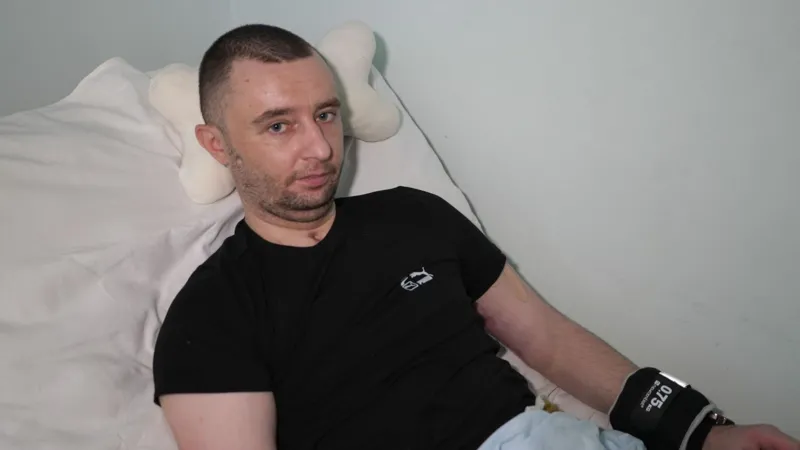
In Ukraine, the war has significantly worsened the situation of antimicrobial resistance (AMR), a global issue where bacteria evolve to resist commonly-used antibiotics. One of the most alarming cases is that of Pte Oleksander Bezverkhny, who, after sustaining severe abdominal injuries and losing both legs, was evacuated to Kyiv’s Feofaniya Hospital. Doctors discovered that his infections were resistant to antibiotics, complicating the already challenging task of saving his life.
AMR has become a critical concern worldwide, with approximately 1.4 million people dying from AMR-related infections in 2021. In the UK, there were over 66,000 serious antibiotic-resistant infections in 2023. However, the ongoing war in Ukraine has exacerbated the situation, accelerating the spread of multi-resistant pathogens.
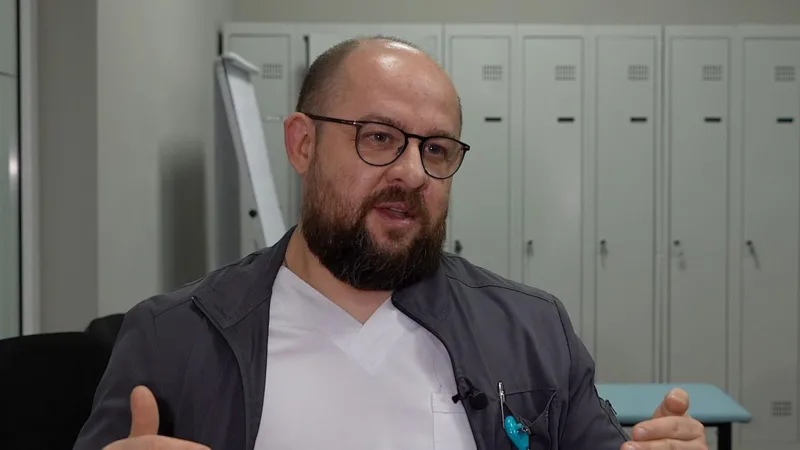
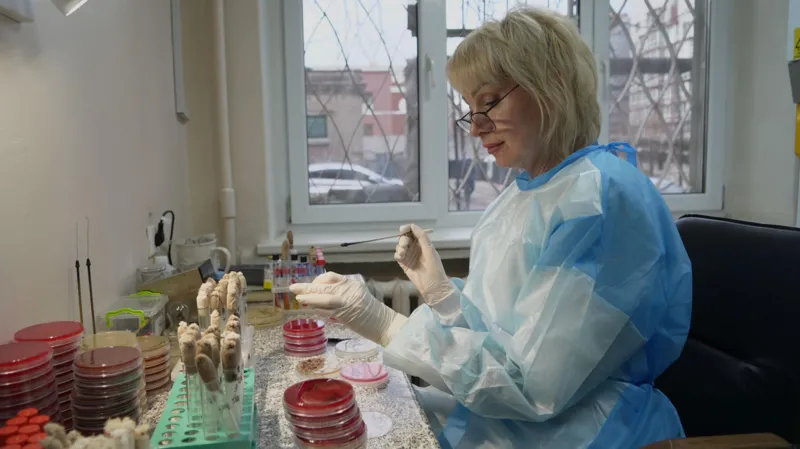
Clinics in Ukraine, particularly those treating war injuries, have witnessed a sharp rise in AMR cases. According to Dr. Andriy Strokan, the deputy chief physician at Feofaniya Hospital, over 80% of patients admitted to the facility have infections caused by antibiotic-resistant microbes. Ironically, these infections often originate within medical settings. While healthcare staff work tirelessly to follow hygiene protocols and use protective gear, the overwhelming influx of war casualties strains their ability to contain the spread of infections.
Dr. Volodymyr Dubyna, head of the ICU at Mechnikov Hospital, highlighted the strain on resources, as the number of ICU beds has increased from 16 to 50 since the start of the Russian invasion. With many medical personnel either fleeing the war or joining the military, staffing levels have been severely impacted. Dr. Strokan further explained that these challenging circumstances have contributed to the spread of AMR bacteria, as understaffed surgical departments struggle to maintain proper hygiene standards, with nurses often responsible for caring for up to 15-20 patients at once. This insufficient care increases the risk of infection transmission.
As AMR infections continue to rise in Ukraine’s war clinics, the healthcare system faces an additional, often overlooked, challenge that threatens to worsen the already dire situation.
The nature of the ongoing war in Ukraine has exposed soldiers to an unprecedented level of risk regarding antimicrobial resistance (AMR) infections. Unlike in peacetime, where medical protocols can contain the spread of infection, soldiers in this conflict often pass through multiple medical facilities as they are evacuated for treatment. Each facility, with its own strains of AMR, adds to the risk of cross-contamination, worsening the spread of these resistant infections.
Pte Oleksander Bezverkhny’s case illustrates this issue. He was treated at three different facilities before finally reaching Feofaniya Hospital in Kyiv. His infections, resistant to standard antibiotics, caused his condition to deteriorate rapidly, leading him to contract sepsis five times. This complex path of treatment, involving multiple facilities, is a direct consequence of the war’s scale and logistics, and it greatly contributes to the spread of AMR infections.
In contrast, other recent conflicts, like the Afghanistan War, saw Western soldiers stabilized on-site and then airlifted directly to European clinics. This approach minimized exposure to different medical environments and helped contain the spread of infections. In Ukraine, however, the large number of casualties and the overwhelming burden on healthcare facilities makes it nearly impossible to avoid multiple points of care, intensifying the problem of AMR transmission.

The overwhelming influx of patients in Ukraine’s war-torn hospitals, a situation not seen since the Second World War, has strained the healthcare system to its breaking point. According to Dr. Volodymyr Dubyna, head of the ICU at a hospital in Dnipro, a city near the front lines, the sheer volume of wounded patients means that once stabilized, they are transferred to other clinics—if space is available—to free up capacity. However, this transfer of patients often exacerbates the spread of AMR bacteria as they pass through different facilities, increasing the risk of further contamination.
The medical teams face a harsh reality: hospitals simply cannot afford to isolate infected patients due to the overwhelming number of casualties. As a result, multi-resistant and dangerous bacteria spread unchecked, worsening the crisis. The infections caused by these resistant bacteria require treatment with special antibiotics from the “reserve” list. However, frequent use of these powerful antibiotics accelerates bacterial adaptation, rendering them ineffective over time.
Dr. Andriy Strokan, deputy chief physician at Feofaniya Hospital, describes the delicate balance doctors must maintain. “On one hand, we must save a patient. On the other, we mustn’t breed new microorganisms that will have antimicrobial resistance.” This dilemma highlights the difficult choices Ukrainian healthcare professionals face daily as they battle both the immediate threat of saving lives and the long-term consequences of fostering antimicrobial resistance.
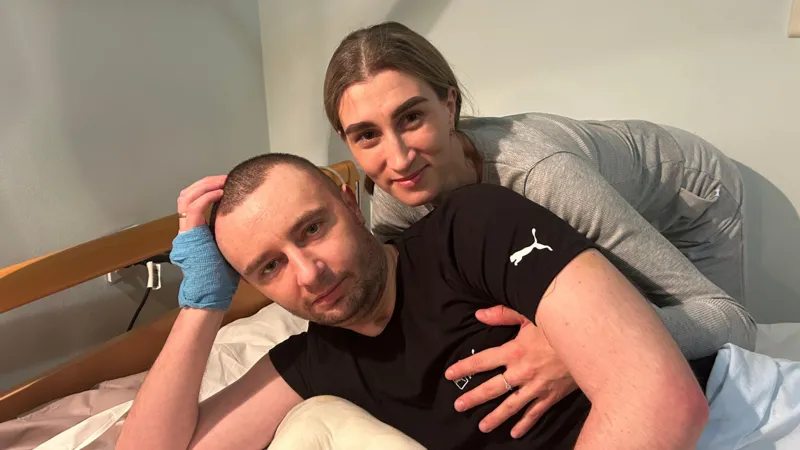
In Pte Oleksander Bezverkhny’s case, doctors had no choice but to use expensive antibiotics, which were sourced from abroad by volunteers. After a year of intensive treatment and over 100 operations, his condition is no longer life-threatening, and he survived. However, his recovery is a rare success story in the face of escalating antimicrobial resistance (AMR).
Despite the doctors’ efforts, the spread of resistant pathogens continues to make it increasingly difficult to save others. As bacteria become more resistant to antibiotics, the medical community is confronted with the growing challenge of treating infections that were once manageable. The battle to save lives is becoming more complex and costly, and as AMR spreads, the window of opportunity for effective treatments continues to shrink.

Courtesy: DW News
References
- ^ “The NATO Russian Founding Act | Arms Control Association”. www.armscontrol.org. Retrieved 6 April 2024.
- ^ Benson, Brett V. (2012). Constructing International Security: Alliances, Deterrence, and Moral Hazard. Cambridge: Cambridge University Press. p. 67. ISBN 978-1107027244.
- ^ “Russia says deployment of EU mission in Armenia to ‘exacerbate existing contradictions'”.
- ^ Jump up to:a b RAND, Russia’s Hostile Measures: Combating Russian Gray Zone Aggression Against NATO in the Contact, Blunt, and Surge Layers of Competition (2020) online
- ^ “Twenty Years of Russian “Peacekeeping” in Moldova”. Jamestown. Retrieved 6 April 2024.
- ^ “President of Russia”. 2 September 2008. Archived from the original on 2 September 2008. Retrieved 6 April 2024.
- ^ Higgins, Andrew; Erlanger, Steven (27 February 2014). “Gunmen Seize Government Buildings in Crimea”. The New York Times. ISSN 0362-4331. Retrieved 6 April 2024.
- ^ Ellyatt, Holly (24 February 2022). “Russian forces invade Ukraine”. CNBC. Retrieved 6 April 2024.
- ^ “Russia joins war in Syria: Five key points”. BBC News. 1 October 2015. Retrieved 6 April 2024.
- ^ “Russia blocks trains carrying Kazakh coal to Ukraine | Article”. 5 November 2021.
- ^ Jump up to:a b “Russia suspends its mission at NATO, shuts alliance’s office”. AP. 18 October 2021. Retrieved 19 October 2021.
- ^ Chernova, Anna; Fox, Kara. “Russia suspending mission to NATO in response to staff expulsions”. CNN. Retrieved 19 October 2021.
- ^ Jump up to:a b “Madrid Summit ends with far-reaching decisions to transform NATO”. NATO. 30 June 2022.
- ^ Wolska, Anna (15 July 2023). “Fake of the week: Russia is waging war against NATO in Ukraine”. EURACTIV.pl.
- ^ “”Special military operation”, “Nazis” and “at war with NATO”: Russian state media framing of the Ukraine war”. ISPI. Retrieved 16 December 2024.
- ^ Jump up to:a b Vavra, Shannon (21 September 2022). “‘The Time Has Come’: Top Putin Official Admits Ugly Truth About War”. The Daily Beast. Retrieved 1 October 2022.
- ^ Tisdall, Simon (5 March 2023). “Nato faces an all-out fight with Putin. It must stop pulling its punches”. The Observer. ISSN 0029-7712. Retrieved 26 June 2023.
- ^ Sarotte, Mary Elise (2014). “A Broken Promise? What the West Really Told Moscow About NATO Expansion”. Foreign Affairs. 93 (5): 90–97. ISSN 0015-7120. JSTOR 24483307.
- ^ Goldgeier J, Shifrinson JRI. Evaluating NATO enlargement: Scholarly debates, policy implications, and roads not taken Evaluating NATO Enlargement: From Cold War Victory to the Russia-Ukraine War: Springer International Publishing; 2023. p. 1-42 doi: 10.1007/978-3-031-23364-7_1.
- ^ Zollmann, Florian (30 December 2023). “A war foretold: How Western mainstream news media omitted NATO eastward expansion as a contributing factor to Russia’s 2022 invasion of the Ukraine”. Media, War & Conflict. 17 (3): 373–392. doi:10.1177/17506352231216908. ISSN 1750-6352. This article incorporates text from this source, which is available under the CC BY 4.0 license.
- ^ Korshunov, Maxim (16 October 2014). “Mikhail Gorbachev: I am against all walls”. rbth.com. Retrieved 12 May 2024.
- ^ Jump up to:a b c Goldgeier J, Shifrinson JRI. Evaluating NATO enlargement: From cold war victory to the Russia-Ukraine war: Springer International Publishing; 2023. 1-645 p doi: 10.1007/978-3-031-23364-7.
- ^ “Old adversaries become new partners”. NATO.
- ^ Iulian, Raluca Iulia (23 August 2017). “A Quarter Century of Nato-Russia Relations”. Cbu International Conference Proceedings. 5: 633–638. doi:10.12955/cbup.v5.998. ISSN 1805-9961.
- ^ “First NATO Secretary General in Russia”. NATO.
- ^ “Memorandum of Telephone Conversation, Bush-Yeltsin, December 8, 1991 | National Security Archive”. nsarchive.gwu.edu.
- ^ https://www.venice.coe.int/webforms/documents/?pdf=CDL(1994)054-e
- ^ https://cis.minsk.by/reestrv2/doc/1#text
- ^ “СССР прекратил существование, 11 республик вступают в СНГ”.
- ^ https://cis.minsk.by/reestrv2/doc/79#documentCard
- ^ “NATO’s Relations With Russia”. NATO Public Diplomacy Division, Belgium. 6 April 2017. Retrieved 26 May 2017.
- ^ “NATO Strategic Concept for the Defence and Security of the Members of the North Atlantic Treaty Organization” (PDF). NATO Public Diplomacy Division, Belgium. 20 November 2010. Retrieved 26 May 2017.
- ^ “The NATO-Russia Archive – Formal NATO-Russia Relations”. Berlin Information-Center For Translantic Security (BITS), Germany. Retrieved 22 April 2016.
- ^ “NATO PfP Signatures by Date”. NATO Public Diplomacy Division, Belgium. 10 January 2012. Retrieved 22 April 2016.
- ^ https://nsarchive.gwu.edu/document/30920-document-8-cable-us-embassy-moscow-state-department-presidents-dinner-president
- ^ https://www.bfm.ru/news/542897
- ^ https://www.rbc.ru/politics/26/01/2024/65b31bcc9a7947b8bad62e39
- ^ https://www.kommersant.ru/doc/90894
- ^ Kozyrev, Andrei (2019). “Russia and NATO Enlargement: An Insider’s Account” (PDF).
- ^ Whitney, Craig R. (9 November 1995). “Russia Agrees To Put Troops Under U.S., Not NATO”. New York Times. Archived from the original on 26 May 2015.
- ^ Jones, James L. (3 July 2003). “Peacekeeping: Achievements and Next Steps”. NATO.
- ^ Jump up to:a b “Lessons and Conclusions on the Execution of IFOR Operations and Prospects for a Future Combined Security System: The Peace and Stability of Europe after IFOR” (PDF). Foreign Military Studies Office. November 2000. p. 4.
- ^ Shevtsov, Leonty (21 June 1997). “Russian Participation in Bosnia-Herzegovina”.
- ^ Joulwan, George (21 June 1997). “The New NATO: The Way Ahead”.
I firmly believe that our cooperation at SHAPE and in Bosnia was instrumental in the creation of the NATO-Russia Founding Act, which was signed in May 1997 in Paris. As NATO’s Deputy Secretary General said, ‘Political reality is finally catching up with the progress you at SHAPE had already made.’
- ^ https://cis.minsk.by/reestrv2/print/documentCard?ids=6
- ^ https://nsarchive.gwu.edu/document/32237-document-14-memorandum-conversation-clinton-yeltsin-summit-helsinki-finland-subject
- ^ https://www.rbc.ru/politics/10/07/2024/668e862a9a7947761cca152b
- ^ Ronald D. Azmus, Opening NATO’s Door (2002) p. 210.
- ^ Strobe Talbott, The Russia Hand: A Memoir of Presidential Diplomacy (2002) p. 246.
- ^ Fergus Carr and Paul Flenley, “NATO and the Russian Federation in the new Europe: the Founding Act on Mutual Relations.” Journal of Communist Studies and Transition Politics 15.2 (1999): 88–110.
- ^ “5/15/97 Fact Sheet: NATO-Russia Founding Act”. 1997-2001.state.gov. Retrieved 31 May 2022.
- ^ Jump up to:a b “NATO Publications”. www.nato.int. Retrieved 28 May 2022.
- ^ “Nato-Russia Council – Documents & Glossaries”. www.nato.int. Retrieved 28 May 2022.
- ^ The NATO-Russia Joint Editorial Working Group (8 June 2021). “NATO-Russia Glossary of Contemporary Political and Military Terms” (PDF).
- ^ “Yeltsin: Russia will not use force against Nato”. The Guardian. 25 March 1999.
- ^ “Yeltsin warns of possible world war over Kosovo”. CNN. 9 April 1999.
- ^ Goldgeier J, Shifrinson JRI. Evaluating NATO enlargement: From cold war victory to the Russia-Ukraine war: Springer International Publishing; 2023. 1-645 p doi: 10.1007/978-3-031-23364-7. p.165.
- ^ “Russia Condemns NATO’s Airstrikes”. Associated Press. 8 June 1999.
- ^ Jackson, Mike (2007). Soldier. Transworld Publishers. pp. 216–254. ISBN 9780593059074.
- ^ “Confrontation over Pristina airport”. BBC News. 9 March 2000.
- ^ Peck, Tom (15 November 2010). “Singer James Blunt ‘prevented World War 3′”. Belfast Telegraph.
- ^ https://web.archive.org/web/20001208050400/http://news2.thls.bbc.co.uk/hi/english/world/europe/newsid_666000/666501.stm
- ^ https://web.archive.org/web/20001208051500/http://news2.thls.bbc.co.uk/hi/english/world/europe/newsid_666000/666768.stm
- ^ https://web.archive.org/web/20041126012223/http://www.bbc.co.uk/russian/0305_1.shtml
- ^ Hall, Todd (September 2012). “Sympathetic States: Explaining the Russian and Chinese Responses September 11”. Political Science Quarterly. 127 (3): 369–400. doi:10.1002/j.1538-165X.2012.tb00731.x.
- ^ “NATO–Russia Council Statement 28 May 2002” (PDF). NATO. 28 May 2002. Archived (PDF) from the original on 3 February 2022. Retrieved 3 February 2022.
- ^ Jump up to:a b “Nato-Russia Council – About”. www.nato.int. Retrieved 31 May 2022.
- ^ NATO. “NATO – Official text: Founding Act on Mutual Relations, Cooperation and Security between NATO and the Russian Federation signed in Paris, France, 27-May.-1997”. NATO. Retrieved 22 April 2016.
- ^ Cook, Lorne (25 May 2017). “NATO: The World’s Largest Military Alliance Explained”. www.MilitaryTimes.com. The Associated Press, US. Retrieved 26 May 2017.
- ^ “Structure of the NATO-Russia Council” (PDF). Retrieved 30 May 2022.
- ^ “Nato Blog | Dating Council”. www.nato-russia-council.info. Archived from the original on 8 February 2009.
- ^ “Nat-o Blog | Dating Council”. www.nato-russia-council.info.
- ^ “Nato Blog | Dating Council”. www.nato-russia-council.info. Archived from the original on 8 February 2009.
- ^ “Allies and Russia attend U.S. Nuclear Weapons Accident Exercise”. Archived from the original on 28 August 2008. Retrieved 3 December 2008.
- ^ “NATO Summit Meetings – Rome, Italy – 28 May 2002”. www.nato.int. Retrieved 26 October 2024.
- ^ Ukraine News The Chronicles of War (24 June 2022). путин о вступлении Украины в НАТО. Retrieved 26 October 2024 – via YouTube.
- ^ Zwack, Peter B. (Spring 2004). “A NATO-Russia Contingency Command”. Parameters: 89.
- ^ Guinness World Records: First murder by radiation:
On 23 November 2006, Lieutenant Colonel Alexander Litvinenko, a retired member of the Russian security services (FSB), died from radiation poisoning in London, UK, becoming the first known victim of lethal Polonium 210-induced acute radiation syndrome. - ^ “CPS names second suspect in Alexander Litvinenko poisoning”. The Telegraph. 29 February 2012. Archived from the original on 12 January 2022.
- ^ Chapter 2. Rights and Freedoms of Man And Citizen | The Constitution of the Russian Federation. Constitution.ru. Retrieved on 12 August 2013.
- ^ “Russia warns of resorting to ‘force’ over Kosovo”. France 24. 22 February 2008.
- ^ In quotes: Kosovo reaction, BBC News Online, 17 February 2008.
- ^ “Putin calls Kosovo independence ‘terrible precedent'”. The Sydney Morning Herald. 23 February 2008.
- ^ “NATO’s relations with Russia”.
- ^ “Ukraine: NATO’s original sin”. Politico. 23 November 2021.
- ^ Menon, Rajan (10 February 2022). “The Strategic Blunder That Led to Today’s Conflict in Ukraine”. ISSN 0027-8378. Retrieved 15 May 2022.
- ^ Bush backs Ukraine on Nato bid, BBC News (1 April 2008)
- ^ Ukraine Says ‘No’ to NATO, Pew Research Center (29 March 2010)
- ^ “Medvedev warns on Nato expansion”. BBC News. 25 March 2008. Retrieved 20 May 2010.
- ^ “Bush stirs controversy over NATO membership”. CNN. 1 April 2008.
- ^ “NATO Press Release (2008)108 – 27 Aug 2008”. Nato.int. Retrieved 4 December 2011.
- ^ “NATO Press Release (2008)107 – 26 Aug 2008”. Nato.int. Retrieved 4 December 2011.
- ^ Jump up to:a b Pop, Valentina (1 April 2009). “Russia does not rule out future NATO membership”. EUobserver. Retrieved 1 May 2009.
- ^ “Nato-Russia relations plummet amid spying, Georgia rows”. Retrieved 1 May 2009.
- ^ “Военные считают ПРО в Европе прямой угрозой России – Мир – Правда.Ру”. Pravda.ru. 22 August 2007. Retrieved 4 December 2011.
- ^ Jump up to:a b “Q&A: US missile defence”. BBC News. 20 September 2009. Retrieved 20 May 2010.
- ^ NATO chief asks for Russian help in Afghanistan Reuters Retrieved on 9 March 2010
- ^ Angela Stent, The Limits of Partnership: U.S.-Russian Relations in the Twenty-First Century (2014) pp 230–232.
- ^ “Medvedev: August War Stopped Georgia’s NATO Membership”. Civil Georgia. 21 November 2011. Retrieved 17 July 2024.
- ^ “Russian and Nato jets to hold first ev