


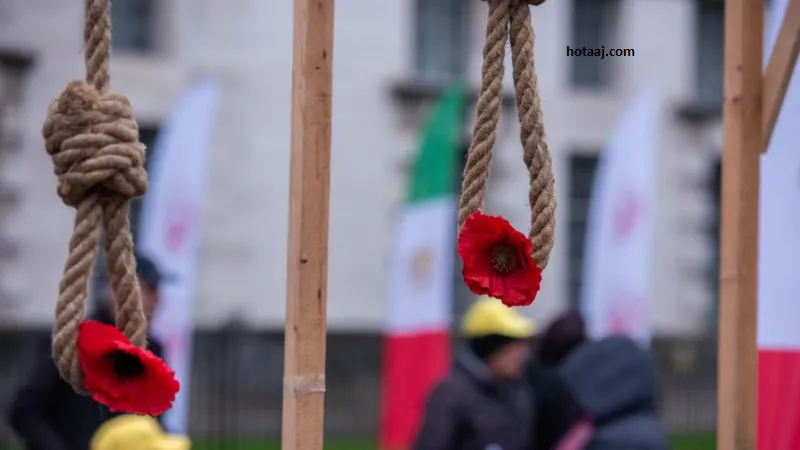
In 2024, Iran executed at least 901 individuals, marking the highest toll in nine years, according to the United Nations human rights chief, Volker Turk. This total represents a 6% increase compared to 2023, when 853 people were executed. Among those executed, a significant number were reportedly sentenced for drug-related offenses, but the UN noted that political dissidents and individuals linked to the 2022 protests were also targeted.
A concerning rise in the execution of women was also highlighted in the report. This surge in executions, particularly in the latter part of the year, is seen as a deliberate tactic by the Iranian authorities to instill fear within society and suppress dissent. In December alone, around 40 people were executed in a single week.
Turk expressed deep concern over the ongoing increase in executions, emphasizing that the situation has become “deeply disturbing.” He called on Iran to take immediate action to halt the growing use of the death penalty. “It is high time Iran stemmed this ever-swelling tide of executions,” he said, stressing the urgent need for reform in the country’s human rights practices.
The UN’s report paints a grim picture of the human rights situation in Iran, with executions continuing to be used as a tool to maintain control over the population and suppress any form of opposition.
UN human rights chief Volker Türk has called on Iranian authorities to immediately halt all executions and impose a moratorium on the death penalty with the goal of eventual abolition. He emphasized that the death penalty is incompatible with the right to life and risks executing innocent individuals. Türk also noted that the death penalty should never be applied for actions protected under international human rights law.
The figures presented by the UN were sourced from several reliable organizations, including Iran’s Human Rights Activists News Agency (HRANA), Iran Human Rights (IHR), and Kurdish group Hengaw. According to IHR, at least 31 women were executed in 2024—the highest number since the organization began monitoring the death penalty 17 years ago. The majority were convicted of murder or drug-related offenses.
Among the women executed, Leila Ghaemi’s case stood out. She was convicted of strangling her husband after discovering him and his friends raping her young daughter. Other women, like Parvin Mousavi, were executed for transporting what they believed was medicine but was later discovered to be morphine.
Human rights activists argue that drug-related offenses do not meet the threshold of “most serious crimes” under international law, which should restrict the use of the death penalty. Additionally, Hengaw reported that more than half of those executed in 2024 were from Iran’s ethnic minorities, particularly Kurds. This follows the pattern of disproportionate targeting of ethnic and religious minorities, as documented by the UN’s fact-finding mission on Iran, particularly after the 2022 “Woman, Life, Freedom” protests.
HRANA also reported five juvenile offenders were executed in 2024, in violation of international law, which prohibits capital punishment for those under 18 at the time of their alleged crime. Iran was responsible for 74% of the global executions recorded in 2023, excluding China, where data on the death penalty is classified.
This surge in executions highlights the ongoing human rights crisis in Iran and the increasing calls for international intervention and reform.

Courtesy: WION
References
- Jeroen Temperman (2010). State-Religion Relationships and Human Rights Law: Towards a Right to Religiously Neutral Governance. Brill. pp. 87–. ISBN 978-90-04-18148-9. Archived from the original on 10 April 2023. Retrieved 20 June 2015.
The official motto of Iran is [the] Takbir (‘God is the Greatest’ or ‘God is Great’). Transliteration Allahu Akbar. As referred to in art. 18 of the constitution of Iran (1979). The de facto motto however is: ‘Independence, freedom, the Islamic Republic.’
- ^ “Surface water and surface water change”. Organisation for Economic Co-operation and Development (OECD). Archived from the original on 24 March 2021. Retrieved 11 October 2020.
- ^ Jump up to:a b “Estimated population in Iran by province in 2024”. www.iranopendata.org/fa/. Iran Open Data (IOD). 5 December 2024. Retrieved 27 December 2024.
- ^ Jump up to:a b c d “World Economic Outlook Database, October 2024 Edition. (Iran)”. International Monetary Fund. Archived from the original on 16 April 2024. Retrieved 11 November 2024.
- ^ “Gini Index coefficient”. The World Factbook. Retrieved 24 September 2024.
- ^ “Human Development Report 2023/24” (PDF). United Nations Development Programme. 13 March 2024. p. 289. Archived (PDF) from the original on 13 March 2024. Retrieved 13 March 2024.
- ^ Jump up to:a b “Definition of IRAN”. merriam-webster.com. Archived from the original on 24 September 2022. Retrieved 24 September 2022.
- ^ “Iran”. 4 November 2024.
- ^ Jump up to:a b MacKenzie 1998.
- ^ Schmitt 1987.
- ^ Laroche. 1957. Proto-Iranian *arya- descends from Proto-Indo-European (PIE) *ar-yo-, a yo-adjective to a root *ar “to assemble skillfully”, present in Greek harma “chariot”, Greek aristos, (as in “aristocracy“), Latin ars “art”, etc.
- ^ Shahbazi 2004.
- ^ Wilson, Arnold (2012). “The Middle Ages: Fars”. The Persian Gulf (RLE Iran A). Routledge. p. 71. ISBN 978-1-136-84105-7.
- ^ Borjian, Maryam; Borjian, Habib (2011). “Plights of Persian in the Modernization Era”. In Fishman, Joshua A; García, Ofelia (eds.). Handbook of Language and Ethnic Identity: Volume 2: The Success-Failure Continuum in Language and Ethnic Identity Efforts. New York: Oxford University Press. p. 266. ISBN 978-0-19-539245-6.
‘Iran’ and ‘Persia’ are synonymous. The former has always been used by Iranian-speaking peoples themselves, while the latter has served as the international name of the country in various languages, ever since it was introduced by the Greeks some twenty-five centuries ago. In 1935, however, the nationalist administration under Reza Shah Pahlavi (see below) made a successful effort to replace ‘Persia’ with ‘Iran,’ apparently to underline the nation’s ‘Aryan’ pedigree to the international community. The latter term used to signify all branches of the Indo-European language family (and even the ‘race’ of their speakers), but was practically abandoned after World War II.
- ^ Lewis, Geoffrey (1984). “The naming of names”. British Society for Middle Eastern Studies Bulletin. 11 (2): 121–124. doi:10.1080/13530198408705394. ISSN 0305-6139.
- ^ Persia Archived 15 June 2022 at the Wayback Machine, Encyclopædia Britannica, “The term Persia was used for centuries … [because] use of the name was gradually extended by the ancient Greeks and other peoples to apply to the whole Iranian plateau.”
- ^ Jump up to:a b “Your Gateway to Knowledge”. Knowledge Zone. Retrieved 3 April 2024.
- ^ “Fars Province, Iran”. Persia Advisor. Archived from the original on 2 May 2024. Retrieved 2 May 2024.
- ^ Foundation, Encyclopaedia Iranica. “Welcome to Encyclopaedia Iranica”. iranicaonline.org. Archived from the original on 10 April 2010. Retrieved 3 April 2024.
- ^ “Eight Thousand Years of History in Fars Province, Iran”. Research Gate. 12 May 2005. Retrieved 3 April 2024.
- ^ “From Cyrus to Alexander : a history of the Persian Empire | WorldCat.org”. search.worldcat.org. Archived from the original on 3 April 2024. Retrieved 3 April 2024.
- ^ Austin, Peter (2008). One Thousand Languages: Living, Endangered, and Lost. University of California Press. ISBN 978-0-520-25560-9.
- ^ Dandamaev, M. A. (1989). A Political History of the Achaemenid Empire. BRILL. ISBN 978-90-04-09172-6.
- ^ “Persia Changes Its Name; To Be ‘Iran’ From Mar. 22”. The New York Times. 1 January 1935. Archived from the original on 25 December 2018. Retrieved 26 December 2018.
- ^ “Persia or Iran, a brief history”. Art-arena.com. Archived from the original on 23 May 2013. Retrieved 21 June 2013.
- ^ Christoph Marcinkowski (2010). Shi’ite Identities: Community and Culture in Changing Social Contexts. LIT Verlag Münster. p. 83. ISBN 978-3-643-80049-7. Retrieved 21 June 2013.
The ‘historical lands of Iran’ – ‘Greater Iran’ – were always known in the Persian language as Irānshahr or Irānzamīn.
- ^ Frye, Richard Nelson (October 1962). “Reitzenstein and Qumrân Revisited by an Iranian”. The Harvard Theological Review. 55 (4): 261–268. doi:10.1017/S0017816000007926. JSTOR 1508723. S2CID 162213219.
I use the term Iran in an historical context […] Persia would be used for the modern state, more or less equivalent to “western Iran”. I use the term “Greater Iran” to mean what I suspect most Classicists and ancient historians really mean by their use of Persia – that which was within the political boundaries of States ruled by Iranians.
- ^ Richard Frye (2012). Persia (RLE Iran A). Routledge. p. 13. ISBN 978-1-136-84154-5. Retrieved 21 June 2013.
This ‘greater Iran’ included and still includes part of the Caucasus Mountains, Central Asia, Afghanistan, and Iraq; for Kurds, Baluchis, Afghans, Tajiks, Ossetes, and other smaller groups are Iranians
- ^ Farrokh, Kaveh. Shadows in the Desert: Ancient Persia at War. ISBN 1-84603-108-7
- ^ “Iran”. Oxford Dictionaries. Archived from the original on 29 December 2016. Retrieved 7 February 2017.
- ^ “Iran”. Merriam-Webster. Archived from the original on 10 May 2017. Retrieved 7 February 2017.
- ^ “How do you say Iran?”. Voice of America. Archived from the original on 11 February 2017. Retrieved 7 February 2017.
- ^ People, “New evidence: modern civilization began in Iran”, 10 Aug 2007 Archived 24 February 2021 at the Wayback Machine, retrieved 1 October 2007
- ^ Azadpour, M. “HEGEL, GEORG WILHELM FRIEDRICH”. Encyclopædia Iranica. Archived from the original on 11 April 2015. Retrieved 11 April 2015.
- ^ https://www.britannica.com/ebc/article-9371723 Archived 2008-04-29 at the Wayback Machine Encyclopædia Britannica Concise Encyclopedia Article: Media
- ^ Baten, Jörg (2016). A History of the Global Economy. From 1500 to the Present. Cambridge University Press. p. 214. ISBN 978-1-107-50718-0.
- ^ R. M. Savory, “Safavids”, Encyclopedia of Islam, 2nd edition
- ^ “The Islamic World to 1600”, Applied History Research Group, University of Calgary, 1998 Archived 2008-06-12 at the Wayback Machine, retrieved 1 October 2007
- ^ Dowling, Timothy C. (2014). Russia at War: From the Mongol Conquest to Afghanistan, Chechnya, and Beyond. 2 volumes. ABC-CLIO. pp. 728–729. ISBN 978-1-59884-948-6.
- ^ “Iran Islamic Republic”, Archived 2006-03-16 at the Wayback Machine, Encyclopædia Britannica, retrieved 23 January 2008
- ^ “International relations / The Iranian revolution”. Encyclopædia Britannica. 23 January 2008. Archived from the original on 15 December 2007. Retrieved 26 September 2024. (subscription required)
- ^ “Ahmadinejad critic Larijani re-elected Iran speaker”. BBC News. 5 June 2012. Archived from the original on 10 May 2024. Retrieved 10 May 2024.
- ^ Borger, Julian; Dehghan, Saeed Kamali (19 September 2013). “Hassan Rouhani sets out his vision for a new and free Iran”. The Guardian. ISSN 0261-3077. Archived from the original on 12 November 2023. Retrieved 10 May 2024.
- ^ Kutsch, Tom (14 July 2015). “Iran, world powers strike historic nuclear deal”. Aljazeera America. Archived from the original on 15 July 2015. Retrieved 15 July 2015.
- ^ Brewer, Eric (25 June 2024). “Iran’s New Nuclear Threat”. Foreign Affairs. ISSN 0015-7120. Retrieved 2 July 2024.
- ^ “U.S. killing of Iran’s second most powerful man risks regional conflagration”. Reuters. 4 January 2020. Archived from the original on 18 April 2024. Retrieved 7 May 2024.
- ^ Carolien Roelants, Iran expert of NRC Handelsblad, in a debate on Buitenhof on Dutch television, 5 January 2020.
- ^ Never-before-seen video of the attack on Al Asad Airbase, 28 February 2021, archived from the original on 23 February 2022, retrieved 8 January 2024
- ^ “109 US troops diagnosed with brain injuries from Iran attack”. Al Jazeera. Archived from the original on 7 April 2024. Retrieved 7 April 2024.
- ^ “Pentagon admits 109 brain injuries in Iran attack – DW – 02/10/2020”. dw.com. Archived from the original on 7 April 2024. Retrieved 7 April 2024.
- ^ Starr, Barbara (10 February 2020). “Over 100 US troops have been diagnosed with traumatic brain injuries following Iran strike | CNN Politics”. CNN. Archived from the original on 7 April 2024. Retrieved 7 April 2024.
- ^ Motamedi, Maziar. “Hardliner Raisi elected Iran’s new president”. Al Jazeera.
- ^ “Several killed in Israeli strike on Iranian consulate in Damascus”. Al Jazeera. Archived from the original on 30 April 2024. Retrieved 1 May 2024.
- ^ “Israeli strike on Iran’s consulate in Syria killed 2 generals and 5 other officers, Iran says”. AP News. 1 April 2024. Archived from the original on 19 April 2024. Retrieved 1 May 2024.
- ^ center, This aerial view shows Tel Aviv’s Ben Gurion International Airport in the; April 5, the surrounding urban areas in Lodin central Israel on; Images, 2024-ROY ISSA/AFP via Getty (15 April 2024). “How Iran’s attack on Israel is disrupting air traffic – Al-Monitor: Independent, trusted coverage of the Middle East”. www.al-monitor.com. Archived from the original on 1 May 2024. Retrieved 1 May 2024.
- ^ Toossi, Sina (2 May 2024). “Iran Has Defined Its Red Line With Israel”. Foreign Policy. Archived from the original on 1 May 2024. Retrieved 1 May 2024.
- ^ “What was in wave of Iranian attacks and how were they thwarted?”. 14 April 2024. Archived from the original on 14 April 2024. Retrieved 1 May 2024.
- ^ Borger, Julian (14 April 2024). “US and UK forces help shoot down Iranian drones over Jordan, Syria and Iraq”. The Guardian. ISSN 0261-3077. Archived from the original on 14 April 2024. Retrieved 1 May 2024.
- ^ “Macron: France intercepted Iranian drones ‘at Jordan’s request'”. POLITICO. 15 April 2024. Archived from the original on 15 April 2024. Retrieved 1 May 2024.
- ^ “The largest drone attack in history”. iranpress.com. Retrieved 1 May 2024.
- ^ Motamedi, Maziar. “‘True Promise’: Why and how did Iran launch a historic attack on Israel?”. Al Jazeera. Archived from the original on 14 April 2024. Retrieved 1 May 2024.
- ^ “Iran launches first-ever direct attack on Israel”. ABC7 New York. 13 April 2024. Archived from the original on 1 May 2024. Retrieved 1 May 2024.
- ^ “How Israel could respond to Iran’s drone and missile assault”. France 24. 18 April 2024. Archived from the original on 1 May 2024. Retrieved 1 May 2024.
- ^ Johny, Stanly (14 April 2024). “Analysis | By attacking Israel, Iran turns shadow war into direct conflict”. The Hindu. ISSN 0971-751X. Archived from the original on 14 April 2024. Retrieved 1 May 2024.
- ^ Staff, Al Jazeera. “Who died alongside Iran’s President Raisi in the helicopter crash?”. Al Jazeera.
- ^ “Masoud Pezeshkian, a heart surgeon who rose to power in parliament, now Iran’s president-elect”. AP News. 6 July 2024. Retrieved 6 July 2024.
- ^ Fassihi, Farnaz; Vinograd, Cassandra (6 July 2024). “Reformist Candidate Wins Iran’s Presidential Election”. The New York Times. ISSN 0362-4331. Retrieved 6 July 2024.
- ^ “What we know about Israel’s attack on Iran”. www.bbc.com.
- ^ “Iran’s Strategy in the Strait of Hormuz”. The Diplomat. Archived from the original on 8 December 2015. Retrieved 29 November 2015.
- ^ “CIA – The World Factbook”. Cia.gov. Archived from the original on 27 January 2021. Retrieved 7 April 2012.
- ^ “Which country has the most earthquakes?”. United States Geological Survey. Archived from the original on 22 May 2021. Retrieved 22 May 2021.
- ^ “هر ده سال، یک زلزله ۷ ریشتری در کشور رخ میدهد | خبرگزاری ایلنا”. Ilna.news. 13 October 2012. Archived from the original on 28 March 2024. Retrieved 5 August 2022.
- ^ “The 5 Hottest Deserts in the World”. MapQuest Travel. 9 November 2009. Archived from the original on 31 December 2023. Retrieved 31 December 2023.
- ^ “Where Is the Hottest Place on Earth?”. earthobservatory.nasa.gov. 5 April 2012. Archived from the original on 3 November 2020. Retrieved 31 December 2023.
- ^ “The hottest place on earth – Secret Compass”. 22 February 2017. Archived from the original on 31 December 2023. Retrieved 31 December 2023.
- ^ Sand-boarding.com (10 August 2023). “The Hottest Deserts on Earth Are Too Hot to Handle”. Surf the Sand. Archived from the original on 31 December 2023. Retrieved 31 December 2023.
- ^ “Geography | Iranian Student Organization (IrSO) | Nebraska”. unl.edu. Archived from the original on 28 January 2024. Retrieved 28 January 2024.
- ^ “IRAN TODAY – Geography…” allventure.com. Archived from the original on 28 January 2024. Retrieved 28 January 2024.
- ^ “Iran ecotourism | Iran Ecotour guide training course”. arasbaran.org. Archived from the original on 28 January 2024. Retrieved 28 January 2024.
- ^ “Iran Islands Tours, Top 10 Islands You Must See in Iran – Iran Travel Information”. Archived from the original on 13 December 2023. Retrieved 22 January 2024.
- ^ Motamedi, Maziar. “Iran’s IRGC runs military drills on disputed islands claimed by UAE”. Al Jazeera. Archived from the original on 28 January 2024. Retrieved 28 January 2024.
- ^ “Iran’s Revolutionary Guard Runs Drill on Disputed Islands in Persian Gulf”. Voice of America. 2 August 2023. Archived from the original on 28 January 2024. Retrieved 28 January 2024.
- ^ “Strait of Hormuz – About the Strait”. The Strauss Center. Archived from the original on 31 December 2023. Retrieved 22 January 2024.
- ^ “Why is the Strait of Hormuz so strategically important?”. Al Jazeera. Archived from the original on 22 January 2024. Retrieved 22 January 2024.
- ^ “The Strait of Hormuz Is at the Center of Iran Tensions Again. Here’s How the Narrow Waterway Gained Wide Importance”. TIME. 23 July 2019. Archived from the original on 14 December 2023. Retrieved 22 January 2024.
- ^ “Strait of Hormuz: the world’s most important oil artery”. Routers. 23 January 2024. Archived from the original on 5 December 2023. Retrieved 22 January 2024.
- ^ “The Strait of Hormuz is the world’s most important oil transit chokepoint – U.S. Energy Information Administration (EIA)”. www.eia.gov. Archived from the original on 22 January 2024. Retrieved 22 January 2024.
- ^ “UAE demands return of three islands seized by Iran”. Arab News. 25 September 2022. Retrieved 22 January 2024.
- ^ “United Arab Emirates calls on Iran to take dispute over islands to UN court | UN News”. news.un.org. 26 September 2011. Archived from the original on 22 January 2024. Retrieved 22 January 2024.
- ^ “UAE official calls for international action to end “Iranian occupation” of disputed islands”. Middle East Institute. Archived from the original on 27 July 2021. Retrieved 22 January 2024.
- ^ “Iran summons Russian envoy over statement on Persian Gulf disputed islands”. AP News. 24 December 2023. Archived from the original on 31 December 2023. Retrieved 22 January 2024.
- ^ “Spokesman: Iran’s Sovereignty over Three Persian Gulf Islands Undeniable | Farsnews Agency”. www.farsnews.ir. Archived from the original on 22 January 2024. Retrieved 22 January 2024.
- ^ “Tehran dismisses UAE claim to three Iranian islands”. Tehran Times. 25 September 2023. Archived from the original on 22 January 2024. Retrieved 22 January 2024.
- ^ “UAE-Iran islands dispute complicates regional diplomacy | Responsible Statecraft”. responsiblestatecraft.org. Archived from the original on 22 January 2024. Retrieved 22 January 2024.
- ^ “Hormozgan Cultural Heritage, Handcrafts & Tourism Organization”. Hormozgan Cultural Heritage, Handcrafts & Tourism Organization. Archived from the original on 28 January 2024. Retrieved 28 January 2024.
- ^ “Qeshm Island Geopark Becomes Global After Receiving UNESCO Green Card – Iran Front Page”. ifpnews.com. 6 May 2017. Archived from the original on 2 June 2023. Retrieved 22 January 2024.
- ^ “Qeshm island Geopark – Home”. www.qeshmgeopark.ir. Archived from the original on 4 December 2023. Retrieved 22 January 2024.
- ^ Visit of Qeshm UNESCO Global Geopark, 12 August 2021, archived from the original on 27 June 2022, retrieved 22 January 2024
- ^ “Namakdan Salt Cave | One of the Longest | Qeshm Attraction | Apochi.com”. Apochi. Archived from the original on 29 November 2023. Retrieved 22 January 2024.
- ^ “Namakdan Salt Cave”. IUGS. Archived from the original on 5 October 2023. Retrieved 22 January 2024.
- ^ “Namakdan Salt Cave: Qeshm’s World-Famous Wonder |TAP Persia”. 13 April 2023. Archived from the original on 2 June 2023. Retrieved 22 January 2024.
- ^ www.sirang.com, Sirang Rasaneh. “Namakdan Salt Cave 2024 | Qeshm Island, Hormozgan | Sights – ITTO”. itto.org | Iran Tourism & Touring. Archived from the original on 11 December 2023. Retrieved 22 January 2024.
- ^ Kiyanoosh Kiyani Haftlang; Kiyānūsh Kiyānī Haft Lang (2003). The Book of Iran: A Survey of the Geography of Iran. Alhoda UK. p. 17. ISBN 978-964-94491-3-5.
- ^ “Weather and Climate: Iran, average monthly Rainfall, Sunshine, Temperature, Humidity, Wind Speed”. World Weather and Climate Information. Archived from the original on 22 September 2015. Retrieved 29 November 2015.
- ^ Moghtader, Michelle (3 August 2014). “Farming reforms offer hope for Iran’s water crisis”. Reuters. Archived from the original on 7 August 2014. Retrieved 4 August 2014.
- ^ Sharon E. Nicholson (2011). Dryland Climatology. Cambridge University Press. p. 367. ISBN 978-1-139-50024-1.
- ^ R. Nagarajan (2010). Drought Assessment. Springer Science & Business Media. p. 383. ISBN 978-90-481-2500-5.
- ^ “Iranian Journal of Forest – 4th National Forest Conference of Iran”. www.ijf-isaforestry.ir. Archived from the original on 8 May 2024. Retrieved 8 May 2024.
- ^ Kernan, Henry S. (1957). “Forest Management in Iran”. Middle East Journal. 11 (2): 198–202. ISSN 0026-3141. JSTOR 4322899. Archived from the original on 8 May 2024. Retrieved 8 May 2024.
- ^ Sotoudeh Foumani, B.; Rostami Shahraji, T.; Mohammadi Limaei, S. (1 June 2017). “Role of political power in forest administration policy of Iran”. Caspian Journal of Environmental Sciences. 15 (2): 181–199. doi:10.22124/cjes.2017.2374. ISSN 1735-3033. Archived from the original on 8 May 2024. Retrieved 8 May 2024.
- ^ “Iran Wildlife and Nature – including flora and fauna and their natural habitats”. www.aitotours.com. Archived from the original on 5 May 2024. Retrieved 5 May 2024.
- ^ April Fast (2005). Iran: The Land. Crabtree Publishing Company. p. 31. ISBN 978-0-7787-9315-1.
- ^ Eskandar Firouz (2005). The Complete Fauna of Iran. I.B. Tauris. ISBN 978-1-85043-946-2.
- ^ Guggisberg, C.A.W. (1961). Simba: The Life of the Lion. Howard Timmins, Cape Town.
- ^ Firouz, Eskander (14 October 2005). The Complete Fauna of Iran. Bloomsbury Academic. ISBN 978-1-85043-946-2.
- ^ Humphreys, Patrick; Kahrom, Esmail (31 December 1997). The Lion and the Gazelle: The Mammals and Birds of Iran. Bloomsbury Academic. ISBN 978-1-86064-229-6.
- ^ “In jab at rivals, Rouhani says Iran protests about more than economy”. Reuters. 8 January 2018. Archived from the original on 13 January 2018. Retrieved 1 February 2018.
- ^ Al-awsat, Asharq (25 September 2017). “Khamenei Orders New Supervisory Body to Curtail Government – ASHARQ AL-AWSAT English Archive”. Archived from the original on 10 October 2017. Retrieved 23 October 2017.
- ^ “Khamenei orders controversial retirement law amended”. Al-Monitor. 5 December 2018. Archived from the original on 7 December 2018. Retrieved 12 December 2018.
- ^ “Reuters Investigates – Assets of the Ayatollah”. Reuters. 11 November 2013. Archived from the original on 12 November 2013. Retrieved 8 January 2018.
- ^ Steve Stecklow, Babak Dehghanpisheh (22 January 2014). “Exclusive: Khamenei’s business empire gains from Iran sanctions relief”. Reuters. Archived from the original on 15 January 2018. Retrieved 14 January 2018.
- ^ Federal Research Division, Library of Congress. “Iran – The Constitution”. Archived from the original on 23 September 2006. Retrieved 14 April 2006.
- ^ Al-awsat, Asharq (15 December 2015). “Controversy in Iran Surrounding the Supervision of the Supreme Leader’s Performance – ASHARQ AL-AWSAT”. Archived from the original on 25 June 2016. Retrieved 1 July 2016.
- ^ “Myths and Realities of Iran’s Parliamentary Elections”. The Atlantic. 23 February 2016. Archived from the original on 16 February 2017. Retrieved 26 February 2017.
- ^ “Anomalies in Iran’s Assembly of Experts Election – The Washington Institute for Near East Policy”. Washingtoninstitute.org. 22 March 2016. Archived from the original on 17 August 2016. Retrieved 26 February 2017.
- ^ Majid Rafizadeh (24 June 2016). “Why Khamenei wants the next Supreme Leader to be ‘revolutionary'”. AlArabiya News. Archived from the original on 4 February 2017. Retrieved 4 October 2022.
- ^ “Constitution of Iran”. Switzerland: University of Bern. Archived from the original on 21 August 2018. Retrieved 2 April 2016.
- ^ “Democracy Index 2022: Frontline democracy and the battle for Ukraine” (PDF). Economist Intelligence Unit. 2023. Archived (PDF) from the original on 30 March 2023. Retrieved 25 May 2023.
- ^ Juan José Linz, Totalitarian and Authoritarian Regimes Archived 2020-07-26 at the Wayback Machine (Lynne Rienner, 2000), p. 36.