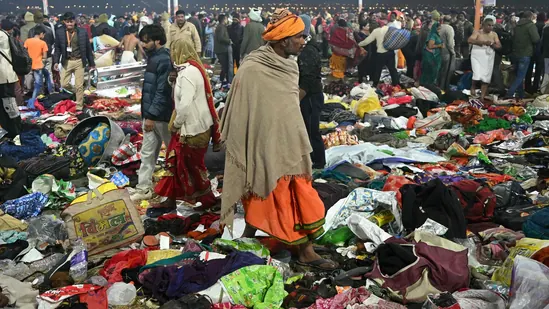







The Maha Kumbh Mela, the world’s largest human gathering, is expected to attract over 40 crore people to Prayagraj.
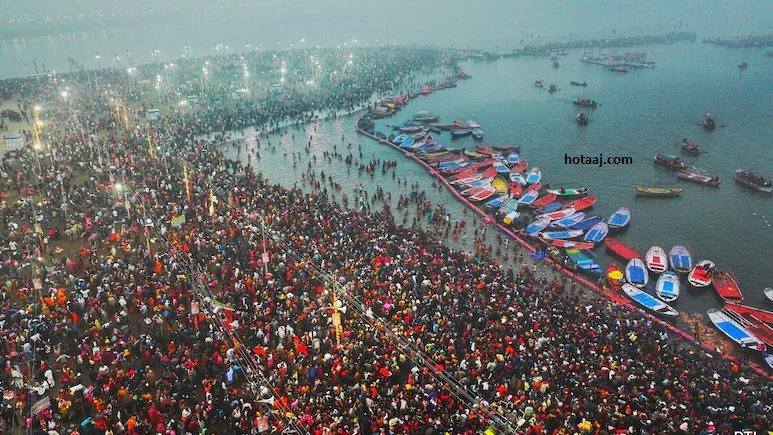
The Maha Kumbh Mela kicked off today in Prayagraj, Uttar Pradesh, with an overwhelming 50 lakh devotees taking the first sacred dip at the Sangam, the confluence of the Ganga, Yamuna, and the mythical Saraswati rivers. This marks the beginning of one of the largest religious gatherings in the world, drawing millions from across India and abroad.
The Kumbh Mela, a centuries-old tradition, is expected to see over 40 crore (400 million) people visiting Prayagraj during its duration, surpassing the combined population of countries like the US and Russia. Pilgrims come seeking spiritual purification, and the sacred dip is believed to cleanse sins and grant salvation.
The event has been carefully organized, with various security, health, and sanitation measures in place to ensure the safety and well-being of the immense crowd. Special arrangements for transportation, accommodations, and crowd management have been made to handle the influx of people.
The Kumbh Mela is not only a religious event but also a vibrant cultural and social gathering, featuring religious discourses, rituals, music, dance, and spiritual performances. It attracts a mix of spiritual leaders, devotees, tourists, and cultural enthusiasts from across the world, making it a significant event in India’s cultural and religious calendar.
This year, the Mela holds particular significance as it coincides with an important planetary alignment, enhancing its spiritual importance. Authorities have expressed their commitment to making the event smooth and memorable for the millions of participants.
Courtesy: CNBC-TV18
The Maha Kumbh Mela 2025, being held after 12 years, has drawn millions of devotees to Prayagraj, with many taking the holy dip at the Sangam – the confluence of the Ganga, Yamuna, and the mythical Saraswati rivers. The event, set up across approximately 4,000 hectares, will continue until February 26, 2025.
This monumental gathering is expected to provide a massive economic boost to Uttar Pradesh, India’s most populous state. With an allocated budget of Rs 7,000 crore for the 45-day-long event, the state is gearing up for not just religious but also significant economic benefits.
Experts project that Maha Kumbh 2025 could generate up to Rs 2 lakh crore in economic growth for Uttar Pradesh. With an expected 40 crore (400 million) visitors, and assuming each spends an average of Rs 5,000 during their visit, the economic impact of this sacred event is poised to be immense. This boost will be seen across various sectors including hospitality, transportation, retail, and tourism, cementing the Kumbh Mela as not just a spiritual phenomenon but also a key driver of regional economic development.
Courtesy: DD India
Uttar Pradesh Chief Minister Yogi Adityanath recently highlighted the monumental economic impact of the Kumbh Mela, referencing the 2019 Ardh Kumbh Mela, which generated Rs 1.2 lakh crore for the state’s economy with an estimated 24 crore devotees. This year, with an expected 40 crore attendees, the Maha Kumbh Mela in 2025 is projected to contribute up to Rs 2 lakh crore to Uttar Pradesh’s economy, marking a significant boost to various sectors.
Mr. Adityanath, a prominent leader of the Bharatiya Janata Party (BJP), described the Maha Kumbh as the world’s largest temporary city, which can accommodate between 50 lakh to one crore devotees at any given time. This sacred event is not just a spiritual gathering but a catalyst for economic growth.
According to the Confederation of All India Traders (CAIT), the food and beverage sector, including packaged foods, water, juices, and meals, is expected to add Rs 20,000 crore to the overall trade. Additionally, the sale of religious items and offerings, such as oil, lamps, Ganga water, idols, incense sticks, and religious books, is projected to contribute another Rs 20,000 crore to the economy.
With such large-scale participation and economic activities, the Maha Kumbh Mela not only strengthens Uttar Pradesh’s cultural significance but also serves as a major driver of economic prosperity.
Courtesy: CA Rahul Malodia: Business Coach
As the Maha Kumbh Mela 2025 unfolds, it is expected to bring substantial economic benefits across various sectors. According to the Confederation of All India Traders (CAIT), transportation and logistics services, including local and interstate transportation, freight, and taxis, are projected to generate Rs 10,000 crore in business. Tourism services, such as travel packages, tour guides, and related activities, are also expected to contribute another Rs 10,000 crore.
Temporary medical camps, Ayurvedic products, and medicines could bring in an additional Rs 3,000 crore. Digital services, including e-ticketing, digital payments, Wi-Fi, and mobile charging stations, are projected to generate business worth Rs 1,000 crore. The entertainment and media sectors, encompassing advertising and promotional activities, are also expected to generate Rs 10,000 crore in trade.
Prime Minister Narendra Modi praised the commencement of the Maha Kumbh Mela, calling it a “very special day” for millions of people who value India’s cultural heritage. In his message, PM Modi expressed his joy at witnessing the vibrant activity in Prayagraj, with pilgrims gathering to take the holy dip at Sangam. He celebrated the Kumbh Mela as a grand confluence of faith, devotion, and culture that highlights India’s timeless spiritual traditions. He also wished all the pilgrims and tourists a fulfilling and memorable stay at the sacred event.
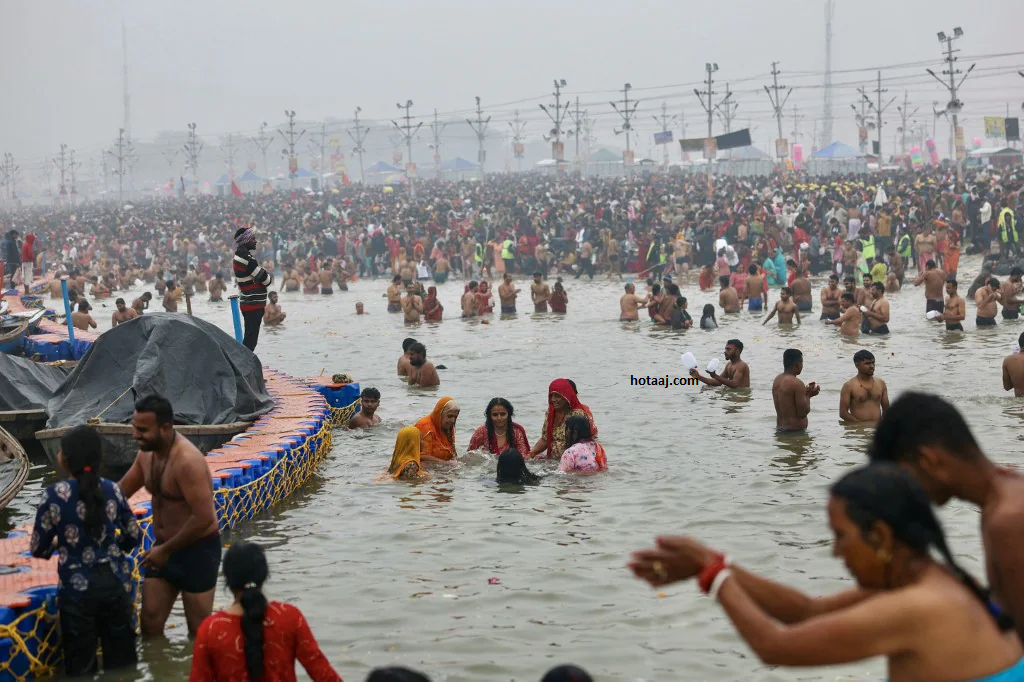
The Maha Kumbh Mela 2025 has officially begun in Prayagraj, with Prime Minister Narendra Modi extending a warm welcome to all the devotees, revered saints, and Kalpvasis. He shared a message on X, stating that the gathering at this holy city is the world’s largest spiritual and cultural event. The Kumbh Mela, which celebrates unity in diversity and the fusion of faith with modernity, is an experience of both spiritual reflection and cultural immersion.
The Kumbh Mela, held four times in 12 years, rotates between four sacred locations across India: Haridwar (Uttarakhand) on the banks of the Ganga, Ujjain (Madhya Pradesh) along the Shipra, Nashik (Maharashtra) by the Godavari, and Prayagraj at the confluence of the Ganga, Yamuna, and Saraswati rivers. The timing of each Kumbh aligns with specific astrological configurations of the Sun, Moon, and Jupiter, making the event a particularly auspicious occasion for Hindus.
During the month-long celebration, millions of pilgrims gather to take part in sacred bathing rituals, also known as Shahi Snans or Amrit Snans. These acts are believed to purify the soul, cleanse sins, and bring spiritual salvation. The event, deeply embedded in Hindu religious traditions, also symbolizes the gathering of diverse cultures and communities coming together in a shared moment of devotion and unity.

This year’s Maha Kumbh Mela will witness massive crowds, with key dates expected to attract the highest number of pilgrims. The dates for the Shahi Snans are as follows:
- January 14: Makar Sankranti (First Shahi Snan)
- January 29: Mauni Amavasya (Second Shahi Snan)
- February 3: Basant Panchami (Third Shahi Snan)
- February 12: Maghi Purnima
- February 26: Mahashivratri (Final Snan)
Preparations for the Maha Kumbh Mela:
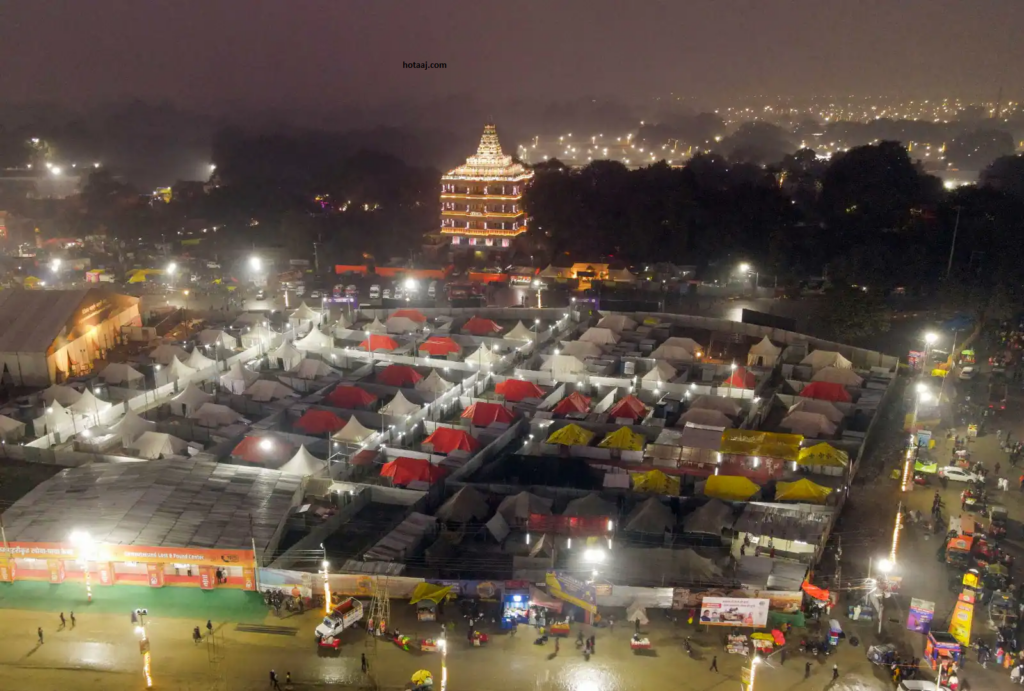
To accommodate the overwhelming number of visitors, extensive arrangements have been made. This year, there are 1,50,000 tents set up to house the devotees. Over 3,000 kitchens will cater to the needs of the pilgrims, while 1,45,000 restrooms have been installed to ensure cleanliness and convenience. Additionally, 99 parking lots have been set up to manage the transportation of visitors.
To maintain order and ensure the safety of the huge crowds, more than 40,000 police officers are stationed at the venue. These officers will not only provide security but also assist in crowd management, making sure that the event runs smoothly and that all devotees can participate in the religious rituals without incident.
To enhance safety and security during the Maha Kumbh Mela, surveillance cameras equipped with artificial intelligence (AI) have been installed across the venue for continuous monitoring, ensuring that the vast crowd is well-managed.
In preparation for the large influx of festival visitors, Indian Railways has bolstered transport services by adding nearly 100 trains, making 3,300 trips to carry pilgrims to Prayagraj. These additional trains supplement the regular services already in place.
According to Union Minister for Culture and Tourism, Gajendra Singh Shekhawat, more than 15 lakh foreign tourists are expected to attend the event. To cater to the needs of these international visitors, the Tourism Ministry has set up a tent city equipped with facilities like Ayurveda, Yoga, and Panchakarma, ensuring that tourists have a comfortable and holistic experience during their stay.
References
- ^ “Maha Kumbh Mela 2025: How this event after 144 years is different from 3 other Kumbhs”. India Today. 2025-01-07. Retrieved 2025-01-13.
- ^ “Maha Kumbh Mela 2025: Why You Should Travel To The World’s Largest Religious Gathering”. Times Now. 16 November 2024. Retrieved 19 November 2024.
- ^ “Maha Kumbh 2025 Mela: When will it start? Know the dates of royal bath, significance, and more”. The Indian Express. 12 November 2024. Retrieved 18 November 2024.
- ^ “Maha Kumbh Mela 2025: How this event after 144 years is different from 3 other Kumbhs”. India Today. 2025-01-07. Retrieved 2025-01-13.
- ^ “Home – Maha Kumbh Mela 2025”. mahakumbh.in. 2022-11-08. Retrieved 2025-01-13.
- ^ Sharma, Vishesh (13 November 2024). “Maha Kumbh 2025: How brands can make a splash during the mega marketing mela”. bestmediainfo.com. Retrieved 18 November 2024.
- ^ Jump up to:a b “Maha Kumbh Mela 2025: Prayagraj To Host A Two-Day Bird Festival For The First Time”. Times Now. 13 November 2024. Retrieved 19 November 2024.
- ^ “Kumbh: Global dignitaries & saints to attend Ganga aarti”. The Times of India. 17 November 2024. Retrieved 18 November 2024.
- ^ “Maha Kumbh 2025: Advanced sanitation standards set to ensure clean and safe experience for devotees and tourists in Prayagraj”. The Times of India. 18 November 2024. Retrieved 18 November 2024.
- ^ “10,000 sanitation workers to make Kumbh clean & green”. The Times of India. 2025-01-11. ISSN 0971-8257. Retrieved 2025-01-13.
- ^ “महाकुंभ-2025 : प्रयागराज में कुंभ मेला क्षेत्र में गाइनेकोलॉजिस्ट और पीडियाट्रिक शिफ्टवार 24 घंटे देंगे अपनी सेवाएं”. ddnews.gov.in. Retrieved 2025-01-05.
- ^ info medias, the. “Mahakumbh 2025: Spiritual Festival and Indian Railway Updates”. the info medias. Retrieved 2 January 2025.
- ^ “Maha Kumbh 2025 to have ‘fire bikes’, offroaders as quick response vehicles | VIDEO”. English.Mathrubhumi. 17 November 2024. Retrieved 18 November 2024.
- ^ “Mahakumbh:Fire safety measures to exceed Kumbh 2019 standards with doubled resources”. hindustantimes.com. 16 November 2024. Retrieved 19 November 2024.
- ^ “Mahakumbh 2025: Prayagraj gears up with 500 Ganga Praharis to maintain river sanctity”. The Times of India. 17 November 2024. Retrieved 19 November 2024.
- ^ “47 of 83 Maha Kumbh projects completed”. The Times of India. 15 November 2024. Retrieved 19 November 2024.
- ^ “Maha Kumbh 2025: UP steps up security, adds AI and chatbots for real-time assistance to travellers”. The Times of India. 24 October 2024. Retrieved 19 November 2024.
- ^ “Streamlining pilgrimage in Prayagraj: Maha Kumbh Mela 2025 navigation app launched for visitors”. The Times of India. 3 November 2024. Retrieved 19 November 2024.
- ^ “Kumbh Mela 2025: Know The Exact Dates From The Start To The Shahi Snan”. news.abplive.com. 13 November 2024. Retrieved 19 November 2024.