


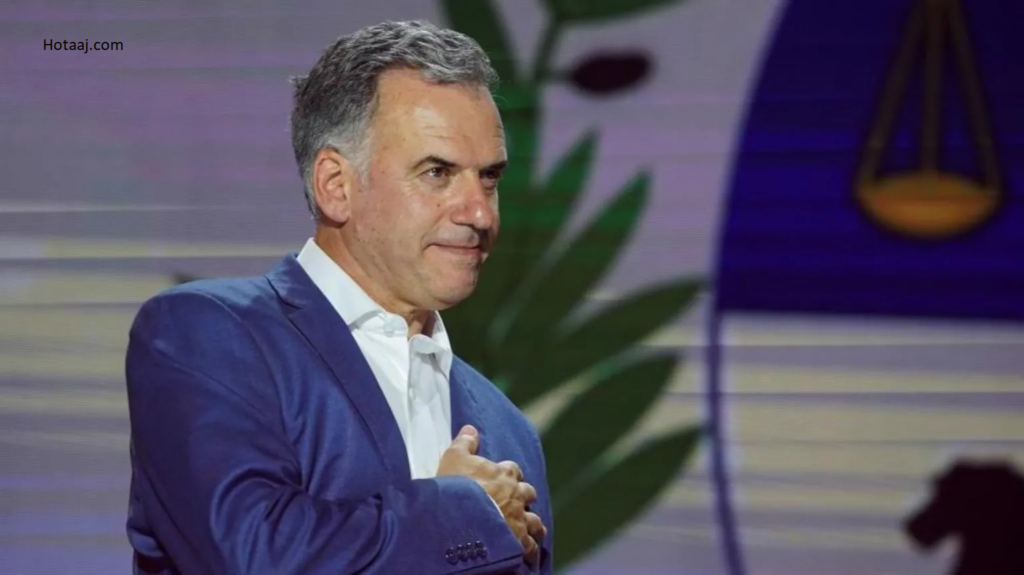
Yamandú Orsi Wins Uruguay Presidential Election, Marking a Return for the Left-Wing Broad Front
In a significant shift in Uruguay’s political landscape, former history teacher Yamandú Orsi has emerged victorious in the presidential election, defeating Álvaro Delgado, the candidate from the ruling conservative coalition. Orsi, a member of the left-wing Broad Front party, triumphed by securing more than three percentage points over his opponent in Sunday’s highly anticipated run-off.
The result marks a decisive moment in Uruguay’s political history, with the Broad Front returning to power after a five-year hiatus. The Broad Front, which governed the country from 2005 to 2020, had been ousted by current President Luis Lacalle Pou and his National Party in the last election. However, due to constitutional restrictions preventing Lacalle Pou from running for a second consecutive term, the stage was set for a new political chapter.
Álvaro Delgado, the conservative candidate, graciously conceded defeat and offered his congratulations to Orsi and the Broad Front. “I wish him success in leading the country and fulfilling the promises made during his campaign,” Delgado said in his concession speech. His loss signals the end of the National Party’s current hold on power, after they won in 2019 and led Uruguay through a period of conservative governance.
Orsi’s victory is not only a political comeback for the Broad Front but also represents a significant win for the left-wing faction of the country. During his campaign, Orsi emphasized policies aimed at social equity, economic reforms, and a commitment to climate action. He has pledged to address the growing economic challenges faced by Uruguay’s citizens, including rising inequality and inflation.
With his win, Orsi will now inherit the responsibility of leading Uruguay through a period of economic recovery, as well as navigating the political and social divisions that have marked the last few years. His leadership promises a return to the Broad Front’s progressive policies, which focused on social welfare, labor rights, and public health during its previous terms in power.
The political landscape in Uruguay has been in flux since the Broad Front’s departure in 2020, with the conservative National Party’s governance characterized by a more market-oriented approach and a focus on private investment. Orsi’s victory reflects a public desire to return to policies focused on social justice and expanding public services, which have historically been the hallmark of the Broad Front.
As the nation prepares for Orsi’s presidency, all eyes will be on how he navigates the complex political and economic challenges ahead. His administration will be expected to strike a balance between maintaining Uruguay’s fiscal health while implementing policies that address the needs of its working-class citizens and underserved communities. With his broad base of support from left-wing activists, labor unions, and social organizations, Orsi’s presidency will likely shape the direction of Uruguay’s domestic and foreign policies for the next five years.
Orsi’s victory is a testament to the power of grassroots campaigning, as the former teacher’s message resonated deeply with the Uruguayan electorate, especially those disillusioned with the economic challenges brought about by conservative rule. As he prepares to take office, Orsi’s broad political experience, including his time as a mayor, will be crucial as he seeks to fulfill his ambitious promises of change and progress.
The return of the Broad Front to power is a signal of shifting tides in Latin American politics, with a growing number of left-wing leaders reclaiming office in the region after years of conservative dominance. For Uruguay, Orsi’s victory sets the stage for a new chapter in its democratic and political evolution.

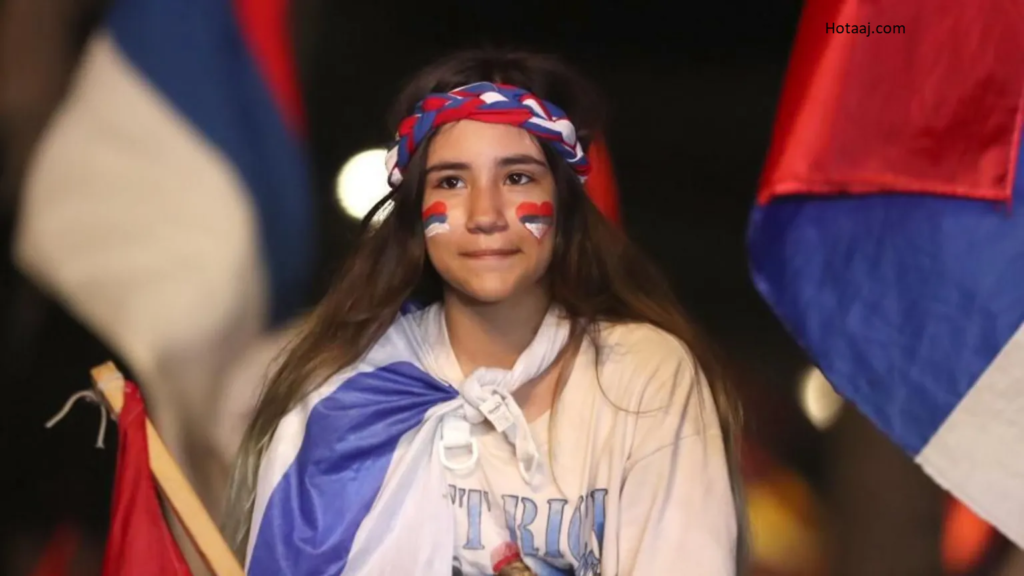
Yamandú Orsi Wins Uruguay’s Presidential Election, Pledges Unity and Progress
Yamandú Orsi, a 57-year-old former history teacher, has been elected as Uruguay’s next president, marking the return of the left-wing Broad Front coalition to power after five years of conservative rule. Orsi, a protégé of former President José Mujica, emerged victorious in Sunday’s run-off against Álvaro Delgado, the candidate from the ruling conservative National Party.
Orsi’s victory is seen as a reflection of his personal journey from humble beginnings to a key political figure. Born in rural Uruguay in a home without electricity, Orsi’s upbringing shaped his commitment to social equity. His career as a history teacher was complemented by a deepening engagement in local politics, where he eventually became the mayor of Canelones, the country’s second-most populous department. During his tenure, Orsi helped bring major investments to the area, including a notable deal with tech giant Google, which announced plans to build a large data center in Canelones.
Orsi’s campaign emphasized his business-friendly stance, promising to avoid raising taxes that could deter potential investors. This approach resonated with voters who appreciated his balanced vision of combining social progress with economic stability. While his victory signals a return to left-wing leadership, Orsi has stressed his desire to govern for all Uruguayans, regardless of their political affiliations. Addressing his supporters on election night, Orsi said, “I’m going to be the president who builds a more integrated country, where we set aside our differences and nobody is left behind—neither economically, socially, nor politically.” He added that he would “call for a national dialogue again and again” and engage with those who voted for his rival, signaling his commitment to national unity.
Orsi’s victory also aligns with the Broad Front’s success in securing a majority in the Uruguayan Senate, although the coalition fell short of a majority in the Chamber of Representatives. Despite this, Orsi is poised to lead the country into a new era, with outgoing President Luis Lacalle Pou offering to cooperate with Orsi’s transition team to ensure a smooth handover of power ahead of the presidential swearing-in on March 1 next year.
The election results contrast with broader regional trends in Latin America, where other countries like Argentina, Brazil, and the United States have seen more polarized and divisive political landscapes. Uruguay’s race, which featured two moderate candidates, shows a more pragmatic and conciliatory approach to governance, with Orsi pledging to bring together a divided electorate and foster inclusive growth.
As Uruguay prepares for a new chapter, Orsi’s leadership is expected to focus on both social justice and economic development. His background as a teacher and mayor provides him with a unique perspective on balancing the needs of everyday citizens with the realities of governing a modern economy. His presidency will likely shape Uruguay’s domestic policies for years to come, as the country looks to recover from the economic challenges faced under the conservative administration.

Courtesy: Al Jazeera English
References
[edit]
- ^ Jump up to:a b “Is Uruguay too stable for its own good?”. The Economist. 25 November 2024. Retrieved 25 November 2024.
- ^ “Yamandú Orsi será el nuevo presidente de Uruguay”. infobae.com (in Spanish). 24 November 2024. Retrieved 24 November 2024.
- ^ “Entrevista a Orsi: el “canarito” que se enamoró de la docencia”. El Observador. Retrieved 18 March 2023.
- ^ “Ceremonia de asunción del Intendente de Canelones, Yamandú Orsi – Presidencia de la República”. 4 April 2018. Archived from the original on 4 April 2018. Retrieved 18 March 2023.
- ^ Dazzo, Rino (10 May 2022). “Il sindaco di Canelones di origini italiane Yamandú Orsi”. Gente d’Italia (in Italian). Retrieved 26 September 2023.
- ^ “Falleció el padre del Intendente Yamandú Orsi”. CanelonesCiudad Portal (in Spanish). Retrieved 26 September 2023.
- ^ “Falleció la madre del Intendente de Canelones”. Intendencia de Canelones. Retrieved 18 March 2023.
- ^ “Falleció Carmen Martínez madre del intendente Yamandú Orsi”. Metropolitano (in Spanish). 17 February 2023. Retrieved 26 September 2023.
- ^ “Yamandú Orsi, el canario que se crio en un rancho sin luz y que se está “preparando” para ser presidente”. 13 February 2023. Archived from the original on 13 February 2023. Retrieved 18 March 2023.
- ^ “Yamandú Orsi, el “gauchito de asfalto” que pasó del malambo a lo más alto de la política”. Montevideo Portal (in Spanish). Retrieved 18 March 2023.
- ^ “El intendente Yamandú Orsi votó a primera hora de la tarde en la Escuela N° 110 ‘Joaquín Suárez'”. HOY CANELONES (in Spanish). Retrieved 18 March 2023.
- ^ “Yamandú Orsi parte 2”. El Observador. Retrieved 18 March 2023.
- ^ “Yamandú Orsi se animó al zapateo en “La peluquería de Don Mateo””. EL PAIS. 29 June 2022. Retrieved 18 March 2023.
- ^ “Yamandú Orsi “Me considero de izquierda, pero con un fuerte contenido nacionalista””. La Mañana (in Spanish). 16 January 2021. Retrieved 18 March 2023.
- ^ “Intendente de Canelones”. Intendencia de Canelones. 7 March 2023. Archived from the original on 7 March 2023. Retrieved 18 March 2023.
- ^ “Yamandú Orsi – Movimiento de Participación Popular”. 13 January 2023. Archived from the original on 13 January 2023. Retrieved 18 March 2023.
- ^ “La posta canaria”. 19 September 2013. Archived from the original on 19 September 2013. Retrieved 19 March 2023.
- ^ “Yamandú Orsi fue electo intendente de Canelones”. HOY CANELONES (in Spanish). Retrieved 19 March 2023.
- ^ “Yamandú Orsi asumió como Intendente de Canelones para el periodo 2015 – 2020”. Intendencia de Canelones. Retrieved 19 March 2023.
- ^ “Frente Amplio pone a Orsi al frente de una campaña “mano a mano con el votante””. Grupo 180 (in Spanish). Retrieved 19 March 2023.
- ^ “El patrón y el candidato intervenido”. EL PAIS. 5 November 2019. Retrieved 19 March 2023.
- ^ “Transmisión de mando en el Gobierno de Canelones”. Intendencia de Canelones. Retrieved 19 March 2023.
- ^ “Yamandú Orsi: una victoria holgada con la mira puesta en 2024”. 2 October 2020. Archived from the original on 2 October 2020. Retrieved 19 March 2023.
- ^ “El patrón y el candidato intervenido”. EL PAIS. 5 November 2019. Retrieved 13 December 2023.
- ^ “El MPP proclama este domingo a Orsi como precandidato y se prepara para buscar alianzas”. Montevideo Portal (in Spanish). Retrieved 13 December 2023.
- ^ “Vertiente Artiguista confirmó su apoyo a la precandidatura de Yamandú Orsi”. la diaria (in Spanish). 11 March 2023. Retrieved 13 December 2023.
- ^ “Frente Amplio oficializó sus cuatro precandidatos: Orsi, Cosse, Bergara y Lima”. subrayado.com.uy (in Spanish). 18 November 2023. Retrieved 13 December 2023.
- ^ “Teacher vs veterinarian: Uruguay’s presidential frontrunners”. France 24. 28 October 2024. Retrieved 28 October 2024.
- ^ “Leftist candidate Orsi wins Uruguay’s presidential election”. France 24. 25 November 2024. Retrieved 25 November 2024.
- ^ “Yamandú Orsi, el “gauchito de asfalto” que pasó del malambo a lo más alto de la política”. Montevideo Portal (in Spanish). Retrieved 19 March 2023.
- ^ “A cartas vistas”. SALA DE REDACCIÓN (in Spanish). 10 October 2020. Retrieved 19 March 2023.
- ^ “Yamandú Orsi le dio la bienvenida a Luis Suárez, “un nuevo vecino” de Canelones”. El Observador. Retrie
- “Yamandú Orsi será el nuevo presidente de Uruguay”. infobae.com (in Spanish). 2024-11-24. Retrieved 2024-11-24.
- ↑ “Frente Amplio oficializó sus cuatro precandidatos: Orsi, Cosse, Bergara y Lima”. subrayado.com.uy (in Spanish). 2023-11-18. Retrieved 2023-12-13.
- “Resultados en vivo elecciones en Uruguay 2024” (in Spanish). 24 November 2024. Retrieved 24 November 2024.
- ^ “Uruguay facing general elections in October”. www.radiohc.cu. Retrieved 14 September 2024.
- ^ “Uruguay’s leftist coalition eyeing return to power in October”. BNamericas.com. Retrieved 14 September 2024.
- ^ “Uruguay election: Voters in one of Latin America’s strongest democracies pick between 2 centrists”. Associated Press. Retrieved 27 October 2024.
- ^ Batschke, Nayara; Debre, Isabel (27 October 2024). “Polls open in stable Uruguay in a vote free of political hostility seen elsewhere in the region”. Associated Press. Retrieved 27 October 2024.
- ^ Electoral system IPU
- ^ Electoral system IPU
- ^ Díaz Campanella, Gabriel (29 October 2024). “Uruguay’s José Mujica steps in to help Broad Front mobilize voters ahead of runoff vote”. El País. Retrieved 29 October 2024.
- ^ Jump up to:a b Batschke, Nayara; Debre, Isabel (29 October 2024). “Uruguay’s presidential runoff will be tight. But with rivals in agreement, it’s no nail-biter”. Associated Press. Retrieved 29 October 2024.
- ^ “Intención de Voto – Octubre 2024”.
- ^ “24/10/2024 – 47% votaría al Frente Amplio y 25% al Partido Nacional el próximo domingo, según la Usina de Percepción Ciudadana” (in Spanish). 4 October 2024.
- ^ “Ultima estimación de voto por partido”. portal.factum.uy.
- ^ “Proyección de Equipos Consultores: FA: 45,8% PN: 24,8%, PC: 17,7%” (in Spanish).
- ^ “INTENCIÓN DE VOTO EL 27 DE OCTUBRE” (in Spanish).
- ^ “INVESTIGACION NACIONAL MPC OCTUBRE 2024”. 13 October 2024.
- ^ “Estimación de voto por partido – Octubre 2024”. portal.factum.uy.
- ^ “Intención de Voto: Primera Vuelta y Balotaje – Setiembre 2024”.
- ^ Jump up to:a b “03/10/2024 – Yamandú Orsi derrotaría por diez puntos a Álvaro Delgado en un eventual balotaje, según encuesta de la Usina” (in Spanish). 4 October 2024.
- ^ “INTENCIÓN DE VOTO “SI LAS ELECCIONES FUERAN HOY”” (in Spanish).
- ^ “Intención de voto en setiembre: el Frente Amplio registra 43%, y la suma de los partidos de la Coalición 40%” (in Spanish).
- ^ “Investigación Nacional MPC Septiembre 2024”. 16 September 2024.
- ^ “Portal FACTUM | Uruguay”. portal.factum.uy.
- ^ Jump up to:a b “05/09/2024 – El FA alcanzaría 47% de los votos y la coalición oficialista 40%, según encuesta de la Usina” (in Spanish). 5 September 2024.
- ^ “En agosto 41% votaría al Frente Amplio y 38% a los partidos de la Coalición Multicolor” (in Spanish).
- ^ “INTENCIÓN DE VOTO “SI LAS ELECCIONES FUERAN HOY”” (in Spanish).
- ^ Jump up to:a b “Intención de Voto: Primera Vuelta y Balotaje – Agosto 2024”.
- ^ “Investigación Nacional MPC Agosto 2024”. 12 August 2024.
- ^ “Portal FACTUM | Uruguay”. portal.factum.uy.
- ^ Jump up to:a b “Cae la intención de voto al Partido Nacional” (in Spanish). 8 August 2024.
- ^ “Intención de voto en julio: 43% votaría al Frente Amplio y 37% a los partidos de la Coalición Multicolor” (in Spanish).
- ^ “INTENCIÓN DE VOTO “SI LAS ELECCIONES FUERAN HOY”” (in Spanish).
- ^ Jump up to:a b “Intención de Voto: Primera Vuelta y Balotaje – Julio 2024”.
- ^ Jump up to:a b “INVESTIGACIÓN NACIONAL MPC JULIO 2024”. 14 July 2024.
- ^ “19/07/2024 – Elecciones nacionales: FA tiene 48% de intención de voto y la coalición multicolor 38%, según la Usina de Percepción Ciudadana” (in Spanish). 29 July 2024.
- ^ “Encuesta de Nómade: Orsi crece en interna del FA entre los que probablemente vayan a votar” (in Spanish).
- ^ “Simpatía política por partido en junio: FA 44%, Partidos de la coalición 39%” (in Spanish).
- ^ “Portal FACTUM | Uruguay”. portal.factum.uy.
- ^ “Preferencias Partidarias – Mayo 2024”.
- ^ “INTENCIÓN DE VOTO “SI LAS ELECCIONES FUERAN HOY”” (in Spanish).
- ^ “En las internas, Yamandú Orsi recoge 55% de las adhesiones del FA y Carolina Cosse 41%; Álvaro Delgado reúne tres de cada cuatro votos del Partido Nacional” (in Spanish). 27 June 2024.
- ^ Jump up to:a b “Investigación Nacional MPC Mayo 2024”. 28 May 2024.
- ^ “Portal FACTUM | Uruguay”. portal.factum.uy.
- ^ “Intención de voto: crecen los apoyos partidarios, y la coalición supera al Frente Amplio” (in Spanish). 9 May 2024.
- ^ Jump up to:a b “SIMPATÍA POLÍTICA POR PARTIDO: FA 42%, PN 27%, PC 7%, CA 4%” (in Spanish).
- ^ “02/05/2024 – FA tiene 45% de intención de voto y partidos de la coalición suman 39%, según la Usina de Percepción Ciudadana” (in Spanish). 20 May 2024.
- ^ “INTENCIÓN DE VOTO “SI LAS ELECCIONES FUERAN HOY”” (in Spanish).
- ^ Jump up to:a b “Uruguay: una encuesta proyecta un triunfo por 7 puntos de la oposición en segunda vuelta” (in Spanish).
- ^ “Preferencias Partidarias – Febrero 2024”.
- ^ “Investigación Nacional MPC Abril 2024”. April 2024.
- ^ “INTENCIÓN DE VOTO “SI LAS ELECCIONES FUERAN HOY”” (in Spanish).
- ^ “Portal FACTUM | Uruguay”. portal.factum.uy.
- ^ Jump up to:a b “Preferencias Partidarias – Febrero 2024”.
- ^ “INTENCIÓN DE VOTO “SI LAS ELECCIONES FUERAN HOY”” (in Spanish).
- ^ “Investigación Nacional MPC Febrero 2024”. 5 February 2024.
- ^ “Se fortalecen las precandidaturas con mayor adhesión” (in Spanish). 14 March 2024.
- ^ “Investigación Nacional MPC Diciembre 2023”. 26 December 2023.
- ^ “Portal FACTUM | Uruguay”. portal.factum.uy.
- ^ “SIMPATÍA POLÍTICA POR PARTIDO: FA 45%, PN 29%, PC 7%, CA 2%” (in Spanish).
- ^ “¿Qué votarían los uruguayos si las elecciones fueran hoy? Esto dice la última encuesta de Opción”. El País. 21 December 2023.
- ^ “Según Usina de Percepción Ciudadana el Frente Amplio llega a 45% de intención de voto y la coalición suma 37%” (in Spanish).
- ^ “Elecciones 2024: Frente Amplio lidera preferencias con el 45 % según encuesta de la Usina de Percepción Ciudadana” (in Spanish).
- ^ “El 17,5% de quienes fueron encuestados no sabe a qué partido votaría” (in Spanish). 4 December 2023.
- ^ “INTENCIÓN DE VOTO “SI LAS ELECCIONES FUERAN HOY”” (in Spanish).
- ^ “¿QUÉ VOTARÍAN LOS URUGUAYOS SI LAS ELECCIONES FUERAN HOY?” (in Spanish).
- ^ “45% votaría al Frente Amplio y 29% al Partido Nacional en las elecciones de 2024, según la Usina de Percepción Ciudadana” (in Spanish).
- ^ “Intención de voto por partido – 4º Bimestre 2023” (in Spanish).
- ^ “INTENCIÓN DE VOTO “SI LAS ELECCIONES FUERAN HOY”” (in Spanish).
- ^ “¿Qué votarían los uruguayos si las elecciones fueran hoy? Esto revela una nueva encuesta de Equipos” (in Spanish). 15 September 2023.
- ^ “Intención de voto: el Frente Amplio mantiene ventaja sobre la coalición de gobierno” (in Spanish). 8 August 2023.
- ^ “INTENCIÓN DE VOTO “SI LAS ELECCIONES FUERAN HOY”” (in Spanish).
- ^ “Intención de voto por partido – 3er Bimestre 2023” (in Spanish).
- ^ “¿A qué partido votarían los uruguayos si las elecciones fueran hoy? Esto concluyó una nueva encuesta de Equipos” (in Spanish).
- ^ “Elecciones 2024: el 45% votaría al Frente Amplio y el 29% al Partido Nacional” (in Spanish).
- ^ “¿A qué partido votarían los uruguayos si las elecciones fueran este domingo?”. El Observador.
- ^ “Intención de voto por partido – 2º Bimestre” (in Spanish).
- ^ “Intención de voto: “empate técnico” entre coalición y Frente Amplio, según la última encuesta de Cifra” (in Spanish). 3 May 2023.
- ^ “SIMPATÍA POLÍTICA POR PARTIDO: FA 42%, PN 28%, PC 5%, CA 2%, PI 1%” (in Spanish).
- ^ Jump up to:a b “La intención de voto al Frente Amplio supera a la de la coalición” (in Spanish). 24 April 2023.
- ^ “Latinobarómetro 2023. Uruguay. Estudio nº LAT-2023 v1_0” (in Spanish).
- ^ “INTENCIÓN DE VOTO “SI LAS ELECCIONES FUERAN HOY”” (in Spanish).
- ^ “La coalición de gobierno suma 45% de intención de voto y el Frente Amplio 41%, según la última encuesta de Factum” (in Spanish).
- ^ “Encuesta Equipos: FA 43%, Partido Nacional 24%, Partido Colorado 9%, Cabildo Abierto 3%” (in Spanish). 14 March 2023.
- ^ “Yamandú Orsi y Álvaro Delgado lideran la intención de voto dentro de sus partidos” (in Spanish). 20 March 2023.
- ^ “Encuesta de Equipos coloca al FA a la cabeza de la preferencia electoral, con 44 %” (in Spanish).
- ^ “Opción: el FA reúne 40% de la intención de voto, mientras que los blancos llegan a 28%”. Montevideo Portal.
- ^ “INTENCIÓN DE VOTO “SI LAS ELECCIONES FUERAN HOY”” (in Spanish).
- ^ “Intención de voto por partido – Octubre 2022” (in Spanish).
- ^ “Encuesta de Equipos Consultores: FA 38%, PN 28%, PC 5%, CA 3%, 1% PI y 1% PERI” (in Spanish).
- ^ “Intención de voto: FA 39%; PN 28%; CA y PC 8% cada uno” (in Spanish).
- ^ “¿Qué votarían los uruguayos si las elecciones fueran hoy? La última encuesta de Equipos Consultores” (in Spanish). 17 May 2022.
- ^ “Intención de voto por partido – Noviembre 2021” (in Spanish).
- ^ “A dos años de las elecciones de 2019: ¿qué votarían hoy los uruguayos?”. subrayado.com.uy (in Spanish). 27 October 2021. Retrieved 14 December 2021.
- ^ “Preferencias Partidarias – Mayo 2021”. 6 July 2021.
- ^ Jump up to:a b “Encuesta de Equipos compara escenarios para las elecciones de octubre y noviembre según el candidato de cada partido” (in Spanish).
- ^ “El Frente Amplio lidera otra encuesta de intención de voto” (in Spanish). 26 December 2023.
- ^ “Preferencias Partidarias – Diciembre 2023” (in Spanish).
- ^ “Encuesta de Equipos Consultores compara escenarios para las elecciones según el candidato de cada partido” (in Spanish).
- ^ Jump up to:a b “Preferencias presidenciales y escenarios de intención de voto” (in Spanish).
- ^ “LAS INTERNAS AL ARRANQUE FORMAL DE LA CAMPAÑA” (in Spanish).
- ^ “LOS PRE CANDIDATOS HOY” (in Spanish).
- ^ “LOS PRE CANDIDATOS HOY” (in Spanish).
- ^ “LOS PRE CANDIDATOS HOY” (in Spanish).
- ^ “LOS PRE CANDIDATOS HOY” (in Spanish).
- ^ “PRESIDENTE PREFERIDO PARA EL PROXIMO PERIODO” (in Spanish).
- ^ “24/10/2024 – 47% votaría al Frente Amplio y 25% al Partido Nacional el próximo domingo, según la Usina de Percepción Ciudadana” (in Spanish). 4 October 2024.
- ^ “Intención de Voto: Primera Vuelta y Balotaje – Setiembre 2024”.
- ^ “Portal FACTUM | Uruguay”. portal.factum.uy.
- ^ “Yamandú Orsi tendría ventaja en un eventual balotaje, según una encuesta de Cifra”. 24 June 2024.
- ^ “Leftist candidate Orsi wins Uruguay’s presidential election”. France 24. 25 November 2024. Retrieved 25 November 2024.
- ^ “Uruguay’s leftist opposition candidate Yamandú Orsi becomes country’s new president”. Associated Press. 25 November 2024. Retrieved 25 November 2024.
- ^ Jump up to:a b c d e f g h i j “Los líderes internacionales que felicitaron a Yamandú Orsi por su triunfo en las elecciones de Uruguay”. Infobae.com (in Spanish). 25 November 2024. Retrieved 25 November 2024.
- ^ “Statement on the election of Yamandú Orsi Martínez as President of the Eastern Republic of Uruguay”. www.exteriores.gob.es. Ministry of Foreign Affairs, European Union and Cooperation. 25 November 2024. Retrieved 25 November 2024.
- ^ “Statement from President Joe Biden Congratulating Yamandú Orsi as President-elect of Uruguay”. The White House. Office of the President of the United States. 25 November 2024. Retrieved 25 November 2024.
- “⇨ José Pepe Mujica: Biography of the Former President | José Pepe Mujica ✅”. José Pepe Mujica. 9 April 2021. Retrieved 11 April 2021.
- ^ Jump up to:a b Hernandez, Vladimir (14 November 2012). “Jose Mujica: The World’s ‘Poorest’ President”. BBC News Magazine.
- ^ Jonathan Watts (13 December 2013). Uruguay’s president José Mujica: no palace, no motorcade, no frills. The Guardian. Retrieved 15 December 2013.
- ^ “Interview: the “philosopher president” of Uruguay”. Times Higher Education (THE). 9 April 2015. Retrieved 17 February 2022.
- ^ Bourcier, Nicolas; Legrand, Christine (27 May 2014). “Uruguay’s José Mujica: the ‘humble’ leader with grand ideas”. The Guardian. ISSN 0261-3077. Retrieved 5 December 2023.
- ^ “José Mujica”. Movimiento de Participación Popular (in Spanish). Retrieved 21 September 2023.
- ^ Mujica paseará por Muxika, la tierra de sus antepasados, Diario La República
- ^ Mujica recibió las llaves de la ciudad de Muxika, Diario La República
- ^ “LevANTE – Favale di Malvaro, Mujica visita la terra degli avi: «Un saluto a tutti i liguri» | Liguria | Levante | Il Secolo XIX”. 10 January 2018. Archived from the original on 10 January 2018. Retrieved 21 September 2023.
- ^ liguriantighi.it (PDF)
- ^ Diario La República (2009). “Mujica de la chacra a la presidencia”. Retrieved 14 July 2010.
- ^ Diario La República (2009). “Mujica de la chacra a la presidencia”. Retrieved 14 July 2010.
- ^ Maria Ximena Alvarez. “Tupamaros revolution – La revolución imposible” (in Spanish). Archived from the original on 29 October 2013. Retrieved 3 December 2009.
{{cite journal}}: Cite journal requires|journal=(help) - ^ Brum, Pablo (May 2014). Pablo Brum’s “The Robin Hood Guerrillas: The Epic Journey of Uruguay’s Tupamaros (CreateSpace, 2014). Pages 99-109. CreateSpace Independent Publishing Platform. ISBN 978-1-4973-0872-5.
- ^ Brum, The Robin Hood Guerrillas, Pages 122-123
- ^ Mallinder, Louise (16 March 2009). “Uruguay’s Evolving Experience of Amnesty and Civil Society’s Response”. SSRN 1387362.
{{cite journal}}: Cite journal requires|journal=(help) - ^ (in Spanish)“El 13 de junio de 1968: hace 40 años nació el Pachequismo”. Espectador.com. 13 June 2008. Archived from the original on 25 February 2012. Retrieved 12 November 2012.
- ^ “The Tupamaros”. Archived from the original on 1 June 2020. Retrieved 2 December 2009.
- ^ Brum, The Robin Hood Guerrillas, Pages 201-229 and 250-254
- ^ Lucho Soria. “Entrevista a José “Pepe” Mujica”. www.elhistoriador.com.ar. Archived from the original on 26 June 2009. Retrieved 7 July 2014.
- ^ Andavolu, Krishna (9 May 2014). “Uruguay and Its Ex-Terrorist Head of State May Hold the Key to Ending the Global Drug War”. Vice. Retrieved 23 February 2016.
- ^ Brum, The Robin Hood Guerrillas, Pages 331-336
- ^ “Uruguay – Broad Front”. Countrystudies.us. Retrieved 12 November 2012.
- ^ “Ley 15.737”. .parlamento.gub.uy. Archived from the original on 9 July 2013. Retrieved 12 November 2012.
- ^ Jump up to:a b c Stephen Gregory (1 February 2016). José ‘Pepe’ Mujica: Warrior, Philosopher, President. Sussex Academic Press. pp. 81–. ISBN 978-1-78284-304-7.
- ^ Warren, Michael (29 November 2009). “Ballot box gives ex-terrorist Uruguay’s presidency”. The Seattle Times.
- ^ Carroll, Rory (25 October 2009). “Former terrorist Jose Mujica favourite in Uruguay election”. London: TheGuardian. Retrieved 7 May 2010.
- ^ “Ex-guerrilla wins Uruguay presidency”. cnn.com. 30 November 2009. Retrieved 7 May 2010.
- ^ “Runoff forced in Uruguay’s election”. AS/COA online. 21 October 2009.
- ^ “Mujica headed for presidential victory in Uruguay”.[dead link]
- ^ “El acuerdo entre la UE y el Mercosur es prioritario para Mujica” (in Spanish). 29 November 2009. [dead link]
- ^ Argentina and Uruguay settle seven-year pulp mill row, BBC News, 16 November 2010.
- ^ Uruguay/Argentina implement the end of the pulp mill dispute, Mercopress, 31 August 2010.
- ^ “La guerre de Libye révélatrice de la géopolitique latino-américaine”. Le Monde (in French). 28 March 2011. Archived from the original on 12 January 2012.
- ^ “Mujica supports Lula da Silva’s Iran policy”. en.mercopress.com. 27 November 2009.
- ^ “Mujica elogió a Lula por recibir a Ahmadinejad”. La Nación. lanacion.com.ar. 28 November 2009.
- ^ “Mujica se compra para traje para ver a Lula” (in Spanish). 29 July 2009. Archived from the original on 21 July 2011. Retrieved 2 December 2009.
- ^ “Mujica invites opposition to a unity pact”. El País (in Spanish). December 2009.
- ^ “”El poder no está arriba sino en el corazón de las grandes masas”, dice Mujica”” (in Spanish).
- ^ “BBC News – Uruguay government aims to legalise marijuana”. BBC News. Bbc.co.uk. 21 June 2012. Retrieved 12 November 2012.
- ^ Padgett, Tim (26 June 2012). “Should the world follow Uruguay’s legalization of marijuana?”. Time.
- ^ Oppenheimer, Andres (23 August 2012). “Uruguay’s plan to sell pot may not be that crazy”. The Korea Herald. Archived from the original on 29 October 2013. Retrieved 24 November 2012.
- ^ “Uruguay:Homosexuales podran casarse desde agosto”. peru21.pe. 6 May 2013. Retrieved 6 May 2013.
- ^ “Uruguay legalises abortion”. BBC News. 17 October 2012. Retrieved 17 October 2012.
- ^“Mujica addressing the UN”. El Observador (in Spanish). 25 September 2013. Archived from the original on 28 September 2013. Retrieved 25 September 2013.
- Documentation of the address.
- ^ “Uruguayan President focuses on climate change, environment in UN Assembly speech”. UN News Centre. 24 September 2013. Retrieved 27 June 2014.
- ^ Ventura, Christophe. “En el país de las conquistas sindicales”. Mémoire des luttes.
- ^ Davies, Wyre (28 February 2015). “Uruguay bids farewell to Jose Mujica, its pauper president”. BBC. Retrieved 1 March 2015.
- ^ Davies, Wyre (March 2015). “Uruguay bids farewell to Jose Mujica, its pauper president – BBC News”. BBC News. Retrieved 22 May 2015.
- ^ “THE SATURDAY PROFILE: After Years in Solitary, an Austere Life as Uruguay’s President”. The New York Times. New York. 4 January 2013. Retrieved 1 May 2013.
- ^ “Uruguay’s beloved Pepe bows out to spend time with his Beetle and three-legged dog”. The Guardian. 16 November 2014. Retrieved 16 November 2014.
- ^ Mercopress (25 November 2010). “First time ever woman president (for a few days) in Uruguay”. Retrieved 25 November 2021.
- ^ “Uruguay’s elections: The mystery behind Mujica’s mask”. The Economist. 22 October 2009. Retrieved 16 November 2012.
- ^ “Mujica en “El Pato Encadenado”” (in Spanish). Larepublica.com.uy (LaRed21). 18 February 2010. Retrieved 12 November 2012.
- ^ “Monocolumn – South America’s unsung political hero”. Monocle.com. 9 August 2012. Archived from the original on 26 November 2012. Retrieved 12 November 2012.
- ^ Zap, Claudine (20 September 2012). “‘Poorest president’ donates 90% of his salary”. Yahoo! News. Retrieved 12 November 2012.
- ^ Castells, Adolfo (10 January 2013). “Folclórico deslumbramiento primermundista” [First world’s folkloric dazzle]. El Diario (in Spanish). Montevideo. Archived from the original on 20 January 2013. Retrieved 30 March 2013.
El [periódico] francés Liberation […] ―en el colmo de la desinformación― afirma que nuestro presidente es vegetariano. Seguramente piensa que los chorizos del Quincho de Varela están rellenos de berenjena y soja. [The French [newspaper] Liberation […] ― at the height of disinformation ― claims that our president is a vegetarian. Surely they think that the sausages of Quincho de Varela are filled with eggplant and soybean.]
- ^ “Carlos Mujica, de tupamaro en los años 70 a nuevo líder del Senado”. Clarin.com. November 2004. Retrieved 12 November 2012.
- ^ “Uruguay’s Jose Mujica gets $1m offer for his VW Beetle”. BBC News. 7 November 2014. Retrieved 7 November 2014.
- ^ Hebblethwaite, Cordelia (20 May 2014). “#BBCtrending: Wishing for someone else’s president”. BBC News. Retrieved 21 May 2014.
- ^ “Mujica: “La religión es una necesidad humana”” (in Spanish). El Observador. 15 March 2017.
- ^ “Pepe Mujica aseguró que “los sueldos de algunos jugadores de fútbol ofenden””. www.tycsports.com. 31 May 2020. Retrieved 21 September 2023.
- ^ www.eurosport.com https://www.eurosport.com/geoblocking.shtml. Retrieved 5 December 2023.
{{cite web}}: Missing or empty|title=(help) - ^ “El ex presidente uruguayo José Mujica anunció que tiene un tumor en el esófago”. www.infobae.com. 29 April 2024. Retrieved 29 April 2024.
- ^ “Iconic former Uruguayan President José Mujica is diagnosed with esophageal cancer”. Associated Press. 29 April 2024. Retrieved 30 April 2024.
- ^ Díaz Campanella, Gabriel (29 October 2024). “Uruguay’s José Mujica steps in to help Broad Front mobilize voters ahead of runoff vote”. El País. Retrieved 29 October 2024.
- ^ “Local images of Kusturica’s documentary”. El Observador (Uruguay) (in Spanish). 2 April 2014. Archived from the original on 29 October 2014. Retrieved 2 April 2014.
- ^ “”Breve Dialogo sulla felicità” – di Frank Iodice”. 20 March 2019.
- ^ “‘Breve dialogo sulla felicità’: gli incontri di Frank Iodice approdano al Liceo ‘Cassini’ di Sanremo – Sanremonews.it”. 16 January 2015.
- ^ “L’incapacità dell’essere umano di amare”. L’Unione Sarda.it. 18 October 2018.
- ^ Jorge Pérez (8 December 2014). “No quiero que estén de acuerdo, les pido que piensen: José Mujica” [I do not want you agree, I ask you to think: José Mujica]. El Informador (in Spanish). Guadalajara. Retrieved 28 February 2015.
- ^ “Lugo entrega a Mujica Orden Nacional al Mérito Mcal. Francisco Solano López” (in Spanish). Diario ABC Color. 16 August 2010. Retrieved 16 June 2013.
- ^ “José Mujica agradece condecoraciones y afirma que América es la “gran causa” por seguir”. Andina.com.pe (in Spanish). 25 January 2011. Archived from the original on 28 April 2014. Retrieved 16 June 2013.
- ^ El Presidente recibirá condecoración creada por José de San Martín en 1821 Presidencia.gub.uy, 25 January 2011 (in Spanish)
- ^ “Mujica recibió la orden mexicana del Águila Azteca de manos de Peña Nieto”. El Observador (in Spanish). 28 January 2014. Archived from the original on 16 May 2018. Retrieved 29 January 2014.
- ^ Mujica fue condecorado por el presidente mexicano Republica.com.uy, 28 January 2014 (in Spanish)
- ^ “Mujica apasionado”. Republica.com.uy (in Spanish). 7 December 2014. Archived from the original on 9 December 2014. Retrieved 7 December 2014.
- ^ “Ecuador condecora a Pepe Mujica”. El Universo (in Spanish). 4 December 2014. Retrieved 15 May 2021.
- ^ Bilbija, Bojan. “Hoseu Muhiki najviši orden Republike Srpske”. Politika Online. Retrieved 8 January 2021.
- ^ Srna (27 June 2016). “ANDRIĆGRAD Dodik uručio Orden zastave RS sa srebrnim vencem bivšem predsedniku Urugvaja”. Blic.rs (in Serbian). Retrieved 8 January 2021.
- ^ “Panamá condecora al expresidente de Uruguay José ‘Pepe’ Mujica” (in Spanish). TVN. 24 November 2017. Retrieved 11 May 2021.
- ^ “El Gobierno condecoró a José “Pepe” Mujica con la Orden del Libertador San Martín” (in Spanish). 25 January 2021. Retrieved 11 May 2021.